 تخطي إلى المحتوى الرئيسي تخطي إلى التذييل

An effective spare parts strategy is the critical firewall protecting your fleet from costly operational downtime and complex warranty claims. When a 12V car fridge fails in the field, the default response is often a full unit replacement—a slow and expensive process that hurts both your budget and your customer’s confidence. This logistical friction means a simple sensor failure can quickly escalate into a major service event, tying up assets and eroding profit margins with every return shipment.
This guide provides a tactical framework for managing field repairs efficiently. We’ll break down the specific components, like PCBs and sensors, that have the highest failure rates and explain why modular board swaps are superior to time-consuming soldering repairs. You will get access to the data needed to create a lean inventory, empower local repair shops with explosion diagrams, and see how QR-coded video guides can streamline the entire service process, turning liabilities into quick fixes.
The “FOC” List: Which Components (PCBs, Sensors) Fail First?
Predicting component failure isn’t guesswork; it’s a data-driven process that uses systematic risk assessment and targeted stress testing to identify weak points before they impact field reliability.
For any electronic device, especially those in demanding environments like a vehicle, the Printed Circuit Board (PCB) is the central nervous system. Its failure means total system failure. Through years of Failure Mode and Effects Analysis (FMEA), the industry has pinpointed a consistent set of failure modes. Understanding these “first-to-fail” components is critical for designing a robust after-sales and spare parts strategy.
Solder Joint Fractures
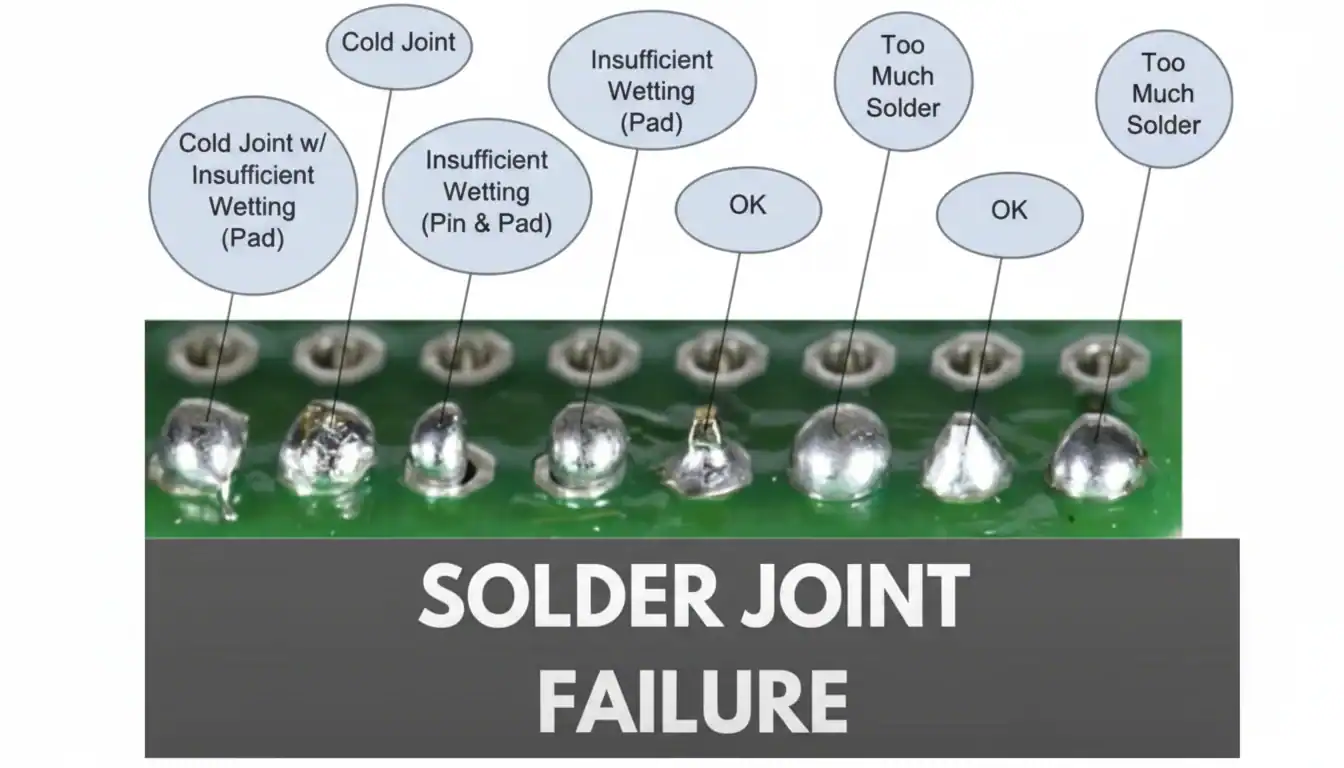
Solder joints are the most common mechanical failure point on a PCB. Subjected to constant thermal cycling (heating and cooling) and mechanical vibration, these connections fatigue and crack over time. We use methods like Automated Optical Inspection (AOI) and X-ray analysis during production to detect micro-fractures. Proactive stress testing helps us predict and reinforce these points, significantly reducing field failures related to solder integrity.
| وضع الفشل | Primary Cause | Common Detection Method |
|---|---|---|
| Solder Joint Fractures | Thermal & Mechanical Stress | Automated Optical Inspection (AOI), X-Ray |
| Via Barrel Degradation | Manufacturing Defects, Stress | In-Circuit Testing (ICT), Burn-in Testing |
| Conductive Anodic Filamentation (CAF) | Electrochemical Migration | Reliability Stress Testing |
Via Barrel Degradation
Vias are the conductive copper pathways connecting different layers of a PCB. Any degradation in the via barrel can sever these critical links, causing intermittent or complete circuit failure. These issues often remain hidden until In-Circuit Testing (ICT) or functional tests under load. To expose these latent defects before shipment, we subject boards to burn-in testing at elevated temperatures, which accelerates the failure of weak vias and improves the long-term reliability of the units that pass.
Conductive Anodic Filamentation (CAF)
CAF is a more insidious failure mechanism. It’s an electrochemical process where metallic filaments grow inside the PCB substrate material itself, eventually creating shorts between conductive traces. This is a latent defect that can appear months or years into a product’s life cycle. Preventing CAF depends entirely on strict manufacturing process controls and careful selection of substrate materials. Standard visual inspections won’t catch it; only rigorous reliability testing and failure analysis can identify a CAF vulnerability.
Modular Repair: Is Swapping Boards Faster Than Soldering?
The best repair strategy isn’t about which method is universally superior, but which one aligns with the product’s operational demands: maximizing uptime or ensuring long-term structural durability at a lower cost.
When a component fails in the field, the choice between swapping an entire printed circuit board (PCB) or desoldering and replacing a single component has significant consequences for cost, downtime, and technician skill level. Modular repair prioritizes speed, while traditional soldering focuses on precision and part-level cost savings. For B2B importers managing service networks, understanding this trade-off is fundamental to building an efficient after-sales strategy.
Benefits of Hot-Swappable Boards
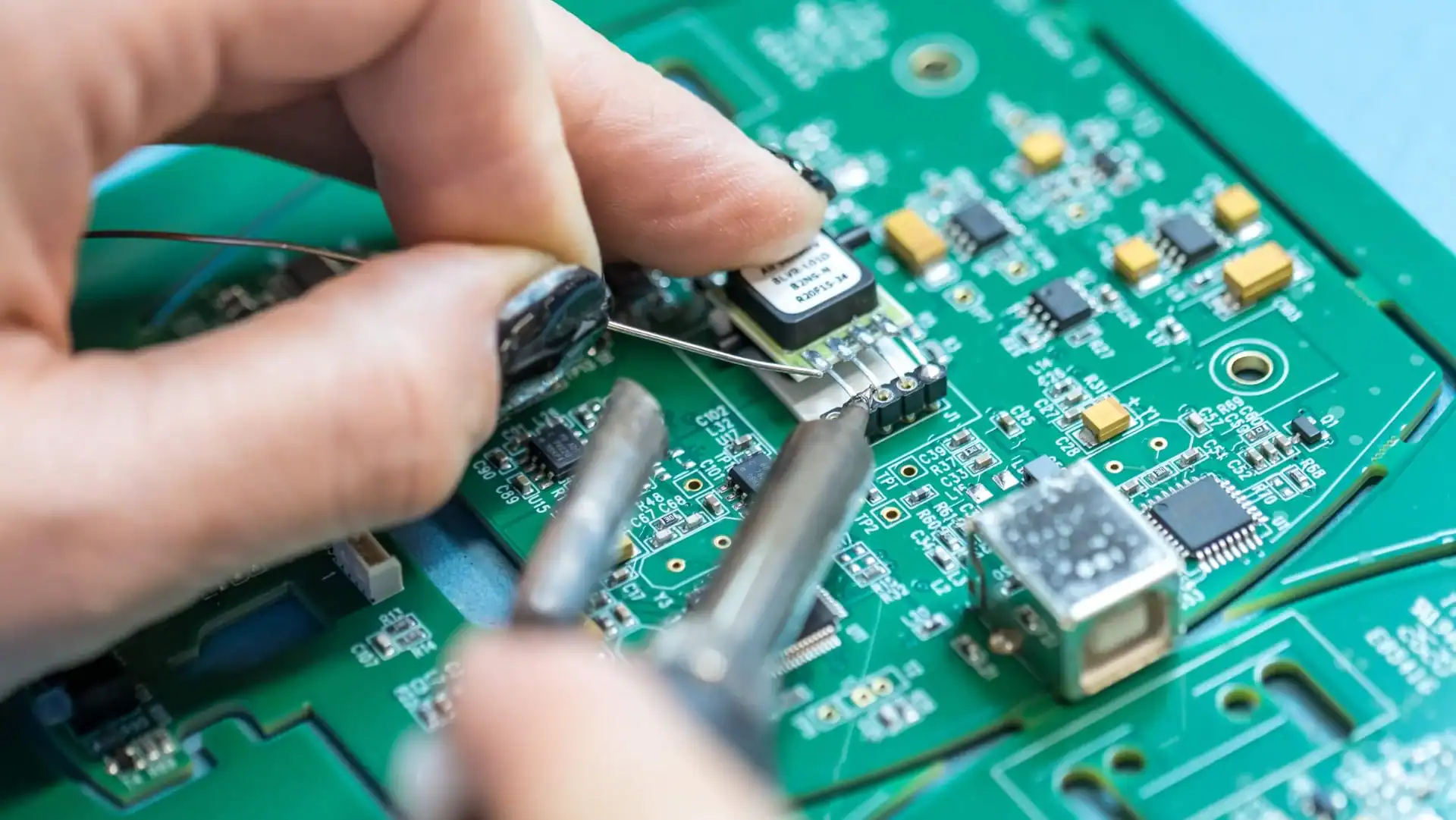
Hot-swappable or modular boards are engineered for rapid field service and minimal system interruption. This approach allows a technician with basic training to replace a faulty module in minutes, often without specialized tools like soldering irons. The primary goal is to get the equipment operational again immediately, deferring the complex board repair to a centralized facility. This method is critical in high-availability environments where equipment uptime is more valuable than the cost of a replacement board.
- Prioritizes system availability and reduces on-site maintenance time.
- Enables component replacement with minimal technical skill, lowering labor costs.
- Ideal for systems where uptime justifies the higher initial design complexity.
| العامل | Modular (Board Swap) | Soldered (Component Repair) |
|---|---|---|
| On-Site Repair Time | 5-10 minutes | 30-90 minutes or more |
| Technician Skill Level | Low (Basic training) | High (Soldering expertise) |
| Spare Part Cost | High (Cost of entire PCB) | Low (Cost of a single resistor/chip) |
| Long-Term Durability | Connectors can be a failure point | High (Fixed, permanent connections) |
Advantages of Soldered Assemblies
Traditional soldered boards provide superior physical robustness and long-term cost efficiency. The permanent connections are more durable and reliable under conditions of vibration and shock—a key factor for portable car fridges used in off-road vehicles. From a manufacturing perspective, soldering is a mature, cost-effective process for mass production. Repairing at the component level is far cheaper in terms of parts, but it demands highly skilled technicians and more time per repair, increasing labor costs and equipment downtime.
- Provides greater durability due to fixed connections resistant to shock and vibration.
- Offers a more cost-efficient solution for both mass production and part-level repairs.
- Favored in applications where long-term stability outweighs the need for rapid swapping.
Application-Specific Repair Choices
The optimal repair method is determined by the product’s application. For KelyLands car fridges, a hybrid approach works best. Core components are soldered for maximum durability to withstand off-road conditions, aligning with our “Shockproof Design” principle. Key control modules and PCBs, however, are designed for modular replacement. This allows our B2B clients to service units quickly in the field by swapping a board from the spare parts inventory we provide, balancing the need for both robustness and serviceability.
- The choice depends on balancing field repair speed against manufacturing cost and durability.
- Modular designs are gaining traction where operational continuity is the primary metric.
- Soldered solutions remain the standard for cost-optimized, long-lifespan electronics.
Source High-Quality, Custom OEM Car Coolers

Explosion Diagrams: Do Local Repair Shops Have the Data?
Most independent repair shops lack access to official explosion diagrams because manufacturers control this data as proprietary intellectual property, distributing it only through authorized service channels.
The short answer is no. Local, independent shops operate in a data-deficient environment when it comes to component-level repairs for specialized equipment like portable refrigerators. The detailed schematics and explosion diagrams necessary for precise work are rarely made public. This isn’t an oversight; it’s a structural part of the manufacturing and service industry.
The Data Gap Between Manufacturers and Independent Shops
A significant information gap exists because OEMs, including KelyLands, provide technical data directly to their B2B clients and authorized service networks, not to the general public. This practice creates a functional barrier for local technicians attempting to diagnose issues beyond simple module swaps. They are effectively locked out of the official information ecosystem.
- Manufacturers treat detailed diagrams and schematics as proprietary IP to protect their designs and control the after-sales service market.
- Independent shops must often rely on experience, reverse-engineering, or incomplete third-party diagrams, which increases the risk of misdiagnosis.
- This data limitation leads to longer repair times and often forces shops to replace an entire PCB or cooling unit instead of a single failed capacitor or sensor.
Proprietary Portals vs. Third-Party Aggregators
Access to official repair information is typically gate-kept through proprietary online portals that require authorized credentials. While third-party data services try to aggregate this information, their libraries are often incomplete or outdated, especially for new models or specialized B2B products. For our B2B clients, KelyLands provides a comprehensive technical packet directly, ensuring their own service teams have the correct information from day one.
The Role of “Right to Repair” Legislation by 2026
The “Right to Repair” movement is the primary force challenging this status quo. By 2026, legislation in key markets like the US and EU is expected to compel manufacturers to make schematics, parts, and diagnostic tools more widely available. These regulations aim to reduce e-waste and break the manufacturer’s monopoly on repairs. If enacted broadly, these laws would require OEMs to share the very explosion diagrams that are currently kept private, fundamentally changing how technical documentation is managed and distributed across the industry.
Video Library: Can QR Codes Link to Repair Guides?
By 2026, QR code integration is a standard operational tool for reducing support costs and improving the end-user experience by delivering instant, model-specific repair guides.
Linking QR Codes to Product-Specific Videos
The implementation is straightforward. We can place unique QR codes on each product, whether it’s a portable compressor fridge or a thermoelectric cooler. When a customer scans the code with a smartphone, it opens a direct link to a video guide for that exact model, covering setup, common issues, or simple component replacement. This eliminates guesswork and ensures customers receive accurate, relevant information for their specific unit.
- Codes are printed directly on the product housing, included in the packaging, or placed in the user manual for maximum visibility.
- Videos are hosted on a dedicated support webpage or a branded YouTube channel for easy access and management.
- This system guarantees that customers access the correct guide for their specific product version, avoiding confusion from outdated or similar models.
Instant Access to Troubleshooting and Maintenance
Customers no longer need to search online forums for manuals or call support for common problems. A quick scan provides immediate visual instructions for tasks like clearing an error code on a compressor fridge or understanding the 3-stage battery protection settings. This direct access to information greatly improves the user experience by reducing frustration and product downtime.
- Guides cover common error codes, routine cleaning procedures, and simple part swaps like replacing a fuse or latch.
- It empowers users to perform their own maintenance, which helps extend the product’s lifespan and builds brand confidence.
- Self-service troubleshooting reduces returns where the unit is not actually defective, saving logistical costs.
Reducing Support Costs for B2B Partners
For B2B clients who rebrand KelyLands products under their own name, this system minimizes their after-sales support burden. End-users can solve basic issues themselves, which reduces the volume of support inquiries directed at the distributor. This allows their support staff to focus on more complex or commercial cases instead of answering repetitive, low-level questions.
- Fewer support tickets and phone calls lead directly to lower operational costs for our distribution partners.
- The system provides a scalable, low-cost support solution that functions effectively in any global market.
- This feature adds tangible value to our OEM and ODM service offerings, making our products more attractive to large-scale importers.
الخاتمة
A proactive spare parts plan is essential for managing after-sales service efficiently. Stocking a small percentage of critical components like PCBs, control panels, and sensors enables your team to perform fast, local repairs. This approach reduces full-unit returns, minimizes customer downtime, and protects your profit margins.
Use this framework to assess your current warranty process and identify opportunities for improvement. If you need our official service manuals or a recommended parts list for your next order, please contact our team.
الأسئلة المتداولة
What is the recommended spare parts list for 100 units?
Our spare parts recommendations are derived from rigorous Failure Mode and Effects Analysis (FMEA) to ensure maximum operational uptime. For a deployment of 100 units, we recommend a field service kit that includes 2-3 complete PCB assemblies, 5-7 high-wear sensors or transducers, and a small stock of common I/O connectors and power modules. This provides coverage for the most common field-serviceable failure points.
Do you provide free spare parts with the order?
Spare parts are not included by default with the initial hardware order. They can be purchased separately based on your operational needs or included as part of an enhanced Service Level Agreement (SLA). Our maintenance contracts offer comprehensive coverage, including advanced replacement parts, to minimize any potential downtime.
Are service manuals and explosion diagrams available?
Yes, comprehensive technical documentation is available. Upon purchase, certified technicians and partners gain access to our secure online portal, which contains detailed service manuals, component-level schematics, and interactive 3D explosion diagrams to facilitate maintenance, troubleshooting, and repairs.
How to handle warranty claims without returning the unit?
Our warranty process is designed to minimize operational disruption. To initiate a claim without returning the full unit, first contact our technical support team. Our engineers will perform remote diagnostics to isolate the fault to a specific Field Replaceable Unit (FRU). Once confirmed, we ship the replacement component directly to you, often via an advanced replacement service. Your on-site technician can then perform the swap using our provided documentation.

 English
  Español
  Français
  Deutsch
  Português do Brasil
  Русский
  한국어
한국어  日本語
日本語  العربية