 تخطي إلى المحتوى الرئيسي تخطي إلى التذييل

When commercial drivers ask why does my car kettle blow the fuse, fleet maintenance teams must treat the issue as an immediate electrical safety risk that directly causes unplanned vehicle downtime. Pushing a high-draw heating element through a standard 12V accessory port frequently exceeds the continuous amperage limits of generic wiring harnesses. This constant thermal stress melts low-grade plastic sockets and triggers cascading electrical failures across the dashboard. Fixing this hardware vulnerability protects your vehicles from costly wiring harness replacements and keeps your logistics operations running safely.
This technical standard operating procedure outlines the exact mechanics behind thermal overloads in commercial vehicle cabins. We analyze the physical limitations of 15A circuits under constant load and evaluate how operating on a 24V system mathematically halves the amperage draw. You will review the strict material requirements for high-temperature applications, specifically comparing heat-resistant Bakelite components against standard ABS plastics. We also detail built-in short circuit protection methods so you can implement reliable appliance specifications across your entire transportation network.
The Amp Limit: Why Do 15A Sockets Melt Under Constant 12V Load?
Sockets melt primarily due to high-resistance electrical contacts and engine-off voltage drops, which force an amperage spike that exceeds the thermal limits of standard vehicle terminal connections.
The Mechanics of Poor Electrical Contact
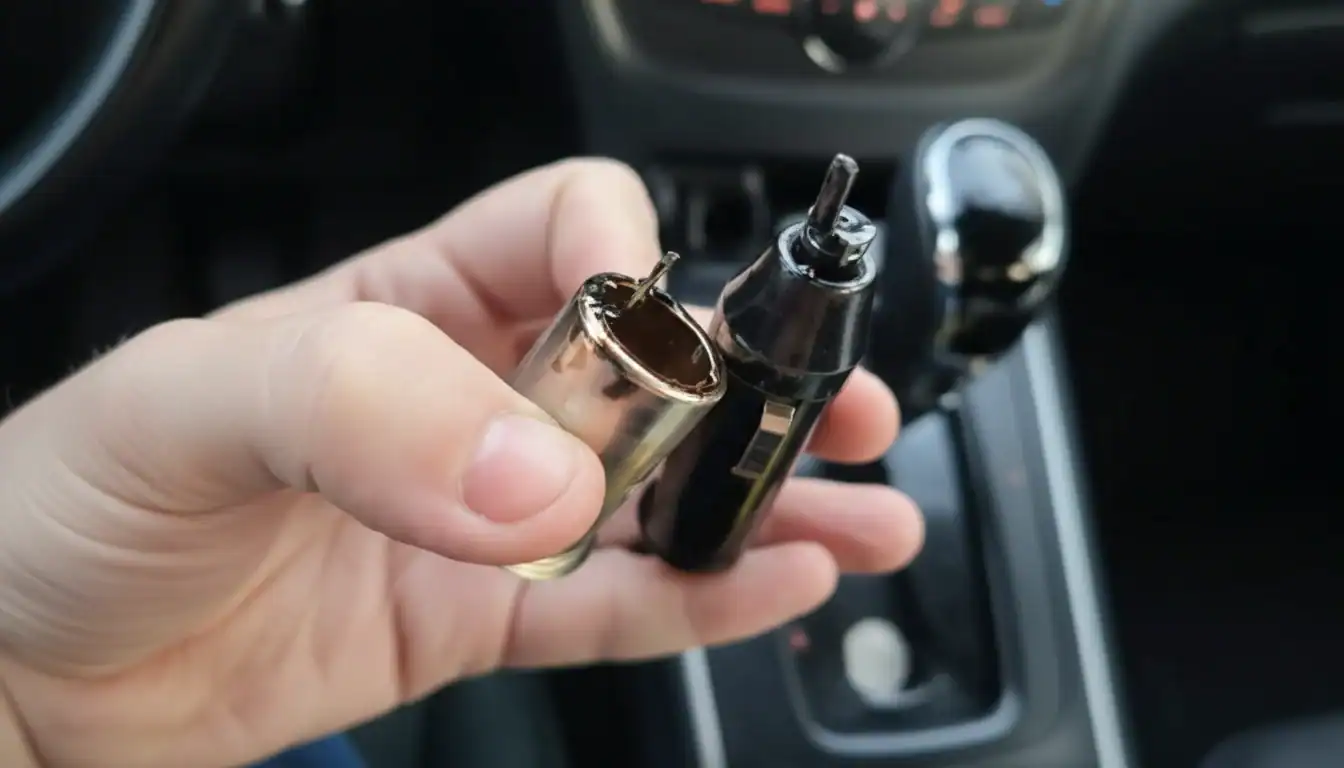
When a plug fails to seat securely inside the 12V terminal, the physical gap creates extreme electrical resistance. Instead of flowing smoothly into the appliance, the current arcs across these microscopic spaces. This persistent arcing generates intense localized heat capable of melting thermoplastic components.
This sparking leaves behind conductive black soot on the metal contacts. The soot buildup further impedes current flow, compounding the resistance and creating a thermal runaway effect that destroys both the plug and the socket.
Socket Types and Terminal Weaknesses
The physical construction of the vehicle’s power socket directly determines its failure threshold under continuous 12V operation. Stab-style or push-in outlets routinely overheat when supporting continuous loads. Secure screw or clamp-style sockets provide the clamping force necessary to maintain low-resistance connections in professional fleet environments.
Manufacturing defects within the vehicle wiring also contribute to thermal failures. Inadequate wire stripping during vehicle assembly prevents the copper strands from making full contact with the terminal plates. This oversight creates high-resistance pinch points that heat up rapidly under the sustained electrical load of a portable kettle.
How Voltage Drops Increase Amperage Draw
Vehicle power dynamics shift dramatically depending on the operational status of the engine, directly impacting the current draw of any connected appliance. A running vehicle alternator supplies 13.8V to 14.2V to the electrical system. At this optimal voltage, a 150W kettle draws a stable, lower amperage to meet its power requirements.
When a driver turns the engine off, the battery voltage immediately drops to 12.5V or lower. To maintain the same 150W heating output, the kettle must pull more amps. This sudden amperage spike accelerates heat generation at any weak connection point in the socket network, greatly increasing the risk of melting the plastic housing.
KelyLands’ Engineering Standard for Continuous Loads
Managing high amperage in fleet vehicles requires specific material upgrades to eliminate fire risks and prevent equipment downtime. KelyLands outfits all 12V and 24V in-car appliances with 100% pure copper cables. This material choice ensures unhindered, low-resistance current delivery straight from the vehicle’s power source to the heating element.
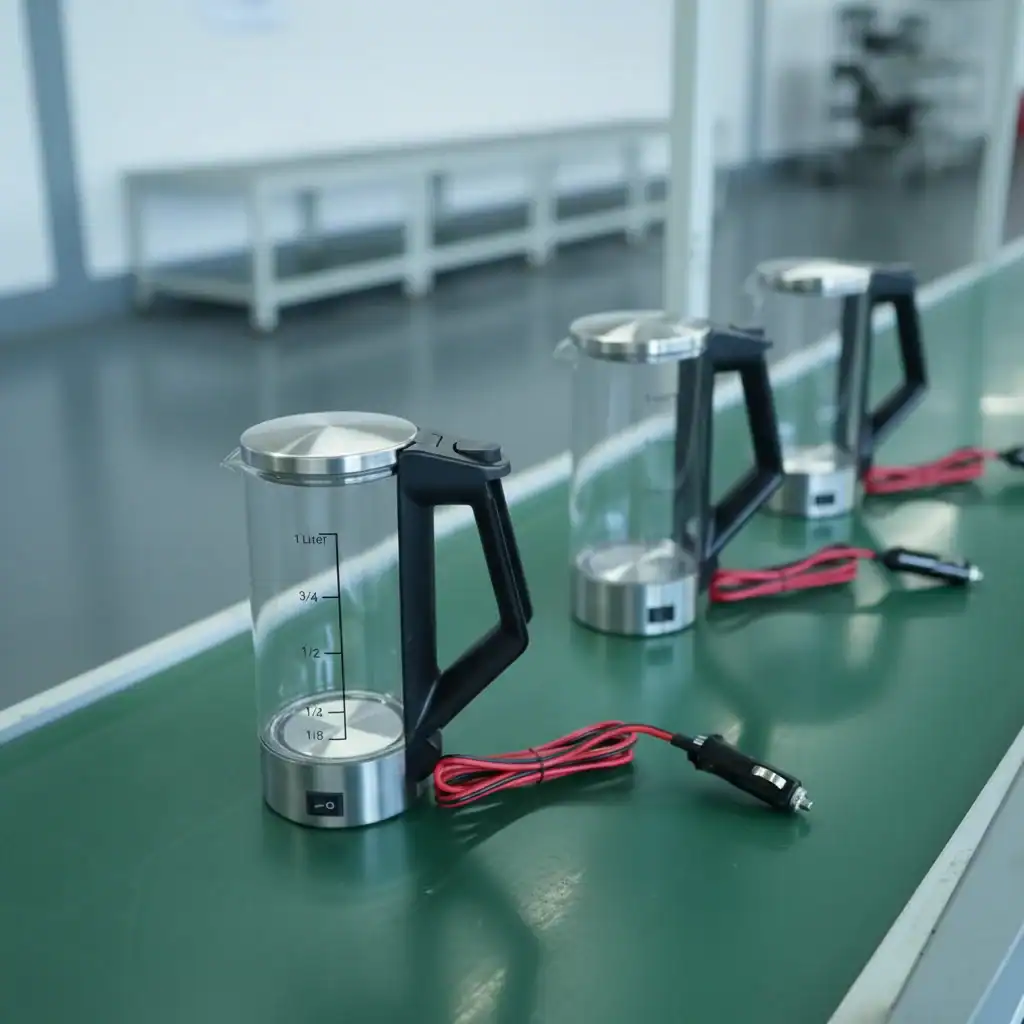
To solve the thermal limitations of standard vehicle sockets, the KelyLands manufacturing team integrates high-temperature Bakelite plugs into all kettles and heaters. Unlike standard ABS plastic, Bakelite maintains its structural integrity under extreme thermal stress, safely supporting sustained 150W to 300W loads without deforming or melting.
The 24V Advantage: How Does Doubling Voltage Halve the Amperage Draw?
Doubling system voltage from 12V to 24V cuts the current draw by exactly 50%, drastically reducing thermal load on commercial vehicle wiring while safely supporting high-wattage appliances.
The Math Behind the Power Formula
The universal formula P = V × I governs all electrical systems, proving that power equals voltage multiplied by current. When an appliance requires a specific wattage to operate, increasing the input voltage directly decreases the required current. This inversely proportional relationship dictates how engineers design safe power delivery systems for vehicles.
| System Voltage | Amperage Draw (300W Load) | Circuit Impact |
|---|---|---|
| 12V DC System | 25.0 Amps | Exceeds limits (Blows standard 15A/20A fuses) |
| 24V DC System | 12.5 Amps | Safe Operation (Well within 15A rating) |
A 300W appliance running on a 12V system pulls 25 amps. This massive load places heavy strain on standard vehicle wiring, easily blowing conventional 15-amp fuses. Switching that exact same 300W load to a 24V system instantly drops the draw to a highly manageable 12.5 amps, eliminating the risk of overloaded circuits and electrical failure.
Minimizing Resistive Heating Losses
High amperage pushes intense electrical current through narrow standard wires, creating excess friction and rapid heat buildup. As current forces its way through the physical limitations of the conductor, it sheds energy in the form of heat. This thermal stress degrades wire insulation over time and causes direct physical damage to connection points.
Halving the amperage halts this destructive resistive heating process, directly protecting the vehicle’s internal components and power sockets from melting. KelyLands integrates 100% pure copper cables into all 24V kettles to maximize transmission efficiency. This material choice guarantees stable, low-resistance power delivery, keeping operating temperatures safely regulated throughout the entire 30-minute boiling cycle.

Powering Commercial Fleet Appliances
Logistics fleets and RV outfitters rely exclusively on 24V architecture to run high-wattage devices safely. Professional drivers spend days in their cabins and demand reliable power delivery for heavy-duty in-car appliances like 1000ML kettles and auxiliary heaters. Standard 12V systems simply cannot support these high-draw applications without risking electrical fires or melted dashboard sockets.
The 24V standard safely supports robust 250W and 300W heating configurations while keeping the amp load well within safe margins. This underlying electrical efficiency ensures stable power delivery across the 1.4-meter cable lengths necessary for navigating large commercial truck cabins. Fleet managers secure maximum uptime and safety by matching heavy-duty equipment demands with the appropriate 24V supply.
Source Premium 12V/24V OEM Car Kettles
Bakelite vs. ABS: Why Are High-Temp Plugs Mandatory for Fleets?
Bakelite delivers superior dielectric strength and thermal stability under continuous high-amperage loads, completely eliminating the melting and fire hazards associated with standard ABS plastic plugs.
Thermal Stability Under Constant Load
Fleet operators prioritize Bakelite for high-stress electrical components because it offers exceptional dielectric strength and thermal stability. During continuous high-amperage draws—such as boiling a 24V kettle for 30 minutes—Bakelite maintains its structural integrity without softening or deforming. This thermosetting plastic actively resists moisture absorption and withstands harsh thermal cycling in demanding engine-bay and cabin environments. Commercial vehicles require this level of durability to prevent electrical degradation over thousands of operational hours.
Why ABS Plugs Fail in Heavy-Duty Applications
Automotive manufacturers frequently utilize ABS plastic to reduce vehicle weight and cut costs on non-critical interior parts. Sustained high-heat conditions generated by high-draw appliances rapidly push ABS past its safe thermal threshold. When an ABS plug handles a continuous 150W to 300W load, the inherent electrical resistance at the socket connection generates intense heat, causing the plastic to melt and deform. This structural failure exposes internal wiring, creating an immediate risk of short circuits and cabin electrical fires.
| Material Standard | Thermal Performance under High Load | Fleet Safety Risk |
|---|---|---|
| Bakelite (Phenolic Resin) | Zero deformation; maintains structural and electrical integrity | Eliminates melting and short-circuit fire hazards |
| Standard ABS Plastic | Rapid softening and melting past thermal limits | High risk of exposed wiring and cabin electrical fires |
KelyLands’ Implementation of Bakelite for Fleet Safety
KelyLands engineers the entire SM and CC series 12V and 24V kettles strictly with high-temperature Bakelite plugs and 100% pure copper cables. We reject cheap ABS plastics to ensure the plug easily manages the full 150W to 300W power draw without melting. Fleet procurement managers specify our hardware to achieve specific operational safety benchmarks:
- Zero Melting Risk: Bakelite construction survives consecutive 30-minute boiling cycles without structural degradation.
- Stable Current Transmission: 100% pure copper wiring eliminates localized overheating within the cable assembly.
- Asset Protection: High-integrity connections protect the truck’s primary electrical architecture from cascading failures.
This targeted engineering approach guarantees safe, continuous operation across commercial logistics assets and gives long-haul drivers reliable access to hot water on the road.
Internal Fuses: Does the Kettle Have Built-In Short Circuit Protection?
While standard domestic kettles rely on wall breakers for short circuit protection, 12V and 24V car kettles require localized plug-based fuses and internal thermal cutoffs to prevent vehicle electrical fires.
The Function of the Irrecoverable Thermal Fuse
Standard household kettles depend on building-level RCD switches or wall breakers to handle electrical faults. 12V and 24V vehicle systems operate in vastly different electrical environments and demand localized, device-level protection. KelyLands engineers integrate an irrecoverable thermal fuse directly into the kettle base as a mandatory fail-safe mechanism.
If the primary temperature controllers fail and the stainless steel heating element reaches critical temperatures, this thermal fuse physically breaks the circuit. This permanent disconnect instantly halts current flow and eliminates fire risks within the vehicle cabin.
Plug-Based Circuit Protection in 12V/24V Systems
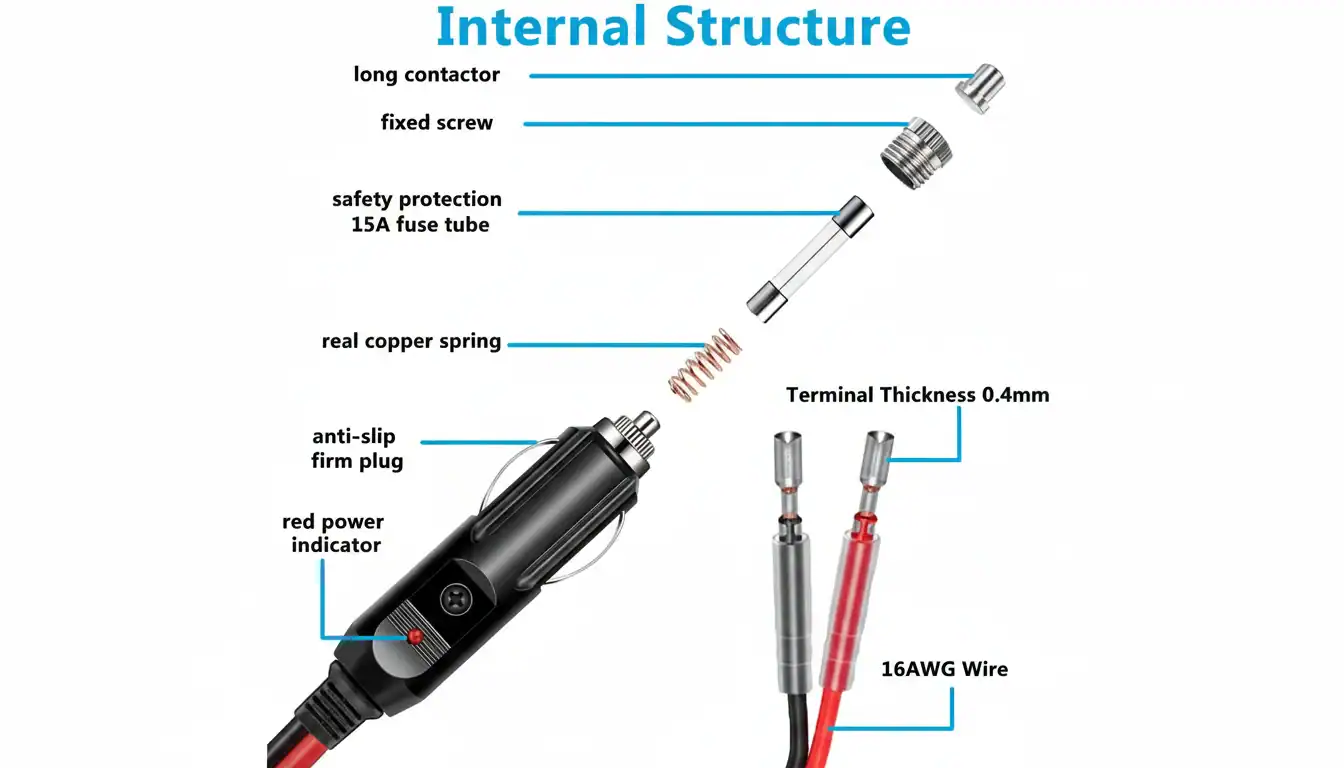
Short circuit protection primarily triggers at the power connection point rather than inside the main kettle body. Heavy-duty 12V and 24V Bakelite plugs house built-in cartridge fuses that function precisely like fused household plugs.
When a power surge or electrical fault spikes the amperage draw, the fuse inside the high-temperature Bakelite plug blows immediately. This targeted protection shields the vehicle’s dashboard wiring and socket from melting. Fleet operators can quickly swap out the blown plug fuse to restore operation without discarding the entire kettle hardware.
How the Triple Safeguard System Prevents Electrical Failures
Multiple safety mechanisms operate in tandem to halt excessive current draw long before a short circuit manifests. The KelyLands Triple Safeguard system integrates three specific defensive layers:
- An auto-off switch that triggers the moment water reaches boiling point.
- A recoverable temperature controller to manage standard dry-boil scenarios if powered empty.
- An irrecoverable thermal fuse that permanently cuts power during catastrophic overheating.
This tiered safety strategy prevents the pure copper cables and heating elements from overheating. Stopping thermal stress early prevents the insulation degradation that directly causes internal short circuits.
الخاتمة
Understanding the relationship between voltage, amperage, and plug materials prevents melted sockets and electrical fires in your fleet. Selecting kettles with high-temperature Bakelite plugs and dedicated 24V circuits drastically reduces thermal strain on vehicle wiring. This proactive approach to in-cabin appliances protects main fuses and minimizes costly downtime.
Review your current cabin accessories to verify they meet the necessary safety thresholds for continuous high-current loads. Reach out to our team to request a sample of the KelyLands commercial kettle series and secure a reliable electrical setup for your drivers.
الأسئلة المتداولة
Why does my car kettle blow the fuse?
Your car kettle typically blows the fuse because it draws a continuous high amperage that exceeds the rating of your vehicle’s 12V accessory circuit. Most standard car sockets are fused at 10A or 15A. When the vehicle’s engine is off, the battery voltage drops, forcing the kettle to pull even higher amperage to maintain the required wattage. Additionally, poor electrical contacts or degraded wiring can create resistance spikes that trigger the fuse to blow as a safety mechanism.
How to prevent a 12v kettle from melting the socket?
To prevent your 12V kettle from melting the socket, ensure a tight, secure electrical connection between the plug and the socket terminals. Loose connections create resistance, which generates extreme heat and arcing. Always run the vehicle’s engine while using the kettle; this maintains a higher voltage (13.8V-14.2V) and reduces the amperage draw. Keep the socket contacts clean of black soot, and consider upgrading to a heavy-duty screw or clamp-style socket rated for continuous high loads rather than using push-in style outlets.
What size fuse is needed for a 24V truck kettle?
For a standard 24V truck kettle, a 15A to 20A fuse is typically required, depending on the exact wattage of the appliance. Most 24V kettles consume between 250W and 300W of power. At 300W, the kettle will draw approximately 12.5 amps under normal operating conditions. Installing a 15A fuse provides a safe buffer for initial power surges while ensuring the circuit remains protected against overheating and electrical shorts.
Are Bakelite cigarette lighter plugs safer?
Yes, Bakelite cigarette lighter plugs are significantly safer for high-draw appliances like car kettles. Unlike standard thermoplastics that can soften or melt when exposed to high heat generated by continuous electrical resistance, Bakelite is a thermosetting plastic. It boasts exceptionally high heat resistance and will not melt under sustained high temperatures. This structural integrity prevents internal metal contacts from shifting, thereby eliminating a major cause of dangerous arcing and plug failure.

 English
  Español
  Français
  Deutsch
  Português do Brasil
  Русский
  한국어
한국어  日本語
日本語  العربية