 تخطي إلى المحتوى الرئيسي تخطي إلى التذييل

A skincare brand launching its first private-label cosmetic fridge hits a wall the moment they ask for pricing. The factory comes back with a cosmetic fridge MOQ of 500 units, and suddenly that $12 per unit FOB quote looks like a $6,000 bet on a product category you haven’t validated yet. The spec sheet says one thing, but the reality of what arrives in the container depends entirely on how you handle this first negotiation.
Most new buyers don’t realize that number isn’t arbitrary. Factories bake in the cost of changeover time — switching paint colors or mold tools runs $200 to $500 in labor alone — and that gets spread across the minimum quantity. A 100-unit run on a custom Pantone shell means each unit carries several dollars of setup overhead. That’s why asking for lower minimums without addressing what drives them rarely works.
The benchmark to write down for your next call is this: any factory that can offer a trial order under 150 units using an existing shell design is worth serious consideration. That number separates flexible partners from rigid production lines.
Why Factories Set MOQs (And Why Yours Feels Too High)
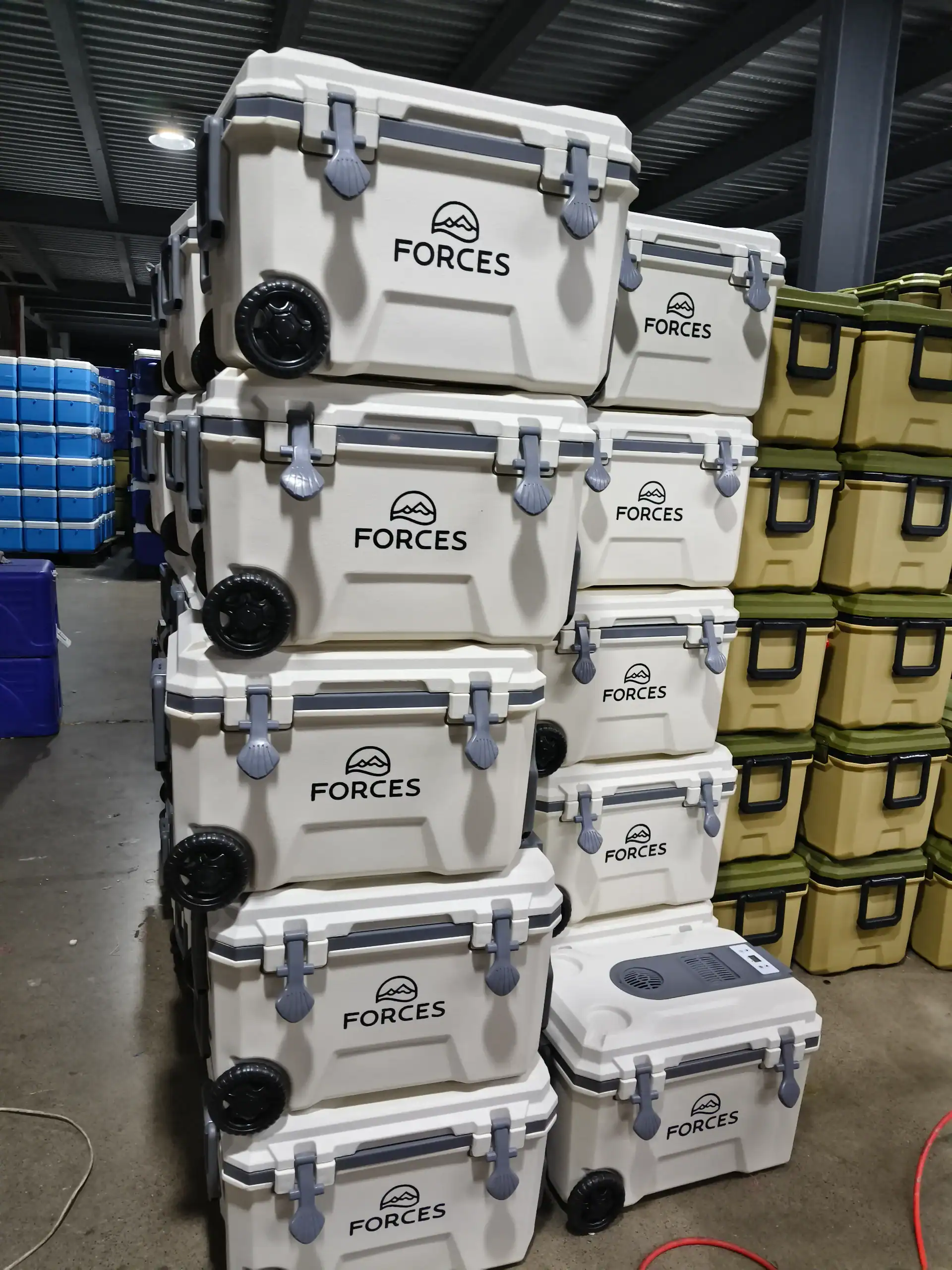
Every MOQ exists because the factory loses money on the first 50 units.
A buyer requesting 50 cosmetic fridges might receive a quote of $38 per unit, and upon pushing back, the factory’s rep would need to explain that the injection mold changeover alone costs $200–$500 in labor. That cost gets spread across every unit in the batch. At 50 units, the overhead per fridge jumps by $4–$10 just from setup. The MOQ isn’t arbitrary — it’s the point where fixed costs stop crushing the unit price.
Fixed setup costs vs. variable unit costs
Production lines have two cost layers: fixed and variable. Fixed costs include mold clamping, paint color switching, line calibration, and quality checks — all incurred whether you make 10 units or 1,000. Variable costs are materials, labor per unit, and packaging. For a cosmetic fridge line, switching from white to pink paint requires flushing the spray system and recalibrating temperature zones. That takes two hours of paid downtime.
The factory recovers that downtime by baking it into the MOQ. If changeover costs $400 and margin per fridge is $4, they need 100 units just to break even on setup before seeing any profit. This is why a quote for 200 units often shows a significantly lower per-unit price than one for 100 — you’re not getting a discount; you’re diluting the fixed-cost burden across more pieces.
The real production run size needed to break even
Most factories calculate their minimum run around a break-even threshold of roughly 300–500 units for an injection-molded cosmetic fridge shell with custom color. Below that number, the fixed costs consume so much of the margin that the factory either loses money or must quote an uncompetitive price that scares off buyers anyway.
For KelyLands’ ثلاجة السيارة production lines in Ningbo — which share tooling and assembly processes with cosmetic fridges — internal data shows that a batch under 200 units triggers a disproportionate jump in per-unit overhead because mold changeover and QC sampling remain constant regardless of volume. The practical break-even for a new SKU with standard colors lands around 300 units when factoring in raw material minimums from compressor suppliers.
5 Proven Tactics to Lower Your Cosmetic Fridge MOQ
A non-refundable deposit signals serious intent and offsets the factory’s changeover risk.
Factories calculate MOQs around a hard number: the cost to stop the line, clean the paint system, swap tooling, and re-calibrate. That changeover runs $200 to $500 in labor alone for a cosmetic fridge line. When you offer a non-refundable deposit of 30-50 percent, you are effectively covering that cost upfront. The factory sees less financial risk in running a smaller batch for you.
Why 30-50 percent works better than 10 percent
A 10 percent deposit barely covers raw material. It does not reassure the production manager that you will not cancel after the first sample. At 30 percent, you have paid for the injection mold time and the compressor units. At 50 percent, you have essentially pre-paid the factory’s break-even point on a short run. That is when they start talking about lowering the minimum from 500 units to 300 or even 200.
The catch is that this deposit must be genuinely non-refundable. If your contract allows cancellation with a refund, the factory still carries risk. Make it clear in writing: this covers their changeover and raw material commitment, and it does not come back.
Pairing deposits with sample approval timelines
A smart move is to tie your deposit to a specific sample approval window. You pay 30 percent upfront, the factory delivers pre-production samples within 14 days, and you approve within 5 business days. This gives them confidence that your timeline is real. Without that structure, some factories hold your deposit for weeks while they prioritize larger orders.
What a Realistic MOQ Looks Like by Fridge Capacity (4L, 10L, 15L)
MOQ drops by 40% when you move from custom tooling to an existing shell.
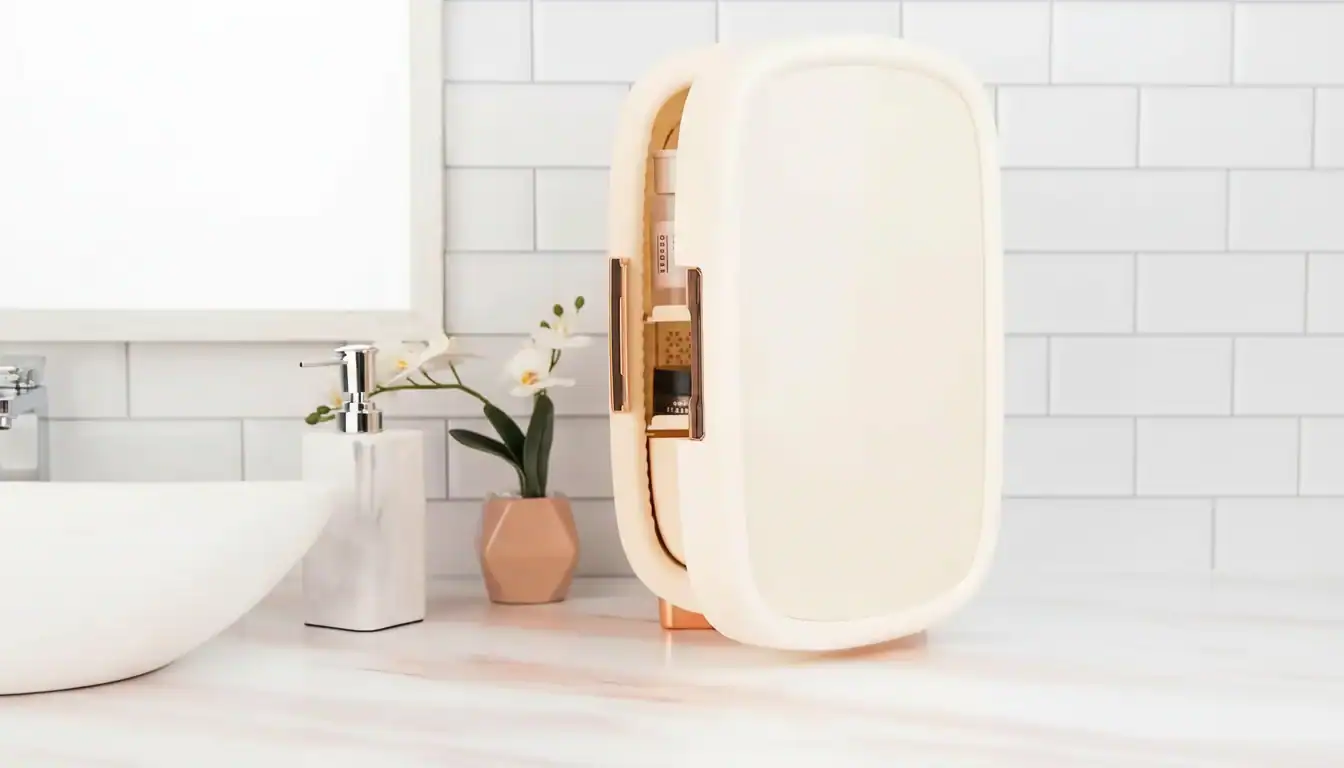
A 4L ثلاجة السيارة is the entry point for most private-label brands. It fits a few drinks or snacks, slides under a seat, and works for short road trips. Factories will run these at 100 units if you accept their standard color and existing mold.
Entry-Level (100 Units)
At 100 units, you are paying for changeover time. Switching the assembly line from one model to another costs roughly $200–$500 in labor alone. That cost gets spread across your small batch, so per-unit pricing sits higher — typically 15–25% above the price at 500 units.
For a 4L car fridge at this volume, expect to pay around $38–$45 per unit FOB Ningbo. The factory runs the batch in one shift, tests each unit for basic cooling function, and packs in neutral cartons with your logo sticker. No custom blister pack, no color-matched handles.
Tiered Pricing Break: 500 Units
At 500 units, the economics shift. The factory can dedicate a full production day without re-tooling between runs. Per-unit cost on that same 4L model drops to roughly $30–$34 FOB. You also get access to two color options without extra charge — white and black are standard ABS shells that every fridge factory stocks.
This is the volume where KelyLands starts offering mixed-SKU consolidation within the same container. You can take 200 units of the 4L model and 300 units of a 10L version on one purchase order, as long as the total hits 500.
Volume Tier: 1,000+ Units
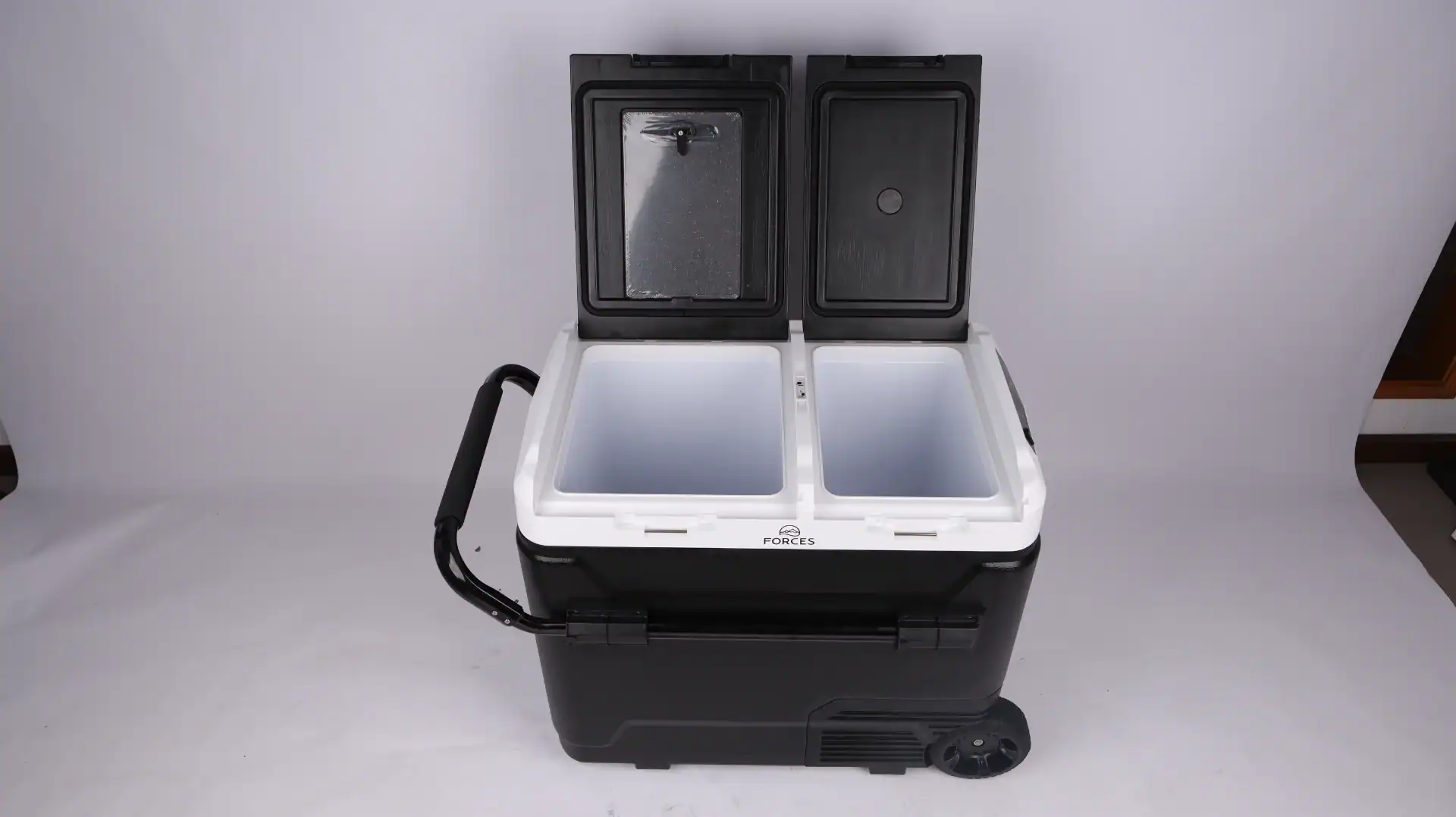
Crossing into four-digit quantities unlocks compressor-grade components instead of thermoelectric modules on larger models. A 15L car fridge at this volume runs roughly $55–$65 per unit FOB with a Danfoss-style DC compressor that holds -18°C even in direct sun.
Common Mistakes That Kill Your Negotiation
A price-first email signals you haven’t done your homework.
The fastest way to get a factory to quote you at list price — and hold it there — is to open with ‘What’s your best price on a cosmetic fridge MOQ?’ This happens daily in factory inboxes. A buyer who leads with price tells the supplier three things: they have no relationship with any other factory, they haven’t compared specs, and they’re likely shopping on Alibaba for the lowest number. The factory responds accordingly — with a high opening number that leaves room for the inevitable discount request.
Why terms matter more than the per-unit cost
Factories build pricing around risk. A buyer who asks about payment terms first — 30% deposit, 70% before shipment — signals they understand how production financing works. Someone who asks about lead time, sample approval流程, and quality tolerance thresholds shows they’ve done this before. Those buyers get better pricing because the factory knows the deal won’t fall apart over a miscommunication about FOB shipping terms or a rejected pre-production sample.
When you discuss payment structure, batch scheduling, and inspection criteria before mentioning price, you shift from being a commodity buyer to a partner. Factories reserve their best pricing for partners. At KelyLands, the sales team logs every inquiry alongside the client’s negotiation approach. Buyers who start with terms receive detailed cost breakdowns by component — compressor type, insulation grade, shell material — which lets them see exactly where savings are possible.
Sample approval history is your credibility card
Nothing proves you’re serious like a signed sample approval report from a previous run. Factories track this internally. When Hanke Chen reviews a new inquiry for cosmetic fridge MOQ negotiations, he checks whether the buyer has approved samples from any supplier in the last 12 months. A buyer with zero sample history is treated as high-risk — they might be gathering quotes without intent to order.
If you don’t have sample history from another supplier, create it. Order one pre-production sample from the factory you’re negotiating with. Pay for it upfront. Approve it formally in writing with photos and measurement records. Then come back to negotiate volume pricing armed with proof that you can move through the approval cycle cleanly. That single step drops MOQ discussions from hypothetical to operational.

How KelyLands Structures Mixed Containers for New Brands
A 20ft container with mixed SKUs can drop your effective MOQ per product by 60-80%.
New brand owners often hit a wall when the factory says ‘500 units minimum per fridge model.’ That number feels punishing when you are testing two or three designs. But here is what the factory is really saying: they need a production run long enough to cover the changeover cost — switching molds, purging paint lines, recalibrating compressors. The fix is not to negotiate one SKU down to 200 units. It is to combine multiple products into one shipping container.
Why KelyLands’ trial container program works
KelyLands built a trial container program specifically for e-commerce brands that want to validate demand before placing large orders. Instead of committing to a full pallet of one cosmetic fridge model, you mix cosmetic fridges with other car accessories — air pumps, مكانس كهربائية, EV chargers — in a single 20ft or 40ft container. The factory runs each product at its own efficient batch size, but you only pay for one consolidated shipment.
This structure solves two problems at once. First, it lowers your effective MOQ per SKU because the total container volume absorbs the setup costs across multiple product lines. Second, it lets you test different price points and categories without betting your entire budget on a single item that might not sell.
Real numbers from actual shipments
A typical 20ft container holds roughly 500-600 units of cosmetic fridges if packed alone. Through KelyLands’ mixed-container program, a new brand recently shipped: 150 units of a 10L cosmetic fridge in white (standard shell), 200 units of a portable مضخة هواء السيارة, and 100 units of a compact car vacuum cleaner. Total: 450 units across three categories. The per-unit freight cost dropped because the container was full, and the factory accepted lower individual MOQs because each product used existing tooling.
What this means for your negotiation
“Ask for this explicitly,” Hanke Chen advises. “When you request pricing on cosmetic fridges alone, the factory quotes based on that single product’s setup cost. When you ask for a mixed-container quote that includes air pumps or مكانس كهربائية from their existing production lines, the math changes.” According to internal data from KelyLands’ export sales team, brands using this approach have reduced their initial order commitment by as much as half compared to ordering fridges alone.
الخاتمة
The factory’s MOQ isn’t a fixed wall — it’s a cost structure. Every time the line stops to swap paint or tooling, that $200-$500 in changeover labor lands on your invoice. Your job is to minimize those changeovers for them.
-
- Can I offer a non-refundable deposit to cover setup costs?
- Can I combine multiple SKU colors into one production run?
- Can I use an existing shell design with my logo only?
If you answered yes to any of those, you have leverage to negotiate lower minimums right now. Review KelyLands’ trial container program — it lets you mix cosmetic fridges with air pumps or مكانس كهربائية in one FCL, hitting container minimums without committing to a full pallet of one SKU. That’s how you test a new product line without betting the whole budget on it.
الأسئلة المتداولة
What is a realistic cosmetic fridge MOQ?
A realistic MOQ for a cosmetic fridge starts around 100 units for stock shell designs with your logo only. Custom tooling or unique colors typically push that. Ask for the stock shell price first to see if 100 units fits your budget.
How can I lower the MOQ on a cosmetic fridge?
Offer a non-refundable deposit of 30-50% to cover the factory’s changeover risk, and accept standard factory colors instead of custom Pantones. Combining multiple SKUs into one production batch also helps spread. Lead with the deposit offer before asking for a lower MOQ.
Why do factories set high MOQs for cosmetic fridges?
Factories set high MOQs because they lose money on the first 50 units due to fixed setup costs like mold changes and line calibration. The break-even point on. Understand that the first batch covers their setup cost, not just your unit price.
Can I mix different fridge sizes in one order?
Yes, mixing different capacities like 4L, 10L, and 15L into one container is common practice to reach a lower combined MOQ. KelyLands structures mixed containers for new brands so. Confirm with your sales contact which size combinations they allow in one container.

 English
  Español
  Français
  Deutsch
  Português do Brasil
  Русский
  한국어
한국어  日本語
日本語  العربية