 Passer au contenu principal Passer au pied de page

Evaluating suction parity (20V vs 12V) without empirical data leads to costly sourcing errors. Product engineers often specify 20V units expecting superior power, only to face warranty claims when the vacuums fail to lift embedded sand. This gap between advertised voltage and actual lifting force erodes operator profit margins.
This analysis benchmarks models against a 13,000Pa performance standard, not voltage alone. We examine how high-performance brushless motor options and filtration systems deliver consistent torque, providing the technical data needed for effective OEM customization and reliable inventory procurement.
Is 13kPa the true benchmark for lifting embedded sand?
A vacuum with 13,000Pa (13kPa) is engineered to lift heavy debris like sand, making it a powerful real-world benchmark.
Understanding Suction Power (kPa) vs. Debris Type
Kilopascals (kPa) are a direct measurement of vacuum pressure, which translates to the lifting force a vacuum can generate. The type of debris dictates the amount of force needed. Lighter particles like dust and pet hair require relatively low suction power to be picked up.
Heavier, denser materials demand much higher suction to be pulled from deep within carpet fibers. This includes common car messes like embedded sand, small gravel, and even dropped coins. Lifting this kind of weight requires a significant jump in kPa.
Why 13,000Pa is a Powerful Standard for Car Cleaning
Our high-performance KelyLands models deliver up to 13,000 Pascals (13kPa) of raw suction. We market this capability as “13,000Pa Hurricane Suction” because it’s engineered specifically to handle the most difficult debris found inside vehicles.
This level of power provides the necessary force to extract stubborn sand from floor mats and dislodge pebbles from seat tracks. It’s a practical and effective benchmark for any car vacuum designed for serious detailing work, not just surface-level cleaning.

Does 20V Voltage directly translate to higher Torque?
No, higher voltage doesn’t guarantee more torque. A tool’s power comes from its entire system, especially its motor technology and overall efficiency.
Why Motor Design Matters More Than Voltage Alone
Torque isn’t a direct result of voltage. It’s about how efficiently a motor converts electrical energy into mechanical force. Factors like the motor’s internal circuitry, winding configuration, and current draw have a much larger impact on the final torque output.
This explains why a 12V tool with an advanced motor can produce more torque than a 20V tool built with an outdated, inefficient design. The engineering inside the motor is what delivers the power, not just the number on the battery.
The Impact of High-Performance Brushless Motors
This is precisely why KelyLands offers vacuums with high-performance brushless motor options. These motors are built to maximize power delivery and durability without needing excessively high voltage ratings.
Brushless technology generates less heat and friction. For a vacuum cleaner, this translates directly to stronger, more consistent suction and a much longer operational lifespan.
Source : Aspirateurs de voiture haute performance et personnalisés

How does 20V Cordless compare to 110V Corded in Airwatts?
110V corded vacuums typically deliver 180-200 Airwatts, while 20V cordless models offer 70-150 AW. Motor efficiency and design, not just voltage, determine the final suction power.
| Attribut | 110V Corded Vacuums | 20V Cordless Vacuums |
|---|---|---|
| Source d'énergie | Continuous wall outlet supply | Rechargeable lithium-ion battery |
| Typical Airwatts (AW) | 180 – 200 AW | 70 – 150 AW |
| Power Consistency | Stable and consistent suction | Power may decrease as battery drains |
Typical Airwatt Performance Ranges
The power source is the biggest differentiator. A 110V corded vacuum pulls from a continuous electrical supply, letting it sustain a high, consistent output, typically in the 180-200 air watt (AW) range. In contrast, a 20V cordless model operates within the limits of its battery, balancing suction power against runtime. This results in a broader performance range, generally between 70-150 AW.
The Role of Motor Design in Suction Power
Voltage doesn’t tell the whole story. Actual suction power comes down to motor efficiency and the overall engineering of the unit. How well does the motor convert electrical energy into airflow? At KelyLands, we focus on high-performance brushless motor options to maximize this power conversion. This design focus allows our vacuums to achieve up to 13,000Pa of suction, ensuring strong pickup ability for all types of debris, independent of the voltage rating.
Is “Fade-Free” suction a reality with Lithium-Ion?
Yes, fade-free suction is real. It’s not just about the battery; it’s about the entire system—motor, filtration, and power management—working together to deliver consistent performance.
How System Design Achieves Consistent Power
“Fade-free” performance isn’t a default feature of all lithium-ion batteries. It’s the result of engineering the entire vacuum system to work in sync. A cheap vacuum with a lithium battery will still lose suction as it runs.
Real consistency comes from three key components. First, the battery management system must deliver consistent voltage throughout its discharge cycle. Second, an advanced brushless motor is needed to draw power efficiently and maintain its rotational speed, even under load. Finally, an effective filtration system, like a washable HEPA filter, prevents clogs. A clogged filter is the number one cause of suction drop-off, regardless of how good the battery or motor is.
The Role of High-Capacity Batteries and Brushless Motors
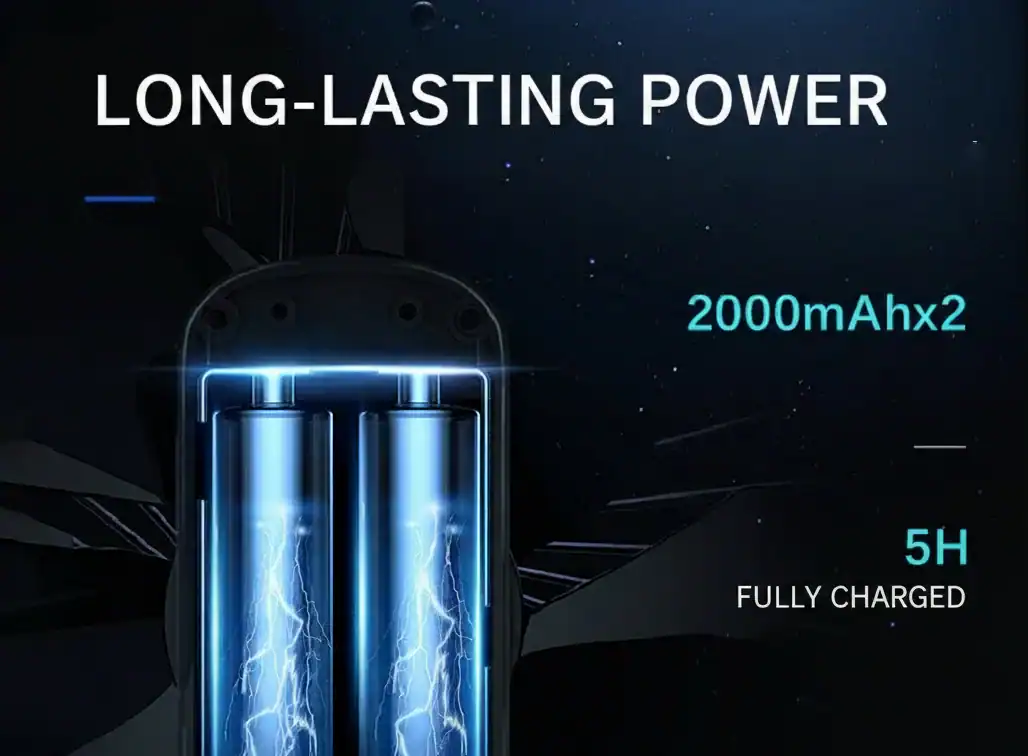
The hardware inside the vacuum makes all the difference. To provide the necessary energy for stable, extended runtimes, our cordless units use high-capacity lithium batteries ranging from 2000mAh to 8000mAh. This ensures there’s enough power in reserve to prevent performance from tapering off.
This battery technology is paired with our high-performance brushless motor options. A brushless motor is far more efficient and durable, allowing the vacuum to maintain its maximum suction power—like our 13,000Pa rating—without fading as the battery drains. The power you get at 90% charge is the same power you get at 10% charge.
Questions fréquemment posées
What is sealed suction (kPa) and what’s a typical range for car vacuums?
Sealed suction, measured in Pascals (Pa) or kilopascals (kPa), indicates the raw lifting force directly at the nozzle tip. For cordless car vacuums, this often ranges from 10,000 to 28,000 Pa. This measurement is just one aspect of performance; true cleaning power also relies on motor efficiency, airflow, and nozzle design.
Does suction power stay constant as the battery drains?
No, suction power naturally decreases as the battery loses charge. A weak battery provides less voltage to the motor, causing it to run slower. Performance can also drop if the filter is clogged or the dustbin is full, since these issues make the motor work harder and use more power.
Is a 12V or 20V car vacuum better?
The better choice depends on the task. A 20V vacuum provides much stronger suction, which is ideal for deep cleaning carpets and embedded dirt. A 12V model is usually lighter and more compact, making it perfect for quick cleanups of dust and crumbs. Choose 20V for maximum power and 12V for portability.
Conclusions finales
While many vacuums chase high voltage numbers, our focus on high-performance brushless motors delivers a true 13,000Pa suction. This engineering-first approach prevents the customer complaints and returns that damage a distributor’s reputation. Quality inventory is the foundation for dealer trust.
Don’t just read the specs—test the performance. We recommend ordering a sample kit to verify our suction power and build quality firsthand. Contact our team to discuss your private label requirements or get a custom quote.

 English
  Español
  Français
  Deutsch
  Português do Brasil
  Русский
  한국어
한국어  日本語
日本語  العربية