 Passer au contenu principal Passer au pied de page

La validation de l'étanchéité des bouilloires électriques portables empêche directement les bagages inondés d'entraîner des retours massifs de produits et des rétrocessions de la part des détaillants. Lorsque les voyageurs d'affaires emportent des appareils remplis de liquide à côté d'ordinateurs portables coûteux, un seul joint défectueux déclenche des réclamations immédiates au titre de la garantie et porte gravement atteinte à la marque. Les fabricants sont soumis à une forte pression pour abandonner les anneaux en silicone de base et adopter des mécanismes d'étanchéité rigoureux qui survivent aux impacts physiques sévères du transport mondial moderne.
Cette procédure opérationnelle normalisée décrit les configurations matérielles spécifiques nécessaires à la conception d'un appareil de voyage sécurisé. Nous expliquons en détail comment les joints en téflon double couche sécurisent les fluides à l'intérieur du bagage à main et nous expliquons la mécanique des soupapes de micro-pression qui permettent d'évacuer l'air en toute sécurité pendant les vols commerciaux à haute altitude. Le guide établit également des protocoles de base pour les tests de chute ISTA 3A et définit les exigences structurelles qu'un couvercle de fermeture doit respecter pour survivre à un impact direct de deux mètres sans libérer d'eau.
Comment les joints en téflon double couche empêchent-ils les déversements dans les bagages à main ?
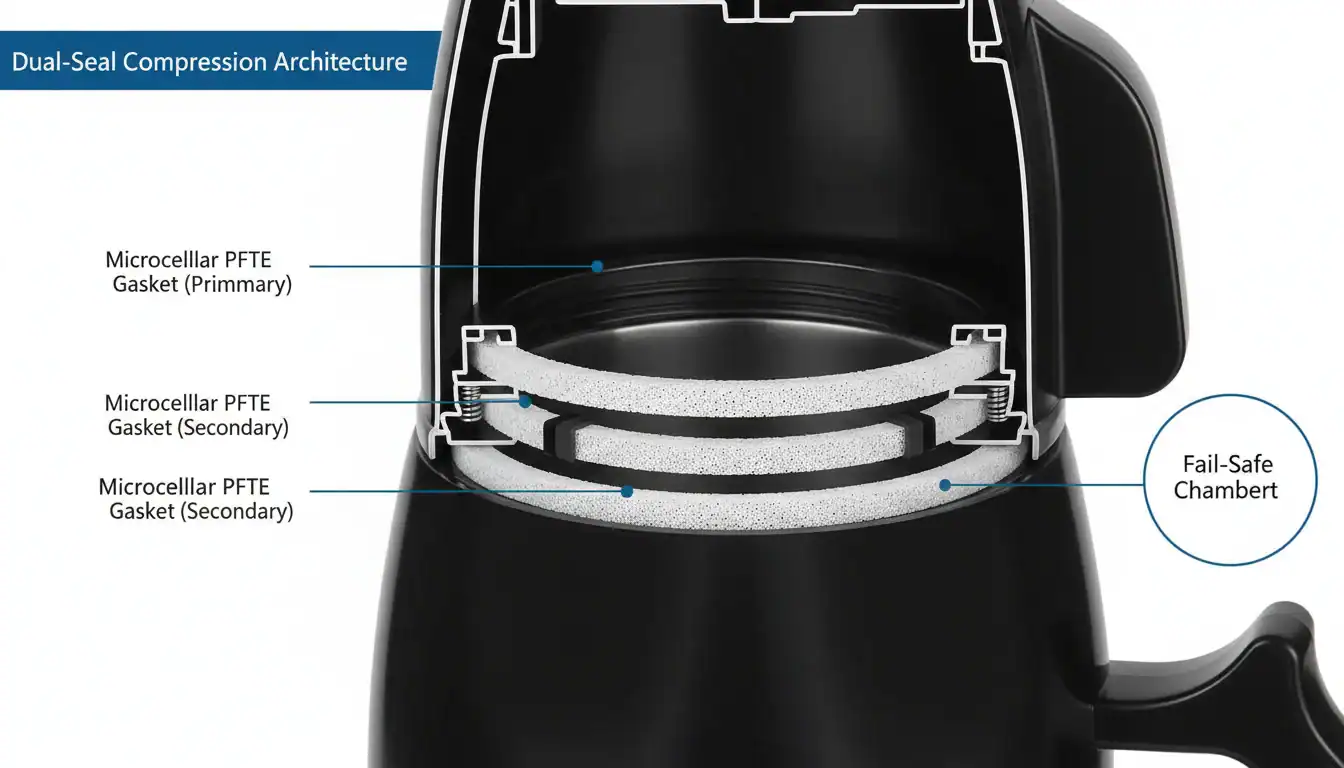
Les ingénieurs intègrent des joints en PTFE microcellulaire à des architectures de compression à double joint pour garantir un confinement sûr des liquides en cas de pression fluctuante et de chocs de transport.
Mécanismes à double étanchéité pour le confinement des liquides
Les conteneurs portables étanches intègrent deux couches d'étanchéité distinctes pour bloquer complètement les voies d'évacuation potentielles des liquides. Des fabricants comme KelyLands appliquent des joints à base de PTFE dans leurs conteneurs portables 12V/24V bouilloires pour voitures pour gérer activement les variations de pression interne. Cette approche à double couche garantit le confinement des liquides même si une contrainte physique externe compromet la limite d'étanchéité primaire. En isolant le réservoir interne de l'environnement externe, ces mécanismes éliminent le risque de fuites à l'intérieur d'un bagage à main bien emballé.
| Joint d'étanchéité métrique | Silicone monocouche standard | KelyLands PTFE bicouche |
|---|---|---|
| Gestion de la pression | Ventilation imprévisible en cas de changement d'altitude | Stabilisation contrôlée par adaptation microcellulaire |
| Résistance aux chocs thermiques | Se dégrade et durcit avec le temps | Maintien de la forme originale en cas de températures extrêmes |
| Redondance à sécurité intégrée | Vulnérable aux impacts physiques directs | La barrière secondaire bloque les voies d'évacuation des liquides |
Dynamique de l'étanchéité par compression multicouche
L'étanchéité par compression utilise des couches structurelles distinctes pour maintenir une pression constante sur le joint interne. Les architectures d'étanchéité modernes associent un récipient interne rigide à une couche de joint externe hautement conformable afin d'absorber les vibrations continues du transport. La structure multicouche s'adapte aux irrégularités mineures de la surface sans exiger de l'utilisateur une force de serrage ou de boulonnage excessive. Cette méthode d'ingénierie spécifique maintient une étanchéité sûre dans des conditions de température et de pression variables que l'on retrouve dans divers environnements de voyage.
Adaptation de surface avec des composés PTFE microcellulaires
Les concepteurs de produits choisissent les composés microcellulaires de PTFE parce qu'ils se compriment efficacement tout en conservant leur forme structurelle d'origine. Ces composés souples se moulent activement dans les interstices microscopiques à l'intérieur des appareils portables, là où les méthodes d'étanchéité rigides traditionnelles échouent régulièrement. Les cadres réglementaires actuels imposent l'utilisation de ces matériaux hautement adaptables pour garantir un transport sûr des liquides dans les bagages compacts.
- Offre une résistance thermique exceptionnelle contre les cycles de températures intenses à l'intérieur des cabines de véhicules.
- S'adapte aux interstices microscopiques de la quincaillerie sans nécessiter l'application d'un couple élevé lors de la fermeture.
- Conserve la mémoire du matériau après une compression mécanique prolongée pendant le transport.
La soupape de micropression permet-elle d'éviter les explosions lors des vols à haute altitude ?
Les soupapes de respiration à très haut débit réagissent en 0,04 seconde pour égaliser les différences de pression internes-externes, évitant ainsi la rupture structurelle des conteneurs de liquides scellés lors d'événements de décompression rapide.
Comment l'altitude affecte-t-elle les conteneurs scellés ?
Les hautes altitudes créent d'importantes différences de pression qui soumettent les cargaisons et les conteneurs scellés à de fortes contraintes. Lorsqu'un avion prend de l'altitude, la pression de la cabine chute par rapport à l'air emprisonné à l'intérieur des unités liquides scellées. Cette disparité génère une contrainte mécanique immédiate vers l'extérieur sur les parois des conteneurs et les fermetures des couvercles, obligeant les matériaux à absorber la charge interne en expansion.
Une décompression soudaine amplifie radicalement cette contrainte physique. La pression ambiante peut chuter de 11 psi à 3 psi en moins de 0,5 seconde. Cette chute extrême et instantanée force l'air emprisonné à l'intérieur des unités scellées à se dilater violemment, menaçant de défaillance structurelle immédiate ou d'explosion si le gaz pressurisé ne peut pas s'échapper.
La mécanique de la décharge par micropression
Des vannes spécialisées gèrent activement la pression interne pour éviter une défaillance catastrophique du conteneur. Les soupapes de sûreté à pression positive se déclenchent automatiquement pour évacuer l'air au moment précis où la différence de pression entre l'intérieur et l'extérieur dépasse les seuils de sécurité prévus. En évacuant le gaz en expansion, ces mécanismes maintiennent l'intégrité structurelle sans rompre l'étanchéité du liquide primaire.
Les reniflards à très haut débit offrent la réponse la plus rapide aux pics de décompression. Ces unités de précision réagissent en seulement 0,04 seconde, évacuant l'excès de gaz cinq fois plus vite que les modèles à ressort standard. Ce déclenchement rapide neutralise les pics de pression soudains avant qu'une contrainte mécanique ne vienne fracturer le boîtier du conteneur ou déloger le bouchon.
Sécuriser le transport de liquides dans l'aviation
Des systèmes de soupapes intégrés protègent les marchandises et les liquides des variations de température et d'altitude pendant toute la durée du vol. Les mécanismes de décharge thermique s'adaptent à la dilatation naturelle des fluides lorsque les températures ambiantes et l'altitude de la cabine fluctuent de manière dynamique pendant les phases de montée et de descente du vol.
L'intégration de soupapes de pression à ventilation rapide dans les conteneurs scellés permet de garantir qu'ils survivent à de fortes chutes d'altitude sans se rompre ni laisser échapper de liquide sur la cargaison environnante. La soupape de micro-pression fonctionne comme une sécurité mécanique vitale, maintenant l'équilibre atmosphérique dynamique à l'intérieur de l'espace de la charge utile, quelles que soient les conditions extérieures.
Source Safe 12V/24V OEM Car Kettles
Qu'est-ce que la norme ISTA 3A Drop-Test pour les emballages de vente au détail B2B ?
La certification ISTA 3A offre une simulation rigoureuse des contraintes liées à la livraison de colis, garantissant que les commandes en vrac B2B survivent aux réseaux de transit mondiaux sans dégradation structurelle ou fonctionnelle.
Principaux éléments de la simulation ISTA 3A
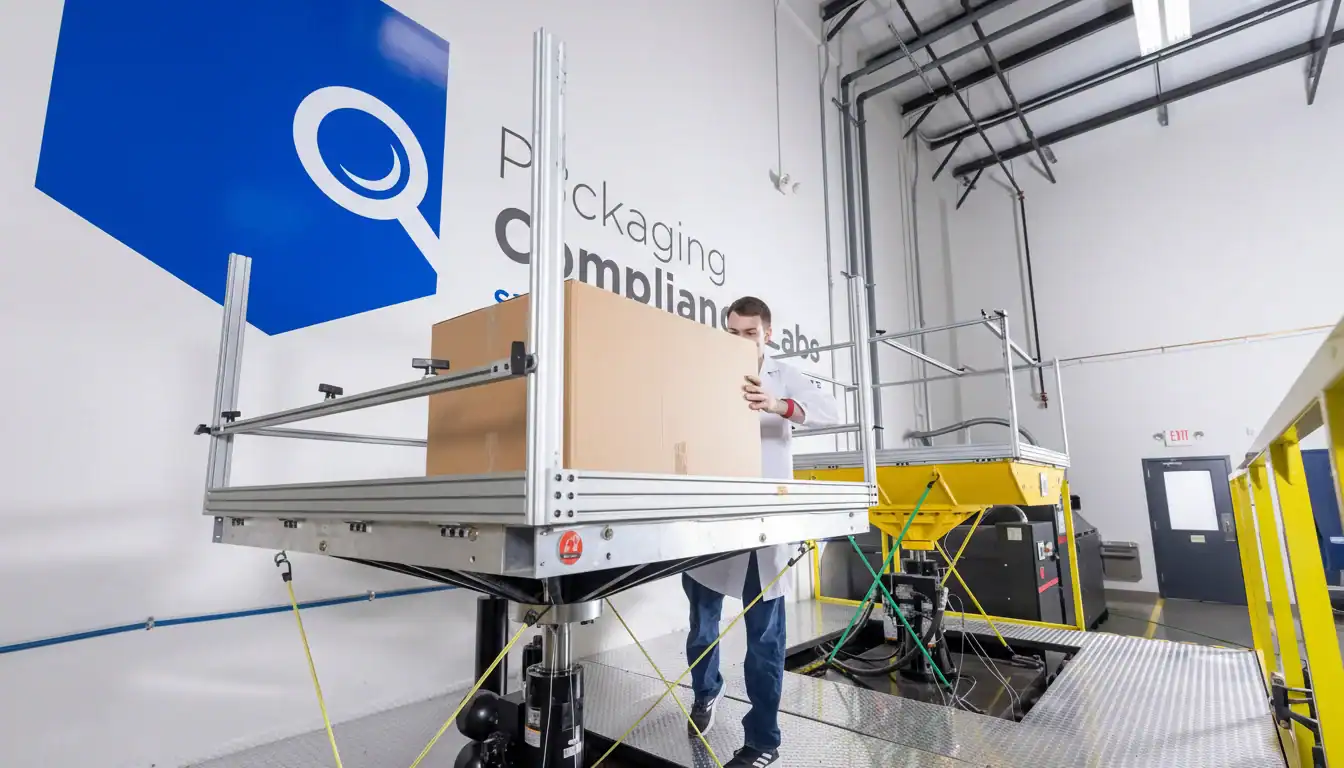
La norme ISTA 3A simule les contraintes physiques que subissent les produits emballés au cours de leur transit dans les réseaux de livraison de colis. Les installations d'essai évaluent les colis selon des séquences précises conçues pour reproduire les conditions d'expédition réelles.
- Les installations d'essai soumettent les colis à un conditionnement atmosphérique afin de reproduire les changements climatiques extrêmes subis lors des expéditions aériennes et terrestres.
- Les ingénieurs effectuent des tests de chute spécifiques à différentes hauteurs pour reproduire l'impact de la manutention manuelle et des systèmes de tri automatisés.
- Les laboratoires effectuent des tests de vibration aléatoires et des contrôles d'étanchéité facultatifs pour évaluer l'intégrité structurelle des matériaux d'emballage et des joints internes du produit.
Types de colis applicables pour l'expédition B2B
L'ISTA 3A classe les envois dans des profils spécifiques afin de garantir des paramètres d'essai précis et pertinents. Le protocole couvre strictement les colis individuels pesant jusqu'à 70 kg (150 livres) qui sont acheminés par des systèmes de transport de colis aériens ou terrestres standard. Les testeurs classent les emballages en quatre catégories distinctes : standard, petit, plat et allongé.
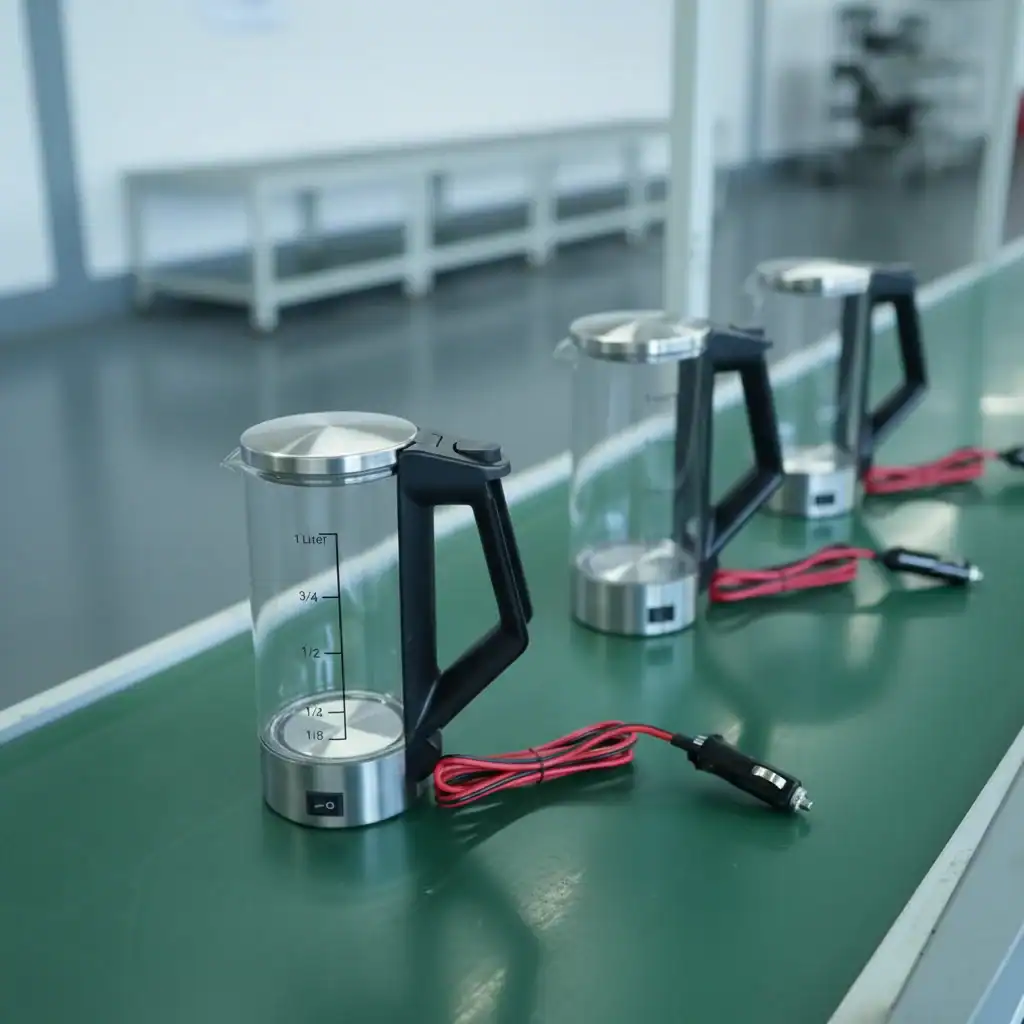
Cette classification permet aux fournisseurs B2B de tester diverses formes de produits, en garantissant une protection adéquate pour des articles allant de 600ML Bouilloires de voiture 12V à des cartons de gros lourds.
| Catégorie ISTA 3A | Paramètres de poids/taille | Application B2B de KelyLands |
|---|---|---|
| Petit / Standard | Moins de 70 kg (150 lbs) | Série CC Boîte couleur au détail |
| Carton standard | Moins de 70 kg (150 lbs) | SM408 Carton (20 PCS / 13 KGS) |
| Carton standard | Moins de 70 kg (150 lbs) | SM400 Carton en verre (12 PCS / 13 KGS) |
Exigences de l'industrie en matière d'emballage protecteur
La validation des emballages de vente au détail par rapport aux normes ISTA 3A garantit l'intégrité des produits, de l'atelier de fabrication à la destination finale. Cette certification constitue un point de référence essentiel dans les secteurs des biens de consommation, de l'électronique et des accessoires automobiles.
Les fabricants comme KelyLands utilisent des solutions d'emballage robustes, telles que des cartons d'expédition personnalisables et des boîtes de couleur renforcées, pour obtenir des commandes en gros. Les responsables des achats B2B constatent que les taux de défectuosité sont nettement inférieurs lorsque les fournisseurs vérifient leurs cartons d'expédition par rapport à ces protocoles rigoureux de chute et de vibration. Ces tests permettent d'éviter les dommages causés par le transport aux composants critiques, tels que les corps en verre borosilicate et les bouchons en bakélite, ce qui permet d'éliminer les taux élevés de RMA avant que les produits n'atteignent les rayons des magasins.
Le couvercle verrouillé peut-il survivre à une chute de 2 mètres sans s'ouvrir ?
Les fabricants d'équipements d'origine de poids lourds conçoivent une construction à double paroi et des systèmes avancés de rétention des couvercles pour protéger les joints d'étanchéité internes contre les déformations dues à des chocs catastrophiques.
Le rôle de l'intégrité des joints et des mécanismes de verrouillage
Moderne bouilloires portables s'appuient sur des mécanismes de verrouillage sûrs et des systèmes de joints étanches pour maintenir l'étanchéité dans des conditions de contraintes physiques sévères. Les fabricants conçoivent des boîtiers structurels à double paroi pour soutenir le mécanisme de verrouillage du noyau et protéger les joints internes en PTFE contre la déformation due aux chocs. Les couvercles à verrouillage sécurisé constituent la première défense contre les fuites catastrophiques de liquide pendant le transport actif et les chocs physiques soudains.
KelyLands intègre des couvercles robustes dans tous ses produits. Bouilloire 12V et 24V pour répondre aux exigences élevées des flottes logistiques long-courriers et des fournisseurs de services maritimes commerciaux. Ce renforcement structurel garantit que la bouilloire reste parfaitement étanche lorsqu'elle est soumise aux vibrations continues et aux secousses soudaines courantes dans les applications de transport commercial.
Stabilité de la pression et prévention des pertes de vapeur
Le maintien de la pression interne et l'arrêt de l'échappement de la vapeur sont à la base des spécifications techniques des couvercles de marmites de pointe. Les principaux fabricants de couvercles de bouilloire bouilloires électriques La vapeur est retenue et la température est maintenue stable pendant plus de 15 minutes immédiatement après l'ébullition. Les ingénieurs privilégient une gestion précise de la pression afin de garantir que le mécanisme de verrouillage reste fermement fixé, même en cas de contraintes thermiques internes extrêmes.
Des bagues d'étanchéité empêchent les déversements dangereux d'eau chaude dans les cabines de véhicules confinées. Cette capacité protège à la fois l'opérateur et l'électronique intérieure sensible du véhicule contre les dommages causés par l'humidité ou les brûlures directes dans des conditions de fonctionnement à haute pression.
Mesures exclusives de résistance aux chocs et de résistance aux chutes
Les normes publiques couvrent rarement les tests de chute de 2 mètres pour les couvercles verrouillables, ce qui incite les fabricants de produits B2B à mettre en œuvre des normes d'impact propriétaires. Les protocoles d'essai généraux destinés aux consommateurs manquent souvent de données normalisées sur la durabilité des chocs extrêmes, ce qui laisse une lacune importante en ce qui concerne les chutes directes de 2 mètres sur des surfaces en béton ou en métal.
Les fabricants OEM comme KelyLands effectuent des tests physiques exclusifs pour garantir la survie de la structure dans les environnements mobiles difficiles. Les responsables des achats évaluent ces mesures de durabilité personnalisées afin d'établir des partenariats de fabrication fiables et durables pour les produits utilitaires robustes, garantissant ainsi aux opérateurs de flottes un équipement capable de résister aux abus industriels.
Conclusion
En garantissant l'étanchéité et la résistance aux tests de chute, vous protégez directement votre logistique de commerce électronique et la réputation de votre marque. L'intégration de joints en téflon double couche et de soupapes de micro-pression empêche les déversements pendant les vols à haute altitude et les transports difficiles. Des tests de chute ISTA 3A rigoureux garantissent que le couvercle de verrouillage reste bien en place en cas de stress physique, ce qui permet de conserver la bouilloire intacte et de garder les bagages au sec.
Évaluez votre stock actuel pour voir si vos bouilloires électriques portables répondent à ces normes de transport exigeantes. Contactez l'équipe KelyLands pour demander un échantillon d'essai et consulter notre catalogue complet de bouilloires électriques durables de 12 V et de 12 V. Bouilloires de voiture 24V.
Questions fréquemment posées
Ces bouilloires électriques portables fuient-elles dans les bagages ?
Non, elles ne fuient pas dans les bagages. Nos bouilloires électriques portables utilisent des mécanismes avancés à double étanchéité et des joints microcellulaires à base de PTFE. Cette technologie d'étanchéité par compression multicouche s'adapte parfaitement aux irrégularités de la surface, garantissant ainsi un confinement fiable et étanche pendant le transport, dans des conditions de pression et de température variables.
Comment fonctionne la soupape de décompression sur les vols ?
La soupape de décompression utilise une membrane respirante unidirectionnelle spécialisée combinée à un mécanisme de décharge à micro-ressort. Au cours d'un vol, lorsque la pression de la cabine de l'avion diminue, cette soupape égalise automatiquement la pression interne de la bouilloire avec celle de l'environnement extérieur. Cela évite une accumulation dangereuse de pression et protège les joints primaires contre les défaillances, tandis que les pores microscopiques de la membrane empêchent activement les molécules d'eau liquide de s'échapper.
Quel est le protocole de test de chute de votre usine pour le mécanisme du couvercle ?
Notre protocole de test de chute en usine est conforme aux normes internationales rigoureuses de test de transport (telles que ISTA 1A). Les bouilloires entièrement assemblées, remplies au maximum de leur capacité, sont jetées d'une hauteur de 1,2 mètre sur une surface solide en béton. Le cycle de test comprend de multiples impacts sur toutes les faces, tous les bords et tous les coins afin de vérifier définitivement que le mécanisme du couvercle et les joints de compression restent complètement intacts et sans fuite dans des conditions de stress physique extrême.
L'eau peut-elle rester à l'intérieur de la bouilloire pendant le transport ?
Oui, l'eau peut rester en toute sécurité à l'intérieur de la bouilloire pendant le transport. Grâce à l'architecture d'étanchéité à sécurité intégrée et aux couches de joints PTFE conformables, le récipient est conçu pour assurer le transport sécurisé des liquides sans nécessiter un serrage excessif du couvercle. Bien que les joints contiennent parfaitement l'eau, nous recommandons généralement de vider l'unité avant le voyage en avion afin de réduire le poids de vos bagages et de respecter les restrictions en matière de liquides imposées par les compagnies aériennes en matière de sécurité.

 English
  Español
  Français
  Deutsch
  Português do Brasil
  Русский
  한국어
한국어  日本語
日本語  العربية