 Passer au contenu principal Passer au pied de page

La recherche d'une connectivité de voyage dans un aspirateur portable est la première défense contre des taux de retour élevés. Les produits dotés de batteries non conformes ou de ports de charge obsolètes ne répondent pas aux attentes des voyageurs modernes, ce qui porte directement atteinte aux marges bénéficiaires et à la réputation de la marque.
Cette analyse compare les fournisseurs à la limite de 100 Wh pour les bagages à main des compagnies aériennes et à la norme de charge USB-C universelle. Nous évaluons les choix de matériaux comme le boîtier ABS/PC et les options de boîtier OEM pour vous aider à sécuriser une ligne de produits conforme et de grande valeur.
Pourquoi l'USB-C PD 3.0 est-il la nouvelle norme mondiale en matière de charge ?
L'USB-C PD 3.0 est la norme mondiale car elle associe une compatibilité universelle à une puissance élevée pouvant atteindre 100 W, accélérée par les mandats réglementaires d'organismes tels que l'UE.
Compatibilité universelle et Power Delivery
L'industrie a adopté l'USB-C parce qu'un seul connecteur réversible fonctionne pour tout : smartphones, tablettes et ordinateurs portables. Les clients n'ont donc plus besoin de transporter plusieurs chargeurs différents, ce qui simplifie l'expérience de l'utilisateur.
La norme fournit jusqu'à 100 W de puissance, permettant des vitesses de charge jusqu'à 70% plus rapides que les ports USB-A plus anciens. Les réglementations gouvernementales, en particulier le mandat 2026 de l'Union européenne pour l'électronique, ont renforcé sa position et forcé tous les grands fabricants à l'adopter.
Chargement pratique de type C pour les aspirateurs portables
Nos aspirateurs de voiture sans fil sont conçus selon cette norme moderne. Ils sont dotés de ports de charge rapide USB-C (5V/2A), ce qui garantit qu'ils fonctionnent avec les mêmes chargeurs que ceux utilisés par vos clients pour leurs téléphones et ordinateurs portables.
L'aspirateur peut ainsi être rechargé presque n'importe où, à partir du port USB intégré d'une voiture, d'un ordinateur portable ou d'une banque d'alimentation portable. Il s'agit d'une fonction pratique qui élimine les frictions et répond aux attentes modernes en matière de commodité.
Un étui rigide justifie-t-il un prix de vente au détail plus élevé ?
Oui. Un étui rigide ajoute de la valeur perçue, offre une meilleure protection et permet d'organiser les accessoires. Il permet aux clients B2B de créer une catégorie de produits haut de gamme, à plus forte marge.
Protection, organisation et valeur perçue
Une mallette rigide offre une véritable protection contre les chutes, les chocs et la pression qu'un simple sac en tissu ne peut supporter. Elle protège l'aspirateur et ses composants sensibles, réduisant le risque de dommages pendant le transport ou le stockage. Il ne s'agit pas d'un simple contenant, mais d'une assurance pratique pour le produit.
Il résout également le problème courant des accessoires perdus. Une bonne mallette comporte des compartiments dédiés au suceur plat, à la tête de brosse et au câble de chargement. L'ensemble du kit est ainsi organisé et prêt à l'emploi, ce qui évite à l'utilisateur d'être frustré par des pièces égarées.
L'inclusion d'un étui durable fait passer le produit d'un simple outil à un ensemble complet et haut de gamme. Cela augmente considérablement sa valeur perçue sur le point de vente, en donnant aux clients une raison claire pour laquelle un modèle coûte plus cher qu'un autre.
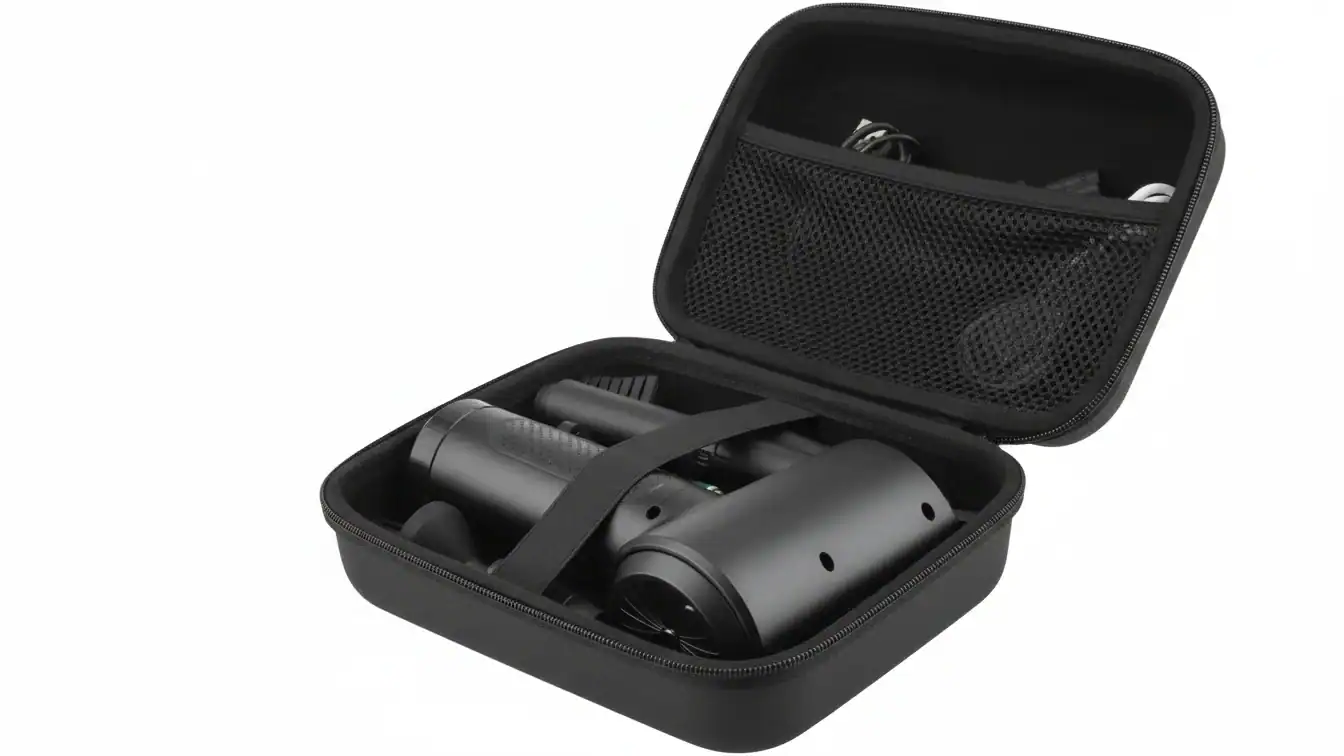
Proposer des étuis EVA en tant qu'accessoires OEM de première qualité
Dans le cadre de ses services OEM, KelyLands propose en option des étuis à coque dure en EVA. Cela permet à nos clients B2B de personnaliser leurs offres de produits et de créer des niveaux distincts pour différents segments de marché. Vous pouvez proposer une version standard avec un sac en tissu et une version premium avec un étui rigide.
Cette stratégie permet directement de proposer une offre groupée de produits à marge plus élevée. La valeur perçue et réelle de l'étui rigide permet une augmentation du prix de vente au détail qui dépasse largement le coût unitaire de l'étui lui-même, améliorant ainsi votre rentabilité globale.
L'ajout d'un étui EVA de marque renforce l'image de qualité de votre marque. Il fournit aux clients une raison tangible et physique de choisir le modèle le plus cher, ce qui rend la proposition de valeur facile à comprendre et à justifier.
Source : Aspirateurs de voiture puissants et personnalisés Direct

Questions fréquemment posées
Puis-je utiliser un chargeur Power Delivery (PD) USB-C avec un aspirateur portable ?
Bien que de nombreux aspirateurs portables soient équipés d'un port USB-C, la charge rapide PD n'est pas une norme. Les modèles qui prennent explicitement en charge le protocole PD 18 W peuvent se recharger complètement en 2 heures environ, alors que les modèles USB-C standard nécessitent souvent 4 heures ou plus. Vérifiez toujours les spécifications du produit pour confirmer s'il prend en charge le protocole PD.
Les aspirateurs de voiture portables sont-ils autorisés dans les bagages à main des compagnies aériennes ?
Oui, les aspirateurs dont la capacité de la batterie est inférieure à 100 Wh sont généralement autorisés dans les bagages à main, conformément à la réglementation de la TSA. L'appareil doit être placé dans votre bagage à main, et non dans un bagage enregistré, afin de respecter les règles de sécurité incendie applicables aux batteries lithium-ion.
Quels sont les matériaux utilisés pour fabriquer les aspirateurs portables ?
La plupart des boîtiers d'aspirateurs portables sont fabriqués en plastique ABS durable et économique. Certains modèles haut de gamme peuvent utiliser des alliages légers d'aluminium et de magnésium pour réduire le poids tout en conservant la solidité de la structure.
Les kits d'aspirateurs portables comprennent-ils une mallette de rangement à coque dure ?
La plupart des aspirateurs portables ne sont pas équipés d'une mallette rigide. Il est plus courant qu'ils soient livrés avec un sac de rangement en tissu doux ou qu'ils comportent un enrouleur de cordon intégré pour faciliter le rangement.
Puis-je charger un aspirateur portable avec la banque d'énergie de mon ordinateur portable ?
Oui, si l'aspirateur est doté d'un port de charge standard de type C, il est généralement compatible avec les banques d'alimentation pour ordinateurs portables. Toutefois, pour une santé et une sécurité optimales de la batterie, les fabricants recommandent d'utiliser le câble de charge d'origine fourni avec l'appareil.
Conclusions finales
Alors que les aspirateurs bon marché inondent le marché, nos spécifications prêtes à l'emploi (batteries conformes aux normes des compagnies aériennes, boîtier ABS durable) protègent votre entreprise contre les retours et les problèmes de conformité. La création d'une gamme de produits fiables commence par l'approvisionnement en stocks certifiés et prêts à être commercialisés.
Ne devinez pas la qualité - vérifiez-la. Nous vous recommandons de demander un kit d'échantillons pour tester directement nos performances et la qualité de nos matériaux. Contactez notre équipe pour discuter des options OEM et créer un produit qui correspond à votre marque.

 English
  Español
  Français
  Deutsch
  Português do Brasil
  Русский
  한국어
한국어  日本語
日本語  العربية