 Passer au contenu principal Passer au pied de page

Le mix de références SKU des réfrigérateurs de voiture est le premier point de contrôle que les acheteurs doivent verrouiller avant d'approuver un fournisseur, un budget ou un créneau de production. “ Pourquoi le modèle 50L s'est-il vendu en trois semaines alors que le 20L est encore dans votre entrepôt ? ” C'est la question qu'un distributeur de Brisbane a posée à son fournisseur après une campagne promotionnelle estivale. La réponse n'avait rien à voir avec le prix ou la marque. Tout était lié au mix de références SKU de réfrigérateurs de voiture auquel il s'était engagé en janvier.
La plupart des importateurs traitent leur assortiment de produits comme une liste statique — choisir quelques tailles, répartir entre thermoélectrique et à compresseur, et considérer que c'est fait. Mais la différence de marge entre ces deux technologies n'est pas subtile. Les unités à compresseur ont généralement un prix FOB plus élevé et exigent une approbation d'échantillon plus minutieuse, mais elles génèrent environ 70 % du profit annuel pour les distributeurs qui trouvent le bon équilibre. Les glacières thermoélectriques se vendent rapidement en haute saison, surtout à des prix plus bas, mais leur tolérance de qualité concernant les températures ambiantes peut transformer un mois de juillet chaud en cauchemar de retours si le stock est surchargé sans vérifier la fiche technique.

Pourquoi votre mix de références SKU de réfrigérateurs de voiture détermine la marge brute
Les réfrigérateurs à compresseur génèrent 70 % de la marge annuelle alors qu'ils ne représentent que 40 % des unités vendues.
La plupart des importateurs avec lesquels j'ai travaillé supposent que les glacières thermoélectriques génèrent du volume parce qu'elles sont bon marché et faciles à vendre au détail. Cette hypothèse leur coûte de la marge. La réalité est que les réfrigérateurs à compresseur — en particulier les modèles 35L et 50L — produisent l'essentiel de votre profit par conteneur, même s'ils tournent plus lentement.
Fourchettes de prix expliquées : compresseur vs thermoélectrique
Les glacières thermoélectriques se situent dans la fourchette FOB de 25 à 55 $ pour les modèles de 20L à 30L. Ce sont des paniers pique-nique avec une puce Peltier. Elles refroidissent à environ 18–20 °C sous la température ambiante, ce qui signifie que par une journée à 35 °C, vos boissons sont à environ 17 °C. Pas assez froid pour les aliments crus ou les produits laitiers. La marge par unité est mince — typiquement 8 à 12 $ après fret et droits de douane.
Les réfrigérateurs à compresseur commencent à 85 $ FOB pour une unité de base de 20L et dépassent 250 $ pour un modèle 50L à double zone avec contrôle numérique et protection de batterie. La marge brute par unité se situe entre 40 et 90 $ selon votre structure de coût débarqué. Un seul conteneur d'unités à compresseur peut générer le même profit que trois conteneurs de glacières thermoélectriques.
Quels clients achètent quelle technologie en 2026
Les acheteurs de glacières thermoélectriques se répartissent en deux catégories : les campeurs occasionnels qui veulent une glacière de week-end pour les sodas, et les consommateurs soucieux de leur budget qui achètent une unité à 39 $ dans un magasin de pièces automobiles sur un coup de tête. Aucun de ces groupes ne passe de commandes fréquentes. Ils achètent une fois toutes les deux ou trois saisons, souvent lorsque leur ancienne unité tombe en panne.
Les acheteurs de réfrigérateurs à compresseur sont différents. Les passionnés d'overlanding, les constructeurs de van-life et les campeurs hors route sérieux considèrent leur réfrigérateur comme un équipement essentiel. Ils étudient les spécifications comme la consommation électrique, les seuils de coupure basse tension et la densité d'isolation avant d'acheter. Ces clients effectuent une mise à niveau tous les deux ans — passant d'un modèle à une zone à un modèle à deux zones, ou d'un 35L à un 50L lorsqu'ils ajoutent des panneaux solaires.
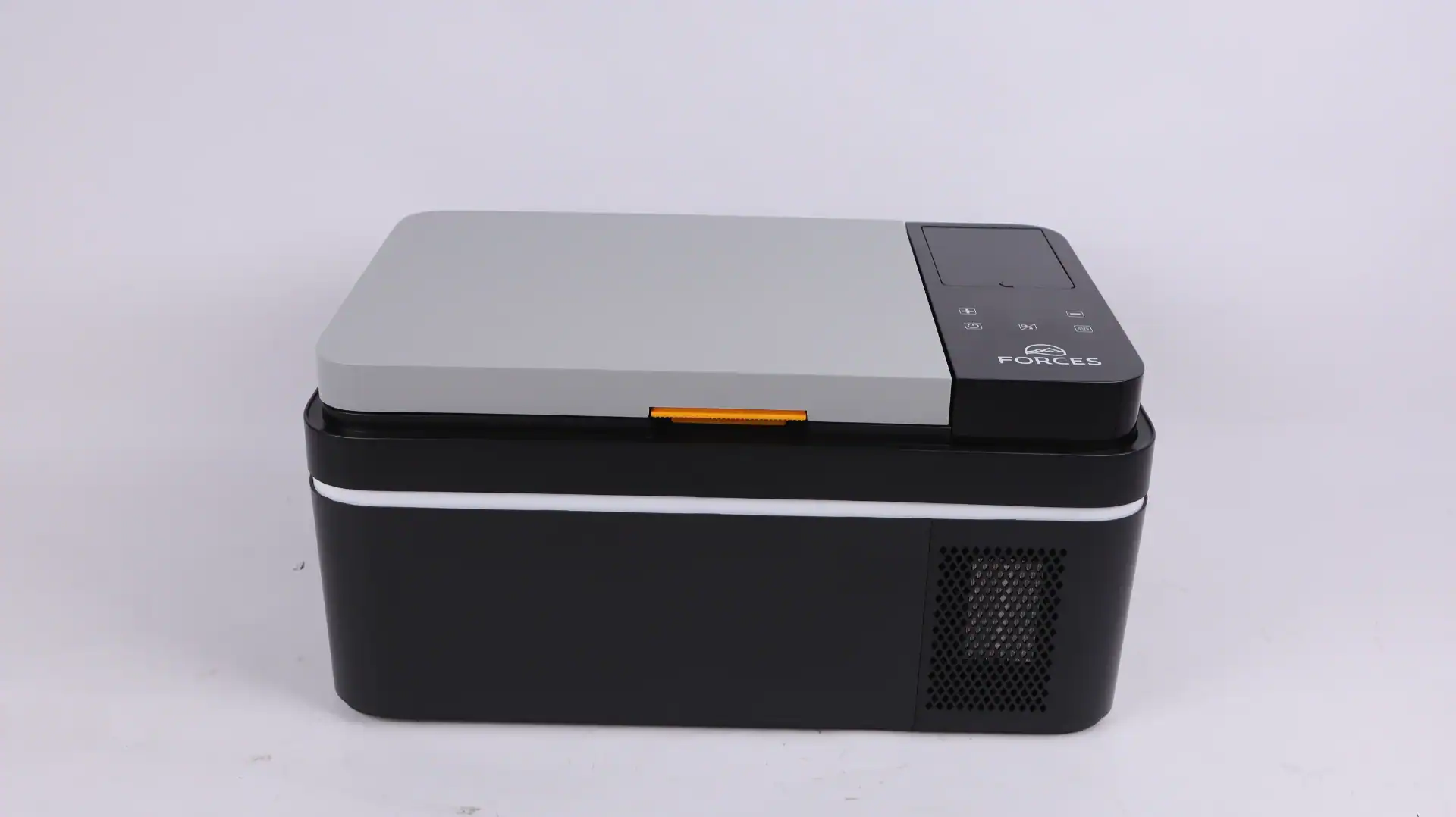
Construire un catalogue équilibré : ratios de références SKU recommandés
Une répartition 60:40 des références SKU entre thermoélectrique et compresseur fonctionne pour le volume estival, mais les unités à compresseur génèrent 70 % de la marge annuelle.
La plupart des importateurs commencent leur catalogue de réfrigérateurs de voiture en cherchant le prix le plus bas. Ils chargent des glacières thermoélectriques de 20 L parce que le coût unitaire est inférieur à $80 FOB Ningbo et que la vente semble facile en été. Puis le T3 arrive, le stock thermoélectrique traîne, et ils réalisent que l'histoire de la marge se joue dans une toute autre catégorie.
20 L, 35 L, 50 L : ce que les importateurs réapprovisionnent réellement
Les données de réapprovisionnement des distributeurs qui ont fonctionné pendant trois saisons ou plus racontent une histoire cohérente. Le segment des 20 L fait bouger les unités — c'est le prix d'entrée qui attire les premiers acheteurs. Mais la cadence de réapprovisionnement chute après juillet. Le réfrigérateur à compresseur de 35 L est l'UGS qui génère des commandes répétées toute l'année. Les acheteurs d'overlanding, les constructeurs de van-life et les campeurs sérieux convergent tous vers cette taille car elle se loge derrière un siège de camion ou sous une plateforme de chargement tout en contenant assez pour un week-end.
Les modèles à compresseur double zone de 50 L sont un autre animal. Ils se vendent plus lentement mais offrent une marge absolue plus élevée par unité — généralement $80 à 120 de bénéfice brut contre $25 à 40 pour une glacière thermoélectrique. Les acheteurs qui veulent des unités de 50 L savent généralement exactement ce dont ils ont besoin et les retournent rarement.
Erreurs courantes de mix de références SKU qui tuent la rotation des stocks
Les unités thermoélectriques sans indice de chaleur ambiante échouent dans les climats de 40 °C et plus.
Le tueur d'inventaire le plus courant dans la catégorie des réfrigérateurs de voiture est le surstockage de glacières thermoélectriques sans vérifier leur indice de chaleur ambiante. Une unité conçue pour un delta de 25 °C (ce qui signifie qu'elle refroidit à environ 15 °C sous la température extérieure) fonctionne bien dans les étés européens doux. Expédiez la même UGS à un distributeur du Moyen-Orient ou d'Australie, et la température interne ne descend jamais sous 18 °C lorsque la température ambiante atteint 45 °C. La glacière devient une boîte de stockage glorifiée.
Les distributeurs qui ont fait des stocks importants d'unités thermoélectriques sans indice au T1 2026 ont vu leurs taux d'écoulement chuter de moitié d'ici août. La solution est simple : exigez que chaque UGS thermoélectrique de votre assortiment comporte un indice de chaleur ambiante publié — idéalement testé à 32 °C et 43 °C afin que vous sachiez où se situe le seuil de performance. Les usines de Ningbo qui produisent pour l'exportation réalisent généralement ces tests ; les données existent si vous les demandez avant l'approbation des échantillons.
Ignorer les modèles à compresseur double zone pour les acheteurs premium
La deuxième erreur est plus subtile mais coûte plus de marge. Les importateurs qui ne stockent que des réfrigérateurs à compresseur mono-zone passent à côté du segment des propriétaires d'overlanding et de camping-car — des acheteurs prêts à payer un supplément pour des compartiments séparés congélateur et réfrigérateur. Un modèle à compresseur double zone de 50 L a généralement un prix de gros de $280 à $350 contre $180 à $220 pour une unité mono-zone de même taille, alors que la différence de nomenclature est inférieure à $40.
Cet écart se traduit directement par une marge plus élevée par emplacement de conteneur. Les acheteurs d'overlanding sont moins sensibles au prix que les campeurs occasionnels ; ils privilégient la fonction au prix FOB. Le partenariat de KelyLands avec l'usine de réfrigérateurs portables de M. Zhou basée à Ningbo comprend des modèles à compresseur double zone qui ciblent exactement ce segment d'acheteurs — des unités qui maintiennent -18 °C dans le compartiment congélateur tout en conservant 4 °C dans la partie réfrigérateur, même à des températures ambiantes élevées.

Conclusion
Un mix de références de réfrigérateurs de voiture intelligent ne devine pas la demande — il adapte la technologie au cas d'usage. Les unités à compresseur portent la marge, les unités thermoélectriques déplacent le volume en haute saison. Si vous vous trompez dans ce ratio, vous vous retrouvez avec un stock qui ne bougera pas avant l'été prochain.
-
- Les réfrigérateurs à compresseur génèrent environ 70% de marge annuelle malgré un volume unitaire plus faible.
- Les glacières thermoélectriques fonctionnent mieux comme stock promotionnel d'été sous un prix FOB de $35.
- Les unités à compresseur de 35 L connaissent les taux de réapprovisionnement les plus élevés dans le segment de l'overlanding au cours du deuxième trimestre.
- Chargement en conteneur mixte depuis les usines de Ningbo vous permet de tester de nouvelles références thermoélectriques sans engagement sur un MOQ complet.
Pour votre prochaine revue de commande, évaluez votre assortiment actuel par rapport à une norme sectorielle simple : visez un catalogue où les modèles à compresseur représentent au moins un tiers du total des références mais génèrent deux tiers du bénéfice brut projeté. Cette répartition maintient votre entrepôt en mouvement et vos marges saines pendant les pics estivaux et tout au long de l'année, la demande en overlanding. Parcourez la gamme actuelle de réfrigérateurs de voiture pour voir comment les fourchettes de prix et les options de capacité s'alignent sur ce ratio avant de finaliser votre mix de conteneurs pour le premier trimestre.
Questions fréquemment posées
Quel est le meilleur assortiment de SKU de réfrigérateurs de voiture pour 2026 ?
Une répartition des références 60:40 thermoélectrique/compresseur fonctionne bien pour le volume estival, mais les unités à compresseur génèrent 70% de marge annuelle alors qu'elles ne représentent que 40% des unités vendues. Pour les acheteurs premium, modèles à compresseur bi-zone. Ajustez les ratios en fonction du climat de votre marché cible et du segment de clientèle.
Quel type de réfrigérateur de voiture a des marges plus élevées ?
Les réfrigérateurs à compresseur offrent des marges plus élevées, contribuant à 70 % de la marge annuelle même s'ils ne représentent que 40 % des unités vendues. Les unités thermoélectriques génèrent du volume mais ont un profit unitaire plus faible et des retours risqués. Privilégiez les modèles à compresseur si la marge est votre objectif principal.
Quelles tailles de SKU les importateurs commandent-ils le plus souvent ?
Les importateurs réapprovisionnent régulièrement les modèles de compresseurs de 35 L et 50 L pour les acheteurs de overlanding et de camping, tandis que les unités thermoélectriques de 20 L se vendent plus lentement, sauf si elles sont proposées à un prix agressif. Le point idéal pour la rotation des stocks est a. Stockez davantage de compresseurs de taille moyenne et utilisez les petits thermoélectriques comme produits d'appel d'entrée de gamme.
Pourquoi les réfrigérateurs thermoélectriques tombent-ils en panne dans les climats chauds ?
Les unités thermoélectriques sans spécifications de chaleur ambiante ne peuvent pas refroidir efficacement au-dessus de 40 °C, ce qui entraîne des retours et une perte de confiance. Vérifiez toujours la plage de température ambiante nominale avant de commander pour des marchés comme l'Australie. Précisez les spécifications de chaleur ambiante dans votre bon de commande pour éviter les problèmes de stock.
Combien de modèles de compresseurs bi-zone dois-je stocker ?
“ Au moins un modèle bi-zone par catégorie de taille (par exemple, une version bi-zone de votre 35 L ou 50 L le plus vendu) est recommandé pour capter les acheteurs premium prêts à payer a. Ajoutez au moins un modèle bi-zone par catégorie de taille pour protéger votre marge premium.

 English
  Español
  Français
  Deutsch
  Português do Brasil
  Русский
  한국어
한국어  日本語
日本語  العربية