


Procurement teams for high-density residential projects face a distinct logistical hurdle as average urban apartments in 2026 shrink to between 400 and 750 square feet. This compression of living space often eliminates traditional utility closets, forcing residents to store maintenance tools in kitchens or wardrobes. Sourcing the right equipment requires hardware that balances suction performance with a compact physical footprint, specifically units that maintain a length under 400mm to fit within modern storage gaps.
This guide examines the engineering benchmarks necessary for shared living environments, comparing the 20,000Pa suction of stick models against the continuous power of corded canisters. We also analyze how multi-functional systems and vertical storage solutions help residents reclaim up to 90% of their floor space while keeping sound levels below 82 dB to respect thin apartment partitions.
The Urban Challenge: Cleaning Without Closet Space
Dense urban apartments in 2026 often average 400 to 750 square feet and lack dedicated utility closets. This spatial deficit requires cleaning hardware to occupy less than 400mm in length and serve multiple roles, such as air purification and floor care, to justify its footprint in limited storage zones.
Spatial Constraints in High-Density Studio Units
Modern studio apartments frequently range from 400 to 500 square feet. These designs often eliminate dedicated utility or linen closets to maximize the primary living area. A standard reach-in residential closet typically offers 24 inches of depth. But accessibility standards requiring 36-inch clear circulation paths restrict the placement of bulky floor-standing equipment in entry zones or corridors. For residents in these high-density environments, storage efficiency determines the viability of any maintenance tool.
University housing and micro-unit developments prioritize built-in cabinets and wardrobes over separate utility rooms. This architectural shift forces residents to store cleaning hardware in residual spaces. Equipment must fit into under-bed gaps or the back of standard wardrobes to remain accessible without obstructing daily movement. In cities like New York, where average small apartments hover around 750 square feet, the footprint of cleaning tools directly impacts the livability of the unit.
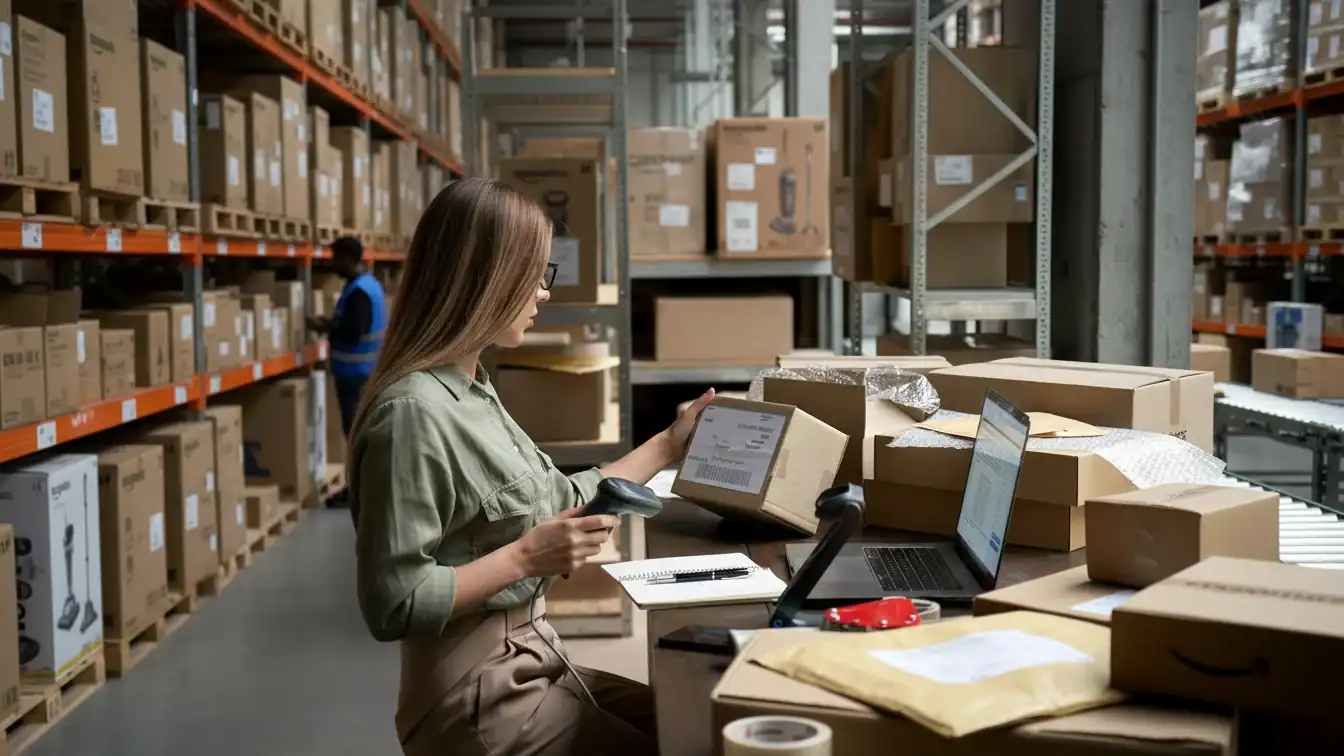
Performance Specs for Residual Storage and Multi-Role Use
Cleaning hardware designed for urban environments must maintain a volumetric envelope of ≤400 x 300 x 250 mm. A mass under 7 kg allows these units to fit inside standard 600mm-deep kitchen base cabinets. High-performance systems, such as those produced by Rainbow, incorporate switched-reluctance motors and stainless steel wands. These materials ensure institutional-grade durability while maintaining a portable frame suitable for residential storage constraints. The use of stainless steel specifically reduces failure rates compared to lower-grade plastics in high-use environments.
The lack of closet space incentivizes the adoption of multi-role systems. Water-based filtration enables a single device to function as both a floor vacuum and a certified air cleaner. This dual-use capability addresses indoor air quality issues in high-occupancy buildings where fixed air-scrubbing infrastructure is often absent. By combining dry debris removal, carpet shampooing, and odor control into one compact unit, residents maximize the utility of their limited storage zones. For procurement teams in university housing, these multi-functional assets reduce the total number of tools required per unit, simplifying inventory and maintenance.
Form Factor Debate: Stick Vacuums vs. Canisters
Choisir un aspirateur dépend de l’équilibre entre la puissance d’aspiration brute et les contraintes de rangement. Les aspirateurs balais offrent un débit d’air supérieur à 100 CFM pour un nettoyage en profondeur, tandis que les modèles balais proposés apportent une polyvalence 2-en-1 légère et un rangement mural, bien que l’autonomie reste limitée à 20-25 minutes en mode haute puissance.
| Indicateur de performance | Aspirateurs à accumuler | Aspirateurs balais |
|---|---|---|
| Aspiration et flux d'air | 100+ CFM / 90″ d’élévation d’eau | 20 000 Pa (crête) |
| Autonomie (haute puissance) | Continu (filaire) | 20–25 minutes |
| Empreinte au sol | Élevée (posé au sol) | Faible (suspendede) |
Ingénierie de l’aspiration et références de débit d’air
Les aspirateurs à accumulateur utilisent des boîtiers moteur séparés pour atteindre 100+ CFM et 90+ pouces d’élévation d’eau. Ces valeurs représentent la norme du secteur pour l’extraction des débris incrustés dans les moquettes denses. En revanche, KelyLands aspirateurs domestiques atteignent des performances d’aspiration de 20 000 Pa. Ce niveau de pression garantit un retrait efficace des débris de surface et maintient les performances lors des transitions entre sols durs et tapis.
Les modèles balais intègrent des moteurs conçus prioritairement pour réduire le poids afin de faciliter la navigation dans les escaliers et sous les meubles. Cette architecture améliore la maniabilité dans les espaces urbains aux sols encombrés. Bien que compacts, ces modèles peuvent générer plus de bruit ressenti, car le moteur est proche de la poignée. Les aspirateurs à accumulateur avec isolation insonorisée maintiennent des niveaux sonores plus bas, puisque le logement plus imposant du moteur permet un amortissement acoustique plus épais par rapport aux modèles balais non protégés.
Spatial Footprint and Operational Limits
Sans fil à bâton offer a 20-25 minute runtime on high-power modes, which provides sufficient time for studio maintenance or quick spot cleaning. Wall-mountable stick designs save floor space in units without dedicated storage closets, making them a preferred choice for small apartments. The vertical orientation allows users to store the device behind doors or inside narrow utility gaps.
Canister footprints require more square footage but provide larger dirt capacities for less frequent emptying. This makes them more suitable for deep cleaning sessions where stopping to dump a dust bin disrupts the workflow. The 2-in-1 handheld functionality of stick models improves access to high shelves and tight corners, offering a level of versatility that bulky canister hoses often struggle to match.
“Self-Standing” Design: Vertical Storage Solutions
Self-standing vertical storage solutions utilize ceiling height to reduce floor footprint by up to 90%. Systems like Vertical Lift Modules (VLMs) use dual-column trays and central extractors to store and retrieve items automatically, delivering them to the operator with ±1 mm accuracy in under 30 seconds.
| Paramètres techniques | Specification Details | Impact opérationnel |
|---|---|---|
| Unit Height Range | 8′ 10″ to 68′ 11″ (2.7 m – 21 m) | Converts unused overhead space into storage. |
| Tray Payload Capacity | 1,000 to 2,200 lbs (450 – 1,000 kg) | Supports dense, heavy inventory in a small area. |
| Retrieval Performance | 140 trays/hour; 20–30s cycle time | Reduces wait times and eliminates manual searching. |
| Power Requirements | Three-phase AC 200/220 V; 4.5–6.0 KVA | Standard industrial power for automated operation. |
Maximizing Urban Floor Space Through Vertical Density
Vertical systems exploit ceiling heights ranging from 8 to 68 feet, reclaiming up to 90% of occupied floor space compared to static shelving. By transitioning from a horizontal to a vertical storage model, these units allow high-density organization in constrained urban environments. The system replaces sprawling aisles with a compact footprint, often requiring only 66 inches (1.6 m) of depth.
Automatic height sensing technology allocates tray positions in 1-inch increments. This dynamic adjustment ensures zero wasted overhead room by sensing the height of stored items and placing them in the narrowest possible slot. This design makes the modules suitable for shared utility zones or residential storage where maximizing square footage is essential.
Mechanical Precision and Technical Payload Specifications
Industrial-grade drives provide positioning accuracy of ±1 mm, supporting tray payloads between 1,000 and 2,200 lbs for heavy household or commercial inventory. Integrated software manages load balancing to prevent mechanical strain, while central extractors deliver goods directly to an ergonomic access bay. These systems achieve throughput rates of 140 trays per hour with average retrieval cycle times between 20 and 30 seconds.
Structural safety requires anchoring the unit to concrete floors with a minimum thickness of 150 mm. This foundation supports the weight of the frame and the power units, which are typically rated at 4.5–6.0 KVA. By using a self-standing design, the load is distributed across the floor rather than the building walls, providing a stable solution for high-capacity inventory management.
Aspirateurs domestiques OEM/ODM de première qualité adaptés à votre marque

Standard 2026 apartment partitions often fail to meet the STC 50 building code requirement, typically rating between STC 30-35. This makes loud appliances a frequent source of conflict. Residents maintain noise discipline by selecting household tools that operate under 82dB and addressing sound leakage paths.
Sound Transmission Class and Apartment Privacy
The International Building Code (IBC) establishes a minimum requirement of STC 50 for walls separating multifamily units. This rating ensures that loud sounds remain faint and speech stays unintelligible between neighbors. While an STC of 50 to 55 provides a baseline for speech privacy in residential dwellings and hotel rooms, many standard city apartments fall significantly short of these figures. Common partitions consisting of basic drywall on wood studs without insulation often yield ratings between STC 30 and 35, a level where normal speech is easily heard through the wall.
Achieving the necessary isolation requires more than just heavy materials. Technical data suggests that structural integrity plays a massive role in actual sound attenuation. Even tiny structural gaps, such as back-to-back electrical boxes or neglected caulking, create flanking paths that compromise the wall’s effectiveness. A mere 0.1% opening in a partition can reduce transmission loss from 40 dB to 30 dB, effectively negating the benefits of sound-dampening insulation or specialized drywall.
Upgrading uninsulated assemblies usually involves adding mass or decoupling components. For instance, a standard interior wall rated at STC 33 improves to STC 39 simply by adding fiberglass insulation. For high-privacy environments or luxury units, designers target STC 60 or higher to block music and low-frequency noise, which standard STC metrics often underweight. These higher ratings typically require resilient channels or mass-loaded vinyl to break the vibration path through the framing.
Minimiser l'impact sonore grâce à des outils ménagers silencieux
Respecter la discipline acoustique implique de choisir des appareils électroménagers qui tiennent compte des limites techniques des cloisons partagées. Les aspirateurs et des outils similaires devraient idéalement fonctionner entre 75 dB et 82 dB. Rester dans cette plage empêche le son de franchir la limite de confidentialité STC 45, courante dans de nombreuses constructions modernes. Lorsque les appareils dépassent ces niveaux, le bruit aérien contourne facilement les capacités d'isolation des cloisons standard, entraînant des conflits avec les voisins et une qualité de vie réduite.
Les normes de laboratoire comme l'ASTM E90 et l'E413 fournissent une base théorique pour la perte de son, mais les performances réelles varient souvent. Les mesures sur site, appelées STC apparent (ASTC) selon la norme ASTM E336, révèlent fréquemment des performances inférieures aux résultats en laboratoire. Ces écarts s'expliquent par le fait que les tests sur site prennent en compte les finitions des pièces, la réverbération et l'étanchéité imparfaite. Par conséquent, un appareil qui semble silencieux dans un grand showroom peut devenir perturbateur dans un petit appartement avec des chemins latéraux importants et une atténuation sonore insuffisante.
La conception des composants influence également la propagation du son dans un bâtiment. Portable vacuum les modèles équipés de moteurs sans balais offrent un avantage distinct en réduisant les vibrations haute fréquence. Ces vibrations sont particulièrement problématiques dans les structures en bois non isolées, car elles se propagent plus efficacement à travers l'ossature que le bruit aérien. En utilisant des équipements qui minimisent les vibrations mécaniques et respectent des niveaux décibelicques plus bas, les résidents peuvent gérer efficacement leur empreinte acoustique dans le cadre du logement collectif.
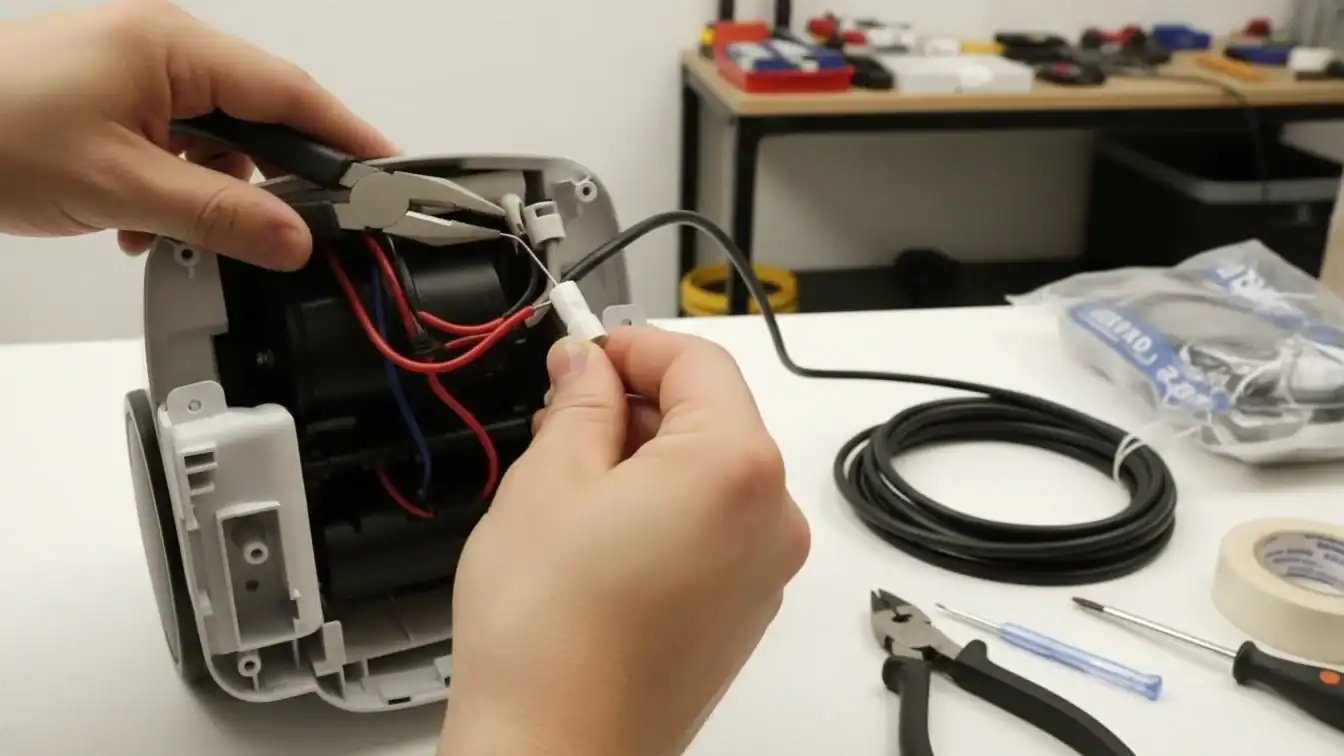
Corded vs. Cordless: The “Studio Apartment” Choice
Choisir entre un modèle avec câble et un modèle sans fil dépend de l'équilibre entre puissance d'aspiration et autonomie. Les modèles avec câble offrent une aspiration de 250 à 400 AW et une utilisation illimitée pour un nettoyage en profondeur, tandis que les modèles sans fil privilégient la mobilité dans des studios de 300 à 500 pieds carrés, bien qu'ils nécessitent une gestion de la batterie et entraînent des coûts de maintenance plus élevés.
Fiabilité de l'autonomie et alimentation stable
Les systèmes avec câble fournissent un apport électrique illimité pour une sortie moteur maximale, garantissant aucune chute de tension pendant une utilisation prolongée. Les outils à câble fixe éliminent les temps d'arrêt dus à la batterie et conviennent aux tâches de nettoyage en profondeur dans les zones où les prises sont facilement accessibles. Bien que les modèles sans fil offrent une meilleure mobilité pour naviguer dans des espaces de 300 à 500 pieds carrés sans danger de cordons, ils sacrifient l'autonomie pour la portabilité. Les compromis d'ingénierie favorisent les moteurs avec câble pour les nettoyages volumineux ou répétitifs où la dégradation de la batterie est un sujet de préoccupation.
Indices d'aspiration et spécifications de portabilité
Corded vacuums typically deliver 250–400 AW suction power, while high-performance home models reach up to 20,000Pa. Cordless units reduce overall weight by removing heavy motor housings, yet lithium-ion battery packs often add weight back to the assembly. These cordless options simplify storage in tight closets but require dedicated charging stations and periodic battery replacements. Physics favor corded units for consistent PSI-equivalent force when cleaning dense materials or high-pile carpets in small residential units.
Conclusions finales
Choosing a vacuum for a small apartment means balancing suction strength with storage needs. Stick vacuums save floor space through wall-mounted designs and handle quick cleaning in studios well, while canister models provide the high airflow required for deep carpet care. Buyers should weigh the 20-minute battery life of cordless tools against the unlimited runtime and high air-wattage of corded alternatives to find a match for their specific floor plan.
Living in high-density units adds extra requirements like noise management and spatial efficiency. Hardware operating under 82dB helps protect privacy in buildings with thin walls, and multi-functional tools reduce the total inventory kept in narrow closets. Selecting equipment that fits within existing furniture or vertical storage gaps ensures the living area remains open and functional. Effective maintenance in tight environments relies on tools that deliver performance without occupying excessive square footage.
Questions fréquemment posées
How stable is the self-standing feature for vertical storage and appliances?
Stability for vertical units must meet the ASTM F2057-23 standard. Manufacturers test units on a 1.5-degree forward tilt to simulate carpeted floors. A passing unit remains upright with 60 pounds applied to the top drawer, ensuring safety in compact apartment layouts.
What is the minimum order quantity for custom matte product colors?
Customizing product housing with specific Pantone colors typically requires a minimum order quantity of 500 units. This threshold ensures consistency in the injection molding process for materials like ABS, PC, and TPU.
Are the noise levels for cleaning tools acceptable for night use in apartments?
La plupart des réfrigérateurs aspirateurs operate between 75 and 82 dB. While effective for maintenance, these levels are significantly higher than the 20 dB baseline for non-mechanical furniture. Residents should verify apartment insulation and local noise ordinances before using high-suction tools late at night.

 English
 Español
 Français
 Deutsch
 Português do Brasil
 Русский
 한국어
 日本語
 العربية