 Passer au contenu principal Passer au pied de page
Sourcing the best car vacuum for dog hair is critical to avoiding the high return rates tied to poor performance. Many models fail to remove hair from dense needle-punch carpet, resulting in negative reviews that erode customer trust and increase warranty claims.
This analysis benchmarks the top vacuums against a 13,000Pa suction standard and the effectiveness of mini-motorized heads. We evaluate performance on automotive fabrics and OEM customization options to help you secure a product line that builds market share.
Why Does Pet Hair Stick So Hard to Automotive Needle-Punch Carpet?
Pet hair clings to automotive carpet due to two main factors: static electricity and mechanical entanglement. Friction builds a static charge that acts like a magnet on the hair, while the carpet’s dense fibers physically trap and weave hair strands into the pile, making them difficult to remove.
The Role of Static Electricity
Car interiors create the perfect conditions for static electricity. Friction from movement within the enclosed space causes carpet fibers to hold a static charge. This electrical charge magnetically attracts loose pet hair, making it adhere to the surface with a powerful cling similar to Velcro. Standard suction alone often isn’t enough to break this bond.
Mechanical Entanglement in Carpet Fibers
Needle-punch carpet is designed for durability, featuring a dense, textured surface with countless points for hair to get trapped. Long hairs physically weave themselves into and around the carpet’s fiber strands. Shorter, stiffer hairs get pressed down and become firmly wedged deep within the pile, making them exceptionally hard to lift out.
Rubber Nubs vs. Motorized Bristles: Which Grabs Hair Better in 2026?
For deep cleaning embedded pet hair from car carpets, motorized bristles are superior because they combine mechanical agitation with powerful suction. Rubber nubs work best for quick, surface-level cleanups on upholstery. The most effective strategy for professional-level results involves using a vacuum with a motorized head first, followed by a rubber tool for final touch-ups.
| Fonctionnalité | Motorized Bristles | Rubber Nubs |
|---|---|---|
| Meilleur cas d'utilisation | Deep cleaning embedded hair in carpets & floor mats. | Quick surface cleanups on upholstery & seats. |
| Mechanism | Mechanical agitation (lifting) combined with air suction. | Static electricity and friction (grabbing). |
| Effectiveness | High on dense, needle-punch carpet fibers. | Low on deeply woven or embedded hair. |
| Maintenance | Requires occasional cleaning to remove tangled hair. | Very low; simply rinse with water. |
Motorized Bristles: Best for Deep, Embedded Hair
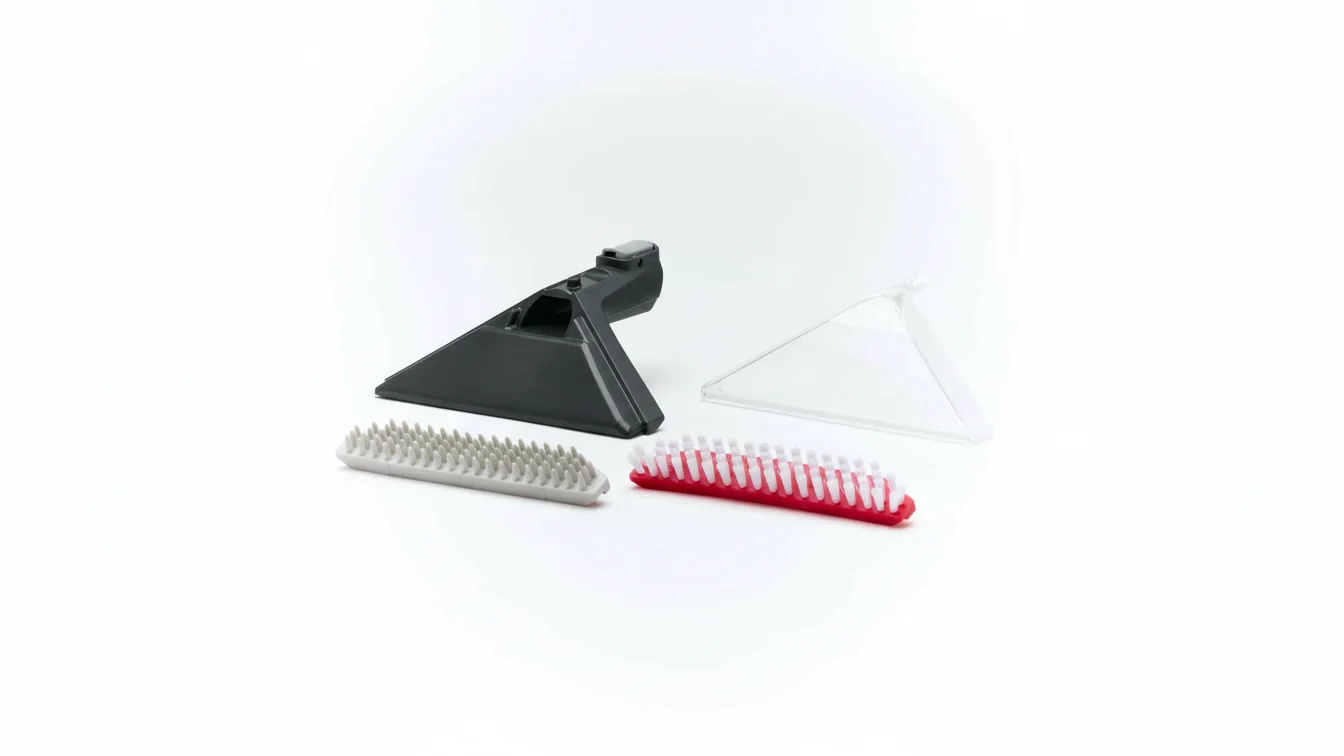
Motorized brush heads are the primary tool for serious pet hair removal. They work by using two actions at once: the rotating bristles physically lift and agitate stubborn hair woven into carpet fibers, while powerful suction immediately pulls it away. This dual-action approach is essential for removing fur that has become oily and mechanically bonded to the carpet. Modern designs often include tangle-free technology with rubber blades or special combs to handle long hair without wrapping. When paired with high suction power, like the 13,000Pa available in our high-performance units, a motorized head can effectively extract deeply embedded fur from dense automotive carpets.
Rubber Nubs: Ideal for Surface-Level Cleanup
Rubber nub tools are excellent for quick, targeted cleanups. Instead of using a motor, they rely on static electricity and friction to grab and pull loose hair from surfaces like upholstery and hard plastics. They are highly effective for final detailing or as a follow-up tool after a deep vacuuming session. Their main benefits are affordability, durability, and zero maintenance—a simple rinse is all that’s needed. They struggle to remove hair that is deeply embedded in thick, needle-punch carpet fibers, as they lack the deep agitation of a motorized brush.
The 2026 Verdict: A Hybrid Strategy Offers the Best Value
No single tool solves every pet hair problem. The most effective and comprehensive cleaning strategy for professional detailers and serious pet owners involves a two-step approach. Use a powerful vacuum cleaner equipped with a motorized brush head for the primary deep-cleaning work on floor mats and cargo areas. Then, use a simple rubber nub tool for quick touch-ups on seats or to catch any stray hairs left behind. By equipping your customers with both tools, or offering a vacuum kit that includes a motorized head, you provide a complete solution that delivers the best possible results and increases perceived value.
Source Certified, High-Suction Car Vacuum Cleaners.

The “Mini-Motorized Head”: Is it the Ultimate Weapon for Cargo Mats?
A mini-motorized head is an excellent tool for deep cleaning fabric-based cargo mats and removing embedded pet hair. Its rotating bristles agitate carpet fibers to lift stubborn debris. However, its effectiveness depends entirely on being paired with a vacuum that has strong suction. For hard rubber mats or coarse debris like sand and mud, high suction power alone is often more important.
How It Works: Agitating Fibers to Loosen Pet Hair
Pet hair becomes deeply embedded in car carpets and fabric mats due to static cling and physical friction, making it difficult to remove with suction alone. The mini-motorized head uses a small, powered brush roll with stiff bristles. As the bristles rotate, they dig into the fabric pile, physically agitating and dislodging trapped hair, dander, and dirt particles. This mechanical action breaks the static bond and lifts the debris to the surface where the vacuum’s airflow can easily pull it away.
The Importance of Pairing It with Strong Suction
The motorized head is only half of the solution. While it excels at loosening debris, the vacuum’s motor must provide enough suction to capture it. Without sufficient power, the loosened dirt and hair can simply resettle into the fabric. To ensure a complete clean, this attachment should be paired with a high-performance vacuum. Our models offering up to 13,000Pa of suction provide the power needed to pull away everything the brush kicks up, delivering a truly deep clean that customers can see and feel.
Challenges with Rubber Mats and Coarse Debris
Cargo mats are not always made of fabric. For hard rubber or plastic liners, the agitating bristles of a motorized head are less effective. These surfaces don’t have fibers for the brush to work on. Cleaning them relies more on raw suction power to lift heavy debris like sand, mud, and small pebbles. In these situations, using a standard crevice or brush nozzle with a powerful vacuum is often a more direct and efficient cleaning method. The motorized head is a specialist tool for textiles, not an all-purpose solution for every type of mat.
Filtration: Do Carbon Filters Prevent the “Wet Dog” Exhaust Smell?
Yes, filters that include an activated carbon layer are highly effective at trapping the volatile organic compounds (VOCs) responsible for pet odors. While our standard HEPA filters excel at capturing physical particles like pet dander, an added carbon stage neutralizes smells instead of just masking them, offering a complete filtration solution for your market.
How Activated Carbon Traps Odors
Activated carbon filters work through a process called adsorption. The carbon has an extremely porous surface that acts like a sponge for odor-causing molecules found in pet smells or stale air. As air passes through the filter, these molecules stick to the carbon’s surface and are trapped. This chemical process neutralizes the volatile organic compounds (VOCs) that create the unpleasant “wet dog” smell, removing them from the air before it’s exhausted from the vacuum.
Why HEPA Filters Alone Don’t Stop Smells
Our standard washable HEPA filters are designed to provide excellent performance in capturing fine physical particles. They effectively remove up to 99.97% of airborne contaminants like pet dander, dust mites, and pollen, which is essential for reducing allergens inside a vehicle. But HEPA filters are not designed to capture gaseous molecules like odors. For a product that solves both problems, the filtration system needs a dual approach: a HEPA filter for particles and an activated carbon layer specifically for odors.
Effectiveness in Odor Control
Integrating an activated carbon layer into a vacuum’s filtration system provides a significant upgrade in performance and perceived value. It directly addresses a common customer complaint that vacuums sometimes recirculate stale smells. For our OEM partners targeting customers with pets or families, offering a vacuum with superior odor control is a powerful selling point. It transforms the product from a simple cleaner into a complete air quality solution, justifying a premium price point and enhancing brand reputation.
Conclusions finales
A product that actually solves the pet hair problem protects your brand reputation and secures customer loyalty. Don’t guess on performance—verify it. Contact our team to discuss your OEM requirements and build a kit that dominates the pet owner market.
Questions fréquemment posées
What is the typical battery life for a cordless pet hair vacuum in 2026?
Our cordless models, equipped with high-capacity 2000-8000mAh lithium batteries, provide up to 40 minutes of continuous runtime. This is ample time for a complete interior cleaning on a single charge. For added convenience, we use modern USB-C fast charging, so they can be easily recharged from a car’s USB port, a laptop, or a power bank.
How effective are these vacuums against pet allergens?
Our vacuums are highly effective because they feature a washable HEPA filtration system. This filter is designed to capture fine particles like pet dander, dust, and pollen, which are common triggers for allergies. By trapping these microscopic allergens, our vacuums not only clean surfaces but also help improve the overall air quality inside the vehicle.
Can these vacuums handle more than just pet hair?
Absolutely. Our high-performance models are engineered with powerful motors that deliver up to 13,000Pa of suction. This “Hurricane Suction” strength allows them to easily pick up heavier debris that other vacuums miss, including sand, dirt, and food crumbs lodged deep within car carpets and floor mats.
What attachments are essential for cleaning a car interior?
We include a full set of essential tools in every kit to ensure a comprehensive clean. This standard set includes a crevice nozzle for reaching into tight spaces like seat seams, a brush head for loosening stubborn hair and debris from upholstery and mats, and an extension hose to easily access hard-to-reach areas like under the seats.
What’s the best car vacuum for dog hair in 2026?
For business buyers targeting the pet owner market, the best vacuum combines high power with the right tools. Our models offer up to 13,000Pa of “Hurricane Suction,” strong enough to lift heavy debris and embedded pet hair from carpets. Paired with our brush head attachment, it effectively agitates fibers to release stubborn fur. As an OEM partner, we help you configure a product line specifically optimized for this demanding cleaning task.
Do pet hair rakes work on automotive needle-punch carpet?
Automotive needle-punch carpet is challenging because its dense fibers trap hair using static and friction. While manual rakes can help, a more effective solution combines mechanical agitation with powerful airflow. Our car vacuums use strong suction to overcome static cling, and the included brush head attachment gets deep into the carpet pile to dislodge and extract embedded hair that surface tools often miss.
Can a vacuum’s motorized brush scratch leather seats?
Care should always be taken when cleaning delicate surfaces like leather. While our brush head attachment is designed for durable carpets and upholstery, we recommend using it with very light pressure on leather. For routine cleaning on leather seats, the crevice nozzle is perfect for reaching into seams, and a soft cloth is usually sufficient for the surface, minimizing any risk of abrasion.
Are the dust bins on pet hair vacuums easy to clean?
We design our vacuums for convenience, and that includes maintenance. Our dust bins are simple to detach and empty. A key benefit for long-term value is our filtration system. We equip our units with either a washable HEPA filter or a durable stainless steel filter. Both can be rinsed clean, which eliminates the need for replacements and reduces ongoing costs for the end-user.
Will a vacuum’s brush roll get tangled with long hair?
Any vacuum with a rotating brush can eventually collect long hair. We designed our brush heads for both effective cleaning and simple maintenance. The attachment is easily detached from the main unit for quick removal of any wrapped hair or fibers. This simple cleaning step ensures the vacuum continues to deliver maximum suction power, especially in cars used by pet owners.

 English
  Español
  Français
  Deutsch
  Português do Brasil
  Русский
  한국어
한국어  日本語
日本語  العربية