


Procuring industrial cleaning equipment requires balancing operator safety with cleaning efficiency, especially in environments with complex stairways and high foot traffic. Standard upright vacuums often weigh between 12.3 and 13.1 lbs, creating muscle fatigue and trip hazards that conflict with OSHA and IBC riser height standards. Adopting Lift-Away technology addresses these risks by decoupling the heavy canister pod from the floor head, reducing the handheld weight to under 8 lbs for safer, more ergonomic handling.
This analysis covers the essential spécifications techniques for B2B sourcing, including one-touch latch durability and suction seals that meet IEC 62885-2 filtration standards for 99.9% particle retention. We examine hose management strategies to prevent mechanical stress and the stability calculations needed to ensure detached pods remain secure on stairs during high-intensity operations.
The “Stair Hazard” of Standard Uprights
Standard uprights create trip hazards when their dimensions fail to align with OSHA and IBC stairway codes. Inconsistent riser heights exceeding a 1/4-inch variation disrupt gait stability, while shallow treads increase fall risks. Adhering to specific 9.5-inch or 11-inch depth standards ensures predictable footing and operator safety.
Gait Stability and the Impact of Non-Uniform Riser Heights
Physical dimensions of stairways and equipment directly influence user safety and balance. Variations in riser height or tread depth exceeding 1/4 inch (6.35 mm) disrupt natural walking patterns and increase trip potential. These inconsistencies force the body to adjust mid-stride, which often leads to falls in high-traffic retail or warehouse environments. Standard upright designs frequently conflict with the 30-50 degree angle slope required for industrial applications, necessitating modular adjustments to maintain safety.
Equipment footprints must account for the 1-inch wide nosing and maintain minimum vertical clearances of 6 feet 8 inches to avoid head obstructions. When uprights fail to meet these spatial requirements, they create “stair hazards” that jeopardize operator stability. Solutions like modular technology address these risks by enabling adjustments that align with architectural codes without requiring a complete overhaul of fixed structures.

Technical Requirements for OSHA and IBC Compliance
Normes de sécurité fournissez des données de mesure spécifiques pour garantir l'intégrité de l'escalier. L'OSHA 1910.25(c) impose une hauteur de marche maximale de 9,5 pouces et une profondeur minimale de marché de 9,5 pouces pour les escaliers standard utilisés dans les environnements industriels. En revanche, l'IBC 1011.5.2 impose des dimensions plus strictes pour les voies d'évacuation, y compris une hauteur de marche maximale de 7 pouces et une profondeur minimale de 11 pouces. Ces réglementations garantissent que l'assiette reste prévisible pour les opérateurs portant des charges ou naviguant sur des plateformes surélevées.
Les escaliers fixes doivent supporter une charge concentrée de 1 000 livres ou cinq fois la charge vive anticipée pour maintenir la stabilité structurelle. Les protocoles réglementaires exigent des garde-corps pour toute configuration d'escalier comportant quatre marches ou plus afin de fournir un soutien nécessaire aux opérateurs. En maintenant un angle d'escalier constant entre 30 et 50 degrés par rapport à l'horizontal, les installations réduisent le risque d'accidents causés par des pentes raides ou peu inclinées.
Lift-Away Mechanics: Button Durability & Seal
Le système Lift-Away utilise un loquet à bouton à une touche pour détacher le panier du embout de sol tout en maintenant une aspiration active. Ce mécanisme repose sur un joint complet anti-allergènes et Filtration HEPA pour piéger 99,9 % des particules jusqu'à 0,3 micron, respectant la norme IEC 62885-2 Cl. 5.11 pour la qualité de l'air intérieur.
| Composant | Mécanisme technique | Norme de performance |
|---|---|---|
| Détachement du panier | Bouton de loquet à une touche | Portabilité manuelle |
| Joint d'étanchéité de l'air | Joint complet anti-allergènes | Rétention de 99,9 % des particules |
| Filtration | Intégré Filtre HEPA | IEC 62885-2 Cl. 5.11 |
Continuité du loquet à bouton unique et du chemin d'aspiration
Un système d'activation à bouton unique permet de détacher le panier de la tête de sol pour faciliter le nettoyage portatif des escaliers et des upholstery. En mode Lift-Away alimenté, l'aspirateur achemine l'énergie électrique via le flexible vers l'embout de sol, ce qui garantit que le rouleau Brosse continue de tourner même après le retrait du panier. Cette configuration permet un nettoyage motorisé sous les meubles à faible profil que les aspirateurs balais traditionnels ne peuvent pas atteindre.
La conception mécanique déplace le centre de gravité vers la poignée lors de l'utilisation portative. Les utilisateurs doivent noter que l'aspirateur peut présenter une traction vers l'avant sur les tapis fins dans ce mode, nécessitant un ajustement manuel ou le remontage du panier pour ajouter du poids. Les ingénieurs ont utilisé des ressorts de loquet internes et des boîtiers en polymère renforcé pour supporter les cycles répétés d'accouplement sans provoquer de fuite d'aspiration ni de fatigue mécanique.
Anti-Allergen Complete Seal and IEC Filtration Data
The Anti-Allergen Complete Seal technology captures 99.9% of dust and allergens ranging from 0.3 to 10 microns. This system undergoes validation according to the IEC 62885-2 Cl. 5.11 standard, which confirms the vacuum remains airtight even when operating under high-suction loads. This seal prevents air from bypassing the filtration system, ensuring all intake passes through the cleaning media before exhaustion.
Integrated HEPA filtration prevents the re-emission of fine particles into the breathing zone during above-floor operation. Mechanical compression seals maintain a vacuum-tight interface between the removable pod and the main suction wand. These seals rely on physical pressure to block air leaks, preserving the high-velocity airflow necessary for effective debris pickup in both upright and detached modes.
Weight Factor: Pod Weight <8 lbs Requirement
Standard upright vacuums often exceed 12 lbs, making stair cleaning difficult. By detaching the suction pod, the weight drops below 8 lbs, meeting the ergonomic threshold for portable use. This configuration allows users to handle stairs and furniture without the bulk of the floor head or base frame.
| Modèle à vide | Total Unit Weight | Portable Pod Specification |
|---|---|---|
| Shark Navigator ADV (LA492) | 12.3 – 13.1 lbs | Under 8 lbs Target |
| Shark Lift-Away Deluxe (NV360) | ~12.5 lbs | Lightweight Detachable Pod |
| KelyLands Engineering | Variable | 20,000Pa Handheld Suction |
Ergonomics and User Strain in Portable Modes
Les modèles verticaux classiques, pesant entre 12,3 et 13,1 lbs, génèrent une fatigue musculaire importante lors du nettoyage des escaliers en hauteur et de l’entretien des tissus d’ameublement. Cette contrainte physique limite la durée et l’efficacité des sessions de nettoyage pour de nombreux utilisateurs. Réduire le poids de l’unité main à moins de 8 lbs répond aux attentes des enseignes retail en matière de maniabilité intuitive, en particulier pour les utilisateurs novices ou souffrant d’une force de préhension limitée.
Les configurations portables permettent une grande polyvalence de mouvement sur les tissus d’ameublement où les têtes de sol standards manquent de la maniabilité nécessaire. En se débarrassant du poids du rouleau brosse motorisé et du châssis principal, l’utilisateur gagne un outil plus agile pour les tâches de nettoyage délicates.
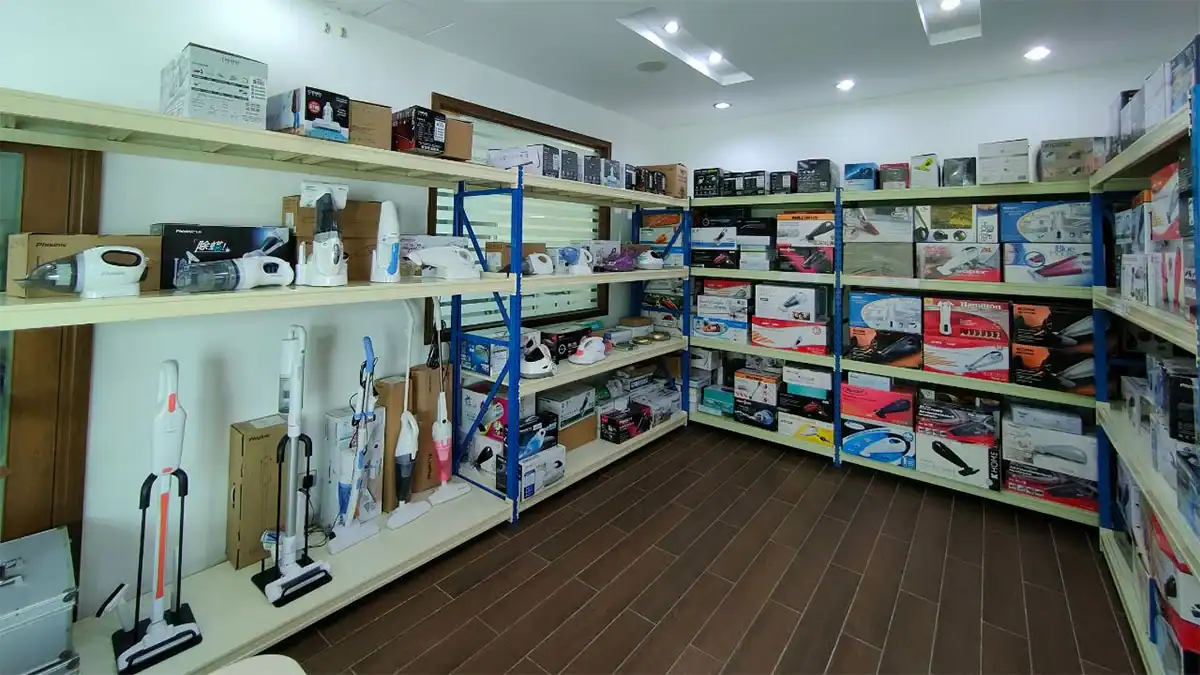
Masse technique et répartition / Performances d’aspiration
Shark Navigator ADV models feature a 12.3 lb total weight, while the detached pod fulfills the sub-8 lb portability requirement. Engineering focus centers on ensuring that this mass reduction does not compromise cleaning power. Detachable pods maintain high suction levels, with KelyLands engineering home models reaching 20,000Pa to ensure thorough debris removal in handheld mode.
Maintaining seal integrity remains a priority during the design phase. Engineering teams focus on latch durability to prevent suction loss during the repeated detachments required for stair cleaning. High-quality seals ensure that the transition between upright and portable modes remains seamless throughout the product lifecycle.
Développez votre marque avec des aspirateurs domestiques haute performance

Hose Management: Preventing Kinks in Lift Mode
Preventing kinks requires maintaining a minimum bend radius using saddles and supports that follow the natural contours of the equipment. We secure hoses with brackets to align motion planes and prevent twisting, while implementing 1.5x pressure testing every six months to ensure long-term durability during dynamic use.
Routing Strategies for Dynamic Flexing
Engineers must align hose bends in the same plane as the equipment’s motion. This alignment prevents mechanical stress on end connections when the vacuum moves between different heights or angles. Utilizing cradles and web slings supports hoses across open gaps, which stops the sagging that leads to permanent kinking or structural damage over time.
Routing hoses in straight lines along equipment contours using brackets and clamps eliminates abrasion and twisting. Maintenance teams must verify that every installation maintains the manufacturer-specified minimum bend radius through the use of permanent saddles. These supports ensure the hose remains functional and unobstructed even during high-intensity lift cycles.
Integrity Testing and Safety Standards
System reliability depends on scheduled hydrostatic testing. Technicians conduct these tests at 1.5x the standard operating pressure for five-minute intervals every six months. Adding whip checks and restraints on fixed assemblies contains potential failures in high-risk areas, protecting both the machinery and the operators from sudden pressure releases.
High-intensity lift operations often trigger surge pressures that exceed standard manufacturer specifications. Operators should inspect for signs of surge damage and validate seal and pod connections against 2026 vacuum performance standards. These regular checks prevent suction loss caused by over-extension or mechanical fatigue during dynamic movement.
Stability: Can the Pod Sit on a Step?
Vacuum pods achieve stability on stairs by maintaining horizontal surface contact and high safety factors. For 2026 models, engineers use a static safety factor of 2 or higher and dynamic factors above 4. Secure placement relies on calculating suction force relative to the pod weight and using high-friction rubber or foam gaskets to prevent air leakage.
Safety Factors and Contact Surface Geometry
Static lifting requires a safety factor greater than 2, while dynamic movement on steps requires a factor exceeding 4 to manage acceleration. Horizontal pad contact maximizes the effective suction area and prevents the air leakage common with slanted or vertical placement.
A central column length 30 mm shorter than the total pod height ensures the structure remains balanced without bottoming out on the stair tread. Pre-cut rubber or foam gasket seals maintain vacuum integrity by conforming to the surface texture of the step.
Suction Force Calculations and Mechanical Support
Engineers calculate suction force (F) using the formula F = P x S, where P represents the vacuum level and S is the effective suction area. Specific pad diameters account for the mass of the vacuum unit and the atmospheric pressure to prevent accidental detachment.
Dual vacuum-mechanical clamping systems in 2026 designs provide a physical lockdown that supports the pod when suction levels fluctuate. Using M6 or M8 screws torqued to precise specifications prevents pod deformation and maintains a level base on narrow step surfaces.
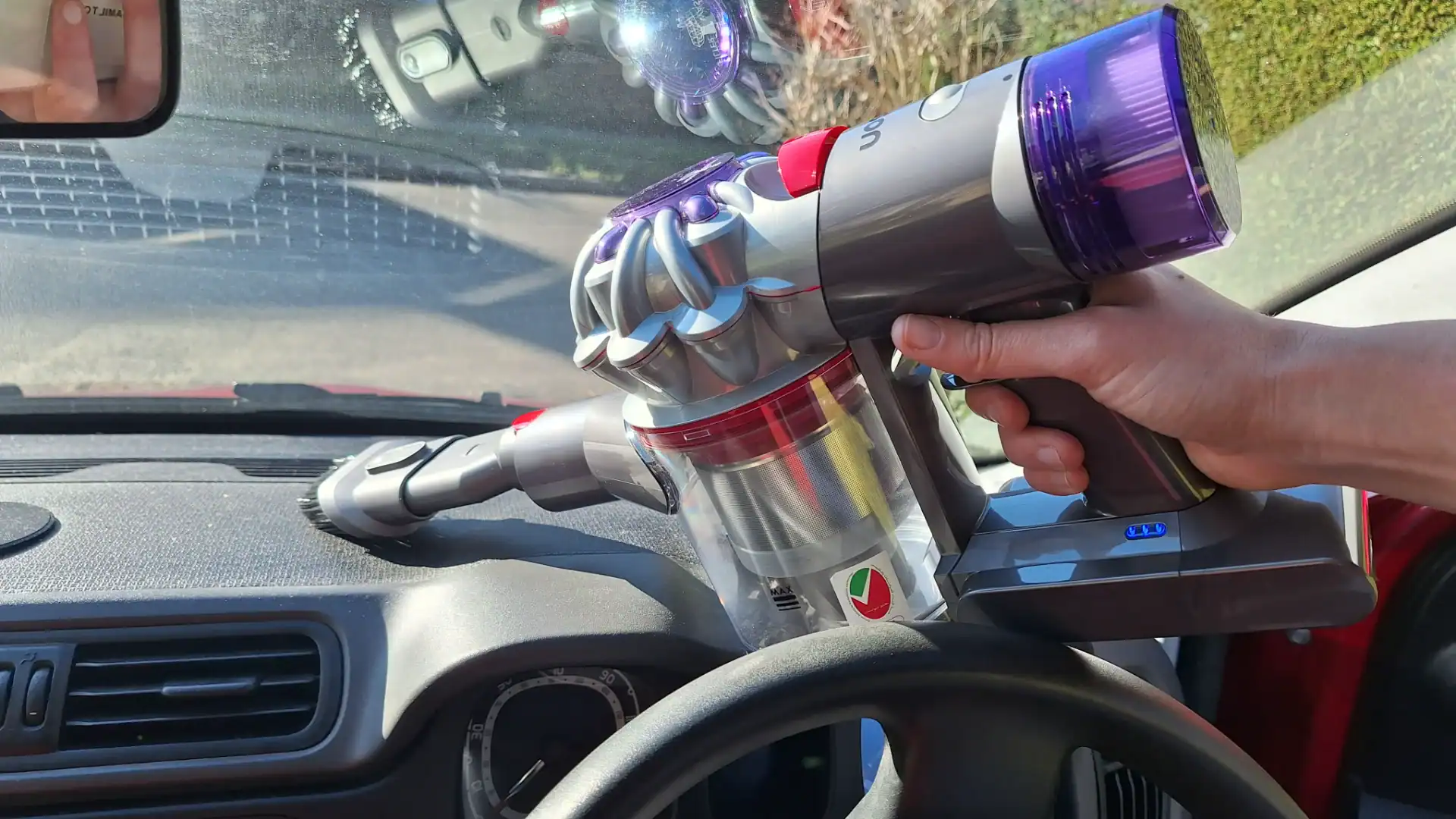
Conclusions finales
Adopting lift-away technology addresses the safety risks inherent in using heavy, fixed uprights on stairways. These modular systems allow users to bypass the physical limitations of standard chassis designs while maintaining rigorous air quality and suction standards. Separating the pod from the base provides the agility required for complex spaces without sacrificing the mechanical power of a traditional vacuum.
Success in sourcing these units depends on balancing OSHA-compliant dimensions with specific hardware requirements like pod weight and latch durability. Choosing equipment with a pod under 8 lbs and validated HEPA filtration secures both operator health and long-term performance. These engineering benchmarks ensure that tools remain functional and safe as facility demands for mobility and hygiene continue to evolve.
Questions fréquemment posées
Does the lift-away latch mechanism affect suction performance over time?
Suction remains consistent as long as the filtration seals stay intact. Engineering tests through 2026 show that lift-away latches using high-grade ABS or polycarbonate do not cause air leaks. Systems utilizing cyclone technology maintain fade-free performance regardless of the latch state.
What is the maximum weight of a detachable lift-away pod?
To ensure ergonomic safety for stair cleaning, the detachable pod must weigh less than 8 lbs. Many high-performance models feature a total unit weight of 5.7 lbs, which includes a 0.75 L dustbin, making the pod itself light enough for one-handed operation.
Can private label clients customize the latch color for specific brands?
Yes, manufacturers provide full color customization using Pantone matching for the housing and latch components. This service is typically available for minimum order quantities of 500 units and covers materials such as ABS, PC, and PP to ensure brand consistency.

 English
 Español
 Français
 Deutsch
 Português do Brasil
 Русский
 한국어
 日本語
 العربية