

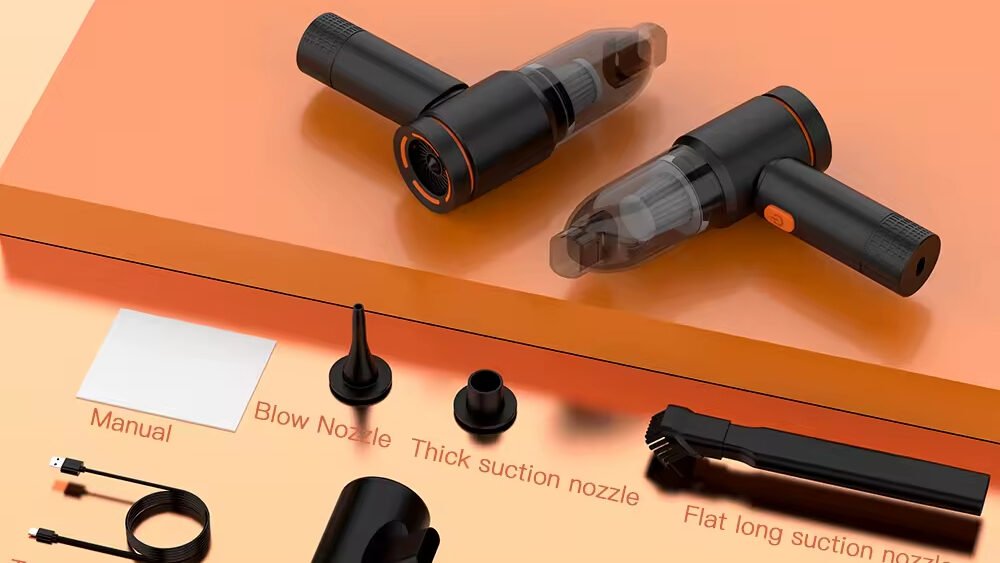
Maintaining a vehicle’s interior requires more than a standard vacuum when microscopic grit embeds deep into carpet fibers. Sand grains as small as 50 µm slip past top-level weaves and lock into the backing, causing abrasive wear that eventually degrades the carpet structure down to the floor pan. Sourcing pro-grade equipment allows detailers to remove these stubborn particles before they cause permanent damage to the vehicle’s interior value.
This guide breaks down the technical benchmarks for effective extraction, including why motors must exceed 13,000Pa suction to pass the industry ‘Sand Test’ of lifting 100g of particles in 10 seconds. We also evaluate the role of 24-inch flexible crevice tools and high-efficiency ろ過システム in maintaining both vehicle cleanliness and operator safety during heavy-duty cleaning sessions.
The “Sand in Mat” Challenge
Sand grains as small as 50 µm embed deep into carpet fibers, where their high shear strength makes them resistant to standard vacuuming. Removing this grit requires high-suction equipment and mechanical agitation, while prevention relies on heavy-duty rubberized mats with raised edges to trap particles before they reach the floor pan.
Micro-Particle Infiltration and Carpet Fiber Friction
Sand grains often reach sizes of 50 µm (0.002 inches), allowing them to slip past top-level carpet weaves and settle directly at the backing. These microscopic particles penetrate deep into the fabric where standard household cleaning tools cannot reach.
Mineral components like quartz and feldspar possess high shear strength. This physical property causes grains to lock into carpet fibers when passenger feet apply pressure. The resulting friction creates a bond that resists vertical suction, requiring mechanical force to break the grains loose.
Embedded grit acts as a constant abrasive. As passengers move, these sharp minerals grind against synthetic carpet yarns. This process causes accelerated wear of the vehicle interior, eventually degrading the carpet structure down to the floor pan.
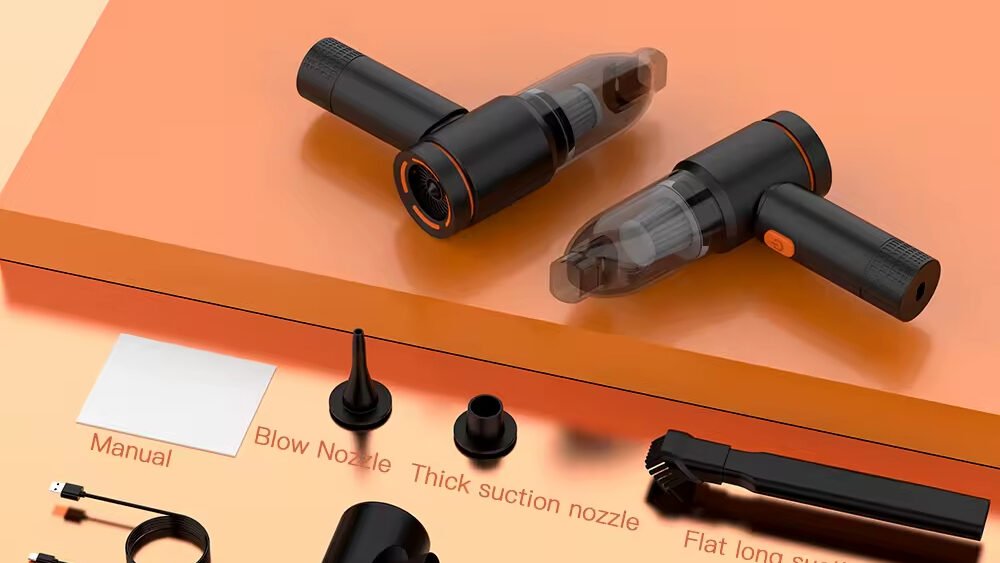
Extraction Tech and Preventive Barrier Standards
効果的な吸引には専用ノズルが必要です 真空システム 吸引力13,000Pa超の高性能クリーナーにより、フロアパンに深く埋もれた砂や砂利を効果的に除去します。硬毛のアジテーションツールを使用すると、クォーツ粒子の静摩擦力を解消し、専用ノズルで吸い出しやすくなります。
縁付きの耐久性あるゴムライナーは、砂の侵入防止に現在標準とされています。全天候対応のライナーは、カーペットの上段で砂をキャッチし、軽く振り落とすだけのメンテナンスが可能です。防水バリアで砂粒を封じ込めることで、細かな粒子が透けやすい車内内装に達するのを完全に防止します。
ビーチを移動する際は、タイヤ圧を18〜20PSIに下げると、車内に持ち込まれる砂の量を軽減できます。この調整によりタイヤの接地面積が増え、入退場時の砂の巻き込みが最小限に抑えられます。物理的な障壁と組み合わせることで、車内への砂の蓄積に対処する包括的な防御策を構築できます。
Essential Tools: Long Crevice, Brush, and Flexible Hose
自動車ディetailingには、狭い車内空間を移動するために、24インチの柔軟な隙間用ノズルと、潰れにくいホースが必要です。これらのアタッチメントは1.25インチの直径と180度の曲げ能力を備え、シート下などへの吸引を可能にし、柔らかい馬毛ブラシは、高吸引力操作時に繊細なダッシュボードやコンソールを傷から守ります。
| ツール種類 | 技術仕様書 | 主な用途 |
|---|---|---|
| 可動式隙間ノズル | 全長24インチ、曲げ半径180度 | シートとコンソールの深い隙間 |
| 商用ホース | 全長20フィート、直径1.25インチ | 車内への長時間リチウム |
| 馬毛ブラシ | 天然の柔らかい毛 | ダッシュボードおよびメーターパネルのクリーニング |
| Universal Adapter | 28mm to 38mm fitment | Cross-brand vacuum compatibility |
Flexible Crevice Tools and Hose Dynamics
24-inch crevice tools provide 180-degree flexibility to access tight gaps between car seats and center consoles. These tools reach areas that standard rigid attachments miss. 20-foot commercial hoses paired with 10-foot extensions use a 1.25-inch diameter to keep airflow consistent. The crushproof design prevents suction loss if the hose is stepped on or pinched during a detailing session. Notched and angled nozzles further assist by maintaining airflow even when pressed against floor wells.
Protective Brushes and Universal Compatibility
Soft horsehair brushes remove dust from dashboards and plastic panels without leaving surface abrasions. The natural fibers stay gentle on electronic displays and glossy interior trim. For floor mats, stiff bristle attachments agitate sand and dirt for easier extraction. Universal adapters bridge the gap between different equipment brands, supporting vacuum ports from 28mm to 38mm. This ensures specialized detailing tools fit most professional and home units without requiring specific brand-locked attachments.
The “Sand Test”: Lifting 100g of Sand in 10 Seconds
In 2026, the sand test serves as a critical performance benchmark for カー用掃除機, measuring their ability to lift 100g of particles within 10 seconds. This feat requires a consistent ガロン毎分(GPM)単位の of 10g/s to overcome gravity and surface friction, typically demanding motor suction above 13,000Pa and specialized nozzle geometry.
| 工学的規格 | Particle Specification | テストの焦点 |
|---|---|---|
| MIL-STD-810 (Method 510) | 150–850 μm calibrated sand | Mechanical resistance and high-velocity flow physics (~18 m/s). |
| ISO 12103-1 | Arizona Desert Sand (ATD) | Ensures particle uniformity for repeatable automotive durability results. |
| MIL-STD-202 | Dust particles ≤150 μm | Seal penetration, abrasion, and internal component longevity. |
Quantifying Suction Power Through Particle Mass
Lifting 100g of sand in 10 seconds requires an average intake velocity that overcomes the 9.8 m/s² gravitational pull and particle-to-surface friction. Unlike fine dust, granular sand possesses higher mass and air resistance, necessitating a vacuum motor that can sustain high kinetic energy. The physics of this test shift the focus from static suction (Pascals) to dynamic airflow (CFM) under heavy load.
Engineers use this test to measure sustained airflow stability. As sand accumulates in the dust cup, the increasing weight and potential filter blockage can cause suction drops in low-quality motors. A tool that completes the 10-second lift successfully shows it has the thermal management and motor torque to maintain a 10g/s intake rate even as the internal resistance of the system changes.
Successful performance indicates a tool can handle deep-seated debris in car carpets. Standard suction ratings often fail to reflect how a tool handles the “weight” of debris. By analyzing the time-to-lift for a specific mass, technicians can verify that the vacuum manages the density of real-world road grit, reaching particles buried within dense automotive upholstery fibers.
Technical Compliance and Particle Size Standards
The test aligns with MIL-STD-810 Method 510 Procedure 2, which utilizes calibrated sand between 150 and 850 μm to evaluate mechanical resistance. While car detailing has its own informal benchmarks, these military-grade standards provide the data for how particles interact with high-speed air. Using this specific grit size ensures that the vacuum nozzle can capture diverse particles without clogging the intake path or damaging the impeller.
Vacuum systems must utilize ISO 12103-1 Arizona Desert Sand (ATD) to ensure particle uniformity and repeatable test results across different laboratory environments. This standardized sand mimics the sharpness and composition of natural silica, allowing manufacturers to calibrate motor sensors and filter efficiency. Without a uniform material, a “sand test” would be impossible to compare between different vacuum models.
Seals and bearings must resist ingress from particles smaller than 150 μm per MIL-STD-202 specifications to maintain tool longevity during high-mass debris intake. Moving 100g of sand creates significant abrasive force within the vacuum tubes. Durable tools use reinforced seals and high-density filters to prevent these fine particles from reaching the motor bearings, preventing premature failure during heavy-duty cleaning tasks.
Premium OEM/ODM Home Vacuums for Your Global Brand

Filtration: Preventing Dust from Blowing Back in Face
High-efficiency air filtration protects detailers from fine particulates like polish residue and brake dust. Systems utilizing electrostatic media or HEPA filters capture particles down to 0.1 micron, achieving a 99.7% reduction in airborne dust to ensure the operator’s breathing zone remains clear during heavy cleaning.
Principles of Airflow and Fine Particulate Capture
Air filtration systems in professional detailing bays target microscopic debris that often bypasses standard ventilation. High-performance units utilize electrostatic media to attract and trap particles as small as 0.1 micron, including fine polish dust and metallic brake residue. By cycling the air volume of a 680-square-foot garage five times every hour, these systems significantly reduce the risk of inhaling particulates during intensive cleaning phases.
Effectively managing the breathing zone requires high airflow speeds, often peaking at 754 CFM. This rapid movement pulls suspended dust away from the operator’s face, preventing the blowback typically associated with compressed air use. Maintaining low noise levels, often around 51 dB, allows these systems to run continuously without disrupting the work environment or requiring additional hearing protection during long correction sessions.
Engineering Standards for Sustained Suction and Filtration
Professional-grade filtration relies on HemiPleat technology to maintain efficiency over time. This design uses synthetic beads to create even spacing between filter pleats, preventing the media from collapsing under heavy dust loads. This increased surface area allows the system to handle significant volumes of abrasive automotive dust without a drop in suction or air volume movement, which is critical for maintaining a clean workspace.
Cleaning mechanisms like Roto-Pulse systems use compressed air at 90 psig to clear the filter cartridges. By covering 30-40% more surface area than traditional reverse-pulse designs, these systems prevent differential pressure spikes that can damage the motor or reduce filtration quality. Such engineering standards ensure a filter life of up to 3000 hours, offering a low-maintenance solution for high-volume detailing shops and serious enthusiasts.
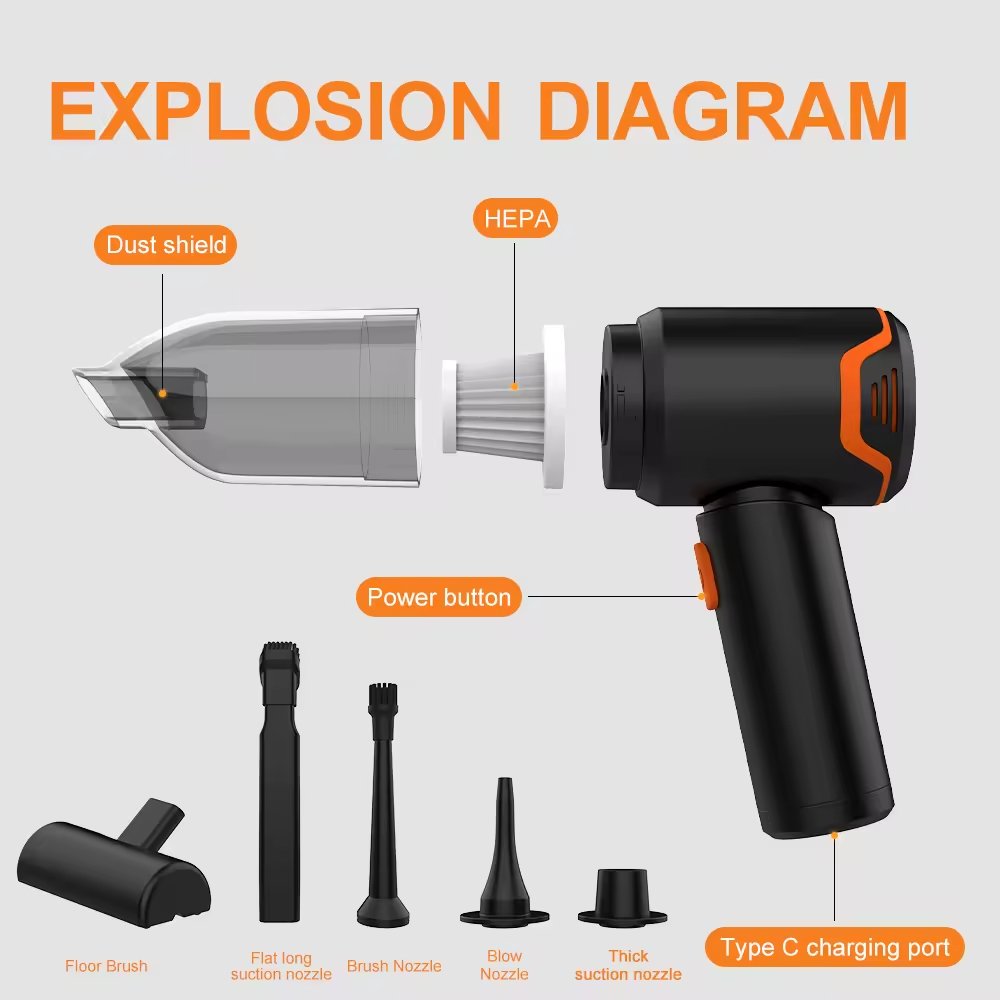
LED Lights: Cleaning Under Dark Seats
Cleaning LED lights under dark seats prevents a 10% drop in lumen output caused by dust accumulation. Regular maintenance using microfiber cloths and mild soap protects polycarbonate lenses from thermal stress while ensuring the vehicle remains compliant with FMVSS 108 lighting standards.
Impact of Dust Accumulation on LED Performance
Dust layers on LED lenses reduce lumen output by 10% or more, which dims the cabin floor area significantly. Grime buildup acts as an insulator, increasing internal operating temperatures and accelerating the degradation of the LED chip. Quarterly cleaning schedules maintain visibility in dark vehicle footwells, while monthly intervals suit high-dust environments like off-road vehicles to prevent safety risks and maintain fixture longevity.
Cleaning Protocols and Regulatory Standards
Use microfiber cloths and mild car wash solutions to clean polycarbonate lenses without causing scratches or clouding. Drivers or technicians must disconnect power sources before cleaning to prevent short circuits near electrical components located under the seat. Restoration kits including fine sandpaper and UV sealants help repair oxidized covers and maintain compliance with FMVSS 108 standards. Applying LED-safe cleaning sprays designed for electronics to sealed units avoids moisture ingress into the housing while preserving electrical integrity.
最終的な所感
Cleaning a vehicle interior effectively requires tools that move beyond basic suction. Professional setups use high-pressure systems and specialized attachments to pull abrasive grit from deep within carpet fibers. Using specific gear like horsehair brushes and extended crevice tools helps reach hidden debris while protecting delicate dashboard components.
High-performance extraction and filtration protect the vehicle’s interior materials over the long term. Removing microscopic sand grains prevents the constant friction that wears down synthetic yarns and degrades the carpet structure. Reliable equipment ensures a cleaner cabin and helps maintain the vehicle’s value by stopping wear before it starts.
よくある質問
Does the detailing kit include a flexible extension hose?
Most premium kits for 2026 include a 10-foot ultra-flexible hose. These attachments typically use a 1.25 to 2.5-inch diameter and provide four times the durability of standard hoses, letting you reach deep under vehicle seats.
Can these tools lift heavy sand and pebbles?
Yes, these accessories use standard shop vac suction to remove heavy sand, pebbles, and automotive debris from carpets and floor mats. The design focuses airflow to lift dense materials that often get trapped in fibers.
Is the vacuum filter washable after heavy dust exposure?
The filters are ready for repeated use and remain washable even after heavy dust exposure. Regular cleaning maintains high suction levels and ensures the vacuum operates efficiently for both wet and dry detailing tasks.

 English
 Español
 Français
 Deutsch
 Português do Brasil
 Русский
 한국어
 日本語
 العربية