 メインコンテンツへスキップ フッターへスキップ


Subject: Fridge battery runtime calculator — we need to stop guessing. Body: The last time a distributor published a “12 hours on a 100Ah battery” claim without derating for lead-acid vs. LiFePO4, the returns hit in week three. Buyers ran their portable fridge battery calculator for camping, got optimistic numbers, and complained when the compressor kicked off at 11 PM. So here is the math that holds up under real duty cycles.
The core issue is not the fridge wattage — it is how buyers convert amp-hours into usable watt-hours and then forget that a lead-acid battery should only be discharged to 50% if they want it to last past season one. A car fridge Ah to Wh conversion calculator that skips that step is worse than useless; it sets false expectations. For private-label brands building product pages, embedding a tool that asks for battery chemistry and ambient temperature separates you from every generic spec sheet.
What follows is the exact formula we use at KelyLands when a distributor asks us to validate their claims before sample approval. It covers nominal voltage differences (12.8V lithium vs. ~12V lead-acid), the duty cycle lookup table by climate zone, and why a cigarette-lighter socket loses roughly 0.3V compared to a dedicated Anderson plug — enough to shift your runtime estimate by an hour or more over a full discharge cycle.
Why RFQ Volume Buyers Need Their Own Calculator Tool
An embedded calculator turns a product page into a buying decision.
End users heading into summer camping season search for one thing before they click “add to cart”: will this fridge run on my battery setup? They type “12V fridge runtime calculator for LiFePO4” or “car fridge battery drain calculator with duty cycle” into Google. If your brand page returns a static spec sheet and a competitor’s page returns an interactive calculator that spits out hours based on their exact battery size, you lose that customer at the comparison stage.
The private-label brands winning the outdoor gear space are the ones that remove math anxiety from the purchase. A buyer with a 50Ah LiFePO4 battery and a KelyLands L-Series fridge drawing 45W at 25% duty cycle in moderate climate does not want to crack open a spreadsheet. They want to slide three numbers into a widget and see “38 hours” appear. That number becomes the justification for buying your fridge instead of a cheaper model with no runtime data.
Embed It as a Lead-Generating Widget on Your Landing Pages
A standalone calculator page is useful. A calculator embedded directly on your car-fridge product pages is better. The user selects their battery type (lead-acid vs LiFePO4), enters Ah capacity, picks an ambient temperature zone, and the widget outputs estimated runtime using the same derating logic discussed in this guide. No redirect, no friction.
Here is the part most brands miss: you can design the widget to capture an email address before revealing results. “Enter your email to receive this calculation + your personal runtime chart.” The user gets their answer immediately — you get a warm lead who has already identified themselves as an active buyer of portable power equipment. For KelyLands distributors running private-label storefronts, that contact list is worth more than the individual sale because it feeds repeat purchases of accessories, replacement batteries, and future fridge upgrades.
The technical implementation is straightforward. Use JavaScript with localStorage so returning visitors see their last calculation without re-entering data. Host it as an iframe or React component so it loads inside your existing PDP layout without breaking site speed metrics. Reference factory-tested values from KelyLands production data — running watts per compressor model, verified duty cycles at 25°C, 32°C, and 40°C ambient — so every result ties back to real bench testing rather than theoretical estimates.

Step 1: Convert Battery Capacity from Amp-Hours to Watt-Hours
Converting Ah to Wh is the single most common error in runtime estimates.
Most battery specs are labeled in amp-hours (Ah). Your fridge draws power in watts. You cannot divide one by the other and get a meaningful number. The bridge between them is voltage, and this is where buyers lose accuracy.
Nominal Voltage Matters: 12V Lithium vs 12V Lead-Acid
A 100Ah lead-acid battery at 12.8V holds roughly 1,280 watt-hours (Wh). A 100Ah LiFePO4 battery at a nominal 12.8V also holds around 1,280 Wh — on paper. The difference is that lead-acid voltage sags under load. When your fridge compressor kicks in, a lead-acid battery’s effective voltage can drop to 11.5V or lower, reducing real available watt-hours by up to 15%. LiFePO4 holds its voltage curve flat until near depletion.
の場合 カー冷蔵庫 battery drain calculator with duty cycle, you must use the battery’s nominal voltage — not the charging voltage (13.8V) and not the cutoff voltage (10.5V for lead-acid). The formula is simple: Watt-hours = Amp-hours × Nominal Voltage.
Do Not Use Full Capacity — Derate to 80% for Longevity
Running a lead-acid battery below 50% state of charge repeatedly cuts its cycle life from ~500 cycles to under 200. For LiFePO4, the safe floor is around 20% remaining capacity — but even then, routinely draining to zero accelerates capacity fade by roughly double over two years.
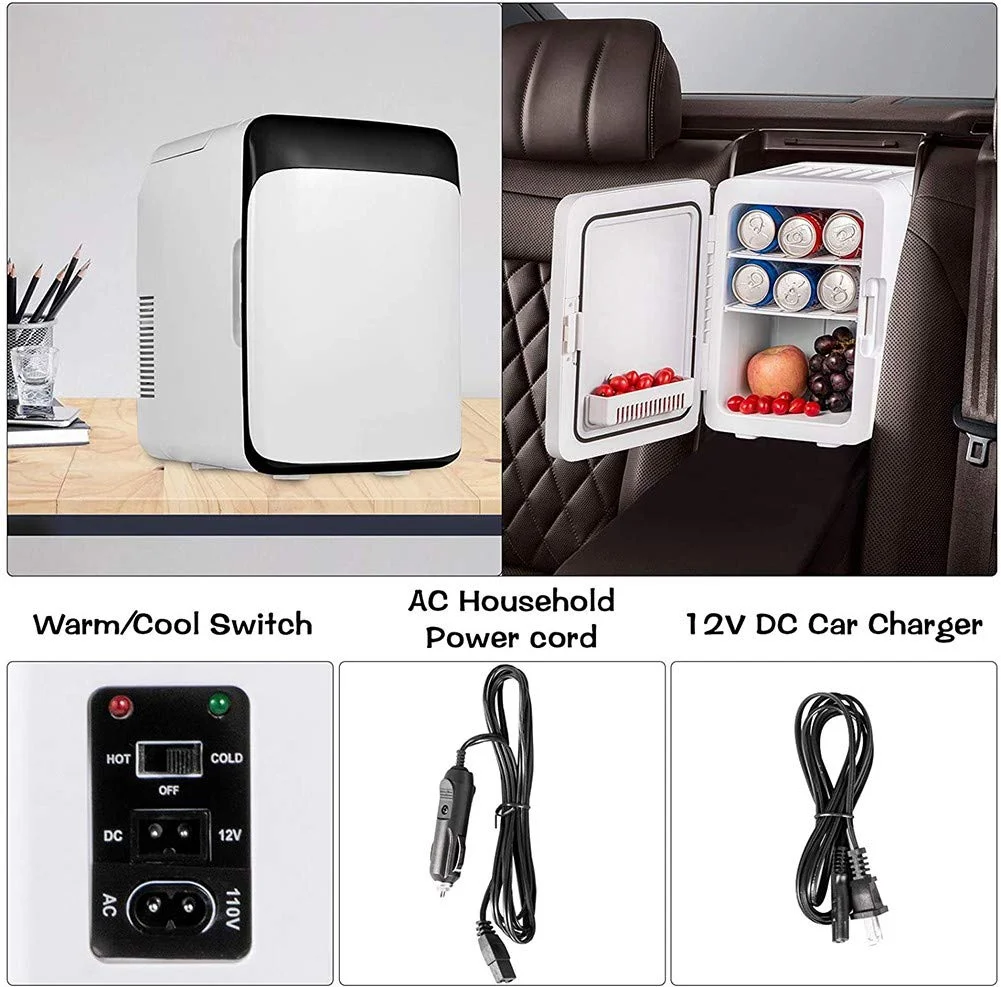
Step 2: Estimate Your Fridge’s Daily Watt-Hour Consumption
Daily Wh is the only number that survives a battery chemistry change.
Most end-user guides tell people to look at the fridge’s amp draw and guess. That method breaks the second you swap a lead-acid battery for a LiFePO4, or switch from a cigarette-lighter outlet to an Anderson plug. The voltage changes, the usable capacity shifts, and suddenly that “3 amp” fridge is pulling different wattage than expected. For a private-label brand publishing runtime numbers on your product page, that mismatch triggers refunds.
Why Daily Wh Replaces Hourly Amps
Amp-hours measure current at one voltage. Watt-hours measure actual energy consumed regardless of voltage. When you build a カー冷蔵庫 battery drain calculator with duty cycle, you need the energy figure because your customer might run the fridge off a 12.8V LiFePO4 battery or a 12V lead-acid deep cycle. The fridge’s compressor draws the same power either way, but the Ah rating of those batteries means different things.
Take a KelyLands ミニ冷蔵庫 rated at 45W running watts. At 12V that equals 3.75A. At 13V it equals 3.46A. If you publish an hourly Ah figure based on 12V and your customer uses a lithium battery sitting at 13V most of the discharge curve, your runtime estimate inflates by roughly 8%. That difference turns into negative reviews on day three of a camping trip.
The Formula: Running Watt × Duty Cycle × Hours Run
The calculation has three variables and none of them are guesses if you use factory-tested data from KelyLands’ production line in Ningbo.

Step 3: The Core Formula Runtime Hours = Battery Usable Wh ÷ Fridge Daily Wh × Hours per Day
Startup surge can spike current 3x above running draw.
Most runtime calculators stop at the average daily draw. That works for LED lights or a phone charger. A compressor fridge is different — every time the motor kicks in, it pulls a startup surge that can hit 3x the rated running wattage for 200-500 milliseconds. If your calculator ignores this spike, you are publishing a number that fails in the field.
Why Average Daily Wh Doesn’t Capture the Surge
The formula Runtime Hours = Battery Usable Wh ÷ Fridge Daily Wh × Hours per Day assumes steady-state consumption. That assumption holds when the fridge runs continuously in a hot environment — because the duty cycle is high and startup events are frequent but brief. The problem appears in cooler conditions where the fridge cycles on and off less often.
Say your fridge draws 4A running but spikes to 12A at startup. In a moderate climate with a 25% duty cycle, the compressor might start only 8 times per day. Those 8 surges each consume roughly 0.5 Ah above the running baseline — about 4 Ah total per day that your average calculation never accounts for. Over two days of runtime, that’s nearly an hour of lost operation.
How to Factor Startup Surge Into Your Calculator

When Using a Carbon Monoxide or AGM Battery – Extra Derating Factor Required
Carbon-monoxide and AGM batteries share a hidden penalty: neither delivers full rated capacity under sustained fridge loads.
Most runtime calculators assume a standard flooded lead-acid battery. That assumption breaks down when the buyer pairs the fridge with a carbon-monoxide (CO) alarm battery or an AGM battery. CO alarm batteries are designed for low-current, always-on monitoring — not for the 3-5 amp draw of a compressor fridge cycling on and off. The internal plate geometry prioritizes standby life over deep discharge recovery.
Why AGM Batteries Need a Separate Derating Factor
AGM batteries handle vibration better and charge faster than flooded cells. But their usable capacity under a fridge load is roughly 10-15% lower than the label rating because of how the absorbed glass mat limits electrolyte migration at higher discharge rates. A 100Ah AGM battery in a hot climate (40°C ambient, duty cycle near 60%) effectively delivers only 65-70 usable Ah before voltage drops below the fridge’s cutoff threshold.
That derating compounds when your calculator already applies a general lead-acid derating of 50%. An AGM-specific calculator should apply an additional factor of 0.85 on top of the base derating. For private-label brands publishing runtime numbers, this distinction separates credible specs from optimistic ones that trigger customer complaints.
CO Alarm Batteries: Not Designed for Fridge Duty
-
- Spec trap: “12V 7Ah” on a CO alarm battery looks like it could run a small fridge for an hour. In reality, its internal resistance is optimized for micro-amp draws. Under a fridge’s 起動サージ(過渡電流) (6-8 amps for KelyLands L Series compressors), voltage sags instantly, and the BMS or protection circuit may trip.
- Risk: “Buyers who substitute a CO alarm battery into their camping setup get runtime measured in minutes — then blame the fridge brand.” Your calculator must flag this chemistry explicitly so your product pages don’t inherit that liability.
結論
The difference between a generic runtime claim and a defensible one comes down to the derating factors you bake into your calculator. Most suppliers won’t tell you that their quoted Ah rating assumes a perfect 25°C lab environment — not a real-world battery at 50% depth of discharge with a fridge cycling through a hot afternoon. That gap is where negative reviews live.
-
- Convert battery capacity from Ah to Wh using nominal voltage (12.8V for LiFePO4, ~12V for lead-acid).
- Derate usable capacity to 80% for LiFePO4 and only 50% for lead-acid or AGM batteries.
- Use duty cycle lookup tables by ambient temperature zone, not flat watt-hour averages.
- Factor in Anderson plug efficiency gains over cigarette-lighter outputs for real-world runtime accuracy.
Now that you have the formula framework, the next step is building your brand’s comparison chart using factory-tested values from your supplier’s spec sheets. Start by pulling the running wattage and duty cycle data for each model in your lineup — KelyLands provides these per-model numbers so you can publish accurate figures without running your own bench tests. Compare those specs against the battery chemistry your target customers actually use, and you’ll have a calculator that earns trust instead of generating refund requests.
よくある質問
カー用冷蔵庫のバッテリー駆動時間をどうやって計算すればよいですか?
バッテリー容量をアンペア時(Ah)からワット時(Wh)に変換するには、公称電圧(LiFePO4は12.8V、鉛酸は12V)を掛けます。その後、長期使用を保証するために80%に制限した実質的な容量を算出します。正確な結果を得るためには、時間ベースのアンペアではなく、毎日のワット時(Wh)を使用してください。.
カー用冷蔵庫の Duty Cycle(連続運転率)とは何ですか?
デューティサイクルとは、圧縮機が1時間あたりに実際に稼働する時間の割合を示し、周囲温度によって変動します。一般的に暑い気候では50%、標準的な気候では33%、涼しい気候では25%となります。納入業者から提供される温度別のデューティサイクルまたは試験データをご利用ください。.
Why can’t I use full battery capacity for runtime?
Using full rated capacity damages lead-acid batteries quickly and reduces LiFePO4 サイクル寿命 significantly—always derate to about 80% usable capacity for longevity. This derating factor prevents premature battery failure and ensures your runtime calculator. Derate first; publish realistic numbers to avoid returns.
Does startup surge affect my runtime calculation?
Startup surge is a momentary spike when the compressor kicks on and should not be included in average daily consumption calculations because it lasts only seconds. However, you must ensure your. Ignore surge for daily Wh but verify peak current capability separately.

 English
 Español
 Français
 Deutsch
 Português do Brasil
 Русский
 한국어
 日本語
 العربية