 メインコンテンツへスキップ フッターへスキップ

Indoor air quality is a growing concern, with studies showing that the air inside a home can be more polluted than the air outside. Modern vacuum cleaners address this challenge directly with two key technologies: brushless motors and HEPA filtration.
The integration of brushless motors provides greater efficiency and durability, changing how vacuums perform. This article explores how these components work in tandem with advanced filtration to deliver superior cleaning power and healthier indoor air.
Key Takeaways from Modern Vacuum Cleaner Technologies
- Brushless motors provide longer lifespan and higher efficiency in vacuum cleaners.
- HEPA filtration plays a crucial role in improving air quality by trapping tiny allergens and particles.
The Role of Brushless Motors in Modern Vacuums
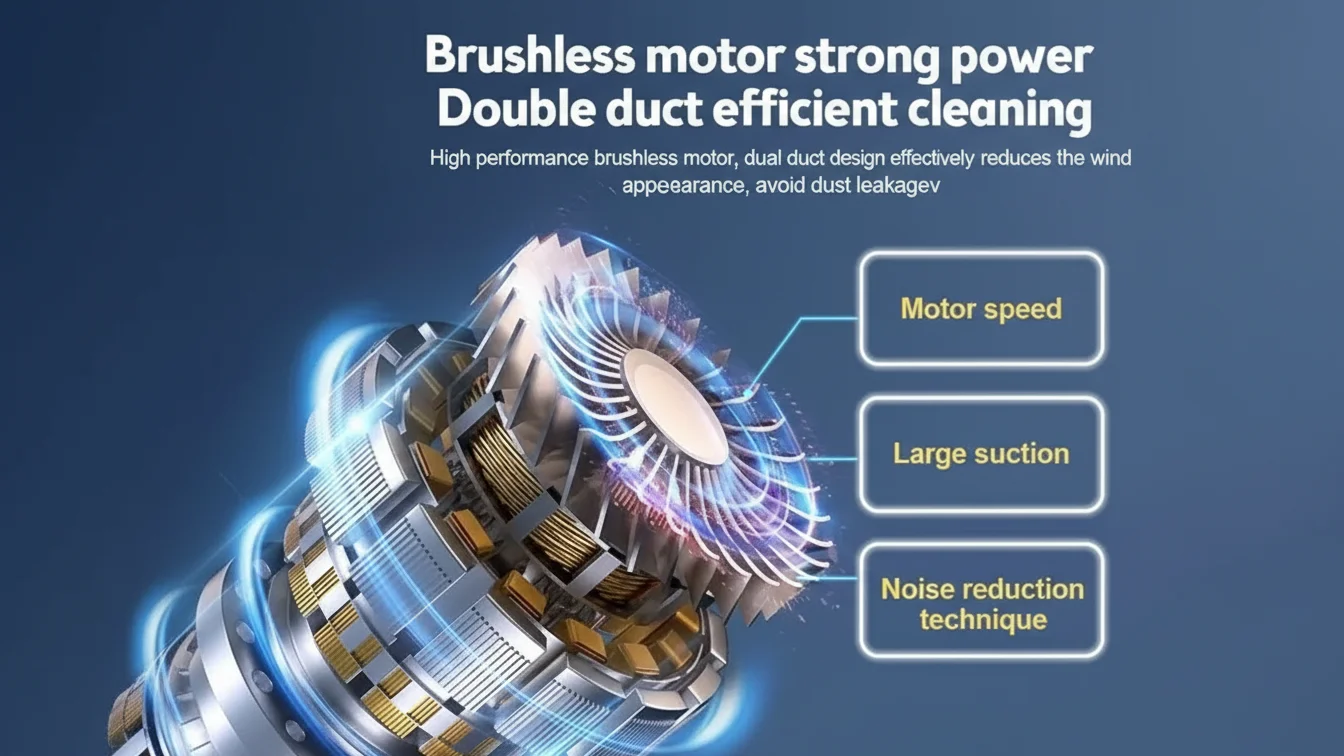
Brushless motors have rapidly become the gold standard in high-end vacuum cleaners, primarily due to their exceptional efficiency and durability. Unlike traditional brushed motors, which rely on carbon brushes that wear down over time, brushless motors operate with minimal friction. This design significantly reduces the need for maintenance, as there are no brushes to replace, leading to a longer lifespan and fewer operational issues. The absence of brushes also allows for quieter operation, contributing to a more pleasant user experience.
The core of a brushless motor’s design is the use of permanent magnets on the rotor and electromagnets on the stator. An electronic controller precisely manages the energy flow to the stator’s electromagnets, creating a rotating magnetic field that spins the rotor. This process, known as electronic commutation, replaces the physical carbon brushes of older motors. The result is a system with virtually no friction, which translates directly into less energy wasted as heat, reduced wear on components, and a significant decrease in operational noise.
In addition to their reduced maintenance needs, brushless motors also enhance vacuum suction power. These motors deliver a higher power-to-weight ratio, enabling vacuums to maintain strong suction without the need for larger, heavier motors. This efficiency allows for consistent, powerful cleaning across various floor types, ensuring optimal performance throughout the life of the vacuum.
How Brushless Motors Revolutionize Vacuum Efficiency
Brushless motors have fundamentally changed the performance of modern vacuum cleaners by eliminating the friction and wear associated with traditional carbon brushes. Without the need for these brushes, the motor operates more smoothly, resulting in quieter operation and significantly reducing maintenance requirements. This increase in efficiency leads to a longer lifespan for the vacuum, making it a more reliable choice for consumers who want durable cleaning solutions.
Additionally, brushless motors offer better power-to-weight ratios compared to their brushed counterparts. This means that vacuums equipped with brushless motors can provide superior suction power without needing larger, heavier motors. As a result, manufacturers can design lighter and more energy-efficient vacuums that maintain high performance, offering users a more powerful cleaning experience and precise vacuum motor speed control while saving on electricity costs.
A practical example of this transition was seen with a commercial cleaning service that upgraded its fleet from traditional brushed motor vacuums to new brushless models. The company reported a 30% reduction in maintenance-related downtime within the first six months, as there were no carbon brushes to replace. Furthermore, their cleaning staff noted that the new units were lighter and ran longer on a single charge, allowing them to cover more area without fatigue or interruption. This shift not only improved operational efficiency but also elevated customer satisfaction due to quieter, more consistent cleaning performance.
Understanding HEPA Filtration in Vacuum Cleaners
HEPA filtration is essential in modern vacuum cleaners, especially for hypoallergenic vacuums. These filters are designed to capture 99.97% of particles as small as 0.3 microns, which includes common allergens such as dust mites, pet dander, and pollen. This ability to trap microscopic particles is crucial for improving indoor air quality, especially in homes where allergy sufferers live. In fact, without HEPA filtration, even the most powerful vacuums would miss a significant portion of allergens that can trigger reactions.
HEPA filters capture particles through a combination of three mechanisms. The first, interception, occurs when particles following the airflow come within one radius of a fiber and get stuck. The second, impaction, affects larger particles that cannot avoid fibers due to inertia and collide with them. The third and most fascinating mechanism, diffusion, governs the smallest particles (typically below 0.1 microns), which move erratically in a zigzag pattern, increasing their likelihood of hitting and sticking to a filter fiber. It is this multi-pronged approach that makes HEPA filters so effective at trapping a wide range of airborne contaminants.
One of the major challenges in HEPA filtration is capturing particles that are even smaller than 0.3 microns, such as some bacteria and viruses, which fall between the range of 0.15 to 0.2 microns. To address this, advanced HEPA filters have been developed with improved materials and designs that enhance particle capture efficiency. These filters often incorporate multiple layers or use electrostatic forces to attract and trap particles, ensuring that the vacuum not only cleans surfaces but also purifies the air, creating a healthier living environment.
Why HEPA Filters Are Crucial for Allergy Management
HEPA filters play a vital role in allergy management by capturing 99.97% of airborne particles as small as 0.3 microns. This includes common allergens such as dust mites, pet dander, and pollen, which are often too small to be caught by standard filters. By trapping these microscopic particles, HEPA filters significantly improve the air quality in a home, making them a critical component for households with allergy sufferers.
Consider the case of a family with a young child suffering from asthma triggered by dust mite allergens. Despite regular cleaning, the child’s symptoms persisted. After switching to a hypoallergenic vacuum cleaner equipped with a true HEPA filter, the parents noticed a marked improvement in their child’s respiratory health within a few weeks. Air quality monitoring confirmed a significant drop in airborne particulate matter, demonstrating the filter’s direct impact on creating a healthier home environment for allergy sufferers.
In addition to particle capture, a sealed vacuum system is necessary to ensure that all air passes through the filtration stages before exiting the unit. Without a sealed system, there is a risk of unfiltered air being released back into the environment, potentially reintroducing allergens into the home. A well-sealed vacuum ensures that the entire cleaning process is effective in reducing allergens and creating a healthier indoor environment.

Combining Brushless Motors and HEPA Filters: The Ultimate Vacuum Performance
When brushless motors and HEPA filtration systems work together, the result is a vacuum cleaner that delivers both exceptional cleaning power and efficiency. Brushless motors offer steady, high-speed rotation without the friction losses common in brushed designs, allowing them to sustain the strong suction needed to pull air through dense HEPA filters. This synergy ensures that even as the vacuum traps microscopic particles, suction power remains consistent, reducing cleaning time and improving overall air quality.
This technological pairing is particularly vital for the cordless vacuum market. The energy efficiency of a brushless motor means less battery power is wasted on heat and friction. This conserved energy can be dedicated to maintaining the high airflow required to pull air through a dense HEPA filter. Consequently, manufacturers can create powerful, lightweight cordless vacuums that offer extended runtimes and uncompromised filtration, giving users the freedom to deep-clean an entire home without being tethered to a power outlet.
The power demands of a true HEPA system place significant stress on traditional motors, which often struggle to maintain airflow without overheating or noise escalation. Brushless motors, however, provide the torque and precision required to overcome the resistance of multi-stage filtration while operating more quietly and efficiently. This combination has become a hallmark of high-end vacuums, enabling longer runtimes, better particle capture, and a smoother user experience that prioritizes both performance and indoor health.
The Synergy Between Motor Power and Filtration Efficiency
When it comes to modern vacuum cleaners, achieving a balance between suction power and filtration efficiency is key, especially when working with dense HEPA filters. These filters are designed to trap even the tiniest allergens and particles, requiring substantial motor power to maintain optimal suction. Brushless motors are perfect for this task, as they provide the necessary strength to keep suction consistent while avoiding the added weight and energy consumption that would typically come with traditional motors.
Another benefit of brushless motors is their ability to reduce friction, resulting in longer and more efficient cleaning sessions. Unlike brushed motors, which experience wear over time due to the constant friction between brushes and the motor components, brushless motors run smoothly and maintain their power output for much longer. This efficiency ensures that users can clean larger areas without needing to recharge or risk losing suction, making brushless motors essential for vacuums that pair with high-performance HEPA filtration systems.
A compelling testimonial came from a customer who upgraded from a mid-range vacuum to a premium model featuring both a brushless motor and a true HEPA sealed system. They described the difference as “night and day,” noting that not only did the new vacuum pick up deeply embedded pet hair their old model missed, but the air in their home smelled cleaner after each use. The user also highlighted the extended battery life, which allowed them to clean their entire two-story house on a single charge—a task that previously required stopping to recharge.
カスタマイズ可能な家庭用真空ソリューション
Equip your brand with KelyLands’ powerful, smart, and portable vacuum cleaners designed for every cleaning need. Explore full OEM/ODM customization and flexible order options to match your market.

結論
Modern vacuum design leverages brushless motors to enhance efficiency, extend lifespan, and reduce operational noise. Paired with HEPA filters that capture microscopic allergens, these vacuums deliver powerful cleaning performance and significantly improve indoor air quality. The synergy between these technologies results in a superior appliance that offers clear health and maintenance benefits for any user.
Ready to upgrade to a vacuum cleaner that provides superior performance and cleaner air? Explore KelyLands’ customizable solutions to find the perfect match for your needs and start building a healthier home environment today.
よくある質問
How does a brushless motor reduce wear?
Brushless motors significantly reduce wear by eliminating the need for carbon brushes, which are a key component of traditional motors. In brushed motors, carbon brushes create friction as they make contact with the commutator, leading to wear and tear over time. However, in a brushless motor, there are no brushes to create friction, which results in a smoother operation and less heat buildup. This reduction in friction not only extends the lifespan of the motor but also ensures quieter performance, making brushless motors an ideal choice for high-efficiency, long-lasting vacuum cleaners.
As a result, the absence of brushes means fewer moving parts that can degrade or fail, ultimately reducing the need for frequent maintenance. The motor’s design is more durable, and the overall vacuum cleaner benefits from consistent suction power and a longer operational life. This efficiency is particularly valuable in settings where a vacuum is used regularly, offering a significant advantage over traditional brushed motors.
What causes suction loss?
Suction loss in vacuums is most often caused by restricted airflow. The primary culprits are clogged filters full of dirt and debris or blockages in the hose from larger items. Over time, worn motor components can also lead to decreased power, making regular maintenance essential for optimal performance.
Are dual-motor systems more efficient?
Dual-motor systems provide greater suction power but often at the cost of increased weight and noise. A single, well-designed brushless motor system can offer comparable or even better efficiency with significantly less noise and a lighter frame. This makes single-motor brushless vacuums a more balanced choice for most household applications.
What defines a “sealed” vacuum?
A sealed vacuum system is designed to ensure that all air entering the vacuum passes through the filtration system before being expelled back into the environment. This includes air that has been drawn through the brush or suction mechanism, where it is then filtered by HEPA or other advanced filters to capture microscopic particles, dust, and allergens. The critical feature of a sealed vacuum is its ability to prevent any particles, even the smallest allergens, from escaping back into the air, ensuring cleaner indoor environments and healthier air quality for users.
In essence, a sealed system acts as a barrier between the vacuum’s interior and the external environment, maintaining maximum filtration efficiency. This is especially beneficial for those with allergies or respiratory conditions, as it ensures that only purified air is released. Without a sealed system, even a vacuum with a powerful filter can lose efficiency, as air can bypass the filtration process and allow contaminants to escape.
Do higher RPMs mean more noise?
Not necessarily, as motor type is more important than raw RPMs. While higher speeds can increase power, a brushless motor generates far less noise than a traditional brushed motor at the same RPM due to its friction-free design. This allows modern vacuums to achieve powerful suction without excessive volume.

 English
  Español
  Français
  Deutsch
  Português do Brasil
  Русский
  한국어
한국어  日本語
日本語  العربية