 メインコンテンツへスキップ フッターへスキップ

Set two 6L cosmetic fridges side by side on the same sourcing desk and the cosmetic fridge size comparison starts with a 30% price gap. That premium usually buys one thing: sample approval that holds through the entire mass production run. It’s the difference between a $50K order that matches the pre-production sample and one where the factory’s quality tolerance drifts after the first few hundred units.
The spec sheet won’t tell you which one you’re getting. A 4L fridge holds 12 to 15 50ml cream jars but chokes on tall serums over 120mm, which quietly limits the accessory upsells your listing depends on. The 10L often mounts the same 48W Peltier module as the 6L, so the bigger box cools slower and returns climb in hot climates.
Ask for thermocouple data at 32°C ambient before you compare quotes. Sea freight on a 10L runs about 1.6x the volume of a 6L, and the average order value can land 40% higher — so landed cost per unit only makes sense once you know whether you’re selling a $39 impulse buy or an $89 countertop centerpiece. Line up the FOB pricing spread across three suppliers, and the best cosmetic fridge size for 2026 stops being a guess.
What Actually Fits in 4L, 6L, and 10L Cosmetic Fridges
Nominal liters mislead.
A 4L mini fridge can hold 12–15 standard 50ml cream jars when you pack them flat. Stand a 120mm serum bottle upright and the same unit rejects it. That gap between jar count and bottle height is where the cosmetic fridge capacity comparison gets real.
Spec sheets list total liters, but usable space is smaller. Door shelves, the compressor hump, and molded shelf lips all eat into what you can actually place inside. KelyLands’ production partners in Ningbo build portable and mini fridge lines at scale, and the layout lesson is consistent across every unit they export: measure the shelf cavity, not the box volume.
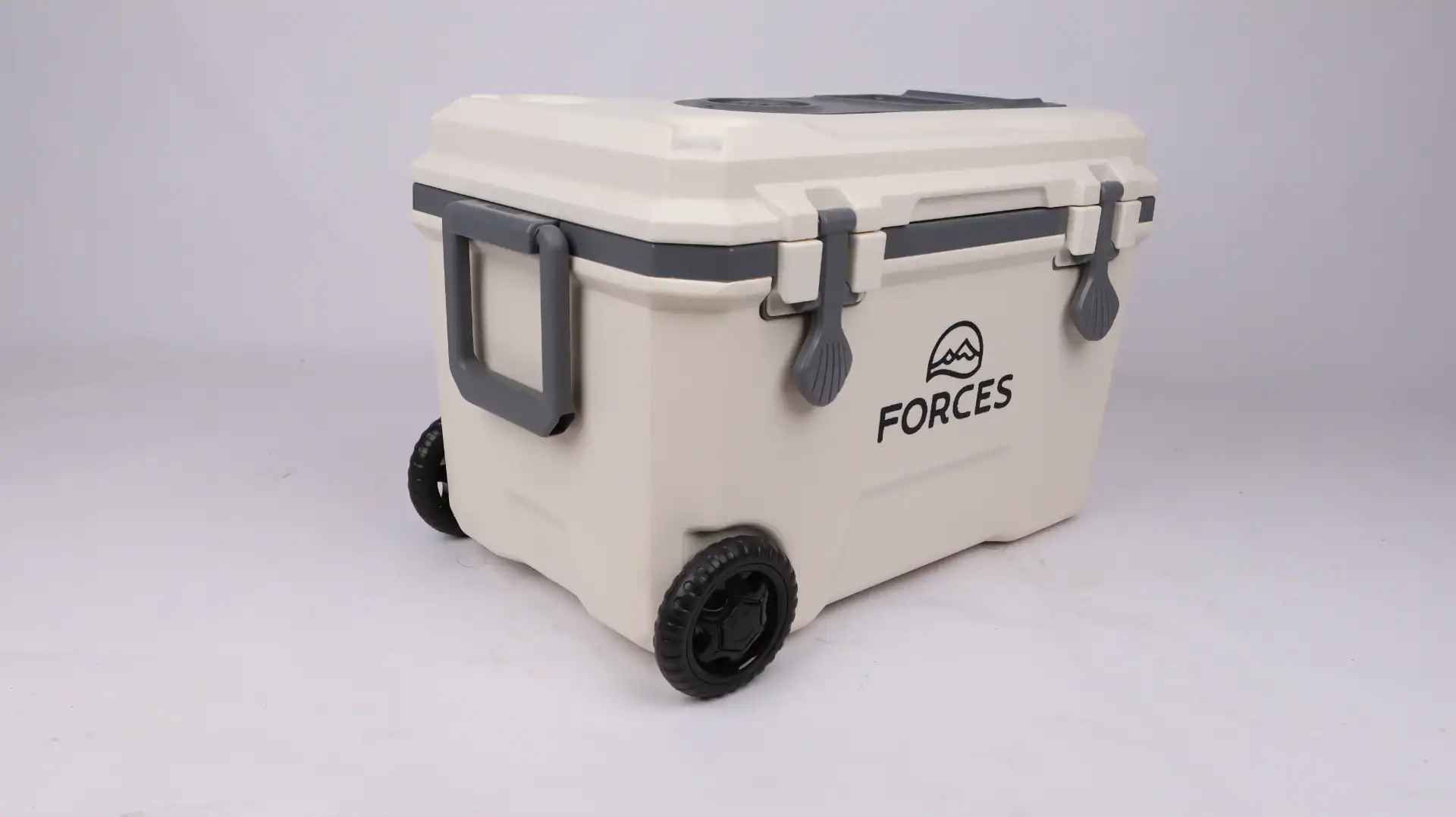
Shelf Height vs Serum Bottle Heights
Ask suppliers for the distance between the shelf and the interior ceiling, not just total volume. Some 4L units squeeze the shelf height to keep the external footprint compact. Others route the Peltier wiring in a way that blocks the back corner, making the last row of jars unusable.
Real Shelf Layouts for 50ml Jars
A standard 50ml cream jar is wide but low. Packing them flat in a 4L interior gives you two rows, roughly 12–15 jars depending on jar diameter. Stacking a second layer only works if the shelf has vertical clearance; many cheap interiors are too shallow for a stable second row.
-
- 4L: Target 12–15 x 50ml jars in one flat layer. Avoid tall serums; this size works best for jars, masks, and sample packs.
- 6L: Adds shelf height more than floor area. A solid middle ground for standing serum bottles while keeping carton size reasonable for shipping.
- 10L: More total volume, but confirm the shelf layout actually holds jars. A tall empty cavity does not help if everything tips sideways.
During sample approval, place real products inside. Use your own 50ml jar and your tallest serum. If the supplier points to the capacity spec instead of letting you verify dimensions, treat that as a red flag.
例えば、 private label brands, the best cosmetic fridge size for a first launch depends on whether the hero product is a jar or a serum. 4L works for jar-heavy skincare lines. Choose 6L or 10L only when bottle-height data from your own product line supports the extra carton volume.
Cooling Performance Differences by Capacity
Capacity alone doesn’t determine cooling performance — the Peltier module does.
A 10L cosmetic fridge sounds like the obvious upgrade over a 6L. But open the spec sheets and you’ll often see the same 48W Peltier module inside both. That matters more than the extra liters.
Peltier module wattage and time-to-cool by volume
Peltier modules are the heart of thermoelectric cosmetic fridges. They transfer heat from the interior to the ambient air, usually with a small DC fan. The wattage of that module determines how much heat it can move per hour. A 40W to 48W module is common in 4L to 10L units, but the cooling workload scales with interior volume.
A 4L fridge with a 48W module can pull the interior down to around 10°C below ambient in roughly 15 to 20 minutes. A 10L fridge with the same 48W module needs more time — often 35 to 45 minutes — because it’s chilling a larger air mass and more shelf surface area. The voltage stays at 12V DC, so the current draw also stays similar; the difference shows up as longer run time.
-
- 4L with 40W–48W module:: Reaches a usable cool temperature in 15–25 minutes. Good for single-serum storage.
- 6L with 48W module:: Cool-down typically lands in the 25–35 minute range. Acceptable for a countertop unit.
- 10L with 48W module:: Cool-down stretches to 35–45 minutes. In a 30°C room, the interior may only reach 12–15°C — not the 6°C your listing promises.
Why 10L units struggle below 6°C in 30°C rooms
The physics is simple: a Peltier module’s temperature differential is limited. Most consumer-grade modules can only maintain a delta of 15–20°C between the hot and cold sides. If the room is 30°C, the cold side bottoms out around 10–15°C. To get below 6°C, the hot side has to stay below 26°C — which requires either a strong fan or a cooler ambient environment.
A 10L unit has more surface area, which means more heat gain from the room through the walls. The same 48W module that works acceptably in a 6L now has to fight a larger thermal load. Inside a warm bedroom or bathroom, the interior temperature plateaus higher. This is why buyers in Singapore, Florida, or Texas leave negative reviews about 10L fridges that “never get cold.” The unit isn’t broken — the engineering spec was mismatched to the size.
Before approving a sample, ask the supplier for thermocouple data at 32°C ambient. A reputable manufacturer will measure the interior temperature at multiple points over a 60-minute run. If they push back with only a “works fine” guarantee, treat it as a red flag. For 10L units, insist on a 60W+ module or recommend a compressor-based design — the cost is higher, but return rates stay low.
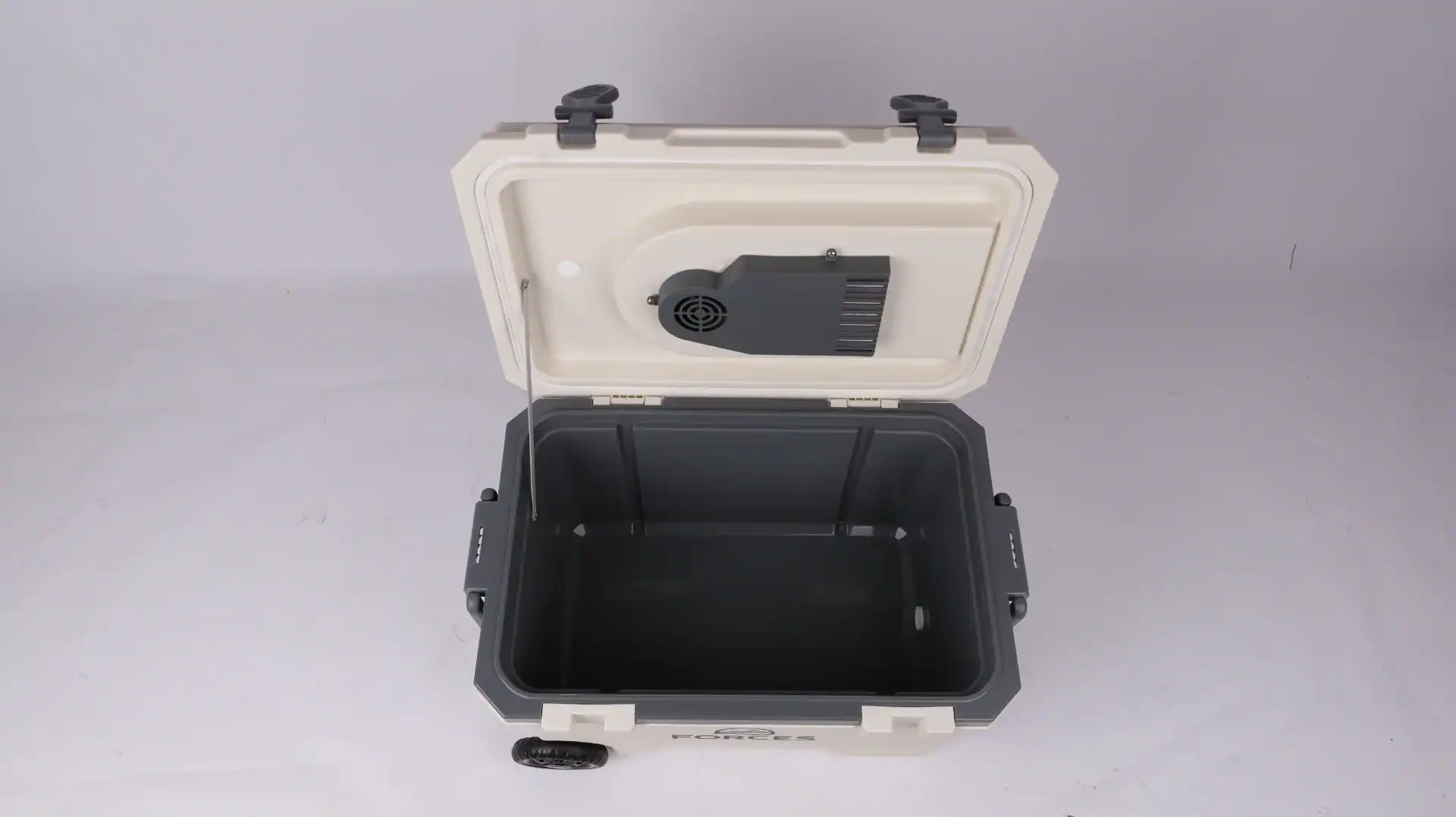
2026 Demand Trends for Cosmetic Fridge Sizes
4L creates TikTok demand; 10L creates cart size.
Ask which size sells best and most suppliers will tell you 10L because it carries a higher ticket. Review patterns on Amazon tell a different story. The 4L tier produces denser review velocity, which lifts BSR faster than a 10L unit can earn through occasional praise.
Amazon BSR and review sentiment by size tier
The 4L listings attract first-fridge buyers — customers who want something for a vanity, dorm shelf, or car. Their reviews use words like ‘cute’ and ‘fits my serums,’ but anything over 120mm becomes a complaint. That sentiment should shape how you build bundles around tall serum bottles.
The 10L tier shows a different review curve. Positive reviews mention ‘holds my whole routine,’ but negative reviews circle back to cooling. ‘Not cold enough’ and ‘takes forever’ appear often enough to matter. Many 10L fridges still ship with the same 48W Peltier module used in 6L units. That is the return engine nobody talks about.
The 6L size is the quiet middle. It holds more than a 4L without inheriting the 10L’s cooling lag, and review sentiment for 6L rarely includes ‘too tall.’ If you track Amazon BSR for skincare fridge terms in 2026, the 6L earns steady rank without the viral spikes or refund spikes of the extremes — which makes it the safer test SKU.
TikTok virality: 4L portable vs 10L countertop
TikTok trends favor the 4L. A portable fridge small enough to sit beside a makeup mirror is easy to film, easy to move, and easy to include in a get-ready-with-me clip. The 10L countertop unit needs a styled shelf and a patient creator, which makes it harder to win in short-form loops.
But virality does not equal profit. The 10L supports a higher price point and a bigger basket — serum, roller, eye masks, done. On TikTok Shop, the 4L drives trial and the 10L drives revenue when the creator positions it as the full routine upgrade. You need traffic for one and margins for the other.
Before chasing either trend, verify the spec sheet with the factory. KelyLands’ 2018 investment in a Ningbo portable fridge production line was built around competitive pricing and reliable delivery, but even that line needs a thermocouple check at 32°C ambient before you approve a 10L sample. Ask the supplier for that data in writing.
| Size Tier | 2026 Demand Signal | Amazon BSR & Review Sentiment | TikTok Virality | Private Label Takeaway |
|---|---|---|---|---|
| 4L Portable | Strong impulse demand from skincare ‘fridge tour’ social content; ideal for serums and eye creams | Top-size tier for BSR velocity; negative reviews cluster around bottles taller than 120mm | High — fits GRWM and bedroom make-up table aesthetics | Holds 12–15 x 50ml jars; best positioned as bundle add-on, not standalone hero SKU |
| 6L Countertop | Balanced mainstream demand; recommended test-size for new private label entrants | Steady BSR with lower return rates; cooling complaints less frequent than 10L | Moderate — functional skincare-organization and ingredient-preservation hacks | Best 6L cosmetic fridge test SKU; lower freight exposure while validating packaging and reviews |
| 10L Countertop | Niche growth with beauty-station and creator ‘shelf tour’ setups | Higher AOV per unit but slower BSR; risk of 1-star reviews from weak cooling in warm rooms | Lower standalone virality; appears inside beauty-room tours rather than hero clips | Often shares the same 48W Peltier module as 6L; request thermocouple data at 32°C ambient before committing |

Private Label Margin Math: Which Size Wins?
10L freight runs 1.6x the 6L volume, but AOV can climb 40% — test before stacking.
The fastest way to wreck a cosmetic fridge launch is to compare FOB quotes while ignoring what the container actually costs. KelyLands’ portable fridge factory in Ningbo, opened with a partner in 2018, builds mini fridges and car coolers on the same thermoelectric lines, so the shell-cost spread from 4L to 10L stays modest. The real jump is in dimensional weight.
What the FOB spread actually hides
From the factory side, 4L and 6L units share most of the same plastic tooling. The 10L needs more material and a larger carton, but the Peltier module often doesn’t change — many 10L units ship with the same 48W module as the 6L. You’re paying for interior volume, not stronger cooling.
-
-
- FOB pricing reality: The price gap between 4L and 10L is driven by shell plastic and packaging, not by a more powerful cooling system.
- Performance trap: Request thermocouple data at 32°C ambient before approving samples. If the 10L carries the same 48W Peltier module as the 6L, cool-down time rises and hot-climate return rates follow.
-
Shipping volume shifts the break-even
Sea freight for a 10L unit runs about 1.6x the volume of a 6L. The 10L can lift AOV by 40% when you bundle accessories or sell it as a countertop centerpiece, but only if the unit cools well enough to avoid negative reviews. Higher AOV means nothing when the return rate eats your margin.
The 6L is the safest first SKU for a private-label launch. It clears the 120mm bottle-height problem that limits the 4L, keeps landed cost per unit below the 10L, and lets you validate real-world cooling expectations before you commit to a deeper inventory buy.
-
- Move to 10L: If post-launch data shows customers using the 6L in shared spaces or asking for more capacity, upgrade to the 10L to capture the 40% AOV uplift.
- Stay with 4L: Only if you’re targeting travel and desk setups and you’ve confirmed the serum bottles are shorter than 120mm.
| SKU / Size | FOB Price Spread | Shipping & Volume | AOV & Upsell Impact | Margin Verdict |
|---|---|---|---|---|
| 4L Portable | $12–$16 per unit (lowest buy-in) | ~0.7 CBM per 100 pcs — most compact, densest pallet | ~$49 AOV; 12–15 jars fit, but serums over 120mm block accessory upsells | Thin unit margin; works as a low-price entry SKU, not a primary profit driver |
| 6L Countertop | $16–$22 per unit (mid-band, best value) | 1.0 CBM per 100 pcs — baseline for freight math | ~$65 AOV; fits tall serums and supports gift-set bundling | Best 6L cosmetic fridge test SKU; balanced margin, freight cost, and cooling-return risk |
| 10L Premium | $24–$30 per unit (highest ticket) | 1.6× the volume of 6L — landed cost per unit climbs sharply | ~$90 AOV (40% higher than 6L), enabling premium bundle margins | Highest gross-margin ceiling, but the 48W Peltier module undercools this volume; hot-climate returns can erase profits |
結論
The right capacity for a cosmetic fridge launch is not the biggest number on the spec sheet. A 4L unit holds 12-15 50ml jars but misses most tall serums over 120mm, while a 10L unit often shares the same 48W Peltier module as the 6L version. That difference changes cool-down time and return rates in warm climates, so the size decision has to include thermocouple data and freight math.
-
- 4L holds 12-15 50ml cream jars, but limits accessory upsells when serums exceed 120mm.
- 10L and 6L often use the same 48W Peltier module; confirm cool-down at 32°C ambient before ordering.
- Sea freight on 10L runs roughly 1.6x the volume of 6L, while AOV potential can be 40% higher.
- Use 6L as a test SKU to validate demand before committing to a 10L container order.
Before you commit to a volume order, ask your supplier for thermocouple data at 32°C ambient and the FOB price spread across 4L, 6L, and 10L. Use sample approval to test the actual fit of 50ml jars and 120mm serums, and request a quality tolerance clause that covers interior dimension variance. Then browse the current mini fridge and car cooler range at KelyLands to compare capacities and factory specs side by side.
よくある質問
2026年に最適な化粧品用冷蔵庫のサイズは何ですか?
4LはTikTokでの需要や衝動買いを牽引し、10Lはカート内商品数増加とシンク上設置を促します。6Lは多くのプライベートラベル販売者がテストSKUとして選定するバランス型サイズです。チャネル別で判断を:ソーシャル主体のブランドは4Lへ、プレミアムホームラインは10Lへ。.
4Lのスキンケア冷蔵庫に何が入りますか?
4Lの冷蔵庫は、血清ボトルを平置きにし、少量の50mlジャーを収容できますが、標準的な背の高いスキンケアボトルを直立させることはできません。公称リットル数は誤解を招くことがあるため、内蔵シェルフの寸法とボトルの高さが容量を決定します。サンプル注文前に内蔵シェルフの図面を御請求ください。.
10L化粧品用冷蔵庫はなぜ冷却に苦労するのか?
Capacity alone doesn’t determine cooling performance — the Peltier module does. 10L units use a higher wattage module but still struggle below 6°C in 30°C rooms because the same cooling. Match capacity to ambient temperature and the product temperature range you need.
プライベートラベル業者がまず投入すべきサイズはどれですか?
Launch with 6L as a test SKU before expanding because it balances carrying capacity, cooling cost, and shipping volume. This lets you validate demand without absorbing the margin risk of 10L or. Add 4L or 10L only after test data confirms demand.
What is the FOB price spread between 4L and 10L?
There is no fixed spread; FOB price depends on spec and order quantity. The bigger landed-cost risk is shipping volume and carton size, not the unit price. Ask for a 6L and 10L quote on the same spec to compare real spreads.

 English
  Español
  Français
  Deutsch
  Português do Brasil
  Русский
  한국어
한국어  日本語
日本語  العربية