


B2B buyers face a significant performance trade-off when choosing between AC mains power and 12V DC vehicle plugs for handheld vacuum lines. Selecting the wrong architecture affects everything from motor longevity to suction power, where AC-powered units often reach 20,000Pa while DC car models typically peak at 13,000Pa. Sourcing the correct motor type ensures the product meets the specific cleaning demands of either a fixed workshop or a mobile roadside environment.
This article examines the technical differences in motor architecture, suction efficiency, and safety certifications like UL for AC and E-Mark for DC systems. We break down why AC motors deliver five times more suction under load and evaluate the manufacturing cost shifts for 2026. You will also find a comparison of dual-use strategies that allow brands to serve both markets using modular power converters and SiC MOSFET technology.
Understanding the Two Markets: Garage Use vs. Road Use
Garage-use equipment utilizes AC mains power (120V/240V) for high-torque, stationary tasks like heavy-duty lifting and sustained cleaning. Road-use products focus on DC power (12V/24V) or lithium batteries, prioritizing portability, variable speed control, and emergency resilience during vehicle travel or outdoor activities.
| 技術的特徴 | Garage Applications (AC) | Road/Mobile Applications (DC) |
|---|---|---|
| 電源 | 120V/240V AC Mains Outlet | 12V/24V DC Port or Battery |
| Motor Architecture | Standard Induction Motor | Brushless DC (BLDC) |
| Speed Management | Fixed/Constant Speed | Variable Soft-Start/Stop |
| 操作ノイズ | Moderate to High (Chain Drive) | Low/Silent (Belt or Direct) |
Fixed AC Power for High-Torque Garage Applications
Mains-powered AC motors draw energy directly from standard 120V or 240V wall outlets to provide the consistent torque required for heavy-duty garage door openers and large workshop vacuums. These systems often utilize industrial-style chain drives paired with AC motors to provide a lower upfront manufacturing cost compared to specialized DC counterparts. Since AC systems operate at a constant speed, they provide the reliable force needed for lifting heavy loads where variable velocity is not a functional requirement.
High energy consumption and audible operational noise define this segment, making these tools better suited for detached garages or professional workshops. In environments where noise does not impact residential living spaces, the ruggedness of an AC motor ensures long-term reliability for stationary tasks. These units remain dependent on the power grid, emphasizing their role as fixed assets rather than emergency tools.
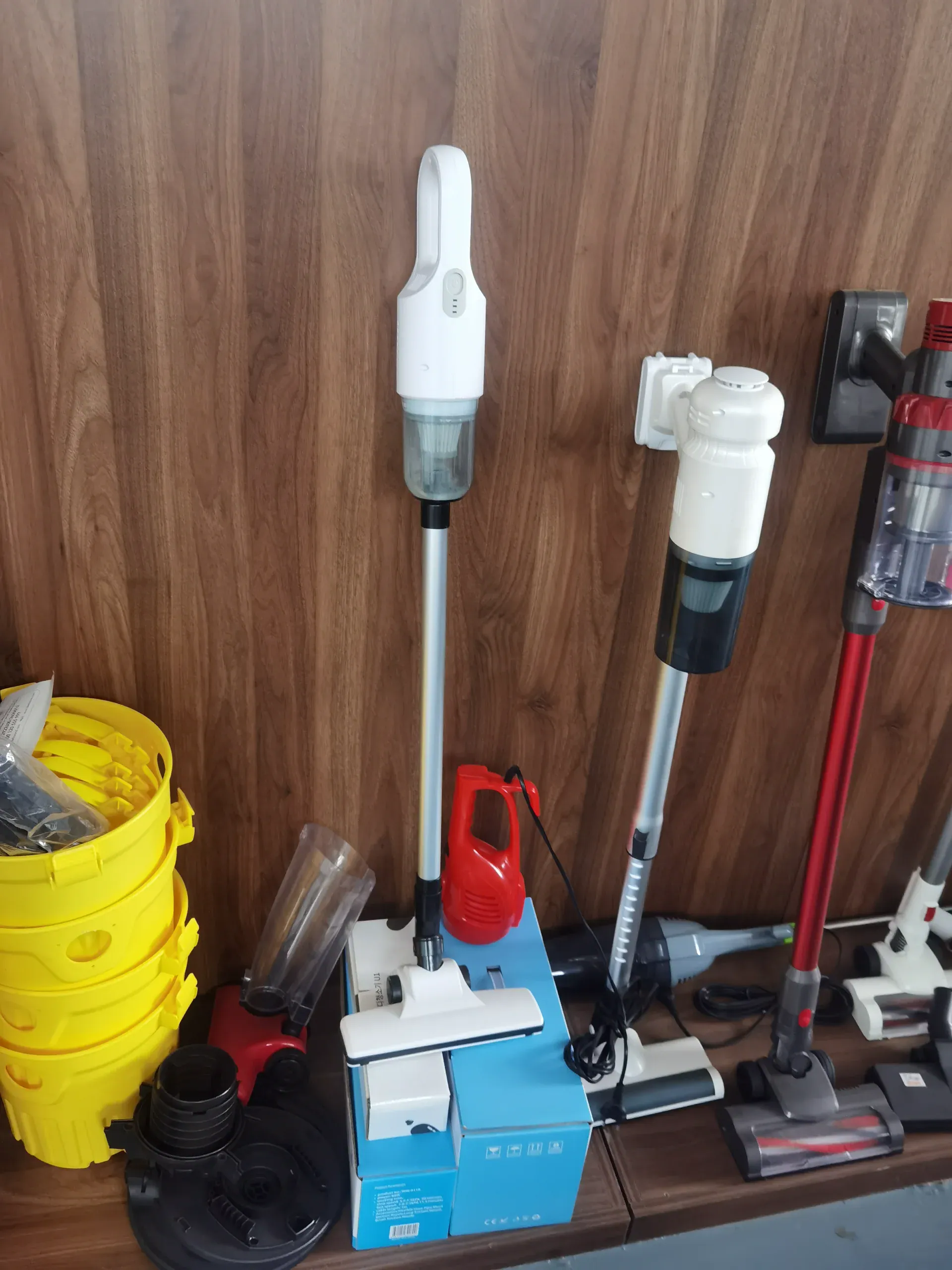
Portable DC Systems and Battery Integration for Roadside Use
Brushless DC designs allow for variable speed control and soft-start/stop functionality in portable タイヤインフレーター and handheld vehicle vacuums. These mobile units integrate with 12V cigarette lighter plugs or internal lithium batteries to ensure functionality during power outages or roadside emergencies. This transition to DC power enables manufacturers to build lighter, more compact tools that fit easily into vehicle storage compartments.
DC-powered accessories achieve higher energy efficiency and quieter operation, meeting the specific demands of residential users and travelers. Modern motor controllers in these devices support advanced smart home and app integration, which facilitates obstacle detection and remote monitoring features. By utilizing battery backups, these systems provide a layer of resilience that traditional AC-powered garage equipment lacks during critical situations.
Performance Gap: Why AC Motors Deliver 5x More Suction
AC motors achieve superior suction by maintaining constant RPM and delivering 3x to 5x their rated torque during peak loads. Unlike DC motors, which lose horsepower as speed drops under resistance, AC induction and universal motors utilize stable grid power to sustain high airflow and static pressure.
Torque Response and RPM Stability under Load
AC induction motors provide a significant advantage in heavy-duty suction applications because they deliver between 3x and 5x their rated torque for short intervals. This surge capacity prevents the motor from stalling when the system encounters sudden resistance or heavy debris. Most standard 1.5HP AC models maintain a steady 1725 RPM, ensuring consistent air movement regardless of the debris volume entering the intake.
Mains-powered universal motors, which are common in high-performance vacuums, increase their speed and vacuum force as airflow resistance rises. This self-compensating behavior allows the motor to reach peak suction levels under sealed conditions. DC motors often experience a reduction in speed when resistance increases, which drops the overall cleaning efficiency in portable units compared to corded AC models.
Horsepower Efficiency and Airflow Pressure Metrics
Engineering data shows that DC motors require approximately 3HP to match the performance of a 1HP AC motor in variable-speed applications. This performance gap occurs because DC systems lose horsepower as RPM drops. Based on the physics of horsepower (HP = Torque × RPM / 5252), AC motors sustain output power by keeping RPM high, while DC systems experience a drop in total work capacity as the motor slows under load.
Performance benchmarks illustrate these technical differences through suction metrics. AC-powered DCモーターはバッテリー駆動の携帯性と高トルクを重視し、コードレスカー用および家庭用掃除機の標準となっています。 can reach 20,000Pa of suction, while DC car units typically peak at 13,000Pa. AC pumps also achieve higher flow rates and static pressure than DC equivalents due to grid power scalability. This makes AC systems better suited for continuous, high-suction tasks where maintaining pressure is critical.
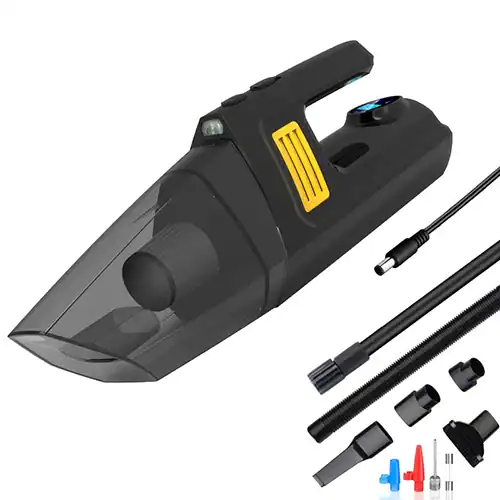
The 12V Cigarette Lighter Plug: Fuse Limits and Amperage
Standard 12V accessory sockets typically operate with a 10A or 15A fuse to protect the vehicle’s electrical system. These sockets generally support a continuous draw of 7-10A, providing a maximum power output of about 120W. Exceeding these limits risks overheating the 16-18 AWG wiring or blowing the fuse during operation.
Electrical Safety and Thermal Protection
Vehicle electrical systems use 20mm or 30-32mm fuses to provide rapid thermal protection against circuit overloads. These components react faster than standard circuit breakers to protect sensitive electronics during voltage spikes. While these systems are rated at a nominal 12V, the actual voltage fluctuates between 12V and a minimum of 10.2V when the battery is under a heavy electrical load. Modern accessory plugs still rely on heat dissipation standards originally established for legacy nichrome cigarette lighter coils, which limits the overall thermal capacity of the socket housing.
Current Limits and Wiring Constraints
Engineering standards for vehicle harnesses prioritize a 10A safe maximum current because of the thin 16-18 AWG wire used in OEM production. Total power delivery peaks at approximately 120W, which accommodates dash cams and phone chargers but fails to support high-current tools without direct battery connections. Most manufacturers set a 15A absolute ceiling for these circuits to prevent fire hazards and permanent wiring damage. Users should audit the vehicle fuse box for specific per-socket ratings, as some models may offer higher tolerances than others depending on the socket construction.
あなただけのブランド用カスタムOEM/ODM家庭用掃除機

AC Motors: Managing Higher Heat and Weight
AC motors generate substantial heat from mains-frequency losses and heavy iron cores, with a 50 kW unit often losing 2.5 kW to heat. In 2026, managing these loads requires Class F insulation (up to 155°C) and optimized liquid cooling channels to prevent component failure while balancing the increased weight of thermal mass.
Thermal Dynamics and Insulation Standards
Efficiency losses in windings and laminations result in approximately 2.5 kW of heat dissipation for a standard 50 kW AC motor operating at 95% efficiency. This thermal output requires strict adherence to insulation standards to prevent the degradation of internal components. Insulation Class F supports temperatures up to 155°C, providing a higher safety margin than the 130°C limit of Class B materials. Most high-performance motors experience temperature rises between 105°C and 115°C over ambient levels during peak operation.
Maintaining external case temperatures below 90°C ensures equipment longevity and operator safety. Winding-to-case temperature differentials often reach 30°C, creating significant thermal stress across the motor housing. Engineers integrate internal sensors to provide real-time monitoring of these gradients, allowing the control system to adjust performance before the motor reaches critical hot-spot limits.
Liquid Cooling Systems and Material Integration
Liquid cooling serves as the primary technical solution for the significant heat and physical mass of AC motors. CFD-optimized housing channels facilitate coolant flow rates of 10-15 L/min, which removes 60% to 85% of generated heat. Ceramic-filled polymer thermal interface materials (TIMs) bridge gaps between components with thermal conductivity exceeding 5 W/m·K. These materials minimize interface resistance, ensuring heat moves efficiently from the copper windings to the cooling jacket.
Advanced structural materials allow motors to operate near their thermal limits without losing mechanical strength. High-performance polymers like ULTEM 9085 maintain their integrity at temperatures up to 153°C, supporting internal components in high-heat zones. Weight management involves a precise balance between dense lamination stacks for magnetic flux and aluminum heat sinks for thermal dissipation. Reducing operating current by 30% can lower heat generation by 50%, an important design consideration for maintaining high power density in liquid-cooled systems.

Dual-Use Strategy: Can You Sell Both Categories?
Implementing a dual-use strategy involves using bi-directional power converters and modular topologies to serve both AC and DC markets. By following Emerge Alliance standards, 2026 product designs achieve efficiencies over 97%, enabling a single hardware architecture to function in both residential garage settings and portable automotive environments.
| Technology/Standard | 効率定格 | Technical Performance |
|---|---|---|
| Dual Active Bridge (DAB) | 98.2% Peak | 2.25 kW/L Power Density |
| 380V DC Distribution | 89.0% | 1.5% gain over 480V AC |
| Bi-Directional LLC | ~97.5% | Under 50 µs Transitions |
Market Integration and Modular Design Standards
Manufacturers leverage the Emerge Alliance AC/DC Dual Input Power Standards to build single-variant hardware that operates on multiple power sources. This approach allows engineering teams to share housing designs and LED interfaces between home vacuum units and car-specific tools, which cuts R&D costs significantly. These modular designs also help businesses enter the Vehicle-to-Grid (V2G) and Energy Storage System (ESS) markets without developing entirely new platforms. By sourcing modular components for both 110V/220V AC and 12V/24V DC configurations, companies simplify their supply chains and inventory management.
Bi-Directional Topologies and Efficiency Metrics
Engineers use Dual Active Bridge (DAB) and LLC resonant converters to maximize hardware performance across different environments. These topologies reach 98.2% peak efficiency at 100 kHz switching frequencies, ensuring minimal energy loss during power conversion. By integrating SiC MOSFETs and GaN switches, systems maintain a high power density of 2.25 kW/L even while handling increased thermal loads in compact housings. Current benchmarks show that these bi-directional systems handle 22 kW capacities with ultra-fast mode transitions in under 50 microseconds. Moving to 380V DC distribution provides a clear advantage, as it offers 89% efficiency compared to the 87.5% found in traditional 480V AC systems, making it a superior choice for high-performance industrial and automotive applications.
Certification Differences: UL for AC vs. CE/E-Mark for DC
AC-powered products require UL or ETL certification in the US to manage high-voltage shock and fire risks through rigorous isolation and grounding tests. In contrast, DC カーアクセサリー typically rely on CE or E-Mark for European automotive homologation, focusing on electromagnetic compatibility and lower-voltage safety rather than mains power protection.
Safety Priorities for AC Mains vs. DC Vehicle Systems
UL standards for 120V AC systems prioritize the prevention of lethal shocks and fire hazards by mandating specific physical creepage distances. These requirements ensure that high-voltage input traces remain sufficiently separated from low-voltage output traces on circuit boards. Mains-powered devices must also undergo high-voltage dielectric withstand testing to verify that isolation barriers do not break down during operation, which maintains user safety and equipment integrity.
DC-powered accessories using 12V cigarette lighter plugs operate under different safety parameters. Since vehicle batteries provide high amperage at lower voltages, these systems focus on overcurrent protection to prevent damage to the vehicle’s electrical wiring. In professional United States environments, OSHA mandates NRTL approval, such as UL or ETL, for any equipment powered by AC. Regulatory authorities specifically exclude CE or ATEX marks as valid substitutes for these mandatory safety certifications in the US market.
Regulatory Frameworks and Specific Testing Protocols
Technical standards vary significantly based on the component type and its intended power source. UL 498 governs attachment plugs and receptacles up to 250V AC, while UL 489 and UL 1066 define the requirements for molded case and low-voltage power circuit breakers. Testing for a UL listing involves measuring ground path resistance for metal enclosures and performing deliberate short-circuit simulations. These tests ensure that overcurrent protection devices interrupt electrical faults reliably to prevent fires.
Environmental testing for AC components requires validation at minimum and maximum rated loads across high and low line voltages. This process ensures stable performance despite potential fluctuations in the power grid. For automotive accessories destined for European markets, the E-Mark confirms the device meets specific safety and electromagnetic standards for road use. While UL focuses on high-voltage isolation, the E-Mark addresses the specific challenges of integrating electronics into a vehicle’s DC ecosystem.
B2B Cost Analysis: Manufacturing Price Delta
By 2026, the price delta between AC and DC manufacturing stems from a 50% reduction in copper cabling requirements and the elimination of redundant power conversion stages. Centralizing rectification through active in-feed converters allows for a 3-wire architecture that improves power factors to 1.0 and reduces peak power demand by 43%.
Capital Expenditure Reductions in Material and Wiring
Transitioning from 4-wire AC grids to 3-wire DC distribution architectures lowers conductor counts and simplifies factory layouts. This shift eliminates the circulation of reactive power, which allows for a 50% reduction in copper cabling requirements without sacrificing performance. By adopting a 650V nominal DC baseline, manufacturers maintain standard insulation requirements while removing the need for specialized or proprietary electrical components often associated with high-efficiency upgrades.
Centralizing power electronics further reduces hardware costs. Using silicon carbide (SiC) or gallium nitride (GaN) devices in central active in-feed converters replaces the need for individual point-of-use rectifiers in every machine. This architecture minimizes the physical footprint of electrical cabinets and lowers the total component count across the production line.
Operational Savings and System Efficiency Benchmarks
DC bus stabilization through capacitive storage delivers peak power reductions of 43% in industrial settings. These systems achieve energy efficiency gains between 9.9% and 18.5% by removing approximately half of the traditional energy conversion cycles found in AC-based infrastructures. Removing these cycles reduces thermal waste and lowers the cooling load for the entire facility.
A comparison of motor current draw illustrates the operational advantage. A DC-fed 7.5-kW unit draws 14.1 A, while an equivalent AC-fed system draws 20 A under the same conditions. This improvement stems from optimizing the power factor to 1.0, which eliminates the significant ohmic losses found in conventional AC diode rectifiers that typically operate with a power factor of 0.63.
最終的な所感
Deciding between AC and DC power comes down to the balance between raw performance and mobility. AC-powered vacuums provide the heavy-duty suction required for professional shops and deep garage cleaning where constant torque is non-negotiable. DC units prioritize the portability and ease of use needed for quick car maintenance and roadside tasks. These two categories serve different consumer habits, so sourcing the right model requires matching the motor architecture to the specific environment.
Sourcing teams should monitor how dual-use technology and new power standards change the market heading into 2026. Modular designs that handle both inputs help companies reach more customers while reducing R&D costs and simplifying inventory. Balancing safety certifications like UL for home use and E-Mark for automotive use ensures products remain compliant across different regions. Knowing the specific electrical limits and thermal requirements of each system helps buyers select tools that perform reliably under real-world loads.
よくある質問
What distinguishes a 12V car vacuum from a standard home handheld model?
Car vacuums operate on 12V DC power with motors typically ranging from 100W to 200W, producing 4.5 to 7 kPa suction. Home handhelds utilize AC power with 400W to 1000W+ motors, delivering significantly higher suction levels exceeding 25 kPa for deep cleaning.
Can I plug a 12V car vacuum directly into a wall outlet at home?
No. Standard house outlets provide 120V or 220V AC, which will damage a 12V DC motor instantly. You must use a dedicated AC-to-DC power converter if you intend to use a car-specific vacuum inside a building.
Are portable 12V vacuums effective for removing sand from car carpets?
Standard 12V vacuums with 1000 to 3000 Pa suction handle surface dust and light debris well but often struggle with heavy sand embedded in fibers. Professional detailing results in 2026 usually require higher airflow models reaching 50 to 100 CFM.
What is the typical wattage for a high-performance car vacuum cleaner?
Most portable handhelds operate between 100W and 200W. Heavy-duty corded models for detailing can reach up to 1200W, providing the necessary lift for stubborn dirt that compact DC motors cannot move.
Which vacuum specifications matter most for automotive detailing?
Look for a balance of suction power (measured in Pa or kPa) and airflow (CFM). For 2026 standards, professional-grade detailing relies on units providing at least 1500 to 2500 Pa combined with specialized crevice tools to reach tight gaps between seats.

 English
 Español
 Français
 Deutsch
 Português do Brasil
 Русский
 한국어
 日本語
 العربية