 メインコンテンツへスキップ フッターへスキップ

Choosing the wrong custom fit Tesla mini fridge is more than an aesthetic mistake; it poses a significant risk of electrical incompatibility that can damage the vehicle’s sensitive low-voltage system and potentially void the factory warranty. Integrating an accessory designed for a traditional 12V system into Tesla’s modern 16V lithium-ion auxiliary architecture without proper engineering can lead to premature component failure or, in a worst-case scenario, thermal events.
This guide provides a technical analysis for selecting a compatible and functional refrigeration unit. We will cover how to effectively utilize the sub-trunk’s dead space, examine the critical voltage difference between 12V accessories and the 16V Tesla battery, and explain why a flush-mounted installation is vital for both aesthetics and function. We will also assess the cooling performance and thermal management required when operating an appliance in a tightly enclosed trunk space.
The Sub-Trunk Fit: How to Utilize “Dead Space” in a Tesla?
Aftermarket manufacturers are converting the underutilized sub-trunk into high-value storage by focusing on precision-molded designs, modular systems, and effective thermal management for powered devices.
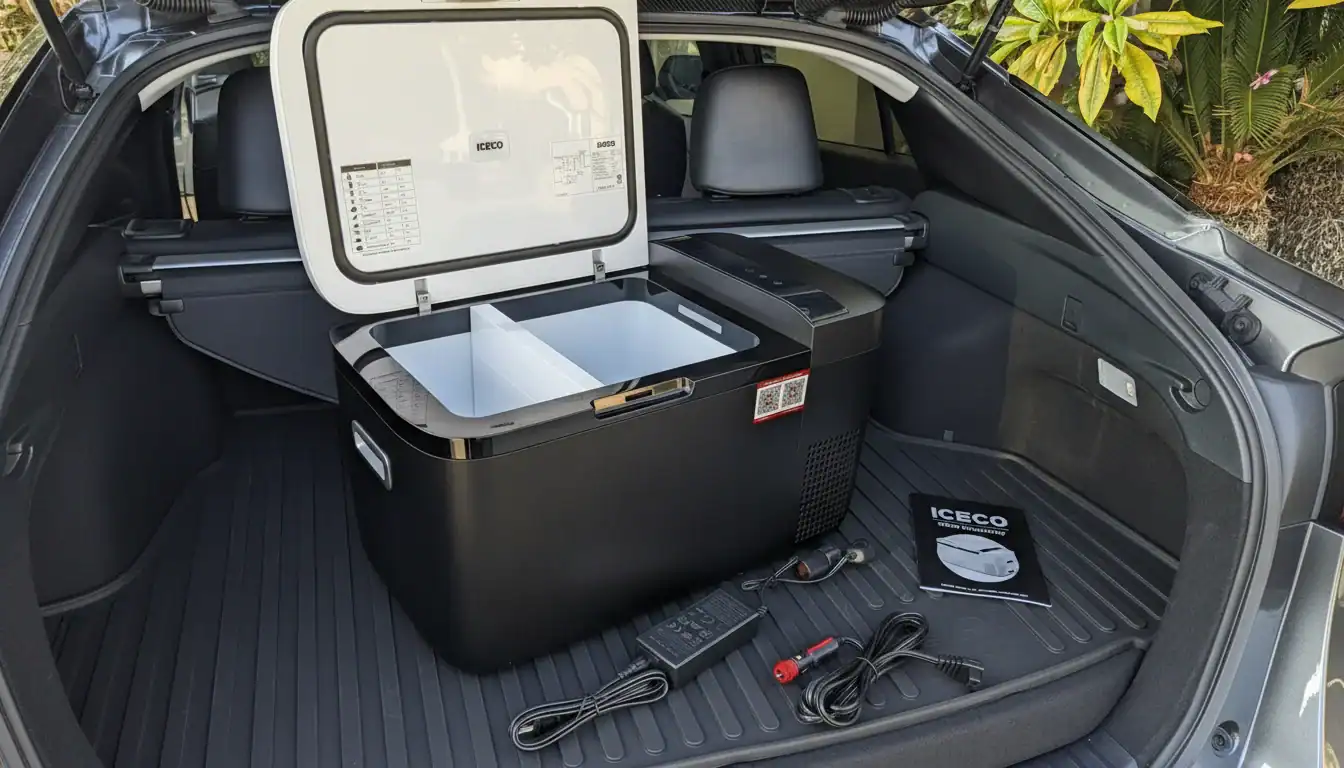
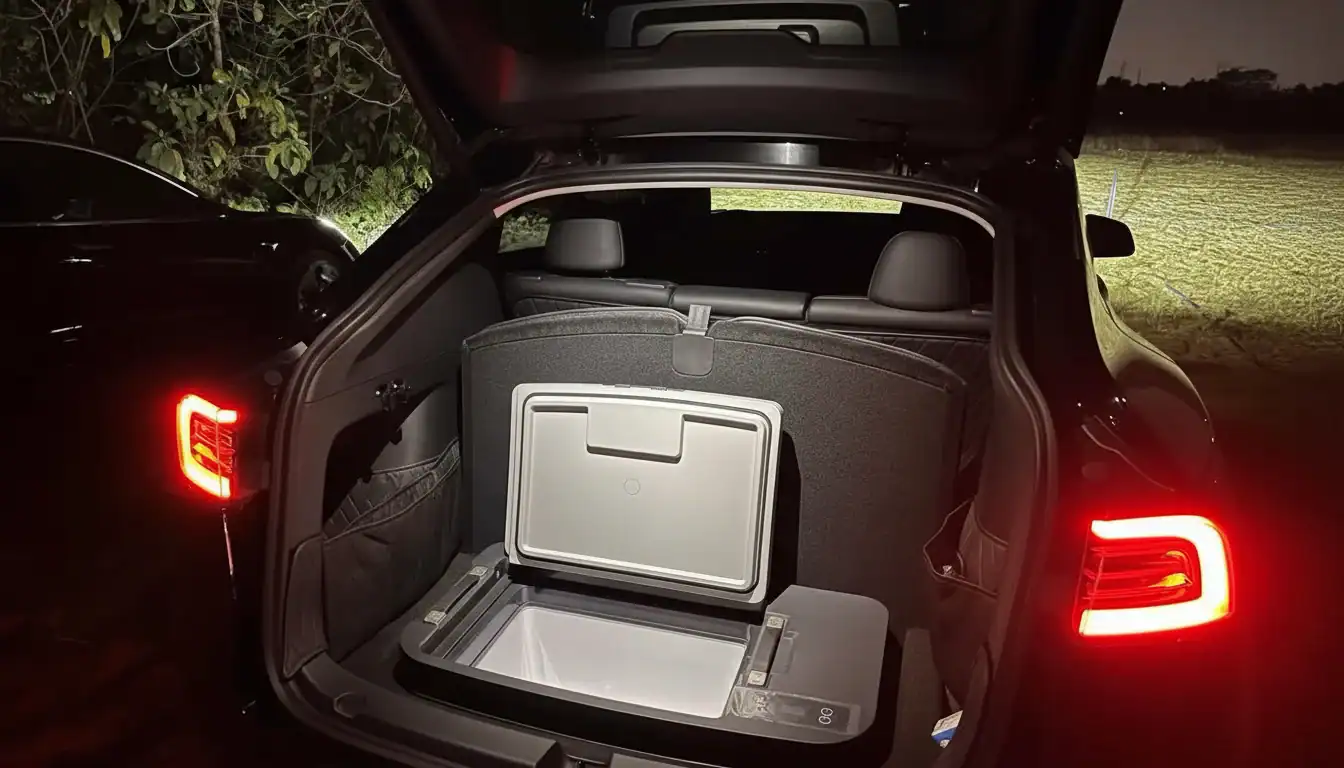
The sub-trunk in Tesla vehicles offers a significant amount of concealed storage, but its irregular shape makes it inefficient for organizing loose items. The accessory market has responded by developing solutions that convert this “dead space” into structured, functional compartments. These products are no longer simple plastic bins; they are engineered systems designed to integrate perfectly with the vehicle’s architecture.
Precision-Molded Designs for Seamless Integration
The most effective sub-trunk accessories are those designed to fit the unique contours of the space precisely. This approach ensures the product feels like a factory-installed component, maximizing every available inch without shifting or rattling during transit. A tight, custom fit prevents wasted volume and gives the trunk a clean, organized appearance.
- Designers use 3D scanning of the vehicle’s interior to create a digital model that matches the sub-trunk’s exact dimensions.
- This process converts awkward, unused areas into structured and functional storage zones.
- The final product aims for a seamless aesthetic that blends with Tesla’s original interior design.
Modular Components for Flexible Organization
The market is shifting toward modular systems that let owners customize their storage layout. Instead of a single, fixed container, these solutions use removable dividers, stackable trays, or interlocking components. This adaptability makes the space far more practical for changing needs, from daily errands to long road trips.
- Users can configure the space for specific cargo, such as separating groceries, securing charging cables, or organizing an emergency kit.
- The layout can be quickly changed to accommodate different uses, improving day-to-day practicality.
- Modularity creates dedicated spots for items that would otherwise roll around loosely in the trunk.
Thermal Management for Powered Accessories
Placing powered accessories like portable compressor fridges in an enclosed sub-trunk requires careful thermal engineering. Heat generated by the device must be dissipated effectively to protect both the accessory and the vehicle’s surrounding components. A well-designed product accounts for this challenge directly in its construction and installation guidelines.
- Installation must not obstruct the vehicle’s own heat dissipation systems or sensitive electronics.
- Products often include built-in ventilation channels or require specific placement to maintain necessary airflow.
- This addresses the core challenge of running electronics safely and efficiently within a confined, insulated space.
12V vs. 16V: Is It Compatible with Tesla’s Li-Ion Low Voltage?
Connecting a standard 12V car fridge to a modern Tesla’s 16V auxiliary battery without a proper step-down converter risks immediate and permanent electronic damage to the accessory.
Tesla’s Transition to a 16V Low-Voltage System
Starting with its newer models, Tesla shifted its low-voltage architecture from the traditional 12V lead-acid battery to a 16V lithium-ion system. This change, which is standard by 2026, improves overall vehicle efficiency, reduces weight, and better supports the advanced electronics in modern EVs.
- The 16V lithium-ion battery offers a higher power density and longer lifespan compared to older 12V systems.
- This architectural update directly affects how third-party accessories draw power from the vehicle.
Compatibility Challenges for 12V Accessories
Standard automotive accessories are designed to operate on a 12V power supply. Connecting a device built for 12V directly to a 16V source will cause it to malfunction or suffer permanent damage due to over-voltage, creating a market-wide compatibility issue.
| パラメータ | Legacy 12V System (Lead-Acid) | Modern Tesla 16V System (Li-Ion) |
|---|---|---|
| Nominal Voltage | ~12.6V | ~15.5V |
| Accessory Compatibility | Direct support for all standard 12V devices | Requires a voltage step-down converter for 12V devices |
| Risk to 12V Devices | Standard operation | High risk of permanent damage from over-voltage |
- The voltage difference is significant enough to burn out sensitive electronic components in 12V devices.
- This creates a need for new accessory standards or adapter solutions for owners of newer Tesla vehicles.
The Role of Adapters and Multi-Voltage Solutions
To use a 12V accessory in a 16V Tesla, a DC-to-DC step-down converter is necessary. These adapters take the 16V input from the car and regulate it to a safe and stable 12V output, allowing legacy devices to work without risk.
- Voltage converters are a common aftermarket solution to bridge the gap between old and new systems.
- Some modern accessories are now being designed with multi-voltage capabilities to work on both 12V and 16V platforms.
カスタムクーラーでブランド力アップ

Hidden Install: Why Is a Flush Finish Important for Aesthetics?
A flush finish integrates functional hardware invisibly into a surface, providing not just a clean, minimalist aesthetic but also tangible benefits in safety, sanitation, and durability.
Aesthetic Benefits
A flush finish creates a seamless, continuous appearance by concealing access points and hardware, a feature highly valued in modern, minimalist design. It eliminates the visual disruption caused by frames, fasteners, and edges. This allows the primary surface’s texture and color to become the main focus without interruption.
- Hides access points like hatches, outlets, and fasteners within wall or floor surfaces.
- Creates an uninterrupted visual flow that aligns with clean-lined architectural trends.
- Allows the primary surface material to remain the focal point without distraction.
- Valued in luxury retail, galleries, museums, and high-end residential projects.
Beyond Cosmetics
Beyond looks, flush finishes offer significant practical advantages. They directly enhance safety by reducing trip hazards and improve cleanliness by minimizing the crevices where debris and dirt can collect. In exterior applications like roofing, concealed fasteners improve weather resistance by minimizing potential points for water infiltration.
- Reduces trip hazards in commercial spaces by creating smoother floor transitions.
- Minimizes edges where dirt and debris can accumulate, improving sanitation.
- Improves weather resistance in roofing by concealing fasteners and minimizing water entry points.
- Decreases liability risks by allowing for smoother movement of equipment.
Implementation Considerations
Achieving a true flush finish is not a simple task. It requires meticulous planning and precise installation, which often leads to higher initial labor costs compared to standard installs. The process involves careful coordination of structural layers and the use of specialized hardware designed to sit below the finished surface plane, remaining completely invisible.
- Requires precise installation tolerances and careful coordination of all structural layers.
- Involves hardware positioned below the finished surface to remain completely invisible.
- Demands higher labor costs compared to standard, non-flush installations.
- Long-term benefits like improved durability and enhanced property value often justify the expense.
Cooling Performance: Does Being in the Trunk Affect Airflow?
Placing a cooling unit in an enclosed trunk requires engineered airflow solutions to prevent heat buildup, which can reduce cooling efficiency by up to 40% and negatively impact vehicle battery health.
The Challenge of Unobstructed Airflow
Any cooling system with a heat exchanger, like a portable compressor fridge, relies on a clear path to dissipate heat. Placing one in an enclosed space like a sub-trunk fundamentally works against this process. The unit exhausts hot air, which becomes trapped and raises the ambient temperature inside the compartment. This hot air is then drawn back into the system, forcing the compressor to work harder for diminishing returns. This cycle can result in heat dissipation losses of up to 40%, directly reducing cooling performance and putting unnecessary strain on the components.
Engineered Solutions for Confined Spaces
To solve the problem of trunk confinement, modern thermal management systems use specialized designs to force air circulation. Ducted systems are a common solution, creating dedicated channels that pull cool air toward the radiator or compressor coils and vent hot air out of the compartment. Some custom vehicle installations even incorporate scoops that actively draw in outside air when the car is moving. Modular cooling architectures help isolate heat-generating components, allowing for more targeted and efficient thermal management in a tight space.
| パラメータ | Standard (Enclosed) Installation | Engineered (Vented) Installation |
|---|---|---|
| Airflow Management | Trapped hot air recirculates | Ducted airflow or active fans |
| Heat Dissipation Loss | Up to 40% efficiency loss | Minimized for optimal performance |
| Impact on Component | Increased strain and reduced lifespan | Maintains optimal operating temperature |
Installation Guidelines and Spacing
Proper installation is non-negotiable for performance. The standard industry recommendation is to maintain a minimum clearance of 4 to 6 inches around the cooling unit’s vents, especially behind it. This gap is critical; it creates a buffer zone that prevents exhausted hot air from being immediately sucked back into the intake. When installing any accessory, you must also ensure that it does not block the vehicle’s own built-in vents or interfere with its native thermal management systems.
Impact on Battery Temperature and Vehicle Range
In an electric vehicle, managing heat from accessories is not just about keeping your drinks cold. It directly impacts the car’s primary systems. An inefficient accessory cooler that radiates excess heat into the sub-trunk can contribute to higher ambient temperatures around the main battery pack. Effective thermal regulation of the battery is essential for preserving vehicle range and preventing long-term degradation. Maintaining consistent and optimal temperatures across all components contributes to a healthier battery and more predictable performance.
結論
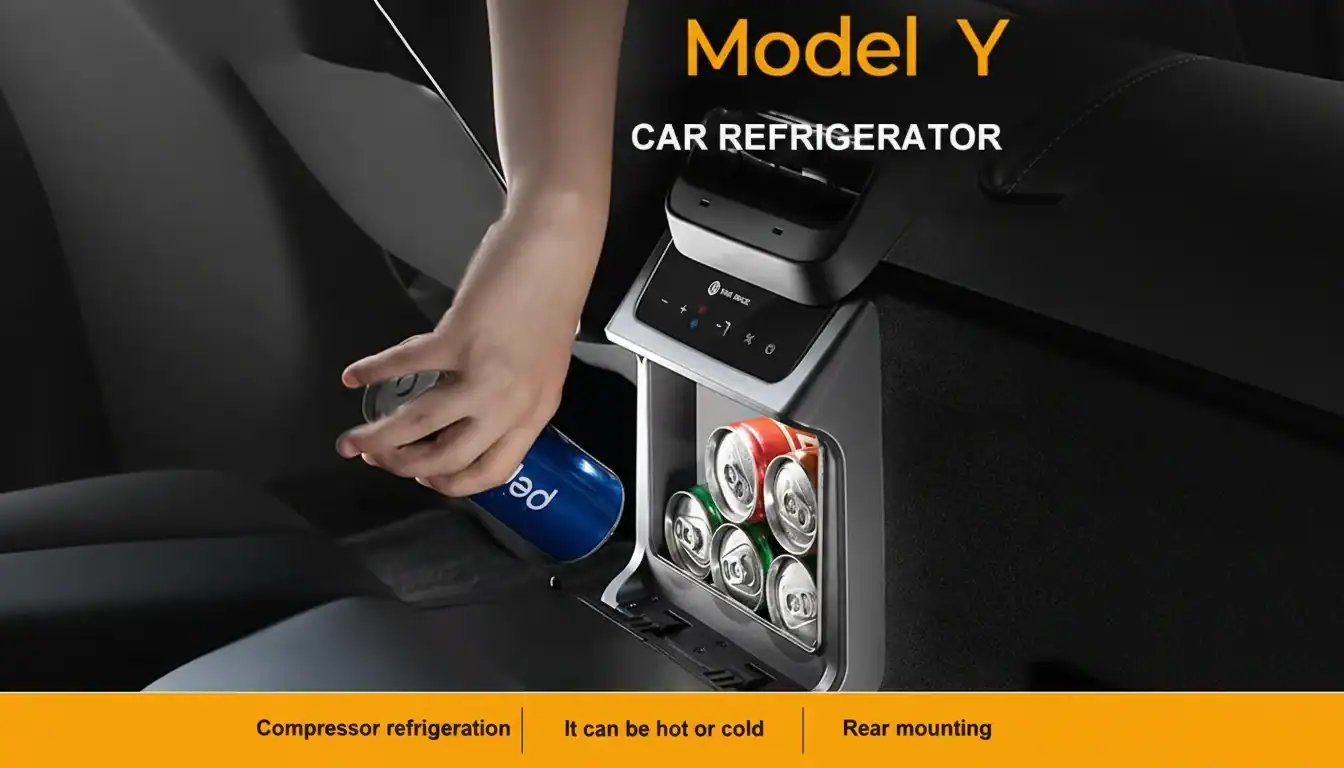
A custom-fit fridge for a Tesla is more than just a convenient accessory; it’s an integrated solution. Key factors like 16V system compatibility, a flush-fit design, and effective cooling management are what separate a premium product from a generic one. Getting these details right ensures the fridge works reliably without compromising the vehicle’s aesthetics or function.
For EV accessory retailers and importers, offering a purpose-built fridge can be a significant market advantage. If you are exploring custom refrigeration solutions for specific vehicle models, reach out to our team to discuss OEM specifications and view our complete product catalog.
よくある質問
What is the best fridge that fits in a Tesla Model Y sub-trunk?
The best units are compressor-based refrigerators specifically engineered with a precision-molded chassis to fit the exact dimensions of the Model Y sub-trunk. Unlike generic coolers, these custom-fit models maximize storage capacity without wasting space. Look for features like a low-power-draw compressor and a configurable low-voltage cutoff to protect your vehicle’s battery. Reputable brands specializing in automotive and EV thermal solutions offer the most reliable and efficient options.
Is the fridge compatible with Tesla’s 16V lithium auxiliary battery?
Yes, premium models designed for the EV market are fully compatible with Tesla’s 16V lithium-ion auxiliary battery system. These refrigerators are engineered to operate within a wide voltage range, typically from 10V to 18V, which safely covers the 16V architecture. They also include automatic voltage detection and a multi-stage battery protection system to prevent any risk of draining the vehicle’s auxiliary battery. Always confirm the manufacturer’s specified input voltage range before purchasing.
Does it fit in the frunk or the trunk?
These specialized refrigerators are designed almost exclusively for the sub-trunk compartment. The sub-trunk’s rigid, defined shape makes it the ideal location for a precision-molded accessory that integrates seamlessly. This placement utilizes previously “dead space” without compromising the primary cargo area in the main trunk or the separate storage capacity of the frunk. While a generic cooler might fit elsewhere, these custom units are engineered specifically for the sub-trunk.
Will it overheat in the closed sub-trunk?
No, a purpose-built sub-trunk fridge will not overheat. These are thermally-managed products engineered for enclosed spaces. They feature highly efficient, low-heat compressors and often include integrated ventilation channels or small, quiet fans to ensure proper heat dissipation. The custom-fit design guarantees that air can circulate around the compressor’s critical components, preventing heat buildup and ensuring consistent cooling performance even when the sub-trunk is closed.

 English
  Español
  Français
  Deutsch
  Português do Brasil
  Русский
  한국어
한국어  日本語
日本語  العربية