 メインコンテンツへスキップ フッターへスキップ
Choosing the right cooler technology can drastically impact energy savings, cooling power, and user experience. This article provides a comprehensive comparison of thermoelectric and compressor coolers, exploring efficiency, cooling range, cost, noise, and ideal use cases to help you make an informed decision. Compressor coolers consume up to 6 times less power compared to thermoelectric units and can achieve temperatures as low as 30-40°F(-1.1°C-4.4°C). In contrast, thermoelectric coolers typically only reach 50°F minimum. However, thermoelectric units offer silent operation with no moving parts, lower upfront costs, and minimal maintenance, making them suitable for noise-sensitive environments.
Comparing Cooling Technologies: Fundamentals and Performance
Understanding the underlying technologies of thermoelectric and compressor coolers reveals why performance and efficiency differ substantially. The core mechanisms of heat transfer and energy use are fundamentally different between these two systems.
How Compressor Coolers Work and Their Advantages
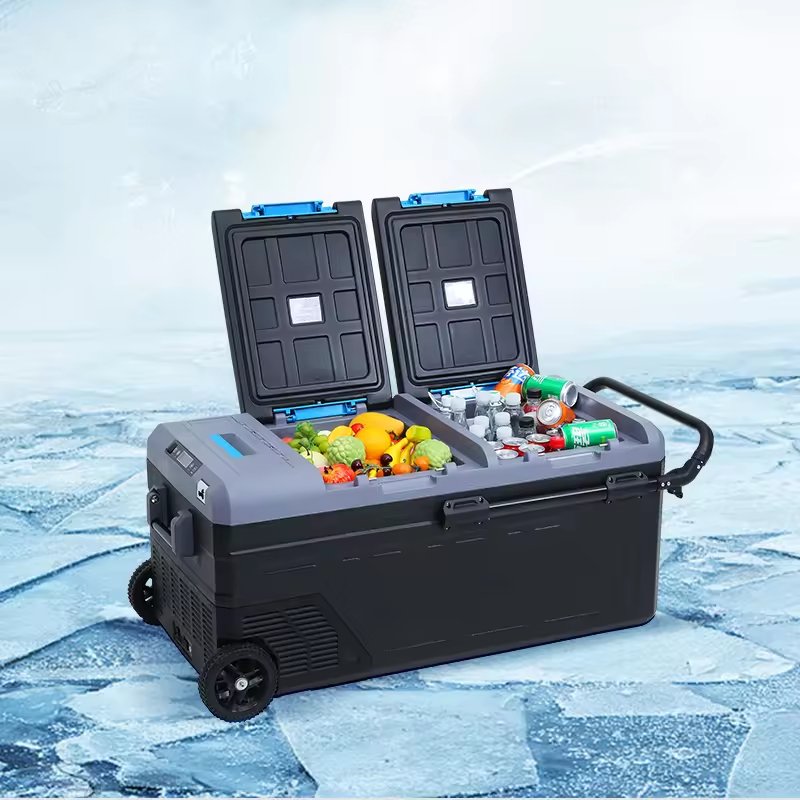
Compressor coolers use a vapor compression refrigeration cycle. This system involves a compressor, refrigerant, and expansion valves to efficiently remove heat. These coolers cycle on and off to maintain temperature. This intermittent operation drastically reduces energy consumption and operational costs over time. Compressor systems handle larger capacities effectively. They also function reliably in warmer ambient conditions where other coolers struggle. They typically achieve lower temperatures, often down to 30-40°F(-1.1°C-4.4°C). This makes them suitable for various needs, including freezer functions. Compressor units are generally more durable but require regular maintenance. This includes periodic refrigerant checks and compressor servicing. They are priced higher upfront but have lower lifetime energy costs. The long-term savings on electricity bills are significant.
| Metric | コンプレッサークーラー | サーモエレクトリック・クーラー | ソース |
|---|---|---|---|
| Cooling Range (°F) | 30-40 (lower temp achievable) | 50 minimum (limited cooling range) | EliteFridges, RIGID HVAC |
| エネルギー消費 | Up to 6 times less than thermoelectric | Continuously on; higher power usage | EliteFridges, Camprest |
| Operating Mode | Cycles on/off | Constant power draw | EliteFridges |
| Capacity Handling | Large to very large | Small to medium | KitchenApplianceStore.com |
| Maintenance | Required (compressor & refrigerant) | Minimal (no moving parts) | RIGID HVAC |
| 騒音レベル | Moderate (compressor noise present) | Virtually silent | Calefort, Compact Appliance |
How Thermoelectric Coolers Work and Their Benefits
Thermoelectric coolers utilize the Peltier effect. An electric current causes heat transfer across two joined metals, cooling one side and heating the other. They have no moving parts. This design translates into virtually silent operation and vibration-free cooling, which is critical for labs or bedrooms. These coolers have faster temperature response times. They also offer more precise temperature controls than many compressor models. They generally have lower upfront costs. Their simplicity also means they require minimal maintenance over their lifespan. They are environmentally friendly. Thermoelectric systems do not use refrigerants or chemicals that can harm the atmosphere. Their cooling efficiency and capacity are limited. This makes them less suitable for large volume applications or use in warm ambient temperatures.

Practical Considerations: Choosing the Right Cooler for Your Needs
Decision factors including cooling capacity, energy efficiency, noise tolerance, cost, and environment suitability determine the best cooler choice. Each factor plays a crucial role in selecting the optimal technology for specific applications and user requirements.
Energy Efficiency and Operational Costs
Compressor coolers consume significantly less electricity. Their intermittent cycling reduces energy bills over time compared to thermoelectric coolers. Thermoelectric coolers run continuously. This constant power draw results in higher consumption and increased operational expenses. In longer-term scenarios, compressor units provide notable savings. They offer environmental benefits and lower costs despite a higher initial expense.
Noise and Vibration Impact
熱電冷却器 operate silently without vibration. This makes them ideal for noise-sensitive settings like bedrooms or laboratories. Compressor coolers produce low to moderate noise. The mechanical components create vibrations that may be disturbing in quiet environments. Noise mitigation technologies in compressors exist. However, they cannot match the complete silence of a solid-state thermoelectric system.
Capacity, Size, and Application Scenarios
Compressor coolers excel in large capacity and built-in designs. They are suitable for sizable storage like wine collections or extended travel. Thermoelectric coolers suit smaller capacities. They are best for freestanding units and portable or niche applications. Thermoelectric technology is sensitive to ambient temperatures. Performance drops significantly in conditions above 26°C (79°F). Compressor units adapt better to environmental stress. They maintain cooling performance in fluctuating or hotter conditions effectively.
Cost and Maintenance Trade-offs
Thermoelectric coolers have lower purchase prices. Fewer mechanical parts also result in minimal maintenance requirements. Compressor coolers are pricier upfront. They need periodic maintenance but offer longer durability and lower long-term operating costs. Thermoelectric coolers may need earlier replacement. Component wear from continuous operation can lead to a shorter lifespan. Compressor systems require professional maintenance. Advances like miniature DC compressors are helping to reduce their noise and size.
Custom Car Coolers Designed for Your Brand
Partner with KelyLands to create thermoelectric and compressor car coolers that fit any environment—from outdoor trips to everyday vehicle use. Benefit from versatile power options, precise temperature control, tailored designs, and global certifications that ensure quality you can trust worldwide.
よくある質問
Which cooler type is better for long trips or camping?
Compressor coolers are generally better for extended use. Their superior energy efficiency and larger capacity are ideal for long trips. Thermoelectric models are better suited for short excursions and quiet environments where noise is a primary concern.
Are thermoelectric coolers really silent compared to compressor units?
Yes, thermoelectric models operate with no moving parts. This makes them almost completely silent. Compressor units produce some operational noise and vibration due to their mechanical nature.
Can thermoelectric coolers achieve freezing temperatures?
No, thermoelectric coolers usually cannot cool below about 50°F. This is a fundamental limitation of the Peltier effect technology. Compressor coolers can reach much lower temperatures, as low as 30-40°F, making them capable of freezing.
Which cooler is more energy efficient and cost effective over time?
Compressor coolers are far more energy efficient. Despite a higher initial cost, they consume much less power during use. This leads to significant savings on electricity bills compared to thermoelectric units that run continuously.
Are thermoelectric coolers environmentally friendlier than compressor coolers?
Thermoelectric coolers use no refrigerants or chemicals. They produce no direct greenhouse gas emissions from leaks. However, their higher energy consumption can have an indirect environmental impact. Compressor systems are improving with the adoption of greener refrigerants.

 English
  Español
  Français
  Deutsch
  Português do Brasil
  Русский
  한국어
한국어  日本語
日本語  العربية