 메인 콘텐츠로 건너뛰기 푸터로 건너뛰기

Finding the best commercial EV charger is the single decision that separates a profitable amenity from a constant source of operational downtime. Businesses often invest thousands in stations that fail within months due to vandalism, payment system glitches, or software lock-in, turning a potential revenue stream into a recurring maintenance expense and a source of customer frustration.
This guide skips the sales pitches and provides a technical vetting framework. We analyze the top chargers against four critical tests: physical durability against impact and rain, payment flexibility with tap-to-pay, software freedom through OCPP, and practical cable management to prevent daily wear and tear. Use this analysis to select a unit built for unmanned public use and long-term ROI.
속도 왕: 어떤 11kW(48A) 유닛이 미래에도 사용할 수 있을까요?
An 11kW (48A) charger is the commercial standard because it delivers substantial charging speed without requiring the expensive site-wide electrical upgrades needed for faster units.
Balancing Charging Speed and Infrastructure Costs
The 11kW (48A) Level 2 charger represents the sweet spot for commercial properties. It offers a practical middle ground, delivering a full charge to a typical EV battery in about 3.6 hours. This speed is more than sufficient for workplace, fleet, and multi-family residential scenarios where vehicles are parked for several hours. Critically, these units avoid the extensive and costly electrical upgrades often associated with faster 22kW systems, making them the most cost-effective choice for scaled deployments. An investment in 11kW infrastructure is a sound, future-ready decision that aligns with the onboard charging capacities of most EVs on the road today.
Smart Features for Commercial Management
A charger’s long-term value is defined by its smart capabilities. Network connectivity is non-negotiable for any commercial or fleet installation. It enables essential functions like remote management, usage tracking, and integration with energy management systems. These features allow property managers to control costs and optimize performance across an entire network of chargers. Key management tools include:
- Reliable Connectivity: Units must support WiFi, Ethernet (LAN), and optional 4G to ensure consistent communication with the central management backend, regardless of installation location.
- Energy Optimization: Remote scheduling allows charging sessions to be shifted to off-peak hours, directly reducing electricity costs. Dynamic Load Balancing (DLB) automatically adjusts power output to prevent overloading a building’s main electrical circuit.
- Access Control: RFID authentication is a standard requirement for managing usage in multi-tenant, workplace, or public environments, ensuring only authorized users can access the chargers.
All-Weather Durability for Public Deployments
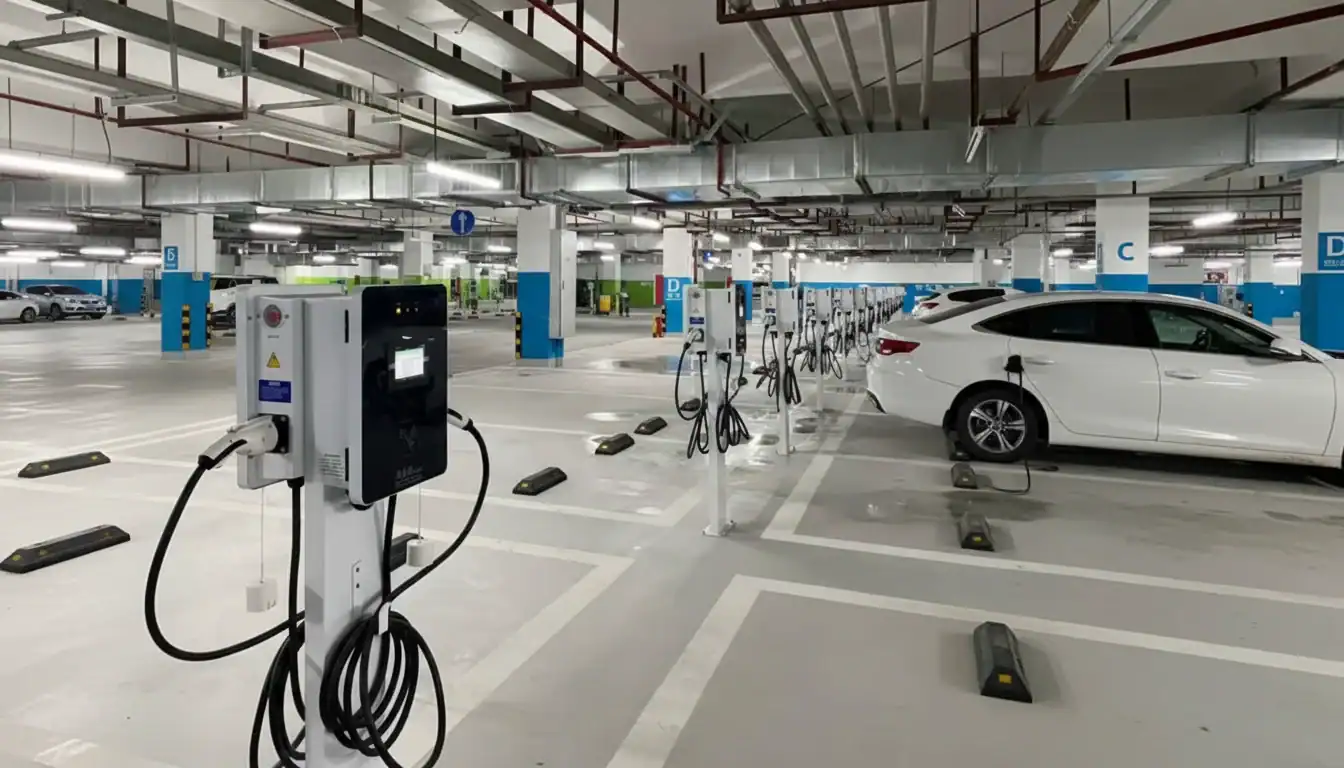
For a charging station to be a sound long-term investment, it must withstand constant public use and harsh weather. Units with robust construction and high ingress protection ratings are essential for reliable, year-round operation. For commercial deployments, a hardwired installation is the industry standard, as it provides a more secure and durable connection than a plug-in setup. Look for enclosures with at least an IP54 rating for protection against dust and water spray, and charging connectors with an IP67 rating, which ensures they can withstand heavy rain and even temporary submersion without failing. This level of physical resilience minimizes downtime and protects the asset for years to come.
앱 경험: 사용량이 적은 시간에 쉽게 과금을 예약할 수 있나요?
Effective app scheduling has moved past basic timers; it now uses real-time utility rate data to automatically shift charging to the cheapest off-peak windows, directly reducing electricity costs without manual intervention.
Intelligent Rate-Based Scheduling
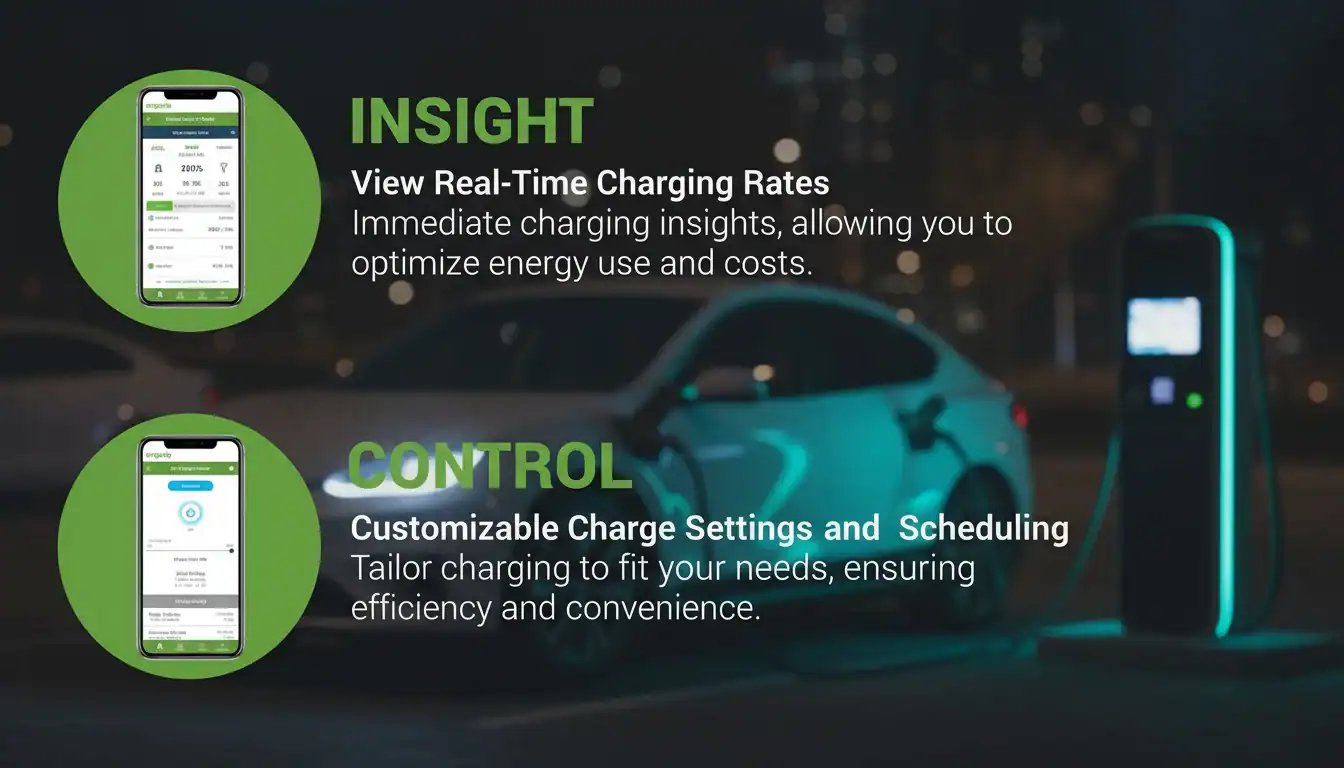
Modern EV charging apps in 2026 no longer rely on simple time-based controls. They now use intelligent, rate-based scheduling that automatically aligns with the cheapest electricity periods, removing any guesswork for the user. These dedicated smart apps sync directly with your utility’s time-of-use (TOU) rate plan to ensure charging happens during the most cost-effective windows.
- Platforms integrate real-time utility rate data to precisely identify off-peak hours.
- Some systems also factor in renewable energy availability to optimize charging for grid stability.
- This automated approach eliminates the need for manual scheduling adjustments when utility rates change seasonally.
“Finish-By” Time Optimization
A key feature for user convenience is the “finish-by time” algorithm. Instead of setting a start time, you tell the app when you need the car fully charged. The system then calculates the best, most cost-effective time to begin the session automatically. This “set it and forget it” approach is now standard in leading smart charging apps.
- The software dynamically calculates the optimal start time based on the current battery level and live electricity rates.
- This removes the complexity of trying to time charging sessions yourself to hit the lowest rate window.
- Advanced apps can coordinate charging schedules for multiple vehicles in a single household to prevent electrical overloads.
Significant Cost Savings
The primary benefit of these smart scheduling features is substantial savings on electricity bills. By automatically charging when energy is cheapest, users can reduce their per-session charging costs significantly. This also helps utilities balance the load on the power grid, contributing to overall efficiency and stability.
- Users can often achieve savings between 30% and 70% per charging session, depending on their local utility’s rate structure.
- The system aligns charging with off-peak periods automatically, maximizing savings without requiring any user intervention.
- This intelligent load shifting helps balance demand on the power grid, which is becoming critical as EV adoption grows.
Smart EV Chargers Built For Your Brand
태양광 매칭: 어떤 충전기가 초과 태양광 전력만 사용하나요?
Using surplus solar power for EV charging relies on three primary methods: integrated hardware ecosystems, flexible third-party software, or home battery storage, each presenting different trade-offs in speed, cost, and compatibility.
Integrated Manufacturer Solutions
Some EV and solar panel manufacturers offer built-in features that automatically divert surplus solar power to the vehicle. This approach creates a seamless experience within a single ecosystem, requiring no third-party software to manage the energy flow. The hardware is designed from the ground up to communicate internally, ensuring reliable performance.
- Systems like Tesla’s “Charge on Solar” and Enphase’s self-consumption profiles monitor home energy usage and solar generation in real time.
- The charger’s software directly adjusts the charging rate to absorb only the excess power not being used by the home.
- This method simplifies setup and guarantees compatibility for users invested in a specific brand’s hardware.
Third-Party Smart Charging Apps
For users with mixed hardware, third-party apps can bridge the gap between different brands of solar inverters and EVs. These applications connect to both systems via APIs and intelligently manage charging sessions based on live solar production data. This software-centric approach offers greater flexibility for existing setups.
- These apps dynamically adjust the charging speed, often pausing or slowing the session when clouds reduce solar output.
- They offer greater flexibility by supporting a wide range of vehicle and solar equipment combinations.
- The technology focuses on software-based optimization, allowing for cost-effective solar matching without replacing existing hardware.
Role of Home Battery Systems
A home battery system acts as a buffer to make solar charging more stable and reliable. It stores excess solar energy generated during the day and can discharge it to the EV charger on demand, smoothing out power fluctuations from intermittent cloud cover. This decouples the act of charging from the time of solar generation.
- Batteries capture all surplus solar energy, preventing interruptions to the charging session.
- This setup enables consistent, high-speed charging using only stored solar power, even when the sun isn’t shining.
- It fully separates the charge cycle from active solar generation, offering the most flexibility.
Current Technical Limitations
Perfectly matching EV charging to fluctuating solar output is still a challenge. The key issues are the speed of communication between devices and the lack of universal compatibility across different brands and protocols. A delay of even a few seconds can result in pulling power from or exporting power to the grid unnecessarily.
- Achieving stable, sub-second power adjustments is difficult, as a passing cloud can cause an immediate drop in generation.
- Broad compatibility between diverse solar inverters, EVs, and chargers remains a significant hurdle.
- Industry progress in 2026 focuses on creating more seamless automation and intelligent load balancing to resolve these issues.
하드와이어 준비: 전기 기술자가 설치하기 가장 쉬운 유닛은 무엇인가요?
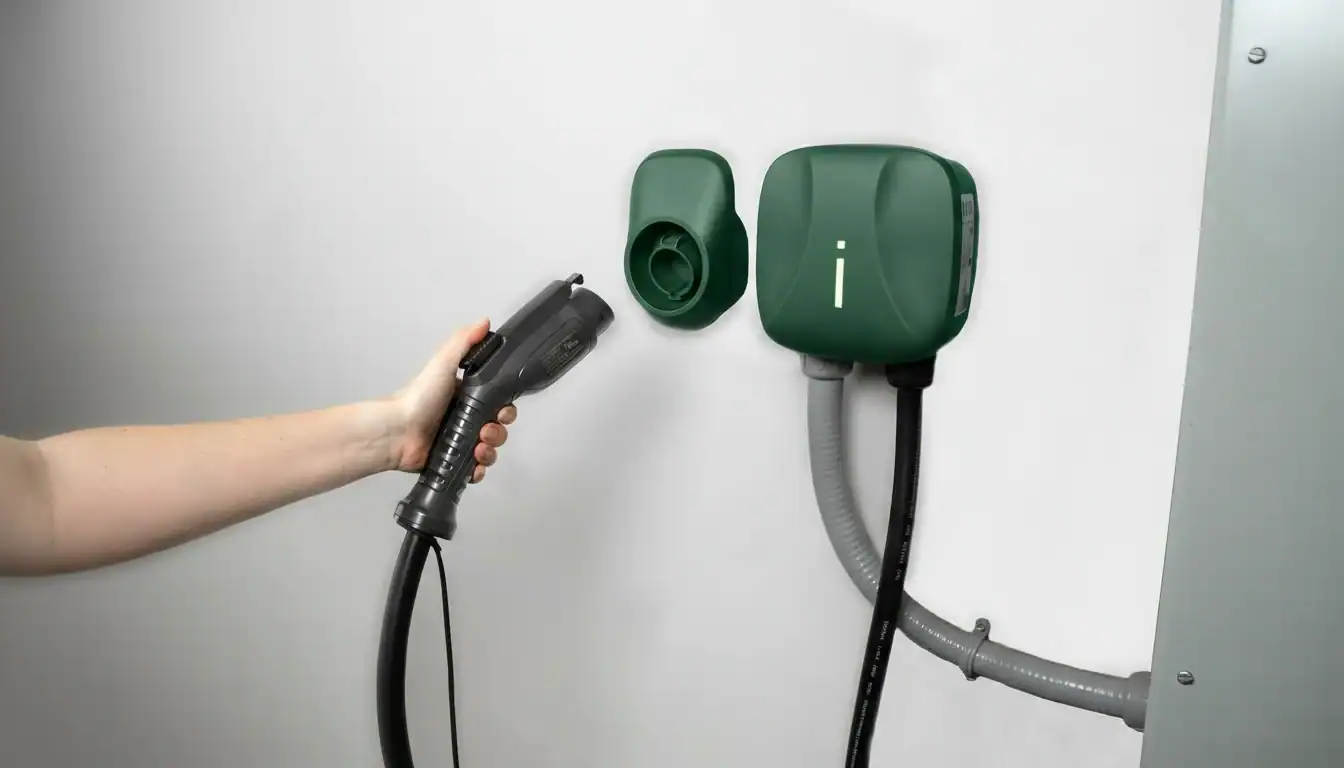
Hardwired installations have become the industry standard for Level 2 charging, offering superior safety, reliability, and often lower costs by simplifying electrical code compliance.
Simplified Code Compliance
Hardwired chargers streamline installation by directly connecting the unit to a dedicated circuit. This method frequently allows electricians to bypass the need for an expensive GFCI breaker, which local codes often mandate for high-power NEMA outlet installations. By eliminating the outlet, the installation becomes cleaner and more cost-effective, as professionals find hardwiring more economical than fitting specialized high-amperage receptacles.
- Direct wiring connects the charger straight to a dedicated circuit, ensuring a stable power connection.
- This setup removes the requirement for a separate, costly GFCI breaker in many jurisdictions.
- As of 2026, this approach reduces both the complexity and material cost of a professional installation.
Standardized Connections and Clear Instructions
The easiest chargers for professionals to install align with standard electrical systems. Top manufacturers design their units for 48-amp circuits using common junction boxes, which allows for faster, more predictable work. Most modern hardwired chargers also feature wall-mounted, plug-and-play internal components, significantly reducing on-site assembly time and minimizing guesswork for the installer.
- Chargers with straightforward wiring requirements minimize installation ambiguity.
- Compatibility with typical electrical panels avoids the need for expensive or custom modifications.
- Clear installation guidelines from the manufacturer are key to reducing deployment time.
Enhanced Long-Term Durability
While hardwiring requires a licensed electrician, it creates a far more durable and reliable connection. By removing the plug and outlet—a common point of failure from the physical stress of repeated use—the system becomes more resilient. This permanent installation is more secure against moisture, dust, and the elements, making it the preferred method for any outdoor or high-use commercial application where reliability is critical.
- A direct connection prevents the gradual wear and overheating that affects power outlets.
- The permanent installation is more secure and resilient against weather exposure.
- For commercial sites, hardwiring is the standard due to its superior reliability and lower maintenance needs.
결론
Choosing the right commercial charger depends on more than just power output. Key factors like durable construction, flexible payment systems, and open network compatibility directly impact your long-term return on investment. Prioritizing these features ensures your hardware remains reliable, user-friendly, and adaptable to future software changes.
If you are sourcing chargers for a commercial project, our team can provide detailed specifications and OEM options. Contact us to get a complete product catalog or discuss your specific hardware requirements.
자주 묻는 질문
Best commercial EV charger for hotels?
For hotels, the best commercial EV charger is a networked Level 2 unit, such as an 11kW (48A) model, that prioritizes reliability and guest convenience. Key features include universal J1772 connectors, load balancing to manage power across multiple stations, and flexible payment options like QR code scanning or tap-to-pay. Chargers should also be integrated with a robust network management platform (e.g., ChargePoint, EVBox) that allows for remote monitoring, setting custom pricing, and generating usage reports. A durable, all-weather design (NEMA 3R or higher) ensures dependable operation for guest vehicles.
Which charger has the lowest maintenance cost?
Chargers with the lowest maintenance cost typically feature a simple, robust design and high-quality components. Look for units with a non-retractable, field-replaceable charging cable and a durable, sealed enclosure (NEMA 3R or IP55+) to protect against weather and vandalism. Hardwired installations are generally more reliable than plug-in configurations for commercial use. Furthermore, chargers from established manufacturers with mature software platforms that support over-the-air (OTA) updates can resolve many issues remotely, significantly reducing the need for costly on-site technician visits.
Best OCPP compliant charger for fleets?
The best OCPP-compliant charger for fleets is one that supports OCPP 1.6J or a newer version, as this enables critical smart charging and load management functionalities. For fleet depots, key features include robust RFID authentication for driver access control, high-uptime hardware, and the ability to integrate with dedicated fleet energy management software. This protocol ensures the operator is not locked into a single network provider and can choose the back-end system that best suits their operational needs, such as optimizing charging schedules around vehicle telematics and off-peak electricity rates.
Commercial charger with built-in credit card reader?
Yes, numerous commercial chargers offer built-in credit card readers to provide simple, app-free payment options for public use. This feature is common on DC Fast Chargers (DCFCs) from manufacturers like Tritium and EVgo, and is also available on premium Level 2 commercial stations from providers such as ChargePoint. These payment terminals typically support tap-to-pay (NFC), Apple Pay/Google Pay, and traditional chip card payments, ensuring maximum accessibility for any EV driver needing to charge.

 English
  Español
  Français
  Deutsch
  Português do Brasil
  Русский
  한국어
한국어  日本語
日本語  العربية