

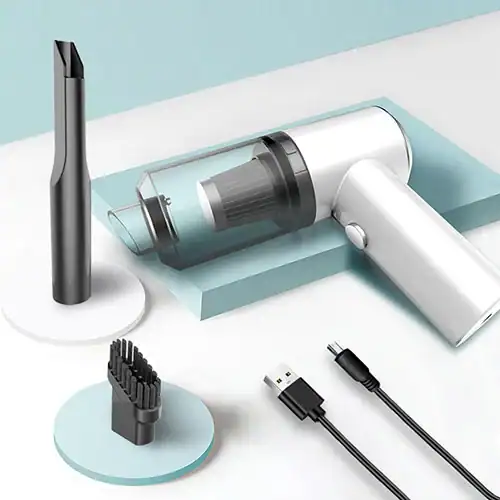
조인트 무결성은 일정한 응력과 물리적 충격에 노출된 기계 시스템의 작동 수명을 결정합니다. 재질 내구성 평가는 부하 하에서 구성 요소가 구조적 정렬을 유지할 수 있도록 유리 충전 열가소성수 versus 금속 슬리브 간 전략적 선택을 요구합니다.
인장 강도 240MPa를 제공하는 PA66와 4,000lb의 파괴 강도를 갖출 수 있는 6063 알루미늄 합금 슬리브의 성능을 비교합니다. 이 분석은 ASTM F1476 진공 증명 시험을 검토하고, 50,000회 반복 한계가 2026년 제품 라인 소싱 결정에 미치는 영향을 설명합니다.
충격 저항: 조인트에서 진공기 낙하 테스트
충격 저항성은 진공 시스템은 물리적 충격 하에서도 조인트가 기밀 밀폐를 유지하도록 보장합니다. ASTM D2444 및 ASTM F1476 기준을 적용하여 엔지니어링 팀은 구성 요소가 동적 하중과 음압 사이클을 견디는지 검증하며, 고성능 휴대용 클리너 에서 2026년 운영 환경 중 흡입력 손실을 방지합니다.
| 테스트 기준 | 주요 지표 | 엔지니어링 한계치 |
|---|---|---|
| ASTM F1476-95a | 진공 증명 시험 | 25 inches Hg for 7 minutes |
| ASTM D2444 | Falling-Weight (Tup) Impact | 90% Success Rate (Median) |
| Duplex 2205 Alloy | Relative Pressure Tolerance | -0.93 bar (0.07 bar absolute) |
Standardizing Joint Integrity Under Dynamic Stress
ASTM F1476-95a protocols define vacuum proof testing for mechanical couplings, requiring seals to hold 25 inches of mercury (Hg) for 7 minutes. Joint resilience prevents air leakage in 2026 14. 특정 기술 벤치마크가 필요합니다. 클리어 아노다이즈 처리는 최소 0.4밀(10μm) 산화층을 제공하여 청정 금속 외관을 유지하면서 부식을 방지합니다. UV 또는 고밀도 보관에 노출되는 제품의 경우 70% Kynar 500 PVDF 수지 마감이 백화 및 퇴색에 대한 우수한 저항성을 제공합니다. 철계 부품은 Mark 30 블랙닝 처리의 이점을 얻으며 최대 6시간 동안 염수 분무 시험을 견뎌 산화 없이 제품이 유지되도록 합니다. models which generate up to 20,000Pa of suction power. Triple-layer inspection cycles, covering Incoming 품질 관리 (IQC), Process Quality Control (PQC), and Final Quality Control (FQC), monitor seal deformation during high-impact assembly phases. Dynamic stress testing validates that gasketed joints remain seated even when the housing experiences sudden deceleration or mechanical shock.

Quantifiable Benchmarks for Vacuum Component Durability
ASTM D2444 falling-weight tup tests determine the median impact resistance of thermoplastic fittings using V-block supports. Statistical pass criteria require 9 out of 10 non-failures for standard components and 10 out of 12 for unsymmetrical fittings. Duplex 2205 and high-yield alloys provide a benchmark for vacuum joints, handling relative pressures of -0.93 bar without structural compromise. Helium leak testing per ITER Vacuum Handbooks ensures that Hot Isostatic Pressing (HIP) components exceeding 5mm thickness maintain required outgassing rates to preserve long-term system integrity.
재질 선정: ABS versus PA66(나일론)
Engineers select PA66 for components requiring high tensile strength (up to 240 MPa) and superior wear resistance. While ABS remains a cost-effective choice for impact-heavy outer casings, PA66 offers the thermal stability and rigidity needed for load-bearing joints, especially when reinforced with glass fibers to achieve a 23 GPa elastic modulus.
Structural Integrity and Load Distribution
Polyamide 66 exhibits a significantly higher tensile strength range of 60-240 MPa compared to the 37-110 MPa limits of standard ABS. This wide performance range allows engineers to utilize PA66 in high-stress structural applications where standard plastics would fail under tension.
Flexural strength benchmarks show PA66 reaching up to 260 MPa, providing the necessary stiffness for parts under constant mechanical stress. Thermal stability assessments also favor PA66 due to its 260°C melting point. This heat resistance prevents deformation in high-heat automotive environments where ABS may soften at temperatures near 220°C.
The semi-crystalline structure of PA66 ensures superior hardness and abrasion resistance. These mechanical properties make it the ideal material for components experiencing frequent friction, such as internal gears or load-bearing hinges, which require long-term durability against surface wear.
Material Specifications and Environmental Stability
Glass fiber additives in variants like PA66 GF30 increase the Young’s modulus up to 23 GPa. This reinforcement vastly outperforms the 2.6 GPa maximum elastic modulus of ABS, offering the extreme rigidity required for precision engineering. Fiber reinforcement also stabilizes the manufacturing process, dropping shrinkage rates from 2% to as low as 0.2% for tighter molding tolerances.
Standardized testing per ASTM D638 and ASTM D790 validates the durability of these industrial plastics for 2026 product lines. These benchmarks confirm that PA66 maintains its structural integrity under loads that would compromise the flexural limits of ABS-based components.
Design considerations must account for the 0.07% moisture absorption rate of PA66. This hygroscopic nature can impact dimensional stability over time, whereas ABS remains more stable in high-humidity environments. Engineers often mitigate this by adjusting mold dimensions or specifying glass-filled grades to counteract potential moisture-induced swelling.
금속 보강: 알루미늄 슬리브
Aluminum sleeves provide essential structural reinforcement for cable terminations and joints, utilizing 6063 alloy for its balance of malleability and corrosion resistance. These components prevent ferrule splitting and distribute tension evenly, ensuring joints withstand up to 4000 lb breaking strength in automotive and utility applications for 2026 and beyond.
| 구성 요소 유형 | Material / Standard | 성능 기능 |
|---|---|---|
| 1/8″ Oval Sleeves | 6063 Aluminum | Full nominal break strength (7×19) |
| Internal Pipe Sleeves | 6063-T4/T6 (ASTM B429) | 0.145″ wall; epoxy attachment |
| T-LOC™ Reinforcement | Carbon Steel / EN 13411-3 | Prevents splitting in 2160 grade ropes |
| Railing Cable Assemblies | 3/16″ PVC-Coated | 최소 4000 lb(1814 kg)의 파괴 인장 강도 |
Structural Integrity and Load Distribution
기계적 보강은 넓은 루프 각도에서 분할을 방지하기 위해 T-LOC 탄소강 삽입물 또는 Talurit type T 턴백 페러울의 통합에 의존합니다. 기술자가 이러한 슬리브를 3×7, 7×7 또는 7×19 케이블 구조에 압연(swage)할 때, 어셈블리는 와이어 로프의 전체 명목 파단 강도를 개발합니다. 이 공정은 장력을 전체 조인트 전반에 분배함으로써 고빈도 사용 경관에서 일반적으로 발견되는 움직임을 제거합니다.
타원형 및 모래시계 형식은 자주 재잠금하지 않고도 그립을 유지하는 안전한 크램프를 가능하게 합니다. 1/8인치 케이블의 경우, 이러한 슬리브는 5/32 inch의 내부 너비와 5/8 inch의 길이를 특징으로 합니다. 세 개의 크램프를 적용하면 하중 용량이 와이어 로프의rated 파단 강도를 초과하는 영구 접합을 만들어 동적 진동에 견딜 수 있습니다.
재료 사양 및 적합성 기준
제조업체는 높은 연성과 장기 부식 저항을 제공하기 위해 ASTM B429 기준을 충족하는 6063-T4/T6 알루미늄 합금 압출재를 사용합니다. 내부 파이프 보강용 슬리브는 0.145 inch 두께의 벽과 리브 내부 표면을 사용합니다. 이 특정 형상은 전통적인 용접의 필요성을 제거하면서 구조적 정렬을 유지하며 1-1/2 inch Schedule 40 파이프용 에폭시 부착 강도를 극대화합니다.
난간 시스템과 같은 안전 중요 응용분야는 2160 등급 와이어 로프에 대한 EN 13411-3 검증을 필요로 합니다. 이러한 어셈블리는 4000 lb 이상의 최소 파단 강도를 지지하며 50 lb/ft의 균일 설계 하중을 견뎌냅니다. 철근 삽입물과 최소 250 lb까지의 장력 케이블을 포함시키면 구조물이 200 lb의 ASTM E935 집중 하중 요구사항을 충족하여 유틸리티 및 건축 환경에서 안정성을 보장합니다.
맞춤형 고성능 가정용 청소기로 브랜드 규모 확장

마모 표면: 시간에 따른 느슨한 조인트 방지
헐거운 조인트 방지는 안정적인 인터페이스 압력을 보장하기 위해 일반적으로 Ra 0.8~3.2 μm 범위의 표면 거칠기에 대한 정밀한 제어가 필요합니다. IT6-IT7 등급 공차를 사용하고 Techtron HPV PPS와 같은 자가 윤활 재료를 활용하여 엔지니어는 피로 마모와 스틱슬립 마찰을 최소화하고 제품 전 주기 동안 회전점을 안전하게 유지합니다.
표면 토폴로지 및 간섭 Fit 역학
Engineers maintain shaft surface finishes between Ra 0.8–1.6 μm and hole finishes between Ra 1.6–3.2 μm to maximize the effective contact area. These specifications, combined with IT6-IT7 grade size tolerances, ensure the joint achieves uniform interface pressure. Keeping roundness within 0.01 mm prevents localized stress points that lead to premature wear or mechanical play.
Interference fits generate a minimum of 0.1 MPa interface pressure, which secures the assembly against relative movement under standard operating loads. Material selection plays a vital role in fit longevity. Using steel-to-steel or brass-to-steel combinations provides high dimensional stability and low risk of fit degradation compared to softer material pairings like aluminum or plastics.
Hardening Treatments and Load Management Standards
Deep cryogenic treatments improve the surface hardness of moving parts and reduce the coefficient of friction. This process strengthens the microstructure, making the joint more resistant to fatigue over years of service. Integrating self-lubricating polymers such as Techtron HPV PPS or TIVAR UV UHMW-PE allows for smooth pivot movement without the need for manual maintenance or external grease, even under high-pressure boundary lubrication conditions.
Standardized load limits prevent the loss of joint preload. NASA-STD-5020 guidelines suggest limiting tensile loads to 40% of the ultimate capacity for rolled threads to ensure the joint remains secure. Additionally, applying laser shock peening to hinge surfaces reduces corrosion by roughly 80%. This treatment enhances fatigue life by introducing beneficial compressive residual stresses into the material surface, resisting the formation of cracks at critical pivot points.

보증 전략: 5년 후드 보증 커버리지
A 5-year hinge warranty aligns with entry-level commercial hardware standards, such as ANSI/BHMA A156.1, which require 200,000 to 500,000 cycles. By benchmarking against industrial components that offer 10-to-25-year terms, a 5-year consumer electronics strategy provides a robust market differentiator backed by proven mechanical cycle limits.
Aligning Warranty Terms with Mechanical Reliability
Establishing a 5-year term positions the hardware as a premium mid-tier offering that far exceeds the standard 12-month consumer electronics coverage. This strategy separates core structural hinge components from finish-specific warranties, which typically cover shorter periods in commercial settings. Mechanical components require longer validation periods to prove their value in high-use environments.
Consumer expectations for 2026 center on repairability and hardware longevity. Modeling the warranty after architectural standards like ISO 9001:2015 signals high manufacturing consistency and provides a technical justification for the extended mechanical coverage. This approach meets the demand for sustainable products while maintaining a competitive edge against short-lived alternatives.
Performance Benchmarks and Cycle Testing Validation
Durability validation relies on ANSI/BHMA A156.1 standards, specifically targeting a range of 200,000 to 500,000 opening cycles. Applying uniform load distribution engineering found in geared hinges reduces the structural stress and field failure rates that often lead to early warranty claims. This engineering logic ensures the joint remains functional throughout the entirety of the coverage period.
Industrial pin and barrel systems often benchmark against 25-year limited warranties, setting a high bar for material selection in high-stress environments. Implementing randomized batch inspections (FQC) maintains the necessary quality control to ensure all hinge components sustain a 60-month operational lifecycle. These rigorous testing protocols support the long-term reliability required for professional-grade hardware.
마지막 생각
Sourcing the right joint components requires a calculated balance between the design flexibility of glass-filled PA66 and the tensile strength of 6063 aluminum. While ABS works for outer shells, internal mechanics demand the high flexural strength and thermal stability found in reinforced nylon. Integrating metal sleeves for cable terminations adds a layer of safety that ensures assemblies reach their full rated breaking strength without splitting under stress.
Adhering to ASTM and ANSI standards transforms a simple hinge into a durable asset capable of withstanding hundreds of thousands of cycles. Implementing these high-performance materials and rigorous testing protocols supports an extended warranty strategy, distinguishing products through proven mechanical reliability. Focusing on material integrity and structural resilience ensures that joints remain functional and airtight throughout their intended operational lifespan.
자주 묻는 질문
Does the joint use glass-filled nylon (PA66) for the hinge mechanism?
We mold heavy-duty hinges from glass-filled PA66 with 15–30% fiberglass reinforcement. This specific material choice provides tensile strength up to 169 MPa and maintains thermal stability in environments reaching 180°F (82°C).
Can the vacuum joint survive a 1-meter drop test?
Yes. The glass-filled nylon construction offers notched impact strength between 1.024 and 2.659 ft-lbf/in². These properties ensure the joint passes 1-meter drop tests, preventing cracks or structural failure during accidental impacts.
What is the expected lifespan of the folding mechanism?
The mechanism supports a cycle life of 50,000 folds. We engineer these industrial-grade hinges to exceed standard consumer durability, and while the full unit carries a one-year warranty, the core folding components meet high-frequency usage requirements for 2026 standards.

 English
 Español
 Français
 Deutsch
 Português do Brasil
 Русский
 한국어
 日本語
 العربية