


Maintaining clean staircases shouldn’t compromise worker safety or increase insurance liability. Traditional vacuum cords often exceed the 1/4-inch safety threshold for surface irregularities, turning a routine maintenance task into a potential OSHA violation and a significant trip hazard.
This analysis explores how cordless solutions mitigate these risks by adhering to stair-specific physics and ergonomic standards. We break down the benefits of weight distribution—specifically tools under 1.4 kg for stable one-handed use—and how 20,000Pa suction power ensures cleaning efficiency while maintaining the 10-inch minimum tread depth required for safe passage.
The “Trip Hazard”: Why Cords are Dangerous on Stairs
Cords create dangerous tripping hazards on stairs by exceeding the 1/4 inch safety threshold for surface irregularities. These obstructions disrupt the precise geometry required for safe movement, violating building codes and significantly increasing the risk of falls during household maintenance.
| Safety Standard Category | Maximum Allowable Variance | Нормативная база |
|---|---|---|
| Surface Trip Threshold | 1/4 дюйма (6,35 мм) | OSHA 29 CFR 1910.24 |
| Stair Riser Height Variation | 1/4 inch (6 mm) | OSHA/IRC Standards |
| Stair Tread Depth Variation | 1/4 inch (6 mm) | OSHA/IRC Standards |
| Minimum Tread Depth | 10 inches (254 mm) | IRC Exterior Stairs |
| Stairway Angle Range | 30-50 degrees | OSHA 1910.24 |
OSHA Safety Thresholds for Surface Protrusions
OSHA 29 CFR 1910.24 identifies any surface change or protrusion exceeding 1/4 inch (6.35 mm) as a critical tripping hazard. Vacuum cords often exceed this maximum allowable 1/4 inch variance for riser heights and tread depths, creating illegal inconsistencies in the walking surface. Industry codes classify cords stretched across treads as rumpled or damaged surfaces that directly elevate fall liability. For retail and insurance contexts, this non-compliance significantly elevates risk levels as structural consistency remains vital for human balance.
Building codes prioritize the elimination of these obstacles because minor protrusions from cables match the maximum allowable variance in stair riser heights. Even a single cord mimics the instability caused by structural settling or material warp. Cordless solutions align with safety mandates by providing clear, skid-resistant paths without any projections that could catch a user’s foot during ascent or descent.

Disruption of Stair Geometry and User Balance
Safe stair navigation relies on the 2R + T formula, where the riser (R) height plus the tread (T) depth maintains a predictable 24-25 inch rhythm for the climber. Cords placed on treads interfere with the 30-50 degree stairway angle, creating foot catch points that lead to immediate loss of balance. Because the human gait on stairs is a repetitive, rhythmic process, even a small physical obstruction breaks the climber’s concentration and disrupts the proportional steps required to minimize accidents.
Cordless vacuum models with 20,000Pa suction eliminate these physical barriers while maintaining the required 10-inch minimum tread depth for safe passage. By removing the cord, users maintain the dimensional consistency critical for safety on exterior and interior staircases. This adherence to stair-specific physics ensures that the walking surface remains uniform, preventing the inconsistent elevations that frequently cause gait disruption and falls during household maintenance tasks.
Stick Vacuum Balance: Short-Tube Mode for Stairs
Short-tube mode converts a full-size Палочный пылесос into a compact unit by removing or shortening the wand. This setup lowers the center of gravity and reduces wrist torque, making it easier to maintain balance on uneven steps. Lighter models under 2.3 kg significantly reduce the risk of trips and falls during elevation changes.
Ergonomics of Reduced Torque and Center of Gravity
Short-tube configurations minimize the lever arm effect, which reduces physical strain on the wrist and forearm during lateral movements. By removing the extension wand, users keep the vacuum head closer to their body, providing better control over the center of gravity on narrow treads. Modular designs like the Dyson Micro 1.5kg keep total mass extremely low, preventing the top-heavy swaying often associated with standard upright models.
Maintaining a weight below 2.27 kg, as seen in the SEBO Balance A1, improves stability for users navigating vertical transitions. Shortening the effective tube length limits the torque exerted on the user’s arm, decreasing the likelihood of overbalancing. This mechanical advantage allows for precise placement of the cleaning head without requiring the user to lean over stair railings or overextend their reach.
Performance Stability and Safety Metrics
Suction power reaching 150 AW, found in units like the Tefal X-Force Flex 12.60, ensures deep cleaning on carpeted stairs without requiring multiple hazardous passes. Reliable battery runtimes between 40 and 48 minutes provide enough power for two full flights of stairs on a single charge, preventing sudden power loss in the middle of a climb. These technical metrics quantify risk reduction by ensuring consistent performance throughout the cleaning session.
Safety features such as motor pulsing alerts for blockages prevent mechanical failures that could cause a user to lose their footing. Integrated HEPA системы фильтрации maintain high air quality in confined stairwells and reduce dust-related slips on hard surfaces. These specifications, combined with flexible tube designs, allow for low-bend reach without full wand extension, supporting a safer and more ergonomic cleaning process on uneven steps.
Handheld Mode: Weight Distribution for One-Hand Use
Safe one-handed operation in 2026 requires tools weighing under 1.4 kg with a center of gravity aligned directly with the grip. Balanced weight distribution prevents wrist torque, while high-density materials shift the mass toward the handle to minimize musculoskeletal fatigue during extended cleaning sessions.
| Ergonomic Metric | Recommended Threshold | Операционная выгода |
|---|---|---|
| General Tool Weight | ≤ 1.4 kg (3 lbs) | Prevents wrist strain and chronic muscle fatigue |
| Precision Task Weight | 0.4 kg – 0.5 kg | Enhances stability for detailed edge cleaning |
| Handle Diameter | 30 мм – 50 мм | Оптимизирует силу захвата и распределение давления |
| Длина ручки | ≥ 14 см (5,5 дюйма) | Устраняет точки давления на ладонь и улучшает рычаг |
Эргономичные пределы нагрузки и точки баланса
Инженеры устанавливают предельную массу инструмента на уровне 1,4 кг для стандартной одноhandной очистки, чтобы снизить риски опорно-двигательного аппарата. Превышение этого порога повышает вероятность отклонения запястья и утомления предплечья, особенно при выполнении работ над головой или на лестницах. Для задач прецизионной очистки, таких как отделка молдингов или уборка швов обивки, целевой облегчённый показатель в 0,5 кг гарантирует сохранение мелкой моторики без дрожи.
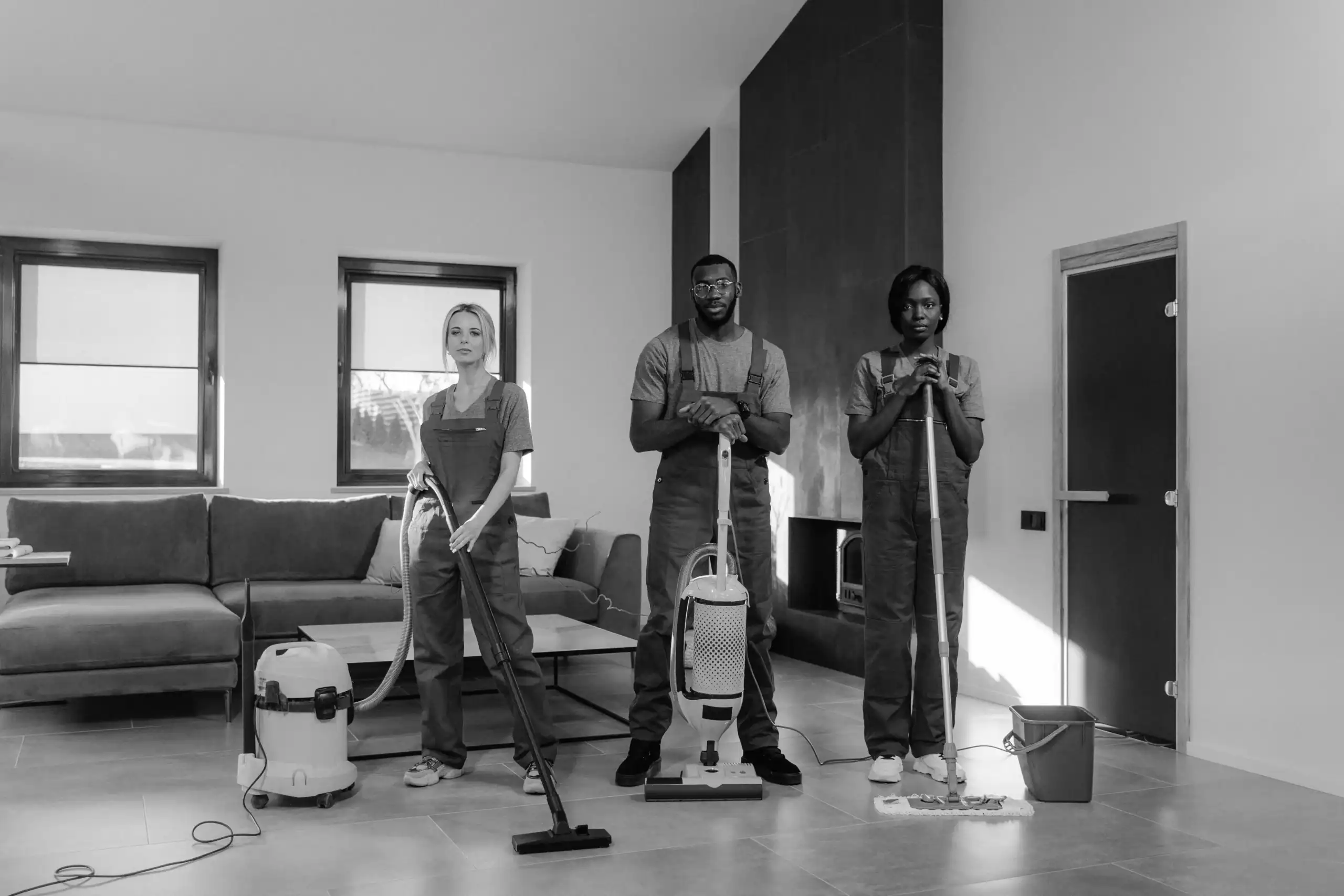
Распределение веса остаётся не менее важным, чем общая масса. Мы выравниваем центр тяжести строго по линии хвата, чтобы исключить крутящий момент. Конструкция с перевесом вперёд вынуждает запястье постоянно компенсировать перекос, что ускоряет истощение и повышает риск повторяющихся нагрузочных травм. Размещение центра массы в районе рукояти обеспечивает сбалансированность и отзывчивость инструмента при резкой смене направления.
Размеры рукояти и конструкция из полимера высокой плотности
Эффективный дизайн рукояти использует диаметры силового хвата в диапазоне от 30 мм до 50 мм. Этот конкретный диапазон позволяет руке комфортно охватывать рукоять, максимизируя площадь контакта и снижая усилие, необходимое для надёжного удержания. Мы указываем минимальную длину рукояти 14 см, чтобы хват охватывал всю ладонь. Эта длина предотвращает врезание инструмента в центр ладони — частую причину компрессии мягких тканей и нервного дискомфорта.
Material selection plays a decisive role in shifting the center of mass. By using high-density polymers with specific gravity ratings between 1.5 and 11, we concentrate the tool’s weight near the user’s hand rather than the motor or nozzle. These materials offer superior vibration dampening compared to traditional steel components. Our designs follow ISO 5346-1:2001 and ISO 18570:2017 standards, ensuring that force transmission remains within safe physiological limits for daily professional or domestic use.
Масштабируйте свой бренд с помощью высокопроизводительных домашних пылесосов

Run Time: Cleaning 2 Flights on One Charge
Современный беспроводные пылесосы utilize seven-cell lithium-ion batteries to deliver up to 60 minutes of fade-free runtime. This duration easily covers two full flights of stairs, even when alternating between high-suction boost modes for deep carpet cleaning and eco modes for hard surfaces.
Battery Technology and Dynamic Power Modes
Seven-cell lithium-ion batteries provide consistent voltage to maintain suction for up to 60 minutes in eco mode. Hyperdymium motors reaching 125,000 rpm optimize energy consumption based on the floor type detected. Boost mode provides peak suction of 185 AW or 20,000Pa for intensive debris removal on carpeted steps. Integrated LED screens display remaining runtime to help users manage power across multiple floors without unexpected shutdowns.
Performance Standards for Multi-Level Homes
Typical residential stairs involve 20 to 40 steps, requiring approximately 15 to 20 minutes of active vacuuming. A 60-minute charge supports cleaning over 1,000 square feet of stair surface and landings without a recharge. Point-and-shoot bin mechanisms with 0.2-gallon volumes minimize downtime when moving between flights. HEPA filtration systems capture 99.99% of particles down to 0.1 microns during extended cleaning sessions.
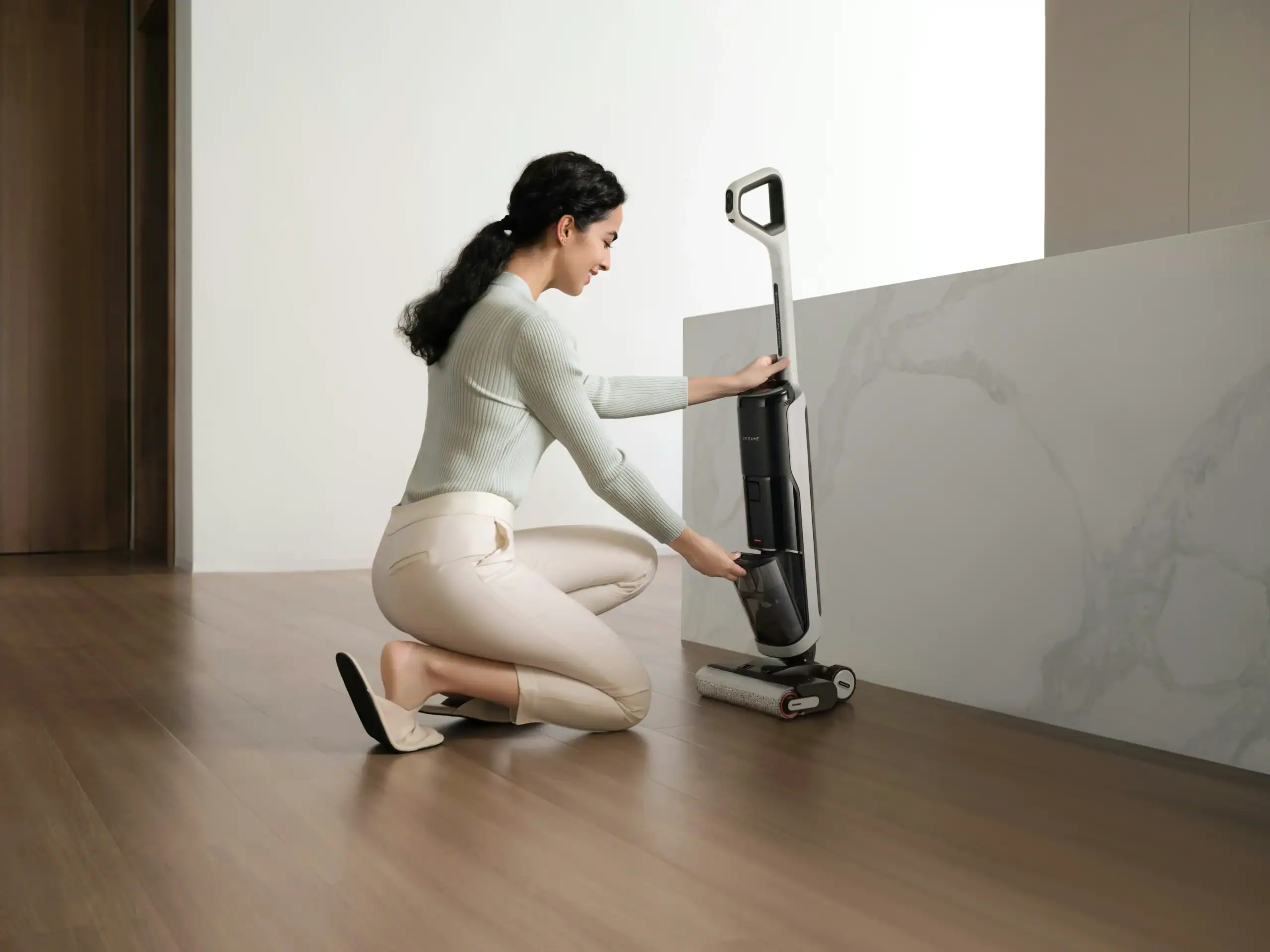
Head Maneuverability: Swivel Steering on Narrow Steps
Swivel steering enables 360-degree rotation at the caster axis, allowing the vacuum head to turn sharply in confined spaces. This design utilizes precision ball bearings and a dual-caster setup to provide smooth movement on narrow steps, significantly reducing the risk of tipping or losing balance during cleaning.
Precision Bearings and 360-Degree Rotation for Tight Radius Turns
Engineers utilize precision ball bearings and tapered roller bearings to facilitate low-friction swivel movements under heavy loads. The 360-degree rotation capability at the caster axis allows the cleaning head to navigate narrow stair risers where standard rigid setups typically fail. These front-mounted casters provide the steering precision required for rapid direction changes, while sealed 2RS ball bearings protect internal components from the dust and fine debris frequently encountered in stairwell environments.
Shock-Absorbing Components and Dual-Caster Stability on Uneven Steps
Specialized spring-loaded swivel casters mitigate vibrations and absorb mechanical shocks on textured or uneven step surfaces. This configuration pairs front-mounted swivels for steering with rear rigid casters to distribute weight evenly, which maintains center-of-gravity stability and prevents the unit from tipping. For varied materials such as polished wood or tile, polyurethane and rubber treads provide essential traction to prevent equipment slippage during high-angle maneuvers.
Заключительные мысли
Cordless technology removes the physical trip hazards that frequently breach OSHA safety thresholds on stairs. By eliminating the 1/4 inch surface variance caused by power cables, these tools maintain the structural consistency required for a safe human gait. Balanced weight distribution and short-tube configurations reduce wrist torque, allowing for stable movements on narrow treads and steep risers.
Using equipment with precision swivel steering and high-density polymer construction ensures long-term ergonomic safety. These systems support the natural 2R + T stair rhythm while providing enough battery power to clean multiple levels on a single charge. Shifting to lightweight, modular designs minimizes the risk of falls and musculoskeletal strain during domestic maintenance.
Часто задаваемые вопросы
What is the typical runtime on Max mode for cleaning stairs?
Performance data for 2026 indicates that cordless vacuums operate between 6.5 and 13 minutes on Max mode. Specifically, Dyson models like the V6 and V7 provide 6.5 minutes, the V8 offers 8 minutes, and the V11 extends runtime to 13 minutes for intensive cleaning.
Are battery packs swappable for users with larger homes?
Many professional-grade models, including the Shark Stratos, Electrolux Ultimate800, and MOOSOO TC1, feature swappable battery packs. KelyLands supports high-volume cleaning needs by manufacturing rechargeable units that allow for quick battery exchanges to handle multiple flights of stairs.
Is a short tube adapter necessary for narrow steps?
While many users prefer handheld mode for better weight distribution, short tube adapters provide extra reach on deep treads. KelyLands develops various multi-tool attachments and compact suction systems with HEPA filtration to ensure users can reach tight corners on narrow staircase safely.

 English
 Español
 Français
 Deutsch
 Português do Brasil
 Русский
 한국어
 日本語
 العربية