 Перейти к основному содержанию Перейти к нижнему колонтитулу

Finding the best portable ev charger is the critical difference between reliable fleet uptime and a catastrophic thermal event that halts operations. Many so-called “heavy-duty” chargers are just consumer-grade units that can’t withstand the daily abuse of a commercial environment, creating significant fire risks and liability concerns when used with improper adapters or on unpredictable power sources.
This guide provides a clear evaluation framework, moving beyond marketing claims to focus on engineering reality. We analyze critical safety features like automatic voltage detection and the mechanical integrity of swappable NEMA plugs versus failure-prone adapters. We also test for industrial-grade ruggedness and the value of real-time diagnostics to ensure you can confidently select a unit that protects both your fleet assets and your personnel.
The “Granny Cable” Test: Can It Handle 110V and 240V Automatically?
A “granny cable” does not convert voltage; it’s a passthrough device designed for a single regional power grid, and its output is dictated entirely by the wall socket it’s plugged into.
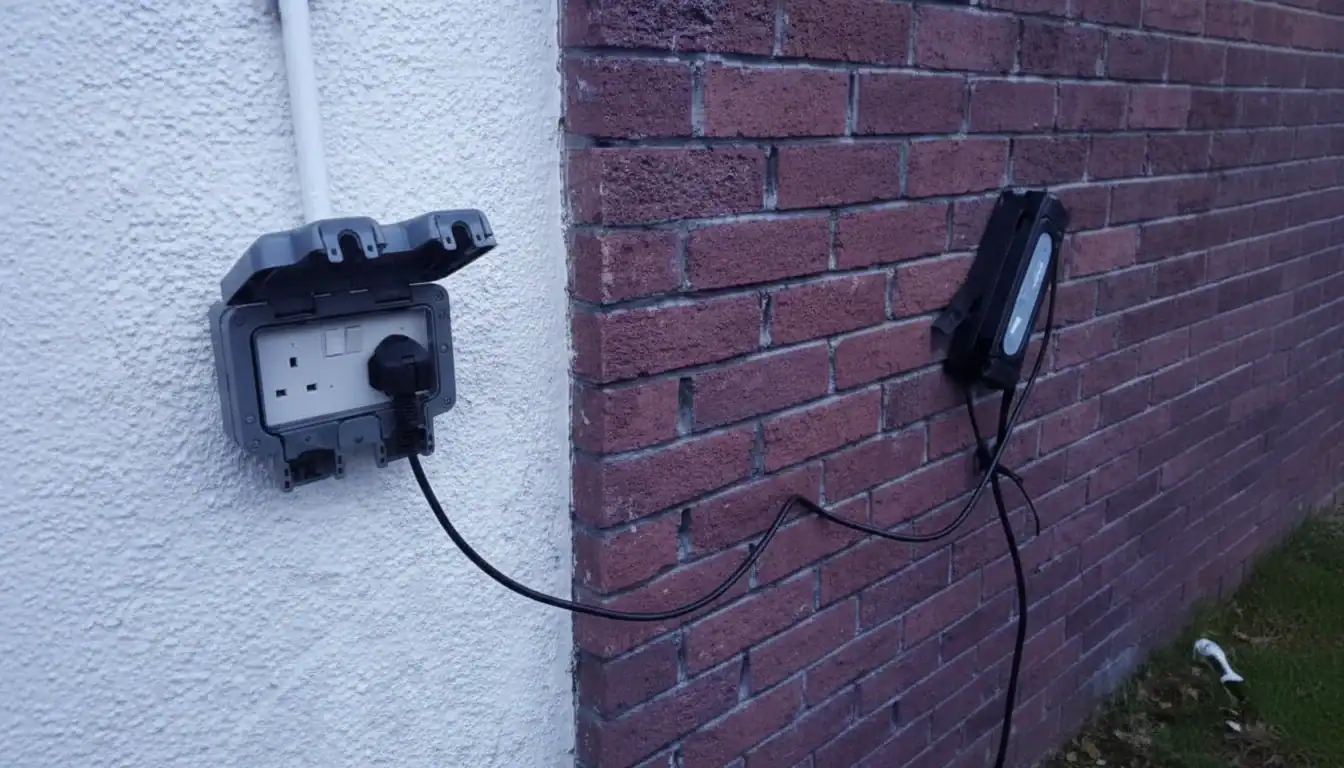
The term “granny cable” refers to a basic, portable Mode 2 EV charger—the kind often supplied with a new electric vehicle for emergency use. A common question from business buyers sourcing these for different markets is whether one model can automatically handle both North American (110-120V) and European (230-240V) standards. The short answer is no; they are built for specific electrical environments.
Designed for Regional Electrical Standards
Most granny chargers are manufactured to comply with a single, standard household voltage system. For example, a model intended for the UK market is built for the ~230V grid and fitted with a BS 1363 plug. A unit for the US market is designed for the ~120V grid with a NEMA 5-15 plug. Their primary function is to offer a reliable but slow charging option from a standard wall socket within a specific country’s infrastructure. They are not engineered as universal travel adapters with complex voltage-sensing electronics.
| Характеристика | Standard “Granny Cable” (Region-Specific) | Advanced Portable Charger (Dual-Voltage) |
|---|---|---|
| Voltage Handling | Fixed for a single grid (e.g., 120V NEMA 5-15 or 230V Schuko) | Detects and adapts to 110V-240V input automatically |
| Основной пример использования | Emergency or overnight trickle charging from a standard home socket | Flexible home, travel, and RV charging across different power sources |
| Internal Electronics | Simplified components rated for a specific, expected input voltage | Complex circuitry to manage variable input and adjust output safely |
Operating Voltage Is Determined by the Socket
A granny cable does not convert electricity from one voltage to another. It simply draws power from the wall and communicates with the vehicle to deliver it safely. The device operates at the voltage of the grid it’s connected to. Plugging a charger designed for 120V into a 240V outlet—even with a physical plug adapter—is a significant safety risk that could damage the charger, the vehicle’s on-board charging system, or the electrical circuit. Always match the charger’s specified voltage to the socket’s output.
Lack of Evidence for Automatic Dual-Voltage Functionality
Standard technical specifications for granny cables do not list automatic voltage detection as a feature. This capability is more common in high-end, specialized travel chargers or power supplies for electronics like laptops, not in basic emergency EV charging equipment. When sourcing portable chargers for international markets, you must verify the manufacturer’s product data sheet for voltage compatibility. It is not an inherent or assumed feature of these devices.
NEMA Swap: Is Changing Plugs Safer Than Using Adapters?
For high-power EV charging, directly replacing a plug to match a dedicated wall outlet is always a safer, more reliable solution than using third-party adapters which introduce fire and equipment failure risks.
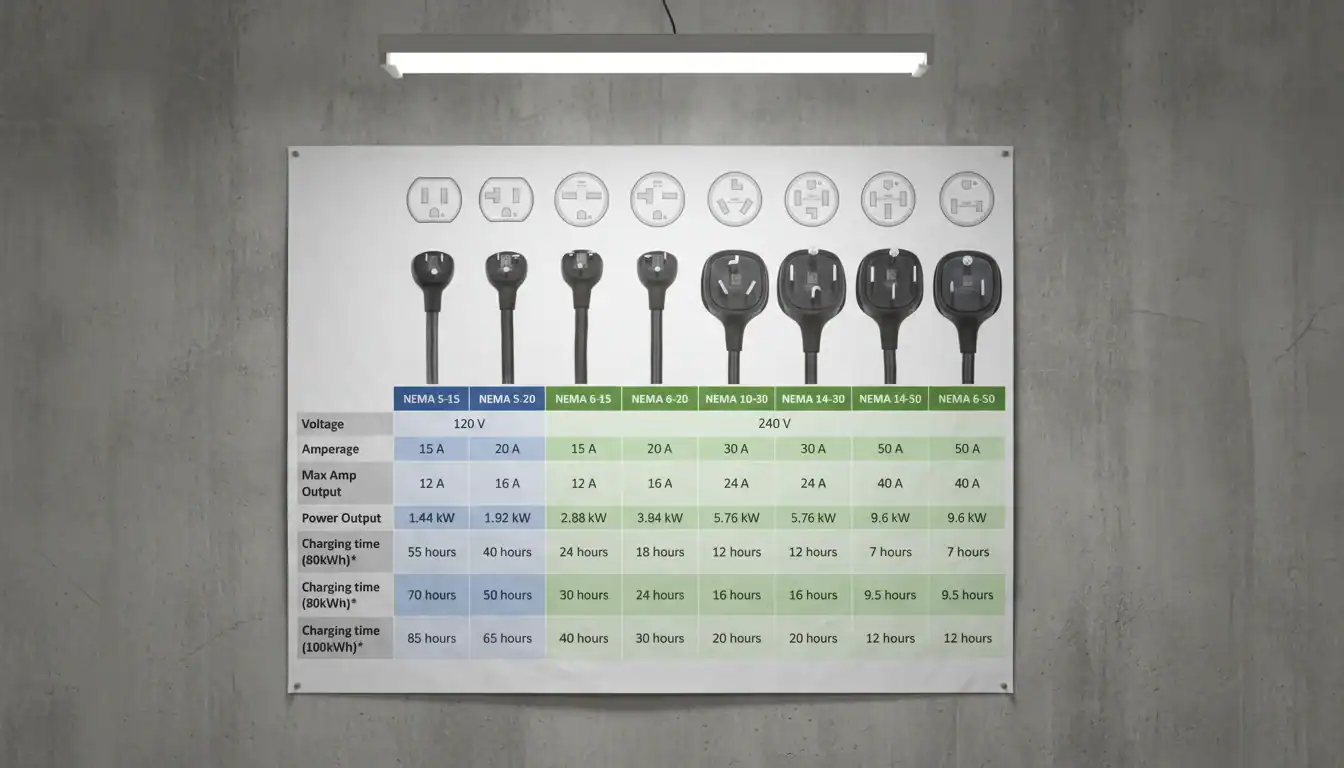
When dealing with the high electrical loads required for EV charging, the connection between your charger and the wall socket is a critical safety point. While adapters seem convenient, they introduce an unnecessary point of failure. The industry consensus and electrical safety codes strongly favor a direct, hard-wired plug that matches the outlet perfectly. This approach eliminates variables and ensures a robust connection capable of handling sustained power draw for hours at a time.
Ensuring Proper Grounding to Prevent Fire Hazards
The most significant risk with adapters is improper grounding. A direct plug-to-outlet connection guarantees a secure and dedicated ground path, which is essential for safely dissipating electrical faults. Adapters, especially cheap or cross-type models, can easily fail to establish this connection, creating a severe shock or fire hazard.
- Industry best practices require code-compliant outlets with dedicated ground wires, making direct plugs the standard.
- Cross-type adapters are notoriously unreliable for grounding and are a primary cause of electrical fires in high-power systems.
| Connection Method | Grounding Integrity & Fire Risk | Overheating & Equipment Risk |
|---|---|---|
| Direct NEMA Plug | Excellent. A dedicated ground path provides maximum safety and minimizes fire risk. | Low. A tight, stable connection prevents resistance buildup and heat generation. |
| Third-Party Adapter | Poor. High risk of a failed or intermittent ground connection, a significant fire hazard. | High. Mismatched connections create poor contact, leading to overheating and potential damage. |
Avoiding Overheating from Mismatched Connections
EV charging is a high-draw application where any weakness in the electrical path can cause a dangerous buildup of heat. An adapter introduces an extra physical connection point where voltage and amperage mismatches can occur. This poor electrical contact generates resistance, which translates directly into heat. A native plug mated to its corresponding outlet provides a single, stable, and low-resistance path for the current, protecting your charger, your vehicle, and your building’s wiring from heat damage.
Adhering to Evolving Electrical Safety Codes
Modern electrical codes and safety standards are moving away from permitting adapters for any permanent or heavy-duty use. The clear guidance is to install the correct, dedicated outlet for the equipment you plan to use. Replacing a charger’s plug to match an existing high-power outlet is the only way to ensure compliance with these updated safety protocols. Temporary fixes are simply not acceptable for long-duration, high-current charging sessions.
Expand Your Market with Custom Portable EV Chargers

Ruggedness: Can It Survive Being Run Over by a Truck (IP67)?
An IP rating measures water and dust resistance, not impact strength; a charger’s ability to survive being run over is determined by a separate IK impact rating and its material construction.
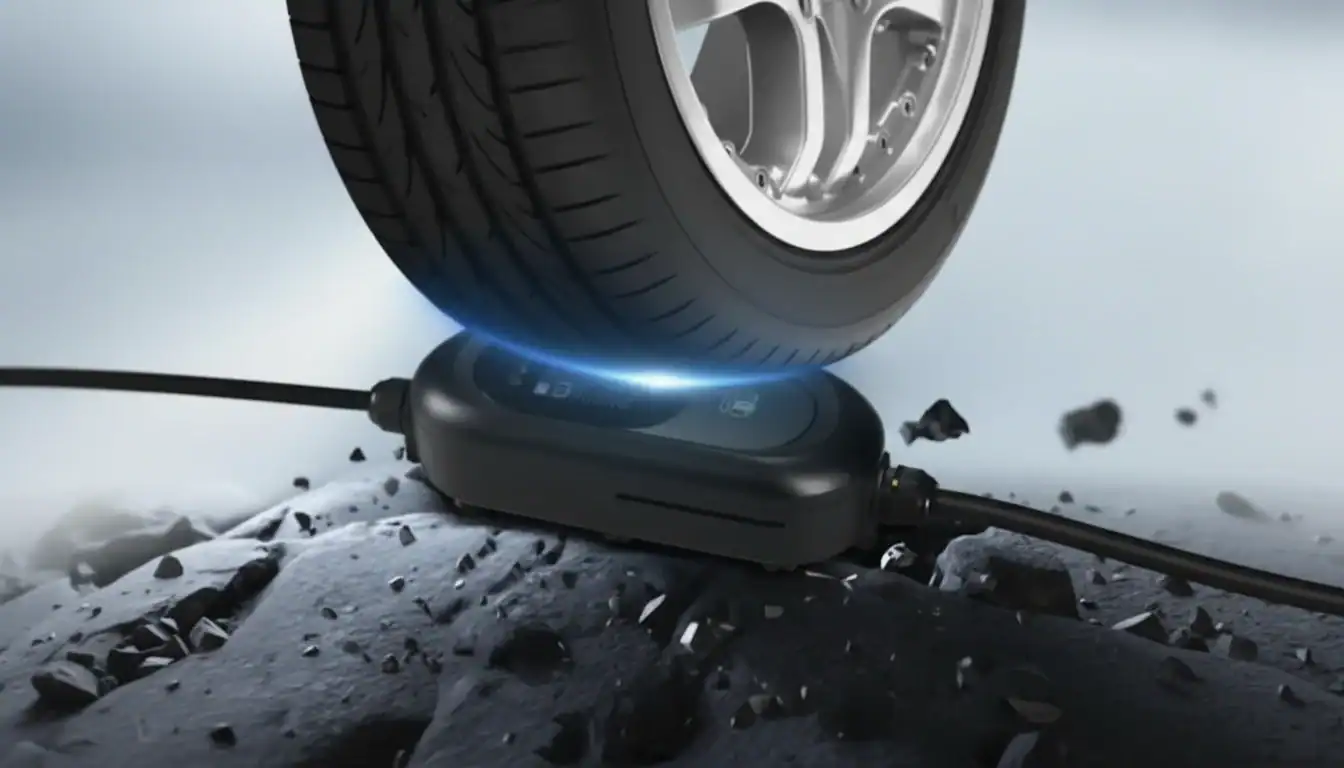
Clients often conflate environmental sealing with physical durability. The marketing claim of a charger being “run-over-proof” has nothing to do with its IP67 rating. These two metrics—ingress protection and impact protection—address entirely different failure modes. A device can be perfectly waterproof yet shatter under minimal force.
IP67 Rating: Protection Against Dust and Water
The IP67 rating is a precise standard for environmental sealing. The “6” indicates it is completely dust-tight, offering the highest level of protection against solid particle ingress. The “7” certifies that the enclosure can be submerged in up to one meter of water for 30 minutes without leaking. This protects the internal electronics from rain, puddles, and high humidity, but it offers no guarantee against physical damage like crushing or shock.
Impact Resistance: A Separate Standard for Durability
A charger’s ability to withstand being run over by a vehicle is a test of its mechanical and structural integrity. This is measured by the IK rating system, which quantifies resistance to impact energy. Our portable EVSE control boxes, for example, are constructed from high-strength polycarbonate and carry an IK10 rating. This is the highest level of protection, certifying that the housing can withstand an impact of 20 joules—equivalent to a 5 kg mass dropped from 40 cm. This specific design choice, not the IP rating, is what allows it to survive such extreme physical stress.
| Атрибут | IP Rating (Ingress Protection) | IK Rating (Impact Protection) |
|---|---|---|
| Назначение | Measures sealing effectiveness against solids (dust) and liquids (water). | Measures enclosure resistance to external mechanical impacts. |
| Test Example | Submersion in 1 meter of water for 30 minutes (for IPx7). | Impact from a 5 kg hammer dropped from 400 mm (for IK10). |
| KelyLands Specification | IP67 (Gun Head), IP65 (Control Box). | IK10 (High-strength PC Housing). |
Unrelated Failure Modes: Sealing vs. Crushing
The two standards address different risks. IP ratings protect the internal circuits from environmental damage like corrosion from moisture or short circuits from dust. Impact ratings protect the physical structure from being broken, cracked, or crushed by external force. A charger with a high IP rating but a low IK rating might survive a rainstorm but fail if dropped on concrete. Our chargers are engineered to handle both, using robust seals for IP67 compliance and a durable, reinforced housing for IK10 impact resistance, ensuring reliability in real-world field conditions.
Smart Screen: Does It Show Real-Time Amps and Temp?
Integrated smart screens are now a standard expectation for providing transparent, real-time operational data like amperage, voltage, and internal temperature for effective load management.
Real-Time Data Display
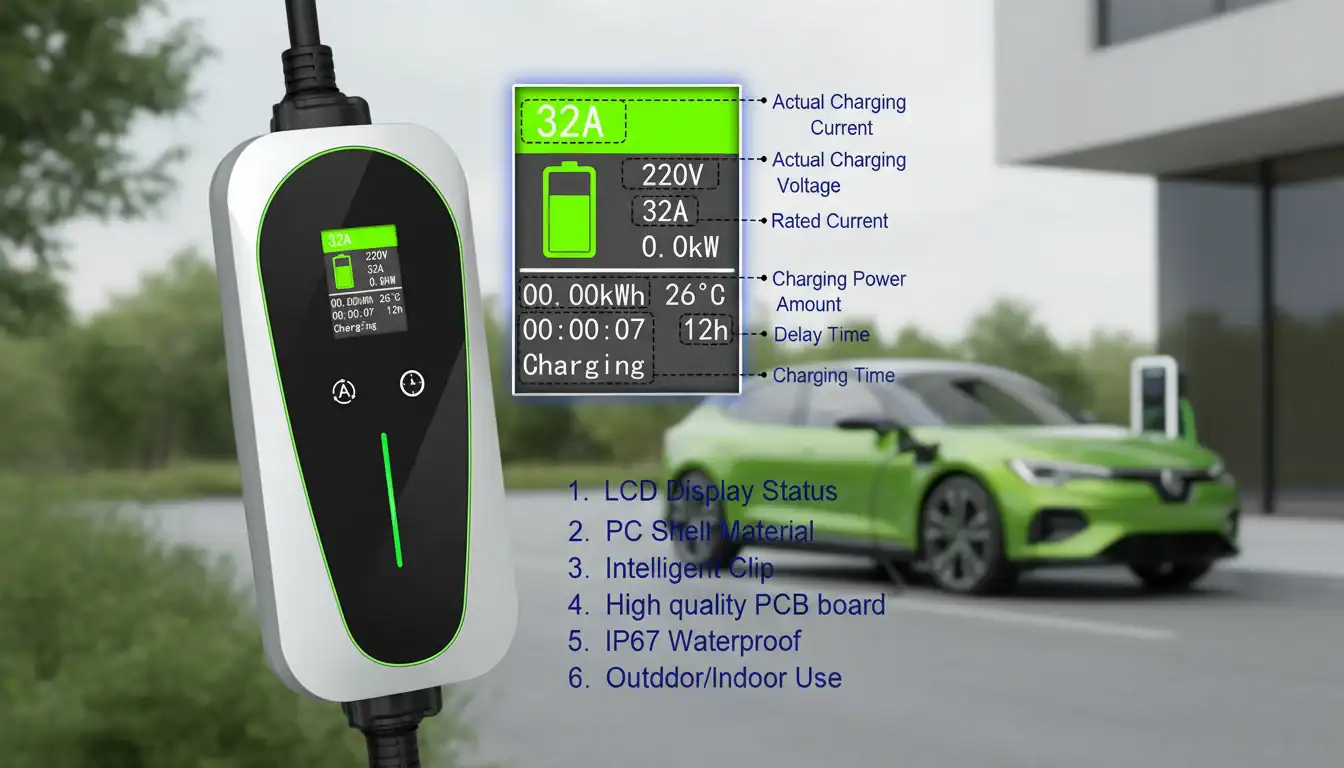
KelyLands portable EV chargers feature integrated smart displays for instant visibility into key charging metrics. This screen gives drivers a direct view of the session’s performance, allowing them to verify amperage, check input voltage, and monitor the power output in kilowatts (kW) as the vehicle charges.
- Displays live amperage to confirm the selected charging rate.
- Shows the current voltage being supplied by the power source.
- Tracks power delivery in real-time, measured in kilowatts (kW).
Temperature and Safety Monitoring
A primary function of the smart screen is tracking the charger’s internal temperature. This is not just a convenience but a core safety mechanism. It allows users to visually confirm the unit is operating within normal thermal limits, which is essential during long charging sessions or in high ambient temperatures. This data feeds into the internal smart chip, which can dynamically adjust the current to prevent overheating.
- Provides an active temperature reading of the charger’s internal components.
- Allows for visual confirmation of safe operating temperatures.
- Aids in dynamic load management in different environmental conditions.
Remote Monitoring via Companion App
Beyond the physical screen, select KelyLands models sync with a companion mobile app. This capability extends monitoring, allowing users to view the same real-time data—amps, temperature, and power—directly from a smartphone. It provides a practical layer of control for managing charging sessions without needing to be physically present at the vehicle.
- Syncs live charging data with a dedicated mobile application.
- Offers the ability to check charging status and metrics from a distance.
- Adds convenience for managing charging sessions without being physically next to the vehicle.
Заключение
A great portable charger delivers more than just emergency power. Key features like automatic voltage switching, rugged IP67 and IK10 ratings, and smart-screen diagnostics provide safe and reliable charging for daily use and long road trips. This combination ensures EV owners have a flexible tool that works anywhere they can find a plug.
For auto accessory retailers or car dealers looking to bundle a dependable charging solution, we offer fully certified portable EVSEs for OEM and private label programs. Contact our team to discuss your technical requirements or to request a sample for evaluation.
Часто задаваемые вопросы
What is the best portable charger for road trips?
The best portable charger for road trips is a Level 2 capable unit that offers high power output (at least 32A, providing around 7.7kW) and includes a set of interchangeable plug adapters. Key features to look for are a NEMA 14-50 plug for RV parks, a standard NEMA 5-15 for household outlets, and robust, all-weather construction (NEMA 4 or IP66 rated). Leading models in 2026 also include smart features like mobile app connectivity for monitoring charging sessions and scheduling.
Can I use a portable charger as my main home charger?
Yes, a high-quality Level 2 portable charger can absolutely serve as your main home charger. To do this effectively, you would typically have a 240V outlet (like a NEMA 14-50) professionally installed in your garage. You can then mount the portable charger’s control box on the wall and leave it plugged in for daily use. While this is a flexible and cost-effective solution, a dedicated hardwired wall-mounted charger may offer higher charging speeds (48A+) and a more permanent, integrated home setup.
Which portable charger charges fastest?
The charging speed of a portable charger is determined by its maximum power output, measured in kilowatts (kW). The fastest portable chargers are Level 2 units rated for 40 amps (40A) that connect to a 240V NEMA 14-50 outlet. This setup delivers approximately 9.6 kW of power, which can add around 30-35 miles of range per hour, depending on the vehicle’s efficiency. The actual speed is also limited by your vehicle’s onboard charger, so ensure your EV can accept this power level to take full advantage of the speed.
Is there a portable charger that works with Tesla and J1772?
Yes, virtually all high-quality third-party portable chargers can work with both Tesla and J1772 vehicles. The standard approach is a charger equipped with a J1772 connector, which is the universal standard for all non-Tesla EVs in North America. To charge a Tesla, you simply use the J1772-to-NACS adapter that comes standard with every Tesla vehicle. This allows a single portable charger to service any modern EV, making it a versatile solution.

 English
  Español
  Français
  Deutsch
  Português do Brasil
  Русский
  한국어
한국어  日本語
日本語  العربية