 تخطي إلى المحتوى الرئيسي تخطي إلى التذييل

Every sourcing guide you will read tells you to check the car cooler temperature range spec first. That is the wrong starting point. The real question is not what the spec sheet says at 25°C in a lab — it is what that unit actually holds when a customer parks the car in Phoenix sun and the cabin hits 50°C. Distributors have lost margin on return freight because a thermoelectric unit labeled as a skincare fridge could not keep vitamin C serums below 15°C after two hours of midday heat.
The gap between rated performance and real-world delivery is where most volume importers get burned. A thermoelectric Peltier cooler typically achieves ambient minus 18-22°C under ideal conditions. Sounds fine until you realize that at a 35°C ambient — which is normal for summer road trips across southern Europe or the US Sun Belt — your effective cooling floor sits around 13-17°C. That works for drinks on a day trip but fails completely for cold-chain skincare or frozen food storage where buyers expect sub-zero temperatures. A compressor fridge, by contrast, holds a steady -20°C to +10°C regardless of whether the car is moving or parked in direct sun.
Here is the detail that separates professionals from amateurs: Chinese manufacturers often rate coolers at ideal lab conditions (25°C ambient), but actual performance drops 30-40% in a parked car at 50°C cabin temp — only compressor fridges maintain set point above 43°C ambient. When you are procuring for regional distribution chains, matching product specs to end-user expectations in hot climates matters more than any FOB pricing advantage. Ask for the test data at your target climate, not just the brochure number.
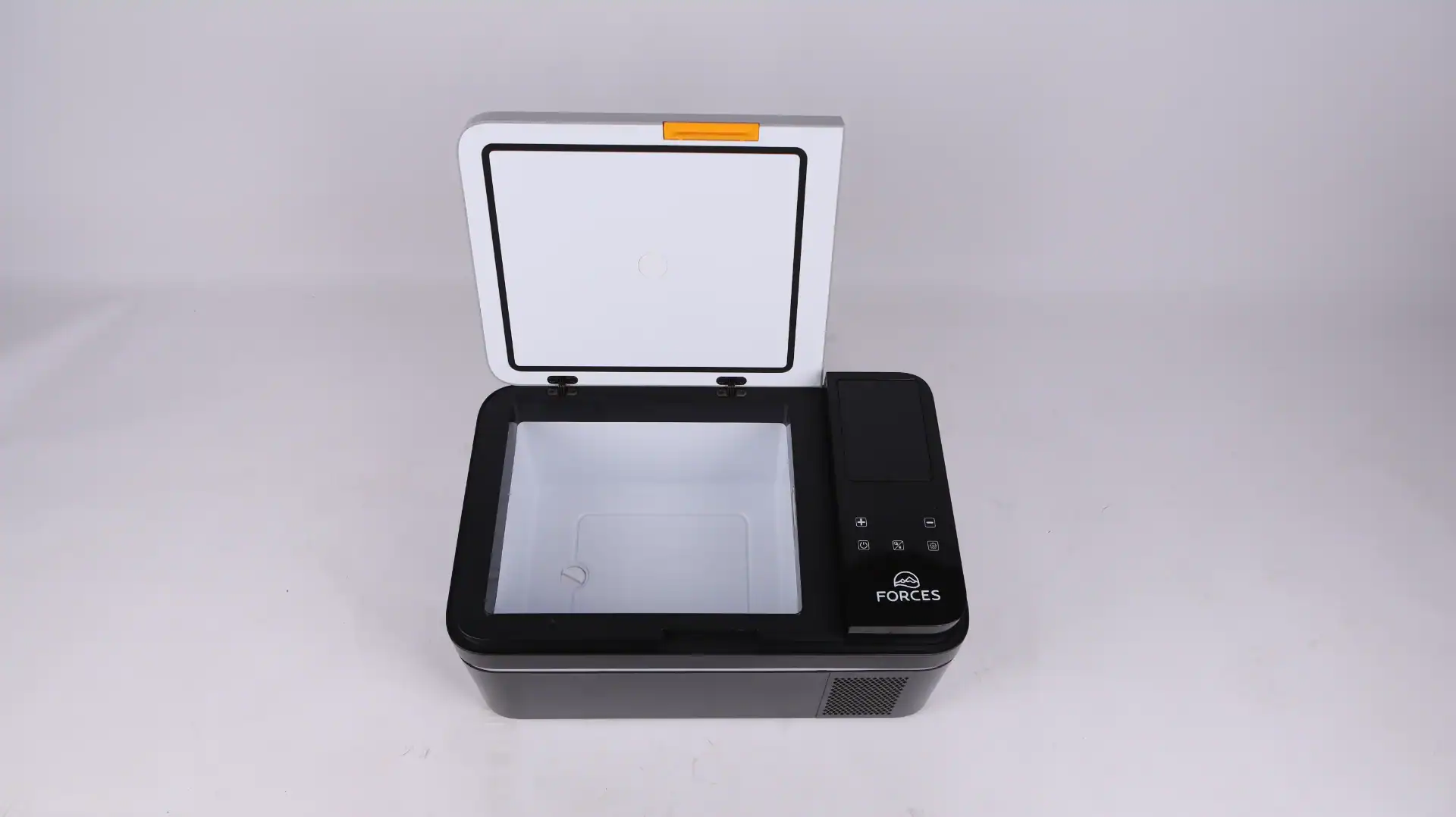
Why Temperature Range Matters in Car Coolers
Thermoelectric coolers chill.
A thermoelectric cooler keeps drinks cool. A compressor fridge holds a steady -18°C through a 40°C day. These are not the same product category, yet many suppliers list them under the same ‘car fridge’ umbrella. For a volume importer, conflating the two means returns, chargebacks, and lost shelf space.
How Thermoelectric (Peltier) Coolers Work
Peltier units use an electric current passing through two dissimilar semiconductors to create a temperature differential. One side gets cold, the other dumps heat via a fan. The cold side can only drop about 18-22°C below ambient air temperature. In a 25°C room that gives you roughly 5°C — acceptable for beverages. In a parked car cabin hitting 50°C? That same unit struggles to reach 30°C.
-
- Maximum delta achievable: -22°C below ambient at best, measured at the cold plate surface — not internal air temp.
- Real-world limitation: At 35°C ambient (common in Australian or Middle Eastern summer), internal temp sits around 13-17°C.
How Compressor Fridges Hold Temperature
Compressor systems work like a household refrigerator: refrigerant gas compresses, condenses, expands, and evaporates in a closed loop. The compressor cycles on and off to maintain a set point regardless of outside heat. That allows adjustable ranges from -20°C up to +10°C. The same unit that freezes ice cream in December will do it in July inside a black SUV.
Standard Temperature Ranges by Cooler Type
Thermoelectric coolers can’t freeze.
A distributor sourcing car coolers for a camping chain needs to know one hard line: thermoelectric units (Peltier) achieve a temperature roughly 18-22°C below ambient. Park that unit in a 35°C parking lot, and the best internal temp you’ll see is about 13-17°C. That keeps drinks cool. It will not hold ice cream, frozen meat, or temperature-sensitive skincare serums.
Thermoelectric (Peltier) Coolers: Ambient Minus 18-22°C
The physics here is simple: Peltier modules move heat from one side of a ceramic plate to the other. No compressor, no refrigerant, no moving parts beyond a fan. The advantage is low cost and near-silent operation. The limitation is absolute — they cannot reach below-freezing temperatures under any realistic ambient condition.
-
- Real-world ceiling: At 25°C ambient (lab ideal), expect ~3-7°C internal. At 35°C ambient (summer car cabin floor), expect ~13-17°C internal.
- Failure mode for distributors: ‘Skincare fridge’ listings on Amazon using thermoelectric units hit return rates above 15% because vitamin C serums require stable 10-15°C — which these units can’t maintain when ambient rises.
Compressor Car Fridges: -20°C to +10°C Adjustable
A compressor fridge uses the same sealed-system technology as your kitchen refrigerator. A Danfoss or Secop compressor circulates refrigerant through an evaporator plate, pulling heat out until the internal air hits the set point. These units adjust from -20°C (deep freeze) up to +10°C (cellar temperature).
| نوع المبرد | نطاق درجة الحرارة | القيد الرئيسي |
|---|---|---|
| Thermoelectric (Peltier) | Ambient minus 18–22°C | Cannot freeze; performance drops 30-40% above 43°C ambient |
| ثلاجة السيارة الضاغط | -20°C to +10°C (adjustable) | Higher cost; requires CARB-compliant refrigerant |
| Skincare Mini Fridge (Thermoelectric) | 10–15°C (unstable in hot cabins) |
How Ambient Temperature Affects Performance
At 50°C cabin temp, thermoelectric coolers lose 30-40% of rated performance.
Most manufacturers publish car cooler temperature range specs based on a 25°C lab environment. That number means little when the unit sits in a parked car where cabin temperatures hit 50-60°C during summer. The gap between lab data and real-world performance is where return rates climb and end-user complaints start.
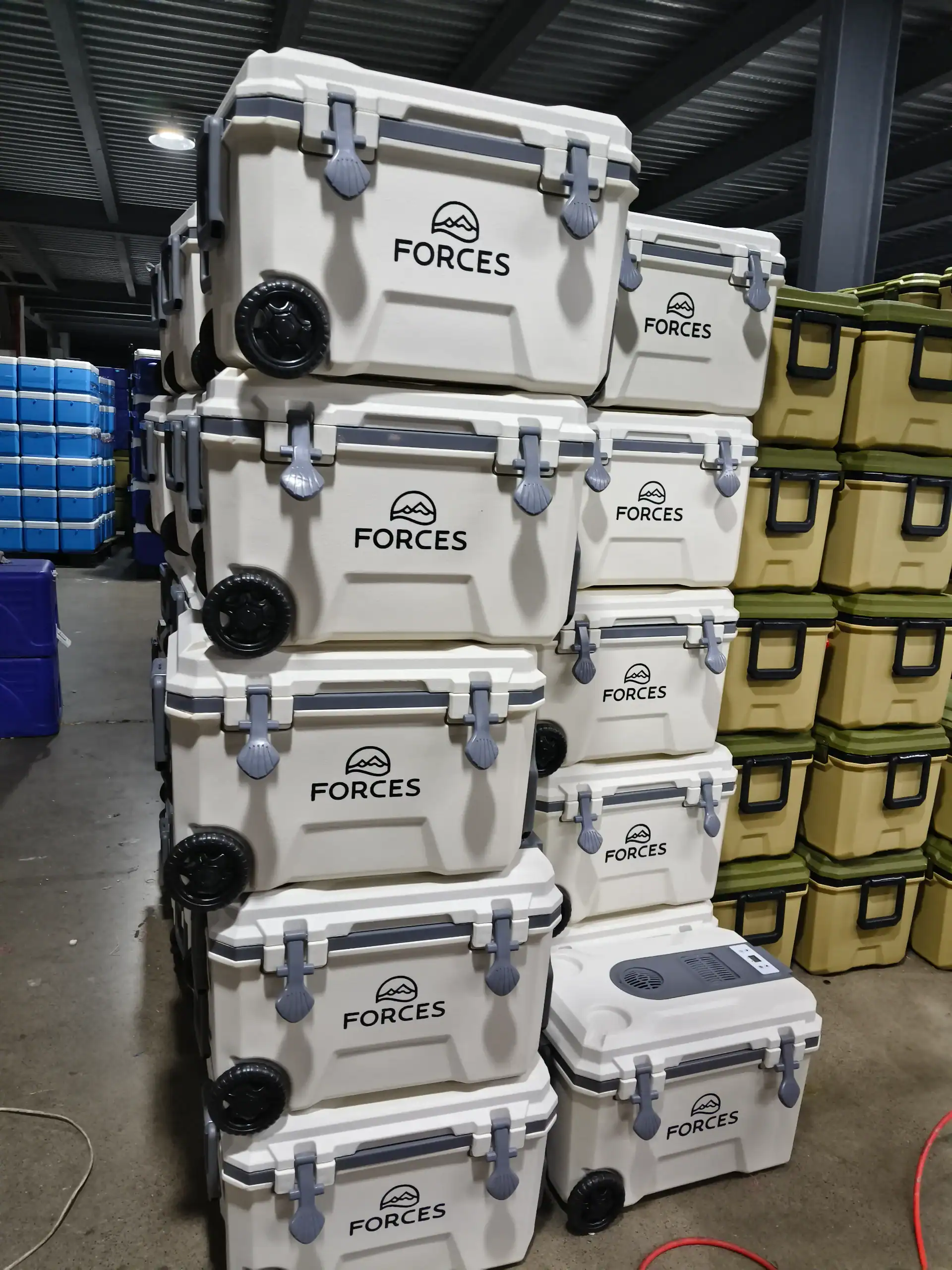
Real-World Testing at 35°C vs. 25°C Ambient
A thermoelectric cooler rated for ambient minus 20°C at 25°C lab conditions will reach roughly 5°C internal temperature. Move that same unit to a 35°C ambient environment — typical for a shaded parking lot in southern Europe or the US Sun Belt — and the internal temp settles around 15-18°C. That is not cold enough for dairy, meat, or most skincare products.
Compressor fridges behave differently. A properly specified compressor unit holds its set point across a much wider ambient range. Internal production data from the Ningbo-based portable fridge factory partnered with KelyLands shows that compressor models maintain -18°C set point up to 43°C ambient. Beyond that threshold, performance degrades, but the unit still holds below freezing at 50°C cabin temp — something no thermoelectric design can match.
The Cooling Curve: Time to Reach Target Temperature
Time-to-temp matters more than most buyers realize. A thermoelectric cooler starting at 35°C ambient needs roughly 90-120 minutes to drop internal temperature by 15°C. During that window, any warm items placed inside raise the average temperature further, extending the cooldown cycle.
Compressor fridges pull down faster — typically reaching target temp within 30-45 minutes from a hot start — because the refrigeration cycle actively removes heat rather than relying on a temperature differential across a Peltier plate. For distributors supplying frozen food logistics or pharmaceutical cold chain applications, this difference determines whether product arrives within spec or gets rejected at delivery.
Skincare Fridge Requirements: Exact Temperature Targets
Vitamin C serums require storage below 55°F to prevent oxidation.
Skincare fridges are a growing subcategory in the car cooler market, but most units sold under that label cannot deliver the temperature stability active ingredients require. The target band for serums, retinol, and vitamin C sits between 40°F and 55°F (4°C to 13°C). That is not a wide range — it is tighter than what most thermoelectric coolers can hold when ambient temperatures fluctuate.
Why 40–55°F matters for active ingredients
Vitamin C (L-ascorbic acid) oxidizes rapidly above 55°F. Retinol loses potency when exposed to sustained warmth. Peptides break down if the temperature swings more than ±3°F from the set point. A car cooler that drifts between 50°F and 70°F over a day of cabin heating will degrade a $80 serum in under a week. The buyer never sees it happen — the customer just stops reordering.
-
- Ideal range: 40–55°F (4–13°C). This matches pharmaceutical cold-chain standards for temperature-sensitive dermatological products.
- Failure threshold: Sustained temps above 60°F accelerate oxidation in vitamin C by roughly 4x compared to stable storage at 45°F.
Why standard car coolers fail this category
A thermoelectric cooler rated to cool ambient minus 18–22°C might hit 50°F in a climate-controlled room at 72°F. Put that same unit in a parked car with cabin temps hitting 110°F, and the internal temperature climbs past 75°F — well above the degradation threshold for any active serum. The skincare mini fridge temperature stability failure is not a defect; it is a physics limitation of Peltier systems.
Compressor-based fridges solve this because they maintain set point regardless of ambient conditions up to about 110°F. A unit set to 45°F stays at 45°F even when the car interior hits 100°F. That consistency is what beauty distribution channels require, yet many importers still source thermoelectric units labeled as skincare fridges and face return rates above 15%.
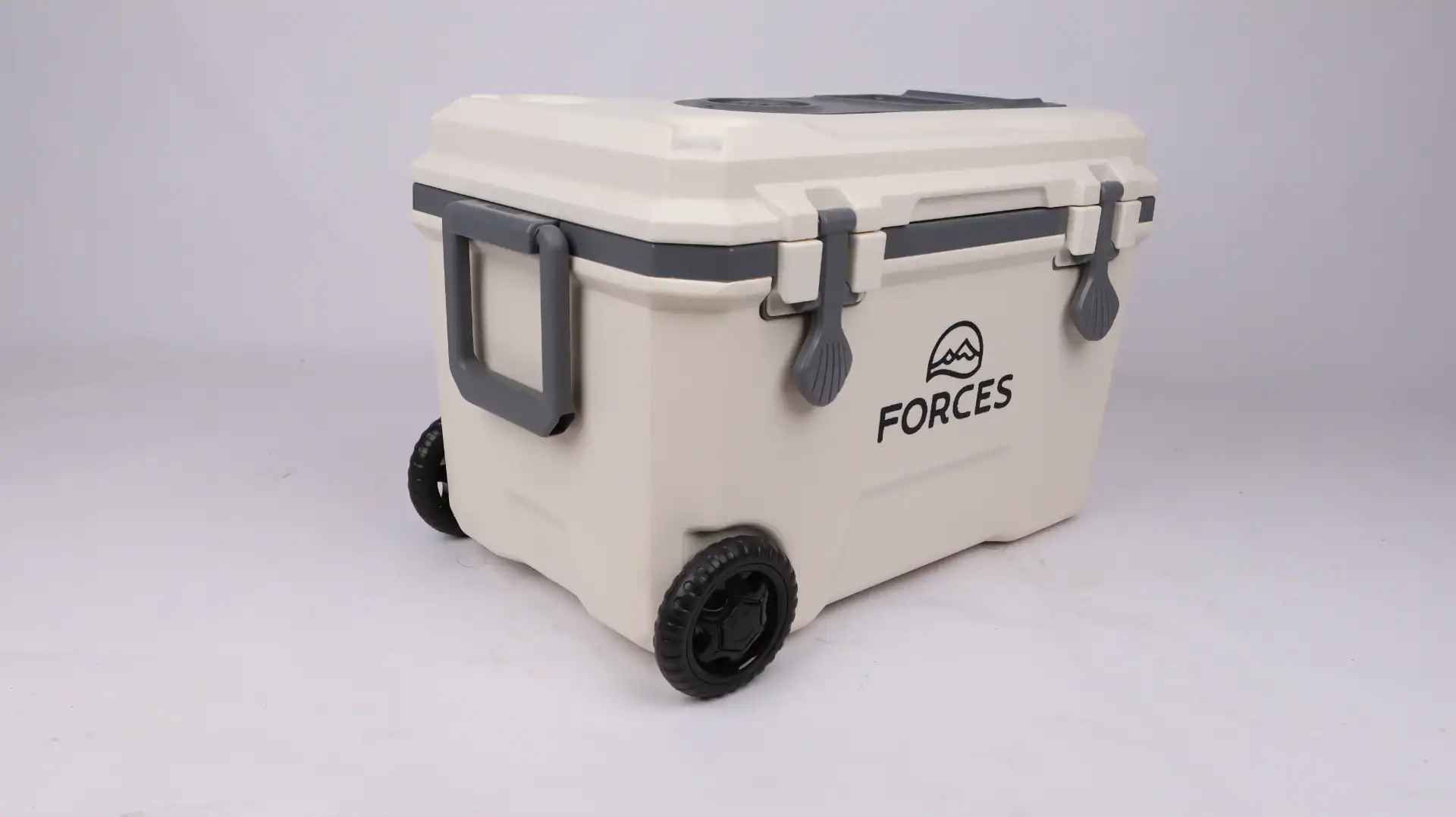
Temperature Stability and Consistency Metrics
A ±2°C fluctuation band is the minimum for cold-chain storage.
Temperature stability is where marketing claims fall apart. A cooler can hit -18°C at startup in a 25°C lab, but if the internal temperature swings by ±5°C during compressor cycling, that unit is useless for frozen food or vitamin C serums. The fluctuation band determines what products your customers can safely store.
Acceptable Fluctuation Band: ±2°C vs ±5°C
Compressor fridges from KelyLands’ partner factory in Ningbo maintain a ±2°C band at set point under stable ambient conditions up to 43°C. Thermoelectric coolers typically swing ±4-6°C because they rely on ambient temperature differential rather than active refrigeration. That difference matters when a distributor’s end user stores insulin, EpiPens, or retinol serums that degrade outside a 2-8°C window.
-
- ±2°C band (compressor): Suitable for frozen food distribution, cold-chain pharmaceuticals, and premium skincare lines where product stability is contractual.
- ±5°C band (thermoelectric): Acceptable for beverages and picnic food where the user consumes contents within hours. Not acceptable for multi-day camping or any medical/cosmetic cold chain.
Standby Power Consumption and Temperature Hold
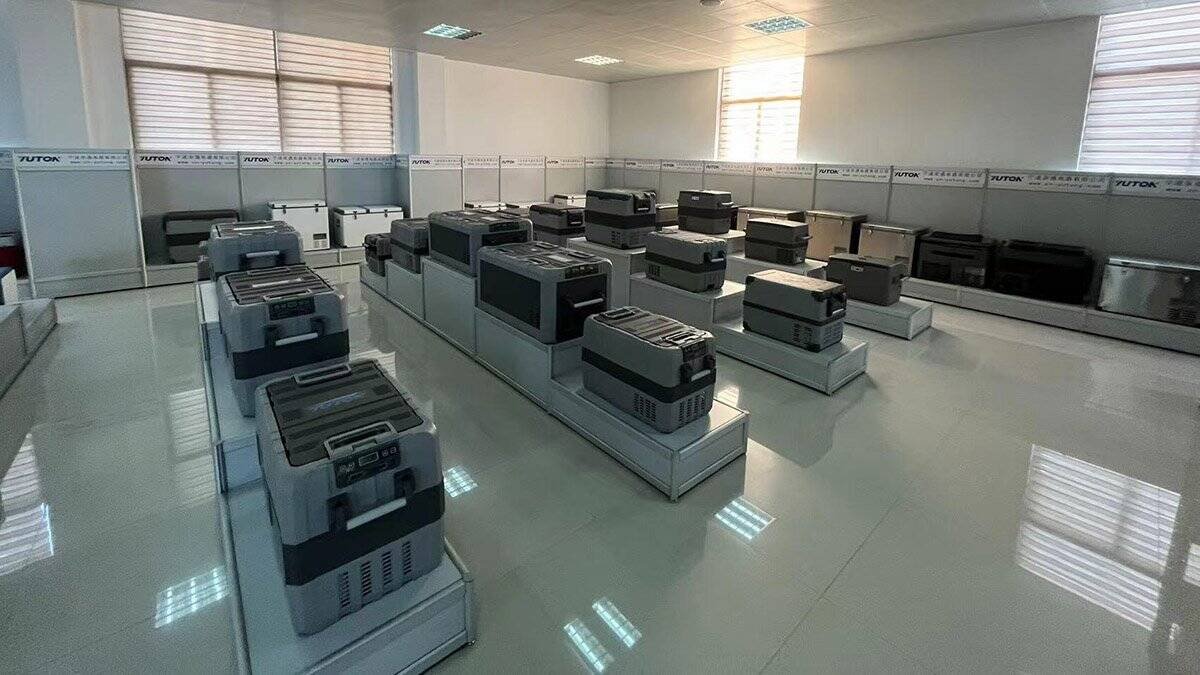
Certifications Validating Temperature Claims
Without CE, RoHS, and CARB certifications, temperature claims are just marketing copy.
A datasheet that says “cools to -20°C” means nothing unless a third party has verified the compressor circuit, the refrigerant gas, and the electromagnetic emissions. For volume importers bringing in container loads of car fridges, certification gaps are the fastest route to a customs hold or a chargeback from a retail buyer.
CE, RoHS, and EMC Testing for Electronic Cooling Components
Every electronic cooler sold into the European market needs CE. That mark covers two specific directives: Low Voltage Directive (LVD) for electrical safety and Electromagnetic Compatibility (EMC) to ensure the compressor inverter doesn’t interfere with nearby vehicle electronics. RoHS restricts six hazardous substances including lead and cadmium in solder joints and PCB laminates.
The common failure point is EMC. A poorly shielded DC compressor motor can radiate noise that disrupts a car’s CAN bus system or GPS receiver. Some suppliers skip pre-compliance scanning to save testing costs — then wonder why their units fail at the EU border when an importer runs random batch checks.
-
- CE-LVD test requirement: Verifies insulation resistance at 500V DC and dielectric strength at 1500V AC between live parts and enclosure.
- EMC emission limits: EN 55014-1 sets conducted emission limits at 150 kHz–30 MHz; radiated limits at 30 MHz–1 GHz for vehicle-mounted appliances.
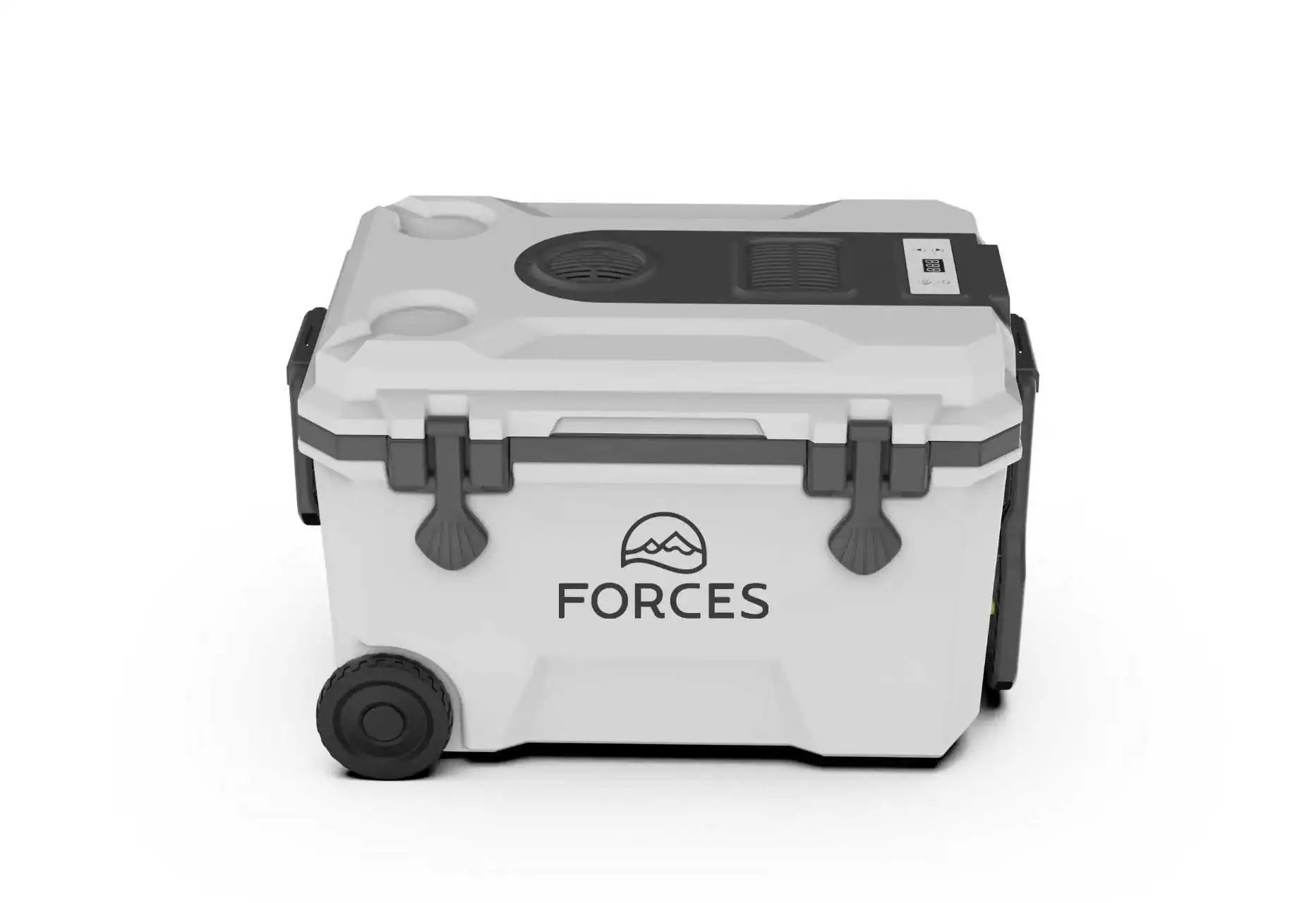
How KelyLands Tests Car Fridge Temperature Performance Before Shipment
Every unit is tested at 35°C ambient before shipment — no lab-condition shortcuts.
The most common failure point in car fridges isn’t the compressor or the control board. It’s the gap between what the spec sheet promises and what the unit actually delivers when a buyer puts it in a hot car. That gap is where returns happen, and for a distributor moving hundreds of units per quarter, a 10% return rate on a $200 cooler eats $2,000 per container — before you factor in freight and restocking.
The 35°C Ambient Test Standard
KelyLands tests every production batch of car fridges at a controlled ambient temperature of 35°C, not the 25°C lab conditions many Chinese factories use to inflate their numbers. The test room sits inside the Ningbo factory complex. Units are loaded with temperature sensors at three internal points: center cavity, door pocket, and near the compressor wall. Data logs record the cooling curve from startup to steady state.
Why 35°C? Because that’s the average cabin temperature in a parked car during summer in most markets where these coolers actually get used — Australia, Middle East, Southern Europe, US Southwest. Testing at 25°C gives you numbers that look good on paper but collapse when the buyer loads drinks at noon in Phoenix.
Pass/Fail Criteria by Cooler Type
الخاتمة
The real performance gap between a thermoelectric cooler and a compressor fridge isn’t something you find on a spec sheet. It shows up in the return rate reports from your distribution channel, or worse, in a customer complaint about spoiled insulin or degraded skincare actives. Matching the car cooler temperature range to the actual use case — not the marketing claim — is what keeps a bulk order profitable.
-
- Thermoelectric coolers max out at ambient minus 18-22°C.
- Compressor fridges hold -20°C regardless of cabin temperature.
- Performance drops by up to 40% in parked cars above 43°C ambient.
- Skincare channels see over 15% returns on mis-sold thermoelectric units.
Before you lock in your next bulk order for camping sites or hospitality projects, ask your supplier for the cooling curve data at a minimum of three ambient temperatures, not just the lab-standard one at 25°C. Review how KelyLands tests each car fridge unit before shipment on the product page — it saves the back-and-forth that eats into delivery timelines.
الأسئلة المتداولة
ما هو نطاق درجة حرارة مبرد السيارة؟
يعتمد ذلك على النوع: مُبرّدات التبريد الحراري تُبرّد إلى حوالي 18-22 درجة مئوية تحت درجة الحرارة المحيطة، بينما ثلاجات الضواغط يمكنها التجميد حتى -20 درجة مئوية. للاستخدام الفعلي، تحقق دائمًا من الأداء في درجات حرارة محيطة عالية. طابق نوع المُبرّد مع حمولتك المستهدفة وظروف المناخ.
هل يمكن لثلاجة السيارة تجميد الأطعمة؟
يمكن فقط لثلاجات السيارات المزدوجة التبريد بالضغط تجميد الطعام، حيث تصل درجات الحرارة إلى -20°م. لا يمكن لمبردات التبديل الكهربائي التجميد؛ بل تحافظ على برودة المحتويات relativeً لدرجة الحرارة الخارجية. يُرجى تحديد طراز الضاغط إذا كانت هناك حاجة إلى التجميد.
كيف يؤثر الطقس الحار على أداء مبرد السيارة؟
في درجة حرارة مقصورة تصل إلى 50°م، تفقد مبردات التربيوكهربائية 30–40% من قدرتها التبريدية المقدرة. تحافظ الثلاجات المعتمدة على الضواغط على درجة حرارة ضبطها بشكل أكثر موثوقية في الظروف الحارة جداً. اختبر مبردك تحت أسوأ ظروف بيئية متوقعة لك.
ما الشهادات التي تثبت صحة ادعاءات درجة حرارة ثلاجات السيارات؟
تغطي اختبارات CE وRoHS وEMC مكونات التبريد الإلكترونية، بينما ينطبق امتثال US CARB على غازات المبردات الضاغطة. تؤكد هذه الشهادات أن نطاقات درجات الحرارة المعلنة قد تم اختبارها ومطابقة للمعايير المطلوبة في أسواق التصدير. اطلب نسخ الشهادات قبل وضع طلب بالجملة.
هل تختبر كيلي لاندز درجة حرارة ثلاجة السيارة قبل الشحن؟
Reputable manufacturers typically run batch-level temperature tests under controlled ambient conditions before shipment. You should ask your supplier for their specific testing protocol and request sample units for independent verification. Always request the factory’s test report with your order confirmation.

 English
  Español
  Français
  Deutsch
  Português do Brasil
  Русский
  한국어
한국어  日本語
日本語  العربية