 Zum Hauptinhalt springen Zum Footer springen

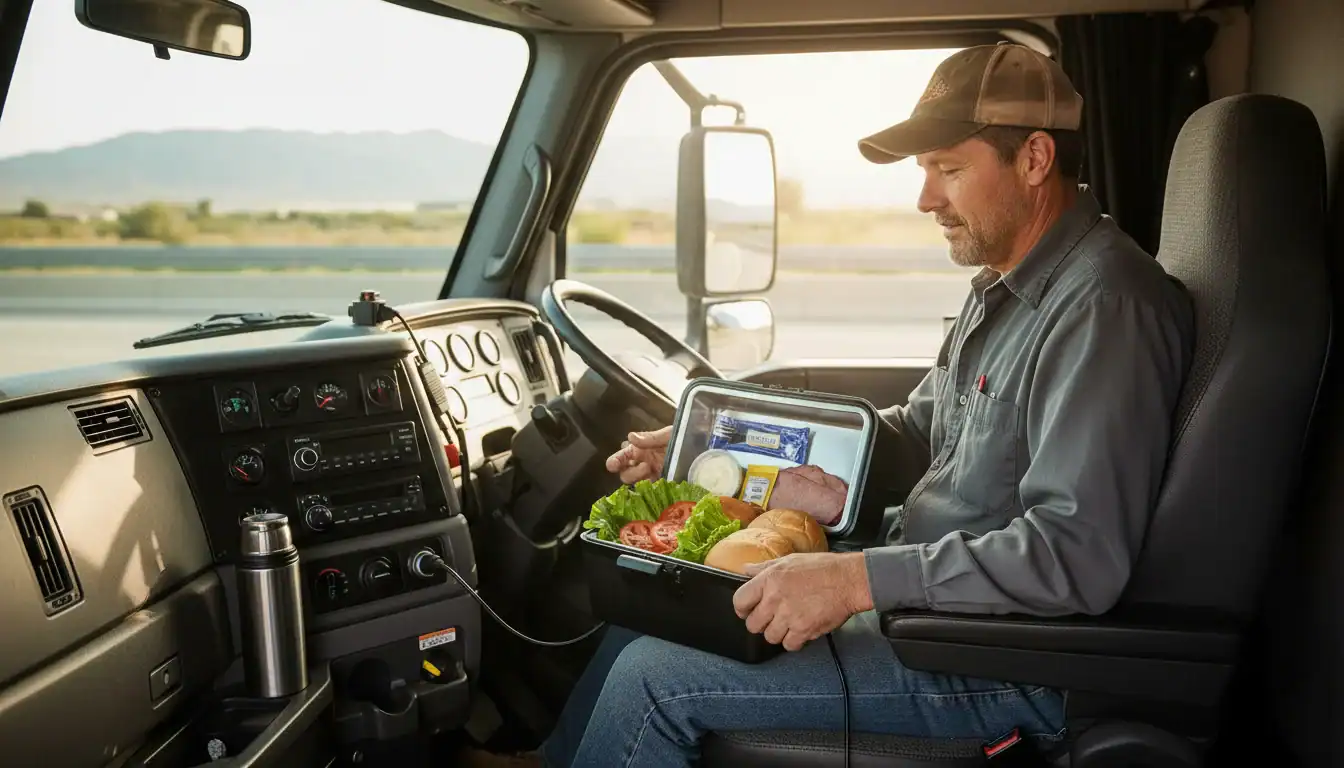
Specifying the right electric lunch box cooler and warmer is a direct investment in driver retention and fleet uptime. Providing a subpar unit that fails on the road doesn’t just lead to a cold meal; it causes driver frustration and can even blow a vehicle’s accessory fuse, creating unnecessary downtime. For fleet managers, a seemingly minor accessory choice can impact driver satisfaction and operational stability.
This guide provides a clear technical checklist for sourcing a reliable lunch box cooler built for the road. We will focus on four critical factors: functional capacity for meal prep containers, heavy-duty construction, food-grade liner requirements, and the essential dual-voltage power system with correct fusing for vehicle safety. Use these points to define your procurement standards and avoid common equipment failures.
Key Sourcing Factor 1: 6L to 12L Capacity
The 6L to 12L capacity range is the commercial sweet spot, balancing daily portability with the functional storage required for professional field and vehicle use.
Target Applications for Professional Daily Use
This capacity segment is engineered for professionals who need more than a simple lunch bag. The 6L to 12L volume provides a critical balance between portability and functional storage, allowing users to carry multiple meals, beverages, or other materials without excessive bulk. It is the ideal size for field work, commercial vehicle storage, and transporting temperature-sensitive items. Professionals in sectors like logistics, healthcare, and field services depend on this size for preserving medical supplies or lab samples at controlled temperatures while in transit.
Active Electric vs. Passive Insulated Variants
Products in this capacity range fall into two distinct technical categories. Active electric coolers use thermoelectric (Peltier) technology, operating on 12V DC power to provide consistent cooling or warming functions. These units actively manage internal temperatures, making them suitable for applications requiring stable conditions. Passive insulated coolers rely on high-density foam insulation and ice packs to maintain temperature for several hours. The choice between an active or passive model is a direct function of the end-user’s temperature control requirements and the project’s cost targets.
Manufacturing and Material Specifications
The supply chain for these coolers is concentrated in China’s Zhejiang and Guangdong provinces, where experienced factories like KelyLands operate. Key material specifications that differentiate suppliers include the use of certified food-grade, BPA-free plastics for inner liners and the density of the PU or EPS foam insulation, which directly impacts thermal performance. Minimum order quantities (MOQs) reflect product complexity; they typically range from 300 to 500 units for specialized electric models and can extend to 1,000 units for high-volume passive coolers destined for retail chains.、
Key Sourcing Factor 2: Heavy-Duty Shoulder Straps
A well-engineered shoulder strap is not an accessory; it’s a critical system component that prevents load failure and protects your brand from costly field returns.
Webbing Material and Stitching Specifications
The strap’s core material determines its lifespan under daily stress. Your technical specifications must demand high-density nylon webbing for its proven abrasion and tear resistance. Pay close attention to the stitching. All load-bearing anchor points—where the strap connects to the cooler body and hardware—require reinforced bar-tack stitching to prevent catastrophic failure. For any cooler with a capacity of 20L or more, mandate a minimum strap width of 38mm (1.5 inches). This width is essential for distributing the weight of a fully loaded unit, improving user comfort and reducing material fatigue over time.
Load-Rated Hardware and Anchor Point Integrity
Plastic clips and buckles are common points of failure. Specify industrial-grade POM (Polyoxymethylene) for its high tensile strength and low friction, or upgrade to metal alloy components for maximum durability in commercial applications. The anchor points themselves are just as critical as the strap. The most robust designs integrate these anchors directly into the main body mold of the cooler, creating a single, unified structure. Before approving production, verify that the supplier conducts static load testing on the complete strap assembly to a value exceeding the cooler’s maximum filled weight.
Ergonomic Features for Portability
Functional durability must be paired with user-focused design to create a premium product. A portable cooler strap system should include several key ergonomic features to enhance practicality and comfort for the end-user.
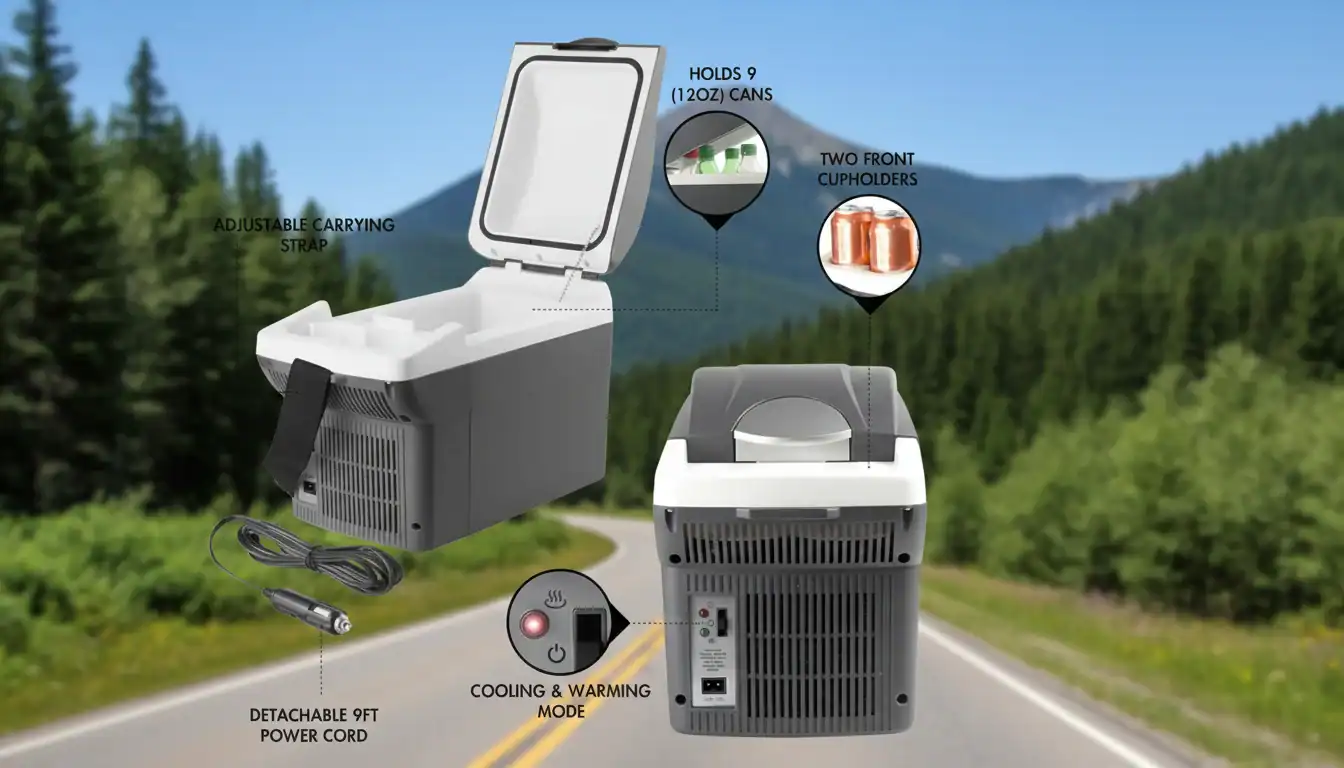
- Padded Guard: A non-slip, padded shoulder guard that can slide along the webbing allows users to position it for maximum comfort.
- Full Adjustability: The strap must accommodate a wide range of user heights and carrying preferences, from a short handle-like length to a full cross-body extension.
- Swivel Clips: Incorporate 360-degree swivel clips at both ends to prevent strap tangling during use and to allow for quick, easy removal when not needed.
Reliable OEM Car Coolers, Built for Your Brand

Key Sourcing Factor 3: Dual 12V/110-240V Power Cords
Including both AC and DC cords as standard eliminates accessory sourcing headaches and guarantees the product works anywhere, from a vehicle to a wall outlet.
Standard DC Cord Specifications (12V/24V)
Every unit ships with a DC power cord designed for vehicle use. The cord includes a standard cigarette lighter plug, ensuring universal compatibility with both 12V cars and 24V commercial trucks. With a standard cable length of 2.5m to 3.5m, users have enough flexibility to position the fridge in the trunk or back seat while still reaching the power source. For compressor models, this cord works directly with the onboard 3-Stage Battery Protection system, which automatically cuts power to the fridge if the vehicle’s battery voltage drops too low, ensuring the engine can always be started.
AC Adapter Configuration for Global Markets (110V-240V)
To support global distribution, the standard kit also contains a universal AC power adapter. This power brick accepts a wide input voltage range from 110V to 240V, making it functional in any major market. We supply interchangeable local wall plugs tailored for specific import regions, including the EU, US, UK, and Australia. This design allows the end-user to move the cooler seamlessly from their vehicle to a home, hotel, or garage without needing to purchase additional converters, extending the product’s utility beyond just travel.
Power Consumption and Mode Compatibility
The dual power cords ensure consistent performance regardless of the source. Compressor fridges can run in both Eco and Max modes on either AC or DC power; Eco mode limits power consumption to under 45W for long-term efficiency. For thermoelectric coolers, the cords provide continuous power to the Peltier module, which is essential for maintaining a stable temperature differential for either cooling or warming. The power system is engineered to deliver the same reliable performance whether it’s plugged into a truck’s 24V DC socket or a standard 220V AC wall outlet.
Universal Inclusion as a Standard Kit Component
Providing both the DC power cord and the AC adapter in the box is a deliberate supply chain decision. This bundled approach removes sourcing complexity and provides immediate, tangible value to both the importer and the end-user. It eliminates a common failure point where customers must find and purchase correct aftermarket accessories.
- Simplified Inventory: Importers manage a single product SKU without needing to stock separate power accessories for different use cases.
- Enhanced User Value: The customer receives a complete, out-of-the-box solution that works in all common environments.
- Streamlined Logistics: It removes the risk of sourcing incompatible or low-quality third-party power adapters.
Key Sourcing Factor 4: Food-Grade, Easy-Clean Liners
The internal liner’s material and design directly determine a cooler’s food safety compliance, lifespan, and required user maintenance.
Verifying Food-Grade Material Composition
The baseline for any portable cooler is that all interior surfaces are constructed from verified BPA-free, food-grade raw materials. This non-negotiable standard ensures safe contact with food and beverages. For international B2B partners, material sourcing must be flexible. We provide options that meet specific regional compliance standards, whether for FDA regulations in the United States or corresponding food contact materials legislation in the EU. This extends to OEM requests for specialized compositions, including the integration of recycled or other eco-friendly plastics to meet sustainability targets.
Engineering for Hygiene and Maintenance
A well-designed liner makes daily use practical. The interior walls are engineered to be smooth and non-porous, a feature that actively resists stains and prevents the absorption of odors from spills. This contrasts with the 304 stainless steel found in many heated lunch boxes, as our cooler liners are optimized for cold storage and quick wipe-downs.
Physical design details are critical for simplifying cleaning. We specifically engineer liners with rounded interior corners to eliminate the 90-degree angles that trap food particles and debris. This small detail makes a significant difference in maintenance. The material itself is selected for high resilience against common food acids and standard, non-abrasive cleaning solutions, ensuring it won’t degrade over time.
Assessing Liner Durability and Thermal Integrity
Beyond food safety, the liner is a critical structural component. It serves as the primary protective barrier for the cooler’s internal PU or EPS foam insulation. A puncture or crack in the liner allows moisture to seep into the insulation, which permanently compromises the unit’s thermal performance. The liner’s durability is directly tied to the cooler’s lifespan and efficiency.
- The material must remain pliable and resist cracking at low temperatures, especially for compressor models rated to hold a freeze at -20°C.
- It provides a significant portion of the unit’s overall structural rigidity, preventing the outer shell from flexing under load.
- This internal strength is essential for the cooler’s shockproof performance, protecting both the contents and the cooling system during vehicle transport.
Schlussfolgerung
Sourcing the right electric cooler for the driver market comes down to a few core specifications that support a daily routine. A capacity between 6L and 12L is ideal for personal meals, while heavy-duty straps and easy-clean liners add practical value. The dual 12V/110-240V power supply is the most important feature, ensuring the cooler works both in the vehicle and at home or the office.
If you are looking to develop a product line for this market, contact us to review our catalog of driver-focused thermoelectric coolers. We can provide complete OEM specifications and help you configure a model for your customers.
Häufig gestellte Fragen
Does the internal dimension fit standard meal prep containers?
It confirms the 6L to 12L capacity range is considered a “sweet spot” large enough to carry multiple meals for daily professional use.
Is the inner liner made of food-grade, wipe-clean PP?
According to the research, suppliers emphasize the use of food-grade, BPA-free materials as a key product differentiator. However, the data does not specify if the liner is made from PP (Polypropylene) or if it has a wipe-clean finish.
Does it come with a heavy-duty shoulder strap?
The research highlights that products in this category are designed for portability, suitable for field work and vehicle storage. However, it does not contain specific details about included accessories like a heavy-duty shoulder strap.
Is the 12V plug fused for truck compatibility (24V option)?
The research confirms that electric coolers in this range typically operate on 12V DC power. It does not mention whether the plug is fused or if a 24V option for truck compatibility is available.

 English
  Español
  Français
  Deutsch
  Português do Brasil
  Русский
  한국어
한국어  日本語
日本語  العربية