 Zum Hauptinhalt springen Zum Footer springen


Die Umsetzung einer OEM-Strategie für Sturzsicherheit (Phase 2) bei hochkochendem Glas (borosilikatglas-Kessel, tragbar) stellt die primäre Verteidigungslinie gegen katastrophale Transportschäden und explodierende Garantieursachen-Kosten dar. Travel-friendly Getränkegeräte ertragen brutale Handhabungsbedingungen im Gepäck und während des täglichen Pendelns. Marken, die ungeschützte Glaseinheiten versenden, riskieren sofortige finanzielle Verluste durch zerbrochene Inventare und negative Kundenbewertungen. Die Integration einer maßgeschneiderten Lebensmittelsilikon-Hülle löst diese operative Verwundbarkeit direkt und bietet Käufern einen strukturellen Stoßdämpfer, der das Gerät physisch abschirmt und langfristige Gewinnmargen schützt.
Dieses technische Arbeitsverfahren definiert die Fertigungsspezifikationen für kundenspezifische Silikonpanzerung. Wir erläutern die ingenieurtechnischen Mechanismen hinter einem Sturztest aus 1 Meter Höhe und berechnen die exakten Werkzeugkosten für das Prägen des Basislogos. Beschaffungsteams erhalten umsetzbare Erkenntnisse zur präzisen Fabrik-Pantone-Anpassung, LFGB Sicherheitsstandards-Konformität, und thermischen Dissipationsmetriken, sodass die Hülle das Gerät aktiv schützt, ohne überschüssige Wärme einzuschließen.
Wie überstehen Lebensmittelsilikonhüllen den 1-Meter-Sturztest?
Lebensmittelechtes Silikon nutzt seine hohe inhärente Kompressibilität und thermische Stabilität, um kinetische Energie zu absorbieren und zerbrechliche Komponenten wie hochborosilikates Glas physisch vor katastrophalem Aufprallversagen zu schützen.
Stoßdämpfende Mechanismen
Lebensmittelechtes Silikon stützt sich auf inhärente Kompressibilität, um mechanische Vibrationen während eines plötzlichen Aufpralls zu dämpfen. Die weiche, flexible Natur des Materials ermöglicht es der Hülle, als physischer Polster zu wirken, der sich sofort komprimiert, sobald er eine harte Oberfläche trifft. Diese schnelle Kompression absorbiert aktiv und lenkt die kinetische Energie eines 1-Meter-Falls von zerbrechlichen internen Komponenten weg. Für Produkte wie den KelyLands SM400 Autokessel, schützt diese spezifische mechanische Wirkung das hochborosilikate Glas vor Zerbrechen beim Aufprall.
| Material Configuration | Impact Absorption (1-Meter Drop) | Thermal Shock Resistance |
|---|---|---|
| Bare Borosilicate Glass | Poor (High shatter risk) | Excellent (Zero-odor boiling) |
| Standard Rigid Plastic | Moderate (Crack/fracture risk) | Low (Melting and off-gassing risk) |
| Silicone-Sleeved Glass | High (Kinetic energy redirected) | Excellent (-60°C to 225°C operating range) |

Material Stability Across Temperature Extremes
Silicone maintains its protective structural integrity even when facing severe heat or cold. Food-grade silicone retains its elasticity across a broad temperature range, functioning reliably from -60°C up to 225°C. This thermal stability ensures the sleeve avoids becoming brittle and cracking during a physical drop. Even if a fleet operator drops the appliance onto frozen asphalt immediately after boiling water in a cold climate, the material continues to absorb the shock without structural failure.
Quality Control for Bulk B2B Production
Rigorous factory testing guarantees consistent drop resistance across large OEM orders. KelyLands enforces a triple-layer inspection protocol consisting of Incoming Qualitätskontrolle (IQC), Process Quality Control (PQC), and Final Quality Control (FQC). These protocols verify the precise thickness and density of every silicone sleeve before final assembly.
- IQC measures masterbatch ratios and raw material elasticity parameters.
- PQC monitors curing temperatures to prevent material degradation during molding.
- FQC executes random batch drop tests to confirm physical resilience.
Production teams validate these material properties under ISO 9001:2015 and IATF 16949 standards. This tight workflow easily meets the strict 2026 durability requirements demanded by commercial logistics fleets and RV outfitters.
Kann die Fabrik die Silikonhülle nach unseren Markenfarben in Pantone abstimmen?
Precision spectrophotometry and rigid masterbatch controls allow factories to match OEM brand colors on silicone sleeves with a Delta-E variance of ≤1.0, rendering any differences imperceptible to the naked eye.
Achieving Delta-E Accuracy in Pantone Matching
KelyLands matches exact brand colors using the Pantone Matching System (PMS) combined with LAB/CIELAB color measurement standards. Factory engineers rely on advanced spectrophotometry and computer-assisted tools to lock in Delta-E (ΔE) values of ≤1.0. This tight tolerance ensures color variations remain entirely imperceptible to the human eye across production runs.
The OEM engineering team requires exact Pantone codes from clients rather than photo-based references. Photos introduce lighting and screen calibration biases, whereas a precise Pantone code provides an objective, mathematical baseline for the dye formulation process.
Managing Process Variables for Color Consistency
Hitting the target color on the first sample demands strict process controls. Engineers keep masterbatch ratio tolerances within ±0.5% during the initial dye formulation stage. Even minor deviations in dye volume can drastically alter the final hue of the cured silicone.
The factory strictly manages curing temperatures, holding them within a precise ±2°C range. This prevents burning or yellowing, which disproportionately affects light-colored sleeves. KelyLands evaluates the base material properties before mixing, factoring in the optical differences between transparent and milky silicone substrates. The team adjusts the pigment load to match the specific light transmission profile of the raw material.
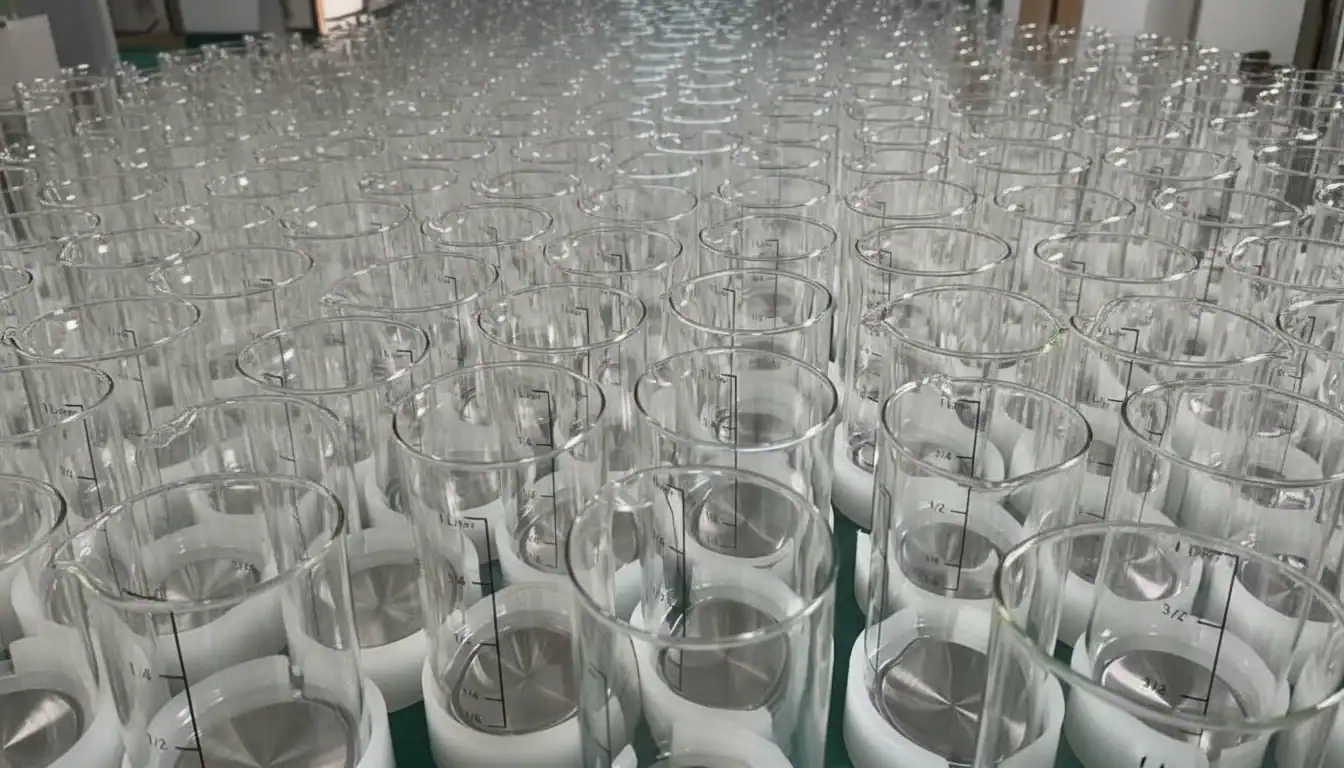
Setting Color Guidelines for OEM Bulk Orders
KelyLands recommends selecting Pantone C (Coated) or U (Uncoated) codes for solid opaque silicone products. These standard codes ensure vibrant, predictable results that align perfectly with your existing corporate branding guidelines.
After clients approve the initial physical color sample, the engineering team thoroughly documents the exact dye formulation, pigment ratios, and thermal curing profile. This stringent documentation guarantees exact repeatability across standard 3,000-piece bulk orders, securing consistent brand presentation for globalen B2B fulfillment operations.
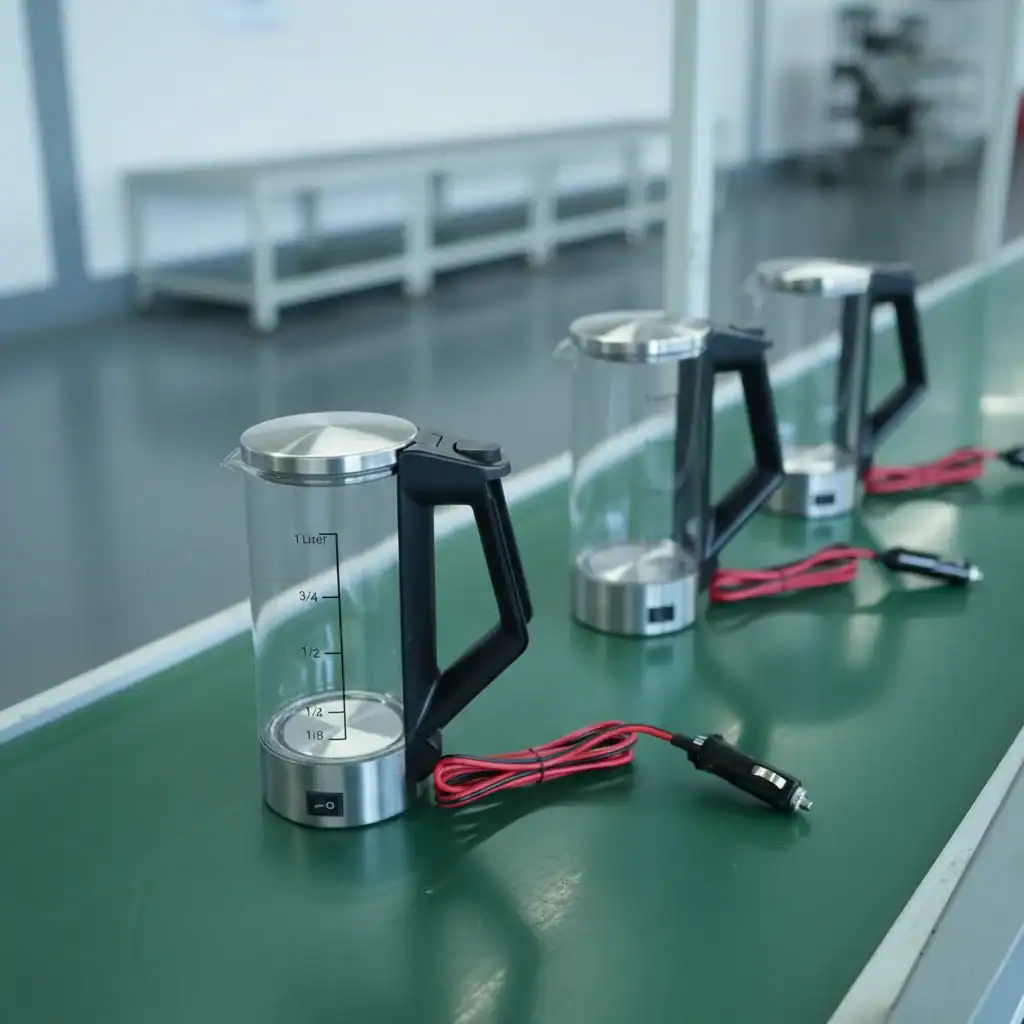
Sichern Sie sich hocheffiziente 12V/24V OEM-Kochkessel
Was sind die Werkzeugkosten für das Prägen unseres Logos auf der Silikonbasis?
Custom silicone tooling investments range from $400 for basic single-cavity setups to over $10,000 for multi-cavity automated systems, but high-speed B2B production runs quickly amortize these upfront costs down to pennies per unit.
Initial Capital Investment for Mold Creation
Machining the physical mold drives the primary expense in silicone logo embossing. Manufacturers utilize CNC machining or electrical discharge machining (EDM) to carve intricate logo geometries into steel or aluminum blocks. Equipment requiring precise temperature and pressure controls dictates the mid-tier to premium pricing for this custom tooling. For standard designs, single-cavity molds present an accessible entry point, while high-volume orders demand complex multi-cavity systems to maximize production speed.
KelyLands engineers reusable mold systems to maintain long-term cost-effectiveness for recurring B2B wholesale orders. By utilizing durable tooling materials optimized for rapid heating and cooling phases, the factory ensures the mold sustains thousands of cycles without degrading the crispness of the 3D embossed logo.
| Tooling Category | Estimated Cost Range | Typische Anwendung |
|---|---|---|
| Einfach-Kavitätsform | $400 – $4,000 | Straightforward logos and low-volume B2B pilot runs |
| Multi-Cavity Mold | $5,000 – $25,000 | Intricate 3D geometries and mass fleet production |
| Digital Prototyping | $100 – $1,000 | Physical verification before cutting final metal |
CAD Integration and Prototyping Fees
Digital design workflows directly influence the initial setup and prototyping costs. Advanced CAD-integrated systems allow designers to finalize the 3D logo details, check tolerances, and analyze flow dynamics before engineers cut the physical metal mold. Industry rates for this specialized design phase typically run between $50 and $200 per hour, depending on the intricacy of the brand artwork.
The OEM design team at KelyLands validates every dimension to ensure the brand logo transfers flawlessly to the silicone base of the SM400 high Borosilikatglas-Wasserkocher. This thorough digital verification step prevents expensive rework, keeps initial prototyping fees manageable, and guarantees the final silicone sleeve aligns perfectly with the rigid glass exterior.
Production Scale and Cost Amortization
Balancing the upfront tooling fee against the total production volume dictates the ultimate commercial viability of custom embossing. Upfront tooling investments pay off through high-speed automated production, which drops the per-unit price significantly at scale. When a brand orders a large batch, the factory distributes the $4,000 mold cost across thousands of units, making the custom branding expense nearly invisible on the final invoice.
- KelyLands structures customized B2B kettle runs at a 3,000-piece minimum so buyers can easily absorb the mold fee across the batch.
- The factory utilizes rapid cooling cycles to increase the daily output yield of custom silicone sleeves.
- Advanced machinery ensures fast turnaround times without compromising detailed 3D logo quality or material integrity.
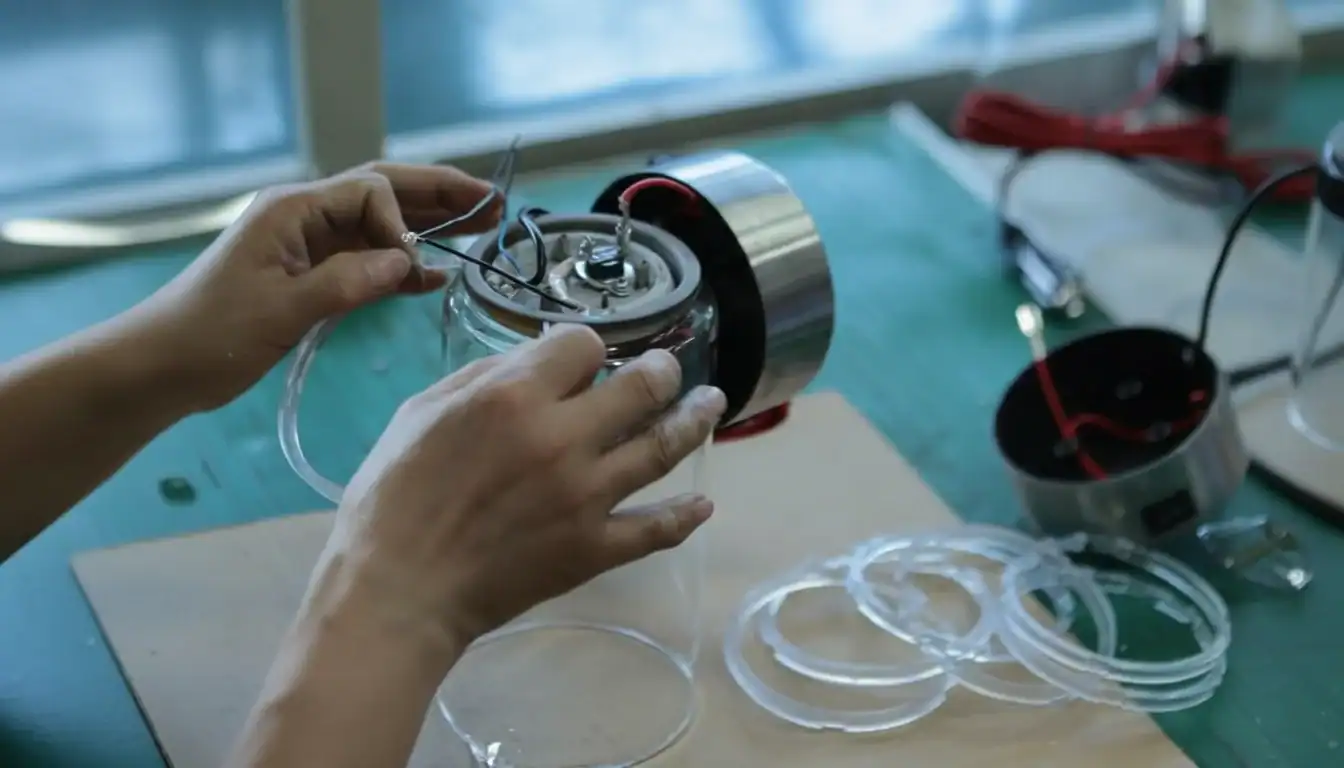
Beeinträchtigt die Hülle die Wärmeableitung des Kochkessels?
Food-grade silicone sleeves act as dense thermal insulators rather than heat sinks, actively improving boiling efficiency by trapping internal thermal energy while maintaining a safe-to-touch exterior.
Thermal Insulation Properties of Silicone Sleeves
Food-grade silicone fundamentally alters the thermal dynamics of the SM400 High Borosilicate Glass kettle. Instead of drawing heat away from the water like a metal heat sink, the silicone sleeve acts as a highly effective thermal insulator. This dense barrier significantly restricts the direct transfer of thermal energy from the rigid glass surface to the external environment.
Because silicone possesses exceptionally low thermal conductivity, it locks the heat inside the 1000ML reservoir. This material characteristic ensures the boiled water remains hot for extended periods after the heating cycle completes, drastically reducing the need for fleet drivers to execute repeated power cycles during long hauls.
Effects on 12V/24V Boiling Efficiency
Heating water via a vehicle’s DC power supply demands strict energy management. KelyLands 12V/24V auto kettles operate within a constrained 150W to 300W power envelope, requiring approximately 30 minutes to bring 1000ML of water to a rolling boil. In this low-wattage environment, minimizing ambient heat loss dictates the overall boiling performance.
The protective sleeve wraps the sidewalls of the glass cylinder, actively preventing the ambient air inside a cold truck cabin from cooling the vessel. By blocking this external temperature interference, the sleeve forces the maximum amount of heating energy directly into the water, optimizing the 30-minute boiling sequence and reducing unnecessary strain on the vehicle’s electrical architecture.
User Safety and External Heat Transfer
Managing external surface temperatures establishes the safety baseline for fleet drivers and RV users operating heavy-duty kettles in confined spaces. The silicone sleeve functions as a reliable thermal barrier, specifically engineered to intercept the intense temperatures radiating outward from the borosilicate glass core.
While the internal water reaches a 100°C rolling boil, the low-conductivity sleeve keeps the exterior contact points cool enough to handle. This deliberate thermal management prevents accidental burns when users grip and pour from the heavy-duty SM400 model immediately after the boiling sequence triggers the auto-off switch.
Schlussfolgerung
Integrating a custom food-grade silicone sleeve transforms a standard portable borosilicate glass kettle into a highly durable, retail-ready product. The sleeve effectively absorbs impacts to pass the 1-meter drop test while maintaining proper heat dissipation during the boiling cycle. Precise Pantone matching and custom logo embossing allow OEM brands to build distinct visual identities while solving the common issue of transit breakage.
Evaluate your current glass kettle designs to see where targeted silicone protection can reduce your product Retourenquoten. Contact our OEM engineering team to discuss tooling costs and request a custom silicone sample tailored to your specific retail requirements.
Häufig gestellte Fragen
Does a borosilicate glass kettle portable break easily in luggage?
Borosilicate glass is highly resistant to thermal shock, but as a rigid material, it can be susceptible to mechanical impacts if packed unprotected in luggage. However, when encased in a high-quality food-grade silicone sleeve, vibrations and impacts are significantly dampened. The compressible nature of the silicone acts as a shock absorber, greatly reducing the risk of breakage during transit and rough baggage handling.
Can we design a custom silicone protective sleeve for the glass?
Yes, custom silicone protective sleeves can be specifically engineered to fit the unique dimensions of any glass kettle. Because food-grade silicone is a soft, compressible material, it can be precision-molded to feature tailored thicknesses at key impact zones. This provides excellent shock absorption to prevent accidental drops while allowing for complete branding, color-matching, and aesthetic customization.
What is the tooling cost for custom silicone molds?
Tooling costs for custom silicone molds typically range from $500 to $3,000 USD, depending on the complexity of the sleeve design, surface finish requirements, and the specific manufacturing method. Standard compression molds for basic protective sleeves fall on the lower end of this spectrum, while more intricate designs requiring multi-cavity Liquid Silicone Rubber (LSR) injection molding will incur higher upfront tooling expenses but offer better efficiency for mass production.
Do the silicone sleeves pass LFGB safety standards?
Yes, premium food-grade silicone sleeves are specifically manufactured to pass rigorous LFGB safety standards. This top-tier certification guarantees that the silicone contains no harmful toxins, does not leach volatile compounds, and safely maintains its structural durability and shock-absorbing properties across extreme temperature ranges, typically from -60°C to 225°C, ensuring optimal safety for consumer appliances.

 English
 Español
 Français
 Deutsch
 Português do Brasil
 Русский
 한국어
 日本語
 العربية