 Zum Hauptinhalt springen Zum Footer springen

Asset degradation in unconditioned storage follows specific thermal triggers: internal ice formation cracks water-based equipment at 32°F, while chemical coatings and paints suffer irreversible separation between 35°F and 50°F. Beyond fluid expansion, sub-zero environments initiate a Ductile-to-Brittle Transition (DBT) in standard carbon steels, which can lead to catastrophic structural failure when temperatures deviate from established safety margins.
This technical analysis examines engineering strategies for cold-weather performance, evaluating specialized alloys such as ASTM A203 and proprietary SZ-Steel against MIL-STD-810H environmental testing protocols. We break down structural requirements using ASCE 7-16 load-rating standards and analyze thermal management frameworks, including ISTA 20, to prevent winter-related asset loss and facility damage.
Understanding the Impact of Cold on Garage Storage
Cold damages assets via liquid expansion, condensation on electronics, and material contraction. Critical failure occurs below 32°F for water-based gear and 35–50°F for chemicals and paints.
Physical Mechanisms: Freezing, Condensation, and Contraction
Unconditioned garages subject equipment to three primary physical stressors: freezing, condensation, and thermal contraction. These forces work together to degrade both structural hardware and stored inventory.
- Freezing: Internal ice formation cracks water-containing equipment like pressure washers at temperatures below 32°F (0°C).
- Condensation: Moisture builds on cold electronics and metal tools during warm-air cycles, causing rust on solder joints and circuit board failure.
- Contraction: Metal tracks and springs contract while lubricants thicken, increasing the operating load and failure risk of garage door openers.
Critical Thresholds for Automotive and Chemical Assets
Asset integrity depends on specific thermal limits. Once temperatures deviate from these ranges, chemical properties change and mechanical performance drops.
- Car Batteries: Performance and lifespan drop significantly below 30°F (−1°C) as internal resistance increases.
- Household Chemicals: Latex paints and coatings separate and fail if stored below 35–50°F (1.7–10°C).
- Fluids and Fuel: Engine and brake fluids thicken in cold air, while lawn mower fuel gells in freezing conditions.
- Infrastructure: Concrete slabs suffer surface spalling and cracking from repeated freeze-thaw cycles and de-icing salt exposure.
- Environmental Control: Insulated steel doors with polystyrene cores and EPDM seals stabilize the garage envelope against these extremes.
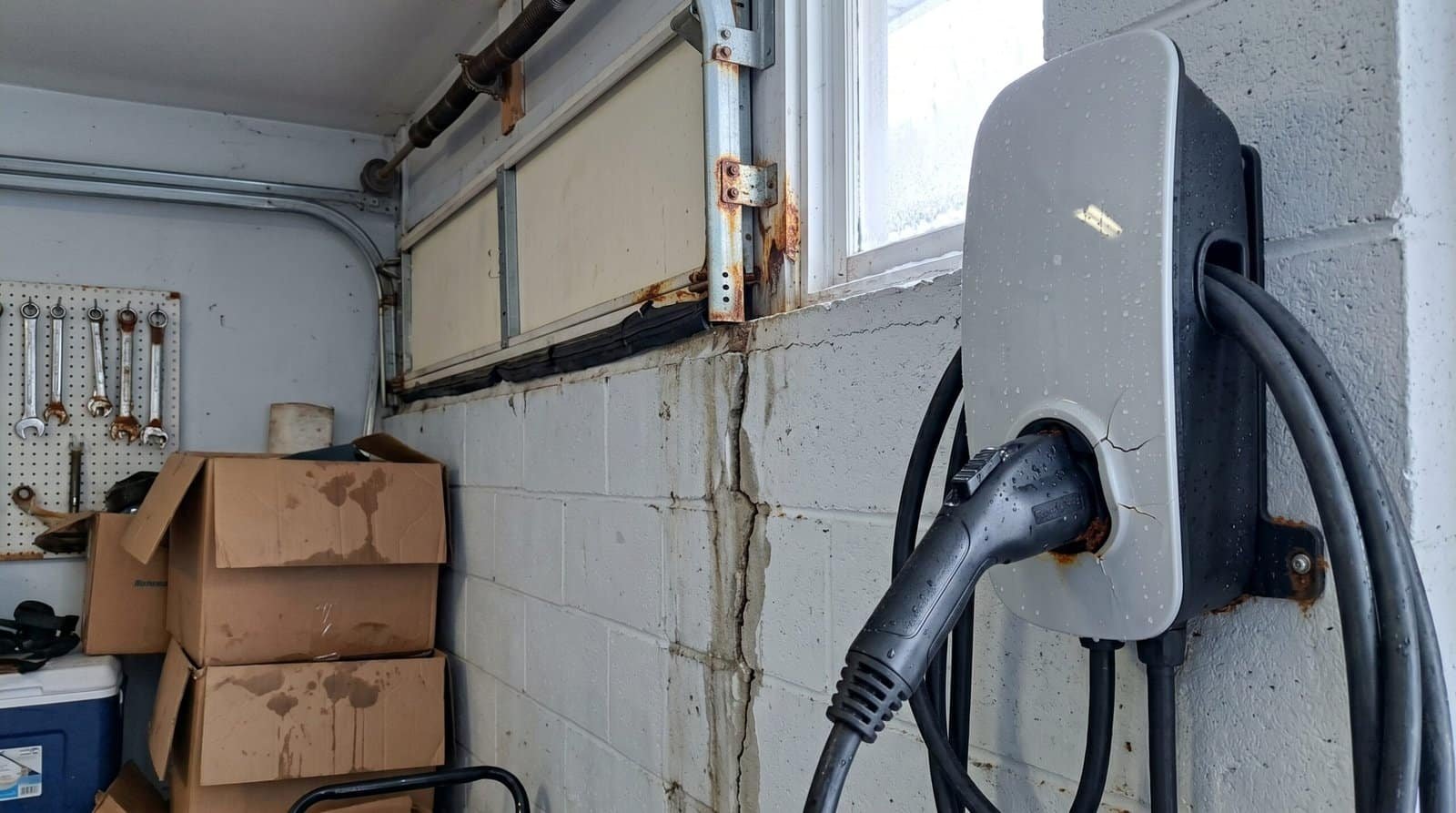
Charging your electric vehicle with KelyLands car accessory in a garage setting.
Material Selection: Ensuring Durability in Sub-Zero Temps
Durability in sub-zero environments requires materials with high impact toughness and engineered microstructures, such as ASTM A203 or SZ-Steel, to prevent brittle fracture and ensure operational safety.
| Material Klasse | Service Temp (Lowest) | Tensile Strength | Primäre Anwendung |
|---|---|---|---|
| ASTM A203 (D & E) | -101°C | 448–586 MPa | Cryogenic Vessels |
| ASTM A533 Grade 1 | -73°C | 552–690 MPa | Pressure Vessels |
| API 5L X-Grades | -25°C to -4°C | Varies by Grade | Arctic Pipelines |
| Proprietary SZ-Steel | -40°C (Tested to -101°C) | Standardized | Offshore/Lifting |
The Metallurgy of Cold Service: Maintaining Toughness
Materials that perform well at room temperature often fail catastrophically in the cold. This happens because most carbon steels undergo a Ductile-to-Brittle Transition (DBT). To prevent brittle fracture, engineers specify materials that maintain high impact toughness at temperatures as low as -45°C. Success depends on the microstructure of the metal.
Engineers use fine-grained microstructures and microalloying elements like Molybdenum (Mo), Manganese (Mn), and Niobium (Nb) to ensure the steel remains ductile. Verification is mandatory. Professionals use the following standards to validate performance:
- Charpy V-notch Testing: The industry standard for verifying impact toughness at specific service temperatures.
- ASTM C666: Governs freeze-thaw resistance for concrete components.
- ASTM D6944: Used to qualify the thermal cycling durability of protective coatings.
- ISO 12944: Validates corrosion protection in salt-rich, sub-zero environments.
Standardized Steel Grades and Specialized Alloys
Standardization removes the guesswork from sub-zero procurement. For cryogenic or high-pressure applications, specific ASTM and API grades are required to ensure the equipment doesn’t shatter under stress. These materials are chosen based on their qualified lowest service temperature rather than just their yield strength.
Joint integrity is equally critical. Even the best steel plate fails if the fasteners cannot handle the contraction. Key specialized materials include:
- ASTM A203 Grades D & E: The benchmark for service down to -101°C, offering tensile strengths up to 586 MPa.
- API 5L X-grades: Specifically engineered for Arctic pipelines to stop crack growth between -25°C and -4°C.
- ASTM A320 Grade L7: The mandatory standard for low-temperature bolting and flange integrity.
- SZ-Steel: A proprietary engineering steel certified by DNV 2.7-1 for offshore lifting equipment operating at -40°C.
Selecting these alloys ensures that hydraulic systems and structural components exceed specified sub-zero requirements. For instance, SZ-Steel has demonstrated reliable operation in hydraulic equipment at -20°C, significantly outperforming standard industrial requirements.
Design Features to Prevent Winter Failure
Winter-proof designs use ASCE 7-16 load-rating, R-60 insulation to block ice dams, and heated enclosures (≥40°F) to protect critical fluid systems from catastrophic freeze-burst events.
| Komponente | Engineering Standard / Spec | Failure Prevention Goal |
|---|---|---|
| Roof Framing | ASCE 7-16 §7.10 | Structural collapse from rain-on-snow drift loads. |
| Attic Insulation | R-60 Thermal Resistance | Ice dam formation and melt-refreeze cycles. |
| Fire Protection | NFPA 13 (Valve Enclosure ≥40°F) | System freeze-up and pipe rupture. |
| Foundations | FPSF (Horizontal Insulation) | Frost heave and slab cracking. |
Structural Load Management and Envelope Thermal Integrity
Engineering for winter starts with physics. Structural integrity depends on managing snow distribution. ASCE 7-16 §7.10 dictates framing requirements for drift-prone regions, specifically addressing rain-on-snow loads. Failure to account for these localized loads leads to roof collapse, especially on lower roof sections adjacent to taller structures.
Ice dams occur when heat escapes the building envelope, melting snow that refreezes at the eaves. Breaking thermal bridges keeps the roof deck cold and prevents melt-refreeze cycles. Proper drainage hardware, including 6-inch gutters and frequent downspouts, routes intense snowmelt away from the building before it can freeze into sliding ice plates.
- Roof Insulation: Specify R-60 attic insulation and ≥2 inch continuous exterior insulation to eliminate thermal bridging.
- Ventilation: Provide 1 ft² net free vent area per 150 ft² of attic floor using ridge and soffit vents.
- Snow Control: Install snow cleats and guards on steep or curved roofs to prevent sliding snow from impacting lower levels.
- Drainage: Use 6-inch gutters and 4-inch diameter underground drains with proper slope to handle rapid snowmelt.
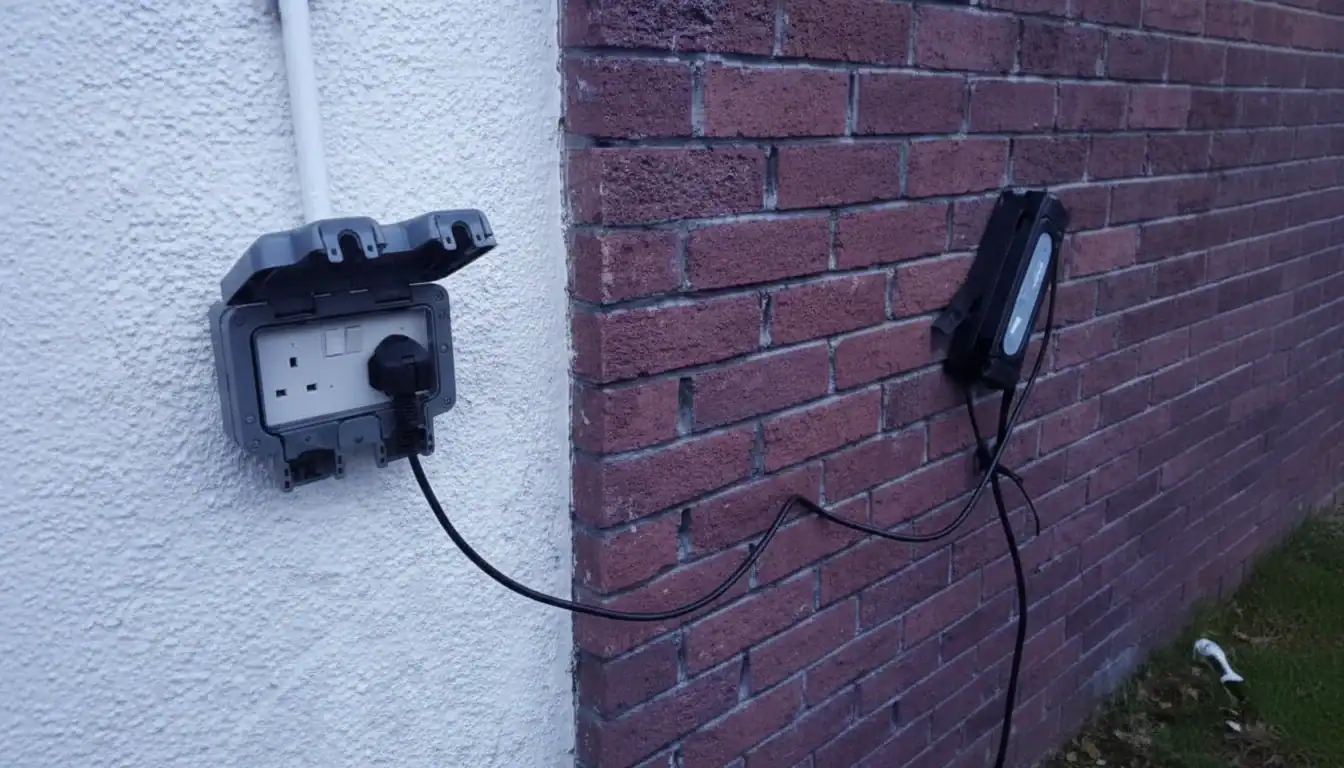
An outdoor power outlet with an EV charger plugged into it on a brick wall.
Technical Specifications for Foundation and Fluid System Protection
Foundation protection prevents frost heave from destroying concrete slabs. Frost-Protected Shallow Foundations (FPSF) use rigid insulation extending 24 to 48 inches horizontally to shift the freeze line away from the footing. Also, a clean granular gravel subbase controls moisture levels and reduces the formation of ice lenses beneath the structure.
Fluid systems require active and passive defenses. Exterior pipes are vulnerable at any point below 32°F. Fire protection systems in unheated zones must utilize dry or pre-action configurations. For domestic water, automatic excess flow valves are the last line of defense, isolating the main line during a freeze-burst event to prevent massive interior water damage.
- Pipe Insulation: Enclose exterior piping in 2-inch fiberglass insulation sleeves.
- Heat Tracing: Use UL-listed heating cables with integral thermostats and central BMS monitoring for early detection.
- Enclosure Temperature: Maintain fire protection valve enclosures at a minimum of 40°F (4.4°C).
- Foundation Specs: Extend horizontal insulation at least 12 inches below grade and 24–48 inches outward based on climate zone.
- Vehicle Protection: Use insulated garage doors with EPDM bottom seals to maintain battery and fluid temperatures between 30–90°F.
Premium OEM/ODM EV Charger Solutions for Your Brand

Testing Protocols for Quality Assurance
Performance validation relies on ISTA 20 and MIL-STD-810H frameworks. Protocols involve three-stage qualification and exposure down to -51°C to verify structural integrity for extreme winter environments.
Standardized Thermal Frameworks and Qualifications
B2B QA teams avoid guesswork by using established frameworks to simulate seasonal extremes. These protocols ensure products maintain structural integrity when the mercury drops, protecting both the hardware and the reputation of the supplier.
- ISTA Standard 20 (STD-0020): A three-stage protocol for insulated shipping containers (ISCs) involving Design Qualification (DQ), Operational Qualification (OQ) with at least three systems, and Performance Qualification (PQ) using real-world shipments.
- Thermal Profiling: Use of ISTA 7D and 7E profiles to simulate seasonal domestic extremes; 7D serves as the high-severity baseline for initial cold testing.
- MIL-STD-810H Method 502.7: The primary benchmark for equipment durability, categorizing environments as “Basic,” “Cold,” and “Severe Cold” (-51°C) to ensure worldwide deployment readiness.
- Replication Requirements: Industry standards mandate multi-sample replication (n=3) during the OQ and PQ stages to provide statistically defensible results.
Technical Stress Procedures and Environmental Simulation
Lab simulations replicate the physical stressors found in sub-zero storage and transit. These tests identify material fatigue, brittle fractures, and structural failure points before a product enters the supply chain.
- Chamber Test Parameters: Environmental testing typically utilizes chambers ranging from -40°C (-40°F) to 20°C (68°F) for durations of approximately 72 hours.
- Dwell Time Requirements: Components containing restrained glass or ceramics require at least 24 hours of exposure at the setpoint before functional evaluation.
- Thermal Shock: Labs use two-zone cycling from -65°C to +150°C to trigger rapid expansion and contraction, uncovering failure modes in seconds.
- Icing Protocols: MIL-STD-810G Method 521 evaluates how larger enclosures and racks handle freezing rain and ice accumulation on walking surfaces and seals.
- Material Validation: Winter packaging QA focuses on cold-room simulations to verify that seals and plastics resist shrinkage and leak paths under sub-zero stress.
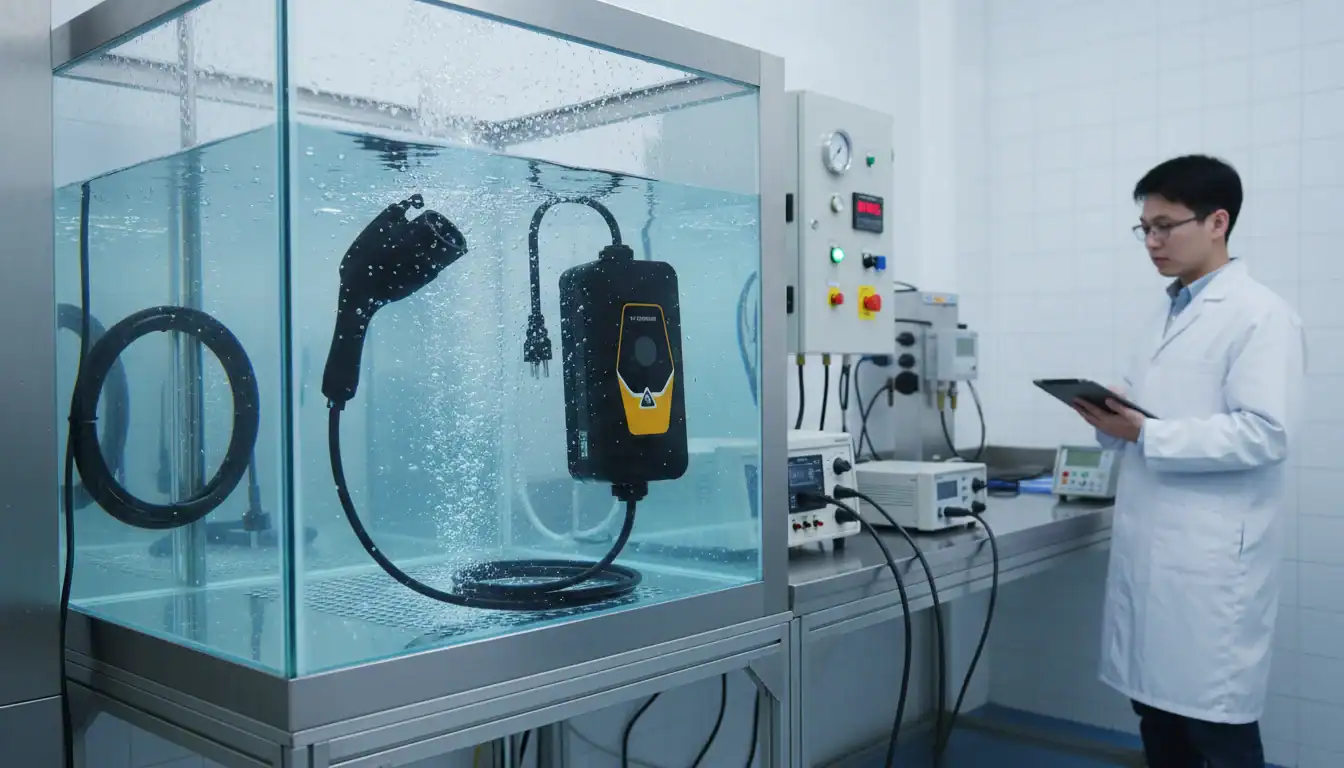
Electric device undergoes submersion test in a lab environment.
Summary: Strategies to Prevent Winter Returns
Stop winter returns by maintaining 40°F minimums, sealing building envelopes, and adhering to NFPA 25 standards to protect temperature-sensitive inventory and critical facility infrastructure.
Thermal Management and Compliance Standards
Environmental control serves as the primary defense against product degradation and system failure. When temperatures drop below specific thresholds, mechanical components fail and chemical compositions shift irreversibly.
- Minimum Threshold: Maintain thermostats at 40°F (4.4°C) to prevent water-based systems from freezing.
- Storage Sensitivity: Keep paints, coatings, and chemicals above 35–50°F (1.7–10°C) to prevent permanent separation.
- Battery Optimization: Store lead-acid and lithium batteries between 30–90°F (−1 to 32°C) to prevent lifespan collapse.
- Regulatory Frameworks: Adhere to NFPA 25 for fire protection and NERC EOP-012-1 for industrial utility freeze protection.
Proactive adjustments matter. Raising setpoints to 60°F (15.6°C) before a forecast severe freeze creates a thermal buffer that prevents the building interior from crashing into the danger zone during peak cold loads.
Facility Hardening and PDCA Operational Protocols
Hardening the facility envelope stops the convective cooling that leads to burst pipes and equipment failure. A structured Plan-Do-Check-Act (PDCA) cycle transforms ad-hoc maintenance into a repeatable engineering process.
- Envelope Integrity: Install EPDM bottom seals and polystyrene insulation on doors to stabilize internal air.
- Moisture Control: Seal cracks and windows to prevent cold air from condensing on electronics and causing solder joint corrosion.
- Mechanical Readiness: Replace standard lubricants with cold-weather variants to prevent hinges, springs, and openers from seizing.
- Pipe Protection: Insulate exterior joints and elbows while implementing “drip or drain” protocols for distal water fixtures.
These physical interventions protect the infrastructure itself. Preventing salt and meltwater intrusion also reduces freeze-thaw cycling that causes concrete spalling and structural degradation in loading bays and garages.
Abschließende Gedanken
Saving on heating is a false economy that invites brittle fractures and chemical failure. Cold-proofing is mandatory insurance for high-value assets and structural integrity.
Audit your storage temperatures today and maintain a 40°F minimum. Immediately replace standard lubricants with cold-weather variants and install EPDM door seals to block heat loss.
Häufig gestellte Fragen
Does the BMS prevent charging when cell temperature is below 0°C?
BMS logic triggers a low-temperature charge inhibit between 0°C and 3°C. This protection prevents lithium plating, which causes permanent, irreversible damage to the battery cells.
What is the expected capacity loss at 5°C ambient temperature?
Expect a 10–20% drop in usable capacity at 5°C compared to the standard 25°C rating. Manufacturer discharge curves show most traction cells provide 80–90% of their rated capacity in this temperature range.
Is the battery pack potted or insulated for thermal stability?
Designers use closed-cell foam or insulation blankets to stabilize temperatures. While some industrial packs utilize potting for structural integrity and vibration resistance, the specific method depends on the pack’s mechanical BOM.

 English
  Español
  Français
  Deutsch
  Português do Brasil
  Русский
  한국어
한국어  日本語
日本語  العربية