 Zum Hauptinhalt springen Zum Footer springen

Die Validierung der Dual Stage Tech(20 psi electric pump)-Architektur ist die einzige Möglichkeit, das Überhitzungsrisiko zu beseitigen, das bei einstufigen Konstruktionen besteht. Während preisgünstige Motoren oft unter der Totlast bei 15 PSI abgewürgt werden, müssen B2B-Käufer Systemen den Vorzug geben, die Volumen und Druck trennen, um kostspielige Garantieansprüche zu vermeiden.
Diese technische Analyse vergleicht die KelyLands 350L/min Turbine und 70L/min Kolbenkonfiguration mit der Standardindustrieleistung. Wir untersuchen, wie der Intelligent Switch-Sensor die 1 PSI-Übergabe verwaltet, um die Motorwicklungen zu schonen und sicherzustellen, dass Ihre Produktlinie die strengen Haltbarkeitsanforderungen für Hochleistungsbestände erfüllt.
Stufe 1 (Turbine): Warum verwenden wir hochvolumige Ventilatoren, um schnell 1 PSI zu erreichen?
Wir setzen Hochgeschwindigkeitsturbinen ein, um 350 l/min Luft zu verdrängen und das riesige Innenvolumen eines SUP-Boards in weniger als 90 Sekunden zu füllen, bevor die Hochdruckkompression beginnt.
Die Physik des Volumens: Warum Kolbenpumpen zu langsam sind
Die meisten Menschen unterschätzen die schiere Menge an Luft, die in einem Standard-Stand Up Paddle Board steckt. Um ein entleertes, aufgerolltes Stück PVC in Form zu bringen, müssen Sie etwa 250 bis 300 Liter Luft bewegen. Dies ist ein reines Volumenproblem, kein Druckproblem.
Wenn wir uns von Anfang an ausschließlich auf einen Hochdruckkolbenmechanismus verlassen würden, wäre der Prozess quälend langsam. Kolben sind auf Kraft ausgelegt, nicht auf Geschwindigkeit. Ein Standard-Hochdruckkolben bewegt etwa 70 Liter pro Minute. Bei dieser Geschwindigkeit würde das einfache Abrollen des Kartons und das Versetzen in einen “weichen” Zustand über vier Minuten lautes, mechanisches Schleifen erfordern. Das ist ineffizient und führt zu unnötigem Verschleiß des Motors, bevor die eigentliche Arbeit beginnt.
Die Turbine der Stufe 1 löst dieses Problem, indem sie eher wie ein Düsentriebwerk als wie ein Kompressor arbeitet. Sie gibt der Luftgeschwindigkeit den Vorrang vor der Kompressionskraft. Da im Inneren einer entleerten Platte kein Gegendruck herrscht, kann das Turbinengebläse die Kammer sofort mit Luft fluten und diese Phase mit geringem Widerstand mühelos bewältigen, während die Lebensdauer des Kolbens für die Arbeit mit hohem Druck aufrechterhalten wird.
350 l/min Schnelles Aufblasen mit zweistufiger Technologie
Bei KelyLands konzentriert sich unser technischer Ansatz auf die Maximierung der Geschwindigkeit während dieser ersten drucklosen Phase. Unsere Pumpen verwenden eine spezielle Turbine der Stufe 1, die so kalibriert ist, dass sie einen Luftstrom von 350 l/min liefert. Dies ist wesentlich höher als bei herkömmlichen Aufblasgeräten und ermöglicht es, ein Standard 10.6ft Board in etwa 60 bis 90 Sekunden auf 1 PSI aufzublasen.
Dieses System stützt sich auf präzise Sensordaten, um die Übergabe zwischen den Motoren zu steuern. Wir verwenden einen Intelligent Switch-Sensor, der den Gegendruck in Echtzeit überwacht. In dem Moment, in dem die Platine einen Druck von 1 PSI erreicht - was anzeigt, dass das Volumen voll ist und sich ein Widerstand aufzubauen beginnt - schaltet das System automatisch die Turbine ab und schaltet den Kolben der Stufe 2 ein. Dieser Übergang ist aus zwei Gründen entscheidend:
- Geschwindigkeitseffizienz: Dadurch wird sichergestellt, dass der langsame Kolben keine Zeit mit leerem Volumen vergeudet.
- Wärmemanagement: Unsere aktiven Kühlsysteme ermöglichen es der Turbine, bei Höchstdrehzahl zu laufen, ohne dass die Gefahr einer thermischen Abschaltung besteht, wie sie bei billigeren, einstufigen Anlagen auftritt.

Stufe 2 (Kolben): Warum schaltet die Pumpe bei hohem Druck in einen lauten Kompressormodus?
Bei 1 PSI versagen die Rotationslüfter bei Gegendruck. Das System schaltet einen drehmomentstarken Kolbenkompressor ein, um die Luft physisch einzudrücken, was den notwendigen mechanischen Lärm erzeugt, um 20 PSI zu erreichen.
Die Physik der Hochdruck-Kolbenkompression
Die meisten Benutzer geraten in Panik, wenn ihre Pumpe von einem leisen Surren zu einem lauten Rattern um die 1-PSI-Marke herum wechselt. Dies ist keine Fehlfunktion, sondern eine mechanische Notwendigkeit. In Stufe 1 kommt ein Rotationsgebläse zum Einsatz, das riesige Luftmengen (350 l/min) widerstandslos befördern kann. Sobald die Platine jedoch Form annimmt und der interne Gegendruck etwa 1 PSI erreicht, wird dieser Lüfter nutzlos. Er kann einfach nicht das erforderliche Drehmoment erzeugen, um mehr Luft gegen den Widerstand zu drücken.
Um den KelyLands-Standard von 20 bis 25 PSI zu erreichen, schaltet das System automatisch Stufe 2 ein: einen Hubkolbenkompressor. Im Gegensatz zum Gebläse verwendet dieser Mechanismus einen Kolben, um die Luft physisch in die Kammer zu drücken. Um eine Durchflussrate von 70 l/min gegen einen hohen Widerstand aufrechtzuerhalten, muss der Hochleistungs-Gleichstrommotor mit hohen Drehzahlen arbeiten. Das deutliche “Kompressorgeräusch”, das Sie hören, ist das Ergebnis dieser schnellen mechanischen Gewalt, die zum Härten der Platte erforderlich ist.
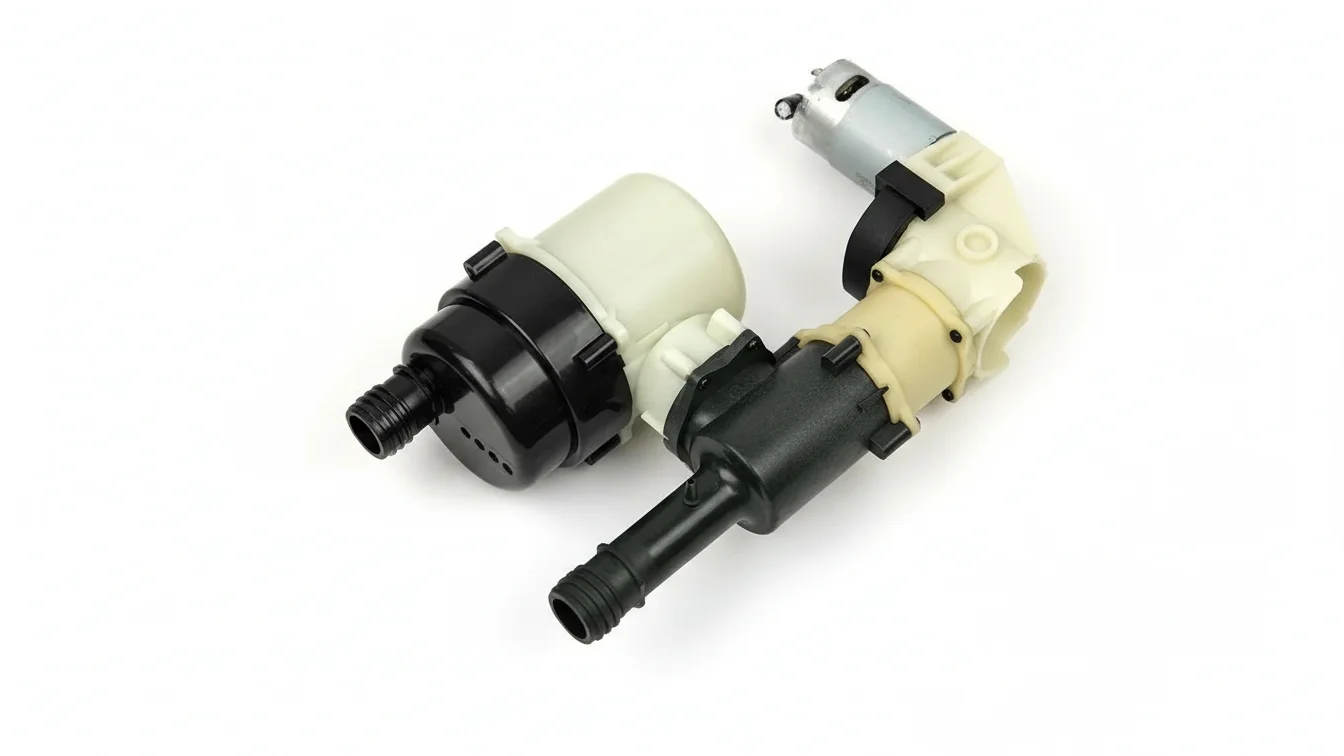
Technische Kontrolle: <85dB Geräuschdämpfung und aktive Kühlung
Da die Physik vorschreibt, dass Hochdruckkompression Geräusche erzeugt, verlagert sich unser technischer Schwerpunkt auf Eindämmung und Management. Wir versuchen nicht, das Geräusch zu eliminieren - was zu Leistungseinbußen führen würde -, sondern es so zu kontrollieren, dass die B2B-Sicherheitsstandards eingehalten werden. Während billige Generikapumpen oft unkontrolliert schreien, setzen wir spezielle Dämpfungsprotokolle ein, um den Betrieb unter 85 dB zu halten.
- Regulierung von Lärm: Optimierte Luftstromkanäle halten den Geräuschpegel unter 85 dB und sorgen für ein ausgewogenes Verhältnis zwischen Leistung und Benutzerkomfort.
- Vibrationskontrolle: Wir installieren interne vibrationsdämpfende Gummifüße, um die Bewegung des Kolbens vom stoßfesten ABS-Gehäuse zu isolieren und so das “Klappern” zu verhindern, das man oft bei Modellen der unteren Preisklasse findet.
- Aktives Kühlsystem: Integrierte Kühltunnel leiten den Luftstrom über den Gleichstrommotor und verhindern so ein thermisches Abschalten während dieser Hochlastphase.
- Abgestimmter Wirkungsgrad: Die Kompressionsgeschwindigkeit von 70 l/min ist so berechnet, dass die Dauer dieser lauten Phase minimiert wird und die Platte schneller gefüllt wird als bei den üblichen 50 l/min der Konkurrenz.
Hochdruck-SUP-Pumpen: Großhandel Direkt

Der Umschaltpunkt: Warum ändert sich der Klang bei 1 PSI abrupt?
Die deutliche Geräuschverschiebung um 1 PSI markiert den automatischen mechanischen Übergang vom hochvolumigen Turbinengebläse zum Hochdruck-Kolbenverdichter.
Die Physik des Übergangs: Vom Turbinenventilator zum Kolbenkompressor
Die plötzliche Veränderung des Geräuschs ist keine Fehlfunktion, sondern der hörbare Beweis dafür, dass die Pumpe “schaltet”, um den erhöhten Widerstand zu bewältigen. Um hohe Drücke effizient zu erreichen, nutzt das Gerät zwei völlig unterschiedliche interne Motoren. Die erste Stufe konzentriert sich auf die Geschwindigkeit, während die zweite Stufe auf die rohe Kraft (Drehmoment) setzt, um die Luft gegen die Wände des SUP-Boards zu drücken.
- Stufe 1 (Turbinengebläse): Ein Zentrifugalventilator dreht sich mit maximaler Drehzahl und liefert 350L/min des Luftstroms. Dieser Mechanismus arbeitet mit geringer Reibung und erzeugt ein kontinuierliches, gleichmäßiges “Zischgeräusch”, ähnlich wie bei einem Staubsauger.
- Stufe 2 (Kolbenkompressor): Sobald die Platte ihre Form hält (ca. 1 PSI), wird der Hubkolben aktiviert. Er liefert 70L/min sondern drückt mit genügend Kraft, um die 20 PSI. Dadurch entsteht ein rhythmisches, mechanisches “pochendes” Geräusch, das auf die physikalische Vibration des Kolbenhubs zurückzuführen ist.
- Die Physik der Kompression: Die Erzeugung von Hochdruckluft erfordert ein physikalisches Drehmoment und nicht nur eine Gebläsedrehzahl. Diese mechanische Intensität führt natürlich zu höheren Dezibelwerten während der zweiten Stufe.
KelyLands zweistufige intelligente Schaltertechnologie
Wir entwickeln diesen Übergang so, dass er automatisch und sicher für die Hardware erfolgt. Unser Markenzeichen Zweistufiger intelligenter Schalter Technologie steuert die Übergabe zwischen den Motoren, um ein Abwürgen zu verhindern und die Abnutzung des internen Getriebes zu minimieren.
- Intelligente Sensoraktivierung: Das System überwacht ständig den internen Gegendruck. Es schaltet den Hochleistungskolben nur dann ein, wenn die Platte voll ist, um den Motor nicht unnötig zu belasten.
- Aktives Kühlsystem: Der Umschaltpunkt löst unsere internen Kühltunnel aus, um die vom Hochdruckkolben erzeugte Wärme abzuführen, was einen Dauerbetrieb ermöglicht.
- Lärmreduzierung: Obwohl die Kolbenmechanik von Natur aus lauter ist, verwenden wir vibrationsdämpfende Gummifüße und ein stoßfestes ABS-Gehäuse, um den Betrieb der Stufe 2 strikt einzuhalten. unter 85 dB.
Warum brennen einstufige Pumpen aus, bevor sie 15 PSI erreichen?
Einstufige Pumpen sind auf den Luftstrom angewiesen, um ihre Motoren zu kühlen. Bei 15 PSI hört der Luftstrom auf, während der Widerstand seinen Höchststand erreicht, was zu einer “toten Förderhöhe” führt, die die internen Zahnräder sofort zum Schmelzen bringt.
| Operative Metrik | Einstufiges Risiko | KelyLands zweistufige Lösung |
|---|---|---|
| Mechanismus der Kühlung | Abhängig vom Durchgangsluftstrom | Unabhängiges aktives Kühlsystem |
| Hochdruck (15 PSI) | Der Motor wird abgewürgt, die Stromstärke steigt an, die Wicklungen verbrennen | Kolbenmechanismus mit hohem Drehmoment rastet ein |
| Umschaltpunkt | N/A (Lineare Kraft) | Intelligenter Schalter bei 1 PSI |
Die Physik des Luftstroms und der Motorüberhitzung
Das Versagen von einstufigen Mechanismen ist keine Frage der Qualitätskontrolle, sondern eine Frage der Physik. Einstufige Turbinen sind darauf ausgelegt, Volumen zu bewegen, nicht Druck aufzubauen. Ihre Motoren sind luftgekühlt, d. h. sie benötigen einen konstanten Strom schnell fließender Luft, der durch das Gehäuse strömt, um die Wärme abzuführen. Diese Konstruktion eignet sich hervorragend zum Aufblasen von Luftmatratzen, hat aber einen fatalen Fehler, wenn es um starre SUP-Boards geht.
- Der Totenkopf-Effekt: Wenn der Druck über 2 PSI ansteigt, entspricht der Gegendruck von der Platine der Kraft des Lüfters. Der Luftstrom stoppt vollständig.
- Abkühlungsverlust: Wenn der Luftstrom stoppt, verliert der Motor seine primäre Kühlquelle genau dann, wenn er am stärksten arbeitet.
- Stromspitzen: Um den Widerstand zu überwinden, nimmt der Motor zu viel Strom auf. Dies führt dazu, dass die Innentemperaturen sofort in die Höhe schnellen.
- Katastrophisches Versagen: Die aufgestaute Hitze verformt in der Regel Kunststoffgehäuse oder lässt Nylonzahnräder schmelzen, lange bevor die Pumpe den angestrebten Druck von 15 PSI erreicht.

Wie intelligentes zweistufiges Schalten Ausfällen vorbeugt
Wir haben diese thermische Einschränkung gelöst, indem wir den Hochgeschwindigkeitslüfter vollständig aus der Hochdruckgleichung entfernt haben. KelyLands Pumpen verwenden einen Intelligenter Schalter das den internen Gegendruck in Echtzeit überwacht. Das System versucht nicht, die Turbine über ihre Leistungsfähigkeit hinaus zu belasten.
- Automatische Abschaltung: Der Hochgeschwindigkeitslüfter (Stufe 1) schaltet die Leistung bei genau 1 PSI ab.
- Lastübertragung: Die Arbeitslast wird sofort auf den Kolbenmechanismus der Stufe 2 übertragen, der mit einer Geschwindigkeit von 70 l/min arbeitet und speziell für die Verdichtung mit hohem Widerstand entwickelt wurde.
- Wärmemanagement: Da der Lüfter nie einem Widerstand ausgesetzt ist, den er nicht bewältigen kann, bleibt der Motor innerhalb sicherer Betriebstemperaturen.
- Aktives Kühlsystem: Im Gegensatz zu passiven Systemen verfügen unsere Einheiten über einen speziellen internen Kühltunnel, der den Kolbenraum während der letzten Kompressionsphase schützt.
Häufig gestellte Fragen
Warum macht die Pumpe nach einer Minute Laufzeit ein lauteres Geräusch?
Hier arbeitet der intelligente Zweistufenschalter genau wie vorgesehen. Die Pumpe beginnt in Stufe 1 und füllt die Form der Platine mit einem Hochleistungs-Turbolüfter leise und schnell (350 l/min). Sobald der interne Sensor einen Gegendruck von etwa 1 PSI feststellt, schaltet er automatisch Stufe 2 ein. Dadurch wird der Hochdruck-Kolbenkompressor aktiviert, der die schwere Arbeit von bis zu 20 PSI übernimmt. Das lautere mechanische Geräusch ist einfach der Kolben, der die Luft komprimiert, um die Platte zu härten.
Kann diese Elektropumpe wirklich 20 PSI für leistungsstarke Touringboards erreichen?
Ja. Während generische Reifenfüller oder preiswerte einstufige Pumpen oft überhitzen oder bei mehr als 15 PSI abgewürgt werden, verwenden KelyLands Pumpen Hochleistungs-Gleichstrommotoren, die speziell dafür entwickelt wurden, 20-25 PSI zu erreichen. Diese Fähigkeit ist entscheidend für technische Touren- und Rennboards, die eine extreme Steifigkeit benötigen, um auf dem Wasser richtig zu funktionieren.
Wird die Pumpe überhitzen, wenn ich mehrere Bretter hintereinander aufblase?
Herkömmliche Handelspumpen lösen oft schon nach einer einzigen Platine thermische Abschaltungen aus. Im Gegensatz dazu verfügt unsere “Club”-Serie über ein aktives Kühlsystem mit internen Ansaugtunneln und Lüftern. Dieses Design leitet die Wärme effizient ab und ermöglicht es Verleihern und Schulen, 3-5 Boards nacheinander aufzublasen, ohne auf die Abkühlung des Geräts zu warten.
Was passiert, wenn ich abgelenkt werde und vergesse, die Pumpe auszuschalten?
Das Gerät verfügt über die Auto-Shutoff-Technologie. Sie stellen Ihren Zieldruck (z. B. 15 PSI) vor dem Start auf dem digitalen Display ein. Der interne Drucksensor überwacht das Aufpumpen in Echtzeit und schaltet den Strom automatisch ab, sobald der Zielwert erreicht ist. So werden Schäden durch zu starkes Aufpumpen verhindert, auch wenn Sie sich entfernen, um andere Geräte vorzubereiten.
Ist diese Pumpe mit meiner speziellen Boardmarke kompatibel?
Wir liefern ein universelles Düsenset mit dem Standard Halkey-Roberts (HR) Ventil, das für 99% der auf dem Markt befindlichen SUPs passt. Da einige Marken (wie Red Paddle Co oder iRocker) leichte Produktionsabweichungen in der Ventiltiefe haben, liefern wir auch einen Satz Ersatz-O-Ringe mit verschiedenen Stärken. Sie können diese Unterlegscheiben austauschen, um eine absolut luftdichte Abdichtung zu gewährleisten, unabhängig vom Boardhersteller.
Abschließende Gedanken
Einstufige Mechanismen brennen unweigerlich unter der “Totkopf”-Hitze des hohen Drucks durch, was die Garantiekosten in die Höhe treibt. Durch die Isolierung der Turbine vom Widerstand sorgt unser intelligenter Zweistufenschalter dafür, dass der Motor den Anstieg auf echte 20 PSI übersteht. Diese Technik schützt den Ruf Ihrer Marke vor thermischen Abschaltungen, wie sie bei gewöhnlichen Verbrauchergeräten üblich sind.
Hören Sie auf, darüber zu raten, ob eine Pumpe dem Missbrauch in einem Verleihgeschäft gewachsen ist, und testen Sie das Active Cooling System selbst. Fordern Sie ein Mustergerät an, um die 1 PSI-Umschaltlogik und die Geräuschdämpfungsleistung aus erster Hand zu überprüfen. Setzen Sie sich noch heute mit unserem technischen Team in Verbindung, um Ihre eigenen Spezifikationen zu konfigurieren, bevor die Nachfrage im ersten Quartal ansteigt.

 English
  Español
  Français
  Deutsch
  Português do Brasil
  Русский
  한국어
한국어  日本語
日本語  العربية