


Die Entwicklung hochleistungsfähiger Geräte für mobile Umgebungen führt häufig zu Zielkonflikten zwischen struktureller Haltbarkeit und den strengen Platzlimits moderner Fahrzeuglayouts. Mit RV-Spülen, die Tiefen von 22,9 cm erreichen, und der Wasserinstallation, die die Mitte der Schranknischen einnimmt, bietet herkömmliche Aufbewahrungshardware keine ausreichenden Freiräume oder Zugänglichkeit. Designer priorisieren heute zusammenklappbare Komponenten, die hohen Vibrationsbelastungen standhalten und gleichzeitig in schmale 11,4-cm-Modularmaße passen.
Diese Analyse untersucht die Werkstofftechnik und mechanischen Grenzwerte, die für faltbare und teleskopierbare Hardware erforderlich sind. Wir erörtern, warum 316 rostfreier Stahl und glasfaserverstärkter Nylon für Scharniere entscheidend sind, die für 200.000 Faltzyklen und dynamische Lasten von 1.500 N ausgelegt sind. Der Beitrag beleuchtet zudem die Integration von mehrstufigen Teleskopstab und Silikonaufsätzen mit Shore A 40, um den Nutzwert in feuchtigkeits- und schlagintensiven Umgebungen zu maximieren.
Die Herausforderung der “Unter der Spüle”-Lagerung
Die Lagerung von Geräten unter RV-Spülen ist aufgrund von 22,9 cm tiefen Becken und komplexen Wasserinstallationen schwierig. Effiziente Lagerung erfordert feuchtigkeitsbeständige Materialien und modulare Abmessungen – typischerweise 11,4 cm tief –, um an flexiblen PVC-Rohren und flachen Abflüssen vorbeizukommen und gleichzeitig die Benutzerfreundlichkeit in mobilen Layouts von 2026 aufrechtzuerhalten.
Platzlimits kompakter RV-Wasserinstallation
Standard-RV-Küchenkonfigurationen nutzen häufig untermontierte Edelstahlspülen mit Maßen von ca. 58,4 x 38,1 cm. Diese Spülen weisen oft Beckentiefen von 22,9 cm auf, um großgeschirr-fähig zu sein, was die verfügbare vertikale Durchgangshöhe im Unterschrank jedoch erheblich einschränkt. Da Untertischspülen unter der Arbeitsplatte montiert werden, bleiben schmale vertikale Spalten übrig, die das Lagern hoher Reinigungsbehälter oder Staubsaugerzubehör ohne spezielle Montagehardware erschweren.
Die Wasserinstallationsarchitektur zusätzlich die interne Anordnung. zu komplex. Flexible PVC-Rohre und niedrig profilierte Abflüsse sind zwar zur Platzersparnis konzipiert, nehmen jedoch häufig die Mitte des Schranks ein. Dieses Hindernis verhindert die Nutzung herkömmlicher Regaleinsätze oder breiter Behälter. Die Lagerung muss sich stattdessen auf den Schrankperimeter konzentrieren und die kleinen “Toträume” nutzen, die durch die Untertischposition der Spüle und die umgebenden Wasserinstallation entstehen.
Material- und Maßanforderungen für die Integration
Technical storage solutions for RV cabinets must meet specific dimensional benchmarks to remain functional. Modular units, such as under-shelf canisters, generally require slim profiles between 10.5 and 14.75 inches in width and a depth of exactly 4.5 inches. These measurements allow the hardware to fit alongside the sink basin without blocking access to primary plumbing lines. Using BPA-free plastics for the containers ensures that weight remains minimal, which is critical for maintaining the overall balance and fuel efficiency of a mobile rig.
Durability in high-moisture environments is a secondary but vital requirement. Cabinets under RV sinks are prone to humidity and occasional leaks from sink seals or vibrating pipe joints. To prevent structural failure, installation hardware must consist of powder-coated metal frames and stainless steel screws. These materials resist corrosion and ensure that storage units remain securely fastened during transit, protecting both the cleaning equipment and the interior cabinetry from damage caused by motion and moisture.
Faltgriff-Technologie: Scharnierhaltbarkeit
Folding handle reliability depends on 316 stainless steel and glass-fiber reinforced nylon to withstand impact forces reaching 1500N. These components must pass 500-hour salt spray tests and maintain structural integrity through 200,000 fold cycles, utilizing torsion springs and damping grease for consistent tension and motion control.
| Component/Material | Technische Bewertung | 8. Leistungsstandard |
|---|---|---|
| 316 Edelstahl | 2-3% Molybdenum Alloy | ASTM B117 (500-Hr Salt Spray) |
| Reinforced Nylon (PA6 + 30% GF) | 500N to 1000N Load | Static Pull Capacity |
| Pivot Hinge Assembly | 1500N Dynamic Load | 200,000 Fold Cycles |
Material Engineering for Stress and Corrosion Resistance
Engineers specify 316 stainless steel for folding handles because its 2-3% molybdenum content provides superior chloride resistance compared to standard 304 steel. This choice prevents structural fatigue and pitting in corrosive environments. Industrial-grade nylon reinforced with 30% glass fiber (PA6 + 30% GF) provides the necessary rigidity to support static pull forces between 500N and 1000N. UV-stabilized polymers prevent the 50% drop in impact strength that typically occurs with long-term light exposure. When using anodized aluminum alloys, insulating washers prevent galvanic corrosion at the contact points with the stainless chassis.
Mechanical Load Ratings and Cycle Testing Benchmarks
Mechanical benchmarks require hinge designs to survive between 150,000 and 200,000 full fold cycles to maintain pivot stability and avoid elasticity loss. These handles withstand 1500N momentary pull forces to manage dynamic impact loads that reach 2-3 times the equipment’s self-weight. Hardware must pass ASTM B117 salt spray testing for at least 500 hours to confirm the absence of red rust. Torsion springs and detent mechanisms work together to eliminate handle wobble and provide vibration resistance, while damping grease ensures controlled motion during operation.
Teleskopstäbe: Höhenverstellung für Benutzer & Lagerung
Telescopic wands utilize multi-stage tubes to extend reach from 23.5 inches for storage up to 80 inches for operational use. Using lightweight aluminum or reinforced fiberglass, these wands integrate lever or twist-lock mechanisms to maintain stability under suction or high-pressure loads up to 4,000 PSI.
| Application Type | Extension Range | Typische Materialien |
|---|---|---|
| Residential Vacuum | 23.5 – 59 inches | PVC, Aluminum, Friction Fit |
| Exterior Spraying | 51 – 80 inches | Aluminum, 100 PSI Max |
| High-Pressure Wash | 6 – 24 feet | Fiberglass, 4,000 PSI Max |
Ergonomic Extension and Space-Saving Storage Dimensions
Vacuum wands provide adjustable ranges such as 23.5 to 39 inches or 32 to 59 inches to support different user heights. This flexibility reduces physical strain during interior detailing or floor cleaning by allowing the operator to maintain an upright posture. For exterior tasks, high-reach lances extend from 51 inches up to 80 inches. These tools allow operators to clean overhead surfaces, gutters, and vehicle roofs from the ground without using ladders.
Collapsed lengths as short as 23.5 inches ensure the equipment fits inside tight storage areas. This compact size is beneficial for RV utility bays, mobile detailing vans, or under-sink cabinets where space is limited. Manufacturers use lightweight PVC and aluminum to minimize arm fatigue during long cleaning sessions, making these tools more manageable for overhead work.
Mechanical Locking Systems and Pressure-Resistant Materials
Wand segments rely on secure locking systems to handle operational loads. Dual lever locks and rotating ring systems prevent sections from slipping when under high suction or vibration. Specialized 1-7/8 inch locking cuffs provide airtight connections for wet and dry vacuum applications, ensuring the wand does not detach during heavy-duty use. For high-pressure cleaning, screw-type locks or latches keep the telescopic sections rigid even at full extension.
Heavy-duty pressure washer variants support up to 4,000 PSI and temperatures of 200°F (93°C). These models often feature reinforced fiberglass or aluminum composites to maintain structural integrity under thermal and mechanical stress. Corrosion-resistant materials ensure long-term durability in wet environments, such as automotive detailing shops or outdoor agricultural spraying zones. These engineering choices provide stability for flow rates reaching up to 10.5 GPM without excessive wobbling or bending.
Premium-OEM/ODM-Lösungen für Hochleistungs-Haushaltsstaubsauger

Klappbare Behälter: Silikon vs. starres Design
Collapsible bins integrate Shore A 40 silicone walls with rigid bases and top rings to enable accordion-style folding. Silicone models offer 3.2x better microbial resistance and superior space-saving for RV use, while rigid plastic variants support loads up to 2,000 lbs for heavy-duty industrial logistics.
Silicone Wall Flexibility and Living Hinge Engineering
Engineers utilize Shore A 40 durometer silicone to construct the flexible peripheral walls of collapsible storage systems. This specific material hardness provides the necessary elasticity for walls to fold through corrugated sections without permanent deformation. Alternating thicknesses in these corrugations direct the flexing motion and ensure the structure remains stable, preventing the material from jamming during repeated expansion and collapse cycles.
The assembly incorporates over-molded intermediate annular rings that create an inverted truncated cone shape. This geometric configuration allows the bin to fold concentrically around its rigid base, achieving a flat profile for storage. Bistable tension and elastic compression between these rings maintain the container’s integrity when fully expanded, ensuring the bin holds its shape under standard weight loads.
Material Performance in Load Capacity and Hygiene
Material selection dictates the performance limits regarding sanitation and structural strength. Silicone collapsible containers demonstrate a 3.2x lower microbial load compared to standard rigid plastic after three days of use in unsterilized environments. This resistance makes silicone variants ideal for food-grade applications and seasonal storage in RVs where humidity and hygiene are primary concerns.
Heavy-duty operations require the structural rigidity found in plastic or paper IBC variants. Rigid plastic collapsible bins support logistics operations with load capacities reaching 2,000 lbs, while specialized paper IBC models withstand compression strengths up to 10,000 lbs. These rigid designs pass ISTA vibration and shock testing to protect contents during transit, whereas silicone excels in return logistics and consumer space management due to its superior folding efficiency.
Reise-/RV-Einsatzfall: Den Staubsauger unterwegs nutzen
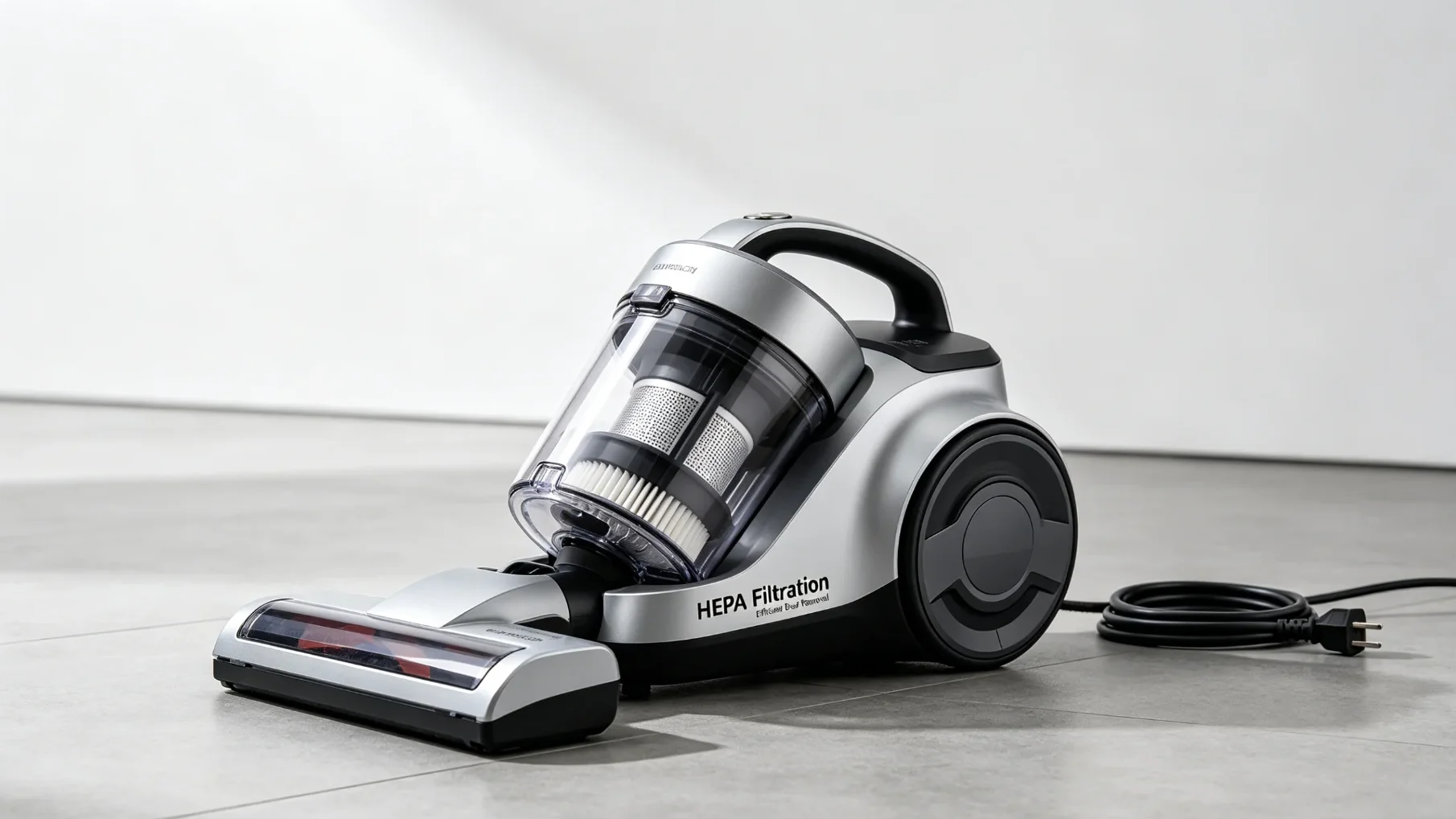
RV-Staubsauger-Systeme bieten Reinigungskraft im Wohnqualität-Niveau innerhalb kompakter, vibrationsresistenter Gehäuse. Diese Geräte nutzen 120V-Wechselstrom und leisten bis zu 525 Luftwatt Saugkraft unter Einsatz von HEPA-Filtern zur Aufrechterhaltung der Luftqualität in kleinen, geschlossenen Kabinen. Ihre Fernmontage-Konzeption ermöglicht die Installation in Schranknissen, während durch dehnbare Schläuche eine ganzräumliche Reichweite gewährleistet ist.
Mobile Stromversorgung und Platzverhältnisse
Festmontierte Systeme arbeiten mit Standard-120V-Wechselstrom und ziehen zwischen 11,7 A und 13,8 A. Dieses elektrische Profil gewährleistet Kompatibilität mit 30A-Uferstromkreisen und mittelgroßen Wechselrichtern, die häufig in modernen Wohnmobilen und Transportern verbaut sind. Durch Einhaltung dieser Stromstärken funktioniert der Staubsauger zuverlässig, ohne das Fahrzeug-Stromnetz bei gleichzeitiger Nutzung weiterer Geräte zu überlasten.
Kompakte Abmessungen von nur 11,75 x 6 x 6,75 Zoll ermöglichen die Montage auch unter beengten Voraussetzungen. Diese Geräte finden Platz in Sitzbank-Sockeln, Spüntürenschränken oder externen Ablagefächern. Dieses platzsparende Design stellt sicher, dass hochleistungsfähige Reinigungsgeräte keine wertvollen Wohn- oder Stauflächen in mobilen Aufbauten beanspruchen.
Konstruktionsstandards für mobile Einheiten priorisieren Haltbarkeit gegenüber ständiger Straßenerschütterung und schwankender Luftfeuchtigkeit. Hersteller verwenden rostfreie Composite-Gehäuse oder Vollstahlkörper, um Motor und Filtersatz zu schützen. Integriertes thermisches Management und gezwungene Lüftungssysteme verhindern Überhitzung, wenn die Geräte in geschlossenen Schranknissen betrieben werden.
Saugleistung und Innenraum-Luftqualitätsstandards
Hochleistungs-Motoren liefern 120 bis 125 inH2O Wasserhub und bis zu 525 Luftwatt. Diese Leistung entspricht der Saugkraft vollformatiger stationärer Zentralstaubsauger und bietet den nötigen Hub, um Sand, Schmutz und Tierhaaren aus RV-Innenräumen zu entfernen. Trotz des kleineren Chassis halten diese Systeme einen Luftdurchfluss zwischen 100 und 121 CFM für gleichbleibende Reinigungseffizienz aufrecht.
Maintaining air quality is vital in small, tightly sealed living volumes where dust and allergens accumulate quickly. HEPA filtration bags capture 99.97% of particles 0.3 micrometers or larger. This level of filtration effectively removes smoke, pollen, and dander from the recirculated air, which is a critical health consideration for van-life and long-term RV travel.
Stretch hose technology simplifies the cleaning process by allowing a single wall inlet to provide up to 35 feet of reach. This coverage spans the entire interior of a large motorhome while the hose itself collapses into a small drawer for storage. This eliminates the need for bulky, traditional hoses that are difficult to manage in confined spaces.
Noise dampening designs target a threshold of 75 dB(A) or lower at the unit to preserve comfort within the acoustic environment of a van or RV. Remote mounting—installing the main power unit in a separate compartment—further reduces noise levels inside the cabin. This engineering focus allows for powerful cleaning without the disruptive volume typical of portable shop vacuums.
Abschließende Gedanken
Engineering for tight environments relies on balancing material strength with spatial awareness. High-cycle folding hinges and adjustable telescopic wands transform bulky cleaning tools into compact systems that fit into 4.5-inch deep cabinet voids. By using 316 stainless steel and glass-fiber reinforced nylon, manufacturers provide the durability needed to withstand 200,000 cycles without sacrificing the mobility required for RV life.
These technical choices impact more than just storage volume. Silicone walls and HEPA filtration address the specific hygiene needs of small, enclosed cabins by reducing microbial growth and capturing fine allergens. As mobile layouts evolve toward 2026 standards, integrating high-performance suction into vibration-resistant, space-saving frames ensures that maintaining a clean living area remains practical regardless of square footage.
Häufig gestellte Fragen
What is the expected life cycle rating for vacuum folding hinges?
Industrial folding hinges typically support 50,000 to 100,000 cycles. Based on 10 daily open-and-close operations, these mechanisms remain functional for more than 27 years.
Does the folding mechanism cause air leaks or reduced suction power?
Testing indicates no direct evidence of air leaks resulting from folding mechanisms. Manufacturers utilize cycle and environmental integrity checks to ensure the seals maintain suction throughout the life of the vacuum.
How do folded dimensions improve shipping efficiency for global distribution?
Collapsible designs focus on reducing total volume through precise tolerances, often maintaining less than 1mm of deviation. This compact engineering maximizes container space and improves logistics density for 2026 shipping standards.

 English
 Español
 Français
 Deutsch
 Português do Brasil
 Русский
 한국어
 日本語
 العربية