 Saltar al contenido principal Saltar al pie de página

Los compradores B2B y los gestores de instalaciones suelen sopesar la comodidad de la tecnología sin bolsa frente a los elevados requisitos de higiene de los entornos comerciales. La demanda residencial representa el 70% de las ventas de sistemas sin bolsa, pero el sector comercial depende de los sistemas con bolsa para cumplir las estrictas normativas sobre calidad del aire. Seleccionar un sistema de filtración exige equilibrar los costes iniciales de hardware con la rentabilidad a largo plazo de los ciclos de sustitución.
Esta guía compara la eficiencia técnica de los separadores ciclónicos y los filtros de mangas, destacando por qué los modelos de mangas proyectan una tasa de crecimiento de 9,84% en sanidad y hostelería hasta 2032. Analizamos el cambio financiero de las normas HEPA H13 a H14, donde el sellado especializado puede aumentar los costes de hardware en 40%, y esbozamos estrategias para maximizar los ingresos recurrentes mediante el mantenimiento estandarizado de consumibles.
Análisis de las tendencias de mercado de los modelos con bolsa frente a los modelos sin bolsa
A partir de 2026, el mercado se dividirá entre modelos residenciales sin bolsa de alta comodidad y sistemas comerciales con bolsa de alta higiene. Los usuarios residenciales impulsan el crecimiento de los modelos sin bolsa gracias a la tecnología multiciclón sin cable, mientras que el segmento de los sistemas con bolsa registra una mayor tasa de crecimiento en los sectores sanitario y hostelero gracias a la mayor contención de alérgenos de 0,3 micras.
El sector residencial se inclina por los sistemas multiciclón sin bolsa
Las aplicaciones residenciales generan 70% de la demanda total sin bolsa. Los hogares urbanos prefieren el perfil de bajo mantenimiento de la tecnología multiciclónica. Los datos de mercado para 2026 muestran que el segmento de las aspiradoras sin bolsa superará los 1.400 millones de dólares de valoración, ya que el sector mantiene una tasa de crecimiento anual de 6,4% hasta el final de la década.
Los modelos verticales sin bolsa tienen una cuota de mercado de 35% en Norteamérica. Los consumidores de esta región prefieren la eficacia de la limpieza en profundidad y quieren eliminar los costes recurrentes de las bolsas. La integración de la tecnología de baterías de iones de litio en los modelos sin bolsa acelera su adopción entre los usuarios que buscan soluciones de limpieza portátiles y robóticas.
Demanda comercial y especificidades regionales de la filtración con bolsas
Las estrictas normativas sobre calidad del aire en los sectores sanitario y hostelero impulsan la tasa de crecimiento prevista de 9,84% para los modelos ensacados hasta 2032. En conjunto, Norteamérica y Europa representan más de 50% del valor mundial, lo que requiere 13 millones de unidades ensacadas sin polvo al año para cumplir las normas de higiene.
Las normas de filtración HEPA exigen una captura de partículas de 0,3 micras del 99,97%. Los sistemas premium con bolsa alcanzan este punto de referencia de forma más consistente en entornos sensibles a las alergias. Los mercados emergentes de la región APAC muestran una demanda creciente de opciones básicas con bolsa, aunque los centros urbanos de renta alta están cambiando rápidamente a alternativas sin bolsa y sin cable.
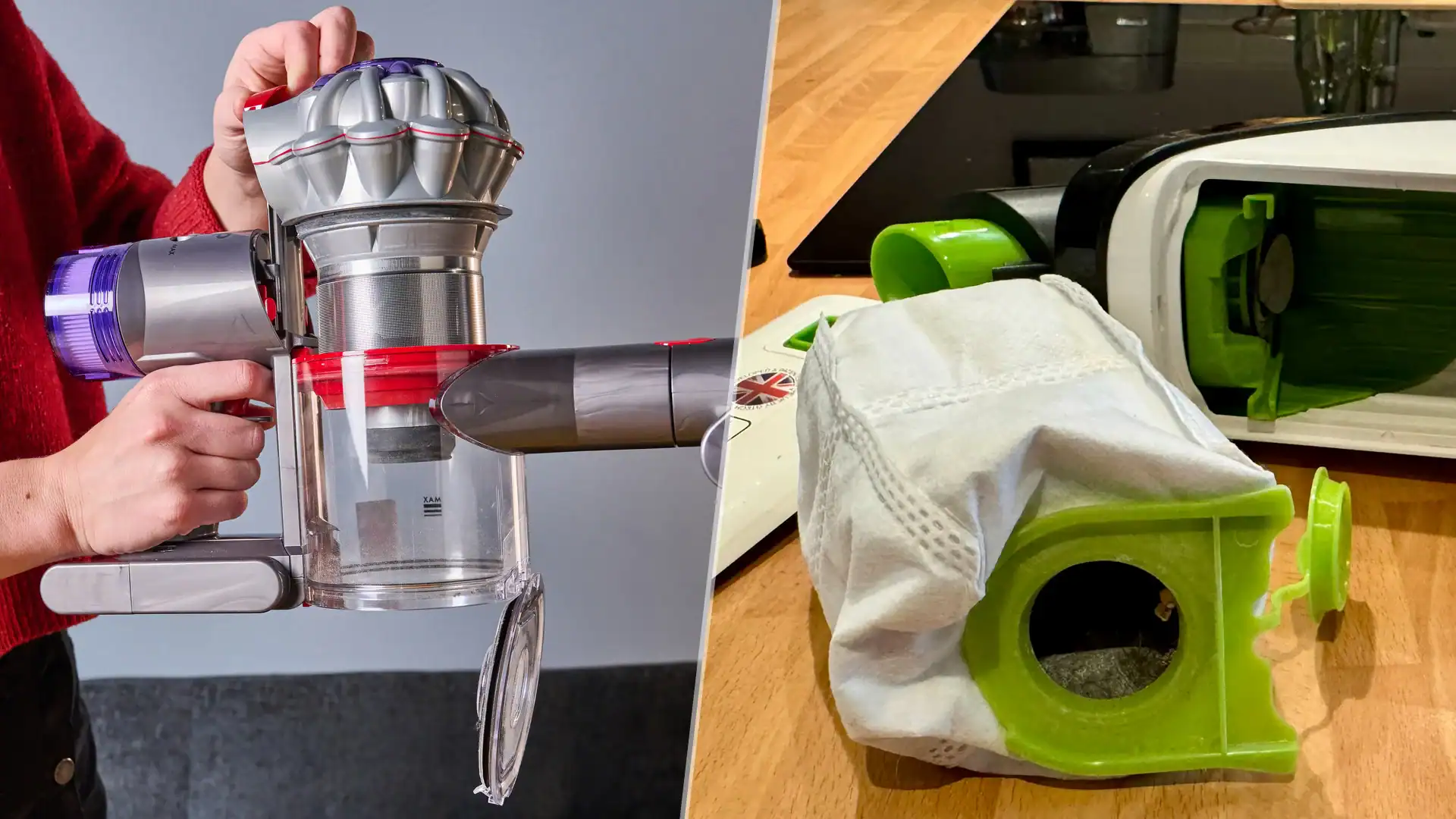
Comparación técnica de la eficacia del ciclón y la filtración por bolsa
Los ciclones ofrecen una solución rentable para capturar polvo grueso de más de 10 micras y soportar temperaturas extremas, mientras que los filtros de mangas alcanzan una eficacia superior de 99,9% para partículas submicrónicas, pero requieren la sustitución periódica de los medios y una mayor energía para superar la caída de presión.
| Métrica de rendimiento | Separadores ciclónicos | Filtros de mangas |
|---|---|---|
| Eficacia (>10 µm) | 70% - 95% | ≥99.9% |
| Eficacia (1-5 µm) | ≤50% - 70% | ≥99.5% |
| Pérdida de carga de funcionamiento | 2 - 6 pulgadas w.g. | 4 - 6 in. w.g. |
| Temperatura máxima | >1000°F (540°C) | 275°F - 500°F (según el medio) |
Eficacia de captura de partículas y umbrales de tamaño
Los ciclones funcionan como clasificadores inerciales, utilizando la fuerza centrífuga para impulsar las partículas hacia las paredes exteriores, donde pierden velocidad y caen en una tolva de recogida. Este mecanismo físico mantiene altos índices de captura para el polvo grueso superior a 10 micras, que suele oscilar entre 70% y 95%. La eficiencia disminuye significativamente para partículas inferiores a 5 micras, ya que la baja masa de estas partículas les impide superar el arrastre de la corriente de gas ascendente. Los diseños de alta eficiencia, como el ACS Hurricane, intentan salvar esta diferencia de rendimiento aumentando las velocidades de entrada para alcanzar una eficiencia de 98% para distribuciones de partículas específicas.
Los filtros de mangas se basan en la filtración superficial a través de fieltros de agujas o medios tejidos para lograr índices de captura de 99,9% o superiores, incluso para partículas submicrónicas. A diferencia de los ciclones, la eficacia de los filtros de mangas sigue siendo en gran medida independiente de la inercia de las partículas una vez que se forma una torta de polvo en la superficie del filtro. Los sistemas de aspiración modernos de 2026 suelen utilizar estas tecnologías en secuencia. En esta configuración, el ciclón actúa como precolector para eliminar los residuos pesados, lo que protege los medios finos del filtro de mangas y prolonga la vida útil de los costosos consumibles.
Límites de caída de presión y rendimiento térmico
La caída de presión de funcionamiento influye directamente en el consumo de energía a largo plazo de una instalación. Los sistemas de filtros de mangas suelen funcionar con una resistencia de 4-6 pulg. p.a. a medida que la torta de polvo se espesa, lo que requiere aproximadamente 15% más de energía del ventilador que una instalación estándar de ciclones. Los ciclones ofrecen un perfil energético más bajo porque carecen de la barrera física de un medio filtrante. Las unidades híbridas como el filtro de mangas ciclónico Torch intentan equilibrar estos factores, gestionando caudales de aire de entre 300 y 18.000 CFM mientras utilizan ciclos de limpieza de chorro pulsante para estabilizar la resistencia al flujo de aire.
La tolerancia térmica crea una clara divergencia entre ambas tecnologías. Los cuerpos de los ciclones fabricados en acero al carbono o inoxidable soportan fácilmente corrientes de gas que superan los 540°C (1000°F), lo que los hace ideales para hornos y calderas. Las bolsas de poliéster estándar utilizadas en los filtros de mangas tienen un límite de 135°C (275°F), por lo que se necesitan medios especializados y caros como la fibra de vidrio o la aramida (Nomex) para aplicaciones de alta temperatura. El mantenimiento de los ciclones implica la supervisión periódica de los revestimientos de desgaste en entornos de alta abrasión, mientras que la filtración de mangas requiere ciclos estructurados de sustitución de los medios filtrantes para evitar fugas de emisiones y mantener la conformidad.
Implicaciones económicas de los sistemas de sellado HEPA H13 y H14
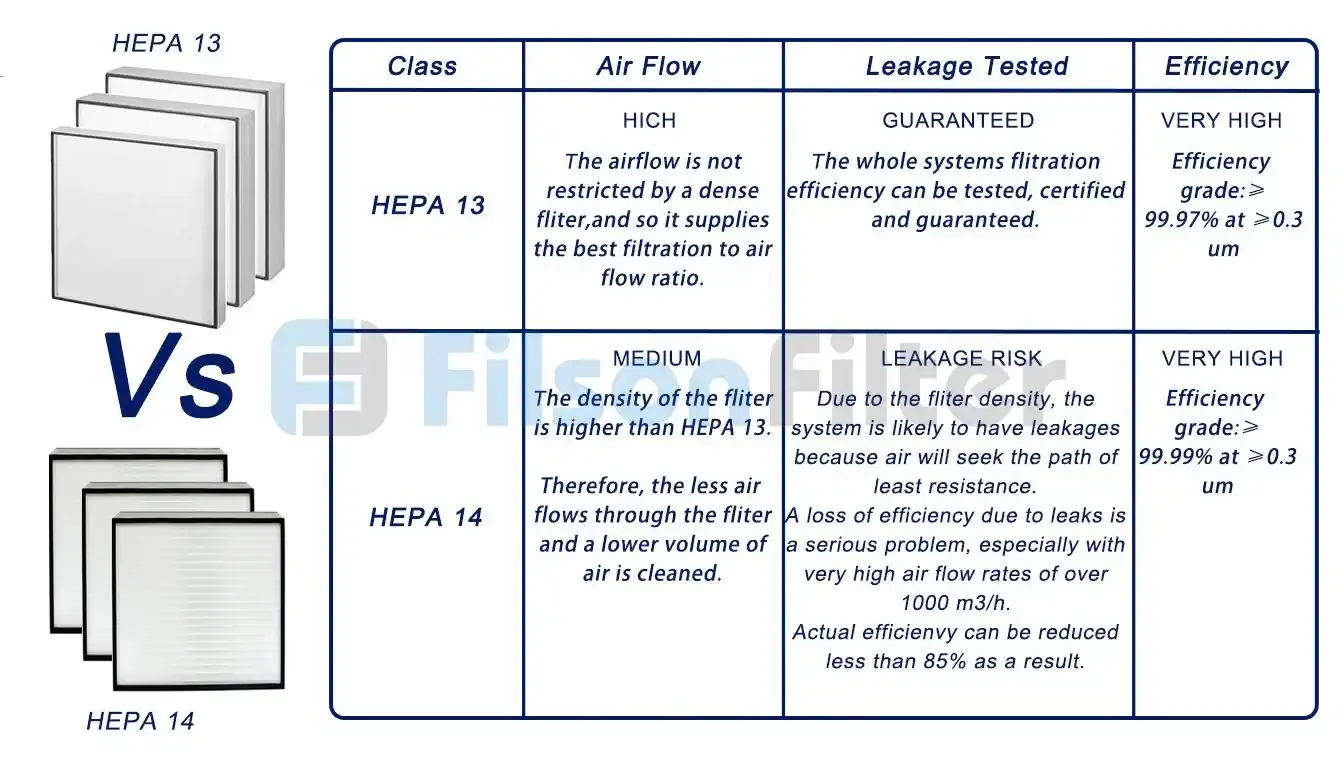
La actualización a sistemas HEPA H14 aumenta los costes iniciales de hardware entre 20% y 40% debido a los bastidores especializados de junta de gel y a las pruebas de fugas individuales. Más allá del precio de compra, los sistemas H14 incurren en costes energéticos anuales de 10% a 15% más elevados y requieren ciclos de mantenimiento más frecuentes que las configuraciones estándar H13 de junta de espuma.
Costes iniciales de adquisición y tecnología de sellado
Los filtros H14 tienen un sobreprecio de 20% a 40% respecto a las alternativas H13. Por ejemplo, un filtro H13 estándar de 610×610×292 mm se vende por $50 a $90, mientras que una unidad H14 comparable cuesta entre $70 y $120. Los métodos de sellado avanzados, como los marcos de sellado de gel, las carcasas con bordes de cuchilla y el encapsulado de uretano, aumentan los precios iniciales de las carcasas entre 201 y 30%.
Las especificaciones de fabricación del H14 incluyen marcos de aluminio extruido de 69 mm y pliegues profundos de 70 a 100 mm. Estos componentes garantizan una eficacia del 99,995% en el tamaño de partícula más penetrante al eliminar las fugas de derivación, que se producen con más frecuencia en los marcos más sencillos de junta de espuma o junta plana utilizados en los sistemas H13.
Energía operativa y ciclos de mantenimiento
La elevada resistencia al flujo de aire en los medios H14 provoca con frecuencia caídas de presión superiores a 80 Pa. Esta resistencia hace que el consumo anual de energía del ventilador aumente de 10% a 15%. Dado que los sistemas H14 mantienen un control de partículas más estricto, requieren pruebas de estanqueidad individuales en fábrica con aerosoles de PAO o PSL para confirmar la integridad de la estanqueidad durante el proceso de fabricación.
Los protocolos operativos de los sistemas H14 requieren una recertificación cada 6 o 12 meses. En cambio, los sistemas H13 suelen funcionar con ciclos de mantenimiento de 12 a 24 meses. Las pruebas frecuentes y los medios más densos de los grados H14 satisfacen las rigurosas exigencias de las salas blancas ISO de clase 5 y 6, pero suponen un mayor coste total de propiedad en comparación con las configuraciones H13 estándar.
Aspiradores OEM/ODM de primera calidad adaptados a su marca

Crear un modelo de ingresos recurrentes con consumibles
El cambio a un modelo recurrente se centra en componentes integrales como los filtros HEPA y las unidades de carbón, que aportan más de 20% del beneficio total. Al estandarizar los intervalos de sustitución entre 3 y 12 meses, las empresas aumentan el valor de vida del cliente en 40% y mantienen 70% de ventas de piezas dentro de los ecosistemas OEM.
| Tipo de componente | Ciclo de sustitución | Impacto financiero |
|---|---|---|
| Filtros HEPA | 6-12 meses | 20% Contribución a los beneficios |
| Filtros de carbón | 3-6 meses | 30% Aumento de la retención (IoT) |
| Kits de mantenimiento | Anual | 40% CLV Crecimiento |
Dinámica económica de la gestión del ciclo de vida de la filtración
Los fabricantes generan márgenes de beneficio superiores a 20% mediante la venta de piezas especializadas y kits de mantenimiento. La inversión inicial en hardware actúa como ancla fundacional, mientras que los ciclos de sustitución obligatorios impulsan un aumento de 40% en el valor vitalicio del cliente. Este marco financiero estabiliza el flujo de caja mediante activadores de recompra impulsados por la física en lugar de ventas opcionales complementarias. Los dispositivos de alto coste inicial requieren compras continuas de filtros, lo que garantiza que el hardware siga siendo funcional y eficiente durante toda su vida operativa.
Intervalos técnicos de sustitución y sistemas de retención
Los equipos de ingeniería fijan los ciclos de sustitución de los filtros HEPA entre 6 y 12 meses para mantener unos estándares específicos de calidad del aire. Las unidades de filtración de carbono requieren actualizaciones cada 3 a 6 meses para una eliminación eficaz de olores y sustancias químicas. La integración de sistemas de reposición habilitados para IoT aumenta la retención de clientes en 30% mediante recordatorios de reposición automatizados. Esta estrategia dirige 70% de las transacciones de consumibles a través de canales OEM, protegiendo la integridad mecánica de los componentes específicos de la marca y evitando la degradación del rendimiento de las alternativas de terceros.
Cómo solucionar la reemisión de polvo en los diseños de recipientes sin bolsa
Los recipientes sin bolsa alcanzan la Clase A de reemisión de polvo cuando limitan las partículas de escape a 0,02% del volumen recogido. Para lograrlo, se requiere una combinación de separación ciclónica de alta eficiencia, juntas de goma herméticas y filtros de escape de grado HEPA que capturen los alérgenos finos antes de que el aire salga de la máquina.
Normas reglamentarias y umbrales de retención de polvo
La etiqueta energética europea para aspiradoras, que se rige por el Reglamento nº 665/2013 y el método de ensayo EN 60312-1:2013, establece una métrica estricta para las clases de reemisión de polvo que van de la A a la G. Para obtener una certificación de clase A, una aspiradora sin bolsa debe demostrar una retención de polvo mínima de 99,98%, que no permita que más de 0,02% de las partículas recogidas vuelvan a escapar al medio ambiente. Este grado de rendimiento refleja la integridad de todo el sistema, incluidos el cuerpo de la aspiradora, las juntas y las conexiones de las mangueras, más que la eficacia del propio medio filtrante. Los datos de producción de fabricantes como Bosch y Philips muestran que, mientras que los modelos de gama alta alcanzan sistemáticamente estos umbrales, los diseños de gama baja suelen caer en la clase B o C porque carecen del sellado necesario en las interfaces de los recipientes para evitar microfugas.
Ingeniería de sistemas para una filtración hermética
Los ingenieros logran la filtración de clase A en los modelos sin bolsa mediante un enfoque de varias etapas que comienza con la separación ciclónica de alta velocidad. Estas cámaras utilizan la fuerza centrífuga para extraer el polvo fino del flujo de aire antes de que llegue a los filtros físicos, evitando la obstrucción prematura y manteniendo la aspiración. Para garantizar que el aire sólo sale a través de la pila de filtración, los fabricantes integran juntas de goma de alta calidad y juntas tóricas en las uniones críticas, como la tapa del recipiente y la carcasa del motor. Los modelos de gama alta, como la Serie 6 de Bosch y la FC9743/09 de Philips, utilizan filtros de escape de grado HEPA o “Alergia” capaces de capturar el 99,9% de partículas de hasta 0,3 micras. Estos sistemas suelen emplear materiales sintéticos lavables de alta densidad que conservan su eficacia de filtrado durante varios ciclos de mantenimiento, lo que proporciona una protección a largo plazo para los usuarios sensibles a las alergias.
Durabilidad de los materiales de los filtros reutilizables frente a los desechables
Los filtros reutilizables emplean materiales robustos, como marcos de acero inoxidable y poliéster reforzado, para alcanzar una vida útil de cinco a diez años. Por el contrario, los filtros desechables se basan en materiales ligeros diseñados para ciclos de un solo uso, por lo que deben sustituirse cada 30 a 90 días. Mientras que los reutilizables ofrecen una durabilidad física superior, los desechables mantienen índices de eficiencia más altos para la captura de partículas finas.
Composición estructural y expectativas de vida útil
Los filtros reutilizables utilizan componentes de alta resistencia, como marcos de acero inoxidable, polipropileno y medios de espuma especializados para resistir la limpieza repetida. Estas unidades alcanzan una vida útil de entre cinco y diez años cuando los operarios siguen un programa de lavado constante cada uno o tres meses. Los robustos marcos evitan que se deformen durante el flujo de aire a alta presión o el aclarado manual, garantizando que el filtro se asiente correctamente dentro de la carcasa del aspirador durante toda su vida útil.
Los filtros desechables dan prioridad a los materiales rentables, como la fibra de vidrio o el papel plisado, que los fabricantes diseñan para un periodo de servicio limitado de 30 a 90 días. Estos materiales se degradan rápidamente cuando se exponen a la humedad o a la agitación física, lo que los hace inadecuados para la limpieza. Los frecuentes ciclos de sustitución de los materiales desechables hacen que entre cuatro y doce unidades entren anualmente en el flujo de residuos por cada sistema de aspiración, lo que pone de manifiesto una diferencia significativa en el impacto medioambiental en comparación con las alternativas duraderas.
Eficacia de la filtración y requisitos de mantenimiento
Los medios desechables alcanzan clasificaciones MERV más altas, entre 4 y 16, capturando hasta 95% de contaminantes grandes como el polen y el polvo. Los filtros reutilizables suelen ofrecer clasificaciones MERV de 1 a 4, con una capacidad de retención de partículas a menudo inferior a 75% para los contaminantes de gran tamaño. Esta diferencia de rendimiento sugiere que, mientras que los reutilizables destacan por su longevidad física, los desechables siguen siendo la norma para los entornos que requieren una calidad del aire y una eliminación de partículas finas de alta precisión.
Los costes de adquisición de materiales reutilizables duraderos oscilan entre $25 y $120, una inversión inicial más elevada que supone un ahorro a largo plazo durante varios años. El mantenimiento de estos materiales requiere un secado minucioso después de cada lavado para evitar la formación de moho y garantizar que los soportes se mantengan estructuralmente sanos. Los operarios deben gestionar con cuidado este proceso, que requiere mucho trabajo, ya que instalar un filtro reutilizable húmedo puede dañar el motor de aspiración o comprometer la integridad del sistema de filtración.
Planificación estratégica de la cartera de productos para minoristas
La planificación estratégica de la cartera de productos de filtración en 2026 se basa en alinear el inventario con normas técnicas como ISO 16890 y EN 1822. Los minoristas maximizan la rentabilidad racionalizando la larga cola de SKU de bajo volumen, a menudo reduciendo los recuentos en 20-40% para impulsar mejoras EBIT mientras se centran en los ingresos recurrentes de consumibles de reemplazo estandarizados.
Marcos de clasificación técnica de los materiales filtrantes
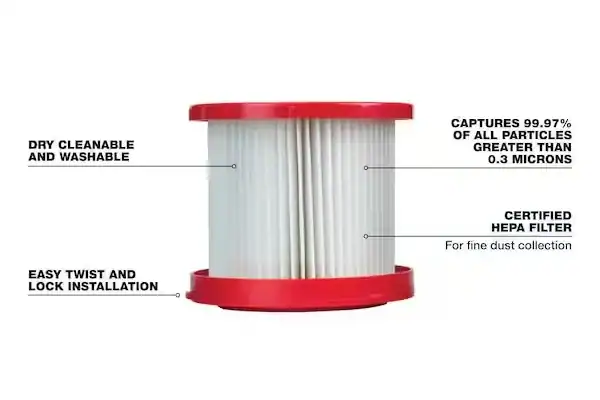
La categorización del inventario sigue los grupos de eficiencia ISO 16890, incluidos ePM1, ePM2.5 y ePM10, para cumplir objetivos específicos de calidad del aire interior. Estas normas sustituyen a las clasificaciones anteriores y permiten una asignación precisa de los productos a las necesidades del cliente. Para entornos de alta pureza, los minoristas deben incluir productos de clase HEPA validados según las normas EN 1822 o ISO 29463. Estos filtros eliminan partículas de hasta 0,3 µm y sirven a segmentos minoristas especializados en medicina o laboratorios.
Las carteras de filtración de líquidos para la venta al por menor de alimentos y bebidas exigen un estricto cumplimiento de la seguridad de los materiales. Los productos que entran en contacto con superficies consumibles deben cumplir las normas 21 CFR de la FDA y 1935/2004 de la UE. El uso de carcasas de acero inoxidable 304/316L combinadas con medios de polipropileno o polietersulfona garantiza la durabilidad y el cumplimiento de la normativa. Los micrajes estandarizados de 0,2 µm a 100 µm permiten a los minoristas clasificar las SKU en función de los casos de uso, desde la prefiltración gruesa hasta el procesamiento de alta pureza.
Estrategias de optimización de carteras y modelización de beneficios
Los programas de racionalización de SKU eliminan entre 20 y 40% de variantes de bajo volumen, al tiempo que preservan más de 90% de ingresos totales. Al eliminar los artículos redundantes o de bajo margen, las empresas reducen los costes de complejidad asociados a la asistencia técnica y la gestión de inventarios. Este enfoque ajustado de la gestión de productos en los canales de filtración industrial permite mejorar el margen EBIT entre 2 y 7 puntos porcentuales. La estandarización en torno a SKU de plataforma garantiza que los artículos de gran volumen permanezcan en stock al tiempo que mejora el rendimiento financiero general.
Los cuadros de mando estratégicos realizan un seguimiento de KPI críticos como el margen bruto por SKU y los índices de utilización de consumibles. El seguimiento del intervalo medio de sustitución de la base instalada permite una previsión más precisa de la demanda y la reposición del inventario. Las revisiones trimestrales de la cartera en 2026 utilizan matrices de priorización para clasificar los productos en funciones de crecimiento, mantenimiento o cosecha. Este modelo de gobernanza se basa en la contribución a los ingresos y la fase del ciclo de vida para determinar dónde asignar los recursos de marketing e I+D.
Reflexiones finales
Los usuarios eligen entre la sencillez operativa y un control estricto de las partículas. Los sistemas sin bolsa dominan los mercados residenciales porque eliminan los costes recurrentes y ofrecen portabilidad gracias a la moderna tecnología inalámbrica. Los entornos comerciales confían en los sistemas con bolsa para cumplir las rigurosas normas de calidad del aire, ya que estos modelos proporcionan una contención submicrónica más fiable y una eliminación de residuos más limpia. La decisión depende de si una instalación prioriza la velocidad de mantenimiento o la captura absoluta de alérgenos.
Los fabricantes y minoristas crean valor a largo plazo centrándose en los consumibles de alto margen. Los ciclos automatizados de sustitución de los filtros HEPA y de carbono estabilizan el flujo de caja y mantienen las máquinas funcionando con la máxima eficiencia. Las empresas que adaptan su inventario a las normas mundiales de filtración protegen su cuota de mercado al tiempo que garantizan que los usuarios mantengan entornos interiores saludables. La estandarización en torno a plataformas de filtros de alto rendimiento mejora los márgenes de beneficio en toda la cadena de suministro.
Preguntas frecuentes
¿Las aspiradoras con bolsa ofrecen una mejor filtración que los modelos sin bolsa?
Los aspiradores con bolsa proporcionan una filtración superior mediante bolsas en capas que retienen el polvo a la vez que mantienen una succión constante. Mientras que los filtros sin bolsa cuestan entre $20 y $80 al año, los sistemas con bolsa mantienen unos costes recurrentes más bajos de $20 a $70 para bolsas de alta calidad.
¿Con qué frecuencia deben sustituirse los filtros HEPA en 2026?
Los protocolos de mantenimiento de la 2026 recomiendan sustituir los filtros HEPA cada 6 a 12 meses. Este programa garantiza que el sistema siga atrapando el 99,9% de partículas de hasta 0,3 micras, lo que evita la sobrecarga del motor y el desvío del aire.
¿Son las bolsas de vacío universales tan eficaces como las de marca?
Por lo general, las bolsas de marca superan a las alternativas universales porque utilizan materiales con capas específicas adaptadas a los requisitos de flujo de aire de la máquina. Las bolsas universales suelen carecer de estas capas de filtración avanzadas, lo que provoca una mayor reemisión de polvo.
¿Qué caracteriza a un sistema sellado en el diseño al vacío?
Un sistema sellado presenta una construcción hermética en la que las juntas y los sellos garantizan que todo el aire pase a través de los medios de filtración. Este diseño evita que el aire no filtrado salga de la carcasa de la máquina antes de llegar al filtro HEPA.
¿Por qué recomiendan los profesionales los aspiradores con bolsa para tratar las alergias?
Se prefieren los modelos con bolsa porque capturan el 99,9% de los alérgenos y proporcionan un método higiénico de eliminación. Los usuarios evitan la ‘nube de polvo’ habitual al vaciar los cubos sin bolsa, lo que reduce significativamente la exposición secundaria a irritantes.
¿Cuál es el margen potencial de los minoristas que almacenan consumibles de vacío?
Los consumibles, como bolsas y filtros, constituyen una fuente de ingresos recurrentes con grandes márgenes. Los minoristas generan ventas constantes porque estos componentes requieren una sustitución periódica, que suele costar a los usuarios entre $20 y $70 al año.

 English
  Español
  Français
  Deutsch
  Português do Brasil
  Русский
  한국어
한국어  日本語
日本語  العربية