 Saltar al contenido principal Saltar al pie de página

El abastecimiento de energía inalámbrica y BMS es el factor crítico que determina las tasas de fracaso del producto y las reclamaciones de garantía. Elegir una pila 18650 de calidad inferior o malinterpretar la función de un BMS durante el transporte marítimo provoca que el inventario no llegue a tiempo, lo que afecta directamente a los márgenes de beneficio y a la reputación de la marca.
Este análisis compara el rendimiento superior de las pilas 21700 para una potencia de succión y un tiempo de funcionamiento constantes. También aclaramos cómo un BMS inteligente y la certificación UN38.3 trabajan juntos para proteger su inversión y garantizar que los envíos pasen la aduana sin retrasos costosos ni problemas de cumplimiento.
¿Por qué las pilas 21700 son superiores a las 18650 para la autonomía en vacío?
Las pilas 21700 ofrecen un mayor tiempo de funcionamiento de la aspiradora porque tienen más capacidad (hasta 5600 mAh) que las pilas 18650. Esto proporciona aproximadamente 20% más tiempo de funcionamiento y una mejor disipación del calor para una succión constante.
| Atributo | Pila 18650 | 21700 Móvil |
|---|---|---|
| Capacidad nominal | 1800-3500 mAh | 3500-5600 mAh |
| Ventaja en tiempo de ejecución | Línea de base | Aprox. 20% Más largo |
| Suministro de energía | Tasa de descarga estándar | Mayor tasa de descarga |
| Gestión térmica | Disipación de calor estándar | Disipación térmica superior |

Mayor densidad y capacidad energética
La principal ventaja de una pila 21700 es su capacidad. Su capacidad oscila entre 3500 y 5600 mAh, lo que supone un salto significativo respecto al rango de 1800-3500 mAh de una 18650. Para un dispositivo de alto consumo como una aspiradora inalámbrica, este almacenamiento extra de energía se traduce directamente en más tiempo de limpieza con una sola carga. Más capacidad significa más tiempo de funcionamiento antes de tener que cambiar o recargar la batería.
Potencia de salida mejorada para una succión constante
El mayor formato físico de las pilas 21700 no se limita a la capacidad, sino que también permite mayores velocidades de descarga. Esto es fundamental para alimentar motores de alto rendimiento que pueden ofrecer hasta 13.000 Pa de succión sin problemas. Las pilas funcionan más frías porque su mayor superficie disipa el calor con más eficacia. Una mejor gestión térmica evita que el rendimiento se ralentice, lo que garantiza que la aspiradora mantenga una succión fuerte y sin desvanecimientos durante todo el trabajo de limpieza.
¿Evita el “Smart BMS” la muerte de la batería durante el transporte marítimo?
Un BMS inteligente protege contra fallos eléctricos como la sobrecarga. No evita la muerte de la batería por factores ambientales durante el transporte marítimo, como la humedad, la sal o largos periodos de inactividad.
Principales protecciones eléctricas que ofrece un SGE
Un sistema de gestión de baterías (BMS) está diseñado para gestionar los riesgos eléctricos y operativos, no los medioambientales. Su trabajo consiste en mantener la batería funcionando de forma segura dentro de los límites especificados. Piense en él como un guardaespaldas a nivel de circuito para la batería.
- Fallos eléctricos: Evita daños por sobrecarga, sobredescarga y sobrecorriente apagando la batería si detecta condiciones inseguras.
- Control de la temperatura: El BMS vigila la temperatura de la batería y puede desconectarla para evitar el sobrecalentamiento, que es una de las principales causas de degradación y avería.
- Equilibrio celular: Mantiene la tensión constante en todas las celdas individuales de la batería. Esta función es fundamental para maximizar la vida útil de la batería.
Retos del transporte más allá de la capacidad del SGE
Las realidades del transporte marítimo de mercancías plantean problemas para cuya solución nunca se diseñó un SGE. Se trata de retos físicos y medioambientales que requieren soluciones físicas, no solo una supervisión electrónica.
- Corrosión medioambiental: Un BMS no ofrece ninguna protección contra los daños físicos causados por la niebla salina y la elevada humedad constante de un contenedor de transporte. Esto requiere un embalaje sellado e inhibidores de la corrosión.
- Autodescarga natural: Todas las baterías pierden carga lentamente con el tiempo. Aunque algunas unidades BMS tienen un modo de “reposo profundo” para ralentizarlo, no pueden detenerlo por completo durante meses de inactividad en el mar.
- Protección física: Un BMS no sustituye a un embalaje adecuado, la amortiguación de vibraciones y las consideraciones climáticas para los componentes electrónicos sensibles. La batería depende de su envolvente físico para su seguridad durante el transporte.
Fuente de potentes aspiradores de coche personalizados

¿Cómo evita la “Lógica de Succión Constante” el desvanecimiento cuando baja la tensión?
Esta lógica utiliza un microcontrolador para regular activamente la potencia enviada al motor. Mantiene una potencia de salida constante a medida que se agota la batería, lo que garantiza una succión constante desde que la batería está llena hasta que se vacía.
La mayoría de las aspiradoras sin cable se debilitan a medida que se agota la batería. La potencia de succión disminuye porque el rendimiento del motor está directamente ligado a la caída del voltaje de la batería. “Constant Suction Logic” resuelve este problema desvinculando la potencia del motor de la tensión bruta, mediante un sistema electrónico inteligente que garantiza un rendimiento constante.
El principio de la regulación activa de la potencia
En lugar de limitarse a alimentar el motor con el voltaje que le queda a la batería, nuestro sistema utiliza un microcontrolador para controlar y regular la potencia de salida en tiempo real. Esta gestión activa ofrece resultados mucho más consistentes que los diseños más antiguos, que se limitan a reducir la velocidad a medida que se agota la batería.
Este enfoque contrarresta eficazmente las dos causas principales de la pérdida de rendimiento: el descenso de los niveles de batería y el aumento de la saturación del filtro. La lógica compensa estos factores, garantizando que la aspiradora funcione igual de bien con 10% de batería que con 100%.
Optimización de motores sin escobillas de alto rendimiento
Esta gestión inteligente de la energía se combina con nuestros motores sin escobillas de alto rendimiento para maximizar la eficiencia y el control. Esta combinación garantiza que el aspirador ofrezca constantemente su potencia de succión nominal (hasta 13.000 Pa) durante todo el ciclo de descarga de la batería. Obtendrá una limpieza fiable y potente hasta que la batería se agote por completo, sin que se produzca ningún frustrante descenso del rendimiento.
¿Tiene el pack de baterías la certificación UN38.3 para logística global?
Sí, UN38.3 es una norma mundial obligatoria para el envío de cualquier producto con una batería de litio. Gestionamos esta rigurosa certificación de seguridad para garantizar que sus pedidos a granel cumplen la normativa y no presentan riesgos.
El papel de UN38.3 en la cadena mundial de suministro
UN38.3 es la certificación mundial obligatoria para el transporte de pilas y baterías de litio por aire, mar o tierra. No es una recomendación; es un requisito legal no negociable para cualquier envío internacional que contenga estas baterías. Para obtener la certificación, una batería debe superar una serie de ocho intensas pruebas de seguridad que simulan las condiciones de transporte del mundo real.
- Simulación de altitud
- Ciclado térmico
- Vibración
- Choque mecánico
- Cortocircuito externo
- Impacto y aplastamiento
- Sobrecarga
- Descarga forzada
Cualquier producto que no obtenga esta certificación queda legalmente excluido del transporte aéreo. Para el transporte marítimo o terrestre, se clasifica como mercancía peligrosa de clase 9, lo que crea importantes obstáculos logísticos y costes añadidos.
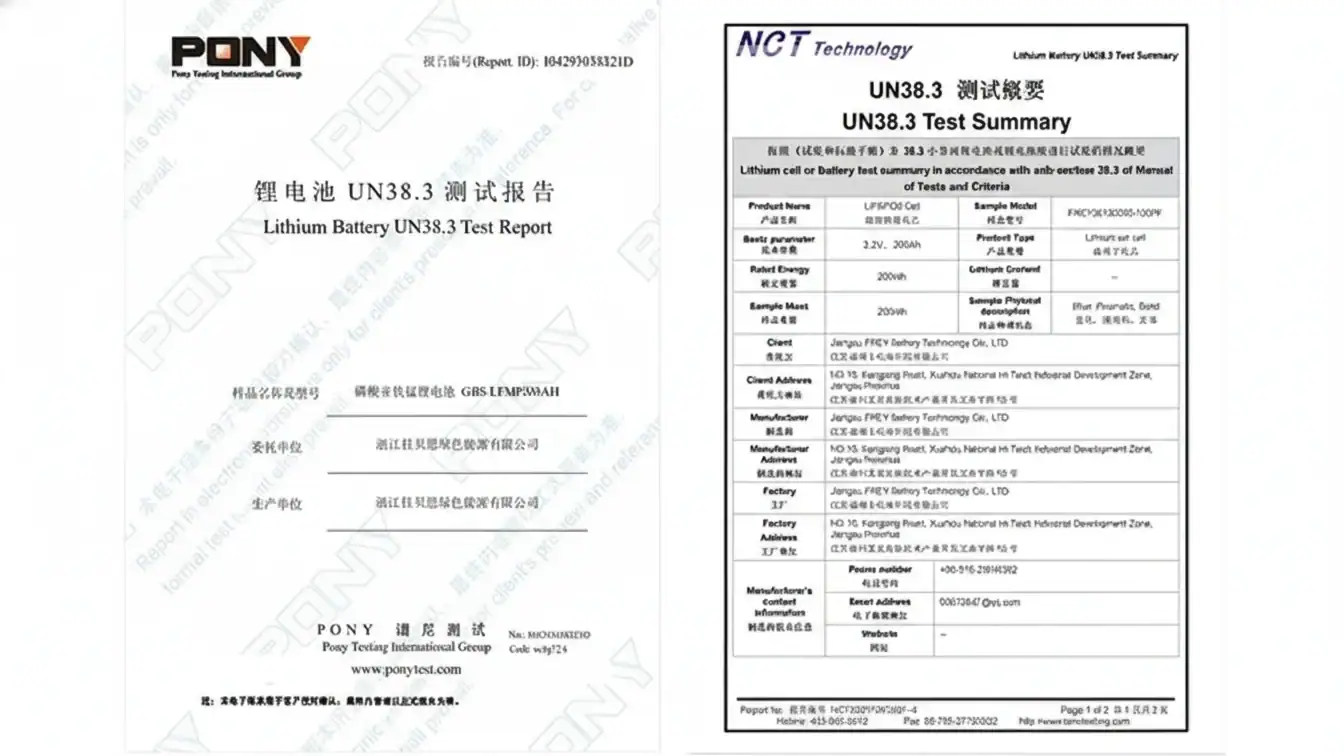
Gestión de la conformidad de los envíos de aspiradores inalámbricos
Gestionamos todo el proceso de pruebas y certificación UN38.3 para las baterías de litio de alta capacidad (2000mAh-4000mAh) utilizadas en nuestras aspiradoras inalámbricas. No se trata de una ocurrencia tardía, sino de una parte fundamental de nuestro flujo de trabajo de producción y exportación.
Esta certificación de transporte está diseñada para funcionar con nuestras certificaciones de seguridad de productos existentes, como CE, RoHS y FCC. Juntos forman un paquete completo de conformidad que garantiza que sus productos estén listos para entrar en el mercado sin fricciones normativas.
Al ocuparnos de esto por usted, nos aseguramos de que sus pedidos a granel pasen la aduana sin retrasos. También le da la flexibilidad de utilizar los métodos de envío más eficientes, incluido el transporte aéreo, manteniendo su cadena de suministro en movimiento.
Preguntas frecuentes
¿Son necesarios los informes MSDS y UN38.3 para el envío de sus aspiradoras?
Sí, tanto el informe de pruebas UN38.3 como la ficha de datos de seguridad (MSDS) son obligatorios para el envío de productos que contengan baterías de litio por vía aérea o marítima. UN3.83 certifica que la batería ha superado las rigurosas pruebas de seguridad de la ONU para el transporte, mientras que la MSDS proporciona información esencial sobre manipulación y peligros. Proporcionamos toda la documentación necesaria para garantizar una logística global conforme a las normas.
¿Cómo funciona el ‘modo de reposo profundo’ de la batería durante el transporte?
El sistema de gestión de la batería (BMS) incluye un modo de reposo profundo, un estado de baja corriente que se activa cuando la aspiradora está inactiva durante largos periodos, como durante el transporte marítimo. Esta función minimiza la autodescarga, preservando la salud de la batería y el nivel de carga para que el producto llegue listo para su uso.
¿Las pilas de sus modelos inalámbricos son extraíbles?
Sí, nuestros diseños siguen la norma del sector de utilizar baterías extraíbles. Esta característica permite a los usuarios cambiar una batería de repuesto para ampliar el tiempo de limpieza y simplifica la sustitución en el futuro, lo que aumenta la vida útil y el valor del producto.
¿Cuál es el índice C de las pilas que utiliza?
La clasificación C es una especificación de ingeniería detallada que se encuentra en las hojas de datos técnicos del fabricante de la célula de la batería y que no suele aparecer en la información general del producto. Nosotros nos centramos en parámetros de rendimiento B2B más prácticos, como el tiempo de funcionamiento, la potencia de succión (Pa) y la velocidad de carga.
¿Cómo mide Airwatts (AW) el rendimiento?
Los vatios proporcionan una medida exhaustiva del rendimiento de limpieza de una aspiradora combinando el caudal de aire (CFM) con la presión estática. A diferencia del voltaje por sí solo, esta métrica ofrece una imagen más completa de la eficiencia del motor en el mundo real. El rendimiento puede variar significativamente en función de la configuración del motor y la batería.
Reflexiones finales
Adquirir aspiradores basándose únicamente en el precio invita a la pérdida de rendimiento y a las quejas de los clientes. Nuestro sistema, que combina 21700 células con Constant Suction Logic, está diseñado para mantener toda la potencia y salvaguardar su reputación en el mercado. Así es como se consigue la confianza del distribuidor a largo plazo y se evitan costosas devoluciones.
Compruebe usted mismo las prestaciones que le ofrecemos. Solicite un kit de muestra para probar directamente nuestras baterías de aspiración de 13.000 Pa y conformes con la norma UN38.3. Nuestro equipo de ingenieros está a su disposición para estudiar sus especificaciones OEM y sus necesidades de embalaje.

 English
  Español
  Français
  Deutsch
  Português do Brasil
  Русский
  한국어
한국어  日本語
日本語  العربية