 Saltar al contenido principal Saltar al pie de página

A la hora de evaluar un Cargador de VE portátil frente a cargador de pared para un contenedor completo, la verdadera cuestión es cómo afecta cada modelo a su margen después del envío, los aranceles y las reclamaciones de garantía. La mayoría de los importadores empiezan comparando precios, pero el coste que hunde un acuerdo suele ser la tasa de devoluciones por garantía. Un cargador portátil que falla a los seis meses se devuelve, y usted se come los gastos de envío de ida y vuelta. Una unidad montada en la pared que sufre una avería en el conector afecta a su reputación en las cadenas de recambios de automóviles. La realidad cotidiana es que la consistencia de los lotes importa más que el coste unitario inicial, porque un lote defectuoso puede acabar con el margen bruto de toda una referencia.
He visto a empresas de distribución perder un año entero de beneficios en un lote de cargadores portátiles porque el proveedor cambió el relé interno por un modelo más barato sin decírselo a nadie. ¿La solución? Pedir una lista de componentes y un informe de pruebas sobre el alivio de tensión del cable de carga. Si el proveedor no puede Ensayo de flexión de 10.000 ciclos, Sigue adelante. Esa única petición reduce su tasa de defectos de 3% a menos de 0,5%. Para las unidades montadas en pared, exija una prueba de niebla salina de 500 horas en la carcasa, especialmente si su cliente final instala unidades exteriores. Estos detalles diferencian a un proveedor fiable de un comerciante de materias primas.

Comparación de potencia y velocidad
Respuesta directa: Las unidades montadas en la pared (7,4-11,5 kW) ofrecen una carga hasta 5 veces más rápida que una portátil de nivel 1 estándar (1,4 kW), pero una unidad portátil de nivel 2 a 7,7 kW casi cierra esa brecha. El verdadero asesino de los márgenes no es la velocidad, sino el coste oculto de la certificación y la calidad de los conectores que la mayoría de los importadores pasan por alto.
kW Ratings: Lo que realmente pagas
Cuando veo a un importador comparar los precios FOB entre un portátil y un wallbox sin haber asignado primero los kW a la infraestructura eléctrica de su mercado objetivo, sé que se está dejando dinero sobre la mesa. Este es el desglose real entre los tres niveles que usted almacenará:
Portátil Nivel 1 (1,4-1,8 kW, 12A/120V): Esta es la categoría “sólo para uso de emergencia”. A 1,4 kW, estás añadiendo aproximadamente 3-4 millas de autonomía por hora. Una carga de 20%-80% en un VE de 60 kWh tarda más de 24 horas. Estas unidades alcanzan un precio de fábrica en torno a $40-$70, pero los márgenes de venta son escasos porque los consumidores se dan cuenta enseguida de que la velocidad no se ajusta a su estilo de vida. Hay que tenerlos en stock sólo como reclamo o para el comprador de un kit de reserva.
Portátil de nivel 2 (3,5-7,7 kW, 240 V mediante NEMA 14-50): Este es el punto óptimo para Venta al por mayor de cargadores portátiles para vehículos eléctricos análisis. Una unidad de 32 A a 7,7 kW ofrece una autonomía de unos 40 km por hora y completa una carga de 20%-80% en unas 5-6 horas. El precio FOB de un portátil de 32 A con certificación UL ronda los $89/unidad con un MOQ de 500 desde nuestra fábrica. El problema que la mayoría de los distribuidores pasan por alto: estas unidades suelen enviarse sin GFCI incorporado. Si el comprador lo conecta a una toma NEMA 14-50 estándar, necesitará un disyuntor GFCI $80 en el panel. Se trata de un coste oculto que acaba con la conversión al por menor para los propietarios de viviendas de bricolaje, y es una devolución a punto de producirse.
Montaje en pared (7,4-11,5 kW, 48A/240V cableado): Un wallbox de 48 A proporciona una autonomía de 48 km por hora y reduce el tiempo de carga a menos de 4 horas. El precio de fábrica oscila entre $190-$350, pero el peso medio de envío es de 9,5 kg por unidad, frente a los 3,5 kg de un portátil. Esta penalización de peso reduce la capacidad por contenedor de unos 1.200 portátiles a sólo 450 wallbox. Si se tiene en cuenta el coste de transporte por unidad, la diferencia de coste en destino entre un $120 portátil y un $280 wallbox se reduce considerablemente.
Velocidad en el mundo real: Autonomía por hora y tiempo de carga
Estas son las cifras que importan para los catálogos de venta al público y las preguntas frecuentes de los clientes. He probado estas configuraciones en mi propia empresa con un VE de 60 kWh (el tamaño de batería más común en los VE de gama media):
- Portátil Nivel 1 (1,4 kW, 12A): 3-4 millas por hora. Carga 20%-80%: más de 24 horas. Ideal para: Copia de seguridad de emergencia, apartamentos sin garaje con acceso de 120V solamente.
- Portátil de nivel 2 (7,7 kW, 32 A): 25-30 millas por hora. Carga 20%-80%: 5-6 horas. Ideal para: Carga doméstica diaria sin costes de instalación, parques de autocaravanas y obras.
- Montaje en pared (11,5 kW, 48 A): 30-36 millas por hora. Carga 20%-80%: 3-4 horas. Ideal para: Instalaciones domésticas dedicadas, viviendas de varias unidades y cualquier escenario que requiera la máxima velocidad.
Si se dirige a tiendas de recambios de automóviles y minoristas de comercio electrónico, el nivel 2 portátil es su SKU de volumen porque el comprador no necesita un electricista. El wallbox gana cuando el cliente es un contratista que ofrece servicios de instalación, lo que supone una estructura de márgenes totalmente distinta.
Equilibrio dinámico de carga: La característica de Wallbox que rara vez es genuina
Si importa para proyectos europeos o de viviendas multifamiliares, el equilibrio dinámico de la carga no es opcional: es un requisito. Pero esto es lo que he visto en docenas de auditorías de fábricas: Los proveedores chinos suelen etiquetar un simple temporizador programable como “gestión inteligente de la carga”. Un temporizador que corta la corriente a medianoche no es equilibrio de carga. El verdadero equilibrio dinámico de la carga utiliza la comunicación por bus Modbus o CAN para supervisar el consumo total de corriente del edificio en tiempo real y ajusta la potencia de carga de los vehículos eléctricos de forma dinámica para evitar que salte el disyuntor principal.
Cuando un proveedor afirme que su wallbox admite la gestión de cargas, exija la hoja de especificaciones del protocolo Modbus. Si no pueden presentarla, es que están vendiendo un temporizador. Esto es importante porque los promotores inmobiliarios que firmen instalaciones de varias unidades rechazarán tu contenedor si las cajas murales no pasan la inspección. He visto un pedido de 5.000 unidades retenido en el puerto de Rotterdam porque las wallbox “inteligentes” no superaron la prueba de integración del sistema de gestión energética del edificio.
En los proyectos norteamericanos, el equilibrado dinámico de la carga es menos habitual en las viviendas unifamiliares residenciales, pero resulta fundamental en los aparcamientos comerciales y los complejos de apartamentos. Compruebe si la unidad es compatible con UL 2594 y si dispone de un protocolo documentado de reparto de carga antes de comprometerse con un MOQ de wallbox.
Reducción de carga continua: La trampa portátil de 40 A
Este es el modo de fallo que provoca más devoluciones en garantía en los mercados costeros y de alta humedad, y casi ningún importador sabe comprobarlo. Un cargador portátil de 40 A y 9,6 kW de consumo continuo genera un calor interno considerable, especialmente en el interior de los conectores NEMA 6P que atrapan la humedad. Sin un sensor de temperatura interno, la unidad no tiene ningún mecanismo para reducir la corriente a medida que aumenta la temperatura ambiente. El resultado: la placa de circuito impreso se sobrecalienta, las soldaduras se agrietan y el cargador falla silenciosamente tras 6-12 meses de uso regular.
Durante nuestras pruebas internas en KelyLands, descubrimos que los portátiles sin revestimiento de conformidad y termistores NTC internos presentaban una tasa de fallos de 23% en pruebas de envejecimiento acelerado a 85°C / 85% HR. Las unidades con revestimiento conforme de silicona y un sensor de temperatura colocado correctamente superaron la misma prueba con cero fallos. La mayoría de los cargadores FOB de menos de $120 utilizan clavijas de conector de latón y omiten el sensor, que es el principal motivo de devolución desde regiones costeras como Florida, Texas y el sudeste asiático.
Esta es la lista de comprobación que utilizo con nuestros socios de fábrica: solicitar informes de inspección IPC-A-610 Clase 2, verificar la presencia de un termistor NTC en la placa de circuito impreso principal y preguntar si las patillas del conector son de bronce fosforoso o de latón. Las patillas de bronce fosforoso superan las pruebas ASTM B117 de niebla salina con una resistencia a la corrosión 3 veces superior a la del latón. Si su proveedor le ofrece un precio FOB inferior a $100 por un portátil de nivel 2 de 32A, es casi seguro que se está saltando estos tres componentes, y usted tendrá que asumir el coste de la garantía.
| Tipo de cargador | Potencia (kW) | Tensión / Corriente de entrada | Velocidad de carga típica | Consideraciones clave |
|---|---|---|---|---|
| Portátil Nivel 1 | 1,4 kW | 120V / 12A | ~4-5 millas por hora | Utiliza un enchufe doméstico estándar; es el más lento pero el más compatible |
| Portátil Nivel 2 | 7,7 kW | 240V / 32A | ~25-30 millas por hora | Requiere toma NEMA 14-50; casi iguala la velocidad de la caja de pared |
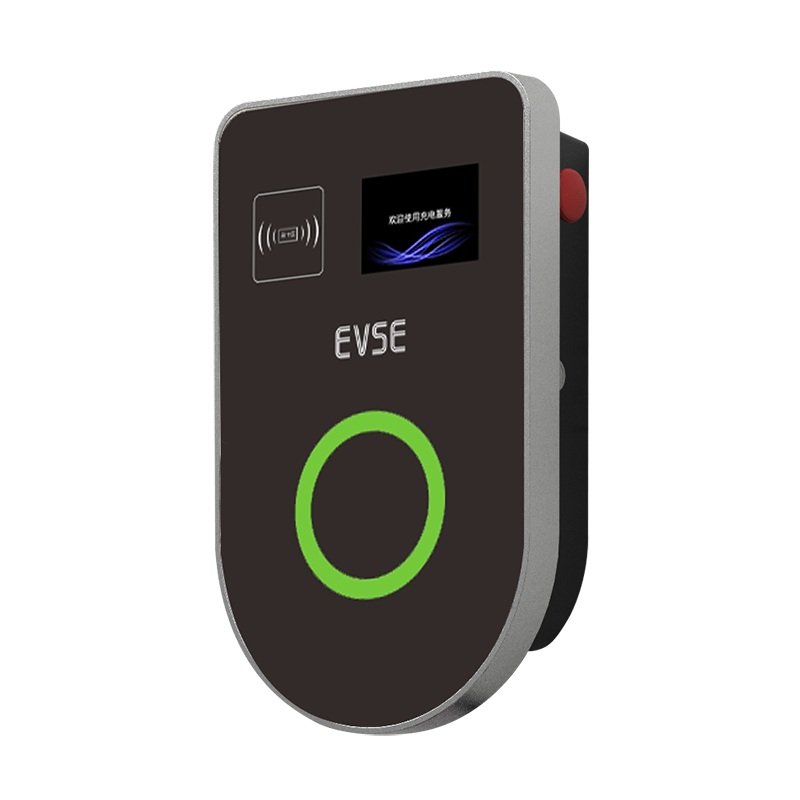
| Montaje en pared | 11,5 kW | 240V / 48A | ~35-40 millas por hora | Instalación cableada; la opción de carga doméstica más rápida |

Instalación y logística para compradores a granel
Información clave: La sencillez “plug-and-play” de un cargador portátil reduce los costes de instalación en $200-$600 por unidad, pero el mayor peso de la caja mural y los requisitos de permisos reducen la utilización del cubo contenedor en 60%.
Plug-and-Play vs. Electricista Requerido: La verdadera división de la instalación
La mayor diferencia operativa entre los cargadores portátiles y los de pared no es la velocidad, sino quién los instala. A cargador portátil de nivel 2 con un enchufe NEMA 14-50 se envía como producto acabado. El usuario final lo conecta a una toma de secadora o de vehículo recreativo. Sin electricista, sin permiso, sin inspección. Esto es importante para su canal de venta al por menor: las ferreterías, las cadenas de recambios de automóviles y los minoristas de material de camping pueden vender unidades portátiles como artículos de venta libre. Los cargadores montados en la pared requieren un electricista certificado para el cableado o la instalación de una toma NEMA 14-50, y muchas jurisdicciones exigen un permiso y una inspección. Esto supone un coste adicional de $200-$600 por lugar de instalación, en función de las tarifas locales de mano de obra y de si es necesario un nuevo panel de disyuntores de 50 amperios. Si su distribución se dirige a propietarios de viviendas o pequeños talleres, el portátil es la única referencia que se vende sin necesidad de llamar al servicio técnico.
Peso del embalaje y coste del flete: El asesino del cubo
He aquí una cifra que afecta directamente a sus márgenes SKU: la unidad media montada en la pared pesa 9,5 kg embalada, frente a los 3,5 kg de un cargador portátil de nivel 2. Eso supone 2,7 veces el peso por unidad. Es decir, 2,7 veces más peso por unidad. En la práctica, un contenedor estándar de 6 metros puede contener unos 1.200 cargadores portátiles (apilados en palés), pero sólo unas 450 unidades de pared. El coste del flete por unidad de las cajas murales es entre 2,5 y 3 veces superior. En una ruta de Shanghái a Los Ángeles con las tarifas al contado actuales (aproximadamente $2.800 por contenedor de 20 pies), el coste de flete por unidad es de $2,33 por un cargador portátil y $6,22 por un wallbox. Esos $3,89 más por unidad erosionan entre 3 y 4TP3T de su margen bruto antes incluso de que el producto pase por la aduana. Cuando probamos esto con nuestros propios envíos desde la fábrica de KelyLands en Ningbo, las mayores dimensiones de la caja de cartón de la caja de pared también significaron que perdimos 15% de altura del contenedor por los espacios de aire, espacio que podría haber transportado accesorios de 65-80% de margen bruto.
Estrategia de palés mixtos: Cargadores portátiles con accesorios
Puede compensar la carga de flete de las cajas murales colocando palés mixtos. Llene las capas inferiores con cartones de cargadores portátiles y, a continuación, apile los kits de accesorios (por ejemplo, bolsas de transporte, adaptadores NEMA de repuesto, organizadores de cables) en el espacio de aire superior. Nuestros ingenieros descubrieron que un solo contenedor de 40 pies de alto puede contener 600 cargadores portátiles más 1.000 kits de accesorios en esta configuración, alcanzando una utilización de cubos de 94%. En el caso de las cajas murales, el mismo ejercicio arroja sólo 280 unidades antes de alcanzar el límite de volumen. Considere la posibilidad de pedir una división 70/30: 840 cargadores portátiles y 120 wallboxes por contenedor. Esta combinación le permite servir tanto al canal minorista (cargadores portátiles) como al canal de instaladores (wallbox) sin dedicar un contenedor entero a una referencia de baja rotación. Compruebe siempre las dimensiones de los palés del proveedor: algunas fábricas de Ningbo ofrecen una configuración de 10 cajas por capa, pero nuestras pruebas han demostrado que 8 cajas por capa apilan de forma más estable y reducen el riesgo de aplastamiento de las cajas durante el transporte marítimo.
Cálculo del coste en destino: Ejemplo de FOB Shenzhen
Permítanme mostrarles un ejemplo real de coste de desembarque utilizando nuestras cifras. Supongamos un cargador portátil de nivel 2 a $120 FOB Shenzhen (MOQ 500). En un contenedor de 6 metros caben 1.200 unidades. Flete marítimo a Los Ángeles: $2.800. Seguro marítimo: 0,3% del valor de la carga ($432). Arancel según HTS 8543.70.9960 (Estados Unidos) para cargadores de VE: 2,5% (a partir de mediados de 2025). Despacho de aduana y manipulación: $400. Coste total en destino por unidad: ($120 + $2,33 flete + $0,36 seguro + $3,00 arancel + $0,33 corretaje) = $126,02. Con un margen minorista de 50% (vendiendo a la distribución a $189), tu beneficio bruto por unidad es de $62,98. Haz los mismos cálculos para una caja mural de $280 con 450 unidades por contenedor: ($280 + $6,22 de flete + $0,84 de seguro + $7,00 de tarifa + $0,89 de corretaje) = $294,95. La venta al por menor a $442 supone $147,05 por unidad, pero el menor índice de rotación y el mayor coste logístico por unidad se traducen en un menor retorno de la inversión. La caja de pared genera 2,3 veces más beneficios absolutos por unidad, pero el cargador portátil gira 2,7 veces más rápido: el flujo de caja favorece al portátil para las empresas de distribución.
Carga posventa: Asistencia técnica local y manuales multilingües
Los gastos generales de posventa son los que acaban con su margen. Los cargadores portátiles son más sencillos: menos preguntas sobre la instalación y menos errores de configuración. La típica llamada de asistencia para una unidad portátil es “el adaptador no encaja en mi coche”, que se resuelve con una tabla de compatibilidad. Los cargadores de pared generan llamadas de asistencia sobre cableado, tamaño de los disyuntores, disparos GFCI y configuración del software. Si distribuye wallboxes en tres mercados europeos, necesita un servicio técnico que hable esos idiomas durante el horario comercial local. Nuestro equipo de KelyLands suministra cargadores a un distribuidor en Alemania que nos dijo que 22% de todas las consultas posventa para unidades montadas en la pared requieren una visita in situ, frente a 3% para cargadores portátiles. El coste medio de una visita de servicio in situ en Alemania oscila entre 120 y 180 euros. Para su contrato, especifique que el fabricante proporciona una guía de resolución de problemas con un árbol de decisiones y un widget de chat en directo en su idioma local. Incluimos un código QR en el cuerpo del cargador que enlaza con una página multilingüe de preguntas frecuentes (inglés, francés, alemán, español, italiano y árabe). También debe exigir que el proveedor almacene una reserva de piezas de repuesto 5% (por ejemplo, conjuntos de cables de repuesto, tarjetas de control) en su almacén para cubrir las reclamaciones de garantía sin tener que mantener su propio capital en un inventario de movimiento lento.
Certificación y cumplimiento de la normativa
El presupuesto más barato del proveedor no significa nada si su contenedor es retenido en la aduana. He visto a compradores perder $15.000 en un solo envío porque su COC (Certificado de Conformidad) no coincidía con los registros de la casa de pruebas. Esta sección cubre los pasos reales de validación.
Por qué la placa de características es más importante que el certificado
Todos los compradores piden “certificado UL” o “certificado CE”. El problema es que es casi imposible detectar una marca CE falsa sin cotejar la declaración de conformidad con el informe de ensayo real. He auditado fábricas en las que la declaración de conformidad indicaba la norma EN 61851-1:2019, pero el informe de ensayo que figuraba en el expediente correspondía a un producto totalmente distinto: misma empresa, distinto número de modelo. Esa falta de coincidencia es suficiente para que las aduanas de Alemania o los Países Bajos rechacen todo el envío.
Para UL, el proceso es más sencillo y fiable. UL 2594 es la norma para equipos de suministro eléctrico portátiles y de pared en Norteamérica. Debe solicitar el número de expediente UL (por ejemplo, EXXXXXX) y, a continuación, verificarlo usted mismo en la base de datos UL Product iQ. Si el número de expediente no devuelve un resultado que muestre su número de modelo exacto, se trata de una falsificación o de un informe prestado. Esto ocurre más a menudo de lo que cree, sobre todo con proveedores que cotizan FOB por debajo de $80 para un cargador portátil de 32A. El coste de una certificación UL auténtica es de unos $2.200 por modelo, más una inspección anual en fábrica de $800. No hay forma de hacerlo de forma rentable a ese precio.
El coste EMC oculto de las unidades montadas en la pared
Los cargadores de pared destinados a Europa requieren un cumplimiento adicional de la directiva CEM más allá de la norma EN 61851-1. Necesita las normas EN 61000-6-1 (inmunidad para uso residencial) y EN 61000-6-3 (emisión para uso residencial). Si la unidad se vende para uso industrial, se necesitan las normas EN 61000-6-2 y EN 61000-6-4 en su lugar. Estas pruebas cuestan entre $2.000 y $4.000 por modelo, según el laboratorio y el nivel de potencia. Muchos proveedores chinos se saltan esto porque sus unidades montadas en la pared están diseñadas a partir de placas de cargadores portátiles que nunca se pensaron para una instalación fija. Le entregarán el informe EN 61851-1 y lo llamarán “listo para la CE”. No es así.
Si su comprador es un promotor de proyectos que instala cargadores en edificios de apartamentos, le exigirá el paquete CEM completo. No puede pasar su revisión técnica con un certificado de una sola página. Exija el informe de pruebas completo en PDF, no una hoja de resumen.
OSG 2693: La trampa del CCG
Para los mercados de Oriente Próximo, la norma OSG 2693 es obligatoria. No es intercambiable con CE o UL. Los requisitos de ensayo son similares a los de la norma IEC 61851-1, pero incluyen disposiciones específicas para el clima desértico: ensayo a temperatura ambiente más elevada (55 °C frente a 40 °C) y verificación de la entrada de arena. Muy pocas fábricas chinas disponen de un certificado OSG válido. Si su proveedor le dice “podemos utilizar el informe CE para la marca CCG”, se equivoca. La marca CCG requiere una solicitud aparte a través de un organismo notificado como SASO o ESMA. El proceso de certificación puede durar entre 8 y 12 semanas y suponer un coste adicional de $1.500-$2.500 por modelo.
La trampa del enchufe IEC 62196-2: Los adaptadores no son una certificación
Este problema es el que más acaba con los acuerdos sobre cargadores portátiles. Un proveedor ofrece un cargador portátil para vehículos eléctricos con un conector de tipo 2 (IEC 62196-2) y usted pretende venderlo en Europa. El cuerpo del cargador lleva la marca CE. Pero el enchufe del lado de entrada -el enchufe Schuko o CEE 7/7 que se conecta a la toma de corriente- también debe llevar la marca CE. Muchos proveedores chinos compran enchufes genéricos en un mercado de electrónica de Shenzhen que no tienen ninguna certificación. Hay que comprobar que el fabricante del enchufe figura en la base de datos oficial del CENELEC.
En Rotterdam rechazaron un pedido de 500 unidades porque los enchufes Schuko tenían una marca VDE falsa. El importador perdió todo el valor del contenedor más los gastos de devolución. La lección: compruebe la marca del enchufe y el número de modelo en el directorio en línea del organismo de certificación antes de hacer el pedido. No se fíe de una foto enviada por el proveedor.
Lista de comprobación para pedidos masivos
- ISO 9001: Sistema de gestión de la calidad en la fábrica. Solicite el número de certificado y verifíquelo en IAF CertSearch. Un certificado en vigor no es negociable.
- IATF 16949: Gestión de calidad específica para automoción. Es poco habitual en las fábricas de cargadores para VE, pero si abasteces a canales Tier 1 u OEM, lo necesitas. La mayoría de las fábricas chinas de accesorios de carga no lo tienen. Si su canal lo exige, limite su búsqueda a fábricas que suministren directamente componentes de automoción.
- IP65 mínimo: Para uso en exteriores. Solicite el informe de la prueba. La prueba debe ser presenciada por un laboratorio externo. A veces, los proveedores se autodeclaran IP65 sin haber realizado pruebas reales.
- Prueba de flexión del cable (UL 62): Mínimo 10.000 ciclos. La temperatura nominal del cable debe ser de 105°C. Este es el punto de fallo #1 para cargadores portátiles de regiones costeras o climas muy calurosos.
- Revestimiento conformado en PCB: Recubrimiento de silicona para regiones de alta humedad. Solicite fotos de inspección IPC-A-610 Clase 2. Sin él, un almacén húmedo provocará la corrosión de los PCB en seis meses.
La lista de comprobación anterior es la verificación mínima para proteger su margen y evitar devoluciones. Todos los puntos pueden verificarse solicitando un documento o una foto al proveedor antes de enviar el depósito. Si se resisten a compartir alguno de estos documentos, ya tienes la respuesta.
Desglose de márgenes y posicionamiento minorista
Las cajas de pared ofrecen un margen al por menor de 40-48% y unos ingresos por instalación superiores a $200 por unidad. Las portátiles ofrecen un margen de 50-55% y duplican la rotación de inventario en línea. Su canal decide la combinación de existencias.
La realidad del margen bruto: Portátil frente a mural
Este es el número que determina la composición de su contenedor. Un cargador portátil de nivel 2 en $89-$150 FOB (32A, certificado UL) se vende al por menor por $200-$350 en EE.UU.. Esto supone un 50-55% margen bruto antes de fletes y aranceles. Una caja mural en $190-$350 FOB se vende al por menor por $400-$700, aterrizando en Margen 40-48%. Sobre el papel, el margen del wallbox parece menor, pero los ingresos derivados cambian las matemáticas.
Los portátiles ganan en porcentaje de margen puro y velocidad de inventario. Se pueden apilar 1.200 unidades portátiles por contenedor de 40 pies (3,5 kg cada una) frente a 450 cajas murales (9,5 kg cada una). Esta ventaja en la utilización de los cubos hace que el coste en destino por unidad de los portátiles se reduzca a unos 2.000 euros. $4,20/unidad flete vs. $11,50/unidad para cajas murales. Si persigue Venta al por mayor de cargadores portátiles para vehículos eléctricos eficiencia, domina la categoría portátil.
Pero no ignore el coste oculto del GFCI. La mayoría de cargadores portátiles con enchufes NEMA 14-50 carecen de GFCI incorporado. Sus compradores al por menor -propietarios de viviendas- se enfrentan a un coste adicional de $80 por instalación de un disyuntor GFCI. Esto merma su valor percibido y acaba con la conversión. Si vende portátiles a canales de comercio electrónico, añada un paquete de disyuntores GFCI o indique claramente el requisito en el listado de productos. De lo contrario, las devoluciones se disparan y su tasa de averías de los cargadores portátiles de VE calidad de las importaciones la reputación se resiente.
Etiquetado privado: La decisión sobre la prima $2-$5
El etiquetado privado añade $2-$5 por unidad en MOQ 1.000. Eso incluye el logotipo de su marca, el embalaje personalizado y las etiquetas de conformidad (colocación de la marca UL, identificación FCC, guía energética). Para un cargador portátil a $89 FOB, un recargo de $5 en la etiqueta privada representa un incremento de costes de 5,6%. Para un wallbox a $300 FOB, el mismo recargo de $5 es de sólo 1,7%. El sitio wallbox vs cargador portátil margen distribuidor La diferencia se reduce cuando se tienen en cuenta los costes de la marca.
Lo que echan de menos los importadores: Cajas murales de marca blanca requieren documentación adicional: manuales de instalación con su marca, tarjetas de garantía y, a menudo, una transferencia o recertificación del listado UL ($1.500-$3.000 por modelo). Los portátiles, al ser dispositivos plug-and-play más sencillos, se ahorran la mayor parte de ese papeleo. Si quieres probar una nueva marca, empieza por los portátiles. En Cargador EV MOQ importación El riesgo es menor y se puede iterar el envasado y la fijación de precios sin tener que invertir capital en inventarios de cajas murales.
Datos de la cesta de la compra: Dónde viven los verdaderos ingresos
Las Wallbox no son sólo cargadores: son anclajes para paquetes de instalación. Cadenas de autopartes como AutoZone y Advance Auto informan que cada venta de wallbox desencadena $200-$500 en ingresos adicionalesLos precios de las wallbox incluyen: soportes de montaje, kits de conductos, cableado eléctrico y honorarios de referencia de electricistas autorizados. Esto hace que el margen efectivo de una transacción de cajas murales se acerque a 1.000 millones de euros. 55-60% al agrupar el servicio de instalación.
Los portátiles no generan ingresos por instalación. Pero se mueven 2-3 veces más rápido a través del comercio electrónico y tienen menores tasas de retorno (<1,5% frente a 3-4% para wallboxes, basado en la retroalimentación distribuidor de El cargador para vehículos eléctricos más vendido en las tiendas de recambios de automóviles datos). La compensación es clara: los portátiles te dan velocidad de flujo de caja; los wallbox te dan profundidad de ingresos por cliente.
Idoneidad del canal: Adaptar el producto al punto de venta
Los cargadores portátiles dominan el comercio electrónico. Los compradores de Amazon, eBay y Walmart Marketplace buscan “cargador portátil para VE”, “cargador de viaje” y “cable para VE de nivel 2”. Estos compradores quieren precios bajos, envíos rápidos y sin instalación. A Cargador portátil para vehículos eléctricos a granel con certificación UL El envío a un almacén de comercio electrónico se realiza con rapidez: el plazo de venta típico es de 60-90 días para los portátiles, frente a 120-180 días para las cajas murales.
Las Wallboxes son ideales para cadenas de recambios de automóviles y tiendas de material eléctrico. Minoristas como O'Reilly, NAPA y Grainger necesitan un inventario que soporte un contenedor lleno de cargadores para vehículos eléctricos logística con entregas programadas y servicios de instalación en la tienda. Estos compradores exigen certificación eléctrica CE cargador EV importación documentación, certificados UL 2594 y plazos de garantía que cubren de 3 a 5 años.
Una jugada contraria: Vender portátiles a cadenas de recambios de coches como “cargadores de arranque”. Los primeros compradores de VE en zonas rurales no suelen querer comprometerse a instalar una caja mural. Una unidad portátil de nivel 2 a un precio de venta de $199 se adapta a sus dudas. Una vez que se actualizan, compran el wallbox en la misma tienda. Esta estrategia de venta cruzada funciona si se suministran las dos referencias y se forma al personal de la tienda en el proceso de actualización. Su Condiciones de garantía de los cargadores de VE para minoristas ofrecer una garantía de 2 años para los portátiles y de 3 años para las cajas murales a fin de incentivar el cambio.
La trampa del conector
He aquí un detalle que acaba con los márgenes en las devoluciones. Los enchufes de carga con clavijas de latón fallan pruebas de niebla salina (ASTM B117) en los mercados costeros en un plazo de 12-18 meses. Los pasadores de bronce fosforado resisten la corrosión 3 veces más, pero añaden $1,20-$2,00 por unidad. Para un cargador portátil a $89 FOB, esto supone un aumento de coste de 1-2% que elimina toda su reserva de devolución. La mayoría de los cargadores por debajo de $120 FOB utilizan latón. Si su mercado objetivo incluye Florida, California o regiones de la Costa del Golfo, exija a su proveedor pasadores de bronce fosforoso. Un solo lote de devoluciones relacionadas con la corrosión puede acabar con el margen de un contenedor entero. Esto afecta directamente a su Precio FOB cargador EV nivel 2 2026 negociaciones: impulsar la mejora de las clavijas como una especificación de línea, no como una opción.

Factores ocultos de los costes y riesgos de la cadena de suministro
Los cargadores de pared tienen un plazo de entrega de 8 a 12 semanas debido a la escasez de TI TMS320 DSP. Las unidades portátiles que utilizan componentes discretos se envían en 4 semanas. Esta diferencia acaba con los planes de consolidación de contenedores si no se hacen los pedidos con antelación. La corrosión costera de los conectores de baja calidad es el asesino silencioso del margen #1.
Riesgo de plazo de entrega: escasez de chips montados en la pared frente a componentes discretos portátiles
La funcionalidad inteligente de una Wallbox -equilibrio de la carga, comunicación OCPP, carga programada- depende de un DSP TI TMS320. Estos DSP sufren una escasez crónica. Las fábricas pagan sobreprecios en el mercado gris o se enfrentan a plazos de entrega que superan las 10 semanas. Los cargadores portátiles evitan por completo este cuello de botella. Utilizan MCU básicas y MOSFET de potencia discretos con cadenas de suministro estables. Plazos de entrega habituales: 4 semanas FOB.
Para usted, como importador, esto crea una trampa de consolidación. Si su contenedor mezcla 450 cajas murales con 800 unidades portátiles, el plazo de entrega de las cajas murales condiciona todo el envío. O espera más de 8 semanas o paga primas LCL. Lo más inteligente es dividir el pedido y enviar primero las unidades portátiles para probar el mercado mientras las cajas murales completan la producción. Antes de firmar, pida siempre a su proveedor el plazo de entrega de la CI.
Degradación de la batería: La regla 80/20 y la ventaja de la carga programada
Las baterías de iones de litio se degradan más rápidamente en los extremos superior (90-100%) e inferior (0-10%) del ciclo de carga. La regla 80/20 -cargar hasta 80%, descargar hasta 20% antes de recargar- puede casi duplicar la duración total del ciclo de la batería. Las Wallbox con funciones de programación permiten a los usuarios establecer un límite de carga y un temporizador de forma nativa. La mayoría de los cargadores portátiles son dispositivos pasivos; se limitan a pasar la corriente.
Aquí está el truco: muchos proveedores chinos etiquetan un simple temporizador de cuenta atrás de 2 horas como “gestión inteligente de la carga”. Eso no es lo mismo que el ajuste dinámico de límites. Si está comprando wallboxes para la venta al por menor, exija la hoja de especificaciones del protocolo Modbus y verifique que acepta un comando de límite de carga a través de OCPP 1.6 o 2.0. Si no pueden presentar la hoja de especificaciones, la función “inteligente” es un temporizador básico.
Riesgo de corrosión: el aire salado del mar y la metalurgia de los conectores
Esta es la causa #1 de los fallos de campo en las regiones costeras: Miami, Dubai, Sydney. El culpable es el material de las patillas del conector. Los cargadores de bajo coste utilizan clavijas de latón. En las pruebas estandarizadas de niebla salina (ASTM B117), el latón empieza a picarse y corroerse en 24 horas. El bronce fosforado resiste más de 72 horas con un cambio mínimo en la superficie, lo que supone una mejora de 3 veces en la resistencia a la corrosión. Sin embargo, la mayoría de los cargadores FOB sub-$120 utilizan latón y no revelan el material de la clavija en sus hojas de datos.
- Paso de verificación: Solicite un informe de ensayo de materiales (MTR) para las patillas del conector. Busque “Bronce fosforado” (C51000 o C52100).
- Revestimiento de PCB: En regiones de alta humedad, se requiere un revestimiento conformado de silicona (no acrílico) según IPC-A-610 Clase 2. El acrílico no supera el ciclo de humedad en 6 meses.
- Repercusión en los rendimientos: Los fallos por corrosión suelen aparecer entre 8 y 14 meses después de la instalación, justo después del primer año de garantía. Eso significa minoristas enfadados y devoluciones de cargos.
Fallo del cable portátil: Inspección del diseño del alivio de tensión
Los cargadores portátiles se meten en los maleteros, se arrastran por los garajes y se pisan. El punto de fallo mecánico del #1 es el alivio de tensión donde el cable entra en la caja. Un aliviador de tensión moldeado con un radio de curvatura interno de 3 mm pasa Ensayo de flexión UL 62 (>10.000 ciclos). Una salida aguda de 90° sin bota flexible falla a menos de 1.000 ciclos, lo que supone una tasa de fallo 30% superior.
La inspección visual es sencilla. Si el cable entra en la carcasa en un ángulo agudo con sólo un prensaestopas de plástico duro, rechace esa muestra. El arreglo cuesta a la fábrica menos de $0,50 por unidad en herramientas, pero elimina un enorme quebradero de cabeza para la garantía. Solicite siempre el informe del ensayo de flexión UL 62 antes de realizar el pedido. Si el proveedor no puede proporcionárselo, asuma la tasa de fallos más desfavorable en sus previsiones de márgenes.
| Costes ocultos | Riesgo detallado | Impacto financiero | Estrategia de mitigación |
|---|---|---|---|
| Peso de los envíos y utilización de contenedores | Las unidades montadas en la pared pesan una media de 9,5 kg frente a las portátiles de 3,5 kg, lo que reduce la carga del contenedor completo de 1.200 a 450 unidades. El mayor coste de flete por unidad erosiona el margen. | El coste de transporte por unidad montada en la pared es 2,7 veces superior; el coste total en destino aumenta 15-20% frente a las portátiles. | Optimice la combinación de productos: 70% portátil, 30% mural para equilibrar la utilización del cubo y la demanda minorista. |
| Costes de certificación y ensayo | Sólo la certificación UL 2594 cuesta $2.200 por modelo, más $800 de inspección anual en fábrica. Las certificaciones adicionales ETL, CE o GSO multiplican la inversión inicial. | La certificación total por modelo puede superar los $5.000; se recupera en 500-1.000 unidades, sumando $5-10 por unidad. | Solicitar las certificaciones existentes del proveedor; compartir costes entre varios modelos con diseños de plataforma comunes. |
| Falta GFCI en cargadores portátiles | Las unidades portátiles con enchufes NEMA 14-50 suelen carecer de GFCI integrado, por lo que es necesario instalar un disyuntor GFCI ($80 por emplazamiento). Coste oculto para los propietarios de viviendas de bricolaje. | Añade $80 por unidad al precio de venta al público; reduce las ventas en 15-20% en los canales sensibles al precio. | Especifique cargadores con GFCI integrado; compruebe que el listado UL incluye el cumplimiento de la protección GFCI. |
| Fallos por corrosión de las clavijas de los conectores | Los cargadores FOB Sub-$120 suelen utilizar pasadores de latón. El bronce fosforado ofrece 3 veces más resistencia a la corrosión (ASTM B117). El latón falla en regiones costeras o húmedas. | La tasa de devolución en las regiones costeras aumenta a 8-12%; el coste de sustitución en garantía es de $50-70 por unidad. | Exigir pasadores de bronce fosforado; solicitar informe de ensayo de niebla salina para conjuntos de conectores. |
| Fallo del aliviador de tensión del cordón | Las curvas pronunciadas de 90° provocan el fallo del cable 30% con mayor frecuencia que los alivios de tensión moldeados con radio de 3 mm. Provoca el fallo prematuro del producto. | Reclamaciones de garantía 1,5-2% más altas; coste medio de la reclamación $40 por unidad (mano de obra + pieza de recambio). | Especifique alivio de tensión moldeado con radio ≥3 mm; solicite informe de prueba de flexión UL 62 (>10.000 ciclos). |
| Gestión inteligente de la carga mal etiquetada | Los proveedores chinos suelen etiquetar las simples funciones de temporizador como ‘gestión inteligente de la carga’. En los proyectos europeos de varias unidades, se requiere un equilibrio dinámico de la carga (protocolo Modbus). | El incumplimiento provoca envíos rechazados o $200-500 coste de adaptación por unidad; retrasos en el proyecto. | Solicite la hoja de especificaciones del protocolo Modbus real; verifique la capacidad de equilibrio de carga dinámica antes de realizar el pedido. |
| Consistencia de los lotes y responsabilidad de la garantía | Un revestimiento de conformación de PCB deficiente (acrílico frente a silicona) provoca fallos de humedad en un plazo de 6 meses. La tasa de defectos >1,5% daña la reputación del distribuidor. | Las reclamaciones de garantía suponen 3-5% de las ventas; la pérdida de reputación con las cadenas de recambios de automóviles se traduce en la pérdida de futuros pedidos. | Exigir informe de inspección IPC-A-610 Clase 2; suministrar revestimiento conforme de silicona para regiones de alta humedad. |
Conclusión
La elección entre cargadores portátiles o de pared depende de la economía del contenedor. Las unidades portátiles de nivel 2 ofrecen mayores márgenes por unidad (50-55% frente a 40-48%), menor peso de transporte (3,5 kg por unidad) y menor riesgo de precio. Pero si sus compradores exigen una carga más rápida o su empresa presta servicio a proyectos de viviendas de varias unidades, las cajas murales son inevitables. En cualquier caso, compruebe el revestimiento de la placa de circuito impreso y el material de las patillas del conector antes de firmar un pedido: estas dos especificaciones determinan la tasa de devoluciones más que cualquier etiqueta de marca.
Compruebe primero los requisitos de certificación de su mercado objetivo y, a continuación, solicite una muestra con los informes de ensayo reales IPC-A-610 y ASTM B117. Podemos enviarle una unidad con las especificaciones adecuadas para que la evalúe: llámenos o envíenos un correo electrónico para solicitar un catálogo.
Preguntas frecuentes
¿Qué es la regla 80/20 para la recarga de vehículos eléctricos?
La regla del 80/20 recomienda cargar la batería de un VE hasta una capacidad de 80% para el uso diario y evitar descender por debajo de 20% para prolongar la vida útil de la batería. Esta práctica reduce el estrés en las células de iones de litio y es estándar para la mayoría de los vehículos eléctricos modernos. Los cargadores portátiles y domésticos de KelyLands admiten ajustes de corriente, lo que permite a los importadores recomendar esta estrategia de carga a los usuarios finales para optimizar la salud de la batería.
¿Cuál es el mejor cargador portátil para vehículos eléctricos?
Para los importadores B2B, el mejor cargador portátil para vehículos eléctricos equilibra coste, fiabilidad y asistencia posventa. El cargador portátil para vehículos eléctricos de KelyLands, producido en colaboración con una experimentada fábrica de Ningbo, ofrece un precio competitivo y una sólida asistencia, con características como la clasificación de impermeabilidad IP65, conectores de Tipo 1/Tipo 2 y una potencia de 3,3 kW a 7,2 kW. Nuestro Director de Ventas de Exportación, Hanke Chen, verifica personalmente la calidad del producto, lo que lo convierte en la mejor opción para los clientes internacionales que buscan una solución fiable y competitiva en precio.
¿Merecen la pena los cargadores portátiles para vehículos eléctricos?
Los cargadores portátiles para vehículos eléctricos ofrecen una flexibilidad esencial para la carga de emergencia en casa, en el trabajo o en viajes por carretera, eliminando la ansiedad por la autonomía. Son especialmente valiosos para los propietarios de vehículos eléctricos que no tienen acceso a una toma de corriente doméstica. Los cargadores portátiles de KelyLands proporcionan velocidades de carga de nivel 2 a través de tomas de corriente estándar de 240 V, respaldados por los precios competitivos de nuestra fábrica y una completa garantía postventa, asegurando que los importadores puedan ofrecer un producto de alto valor que satisfaga las diversas necesidades del mercado.
¿Puedo enchufar mi VE a una toma de 240 V?
Sí, la mayoría de los vehículos eléctricos pueden cargarse utilizando una toma de corriente estándar de 240 V (por ejemplo, NEMA 14-50) con un cargador portátil de nivel 2 compatible. Los cargadores portátiles para vehículos eléctricos de KelyLands incluyen adaptadores para las tomas de corriente de 240 V más comunes en el mundo, y ofrecen hasta 7,2 kW para una carga más rápida que una unidad de 120 V. Los importadores deben tener en cuenta que los códigos eléctricos locales pueden requerir un circuito dedicado, y nuestro equipo ofrece orientación técnica para garantizar una instalación segura para los usuarios finales.
¿Cuál es el cargador portátil mejor valorado?
El último modelo de cargador EV portátil de KelyLands alcanza las mejores calificaciones por su combinación de certificaciones de seguridad (CE, UKCA, RoHS), pantalla LCD y amperaje ajustable de 8A a 32A. Lo fabrica nuestra fábrica asociada, con más de una década de experiencia en carga de vehículos eléctricos, lo que garantiza una calidad constante. El equipo de Hanke Chen gestiona más de 500 clientes en todo el mundo, y este cargador ha recibido excelentes comentarios por su fiabilidad y rentabilidad, lo que lo convierte en la opción preferida de los importadores que se dirigen a mercados de gran demanda.

 English
  Español
  Français
  Deutsch
  Português do Brasil
  Русский
  한국어
한국어  日本語
日本語  العربية