 Saltar al contenido principal Saltar al pie de página

Selecting the right high-pressure sports ball pump directly impacts equipment budgets and team readiness. Inexpensive models built with direct-connect plastic needles are a primary source of failure, causing snapped components and significant downtime. This forces club buyers into frequent re-purchasing cycles, eroding operational funds that could be invested elsewhere.
This analysis provides a technical breakdown of the components that define a durable team pump. We evaluate designs against key engineering standards: the double-action mechanism for inflation speed, stainless steel needles to prevent corrosion, and flexible hoses that absorb the stress responsible for nearly all common failures.
Double Action Mechanics: How Does Pumping on Both Push and Pull Strokes Double Speed?
A double-action pump forces air into an object during both push and pull strokes. This continuous airflow effectively doubles the output and cuts inflation time in half.
| Mecanismo | Single-Action Pump | Double-Action Pump |
|---|---|---|
| Inflation Stroke | Push Stroke Only | Push & Pull Strokes |
| Return Stroke | Idle (No Airflow) | Active (Inflating) |
| Airflow per Cycle | Intermittent | Continuous |
| Overall Speed | Estándar | Approximately 2x Faster |
The Core Principle: Generating Pressure on Both Strokes
A double-action system generates air pressure during both the downstroke (push) and the upstroke (pull). This is fundamentally different from a single-action pump, which only moves air on the downstroke. The pull motion on a single-action pump is an idle return stroke that does no work. By moving air twice in one full cycle, a double-action pump delivers a much more continuous and efficient airflow.
The Efficiency Advantage: Halving Inflation Time
The practical benefit is speed. The pump accomplishes twice the work for every full cycle compared to a single-action design. This means an operator can hit their target pressure with significantly fewer handle movements. This reduction in strokes directly cuts down the total time and physical effort needed for inflation.
Needle Durability: Why Is Aluminum Housing Superior to Plastic?
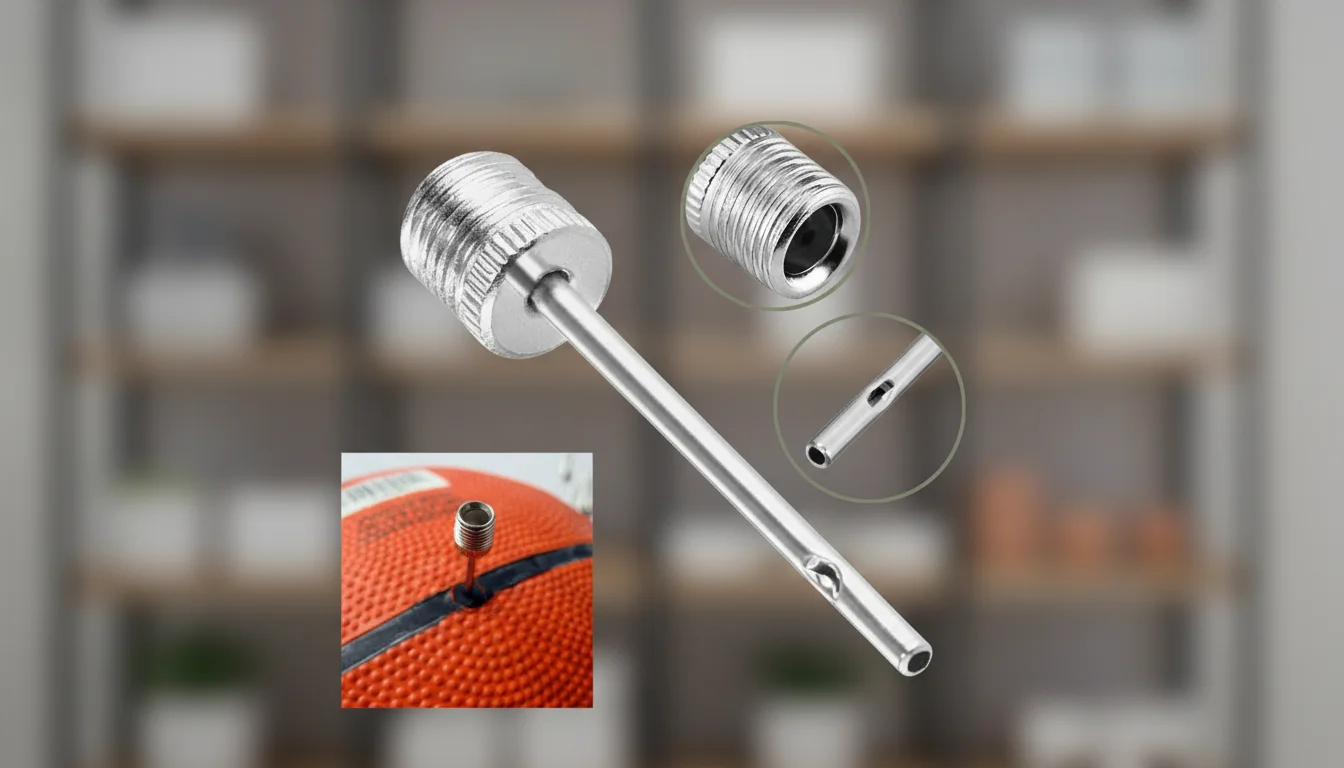
While metal needles offer better rigidity than plastic, stainless steel is the superior material. Aluminum corrodes, but stainless steel resists bending and corrosion, making it the professional standard.
Common Failure Points in Plastic and Aluminum Needles
Plastic needles just don’t hold up. They are known to crack and warp when exposed to the repeated pressure and temperature changes of inflation. Aluminum seems like a step up, but it brings its own set of issues. The material is prone to corrosion and can bend or snap without much force, making it unreliable for frequent, heavy-duty applications.
The Professional Standard: Durability of Stainless Steel
For any application demanding reliability, stainless steel is the correct choice. It provides strong resistance to both physical bending and chemical corrosion, ensuring a much longer operational lifespan. It is recognized as the most suitable material for frequent use, outperforming plastic, aluminum, and even brass in tough conditions.
Build Your Brand with Premium OEM Ball Pumps

Ergonomics: Does the Handle Grip Prevent Slipping with Wet/Muddy Hands?
Yes, a well-designed grip reduces slipping. Success depends on aggressive tread patterns that channel away moisture and soft rubber compounds that provide better adhesion on wet surfaces.
The Role of Tread Pattern and Material in Grip
Aggressive tread patterns and textured surfaces are the main defense against slipping. These features are designed to channel away moisture and debris, maintaining direct contact between the hand and the grip. The material itself is just as critical. Softer rubber compounds and specialized gel padding provide superior anti-slip control in wet environments by creating a tackier, more adhesive surface.
Durable Housing for a Consistently Firm Hold
The grip doesn’t work in isolation. The handle is integrated into a durable ABS housing, giving the tool a solid and reliable structure. This sturdy construction ensures the handle does not flex or deform, even when you apply significant force. This allows you to maintain a secure hold without worrying about the tool’s integrity.
Hose vs. Direct: Why Do Flexible Hoses Prevent 90% of Needle Snaps?
A flexible hose absorbs the angular stress from pumping. This prevents direct force transfer to the needle’s base, stopping the metal fatigue that causes it to snap.
The Mechanics of Needle Failure: Direct Pumping Stress
When an inflation needle attaches directly to a pump body, it’s a recipe for failure. Every pump stroke transfers the full compressive and side-to-side force straight into the needle. The real problem is the uneven hand pressure during fast pumping, which creates significant angular stress right at the needle’s base—its weakest point.
This repeated mechanical stress isn’t a single event. It’s a cumulative process that causes metal fatigue. Eventually, the metal weakens and the needle either bends or snaps clean off inside the ball’s valve, creating a bigger problem.
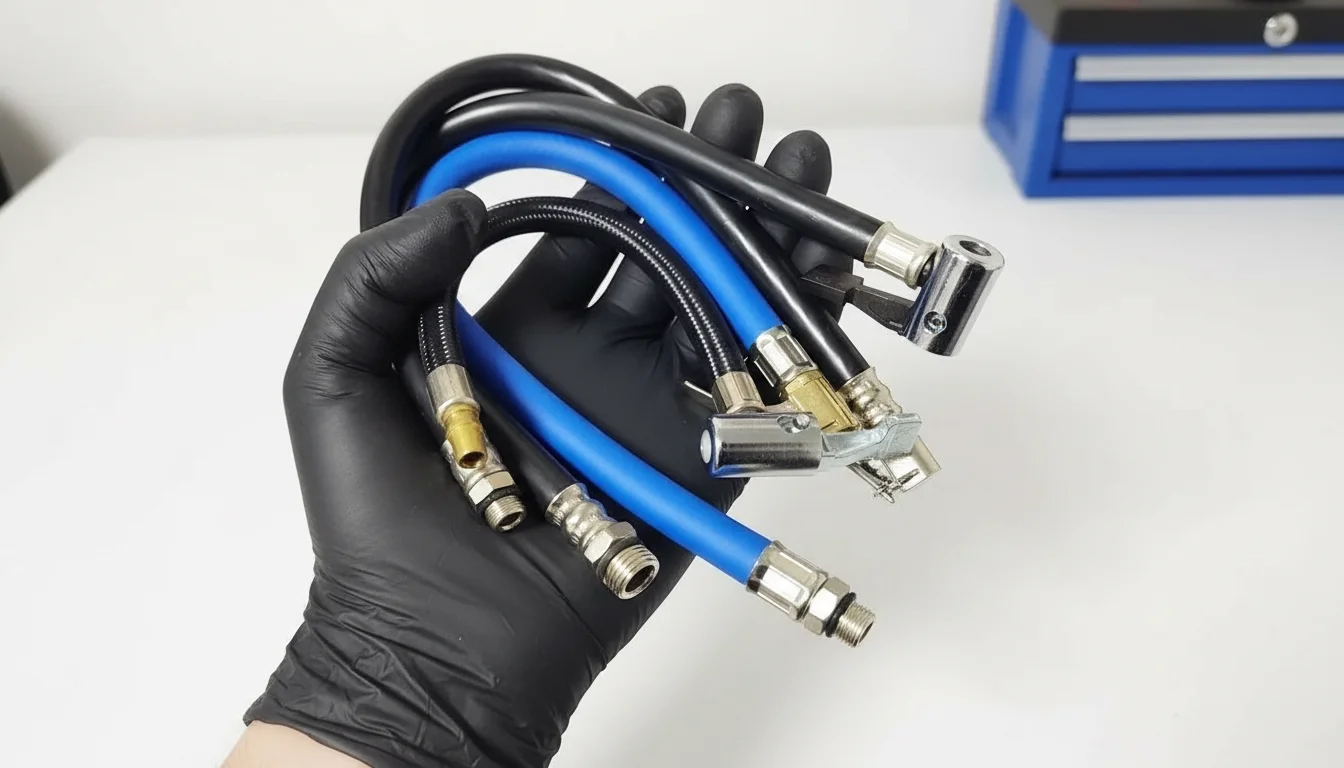
The Solution: How a Flexible Air Hose Isolates Stress
The fix is simple mechanical separation. Including a High-Pressure Air Hose acts as a shock absorber, effectively disconnecting the pump’s chaotic movement from the stationary Ball Needle. All the pumping forces get dispersed along the length of the flexible hose before they can reach the needle itself.
This design keeps the needle stable and perpendicular to the valve, even when the user is pumping quickly or at an awkward angle. By eliminating the direct transfer of angular stress, the hose drastically reduces metal fatigue. This is why pumps that include a flexible hose accessory don’t suffer from the constant bending and snapping issues that plague direct-connect designs.
Preguntas frecuentes
What makes a double-action pump faster than a single-action one?
A double-action pump inflates on both the push and pull strokes. This makes it nearly twice as fast as a standard single-action pump, which only inflates when you push down. The dual-action design saves considerable time and effort, especially when you need to inflate multiple balls.
Does this pump include a flexible hose to prevent needle breakage?
Yes, many modern ball pumps include a flexible extension hose. This hose allows you to inflate the ball from different angles, which greatly reduces the stress on the needle and helps prevent it from bending or snapping off during pumping.
Are soccer balls durable enough for use on muddy fields?
Soccer balls are designed for use on natural grass, which includes muddy conditions. A muddy field is actually less abrasive to the ball’s surface material than hard surfaces like concrete or asphalt. For better performance on heavy, wet ground, it helps to inflate the ball toward the higher end of its recommended PSI range.
Is the pump compact enough to carry in a sports bag?
Yes, these pumps are specifically designed for portability. Most are slim, lightweight, and about 9 inches long, so they can easily fit into a gym bag pocket or other tight spaces without adding bulk or getting caught on your gear.
Are spare needles stored inside the pump’s handle?
Most ball pumps do not have built-in storage for spare needles in the handle. A pump typically includes one needle to get you started, and any extra needles are usually sold in multi-packs with their own separate storage case for better organization.
Reflexiones finales
While basic pumps offer a lower unit price, their constant failures—from snapped needles to slow inflation—lead directly to customer returns. Adopting the double-action standard with a flexible hose isn’t a feature; it’s a safeguard for your brand’s reputation. Reliable gear is what keeps teams and dealers coming back.
Don’t just read about durability—confirm it for your inventory. We recommend ordering a sample kit to test the build quality and inflation speed firsthand. Contact our team to discuss your OEM requirements and secure your stock.

 English
  Español
  Français
  Deutsch
  Português do Brasil
  Русский
  한국어
한국어  日本語
日本語  العربية