 メインコンテンツへスキップ フッターへスキップ

産業用真空システムは、接合部での空気漏れや内部乱流が流れを乱すことで、ピーク性能を失うことがよくあります。これらの損失は通常、標準的な90度ベンドが遠心力によりディーン渦と呼ばれる二次流れを生み出し、吸引力を10~30%低下させるために発生します。これらの問題を解決するには、精密なシールと滑らかな内部形状による気流効率の向上に焦点を当て、静圧低下を防ぐ必要があります。.
本ガイドでは、ISO 3601およびAS568準拠を含む、システム圧力維持のための技術基準について解説します。表面仕上げがRa 5以下であると、デブリの引っ掛かりポイントが排除される理由と、Oリングの静圧縮率15~25%が真空安定性に必要な理由を分析します。流れ力学の物理とベンド半径の影響を調べることで、高応力吸引経路を確保するために必要なデータを提供し、 一般的な 詰まりを回避します。.
気流の物理:ベンドでの乱流
ベンドを通過する気流は、遠心力が高速空気を外壁に向かって押し出すため、運動量の変化を経験します。この動きにより、ディーン渦と呼ばれる二次流れが発生し、乱流運動エネルギーが増加し、静圧低下を引き起こします。これらの乱れは、ポータブルカー用掃除機やエアポンプの 吸引力を大幅に低下させます。.
二次流れ力学とディーン渦
遠心力は、高運動量の流体を90度パイプベンドの凹壁に向かって駆動します。二次流れは外壁の45度位置でピークに達し、ディーン渦が境界層を不安定にします。凹壁での流れの減速は渦形成を引き起こし、これは低レイノルズ数k-ε乱流モデルで検証された現象です。曲率比0.05~0.4が二次運動の強度とその後の効率低下を決定します。.
乱流運動エネルギーと速度勾配
计算流体力学显示,在曲率半径为1.5D的复合弯管中,最大空气流速可达15.02 m/s。对于标准90°弯管,系统性能取决于100至34,132之间的雷诺数范围。高湍流动能主要出现在外壁,阻碍压力恢复并增加能量耗散。内孔设计需要进行曲率修正,以保持高速吸气应用中的气流一致性。.
ガスケット工学:Oリングとシール
垫圈工程利用O形圈的压缩变形,在配合表面之间创建零间隙密封。通过遵循AS568和ISO 3601等标准,这些部件可承受高达1,500 PSI的内部压力并抵抗极端温度,确保气流效率的一致性,适用于 气泵和真空系统.
| 材料規格 | 温度範囲 | 主な用途 |
|---|---|---|
| 硅橡胶 (VMQ) | -85°F 至 +400°F | 宽温度耐受性和低释气性 |
| 丁腈橡胶 (NBR) | -40°F 至 +257°F | 适用于高应力路径的耐油和耐化学性 |
| 氟硅橡胶 (FVMQ) | -75°F 至 +400°F | 航空航天系统和耐燃油气流 |
| 高压密封件 | 标准材料极限 | 采用挡圈的系统(>1,500 PSI) |
ゼロギャップ気流完全性のための精密シール
機械的圧縮により、グランドと相手面の間にゼロギャップシールが形成され、携帯用エアポンプと高吸引力に必要なバリアを提供します。 掃除機. 静的圧縮率15~25%は真空安定性を確保し、動的圧縮率8~16%は可動部の摩擦を低減します。これらの特定の圧縮率は、内部システム圧力を維持し、敏感なエアフローパスへの汚染侵入を防ぎます。.
ゼロギャップシールは内部圧力低下を防止し、大型携帯用コンプレッサーに必要な150 PSI出力を直接サポートします。 携帯用コンプレッサー. エンジニアは、高圧サイクル中のシール押出を防ぐために、グランド深さと表面仕上げを計算して溝を設計します。この精密な形状により、エラストマーが隙間へ変形し、変動荷重下でもエア漏れを遮断します。.
材料科学と国際適合基準
AS568およびISO 3601規格は、内径と断面積の精度に関する寸法公差とクラスA~Eを定義しています。これらのグローバルベンチマークにより、Oリングが航空宇宙および産業用ハードウェアと互換性を保つことが保証されます。シリコーン(VMQ)およびフルオロシリコーン(FVMQ)は、-148°Fから+400°Fまでの極端な温度耐性を提供し、弾性を失うことなく効果的に機能します。ニトリル(NBR)およびバイトン(FKM)は、攻撃的な流体や高応力エアフローパスを扱うシステムに必要な耐薬品性を提供します。.
バックアップリングは、1,500 PSIを超える環境で標準シールを補助し、構造的完全性を維持して故障を防止します。これらのコンポーネントは、極端な圧力下でOリングがクリアランスギャップに押し込まれるのを防ぎます。ASTM D2000分類 引張強度と空気老化要件に基づいて材料選択をガイドし、ハードウェアが耐久性と効率の2026年性能基準を満たすことを保証します。 —.

滑らかな内径:摩擦低減
スムーズ内孔(S.I.B.)技術は、5 Ra以上の超平滑仕上げを利用して、隙間や溶接ビードを除去します。これにより、抗力と圧力損失が低減され、ノズル先端で50 psiなどの最適な流量を維持しながら、2026年の衛生および産業基準を満たします。 —.
表面仕上げ要件と材料完全性
エンジニアは、5 Ra以上の表面仕上げを維持することで、最適な油圧性能を実現します。この微細な平滑性により、粒子の蓄積が防止され、細菌や汚染物質が留まる可能性のある隙間が排除されます。高純度システムでは、多くの場合、KynarなどのPVDF材料を使用してこれらの滑らかな内孔を作成します。この材料は、従来の金属配管に一般的な溶接ビードや突起を除去します。これらの構成は、FDA、USDA、3A、およびUSPクラスVI基準に準拠し、医薬品および食品製造向けの耐薬品性と衛生環境を提供します。.
圧力管理と摩擦低減指標
流体力学は、エネルギー効率を維持するために内部抵抗を最小限に抑えることに大きく依存しています。ハンドヘルドのスムーズボアノズルは、先端圧力50 psiで最良の性能を発揮し、機能範囲は40~60 psiです。この構成により、2.5インチシステムで200 gpmで動作する場合、ホース摩擦損失を100フィートあたり約10 psiに低減します。エンジン圧力の要求を下げることで、これらのシステムは 15~17 GPM エネルギー消費を増やすことなく、全体のストリームリーチを向上させます。.
より大規模なパイプラインでは、SY/T 7041コーティング基準により滑らかな塗膜が提供され、非腐食性媒体の伝送抵抗が低減されます。高度な表面テクスチャリングは、マイクロスケールの特徴を通じてこれらの効果をさらに高めます。ディンプルの深さと直径の比を0.1~0.18に適用し、20~30%の表面被覆率と組み合わせることで、圧力スパイクが発生して潤滑膜を厚くします。これにより、機械的接触部の滑り摩擦が低減され、システムコンポーネントの長期的な耐久性が向上します。.
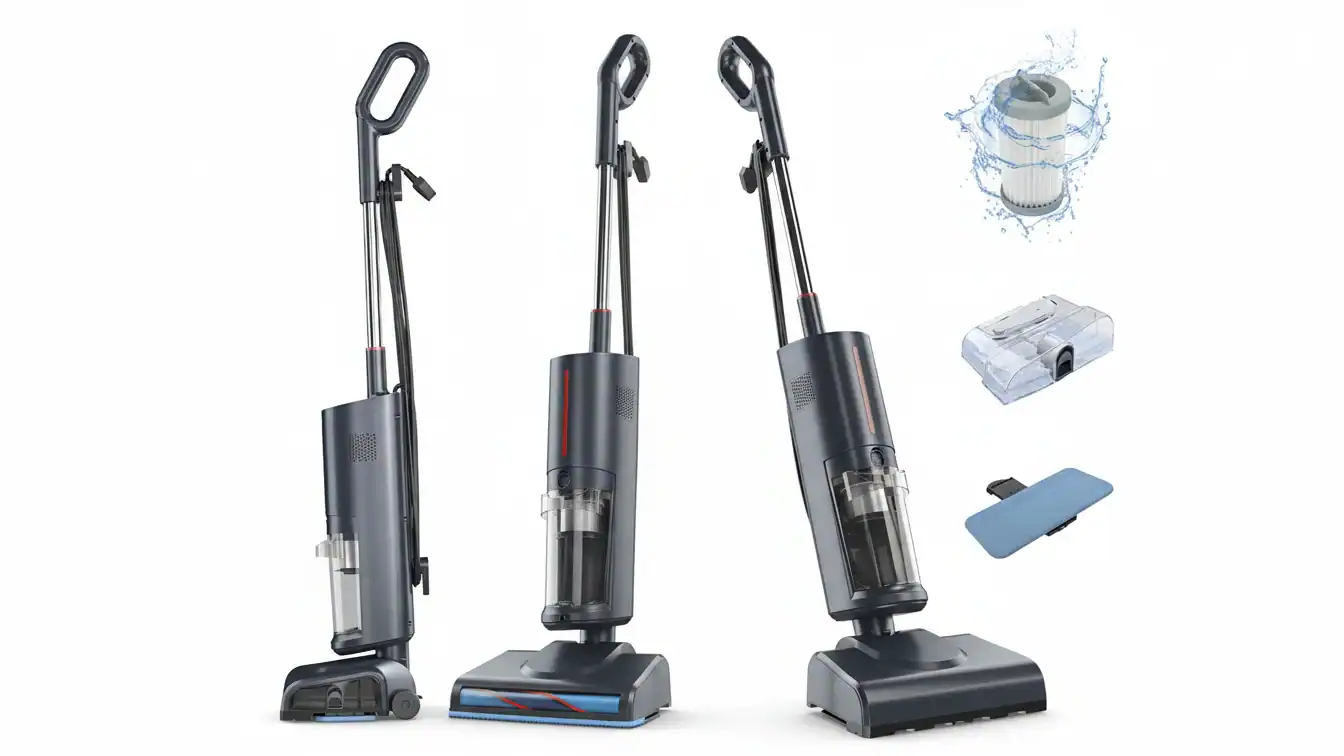
高吸引力家庭用掃除機向けスケーラブルOEM/ODMソリューション

吸引力テスト:ストレート対ベンド性能
Straight suction paths outperform bent configurations by 10-30% due to reduced turbulence and uniform flow. Using ASTM D790 and ASTM C1609 standards, testing reveals that bent paths introduce higher pressure drops and shear stresses, which engineers mitigate by maintaining a 16:1 span-to-depth ratio and using dual-sensor deflection monitoring.
| Standard / Method | Key Parameter | 技術要件 |
|---|---|---|
| ASTM D790 | Span-to-Depth Ratio | 16:1 Ratio |
| ASTM D790 (Proc A) | Preferred Strain Rate | 0.01 mm/mm/min |
| ASTM C1609 | Specimen Span | 500 mm (150x150x550 mm beams) |
| Deflection Measurement | Sensor Configuration | Dual LVDT / Extensometers |
Comparative Flow Resistance and Path Geometry
Straight tubes facilitate uniform airflow with minimal energy loss. In contrast, bent configurations cause flow separation and increased turbulence. These geometric deviations introduce shear stresses comparable to 4-point bending failure modes observed in mechanical testing. Structural studies indicate that vacuum stability drops by 10-30% when suction paths move away from optimal span-to-depth ratios, primarily because internal friction increases at transition points.
Standardized Testing and Quantitative Metrics
Engineers use ASTM D790 Procedure A with a 0.01 mm/mm/min strain rate to evaluate the stiffness of thermoplastic vacuum components. This method ensures that materials used in suction housing maintain structural integrity under load. Accurate data requires dual LVDT sensors to measure net deflection, which provides a precise flexural modulus and identifies the yield point. Maintaining a 16:1 support span-to-depth ratio prevents premature failure in components like KelyLands vacuum housing. Furthermore, 4-point bend tests establish a constant moment zone, which helps minimize the influence of material flaws in heterogeneous suction components.
詰まり防止:内部に鋭利なエッジなし
Internal edges catch hair and debris, forming the foundation of most clogs. Engineering solutions like sweep elbows, wye branches, and heat-fusion joints eliminate these catch points. By ensuring a monolithic, burr-free internal surface, systems maintain laminar flow and prevent particles from adhering to the walls.
Geometric Design for Laminar Flow
Modern plumbing systems utilize long-radius sweep elbows in 45° or 90° configurations to guide waste smoothly. These large bend radii prevent solids from impacting the pipe walls and sticking at sharp turns. Wye branches employ shallow, tapered entry angles where they meet the main line. This design choice minimizes flow disruption and turbulence, allowing fluid to merge without dropping suspended particles.
Sanitary tees protect system integrity by maintaining flow momentum through directional curves. These curves reduce the risk of backup from branch lines into the primary stack. By preserving fluid velocity, these smooth transitions enable a self-scouring action that carries hair, grease, and other debris through the entire drainage network before they can settle and cause obstructions.
Surface Continuity and Manufacturing Standards
Heat-fusion welding creates joints with a monolithic structure, leaving no internal ridges or gaps that might initiate a clog. This method eliminates the diameter changes typical of threaded or glued connections. Compliance with 2026 CDC VSP standards reinforces this approach, as the guidelines mandate an absence of sharp internal corners or angles on surfaces to prevent waste accumulation and bacterial growth.
Reliable installations require pipe ends cut perfectly square and free of burrs. Following Zurn engineering guides ensures that connections remain unobstructed and professional. For mechanical joints, compression-fit gaskets like the Neo-Loc conform to ASTM C564 standards. These gaskets include a built-in pipe stop to ensure precise alignment and a smooth internal transition capable of handling 10 psi of operating pressure without creating a lip or shelf.

最終的な所感
Efficient suction depends on how well a system manages the physics of airflow and the integrity of its seals. When designers prioritize smooth internal paths and precise gasket engineering, they minimize the turbulence that usually saps power at joints and bends. Using high-grade materials like Silicone or Nitrile alongside standardized O-ring configurations prevents air leaks and keeps pressure stable throughout the device.
Systems that eliminate sharp internal edges and utilize smooth-bore technology do more than just maintain suction; they prevent the buildup of ペットの毛 and debris that leads to performance failure. Choosing hardware that follows ASTM testing standards ensures the equipment remains durable under heavy use. These engineering choices result in more reliable tools that maintain high flow rates and consistent performance without the frequent clogs or pressure losses found in standard designs.
よくある質問
What is the typical suction loss when a tube is bent at a 90-degree angle?
Bending a tube or duct increases pressure drop, which directly reduces suction. Industry data for 2026 indicates that a standard 90° smooth bend causes a 10-30% loss. With a pressure loss coefficient of ζ=0.290, users can expect a 15-25% velocity pressure drop at typical airflow speeds of 3-5 m/s.
Do internal ridges in the joint trap pet hair or debris?
Standard vacuum joints often feature internal ridges or seams that catch pet hair and lint. To prevent these obstructions, KelyLands utilizes smooth internal bores that eliminate catch points, ensuring debris passes through the joint without causing clogs or airflow turbulence.
How do double O-ring seals improve performance compared to standard joints?
Double O-ring seals create a more secure interface than single-seal designs, effectively preventing air leaks even at low pressures of 1-5 Pa. This engineering choice maintains consistent vacuum pressure and prevents suction degradation at the connection points.

 English
  Español
  Français
  Deutsch
  Português do Brasil
  Русский
  한국어
한국어  日本語
日本語  العربية