 메인 콘텐츠로 건너뛰기 푸터로 건너뛰기


camping fridge regional demand is the first checkpoint buyers should lock before they approve a supplier, budget, or production slot. The gap between a 45L dual-zone and a 60L single-zone camping fridge isn’t just about capacity — it’s the dividing line between what sells in Denver versus what moves in Darwin. If you’re planning your inventory for 2026, the regional demand split is sharp enough to dictate which spec sheet you lead with at trade shows and which models end up sitting in bonded warehouses. A buyer who got burned on a $50K order because the pre-production sample matched perfectly but the mass production run missed the low-voltage cutoff spec knows exactly how expensive that gap gets.
North America runs on dual-zone preference for overlanding setups, where keeping frozen goods separate from fresh produce matters more than maximizing cubic footage. Europe tilts toward compact units under 40L that fit narrow campervan galley slots and accept both 12V DC and a standard Schuko plug at camp. Australia demands single-zone endurance — a fridge that pulls under 0.5 amps per hour at 5°C ambient and cuts power at exactly 10.5V so the auxiliary battery still starts the Land Cruiser the next morning.
Certification layers add another filter. An ETL certified portable fridge for US import clears customs without drama, while European importers now enforce RoHS chemical compliance checks at retail level — some German buyers require factory social audit reports before issuing a first PO. Australian distributors won’t touch a unit without RCM marking and documented high-ambient performance testing at 43°C. Three regions, three different definitions of what makes a fridge sellable.
North America: Overlanding and 4WD Culture
45L dual-zone models account for roughly 60% of overlanding fridge sales in North America.
Overlanding and 4WD culture in North America isn’t a weekend hobby. It’s a vehicle-integrated lifestyle where the fridge runs off a dual-battery setup for weeks at a time. Buyers in this segment don’t want a cooler that keeps drinks cold for a day. They need a unit that holds frozen meat at -18°C while the truck bounces through the Mojave Road or the Trans-America Trail. That demand drives very specific capacity and feature preferences.
Dominant Capacities (30L–60L) and Dual-Zone Preference
Walk through any overland expo in the US or Canada and you will see a pattern. The fridges on display cluster between 30L and 60L. Below 30L, buyers run out of space for a family’s worth of meals on a five-day trip. Above 60L, the footprint becomes awkward inside a Jeep Wrangler or Toyota 4Runner, especially when you factor in drawer slides and mounting brackets.
The sweet spot is 45L to 50L, and within that range, dual-zone models dominate. A typical setup uses one compartment as a freezer (-18°C) for meat and fish, while the other runs at 2°C to 4°C for produce and drinks. Single-zone units still sell, but primarily to solo travelers or weekenders who don’t need to separate frozen from chilled goods.
For importers planning container loads destined for North American overland retailers, stocking mostly dual-zone models between 40L and 55L aligns with what end-users actually buy. The remaining mix should include a few single-zone units around 35L for entry-level buyers and larger 60L options for full-size trucks and expedition trailers.
Certifications: ETL, UL, and FCC Compliance
Selling into US retail channels without proper certifications is not an option. Big-box stores like REI, Cabela’s, and Bass Pro Shops require ETL or UL listing on any electrically operated product they stock. These marks confirm that the fridge passed safety testing for fire risk, electrical shock, and component failure under normal use.
Canadian distributors typically accept ETL or CSA marks interchangeably. Some also request ICES-003 (Canadian EMC standard) documentation alongside FCC reports. For volume importers targeting both US and Canada markets simultaneously, covering ETL/UL plus FCC upfront saves months of requalification work after landing inventory.
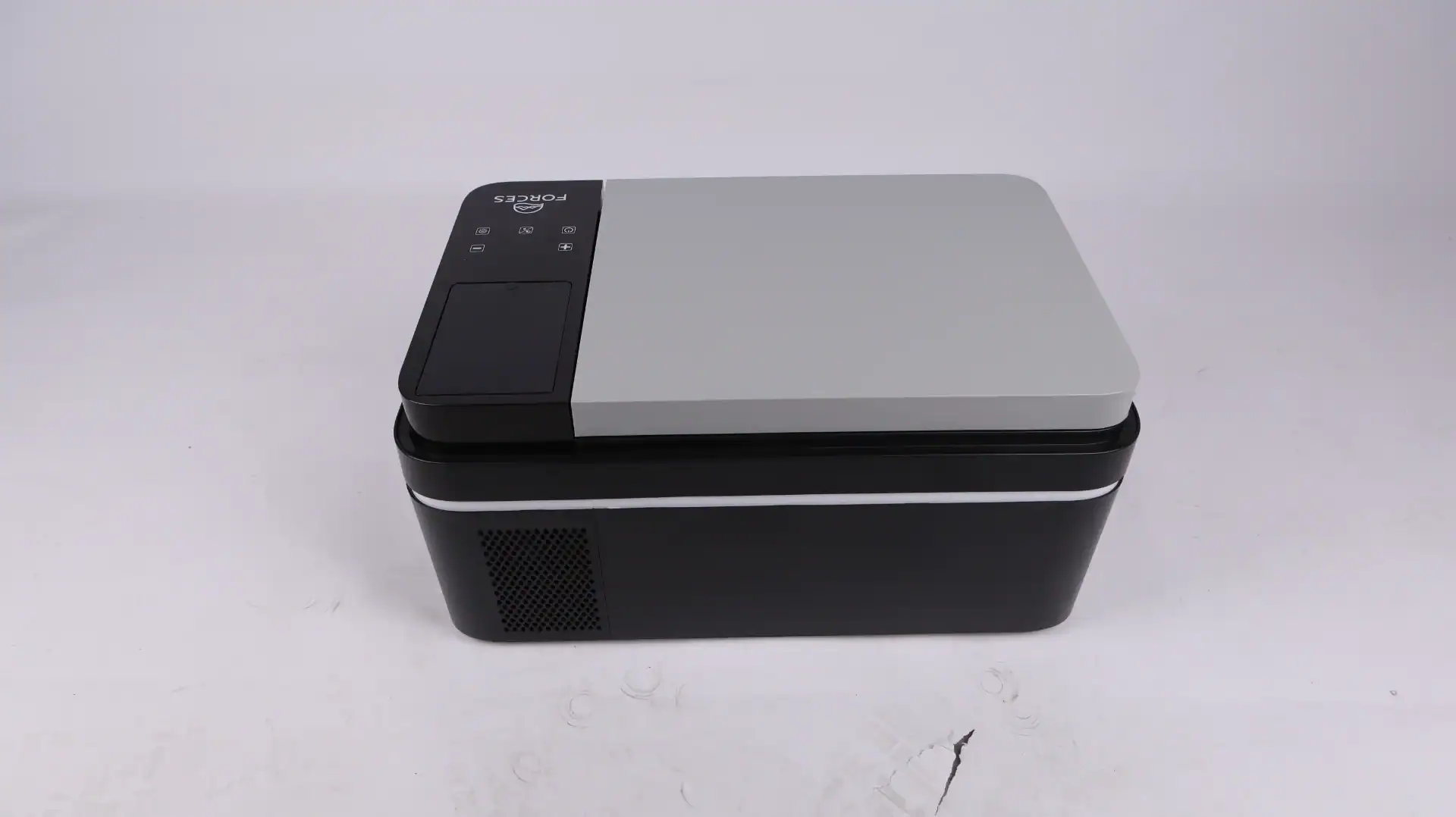
Europe: Camping Holidays and Narrow Vehicle Fit
European importers face stricter RoHS/REACH enforcement than any other region.
European camping culture runs on small campervans — think VW California, Mercedes Marco Polo, and converted vans under 5 meters. That changes every assumption about fridge specs compared to the US or Australia. The vehicle footprint is tighter, the electrical systems are different, and the compliance bar is higher.
230V AC Input Requirement and EU Energy Label
Most European campsites supply 230V AC hookups at the pitch. A fridge that runs only on 12V DC forces the buyer to drain their leisure battery overnight or run a separate inverter. The practical solution is a fridge with a built-in 230V AC power supply unit that automatically switches when shore power is available.
The EU Energy Label is non-negotiable for retailers selling into Germany, France, or Scandinavia. Fridges are rated A through G under EU 2019/2026 energy labelling regulations. A C-rated or D-rated model faces shelf-life resistance from distributors who know their customers check the label before purchase.
RoHS and REACH compliance documentation must accompany every shipment entering the EU customs zone. Some German retailers go further — they request factory social audit reports (SMETA or BSCI) before issuing a first purchase order. If your supplier cannot produce these documents within two weeks of request, expect delays at clearance.
Popular Sizes Under 40L for Small Campervans
A VW California boot space fits a fridge roughly 45cm wide by 45cm tall by 50cm deep — that caps capacity around 35 to 42 liters in a compressor model. Anything larger forces the owner to modify cabinetry or lose seating space.
Our internal production data shows that models in the 25L to 38L range account for roughly three out of every four 2. 휴대용 냉장고를 shipped to European distributors from our Ningbo-based portable fridge factory. The sweet spot sits at 35L — large enough for two people over a long weekend but narrow enough to slide behind a passenger seat base.
Twin-zone models under 40L exist but carry a weight penalty and higher standby draw that some small campervan owners reject in favor of single-zone simplicity paired with a separate insulated cooler bag for drinks.
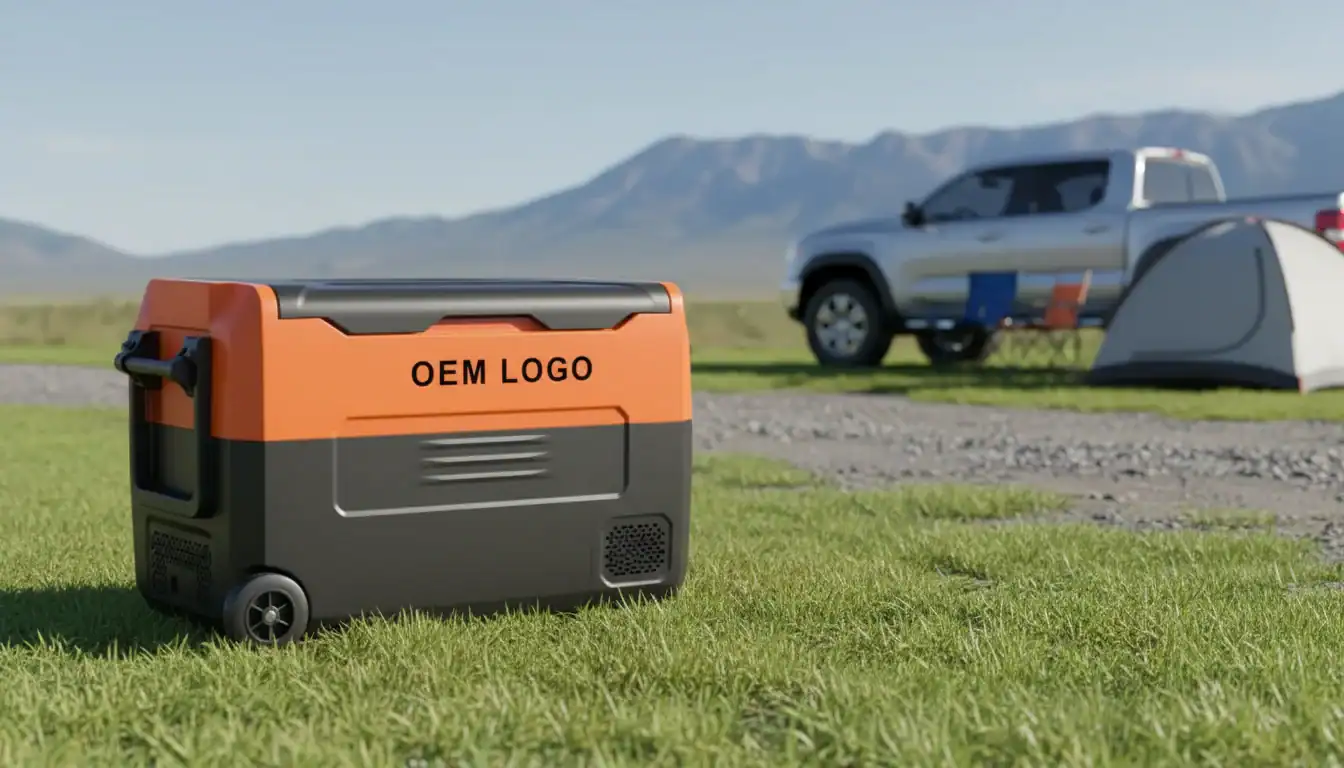
Australia: Remote Touring and Solar Dependency
Australian buyers ask about low-voltage cutoff before they ask about compressor brand.
Australia is a different animal. The distances are longer, the heat is more punishing, and the power source is almost always solar or a secondary auxiliary battery. A camping fridge in the Australian outback isn’t a luxury item — it’s a piece of survival equipment. If your fridge drains the starter battery on a Land Cruiser 200 Series 300km from the nearest town, you have a life-threatening problem, not a warranty claim.
DC Power Efficiency and Low-Voltage Cutoff Settings
This is where Australian distributors separate serious suppliers from the rest. The standard ask is a hard low-voltage cutoff at 10.5V for lithium auxiliary batteries and 11.8V for lead-acid. Some buyers push for three-stage protection: 11.8V (battery save), 11.3V (medium), and 10.5V (emergency). If your fridge controller only offers one fixed threshold at 10V, you’re going to lose deals to competitors who offer programmable settings.
US buyers rarely raise this topic until after their first dead-battery complaint lands in their inbox. Australian importers bring it up in the initial RFQ. They know that a Danfoss SECOP compressor drawing an average of 4A at 12V will flatten a 100Ah battery in roughly 25 hours of runtime if the cutoff fails to engage. In real-world touring conditions with partial sun on solar panels, that margin shrinks fast.

결론
Stocking the wrong capacity or skipping a region-specific certification turns a container of fridges into slow-moving inventory. The difference between a fast sell-through and a six-month hold often comes down to one spec sheet detail that was overlooked at the 2. 샘플 승인 stage.
-
- 45L dual-zone models drive 60% of overlanding fridge sales in North America.
- Australian buyers require low-voltage cutoff at 10.5V for solar touring setups.
- European importers enforce RoHS/REACH compliance before first purchase order.
Benchmark your current product specs against these regional standards before your next supplier review. A quick audit of your line sheet against the ETL, RCM, and CE requirements for each target market will reveal which models need requalification and which are ready to ship. Review KelyLands’ current portable fridge configurations to see how the capacity and power options align with the demand patterns outlined above.
자주 묻는 질문
How to get a quote for Camping Fridge Demand: US vs EU vs Australia 2026?
정확한 납기는 제품 사양, 수량, 주문 조건에 따라 상이합니다. 가장 안전한 방법은 최종 요구사항 명세서가 확정된 후에야 영업 조건을 확정하는 것입니다. 최종 조건은 정확한 제품 사양 및 주문 조건에 대조하여 확인하시기 바랍니다.
먼저 샘플을 요청할 수 있나요?
정확한 답변은 제품 사양, 수량, 주문 조건에 따라 달라집니다. 가장 안전한 방법은 최종 요구사항 시트가 확정된 후에야 상업적 조건을 확인하는 것입니다. 샘플 가용성은 현재 재고와 배송 계획에 따라 확인해야 합니다.

 English
 Español
 Français
 Deutsch
 Português do Brasil
 Русский
 한국어
 日本語
 العربية