 Pular para o conteúdo principal Pular para o rodapé

Importers and retailers face a shifting landscape in the cleaning tool sector as professional detailing standards demand higher performance from portable equipment. With the specialized car detailing market projected to reach USD 2.49 billion by 2029, sourcing the right corded handheld vacuum cleaner becomes a priority for businesses serving the automotive and home maintenance industries. Buyers need products that provide consistent suction for deep cleaning without the performance drop-off typically associated with battery depletion.
This guide details the technical specifications necessary for high-volume sourcing, focusing on motor efficiency and ergonomic design. We explore the transition to high-efficiency BLDC motors that offer 90% efficiency and review the critical cord length requirements, typically ranging from 10 to 20 feet for automotive use. The following sections also cover retail packaging optimization and the global safety certifications required to maintain a competitive edge in the current market.
The Niche Market for Car Detailing and Quick Spills
The car detailing sector shows strong momentum, with the niche market projected to reach USD 2.49 billion by 2029. Growth stems from a 10.3% CAGR in professional detailing services and a 6.7% increase in interior-specific maintenance, driven by the rise of mobile on-demand services and premium vehicle care.
| Segmento de mercado | Projected Valuation | Growth Rate (CAGR) |
|---|---|---|
| Specialized Car Detailing | USD 2.49 Billion (2029) | 10.3% |
| Mobile Car Wash & Detailing | USD 282.8 Billion (2035) | 8.4% |
Consumer Drivers for On-Demand Interior Maintenance
Rapid urbanization and busy professional schedules support a 6.9% CAGR for on-demand detailing services. As vehicle ownership reaches nearly 90 million units globally, the frequency of required interior hygiene increases. Consumers spend more time in their vehicles, which heightens the need for immediate remediation of spills and biological contaminants. This shift favors the adoption of portable, high-suction tools that allow mobile detailing operations to perform rapid deep cleaning on-site.
Growth in the premium vehicle segment also influences these maintenance habits. Owners of high-value cars use regular detailing to protect complex cabin materials and preserve high resale values. Mobile operators prioritize lightweight, efficient equipment to manage odor control and stain removal without the logistical constraints of traditional wash bays. These tech-driven solutions cater to a growing demographic that views vehicle cleanliness as a core component of personal hygiene and asset management.
Economic Valuation and Segment Growth Targets
The specialized car detailing market expects a valuation of USD 2.49 billion by 2029, showing robust momentum in niche cleaning services. On a broader scale, the mobile car wash and detailing subsets target a long-term market size of USD 282.8 billion by 2035. This expansion aligns with a move toward subscription-based models and contactless service delivery. As fleets age, the demand for restorative interior services grows, particularly for odor remediation and deep-fiber extraction.
Asia-Pacific markets currently exhibit the highest regional growth at 7.2% for interior detailing. Technical growth leads in the ceramic coating and surface protection segments with a 14.22% CAGR. These high-growth areas emphasize the transition from basic aesthetic washes to technical preservation. Specialized tools like handheld corded vacuums play a vital role in these segments by providing the consistent power necessary for professional-grade interior prep and spill management.
Power Density and Motor Selection for Handheld Units
Engineers balance handheld vacuum performance by operating within a 1440W power limit (12A at 120V) to prevent circuit overloads. Modern designs transition from universal motors to high-efficiency BLDC systems, which offer 90% efficiency and significant weight reduction while maintaining suction pressures between 20 and 30 kPa.
Electrical Circuit Limits and Input Power Scaling
Standard US residential branch circuits restrict plug-in appliances to 12A at 120V. This creates a practical 1440W upper bound for continuous motor input in corded handheld units. Designers must stay within this safety envelope to prevent tripping breakers in typical household environments.
Most single-motor designs target an input window of 1000W to 1500W. This power level generates between 250 and 450 air watts at the nozzle, which is necessary for effective debris pickup. Machines that push beyond the 1.4 kW threshold require more aggressive thermal management and heavier electrical components.
Scaling power requires managing the trade-off between current draw and physical mass. Higher current necessitates thicker copper wiring and larger stators. These additions increase the overall weight of the motor, making it difficult to maintain the ergonomic balance required for a handheld device.
Motor Efficiency and Thermal Management Benchmarks
High-efficiency BLDC motors, such as the DN4261-24-053, achieve 90% efficiency. This significantly outperforms the 35% efficiency typical of traditional AC universal motors. By converting more electrical energy into mechanical work, BLDC systems provide higher suction power with less wasted energy.
Integrating BLDC technology reduces motor weight by 33% to 50%. This weight reduction allows handheld units to maintain a net weight around 1.76 kg while delivering 27 kPa of suction. Modern stick vacuums use this density to provide professional-grade performance without the bulk of industrial machines.
BLDC motors also offer superior thermal control, typically maintaining a temperature rise between 40°C and 45°C. In contrast, universal motors often reach a 95°C temperature rise. Excessive heat degrades housing plastics and causes user discomfort, making thermal efficiency a key factor in motor selection.
Performance targets for premium handheld units range from 19.6 to 29.4 kPa (approximately 2000 to 3000 mm H2O). Achieving these industrial-level suction pressures in a portable form factor requires optimizing the relationship between input wattage, motor efficiency, and air path design.
Ergonomic Design and User Comfort Guidelines
Standard ergonomic guidelines for 2026 focus on handle geometry and weight reduction. Key metrics include a handle diameter of 3.1–3.8 cm and a total weight under 6 lbs to reduce muscular effort. Proper tilt angles between 40.6° and 46.6° further enhance motion range and user comfort.
Handle Geometry and Grip Surface Parameters
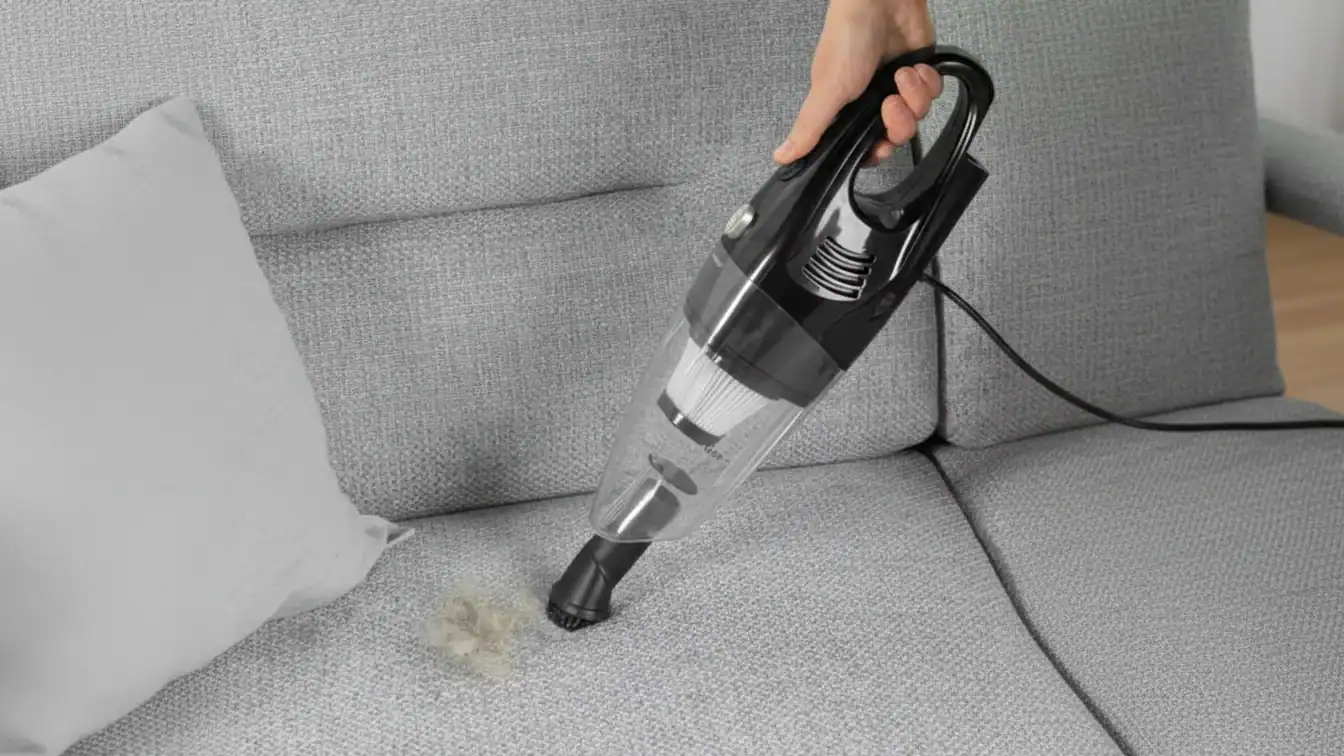
Handle dimensions directly impact the ratio between grip force and muscle activity. Engineers select handle diameters between 3.1 cm and 3.8 cm to optimize this efficiency and improve user control. Implementing a specific tilt angle within the 40.6° to 46.6° range increases the comfortable range of motion by 1.8%, allowing for more natural wrist positions during operation.
To minimize forearm muscle strain during front-to-back cleaning tasks, the midpoint-pipe centerline distance must remain between 3.0 mm and 25.8 mm. Shortening this distance prevents the excessive exertion typically caused by wider offsets. Complex handle geometries with an optimized upper part curvature radius consistently achieve higher satisfaction scores than basic cylindrical designs because they better conform to the human palm’s natural anatomy.
Weight Management and Fatigue Prevention Standards
Reducing the total weight of handheld cleaning tools prevents long-term musculoskeletal fatigue. Safety standards suggest keeping device weight under 6 lbs, while modern high-end models aim for approximately 3.64 lbs to maximize agility. Following OSHA guidelines, handle designs must eliminate the need for constant gripping, allowing users to rest their hands periodically during extended use sessions.
Effective weight distribution balances the center of gravity by positioning the motor and battery to avoid the asymmetrical shoulder stress common in heavy units. While commercial vacuums often range from 10 to 25 lbs, handheld variants require low-vibration motor mounts to maintain a neutral posture. These features decrease physical exertion and ensure stability during specialized tasks like automotive detailing or overhead cleaning.
Scale Your Brand with Premium, Customizable Vacuum Solutions

Essential Attachment Ecosystems for Specialized Cleaning
Specialized attachment ecosystems transform handheld vacuums into versatile cleaning systems. By combining 26-inch flexible hoses, crevice tools, and HEPA-grade filtration, these devices address specific challenges in automotive detailing and upholstery maintenance, ensuring high suction efficiency and 99.99% particle retention across various surfaces.
Modular Tools for Multi-Surface Versatility
Standard 3-in-1 configurations integrate crevice tools, pole handles, and specialized floor nozzles to transition between stair, upholstery, and hard floor cleaning. Integrated 26-inch smart-flex hoses provide the necessary reach for complex vehicle interiors and tight gaps where rigid nozzles cannot penetrate. These components ensure the vacuum maintains its utility across diverse physical environments without requiring multiple dedicated machines.
Pet brushes and mattress tools utilize specific geometry to agitate fibers and remove deep-seated debris without clogging the primary intake. By focusing mechanical agitation at the point of contact, these tools allow the motor to capture embedded hair and dust that standard suction nozzles might miss. The inclusion of 16-foot power cords complements these tools by providing full vehicle reach from a single power source.
Engineering Suction Delivery and Filtration Standards
Tool geometry maintains high-velocity airflow to support motor outputs ranging from 110W to 1000W and peak suction pressures of 25kPa. Washable HEPA filtration systems capture 99.99% of micro-particles, preventing dust bypass during high-intensity tasks like sand or pet hair removal. This filtration efficiency ensures that the exhausted air remains clean, which is critical during enclosed tasks like car detailing or mattress cleaning.
Acoustic engineering maintains operational noise at 67 dB, allowing for extended use in residential or commercial settings without compromising suction through the attachment chain. High-capacity dust cups, often reaching 600ml, support these engineered systems by reducing the frequency of maintenance stops. These technical specifications work in tandem to provide sustained performance during rigorous cleaning cycles.
Cord Length Requirements for Automotive Applications
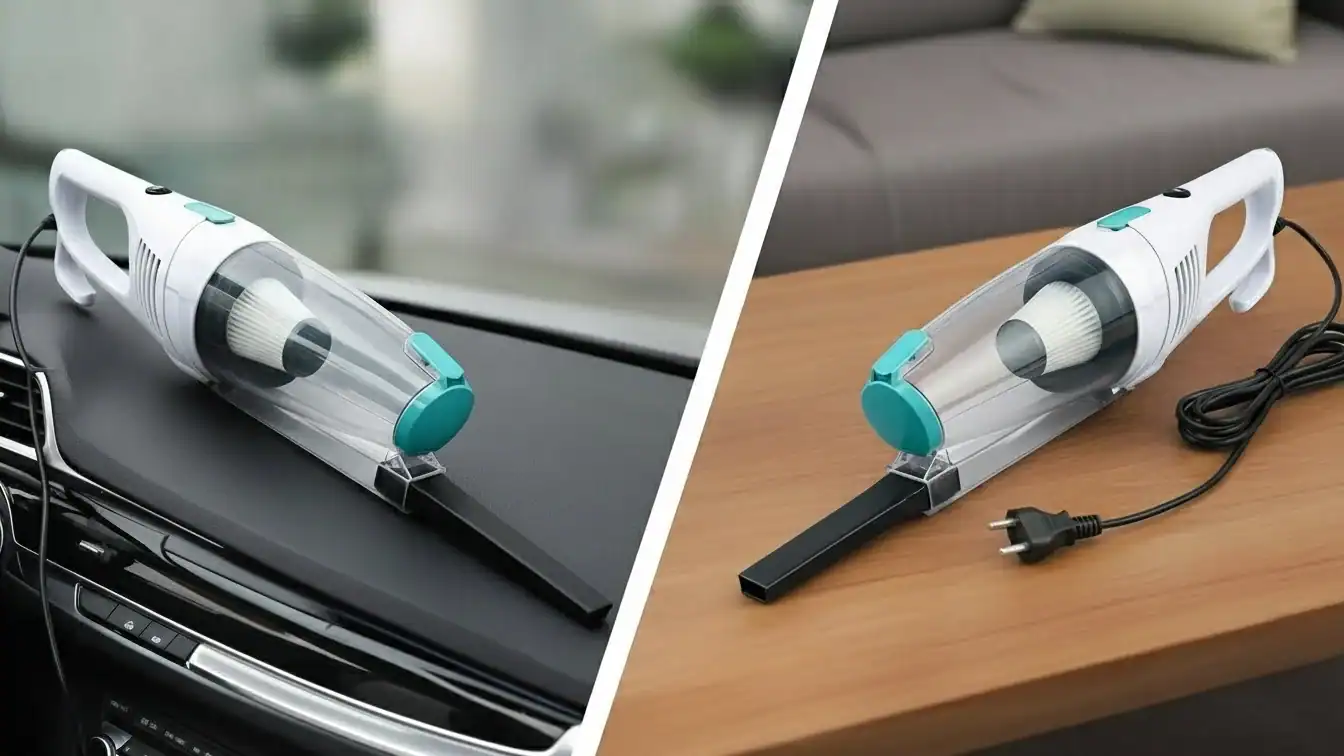
Most automotive vacuum cords utilize a 3–6 meter (10–20 ft) range to reach from a 12V socket to all cabin corners. Engineering designs prioritize SAE J1128 and ISO 6722 standards, using wire gauges like 12 AWG to manage voltage drop and maintain thermal stability between -40 °C and 125 °C.
Vehicle Interior Geometry and Reach Metrics
Standard passenger vehicles and SUVs require a minimum 3-meter cord to reach from the dashboard outlet to rear seating areas. Extending the length to 5–6 meters provides necessary access to trunk and cargo compartments in larger vehicles. This specific range accommodates various cabin dimensions without requiring the user to relocate the power source.
Designers balance cord length against packaging constraints and user storage convenience. Excessive length often leads to cable management issues and bulk in 12V accessory compartments, so engineers aim for the shortest possible length that still reaches all vehicle extremities. This ensures the product remains compact for storage while remaining functional during use.
The 10–20 ft range aligns with common vehicle wheelbase dimensions found in the North American and European markets. This specification ensures the tool functions effectively in both compact cars and full-sized transport vehicles, covering the distance from the cigarette lighter or 12V socket to the farthest interior points.
Electrical Standards and Wire Sizing Specifications
Engineering teams utilize SAE J1128 and ISO 6722 standards to specify low-voltage primary wires for 12V systems. These standards define the requirements for copper conductors like TXL, GXL, or SXL, which are commonly used in automotive harnesses. Using these specific wire types ensures the cord survives the mechanical and chemical stresses typical of a vehicle environment.
Current-versus-length charts dictate the necessary conductor thickness for safety. An 8–15 A motor load typically requires 12 AWG or 14 AWG copper conductors to prevent hazardous voltage drop and heat buildup over a 6-meter run. Selecting the correct gauge prevents motor performance degradation and ensures the device operates within safe thermal limits.
Compliance with DIN 72551 and ISO 14572 ensures the cord insulation maintains structural integrity under automotive temperature extremes. These standards require materials to withstand a range from -40 °C to 125 °C. Using compliant materials like thin-wall PVC or cross-linked polyethylene prevents insulation cracking in winter and melting during summer heat exposure.
Safety Certifications and Compliance for Handheld Devices
Reliable handheld vacuums must meet CE, UL, and RoHS standards for general consumer safety, covering electrical insulation and electromagnetic compatibility. For industrial applications involving combustible dust, devices require NFPA 654 compliance or ATEX/IECEx certification to prevent fire risks and ensure static dissipation.
Universal Electrical and Consumer Safety Directives
Manufacturers obtain the CE Mark to demonstrate compliance with the Low Voltage Directive (2014/35/EU) and EN 60335-2-2, which specifically governs the safety of vacuum appliances. UL Certification provides further verification by testing motor insulation integrity, the flammability of plastic housings, and over-current protection. These certifications ensure the device remains safe under standard operating conditions and resists electrical failure.
The GS Mark serves as a voluntary validation for premium durability, requiring third-party mechanical drop tests and noise level measurements according to IEC 61000 standards. Environmental safety depends on RoHS and REACH compliance to restrict hazardous substances like lead or cadmium in corded components. EMC Compliance per EN 55014 prevents the vacuum from creating electromagnetic interference that could disrupt Wi-Fi signals or medical equipment.
Industrial Standards for Combustible Dust and Hazardous Zones
Industrial environments require handheld units that meet NFPA 654 standards for non-combustible construction. These regulations require the motor to be isolated from the dust stream to prevent internal ignition sources. Operators use static-dissipative or conductive hoses along with grounded accessories to prevent electrostatic discharge during high-velocity suction of fine particles.
Specialized zones containing explosive gases or dust demand ATEX and IECEx certifications. These units are designed for Class I Division 1 environments and often feature stainless steel housings and HEPA filtration to maintain air quality. OSHA mandates NRTL certification for electrical equipment in industrial workspaces to verify that the tools meet rigorous fire and explosion protection requirements during routine cleaning.
Optimizing Packaging for High Volume Retail Shelf Space
Retailers prioritize slim packaging under 45 inches high and 10 inches wide to maximize shelf facings. Designs keeping total ship weight below 4 pounds improve pallet density and reduce shipping overhead. 2026 standards favor vertical profiles and 600 mL bin capacities to balance performance with high-volume display requirements.
| Vacuum Model | Packaging Dimensions (HxW) | Weight & Capacity |
|---|---|---|
| National NA-800V | 43-1/4 in. x 5-7/8 in. | 0.5 L (2-cup) Bin |
| Qunler Stick Vac | Slim Vertical Profile | 3.3 lb / 600 mL Bin |
| Shark UltraLight PetPro | Detachable Format | < 3 lb (Hand Vac) |
| Dirt Devil Hand Vac 2.0 | 8.75 in. x 6.5 in. | Compact D-11 in. |
Shelf Facing Optimization and Vertical Profiles
Vertical profiles under 45 inches in height ensure compatibility with standard 48-inch retail shelf heights. Using slim widths like the 5-7/8 inch profile found in the National NA-800V increases the number of units fitting within 12-18 inch linear shelf runs. Detachable handle designs further reduce the outer carton footprint, allowing retailers to place more product facings on high-volume endcaps.
Compact dimensions under 45 in. H x 10 in. W fit high-volume displays effectively. The National NA-800V profile enables vertical stacking without exceeding height limits. These specifications align with retail constraints for multi-surface cleaners, favoring slim profiles over bulky uprights to maximize visibility in crowded aisles.
Logistics Efficiency and Unit Weight Specifications
Shipping weights under 4 pounds, exemplified by the 3.3-pound Qunler and sub-3-pound Shark units, improve pallet stability and shipping density. Lightweight builds reduce packaging bulk, supporting dense pegboard or endcap arrangements where weight limits are a primary concern for store safety and display longevity.
Dust bin capacities between 0.5 liters and 600 mL provide adequate debris storage while keeping carton depth compact for dense stacking. This balance allows for efficient logistics from factory to shelf. Clear on-pack labeling of 14-16 foot cord lengths assists consumer decision-making in fast-paced retail environments by highlighting key performance specs without requiring the shopper to open the box.
Considerações finais
The shift toward specialized car care creates a steady demand for high-suction, corded tools that batteries often struggle to match during long cleaning sessions. Sourcing units that feature BLDC motors and 1440W power limits provides the performance professional detailers and car owners expect. These technical choices ensure the product handles deep-seated debris while staying within the electrical safety limits of standard home and automotive outlets.
Retailers gain a competitive edge by selecting models that balance ergonomic geometry with compact packaging for better shelf density. Prioritizing certifications like CE and UL minimizes regulatory risks in international markets. As the mobile detailing industry heads toward a multi-billion dollar valuation, offering reliable, cord-powered handhelds meets the specific needs of consumers who value long-term vehicle maintenance and interior hygiene.
Perguntas frequentes
What specifications define a high-performance handheld vacuum for car detailing in 2026?
Professional car detailing requires a corded handheld vacuum with a motor power between 100W and 200W. The device should offer a 15–16 foot power cord to ensure reach across the entire vehicle cabin and include a HEPA or high-efficiency filtration system to manage fine particulates.
How much suction power is necessary for automotive deep cleaning?
For effective debris removal from vehicle carpets and upholstery, a suction range of 2000–3000 Pa is the industry benchmark. While some home units reach higher levels, this range provides the necessary lift for automotive surfaces without excessive power draw from the 12V DC outlet.
What is the acceptable noise level for small handheld vacuums?
To ensure operator comfort, the noise level for these devices should stay around or below 80 dBA. High-quality models typically operate in the 75–82 dB range, balancing motor efficiency with acoustic dampening.
Which attachments are most important for specialized vehicle cleaning?
A comprehensive detailing kit must include a crevice nozzle for seat tracks, a dusting brush for dashboard vents, and a flexible hose. The hose is particularly critical for reaching under seats and into tight door pockets where rigid nozzles cannot fit.
Are corded handheld vacuums better than battery-powered versions for detailing?
Corded models are generally preferred for deep detailing because they provide consistent suction power without the time constraints of a battery. A corded unit allows the user to complete a full interior clean without the performance drop-off often seen as lithium-ion cells deplete.

 English
  Español
  Français
  Deutsch
  Português do Brasil
  Русский
  한국어
한국어  日本語
日本語  العربية