 Pular para o conteúdo principal Pular para o rodapé

A reliable heating function on an electric cooler and warmer is the primary defense against the cold food complaints that damage ratings and reduce tips. For gig workers on platforms like DoorDash or UberEats, delivering an order that has dropped below a safe temperature isn’t just a service failure—it’s a direct hit to your earnings and platform standing. When an order arrives lukewarm, the operational risk falls squarely on the driver, turning a simple piece of gear into a critical business tool.
This guide provides a technical breakdown of what actually matters for professional delivery work. We will analyze how quickly these units switch from cooling to heating, verify if they can consistently hold the food-safe temperature of 140°F (60°C), and cover practical requirements like safe 12v power use and how to manage inevitable grease spills. Consider this your standard operating procedure for choosing equipment that protects your income and your reputation.
Switching Modes: How to Go From Iced Tea to Hot Coffee Instantly?
The ability to switch from cooling to heating relies on a simple polarity reversal in the thermoelectric module, offering dual functionality without mechanical complexity.
Thermoelectric coolers offer a distinct advantage over traditional compressor units: the ability to both cool and warm. This dual function isn’t a gimmick; it’s an inherent feature of the solid-state technology that powers the device, providing genuine flexibility for transporting different types of food and beverages.
The Technology Behind the Switch
KelyLands thermoelectric units use the Peltier effect, where an electrical current passes through a semiconductor module to transfer heat from one side to the other. In cooling mode, heat is pulled from the interior and exhausted outside. Reversing the polarity of the current with a simple switch causes the module to do the opposite: it pulls ambient heat from the outside and transfers it into the interior. This process is entirely electronic, requiring no refrigerants, compressors, or moving parts other than a small circulation fan, making the system reliable and vibration-free.
| Recurso | Cooling Mode | Warming Mode |
|---|---|---|
| Tecnologia principal | Peltier Module (Standard Polarity) | Peltier Module (Reversed Polarity) |
| Métrica de desempenho | Cools 15–20°C below ambient (Delta T) | Heats to a fixed 50–65°C |
| Aplicativo principal | Keeping drinks and perishables cold | Maintaining temperature of pre-heated meals |
How to Activate the Warming Function
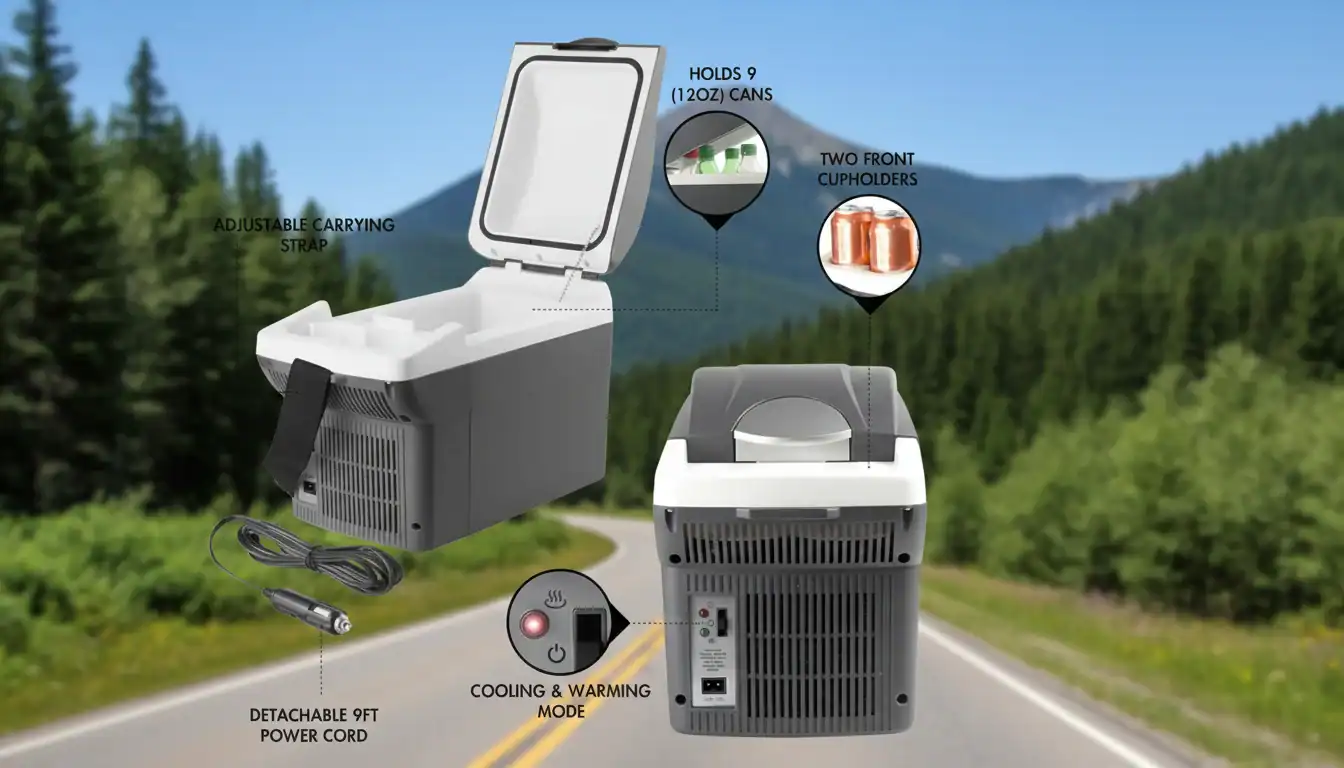
Switching from cooling to warming is intentionally straightforward. The unit’s control panel features a single, clearly marked switch, usually with ‘COOL’ and ‘HEAT’ positions indicated by color (blue and red) and text. The user simply moves the switch from one setting to the other. The internal fan will then begin circulating warm air instead of cold, starting the heating process immediately.
- Locate the mode-selector switch on the control panel.
- Move the switch to the ‘HEAT’ position.
- An indicator light typically confirms the warming mode is active.
Temperature Capabilities and Expectations
It’s important to manage customer expectations for the warming function. Its purpose is to *maintain* the temperature of already hot items, not to cook raw food or reheat cold meals quickly. The system is designed to hold a steady internal temperature of approximately 50–65°C (122–149°F). This makes it ideal for keeping a thermos of coffee hot on a long drive, ensuring a casserole stays warm on the way to a potluck, or for food delivery services needing to keep meals at a safe serving temperature during transit.
- Warms to a thermostat-controlled maximum of 65°C (149°F).
- Keeps pre-made hot beverages and meals at serving temperature.
- Does not function as a portable oven; it is a food warmer.
Warming Temp: Can It Maintain 140°F (60°C) for Food Safety?
Meeting the 140°F (60°C) food safety standard is non-negotiable for commercial food transport, a benchmark that separates professional-grade equipment from liability risks.
The 140°F (60°C) Food Safety Standard
Health codes, including FDA mandates, specify 140°F (60°C) as the minimum temperature for holding hot food. This threshold is critical because it halts the growth of harmful bacteria that thrive in the “danger zone”—between 40°F and 140°F (4°C to 60°C). Any device used for food transport must reliably maintain temperatures above this line to ensure safety and compliance.
- KelyLands’ thermoelectric coolers are engineered to meet this standard, with warming capabilities reaching up to 65°C (149°F).
- This performance keeps food safely outside the temperature danger zone during transport.
- Compliance with this standard is a core requirement for any professional food delivery, catering, or transport operation.
Common Equipment Performance Gaps
A significant portion of warming devices on the market fail to consistently hold the required 140°F. Field data shows many units only achieve temperatures between 110°F and 120°F (43°C to 49°C). This performance gap creates a serious compliance and food safety risk for any business relying on them.
| Métrica de desempenho | Typical Low-Cost Warmers | KelyLands Thermoelectric Cooler |
|---|---|---|
| Maximum Temperature | 110–120°F (43–49°C) | Up to 149°F (65°C) |
| Food Safety Compliance | Fails (Operates in Danger Zone) | Passes (Holds Above Danger Zone) |
| Intended Use | Casual, non-critical warming | Professional Food Delivery & Transport |
- Underpowered warmers lead to unsafe food conditions and potential legal liability.
- This performance gap underscores the need for reliably engineered and tested equipment.
- KelyLands’ design prioritizes consistent heat delivery to avoid these common shortfalls.
Verification and Reliable Performance
Industry standards demand that warming equipment is verified to hold its stated temperature. A thermometer check should always confirm performance. Devices that can reliably maintain 140°F or higher are not simple conveniences; they are essential tools for any operation that handles hot food. This capability is a primary differentiator in the portable cooler and warmer market.
- Consistent temperature maintenance removes guesswork and ensures food safety.
- KelyLands products provide dependable warming for both professional and demanding personal use.
- The ability to hold food at a safe, verified temperature separates premium equipment from the rest of the market.
Source High-Performance, Fully Customizable Car Coolers

Food Delivery Use: Keeping Burgers Hot for DoorDash/UberEats.
Passive insulated bags only delay the cold; active 12V heating systems are the only reliable way to guarantee food safety and quality on multi-stop delivery routes.
Active Heating for Reliable Deliveries
For any food delivery service, maintaining temperature is the core metric of success. While standard insulated bags provide a temporary buffer, they are passive systems that constantly lose heat. Actively heated containers provide consistent, regulated warmth throughout the entire delivery chain. This ensures the last delivery of a route is just as hot and fresh as the first.
- KelyLands car coolers connect directly to a vehicle’s 12V power source, generating steady heat to keep food well above the 140°F (60°C) food safety threshold.
- Unlike passive bags that only slow heat loss, an active system constantly replaces it, fighting temperature drops during long waits or multi-stop routes.
- As real-time temperature monitoring becomes standard, an active cooler guarantees the system consistently reports optimal conditions, protecting drivers from compliance issues.
Maintaining 140°F (60°C) for Food Safety and Quality
Health regulations and customer satisfaction both depend on keeping hot food at or above 140°F (60°C). Any drop below this temperature not only enters the bacterial danger zone but also ruins the food’s texture and taste. This leads directly to poor reviews, refund requests, and platform penalties.
- A powered car cooler maintains this precise temperature, ensuring every meal is safe to eat and meets the restaurant’s quality standards upon arrival.
- This level of control protects both the customer from foodborne illness and the driver from liability.
- Consistent heat preserves the intended quality of sensitive items like crispy fries or juicy burgers, which degrade quickly in a cooling, passive thermal bag.
Handling Multi-Stop Routes Without Losing Heat
The logistics of bundled or multi-stop deliveries present the biggest challenge to temperature control. Each time a bag is opened, heat escapes. An actively heated container is essential for drivers handling several deliveries in one trip, ensuring every customer receives a hot meal.
- With a KelyLands thermoelectric car cooler, the container’s internal temperature remains stable and recovers quickly, regardless of how many times it’s opened and closed.
- This efficiency is critical in high-growth regions like the Asia-Pacific market, where complex, multi-stop logistics are becoming standard operating procedure.
- Drivers can confidently accept batched orders, increasing their efficiency and earnings without sacrificing food quality for customers later in the queue.
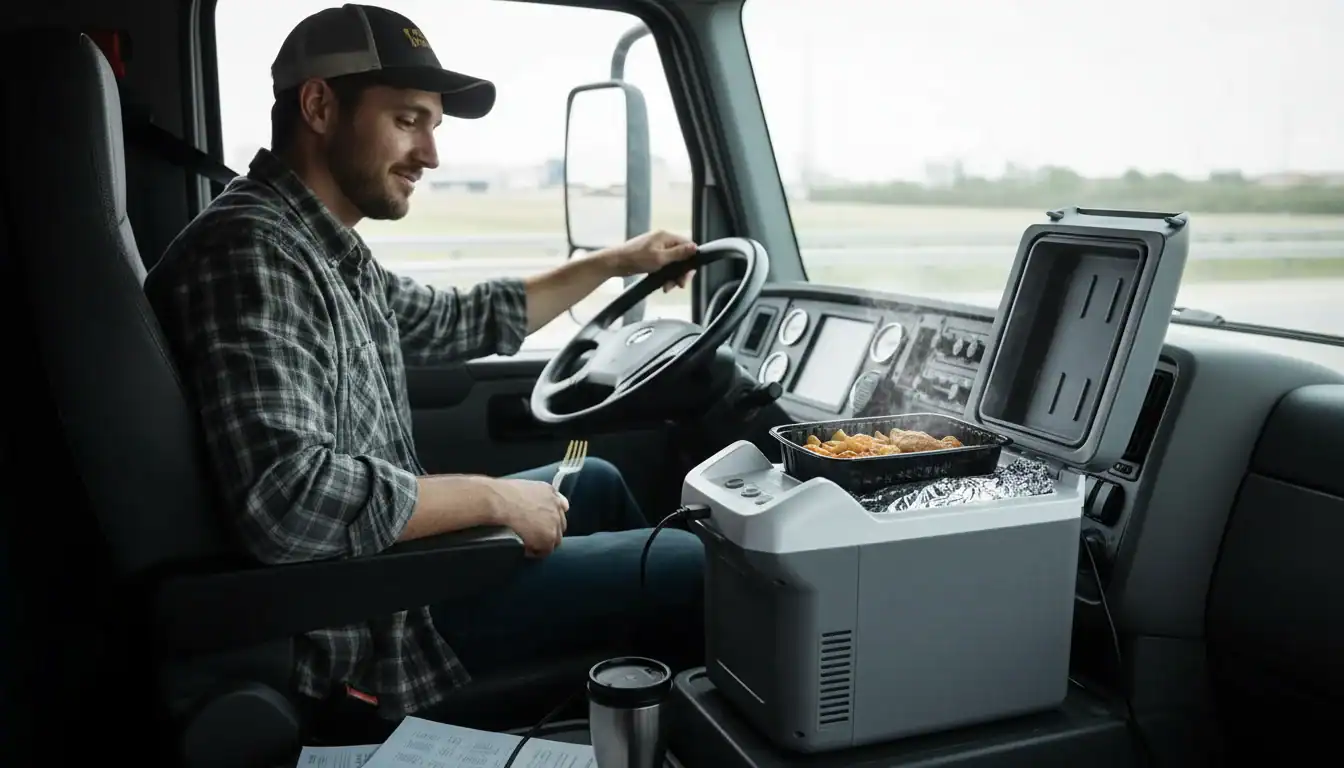
Winter Road Trips: Why You Need Warm Meals on the Go?
Bringing pre-cooked warm meals on winter road trips provides a critical advantage in morale, energy, and preparedness, especially when navigating remote areas with unpredictable conditions.
Boosting Morale and Comfort in the Cold
A hot meal delivers a significant psychological boost during cold-weather travel, offering a tangible sense of comfort and normalcy. It serves as a welcome break from the monotony of driving, directly improving the overall mood and experience of the trip for everyone involved.
- Warm food offers a comforting break from the cold, making long drives more enjoyable.
- Sharing a hot meal improves the social atmosphere for passengers.
- It provides a satisfying alternative to cold snacks and sandwiches.
Sustaining Energy and Body Temperature
Consuming warm foods and drinks helps your body maintain its core temperature, a crucial function during winter. Hearty meals like soups or stews provide the necessary calories and nutrients to stay energized for long hours behind the wheel, far more effectively than high-sugar snacks.
- Warm meals help regulate internal body temperature against external cold.
- Hearty, warm dishes like stews provide sustained energy release.
- Proper nutrition from a real meal is more effective than relying on snacks.
Convenience and Savings on the Road
Relying on restaurants or roadside diners can be both time-consuming and expensive. Bringing your own pre-cooked warm meals eliminates the need for frequent stops, allowing you to save money and stick to a tight travel schedule without compromising on food quality.
- Avoids costly restaurant bills, making the trip more budget-friendly.
- Reduces time spent searching for open eateries, especially in remote areas.
- Allows for healthier, home-prepared options tailored to your dietary needs.
Practicality for Remote and Unpredictable Conditions
Winter travel often involves driving through areas with limited services. Having a reliable supply of warm food ensures you are prepared for unexpected delays, road closures, or situations where restaurants are simply unavailable.
- Guarantees a food source if you get stuck in traffic or bad weather.
- Essential for trips through national parks or rural routes with few amenities.
- Provides a reliable meal option when traveling late at night or on holidays.
Conclusão
A reliable electric cooler and warmer is an essential tool for delivery fleets and gig workers aiming to maintain food quality. These units ensure meals stay at a safe, desirable temperature, which directly impacts customer satisfaction and driver ratings. The ability to switch from cold drinks to hot food makes this a versatile, year-round asset for any mobile service.
If you are sourcing equipment for a delivery fleet or exploring corporate gift options, review our catalog for OEM customization. Contact our team to discuss your specific capacity and branding requirements for a bulk order.
Perguntas frequentes
Can an electric cooler keep takeaway food hot for 1 hour?
Yes, absolutely. An electric cooler with a warming function is designed for this exact purpose. These devices can typically maintain a temperature of up to 140-150°F (60-65°C), which is ideal for keeping pre-heated food well above the food-safe temperature threshold. To ensure optimal performance, place the food into the cooler while it is still hot from the restaurant and switch the unit to its heating mode immediately. One hour is well within the standard operational capability for keeping a meal ready to eat.
What is the best car cooler warmer combo for delivery?
For professional delivery services, the best car cooler/warmer combo prioritizes reliability, efficiency, and capacity. Look for a commercial-grade thermoelectric model with a capacity between 25 and 40 quarts, which is large enough for multiple orders. Key features should include a durable, hard-sided construction, a secure lid latch, and a low-voltage cutoff function to prevent draining your vehicle’s battery. A unit with a digital temperature display also allows for precise control, ensuring food is always delivered at the optimal temperature.
How to use the heating function safely on a 12v cooler?
To use the heating function safely, always ensure proper ventilation around the unit’s fan and vents by leaving at least a few inches of clearance; never cover the cooler with blankets. Secure the cooler in your vehicle so it cannot tip over or slide during transit. It is highly recommended to run the cooler only when the vehicle’s engine is on to avoid draining the battery. For added safety, plug the 12V cord directly into a high-quality vehicle socket and avoid using cheap, multi-socket adapters which can overheat. Finally, always unplug the unit when not in use.
Is the interior liner easy to clean grease spills?
Yes, the interior liners of modern electric coolers are specifically designed for easy cleaning. They are typically made from a single piece of molded, non-porous hard plastic like polypropylene. This smooth surface prevents grease, oils, and sauces from absorbing into the material. For cleaning, simply wipe up spills with a paper towel, then use a soft cloth with warm water and a mild dish soap. For stubborn grease, a food-safe degreaser can be used. Avoid abrasive scouring pads to prevent scratching the liner.

 English
  Español
  Français
  Deutsch
  Português do Brasil
  Русский
  한국어
한국어  日本語
日本語  العربية