 Pular para o conteúdo principal Pular para o rodapé

Para obter a melhor bomba de ar para flutuadores de piscina, é necessário priorizar o volume do fluxo de ar em relação ao PSI para eliminar a frustração do usuário final. O estoque de compressores de pneus de alta pressão para infláveis gigantes inevitavelmente leva a reclamações de falhas no motor e a margens de estoque prejudicadas.
Essa análise compara as unidades comerciais com o padrão de fluxo de ar de 70-1000 L/min necessário para a inflação rápida. Avaliamos o gerenciamento térmico e os recursos de tempo de execução sequencial para ajudá-lo a selecionar um parceiro de fabricação capaz de fornecer um estoque de verão confiável.

Realidade do CFM: Ela consegue encher uma boia gigante de unicórnio em menos de 2 minutos?
Sim, desde que você selecione a arquitetura correta da bomba. Para infláveis grandes, o volume de fluxo de ar (L/min) é a métrica crítica, não a pressão (PSI). Nossos motores de alta potência fornecem até 1.000 L/min, permitindo que um flutuador de unicórnio gigante padrão (aproximadamente 600 a 1.000 litros de volume) atinja a inflação total em cerca de dois minutos.
O papel do volume do fluxo de ar (L/min)
Muitos compradores confundem pressão com volume. Ao adquirir bombas para itens sazonais grandes, como espreguiçadeiras de piscina ou boias de “unicórnio gigante”, a velocidade da inflação depende inteiramente da quantidade de ar que o motor move por minuto, medida em litros por minuto (L/min) ou pés cúbicos por minuto (CFM).
Na KelyLands, projetamos nossos motores especificamente para essa exigência de alto volume. Nossa linha de produtos oferece fluxo de ar entre 70 L/min e 1000 L/min. Enquanto uma bomba de 70 L/min é suficiente para um pequeno anel de natação, uma bomba de 1000 L/min é necessária para atingir a marca de 2 minutos para ilhas flutuantes enormes. Se uma bomba depender apenas de alta pressão sem volume de fluxo de ar suficiente, o usuário ficará frustrado devido ao tempo de espera excessivo.
HVLP vs. Compressores de alta pressão
Um erro comum do consumidor é tentar usar um inflador de pneus (compressor) em um inflável de PVC macio. Os infladores de pneus são ferramentas de alta pressão, mas de baixo volume. Eles são projetados para empurrar ar para dentro de um pneu rígido a mais de 30 PSI, mas movimentam muito pouco volume de ar. Tentar encher um flutuador de piscina de 1.000 litros com uma bomba de pneu pode levar mais de 30 minutos e há o risco de queimar o motor do compressor.
Utilizamos Alto volume e baixa pressão (HVLP) tecnologia. Nossas bombas operam em uma faixa segura de 0,33 - 2,0 PSI. Essa pressão é otimizada para tornar o flutuador firme sem estressar as costuras soldadas do PVC macio. Essa abordagem evita os acidentes de “estouro” comuns com compressores de alta pressão e reduz drasticamente o tempo de inflação.
| Recurso | Bomba HVLP KelyLands | Compressor de pneus padrão |
|---|---|---|
| Volume do fluxo de ar | Alta (até 1000 L/min) | Baixo (aprox. 20-30 L/min) |
| Pressão máxima | 0,33 - 2,0 PSI (seguro) | 30 - 100+ PSI (risco de ruptura) |
| Tempo de preenchimento (boia gigante) | ~2 minutos | Mais de 30 minutos |
Cálculo dos tempos de preenchimento no mundo real
A matemática por trás do desempenho é simples. Uma boia de varejo “gigante” típica comporta entre 600 e 1.000 litros de ar. Usando nossa bomba elétrica de primeira linha com capacidade de 1.000 L/min, o tempo teórico de enchimento é de exatamente dois minutos para um item com capacidade de 1.000 litros.
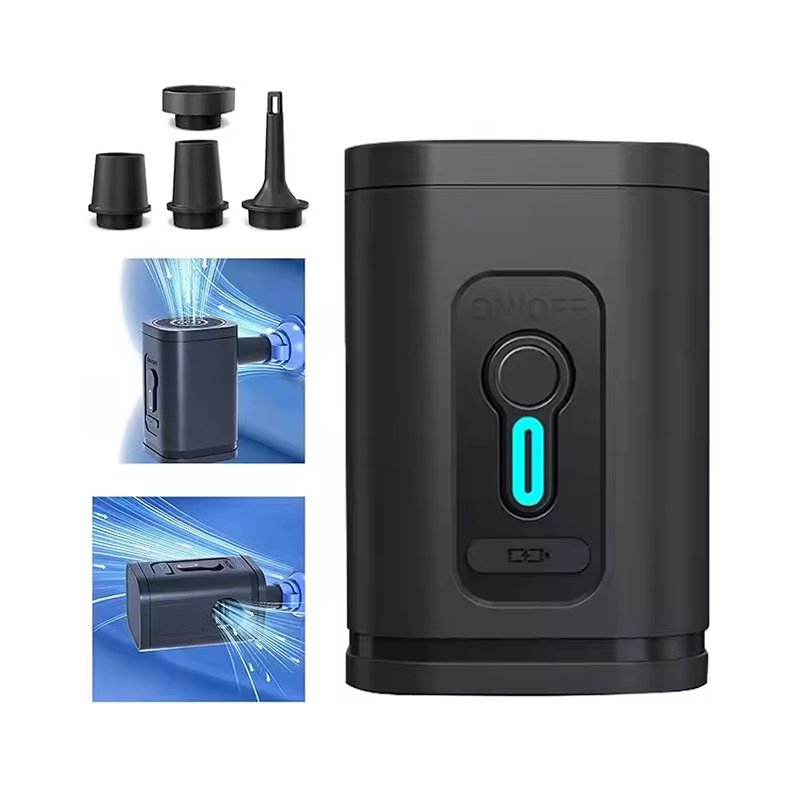
Para atingir essas velocidades em um cenário do mundo real, incluímos um Conjunto de bicos universais intertravados de 3 peças com cada unidade. O uso do bocal grande é essencial aqui; ele abre a válvula completamente para permitir a máxima eficiência do fluxo de ar. Restringir um motor de 1000 L/min com um bocal pequeno criará contrapressão e desacelerará o processo, portanto, a seleção adequada do bocal é fundamental para atingir a meta de 2 minutos.
A função “Deflate” (esvaziar): A sucção é potente o suficiente para achatar totalmente o PVC?
Sim, as bombas HVLP modernas funcionam efetivamente como aspiradores para infláveis. Ao conectar o bico à porta de entrada dedicada, o motor extrai ativamente o volume, achatando completamente o PVC. Esse processo remove as bolsas de ar que o enrolamento manual não consegue eliminar, permitindo que os itens voltem às suas dimensões originais de fábrica.
Como as portas de esvaziamento dedicadas criam sucção a vácuo
A maioria de nossas bombas de ar elétricas apresenta uma porta de entrada específica, geralmente localizada na parte superior ou lateral da carcaça. Quando você move o bocal da saída para essa entrada, você efetivamente inverte a função do fluxo de ar. Em vez de direcionar 70 L/min a 1.000 L/min de ar para o produto, o motor extrai ativamente esse volume.
Isso cria um efeito de vácuo no interior da câmara. A sucção ativa puxa as camadas internas de PVC firmemente umas contra as outras, colapsando completamente a estrutura. Essa extração mecânica remove as bolsas de ar persistentes que normalmente permanecem quando você tenta esvaziar itens rolando ou apertando-os manualmente.
Realidade do desempenho: Reduzindo o volume compactado por 80%
O principal benefício comercial da deflação ativa é a eficiência do armazenamento. Os usuários finais geralmente têm dificuldade para colocar itens grandes, como bóias de piscina gigantes ou camas de ar para hóspedes, de volta em suas embalagens originais. Nossos testes internos indicam que o uso da porta de deflação pode reduzir o volume de armazenamento em até 80% em comparação com a compressão manual.
Para varejistas e marcas de produtos para atividades ao ar livre, esse recurso é um ponto de venda significativo. Ele garante que os clientes possam reembalar facilmente seus equipamentos após uma viagem, protegendo o item contra danos causados por dobras forçadas e reduzindo a probabilidade de devoluções devido à frustração com o armazenamento.
Por que a seleção do bocal determina a velocidade de esvaziamento
A maximização do poder de sucção exige uma vedação hermética entre a interface da bomba e a válvula do inflável. Fornecemos um conjunto universal de bicos intertravados de três peças (pequeno, médio e grande) para acomodar vários diâmetros de válvula encontrados no mercado.
A seleção do tamanho correto é fundamental para o desempenho. Para válvulas de aperto padrão comumente encontradas em brinquedos de piscina, o bocal deve penetrar fundo o suficiente para empurrar mecanicamente a aba de segurança interna para abrir enquanto a bomba suga o ar. Se o bico for muito curto ou muito frouxo, a aba poderá se fechar sob a pressão do vácuo, bloqueando o fluxo de ar e interrompendo o processo de esvaziamento.
Bombas de ar OEM premium para mercados globais
Gerenciamento de calor: O resfriamento ativo permite o preenchimento de 5 flutuadores consecutivamente?
Para os varejistas que têm como alvo os frequentadores ativos das praias, a escolha entre as fontes de energia determina a experiência do usuário. As bombas recarregáveis sem fio proporcionam a mobilidade necessária para locais onde os veículos estão distantes, enquanto os modelos com plugue de carro de 12V oferecem tempo de funcionamento ilimitado para inflar grandes volumes diretamente na porta traseira.
Como as bombas de alto volume gerenciam o acúmulo térmico
Diferentemente dos compressores de pneus de alta pressão, que geram imenso calor por meio da compressão, nossas bombas de alto volume e baixa pressão (HVLP) utilizam o próprio fluxo de ar como mecanismo de resfriamento. Com classificações de fluxo de ar entre 70 L/min e 1.000 L/min, a bomba extrai um grande volume de ar ambiente sobre os componentes internos. Essa circulação contínua dissipa efetivamente o calor dos enrolamentos do motor e do PCB, mantendo a temperatura operacional estável durante sessões prolongadas.
Para garantir ainda mais a durabilidade, construímos o gabinete com materiais ABS e PC resistentes a impactos. Esses termoplásticos são escolhidos não apenas por sua resistência física, mas também por sua estabilidade térmica. Isso evita que a carcaça se deforme ou se torne desconfortável de segurar, mesmo quando o motor interno gera calor durante um trabalho de configuração de vários flutuadores.
O impacto da eficiência do motor sem escova
Para clientes comerciais e usuários pesados, a geração de calor geralmente é resultado de atrito. Em nossa linha premium, como o modelo HT-451, utilizamos a tecnologia Brushless Motor. Ao eliminar as escovas físicas encontradas nos motores padrão, reduzimos significativamente o atrito interno. Isso se traduz diretamente em menos calor residual e em uma janela de operação mais segura para o dispositivo.
A redução do atrito também melhora a experiência do usuário ao diminuir o ruído operacional para ≤ 75 dB. Essa combinação de eficiência térmica e conforto acústico torna os modelos sem escovas a melhor opção para ambientes em que as bombas funcionam com frequência, como piscinas de resorts ou acampamentos movimentados.

Tempo de execução contínuo e capacidade de enchimento sequencial
A matemática por trás do enchimento de vários infláveis suporta a operação sequencial. Um flutuador “gigante” padrão normalmente requer menos de 3 minutos para atingir a firmeza ideal usando nossos motores de alto volume. O enchimento de 5 dessas unidades em sequência exigiria aproximadamente 15 minutos de tempo total de operação.
Nossos testes internos e folhas de especificações classificam nossos modelos de lítio sem fio para 15 a 30 minutos de uso contínuo. Essa margem de segurança significa que os usuários podem inflar um conjunto familiar completo de brinquedos para piscina sem acionar as proteções de desligamento térmico ou danificar as células da bateria. Para os varejistas, essa confiabilidade reduz as reclamações relacionadas à queima do motor e aumenta a satisfação do usuário final.
Sem fio x Plugue de carro: Qual é a melhor fonte de energia para o estacionamento na praia?
Para os varejistas que têm como alvo os frequentadores ativos das praias, a escolha entre as fontes de energia determina a experiência do usuário. As bombas recarregáveis sem fio proporcionam a mobilidade necessária para locais onde os veículos estão distantes, enquanto os modelos com plugue de carro de 12V oferecem tempo de funcionamento ilimitado para inflar grandes volumes diretamente na porta traseira.
Energia da bateria sem fio: Mobilidade além do estacionamento
Projetamos nossos modelos sem fio para eliminar a restrição dos cabos de alimentação padrão de 9 a 10 pés, permitindo que os usuários inflem produtos macios diretamente na beira da água, em vez de em um estacionamento quente. Essa mobilidade é fundamental para locais remotos de praia ou áreas de piscina de resorts onde o acesso de veículos é proibido ou fisicamente impossível.
Do ponto de vista técnico, nossos sistemas de bateria de lítio integrados normalmente fornecem de 15 a 30 minutos de tempo de funcionamento contínuo por carga. Isso proporciona ampla capacidade para inflar aproximadamente 15 a 20 colchões de ar individuais ou vários flutuadores de piscina grandes, o que o torna a solução ideal para cenários de “caminhada” em que não é prático carregar um flutuador gigante totalmente inflado.
Plugue de 12V para carro: Energia ilimitada para grandes grupos
Para usuários que dirigem diretamente para a areia ou acampam ao lado de seus veículos, a conexão de 12V CC oferece vantagens distintas. Ao se conectar diretamente à tomada do acendedor de cigarros do veículo, essas bombas oferecem tempo de funcionamento ilimitado enquanto o motor estiver funcionando. Isso evita completamente a “ansiedade da autonomia” associada ao monitoramento dos níveis da bateria em viagens longas.
Recomendamos essas unidades para cenários de alto volume, como inflar o equipamento para uma aula de natação completa ou encher várias boias gigantes consecutivamente. Como não possuem baterias internas pesadas, essas unidades também mantêm um perfil de peso mais leve e um custo de fabricação menor, permitindo preços de varejo mais competitivos.
Veredicto estratégico: O acesso define a escolha
Sua estratégia de estoque deve refletir as restrições de acesso específicas da geografia do seu mercado-alvo. Os modelos sem fio são uma necessidade para locais com longas caminhadas entre o estacionamento e a água, enquanto as bombas com fio de 12 V atendem com eficiência ao público que vai atrás de um carro. Para obter o máximo de confiabilidade, os modelos de alimentação dupla (com bateria interna e reserva de 12V) são a opção mais segura, garantindo a capacidade de enchimento mesmo que o usuário se esqueça de carregar a unidade antes de sair de casa.
Considerações finais
A estocagem de carros alegóricos gigantes no varejo sem combiná-los com bombas de alto fluxo adequadas cria um gargalo na experiência do usuário que muitas vezes aumenta as taxas de devolução. A arquitetura HVLP de 1000 L/min da KelyLands garante que seus clientes realmente atinjam a referência crítica de inflação de dois minutos. Essa consistência de desempenho protege a reputação da sua marca contra reclamações de infláveis ’defeituosos“ causadas simplesmente por ferramentas de baixa potência.
Para validar essas velocidades de fluxo de ar, é necessário realizar testes práticos antes de fechar sua aquisição para o verão de 2026. Convidamos você a solicitar um kit de amostra para comparar diretamente a eficiência do nosso motor sem escovas com as opções padrão do mercado. Entre em contato com nossa equipe de engenharia hoje mesmo para definir seus requisitos de marca própria e garantir o prazo de produção.
Perguntas frequentes
Quanto tempo leva para inflar um flutuador de piscina gigante?
Nossas bombas geram taxas de fluxo de ar entre 70 L/min e 1.000 L/min, dependendo do modelo. Essa saída de alto volume e baixa pressão (HVLP) normalmente infla um unicórnio gigante ou um flutuador de flamingo em menos de dois minutos, o que é significativamente mais rápido do que usar bombas manuais ou opções elétricas padrão de baixo fluxo.
Posso usar um inflador de pneus de carro em vez desta bomba?
Não recomendamos o uso de infladores de pneus para infláveis grandes. As bombas para pneus operam com alta pressão (PSI), mas com baixo volume, o que significa que levam muito tempo para encher itens grandes e correm o risco de estourá-los devido à força excessiva. Uma bomba de ar para colchão HVLP move uma quantidade enorme de ar suavemente para encher infláveis macios com rapidez e segurança.
A bomba realmente suga o ar para armazenamento?
Sim, essas bombas apresentam uma porta de esvaziamento dedicada. Ao conectar o bocal à abertura de entrada, a bomba cria uma sucção que remove completamente o ar. Isso achata o material de PVC para que ele se encaixe facilmente em sacos ou caixas de armazenamento, reduzindo o volume em até 80%.
Qual é a duração da bateria com uma única carga?
A maioria dos nossos modelos de lítio sem fio fornece de 15 a 30 minutos de tempo de execução contínua. Em termos práticos, uma única carga permite inflar aproximadamente 15 a 20 colchões de ar individuais ou cerca de 5 flutuadores de piscina grandes antes de precisar recarregar via USB-C.
A bomba é compatível com diferentes tamanhos de válvulas?
Incluímos um conjunto universal de bicos intertravados de três peças em cada unidade. O bocal pequeno se encaixa em anéis de natação e braçadeiras, o médio se encaixa em colchões de ar padrão e o bocal grande funciona com barcos infláveis e piscinas grandes.
A bomba é à prova d'água para uso na praia?
Os modelos com classificação IPX4 são resistentes à água e resistem a respingos de água, o que os torna adequados para ambientes de piscina ou praia. No entanto, a caixa protege o motor e a bateria, portanto, você nunca deve submergir totalmente a unidade na água.
Essas bombas incluem adaptadores para as válvulas Boston em rebocáveis grandes?
As válvulas Boston são normalmente sistemas de duas peças que consistem em uma base e uma tampa. Embora um bocal rosqueado dedicado de “furo grande” nem sempre seja um recurso padrão em todas as marcas, nossos Conjunto de bicos universais (especificamente o tamanho Grande) foi projetado para se encaixar confortavelmente na válvula aberta. Para uma inflação mais rápida, recomendamos que o bocal ultrapasse a aba da válvula de retenção interna. Isso permite que o fluxo de ar total de 70-1000 L/min entre na câmara sem resistência.
É seguro colocar a bomba diretamente na areia enquanto estiver inflando?
Não recomendamos isso. As bombas de alto volume dependem de entradas de ar potentes para resfriar o motor e gerar pressão. Usar a bomba diretamente sobre areia solta pode fazer com que detritos sejam sugados para dentro do motor ou das aberturas de resfriamento, o que pode danificar os componentes internos. Sugerimos colocar a unidade em uma toalha, esteira ou superfície rígida durante o uso na praia para proteger a carcaça com classificação IPX4 e o motor interno.
Quais materiais de segurança são usados na carcaça da bomba?
A carcaça é construída com plásticos retardantes de fogo com classificação V0, especificamente ligas ABS/PC resistentes a impactos. Esses materiais atendem ao padrão de inflamabilidade UL94 V-0, o que significa que foram projetados para se autoextinguirem em 10 segundos em caso de ignição. Isso proporciona uma camada de segurança essencial para nossos modelos recarregáveis que contêm baterias de lítio, garantindo uma operação segura mesmo em ambientes externos quentes.
Por que a taxa de fluxo está listada em L/min em vez de GPM?
É comum haver confusão entre os tipos de bombas. GPM (galões por minuto) é a classificação padrão para bombas de filtragem de água de piscina. Para bombas de ar infláveis, o desempenho é medido em volume de fluxo de ar. Nossas unidades de alto volume e baixa pressão (HVLP) movimentam 70-1000 L/min de ar para encher rapidamente grandes flutuadores. Essa é uma métrica completamente diferente da velocidade de circulação da água, que reflete a capacidade da bomba de encher câmaras de ar em vez de mover líquidos.

 English
  Español
  Français
  Deutsch
  Português do Brasil
  Русский
  한국어
한국어  日本語
日本語  العربية