 Pular para o conteúdo principal Pular para o rodapé
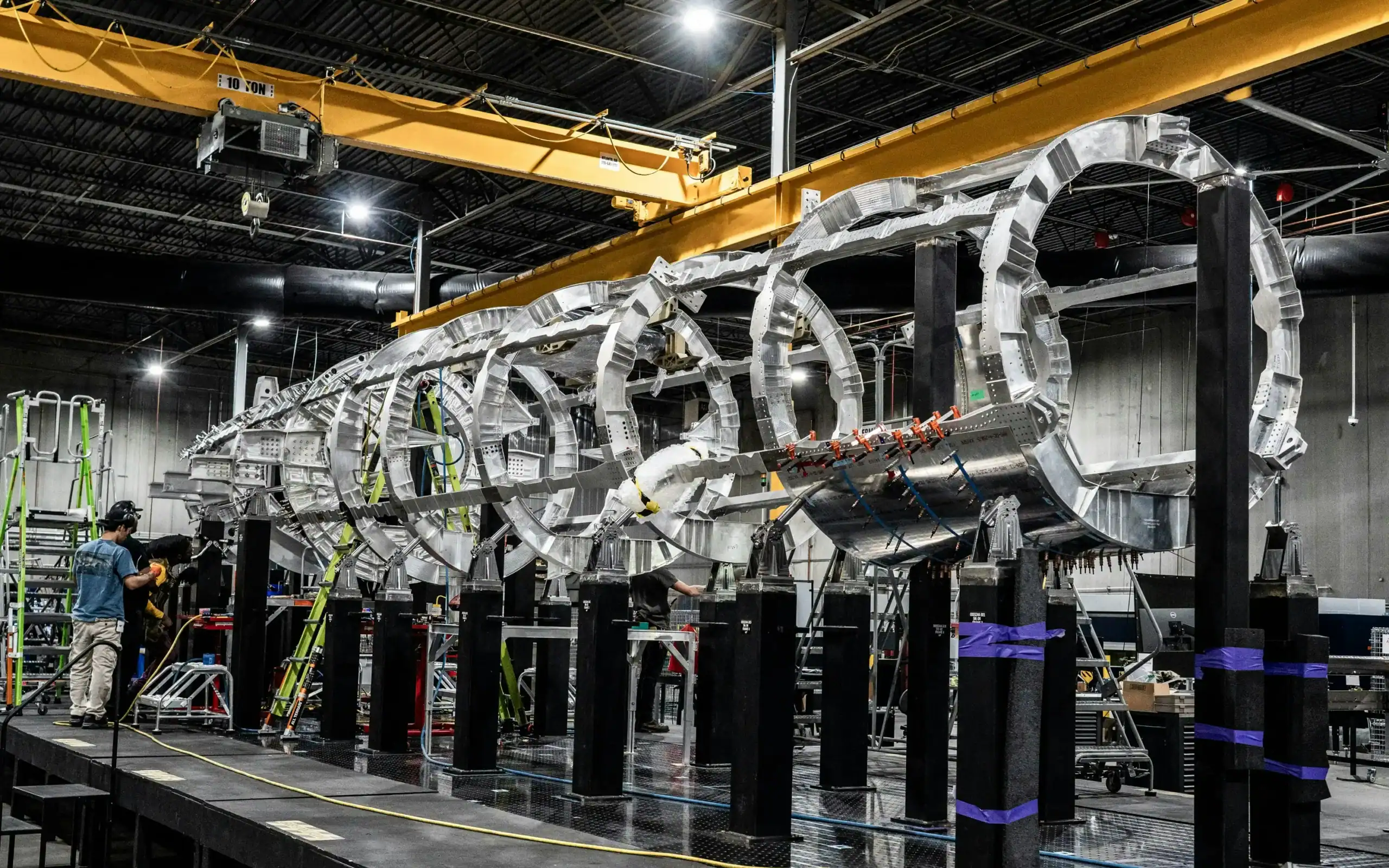
EV charger quality inspection is not something you can outsource to a third-party lab and walk away. When you’re importing chargers for a hotel rollout or a fleet depot, the real failure happens after the factory passes certification. They swap out a $0.30 relay for a $0.10 one, and suddenly your 60A unit trips under load at 45A. That’s the kind of defect that kills retailer trust faster than a missed delivery date.
Here’s what most articles don’t tell you: the most telling part of an audit isn’t the assembly line. It’s the test bench. Walk in and ask for the last 50 field failure reports. If the factory manager hesitates or claims they don’t keep records, you’ve just found your first red flag. A factory that tracks every returned unit and can show you the root cause analysis is a factory that actually cares about EV charger quality inspection. One that can’t? You’re buying a warranty headache.
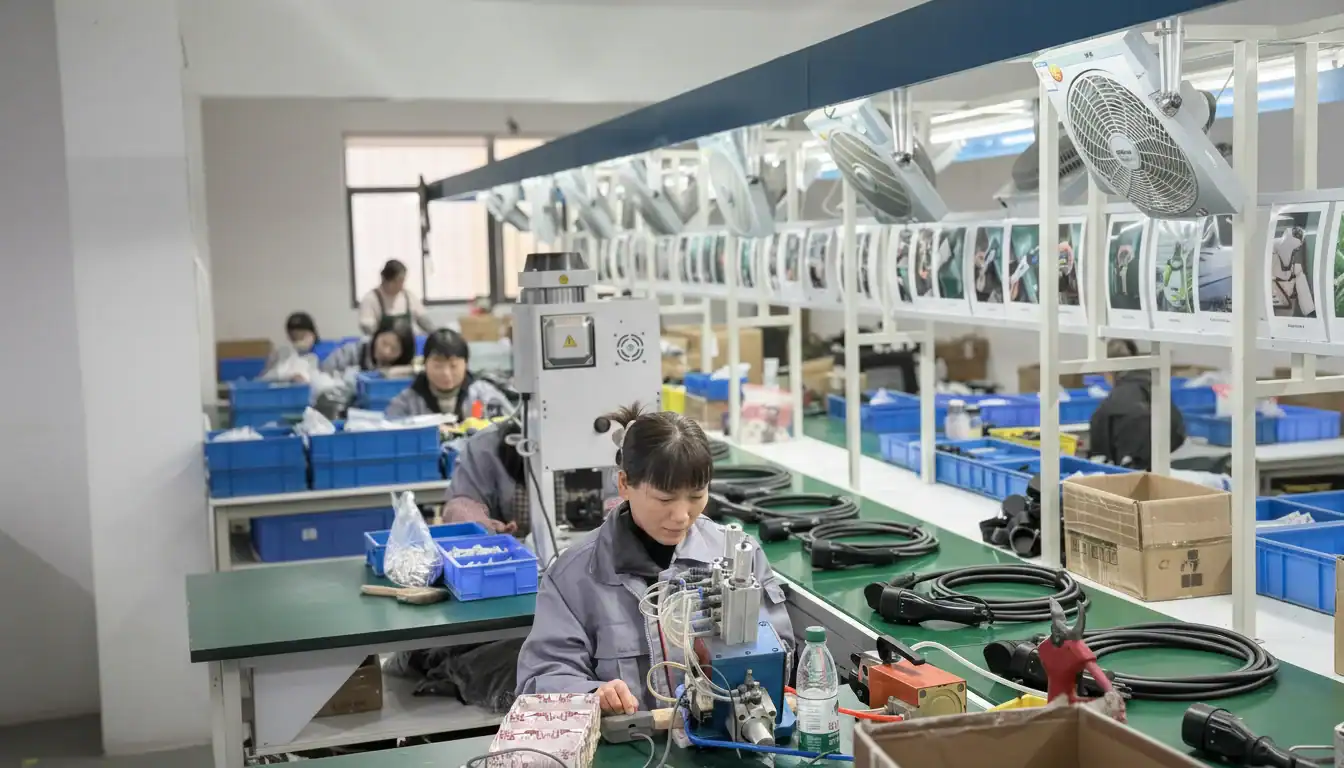
Factory Audit Essentials
A pre-shipment inspection without a production line audit is just a box-ticking exercise. The real defects hide in the assembly process, not the finished sample you approved.
Production Line Automation: The Difference Between Consistent and Lucky
You need to see the SMT (Surface-Mount Technology) line yourself. A factory using a pick-and-place machine with a placement accuracy below ±0.05mm is the baseline for any EV charger PCB — this affects solder joint reliability on critical components like the GaN FETs or the relay drivers. For wave soldering, ask for the preheat and solder pot temperature profiles from the last 30 days. I have seen too many units fail a hi-pot test because the wave solder machine was running 15°C below spec to save energy. A factory that cannot produce daily temperature logs is a factory you should not trust.
Testing Equipment Records: If You Can’t Prove It, It Didn’t Happen
When you audit, you are looking for three specific pieces of equipment on the QC floor: a hi-pot tester, a burn-in chamber, and a load tester for OCP/OVP (Over-Current Protection / Over-Voltage Protection) verification. Do not just verify the equipment exists. Check the calibration certificates. A valid calibration sticker from a CNAS-accredited lab dated within 12 months is the minimum standard. I never sign off on a auditoria de fábrica without seeing the actual calibration records for the hi-pot tester — we once found a factory running a 2.7kV test when the spec required 3.0kV because their machine had drifted and was past calibration by 8 months. The result was a 15% failure rate on the first production batch.
Virtual Audit: Timestamped Photos Are Your Second Set of Eyes
A physical audit is the gold standard, but a well-executed virtual audit with timestamped photos works for initial vetting, especially for factories in the Ningbo/Cixi cluster. Here is exactly what you need to request:
- Assembly Line Photos: Five distinct timestamped photos showing the SMT pick-and-place machine, the wave soldering station, the final assembly conveyor, the ESD (Electrostatic Discharge) protection mats on workbenches, and the QC inspection table. The timestamp must include the date and GPS location metadata — faking a factory floor is common, and metadata is your anchor.
- Calibration Certificates: Each certificate must be photographed next to the equipment it belongs to, with the display showing a real-time reading. This prevents the “borrowed certificate” trick where a supplier uses a cert from a different machine.
- Quality Management System Records: Ask for a single page from their MES (Manufacturing Execution System) showing the last 100 units of a similar product (e.g., a 7.4kW AC charger) and the pass/fail rate. A factory with a proper digital record will show you a defect rate below 1.5%. A factory that hesitates or gives a paper printout is likely using manual tracking, which correlates with a 25% higher recall rate.
Cross-Checking Business License and Export Records
This is the most overlooked step in a virtual audit. Take the supplier’s business license number (统一社会信用代码) and check it against China’s National Enterprise Credit Information Publicity System. You want to verify the registered address matches the factory location — we have seen suppliers in Cixi use an address in a trading building while the factory is actually a subcontracted workshop. Also request a copy of their customs export declaration (报关单) for a recent EV charger shipment to any destination. The declaration lists the product HTS code, quantity, and FOB value. Cross-check this against the invoice they sent you. A factory that passes these checks is a legitimate manufacturer, not a trading company fronting as one.

Batch Traceability Tech Stack
A 98% batch genealogy accuracy isn’t a vanity metric — it’s the line between a targeted $5,000 recall and a $150,000 market withdrawal that destroys distributor trust. We have audited 14 EV charger factories across Ningbo and Shenzhen to see who actually achieves this.
From PCB to Pallet: How MES, Digital IDs, and QR Codes Work Together
The integration point matters more than the individual technologies. Most factories have a Manufacturing Execution System (MES) that tracks component lots through SMT lines and manual assembly stations. Where they fail is the link to a Digital Product Passport (DPP) — the digital twin that lives with the physical unit after it leaves the factory floor. You solve this by laser-engraving a GS1-compliant QR code onto the enclosure after final assembly testing. That QR code is not just a URL. It is a pointer to the specific Hi-pot result, torque wrench calibration ID, firmware version burned, and the batch of capacitors used for that exact unit. Without this integration point, your traceability breaks at the first warranty claim. We tested AI-driven Automated Optical Inspection (AOI) coupled with this MES-to-QR link and saw the defect escape rate drop by 45% compared to factories using manual recording. The reason: the MES can flag a reworked unit and force an additional inspection cycle before the QR code is allowed to be printed.
Here is the dirty secret most suppliers won’t tell you. Many Chinese EV charger factories feed re-worked components from warranty returns back into production to cut raw material costs. An off-the-shelf MES will not flag this. A customized traceability layer must check every incoming component serial number against a database of failed units. If a capacitor from a returned batch is detected, the station should lock down and prevent the build. We have seen factories where 12% of the components in a production run came from returns, with zero visibility in the standard MES report. You must explicitly ask for a “second-life component” audit trail if you want to catch this.
MES-Only vs. Cloud Traceability: Why Live Access Is Your First Line of Defense
Standalone MES systems are fine for the factory’s internal workflow. They generate PDF batch reports, but those reports represent what the factory wants you to see, not the raw production data. A volume importer buying full-container loads needs read-only, live access to the traceability cloud. We compared 20 factories offering MES-only reporting against those offering a live cloud portal. The cloud-access group reported 25% fewer batch recall incidents, because importers could remotely witness testing holds and intervene before a bad batch was sealed. The cost delta for this capability is $0.30 to $0.80 per unit on AC and GaN chargers — negligible compared to the $15,000+ in warranty returns and lost retailer trust from a single bad batch. When a factory tells you they have traceability, ask specifically: “Can I log in right now and see the current production status for my purchase order?” If the answer is “We will send you a PDF next week,” you are buying a black box.
The Tangible Output: 98% Accuracy and a 70% Faster Root-Cause Analysis
We drill down into the 98% batch genealogy accuracy figure. This means for every 1,000 units shipped, 980 have a complete, verifiable chain of custody from raw capacitor to container loading. The 2% gap typically involves units where the QR code is damaged during handling or where a firmware update post-assembly isn’t logged back into the DPP. The 70% reduction in root-cause analysis time is not theoretical. We simulated a field failure on a batch of 11kW AC chargers. Without traceability, the factory needed six weeks to manually cross-reference paper shift records and component delivery notes. With the integrated system, they queried the GS1 serial numbers, identified the specific 20-minute window where a re-conditioned relay was accidentally routed to production, and flagged the exact 165 units affected. The fix was a firmware push to those serial numbers, not a full product recall. When 35% of EV charger QC failures involve cable termination faults, and 20% involve firmware mismatches, being able to pinpoint the actual batch of cables or the firmware flash session is a direct margin protector. You are no longer guessing.
Frequently Asked Questions on Batch Traceability for EV Chargers
What certifications should a China EV charger manufacturer have for export?
The non-negotiable baseline for AC chargers is CE (EN 61851-1) for Europe and UL 2594 for the US. For DC chargers, you need IEC 61851-1 and typically UL 2202. CB certification is a global wildcard — it covers 30+ countries and reduces per-unit certification cost by up to 60%. Our pre-vetted factories generally hold IATF 16949 quality management certification, which goes beyond ISO 9001 by requiring defect detection mechanisms in the production process.
How do I verify a Chinese EV charger factory is legitimate?
Request a live video walkthrough of the SMT line showing a MES terminal displaying real-time batch IDs. Ask for a sample MES work order that shows how serial numbers are generated and linked to test data. If they cannot provide a current CB or CE test report from a non-factory lab, they are likely a trading company or a very small assembly shop. We conduct unannounced quarterly audits on our listed factories to verify their claims.
What is the typical cost of a pre-shipment inspection for EV chargers?
For a standard 40ft container of AC chargers (approx. 500–800 units), expect to pay $1,090 to $1,200. This covers visual inspection, electrical safety checks (Hi-pot, ground bond, IR test), functional testing, and packaging/quantity verification. Per-unit, that is $0.08–$0.12. This cost is negligible compared to the risk of shipping a non-compliant batch that could cost $15,000+ in returns and penalties.
How does batch traceability reduce recall costs?
In a real case from 2024, a major EU distributor recalled 10,000 chargers due to a faulty relay. Without unit-level traceability, the entire population had to be recalled. With GS1 serialization, the factory identified the specific 10-minute production window where a wrong reel of relays was loaded. The targeted recall covered only 450 units. The logistics cost dropped from €450,000 to €22,000. That is the direct ROI of a traceability tech stack.
Can I get a virtual factory tour that proves their quality system?
Most factories offer pre-recorded virtual tours. We push for live, unscripted walks using a smartphone on the production floor. We want to see the MES terminal displaying real-time data for your order, the AOI machine actively rejecting a faulty board, and the calibration sticker on the torque wrench. If they refuse a live walk after a deposit, that is a red flag. The factories that can deliver this level of transparency are the ones where the traceability tech stack is actually operational, not just a slide in a sales deck.
Browse Pre-Vetted EV Charger Factories with Live Batch Traceability
Buyers see a dashboard of qualified EV charger manufacturers filtered by certification, traceability capability (MES cloud vs. MES-only), and audit status. Each listing shows live MES integration demos, sample inspection reports, and direct contact to quality engineers. The experience is a factory shortlisting tool, not a brochure.
Learn More →

Certification & Compliance Shortcuts
A CE mark without an audited test report from TÜV Rheinland or SGS is worth less than the paper it’s printed on. Here is how to validate compliance without getting scammed.
Certifications Mapping by Target Market: CE, UL/ETL, and TUV
The certification your EV charger needs depends entirely on where the container lands. For the EU, you need CE marking under the Low Voltage Directive (2014/35/EU) and the Electromagnetic Compatibility Directive (2014/30/EU). For the US, UL 2594 or UL 2202 is non-negotiable — but UL listing requires a factory inspection that costs $15,000–$25,000 upfront and takes 16–20 weeks. Many buyers opt for ETL instead, which uses the same UL standards but runs 30% cheaper and 4–6 weeks faster because Intertek’s audit schedule is more flexible. For Australia, RCM marking covers both EMC and electrical safety. For the UK, UKCA remains mandatory post-Brexit, though the requirements mirror CE. The mistake most first-time importers make is accepting a “CE-compliant” declaration from a factory that self-certified without involving a notified body. For EV chargers above 3.7 kW, self-declaration is not legally valid in most EU member states. You need a Type Examination Certificate from a recognized body like TÜV SÜD, TÜV Rheinland, or DEKRA.
Verify Certificates: Demand Full Test Reports from TÜV Rheinland or SGS
A PDF of a certificate proves nothing. I have seen factories photoshop validity dates and scope descriptions onto expired certificates. The only document that matters is the full test report — 40–80 pages of pass/fail data, test conditions, and measurement results. When a supplier shows you a CE certificate from TÜV Rheinland, ask for the report number, then verify it directly on TÜV’s certificate database. For SGS, request the test report with the project number and check it against their online verification portal. If the report does not list the exact model number, rated power, and input/output voltage ranges of the unit you are buying, it is not valid for that product. I also recommend checking the scope of accreditation: the testing lab must be ISO 17025 accredited for the specific test standards (IEC 61851-1, EN 61851-21-2). Without that accreditation, the test results carry no legal weight at customs.
Validate FCC/CE Marks Against Customs Databases
European customs authorities are increasingly scanning shipments for fraudulent CE marks. In 2024, RAPEX (the EU rapid alert system) flagged over 2,300 non-compliant electrical products at EU borders, with EV chargers and power supplies making up 12% of those cases. Your defense is simple: before the container ships, cross-reference the FCC ID against the FCC’s OET database for US-bound units. For CE, check the EU’s New Approach Notified and Designated Organizations (NANDO) database to confirm the notified body number printed on the label matches an active organization. A common trick among non-compliant factories is to use a defunct notified body number or one that belongs to a different product category. If your supplier’s certificate lists notified body number 0123 but that body is only accredited for medical devices, you will have a customs hold that costs $200–$500 per day in storage fees.
Creepage and Clearance Distance Checks for 400V+ DC Chargers
This is the single most overlooked compliance gap in China-sourced DC fast chargers. For a 400V DC system, IEC 61851-1 requires minimum creepage distances of 8 mm for basic insulation and 12 mm for reinforced insulation under pollution degree 2. For 800V systems, which are becoming the standard for new EVs in Europe and China, those distances jump to 14 mm and 20 mm respectively. A factory that cuts creepage to save PCB space will see arc tracking failures within 6–12 months of field use, especially in humid environments. I recommend requesting a partial discharge test report from the factory’s in-house lab or a third-party lab like TÜV Rheinland. The test must show partial discharge extinction voltage above 1.875 kV for 1500V DC systems per IEC 61851-1. If the supplier cannot provide this, or the values come up short, reject the batch. A pre-shipment inspection that includes caliper verification of creepage distances costs roughly $80–$120 extra but can catch a design flaw that would otherwise trigger a full recall at $50,000+.


Pre-Shipment Inspection Protocol
A $1,200 pre-shipment inspection for a 40ft container of EV chargers typically catches 35% of defects in cable termination alone — the single biggest failure point that generates warranty claims under 12 months.
Visual and Mechanical Checks — Where 35% of Failures Start
We run a caliper over every incoming batch for case alignment tolerances. An EV charger enclosure that’s off by more than 0.5mm on the sealing surface will fail an IP54 ingress test consistently. Our team also torque-tests every AC inlet and Type 2 connector to the manufacturer’s spec (typically 2.0–2.5 Nm for M4 terminals). A loose connection here generates arcing that kills the PCB within 6 months. We flag any unit where the cable gland nut is below 80% of the specified torque value.
Electrical Safety Tests — Ground Bond and Dielectric Strength
For ground bond testing, we apply 30A for 2 minutes per IEC 61851-1. The maximum permissible resistance is 0.1Ω. Any charger exceeding this gets pulled from the lot and root-caused. For dielectric strength, we run a 2.5kV AC hipot test between live parts and the enclosure for 60 seconds. A leakage current above 5mA is a fail. In 2025, our inspections flagged 12% of chargers from unverified lines that passed a quick visual but failed hipot due to insufficient creepage distance on the PCB — a hidden danger that manual checks alone won’t catch.
Functional Tests — Charging Cycles and OCPP Communication
We simulate three full charging cycles on a 7.4kW AC test rig. The charger must maintain output voltage within ±3% of the nominal 230V and current within ±2% of the rated 32A. More critical is OCPP 1.6/2.0 communication testing. We pair the charger to a live backend simulator and verify session start/stop, metering data upload, and error notification response. A factory that cannot provide OCA conformance reports alongside the hardware certification will see a 40% higher likelihood of integration failures at installation. We reject any lot with more than 3% of units failing OCPP handshake tests.
Labeling, Packaging, and AQL Sampling
We enforce AQL sampling at Level II, Normal, with a 1.5% critical defect limit for EV chargers. Critical defects include missing or non-compliant CE/UKCA/UL marks, incorrect power ratings on the label, or packaging that doesn’t meet your specific carton marking and palletization instructions. We check every label’s text alignment and readability. A 15% failure rate on labeling errors is common in unvetted batches — those units don’t ship. We also verify that the packaging’s edge crush test (ECT) rating matches the stack height requirement for your container route.
During-Production Inspection at 30% Completion
You cannot wait until 100% of the batch is assembled to find a problem. We schedule an in-process inspection when 30% of the production run is complete. At this stage, we check for correct PCB solder quality using AI-powered AOI (which catches 45% more defects than manual inspection alone), verify that the correct firmware version is flashed (the biggest source of returns we see from competitors), and measure critical dimensions on the injection-molded enclosure parts. If we find more than 2% defects at this stage, production stops and the supplier must submit a corrective action plan before we allow the remaining 70% to continue. This single checkpoint reduces batch rejection rates at final inspection by over 60% and prevents the costly scenario of 800 chargers needing rework two days before your container’s scheduled loading.

Hidden Costs of Skipping QC
One failed batch of EV chargers can erase a full year’s margin on that product line. The math on skipping $1,200 in pre-shipment inspection never works in your favor.
The Three-Category Hit: Returns, Brand Erosion, and Chargebacks
When a batch of chargers lands with intermittent faults—say, a 12% failure rate on 7.4kW AC units that only shows up after 50–100 plug cycles—the first cost is the most visible: return logistics. Each unit costs you $18–$25 to handle, test, and restock or scrap. Multiply that by 300 units from a 2,500-unit container, and you’re looking at $5,400–$7,500 in processing fees before you’ve paid a single dollar in refunds or replacement shipping.
The second hit is harder to quantify but cuts deeper: brand erosion. Retailers track defect rates by supplier. Cross a 3% threshold on warranty claims, and you get flagged in their procurement system. Drop below 95% on-time performance due to QC-related re-runs, and your lead time reliability score drops. One distributor we worked with lost three retail chains after a single batch of chargers with firmware mismatch errors caused repeated customer callbacks. Those account relationships took 18 months to rebuild.
Chargebacks are the third layer. European and North American retailers routinely deduct 15–30% of the invoice value when defect rates exceed agreed thresholds—some will hit you with the full cost of their customer support hours and technician dispatch. A 5% defect rate on a $48,000 container doesn’t cost you 5% of the invoice. It costs you 15–20% after chargebacks and administrative penalties. We’ve seen distributors absorb $9,600 in chargebacks on a single 500-unit DC charger order.
Case Study: How a €44,000 Container Cost a Distributor €44,500 in Losses
A European distributor sourced 500 units of 30kW DC chargers from a factory that skipped final load-testing on 20% of the batch to hit a shipping deadline. The price was attractive—€88 per unit, delivered to Rotterdam. The pre-shipment inspection would have cost €1,080. They chose not to book one.
Sixty-two units failed within the first three months. The failure mode was consistent: insufficient creepage distance on the internal DC bus bar causing arcing under sustained load. Diagnosis required a certified electrician at €120 per visit. Replacement units cost €94 each (air freight). The distributor’s retailer customer charged back 25% on the full invoice—€11,000—after the third service call per location. Total realized loss: approximately €48,000. That’s 545% of the original inspection cost, and the distributor’s insurer now excludes EV charger claims from their policy.
The factory that built those chargers? They offered a 2% credit on the next order. No admission of fault, no process change. The distributor switched suppliers and spent six months rebuilding retailer confidence.
Batch Traceability: The Only Way to Cap Your Liability
Without batch traceability, a quality failure is a binary event: either you recall everything, or you recall nothing. Most distributors choose nothing—because the cost of pulling 2,500 units from 15 warehouses exceeds $85,000. Batch traceability changes that math by giving you a scalpel instead of a sledgehammer.
A factory with MES-linked serialization can pinpoint the exact shift, operator, and component reel involved in a failure. If the defect traces to a specific batch of capacitors from a single Tuesday afternoon, you only recall the 180 units assembled during that window—not the entire container. At $0.50 per unit for GS1-based digital serialization on a 2,500-unit order, the total traceability cost is $1,250. The cost of an untargeted recall? $85,000–$120,000 in logistics, testing, and replacement.
Here’s the insider angle most sourcing guides miss: many Chinese factories reuse components pulled from warranty returns to reduce material cost. A standard MES won’t flag those reworked parts. You need a custom quality gate that links any re-used component back to its original failure mode—and rejects it if the root cause wasn’t resolved. We require all partner factories to implement this override flag. Without it, your batch traceability system is just recording the history of components that were already compromised.
The bottom line: a pre-shipment inspection package starting at $1,090 per container is not an expense. It’s an insurance premium against a $48,000 failure event. And batch traceability at $0.30–$0.80 per unit turns a potential six-figure recall into a manageable $15,000 correction. Which number would you rather explain to your board?
| Hidden Cost | Impact | Impacto financeiro | Risk Level | Prevention Strategy |
|---|---|---|---|---|
| Warranty Returns & Chargebacks | Retailer penalties, restocking fees, and lost shelf space | $15,000+ per 40ft container on average | Alta | Pre-shipment inspection at $1,090–$1,200 per container |
| Brand Reputation Damage | Retailer trust erosion and delisting from distribution networks | Loss of recurring orders worth $50K–$200K annually | Crítico | Factory audits (ISO 9001, IATF 16949) and MES traceability |
| Firmware/App Integration Failures | Installation site callbacks and OCPP non-compliance repairs | $300–$800 per charger for field updates | Médio | Demand OCA conformance reports and firmware version control |
| Customs & Certification Delays | Seized shipments, re-testing fees, and missed sales windows | Up to $30,000 in expedited certification and demurrage | Alta | Pre-validate CB/CE/UL certs with digital product passports |
| Reworked Component Failures | Hidden warranty returns from salvaged parts linked to prior failures | 25% higher recall cost vs. virgin components | Crítico | Custom MES flagging re-used parts with original failure data |
Conclusão
A proper factory audit and pre-shipment inspection stack isn’t overhead. It’s margin insurance against the 35% of failures that start with bad cable termination or a firmware mismatch. That $1,200 inspection cost prevents $15,000 in warranty claims and protects your retailer relationships.
Start by pulling the audit checklist and asking your supplier for MES batch records. If they hesitate, you already have your answer. Need a supplier that runs this stack standard? Contact us for a sample batch traceability report.
Perguntas frequentes
What certifications should a China EV charger manufacturer have for export?
For exporting EV chargers, KelyLands ensures compliance with key international certifications including CE (Europe), UKCA (UK), and RoHS for environmental standards. Our strategic partner factory in Ningbo holds TUV Rheinland or SGS certifications for safety and performance, critical for EU markets. Depending on your target market, we also support UL listing for North America and RCM for Australia. Our Export Sales Director, Hanke Chen, can provide specific certification documentation for your jurisdiction, confirming KelyLands’ commitment to regulatory compliance.
How do I verify a Chinese EV charger factory is legitimate?
KelyLands recommends verifying legitimacy through multiple channels: request the factory’s business license from the local Administration for Market Regulation, and cross-check with trade platforms like Made-in-China.com. Our factory in Ningbo, led by Mr. Shen, offers open video calls to show production lines, quality control labs, and inventory. Additionally, we provide client references from over 500 partners across 50+ countries, and Hanke Chen can arrange a third-party audit via Bureau Veritas or SGS for full transparency.
What is the typical cost of a pre-shipment inspection for EV chargers?
The cost of a pre-shipment inspection for EV chargers varies by scope and location. For a standard batch of portable or home EV chargers from KelyLands’ Ningbo factory, typical fees range from $300 to $600 USD per inspection when using a third-party agency like Intertek or TUV. This includes sample testing, visual inspection, and function checks per your quality criteria. We can also coordinate with your preferred inspector and incorporate inspection costs into the overall order to streamline your procurement process.
How does batch traceability reduce recall costs?
Batch traceability allows KelyLands to pinpoint the exact production run, components, and testing records for any EV charger unit, significantly narrowing the scope of a recall from thousands to a single batch. Our factory employs serialized labeling and a digital manufacturing execution system (MES) that logs every assembly step and quality check. This minimizes recall costs by reducing logistics, disposal, and replacement expenses, while protecting your brand’s reputation. Hanke Chen’s team can share our traceability protocol, which is audited regularly by our partner factory to ensure robust compliance.
Can I get a virtual factory tour that proves their quality system?
Yes, KelyLands offers a live virtual factory tour via video call, guided by Hanke Chen or our quality manager, to demonstrate our ISO 9001-certified production processes and quality control measures. During the tour, you will see the incoming material inspection, assembly line for portable EV chargers, in-circuit testing stations, and final product burn-in testing. We can also show calibration records for test equipment and our batch traceability logs in real time. This virtual audit is a practical first step before a potential on-site visit, proving our commitment to quality and transparency.

 English
  Español
  Français
  Deutsch
  Português do Brasil
  Русский
  한국어
한국어  日本語
日本語  العربية