

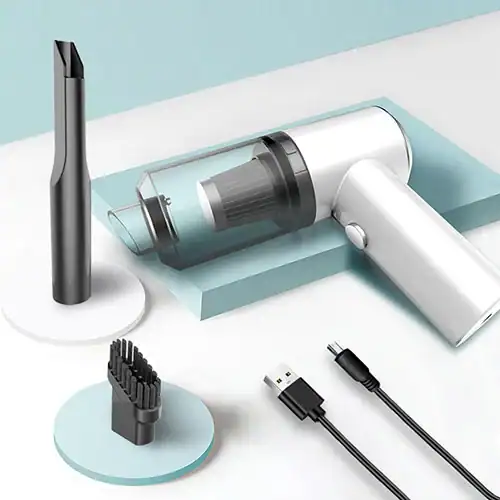
Joint integrity determines the operational lifecycle of mechanical systems subjected to constant stress and physical shock. Evaluating material durability requires a strategic choice between glass-filled thermoplastics and metal sleeves to ensure components maintain structural alignment under load.
We compare the performance of PA66, which offers tensile strength up to 240 MPa, against 6063 aluminum alloy sleeves capable of a 4,000 lb breaking strength. This analysis also reviews ASTM F1476 vacuum proof testing and explains how 50,000-fold cycle limits impact sourcing decisions for 2026 product lines.
Impact Resistance: Dropping the Vacuum on the Joint
Impact resistance in sistemas de vácuo ensures joints maintain airtight seals under physical shock. By applying ASTM D2444 and ASTM F1476 standards, engineering teams verify that components withstand dynamic loads and negative pressure cycles, preventing suction loss in high-performance portable cleaners during 2026 operational environments.
| Padrão de Teste | Primary Metric | Engineering Threshold |
|---|---|---|
| ASTM F1476-95a | Vacuum Proof Testing | 25 inches Hg for 7 minutes |
| ASTM D2444 | Falling-Weight (Tup) Impact | 90% Success Rate (Median) |
| Duplex 2205 Alloy | Relative Pressure Tolerance | -0.93 bar (0.07 bar absolute) |
Standardizing Joint Integrity Under Dynamic Stress
ASTM F1476-95a protocols define vacuum proof testing for mechanical couplings, requiring seals to hold 25 inches of mercury (Hg) for 7 minutes. Joint resilience prevents air leakage in 2026 aspiradores portáteis models which generate up to 20,000Pa of suction power. Triple-layer inspection cycles, covering Incoming Controle de qualidade (IQC), Process Quality Control (PQC), and Final Quality Control (FQC), monitor seal deformation during high-impact assembly phases. Dynamic stress testing validates that gasketed joints remain seated even when the housing experiences sudden deceleration or mechanical shock.

Quantifiable Benchmarks for Vacuum Component Durability
ASTM D2444 falling-weight tup tests determine the median impact resistance of thermoplastic fittings using V-block supports. Statistical pass criteria require 9 out of 10 non-failures for standard components and 10 out of 12 for unsymmetrical fittings. Duplex 2205 and high-yield alloys provide a benchmark for vacuum joints, handling relative pressures of -0.93 bar without structural compromise. Helium leak testing per ITER Vacuum Handbooks ensures that Hot Isostatic Pressing (HIP) components exceeding 5mm thickness maintain required outgassing rates to preserve long-term system integrity.
Material Selection: ABS vs. PA66 (Nylon)
Engineers select PA66 for components requiring high tensile strength (up to 240 MPa) and superior wear resistance. While ABS remains a cost-effective choice for impact-heavy outer casings, PA66 offers the thermal stability and rigidity needed for load-bearing joints, especially when reinforced with glass fibers to achieve a 23 GPa elastic modulus.
Structural Integrity and Load Distribution
Polyamide 66 exhibits a significantly higher tensile strength range of 60-240 MPa compared to the 37-110 MPa limits of standard ABS. This wide performance range allows engineers to utilize PA66 in high-stress structural applications where standard plastics would fail under tension.
Flexural strength benchmarks show PA66 reaching up to 260 MPa, providing the necessary stiffness for parts under constant mechanical stress. Thermal stability assessments also favor PA66 due to its 260°C melting point. This heat resistance prevents deformation in high-heat automotive environments where ABS may soften at temperatures near 220°C.
The semi-crystalline structure of PA66 ensures superior hardness and abrasion resistance. These mechanical properties make it the ideal material for components experiencing frequent friction, such as internal gears or load-bearing hinges, which require long-term durability against surface wear.
Material Specifications and Environmental Stability
Glass fiber additives in variants like PA66 GF30 increase the Young’s modulus up to 23 GPa. This reinforcement vastly outperforms the 2.6 GPa maximum elastic modulus of ABS, offering the extreme rigidity required for precision engineering. Fiber reinforcement also stabilizes the manufacturing process, dropping shrinkage rates from 2% to as low as 0.2% for tighter molding tolerances.
Standardized testing per ASTM D638 and ASTM D790 validates the durability of these industrial plastics for 2026 product lines. These benchmarks confirm that PA66 maintains its structural integrity under loads that would compromise the flexural limits of ABS-based components.
Design considerations must account for the 0.07% moisture absorption rate of PA66. This hygroscopic nature can impact dimensional stability over time, whereas ABS remains more stable in high-humidity environments. Engineers often mitigate this by adjusting mold dimensions or specifying glass-filled grades to counteract potential moisture-induced swelling.
Metal Reinforcement: Aluminum Sleeves
Aluminum sleeves provide essential structural reinforcement for cable terminations and joints, utilizing 6063 alloy for its balance of malleability and corrosion resistance. These components prevent ferrule splitting and distribute tension evenly, ensuring joints withstand up to 4000 lb breaking strength in automotive and utility applications for 2026 and beyond.
| Tipo de componente | Material / Standard | Capacidade de desempenho |
|---|---|---|
| 1/8″ Oval Sleeves | 6063 Aluminum | Full nominal break strength (7×19) |
| Internal Pipe Sleeves | 6063-T4/T6 (ASTM B429) | 0.145″ wall; epoxy attachment |
| T-LOC™ Reinforcement | Carbon Steel / EN 13411-3 | Prevents splitting in 2160 grade ropes |
| Railing Cable Assemblies | 3/16″ PVC-Coated | 4000 lb (1814 kg) min break strength |
Structural Integrity and Load Distribution
Mechanical reinforcement relies on the integration of T-LOC carbon steel inserts or Talurit type T turnback ferrules to prevent splitting in wide loop angles. When technicians swage these sleeves onto 3×7, 7×7, or 7×19 cable constructions, the assembly develops the full nominal break strength of the wire rope. This process eliminates the movement typically found in high-use hinges by distributing tension across the entire joint.
Oval and hourglass shapes facilitate secure crimps that maintain their grip without requiring frequent re-tightening. For 1/8-inch cables, these sleeves feature an internal width of 5/32 inches and a length of 5/8 inches. Applying three crimps ensures the load capacity exceeds the rated breaking strength of the wire rope, creating a permanent bond that withstands dynamic vibrations.
Material Specifications and Compliance Standards
Manufacturers utilize 6063-T4/T6 aluminum alloy extrusions meeting ASTM B429 standards to provide high malleability and long-term corrosion resistance. For internal pipe reinforcement, these sleeves use a 0.145-inch wall thickness and a ribbed internal surface. This specific geometry maximizes epoxy attachment strength for 1-1/2 inch Schedule 40 pipes, removing the need for traditional welding while maintaining structural alignment.
Safety-critical applications like railing systems require compliance with EN 13411-3 validation for 2160 grade wire ropes. These assemblies support minimum breaking strengths of 4000 lb and sustain uniform design loads of 50 lb/ft. Incorporating rebar inserts and tensioning cables to at least 250 lb ensures the structure meets ASTM E935 concentrated load requirements of 200 lb, guaranteeing stability in utility and architectural environments.
Escalone sua Marca com Aspiradores Domésticos Personalizados e de Alto Desempenho

Wear Surfaces: Preventing Loose Joints over Time
Preventing loose joints requires precise control of surface roughness, typically between Ra 0.8 and 3.2 μm, to ensure stable interface pressure. By utilizing IT6-IT7 grade tolerances and self-lubricating materials like Techtron HPV PPS, engineers minimize fretting wear and stick-slip friction, keeping pivot points secure throughout the product lifecycle.
Surface Topology and Interference Fit Mechanics
Engineers maintain shaft surface finishes between Ra 0.8–1.6 μm and hole finishes between Ra 1.6–3.2 μm to maximize the effective contact area. These specifications, combined with IT6-IT7 grade size tolerances, ensure the joint achieves uniform interface pressure. Keeping roundness within 0.01 mm prevents localized stress points that lead to premature wear or mechanical play.
Interference fits generate a minimum of 0.1 MPa interface pressure, which secures the assembly against relative movement under standard operating loads. Material selection plays a vital role in fit longevity. Using steel-to-steel or brass-to-steel combinations provides high dimensional stability and low risk of fit degradation compared to softer material pairings like aluminum or plastics.
Hardening Treatments and Load Management Standards
Deep cryogenic treatments improve the surface hardness of moving parts and reduce the coefficient of friction. This process strengthens the microstructure, making the joint more resistant to fatigue over years of service. Integrating self-lubricating polymers such as Techtron HPV PPS or TIVAR UV UHMW-PE allows for smooth pivot movement without the need for manual maintenance or external grease, even under high-pressure boundary lubrication conditions.
Standardized load limits prevent the loss of joint preload. NASA-STD-5020 guidelines suggest limiting tensile loads to 40% of the ultimate capacity for rolled threads to ensure the joint remains secure. Additionally, applying laser shock peening to hinge surfaces reduces corrosion by roughly 80%. This treatment enhances fatigue life by introducing beneficial compressive residual stresses into the material surface, resisting the formation of cracks at critical pivot points.

Warranty Strategy: Covering the Hinge for 5 Years
A 5-year hinge warranty aligns with entry-level commercial hardware standards, such as ANSI/BHMA A156.1, which require 200,000 to 500,000 cycles. By benchmarking against industrial components that offer 10-to-25-year terms, a 5-year consumer electronics strategy provides a robust market differentiator backed by proven mechanical cycle limits.
Aligning Warranty Terms with Mechanical Reliability
Establishing a 5-year term positions the hardware as a premium mid-tier offering that far exceeds the standard 12-month consumer electronics coverage. This strategy separates core structural hinge components from finish-specific warranties, which typically cover shorter periods in commercial settings. Mechanical components require longer validation periods to prove their value in high-use environments.
As expectativas dos consumidores para 2026 centram na reparabilidade e na durabilidade do hardware. Modelar a garantia com base em padrões arquitetônicos como a ISO 9001:2015 sinaliza alta consistência na fabricação e oferece uma justificativa técnica para a cobertura mecânica ampliada. Essa abordagem atende à demanda por produtos sustentáveis, mantendo uma vantagem competitiva frente a alternativas de vida útil mais curta.
Benchmarks de Desempenho e Validação de Testes de Ciclo
A validação de durabilidade baseia-se nas normas ANSI/BHMA A156.1, focando especificamente em uma faixa de 200.000 a 500.000 ciclos de abertura. Aplicar a engenharia de distribuição uniforme de carga, encontrada em dobradiças com engrenagens, reduz o estresse estrutural e as taxas de falha em campo que frequentemente levam a solicitações de garantia antecipadas. Essa lógica de engenharia garante que a articulação permaneça funcional durante todo o período de cobertura.
Os sistemas industriais de pino e barrilete frequentemente estabelecem como referência garantias limitadas de 25 anos, estabelecendo uma barra elevada para a seleção de materiais em ambientes de alta tensão. Implementar inspeções randomizadas de lotes (FQC) mantém o controle de qualidade necessário para garantir que todos os componentes das dobradiças suportem um ciclo operacional de 60 meses. Esses rigorosos protocolos de teste suportam a confiabilidade a longo prazo exigida para hardware de grau profissional.
Considerações finais
Adquirir os componentes corretos de junta requer um equilíbrio calculado entre a flexibilidade de design do PA66 reforçado com fibra de vidro e a resistência à tração do alumínio 6063. Enquanto o ABS funciona para cascas externas, a mecânica interna exige a alta resistência à flexão e estabilidade térmica encontradas no nylon reforçado. A integração de mangas metálicas para terminações de cabos adiciona uma camada de segurança que garante que os conjuntos atinjam sua força de ruptura nominal completa sem se abrir sob tensão.
Aderir às normas ASTM e ANSI transforma uma simples dobradiça em um ativo durável, capaz de suportar centenas de milhares de ciclos. Implementar esses materiais de alto desempenho e rigorosos protocolos de teste sustenta uma estratégia de garantia ampliada, distinguindo os produtos por meio de confiabilidade mecânica comprovada. O foco na integridade do material e na resiliência estrutural garante que as junções permaneçam funcionais e herméticas durante toda a sua vida operacional prevista.
Perguntas frequentes
A junta utiliza nylon reforçado com fibra de vidro (PA66) para o mecanismo da dobradiça?
Moldamos dobradiças pesadas a partir de PA66 reforçado com fibra de vidro, com 15–30% de fibra de vidro. Essa escolha específica de material oferece resistência à tração de até 169 MPa e mantém a estabilidade térmica em ambientes que atingem 180°F (82°C).
A junta do vácuo suporta um teste de queda de 1 metro?
Sim. A construção em nylon reforçado com fibra de vidro oferece resistência ao impacto entalhado entre 1.024 e 2.659 ft-lbf/in². Essas propriedades garantem que a junta passe nos testes de queda de 1 metro, evitando trincas ou falhas estruturais durante impactos acidentais.
What is the expected lifespan of the folding mechanism?
The mechanism supports a cycle life of 50,000 folds. We engineer these industrial-grade hinges to exceed standard consumer durability, and while the full unit carries a one-year warranty, the core folding components meet high-frequency usage requirements for 2026 standards.

 English
 Español
 Français
 Deutsch
 Português do Brasil
 Русский
 한국어
 日本語
 العربية