 Zum Hauptinhalt springen Zum Footer springen

Choosing the best camping fridge is the critical decision that stands between a successful family trip and the health risk of food spoilage. A standard ice chest often fails after a single hot day, leaving you with soggy groceries and unsafe meat temperatures when you are miles from the nearest store. This failure isn’t just an inconvenience; it’s a gamble on your family’s well-being and the success of your entire trip.
This guide skips the marketing fluff and focuses on the technical specifications that actually matter. We analyze the real-world capacity needs for a family of four, comparing 45L and 60L models to find the functional sweet spot. We also dig into material science to explain why recycled plastic bodies offer superior durability, test if oversized wheels can handle sand and gravel, and detail how a simple drain plug makes cleanup manageable after an inevitable spill.
Capacity Wars: Is 45L or 60L the Sweet Spot for a Family of 4?
For a family of four, a 60L portable fridge is the practical standard for multi-day trips, offering critical storage flexibility for a minimal penalty in weight and vehicle footprint compared to a 45L model.
45L Models: Ideal for Shorter Trips and Smaller Groups
A 45L portable compressor fridge is optimized for couples or groups of three heading out for a weekend. It provides enough space for about 67 standard cans. While a family of four can make it work for a short overnight trip, it demands precise packing and leaves little room for error or extra supplies. This size is best when vehicle space is the absolute top priority over storage convenience.
- Capacity is suitable for approximately 67 standard cans.
- Recommended for couples or groups of three for a weekend.
- A viable but tight option for a family of four on brief trips.
| Spezifikation | 45L Model | 60L Model |
|---|---|---|
| Approximate Can Capacity | 67 Cans | 106 Cans |
| Idealer Anwendungsfall | 2-3 people, weekend trips | Family of 4, multi-day trips |
| Average Weight (Empty) | ~18 kg (40 lbs) | ~20 kg (44 lbs) |
60L Models: The Practical Standard for Family Outings
For a family of four, a 60L fridge is the effective baseline. Its ability to hold around 106 cans translates to enough room for perishables like meat and dairy alongside drinks for a long weekend or more. This extra space eliminates the need for constant reorganizing and lets you pack more varied food items, which is critical when catering to different tastes on an extended trip.
- Provides enough storage for roughly 106 cans.
- Offers superior capacity for longer family trips.
- Considered the minimum practical size for a family of four on multi-day adventures.
Portability vs. Capacity: Analyzing the Trade-Offs
The decision to upgrade from 45L to 60L has a surprisingly small impact on portability. The larger unit is typically only about two kilograms heavier. More importantly, the base footprint often remains very similar; manufacturers achieve the extra capacity by increasing the unit’s height. For most SUVs and trucks, this vertical expansion is a non-issue, making the upgrade an easy choice for the significant gain in storage volume.
- A 45L unit weighs around 18 kg, while a 60L unit weighs about 20 kg.
- The base dimensions are often similar, with the primary difference being height.
- The added capacity generally outweighs the slight increase in weight for family use.
Eco-Design: Why Are “Recycled Plastic” Bodies the New Standard?
The industry shift to recycled plastic bodies isn’t just an environmental play; it’s a strategic move for superior insulation, lighter weight, and improved durability compared to traditional metal alternatives.
Durability and Low Weight
Recycled plastics, specifically high-density polyethylene (HDPE), provide the ideal balance of strength and portability for camping fridges. These advanced materials are engineered to handle the drops, impacts, and vibrations common in outdoor use. At the same time, they are significantly lighter than metal coolers, making them much easier to move from a vehicle to a campsite without assistance.
- Offers high resistance to impacts and harsh weather conditions.
- Reduces the overall weight of the cooler for better portability.
- KelyLands uses premium recycled plastics to ensure product longevity.
| Material Feature | Recycled Plastic Body (Modern Standard) | Traditional Metal Body (Legacy) |
|---|---|---|
| Thermal Insulation | Excellent. Low thermal conductivity prevents heat transfer. | Poor. Metal readily conducts external heat, stressing the compressor. |
| Gewicht | Lightweight and highly portable. | Heavy and cumbersome to transport. |
| Durability | High impact resistance; does not dent easily and is corrosion-proof. | Prone to dents, scratches, and rust over time. |
Improved Insulation and Energy Efficiency
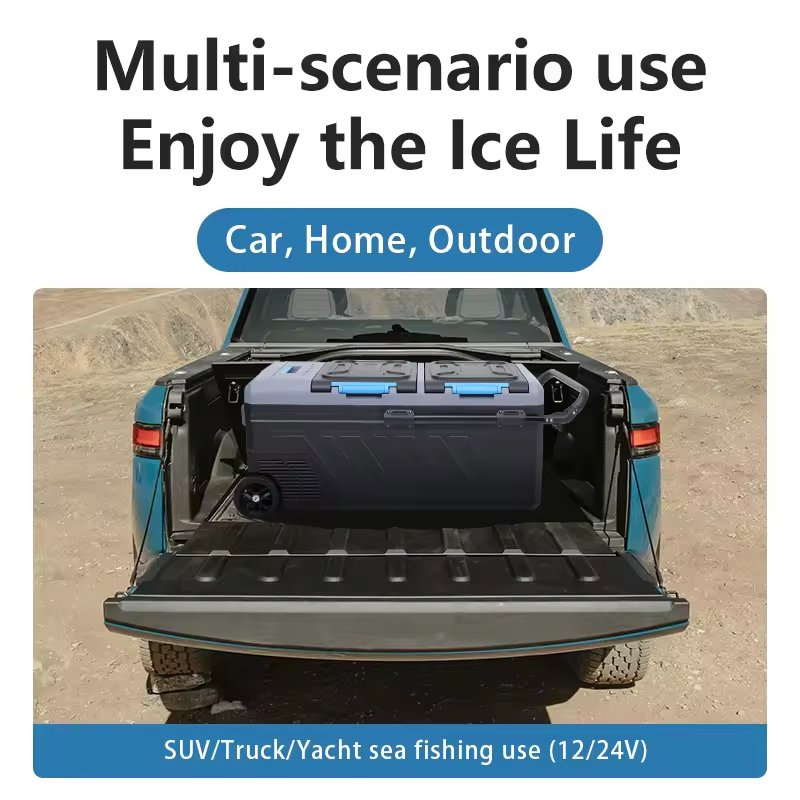
Plastic is a natural insulator that conducts far less heat than metal. This physical property means a recycled plastic body provides superior thermal performance, keeping the cold air in and the warm air out. This efficiency helps the fridge maintain its internal temperature with less effort from the compressor. As a result, modern units can run on as little as 45W in eco-mode, making them fully compatible with off-grid power sources like portable solar panels and power stations.
- The material’s low thermal conductivity keeps contents cool for longer periods.
- Reduces the compressor’s workload, leading to lower energy consumption.
- Optimized for use with portable power stations and solar generators.
Environmental Benefits and Sustainability
The market-wide adoption of recycled plastics is a direct response to growing consumer demand for eco-conscious gear. Using recycled materials reduces the carbon footprint of manufacturing by minimizing reliance on new, fossil-fuel-based plastics. It gives a second life to materials that would otherwise end up in landfills. This sustainable approach delivers a high-performance product that also aligns with the values of the outdoor community.
- Reduces reliance on new fossil-fuel-based plastics.
- Appeals to environmentally aware consumers seeking sustainable products.
- Helps minimize food spoilage and waste during trips through reliable cooling.
Source Globally Certified, Custom Car Coolers

Rugged Wheels: Can You Drag It Across Sand and Gravel?
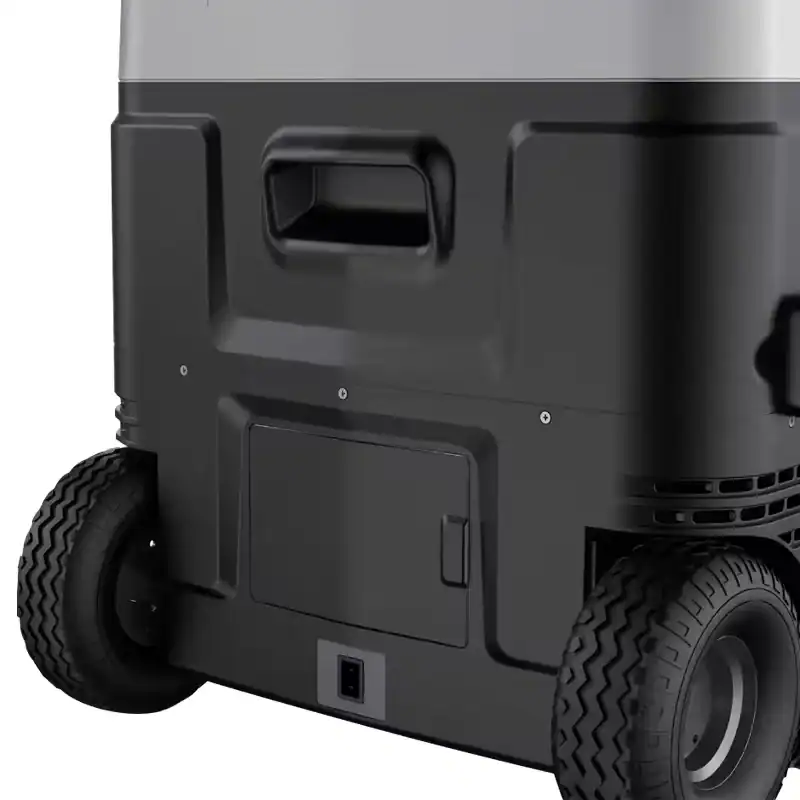
The reliability of a portable fridge in the field now hinges on an engineered wheel system, validated through rigorous terrain simulation to ensure performance on sand, gravel, and uneven ground.
Terrain Simulation and Durability Testing
By 2026, wheel performance is validated through advanced durability tests that simulate real-world conditions. These assessments go beyond basic lab trials, using extensive field testing on sand and gravel to ensure the wheels can withstand the demands of off-road use. The focus has shifted from simple road performance to proving reliability for the adventure and recreational vehicle segments, where terrain versatility is a primary requirement.
- Wheels undergo trials that mimic being dragged across uneven, loose surfaces.
- Performance validation confirms reliability for repeated, demanding use.
Key Design Elements for All-Terrain Traction
The ability to move a loaded cooler across difficult terrain comes from specific innovations in wheel design. Engineers are focusing on tread patterns, reinforced sidewalls, and self-cleaning voids that work together to maintain consistent grip. These elements are not cosmetic; they are functional components essential for practical use in outdoor environments.
- Tread designs are engineered to maximize surface contact and traction on both sand and gravel.
- Sidewall reinforcement adds stability and protects the wheel assembly against impacts from rocks and roots.
- Self-cleaning patterns actively eject small stones and sand to maintain a firm grip and prevent wheel lock.
Material Composition: Balancing Weight and Impact Resistance
Material choice directly impacts both durability and ease of use. The industry now favors advanced polymers that provide high impact resistance without adding significant weight. This balance ensures the cooler is easy to pull across long distances while remaining tough enough for rugged environments. A heavy-duty wheel is useless if the user struggles to move the unit in the first place, making the weight-to-strength ratio a critical design metric.
Drain Plugs: How Easy Is It to Clean After a Milk Spill?
A simple drain plug can be the difference between a quick rinse and a persistent sour milk smell that ruins a camping fridge permanently.
A spilled carton of milk or leaky container is a common scenario during family trips. How easily you can clean the mess depends entirely on the design of the cooler’s drain system. A well-designed plug streamlines cleanup and prevents lingering bacteria and odors, while a poorly designed one creates traps for residue that are nearly impossible to fully sanitize.
Impact of Drain Plug Design on Cleanliness
The effectiveness of a drain plug is determined by its physical design, location, and the materials used. Simple, wide-mouthed plugs with minimal threading consistently outperform complex systems in real-world cleaning scenarios. These three factors are critical for maintenance.
- Accessibility: The plug must be located for easy access. If you have to tilt the unit at an awkward angle or reach deep into a corner, complete cleaning is difficult. The best designs allow for straightforward draining and wiping from a comfortable position.
- Simplicity: Designs with intricate threading, multiple small parts, or spring-loaded mechanisms trap residue. A simple, robust plug with coarse threads is far easier to wipe clean and less likely to harbor spoiled liquid.
- Material: The plug and its gasket should be made from non-porous, food-grade materials like smooth plastic or silicone. These surfaces resist absorbing odors and make it difficult for bacteria to grow.
A General Cleaning Procedure for Spills
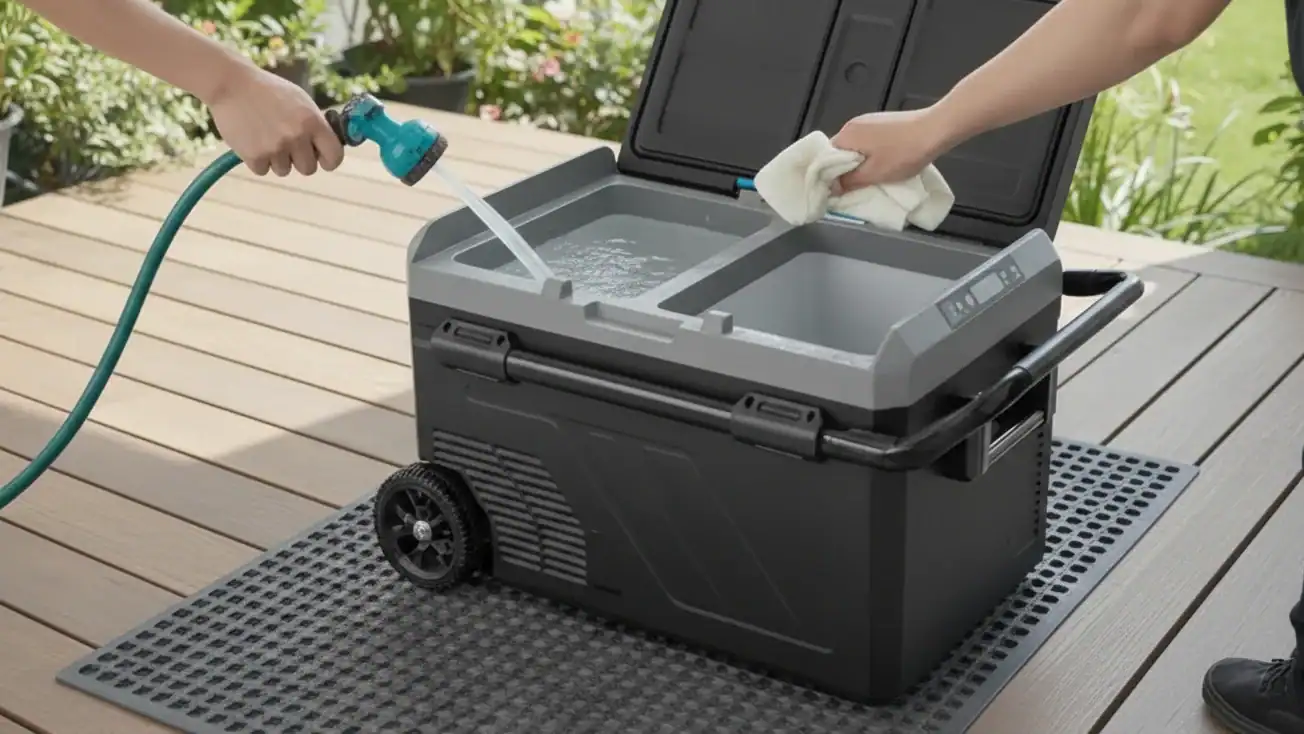
While you should always check the manufacturer’s instructions, a standard cleaning process will effectively manage most spills and prevent long-term issues. Acting quickly is the most important step to avoid permanent odors from spoiled milk.
- Immediate Drainage: As soon as you notice a spill, open the drain plug to let all the liquid out. Don’t let it sit and soak into the cooler’s interior.
- Rinse and Wipe: Use warm water to flush the interior, guiding the flow toward the open drain. Follow up by wiping the entire area with a clean cloth.
- Sanitize: Clean the plug, gasket, and the surrounding drain area with a food-safe cleaning solution. A simple mix of mild soap and water or a diluted vinegar solution works well.
- Air Dry: Leave the cooler lid propped open and the drain plug removed. This ensures the entire unit, especially the drain channel and seal, dries completely to prevent mold growth.
Common Features of Hard-to-Clean Drains
Certain design choices can make cleaning much harder than it needs to be. When evaluating a unit, watch out for these flaws, as they often lead to contamination and persistent bad smells that are difficult to eliminate.
- Narrow Channels: Deeply recessed or narrow drain channels are almost impossible to wipe out with a cloth or sponge. They trap liquid and become a breeding ground for bacteria.
- Complex Gaskets: Rubber seals with multiple grooves or intricate patterns are primary sources of odor. They are difficult to remove, clean, and reseat properly.
- Tethered Plugs: A tether prevents you from losing the plug, but it can also get in the way. If the tether is short or rigid, it can obstruct access to the drain opening and make a thorough wipe-down impossible.
Schlussfolgerung
Selecting the right camping fridge involves balancing family-friendly capacity with rugged, all-terrain features. The shift towards recycled plastic bodies and user-centric designs like easy-to-clean drain plugs meets the growing consumer demand for both sustainability and convenience. These elements create a reliable product that performs well from sandy beaches to remote campsites, building trust with the end user.
Our catalog features a range of customizable compressor fridges and thermoelectric coolers designed to meet these market needs. Contact our team to discuss OEM solutions and how we can help you build your next best-selling outdoor product line.
Häufig gestellte Fragen
What size camping fridge do I need for a family of 4?
For a family of four, a 60L camping fridge is the most practical and recommended size. This capacity provides ample space for perishable food and drinks for extended trips, holding approximately 106 cans. While a 50L model is the minimum suitable size for a short weekend trip, the 60L option offers significantly more flexibility without a prohibitive increase in weight or footprint. For frequent, long trips requiring dual-zone freezing and refrigeration, consider models in the 75L range or larger.
Best camping fridge with wheels?
The best camping fridges with wheels are distinguished by features built for rugged, off-grid environments. Look for models with large, durable, all-terrain wheels that can handle gravel, grass, and uneven surfaces, not small plastic casters. A high-quality unit will also feature a sturdy, telescoping metal handle for reliable leverage. Ensure the core of the fridge includes a power-efficient and reliable compressor, robust body construction with reinforced corners, and secure latches to guarantee performance and longevity.
Are camping fridges bear proof?
Standard camping fridges are not bear-proof by default. To be considered bear-resistant, a unit must pass certification from a body like the Interagency Grizzly Bear Committee (IGBC). Select high-end models from premium brands can achieve this certification, but only when properly secured using the manufacturer’s specified locking mechanism, which typically involves heavy-duty padlocks placed in designated steel-reinforced slots on the fridge body. Always check for IGBC certification if you camp in bear country.
Is the plastic material BPA-free and recycled?
Yes, the interior plastic components that come into contact with food and beverages are BPA-free. This is a well-established industry standard for portable refrigerators, which utilize food-grade polymers like polypropylene (PP) or polyethylene (PE). Regarding recycled content, the primary structural and insulating components are typically made from virgin materials to ensure maximum durability, insulation performance, and food-safety compliance. While some non-critical, external trim pieces may contain recycled plastics, performance-related parts do not.

 English
  Español
  Français
  Deutsch
  Português do Brasil
  Русский
  한국어
한국어  日本語
日本語  العربية