 Zum Hauptinhalt springen Zum Footer springen

Die Wahl des besten solarbetriebenen Autokühlschranks für abgelegene Außeneinsätze ist eine wichtige Entscheidung, die sich direkt auf die Integrität der Anlagen auswirkt, denn ein Stromausfall kann zu Tausenden von verdorbenen medizinischen Vorräten oder gefährdeten biologischen Proben führen. Standardkühlgeräte sind auf eine konstante Eiszufuhr angewiesen, und generatorbetriebene Geräte bringen Lärm, Kraftstofflogistik und mechanische Fehlerquellen in die Kühlkette ein. Für jedes Team, das netzunabhängig eingesetzt wird, ist die Aufrechterhaltung einer stabilen Temperatur für empfindliche Fracht eine nicht verhandelbare operative Anforderung, keine Bequemlichkeit.
Diese Analyse dient als technischer Benchmark für die Auswahl eines geeigneten solarbetriebenen Kühlschranks. Wir werden die wichtigsten technischen Spezifikationen bewerten, die die Zuverlässigkeit im Feld bestimmen, einschließlich der realen Dauer der integrierten Batterien ohne externe Stromquelle. Außerdem untersuchen wir die Effizienz der direkten Solareinspeisung für das Aufladen, den tatsächlichen Stromverbrauch der Öko-Modi mit geringem Stromverbrauch an bewölkten Tagen und wie diese Geräte zusammen mit tragbaren Stromstationen ein redundantes Stromversorgungssystem für einsatzkritische Kühlung bilden.
Integrierte Batterie: Kann es 4 Stunden lang ohne externe Stromversorgung kühlen?
Beim 4-Stunden-Benchmark für die stromlose Kühlung geht es weniger um die Batteriegröße als um die thermische Effizienz. Bis 2026 erreichen die führenden Modelle dies durch die Kombination von hochdichter Isolierung mit Phasenwechselmaterialien, die passiv Wärme absorbieren - eine grundlegende Abkehr von der brachialen Kompressorleistung.
Ja, ein moderner Kompressor-Autokühlschrank mit integrierter Batterie kann seine Temperatur zuverlässig 4 Stunden oder länger ohne externe Stromversorgung aufrechterhalten. Diese Fähigkeit hängt nicht nur von der Wattstundenzahl der Batterie ab, sondern ist das Ergebnis eines systembasierten Ansatzes zur Energieeffizienz. Der Kompressor läuft nur intermittierend, so dass die eigentliche Arbeit von der Fähigkeit des Geräts geleistet wird, Temperaturschwankungen zu widerstehen. Hier machen fortschrittliche Materialien den Unterschied.
Die Rolle von Dämmstoffen und modernen Materialien
Moderne tragbare Kühlschränke im Jahr 2026 nutzen eine hybride passiv-aktive Kühlarchitektur. Die Batterie liefert die aktive Energie, aber hochwertige Isolierung und Phasenwechselmaterialien (PCM) sorgen für die passive thermische Belastbarkeit, die für eine längere netzunabhängige Zeit erforderlich ist. Diese Materialien absorbieren Wärmeenergie und geben sie wieder ab, um die Innentemperaturen lange nach dem Abschalten des Kompressors stabil zu halten.
- Isolierung aus hochdichtem Schaumstoff minimiert Wärmeverluste und bildet eine starke Barriere gegen die Umgebungswärme.
- Phase-Change-Materialien (PCMs) funktionieren wie eine Wärmebatterie. Sie absorbieren Wärme, wenn sie vom festen in den flüssigen Zustand übergehen, und halten so die Innentemperatur über Stunden konstant.
- Dieser hybride Ansatz macht eine ausgedehnte netzunabhängige Kühlung praktikabel, da die integrierte Batterie als Stromquelle für gelegentliche Temperaturerhöhungen und nicht für den kontinuierlichen, energieintensiven Betrieb dient.
| Modell Beispiel | Akku-Konfiguration | Angegebene stromlose Laufzeit |
|---|---|---|
| Anker EverFrost Serie | Abnehmbar 299 Wh | Bis zu 42 Stunden |
| ACOPOWER LiONCooler Mini | Abnehmbar 193 Wh | Bis zu 10 Stunden |
| Vitrifrigo VFREE Plus | Herausnehmbare Lithium-Ionen | 4-6 Stunden |
Schlüsselfaktoren, die die netzunabhängige Leistung beeinflussen
Das Erreichen oder Übertreffen der 4-Stunden-Benchmark hängt stark von den realen Bedingungen und Nutzungsmustern ab. Die angegebene Laufzeit basiert auf spezifischen Testparametern, und die tatsächliche Leistung kann davon abweichen. Die Art und Weise, wie Sie den Kühlschrank vorbereiten und verwenden, ist ebenso wichtig wie seine technischen Spezifikationen.
- Umgebungstemperatur: Ein Kühlschrank, der bei 35°C (95°F) Hitze betrieben wird, entlädt seine Batterie schneller als ein Kühlschrank, der in einer Umgebung von 20°C (68°F) betrieben wird.
- Anfangstemperatur: Die Vorkühlung des Kühlschranks und seines Inhalts mit Wechselstrom oder Fahrzeugstrom ist entscheidend, bevor man sich vom Netz trennt. Wenn der Innenraum und der Inhalt zu Beginn warm sind, muss der Kompressor hart arbeiten, was die Lebensdauer der Batterie im Vorfeld erheblich beeinträchtigt.
- Belastung des Kühlschranks: Ein voller Kühlschrank, der mit kalten Gegenständen gefüllt ist, wirkt wie eine thermische Masse, die dazu beiträgt, die Temperatur länger zu halten. Ein leerer oder halbleerer Kühlschrank hat mehr Luft zu kühlen und ist weniger effizient.
Der Wandel hin zu thermischer Belastbarkeit
Der Schwerpunkt der Branche hat sich von der reinen Verdichterleistung auf die allgemeine thermische Belastbarkeit verlagert. Ziel ist es, Systeme zu bauen, die in netzfernen Szenarien mit minimalem Energieverbrauch zuverlässig arbeiten. Die Hersteller konkurrieren jetzt über die Qualität ihrer Isolierung und die Effektivität ihrer PCM-Integration, nicht nur über die Kühlgeschwindigkeit ihres Kompressors. Dieser Wandel macht integrierte Batterien zu einer praktischen Lösung für Solar- und tragbare Stromversorgungssysteme, die je nach Modell und äußeren Bedingungen eine stabile Temperatur von 4 bis über 24 Stunden aufrechterhalten können.
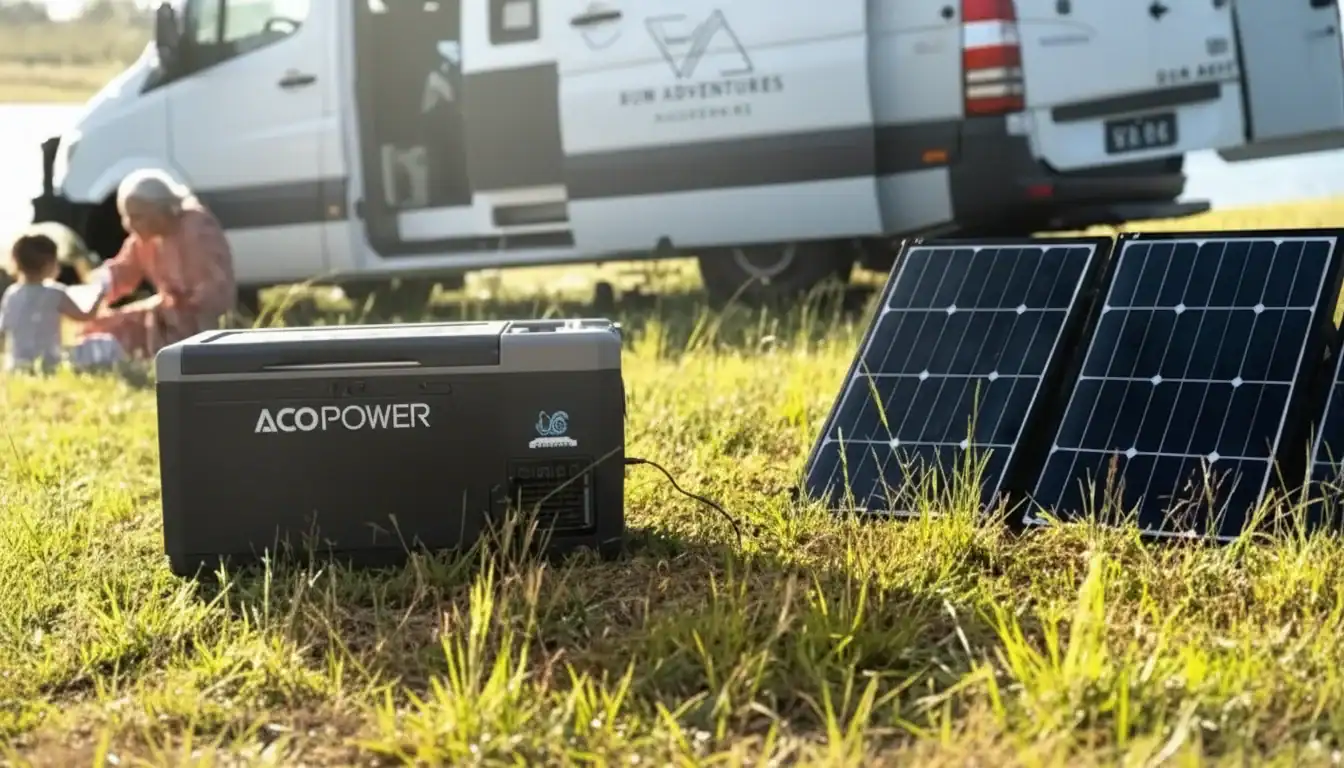
Direkte Solareinspeisung: Können Sie die Paneele direkt an den Kühlschrank anschließen?
Ein Solarpanel direkt an einen tragbaren Kühlschrank anzuschließen, ist in der Regel nicht praktikabel. Die schwankende Leistung eines Solarmoduls kann empfindliche elektronische Geräte beschädigen. Daher ist ein System mit einem Laderegler und einer Batterie erforderlich, um eine stabile Gleichspannung zu liefern.
Die Standardeinrichtung: Warum die meisten Kühlschränke mehr als ein Panel benötigen
Für die meisten tragbaren Kompressorkühlschränke, die im Jahr 2026 auf dem Markt sind, ist ein direkter Solaranschluss keine Option. Diese Geräte sind auf eine stabile Stromversorgung ausgelegt, was ein Solarpanel allein nicht garantieren kann. Die Rohleistung eines Panels schwankt ständig mit der Sonnenintensität, den Wolken und dem Winkel des Panels. Ein Zwischensystem ist unerlässlich, um diese variable Energie zu puffern und zu regulieren.
- Ein Solarladeregler ist der unverzichtbare erste Schritt. Er reguliert die Spannung der Paneele und verhindert Spannungsspitzen, die den Kompressor und die Steuerplatine des Kühlschranks zerstören würden.
- Eine Batterie fungiert als Energiereservoir. Sie speichert den Strom, der während der Sonneneinstrahlung gesammelt wird, und liefert einen konstanten Strom an den Kühlschrank, so dass dieser auch nachts oder an bewölkten Tagen läuft.
- Ein Wechselrichter wird nur benötigt, wenn der Kühlschrank mit Wechselstrom betrieben wird. Er wandelt den Gleichstrom der Batterie in nutzbaren Wechselstrom um, wobei allerdings ein Energieverlust entsteht. Die meisten modernen tragbaren Kühlschränke werden mit Gleichstrom betrieben.
| Komponente | Standard-Kühlschrank-Setup | Einrichtung eines solarbetriebenen Kühlschranks |
|---|---|---|
| Laderegler | Erforderlich (Externe Komponente) | Oft eingebaut (MPPT) |
| Batterie | Erforderlich (extern) | Erforderlich (extern oder integriert/entfernbar) |
| Wechselrichter | Nur für AC-betriebene Modelle | Nicht erforderlich (nativer DC-Betrieb) |

Aufstrebende solarbetriebene DC-Kühlschränke
Eine wachsende Nische von speziell angefertigten Gleichstromkühlschränken vereinfacht die netzunabhängige Kühlung. Diese fortschrittlichen Modelle verfügen über die notwendige Technologie, um einen direkten Anschluss an die Solarenergie zu ermöglichen und die Notwendigkeit einer komplexen und sperrigen Balance of System (BOS)-Infrastruktur zu reduzieren.
- Viele dieser Kühlschränke verfügen über eingebaute MPPT-Laderegler (Maximum Power Point Tracking), die aktiv die optimale Spannung und den optimalen Strom ermitteln, um die vom Panel gewonnene Energie zu maximieren.
- Sie sind so konstruiert, dass sie effizient mit direktem Gleichstrom betrieben werden können, wodurch der 10-15% Energieverlust vermieden wird, der normalerweise bei der Umwandlung von Gleichstrom in Wechselstrom durch einen Wechselrichter entsteht.
- Dieses integrierte Design vereinfacht die Einrichtung und macht die solarbetriebene Kühlung praktischer für mobile und abgelegene Anwendungen, bei denen Platz und Gewicht eine Rolle spielen.
Die wichtigsten technischen Hürden für Direktverbindungen
Auch bei diesen neuen solarfähigen Geräten müssen einige technische Herausforderungen gemeistert werden, um ein zuverlässiges System zu erhalten. Diese Faktoren sind entscheidend für die langfristige Leistung sowohl des Kühlschranks als auch der Solarmodule.
- Die Spannungsanpassung ist entscheidend. Die Ausgangsspannung des Panels muss innerhalb des zulässigen Eingangsbereichs des Kühlschranks liegen. Eine Fehlanpassung kann leicht zu Schäden an der internen Elektronik des Geräts führen.
- Intermittierendes Sonnenlicht bleibt die größte Herausforderung. Ohne Batterie würde der Kompressor des Kühlschranks bei vorbeiziehenden Wolken ständig an- und ausgehen, was zu extremer Ineffizienz und beschleunigtem mechanischem Verschleiß führt.
- Die Integration einer Batterie ist nach wie vor die robusteste Lösung. Sie bietet die stabile, unterbrechungsfreie Stromversorgung, die für eine konstante Kühlleistung unabhängig von den Wetterbedingungen erforderlich ist.
Ihre Marke auf weltweit zertifizierten Autokühlern

Öko-Modus: Sind 45 Watt effizient genug für bewölkte Tage?
Der 45-Watt-Eco-Modus ist nicht nur eine Stromsparfunktion, sondern eine strategische Notwendigkeit, um einen Kompressorkühlschrank auch dann in Betrieb zu halten, wenn die Sonneneinstrahlung bei bedecktem Himmel sinkt, und so die kritischen Batteriereserven zu verlängern.
Die Effizienz eines tragbaren Kühlschranks wird nicht an einem perfekten Sonnentag getestet, sondern während einer Reihe von bewölkten Tagen. Ein energiesparender “Eco”- oder Niedrigverbrauchsmodus, der in der Regel bei etwa 45 Watt liegt, ist die Kerntechnologie, die eine netzunabhängige Kühlung bei wechselhaftem Wetter möglich macht. Diese geringe Leistungsaufnahme ist der Unterschied zwischen einer leeren Batterie und einer kontinuierlichen Kühlung.
Solarmodulleistung an bedeckten Tagen
Bei starker Bewölkung ist die Leistung der Solarmodule gering, so dass der Betrieb von Geräten mit geringem Verbrauch für das Überleben des Systems unerlässlich ist. Wenn die Solareinspeisung beeinträchtigt ist, muss der Kühlschrank fast ausschließlich mit der gespeicherten Batterieleistung betrieben werden. Ein Niedrigverbrauchsmodus verlängert direkt die Laufzeit dieser Reserven.
- An bewölkten Tagen erzeugen Solarmodule in der Regel nur 10-25% ihrer Nennleistung. Ein 100-Watt-Paneel erzeugt vielleicht nur 10-25 Watt.
- Eine Verbrauchsrate von unter 50 Watt sorgt dafür, dass der Kühlschrank weniger Strom verbraucht, als ein Panel noch erzeugen könnte, oder zumindest das Defizit aus der Batterie minimiert.
Kompressor-Zyklus und Stromsparen
Bei den 45 Watt handelt es sich um einen Durchschnittswert, nicht um eine konstante Leistung. Moderne Kühlschränke mit Gleichstromkompressor erreichen diese Effizienz durch intelligente Schaltvorgänge. Der Kompressor läuft in kurzen, kräftigen Stößen, um die Temperatur zu senken, und schaltet sich dann vollständig ab, wobei er sich auf die Isolierung des Geräts verlässt. Diese Methode ist weitaus effizienter als der Versuch, den Kompressor kontinuierlich mit einer sehr niedrigen Leistung laufen zu lassen.
- Optimierte Algorithmen überwachen die Innentemperatur und schalten den Kompressor nur dann ein, wenn die Temperatur über einen bestimmten Schwellenwert steigt.
- Durch diesen Ein-Aus-Zyklus wird der Gesamtenergieverbrauch über 24 Stunden drastisch reduziert, so dass der Durchschnittswert von 45 Watt erreicht werden kann.
Die Rolle der Batteriereserven bei der Überbrückung von Lücken
45 Watt sind zwar effizient, aber sie können keine Energie aus dem Nichts erzeugen. Ob man mehrere Tage mit wenig Licht überleben kann, hängt ganz von der Kapazität eines angeschlossenen Akkus oder einer tragbaren Stromquelle ab. Die Hauptfunktion des Eco-Modus besteht darin, diese gespeicherte Energie so lange wie möglich zu erhalten.
- Kraftwerke mit einer Kapazität von 1200-2400 Wh sind der Industriestandard für zuverlässige, mehrtägige netzunabhängige Kühlung.
- Die geringe Leistungsaufnahme des Eco-Modus verlängert die Laufzeit dieser Batterien und stellt sicher, dass der Kühlschrank auch über längere Zeiträume mit unzureichender Solarladung betrieben werden kann.
Ausgleich zwischen niedrigem Stromverbrauch und zuverlässiger Kühlung
Die grundlegende technische Herausforderung besteht darin, Energie zu sparen, ohne die Innentemperatur auf ein unsicheres Niveau ansteigen zu lassen. Der 45-Watt-Modus ist der Balancepunkt, an dem die Hersteller die Effizienz des Kompressors und die Isolierung optimiert haben, um eine stabile Kühlung zu gewährleisten, selbst bei begrenzter Energiezufuhr. Er stellt sicher, dass der Kühlschrank den Inhalt auch bei wechselhaftem Wetter sicher kühlen kann, ohne dass seine Energiequelle schnell erschöpft wird.
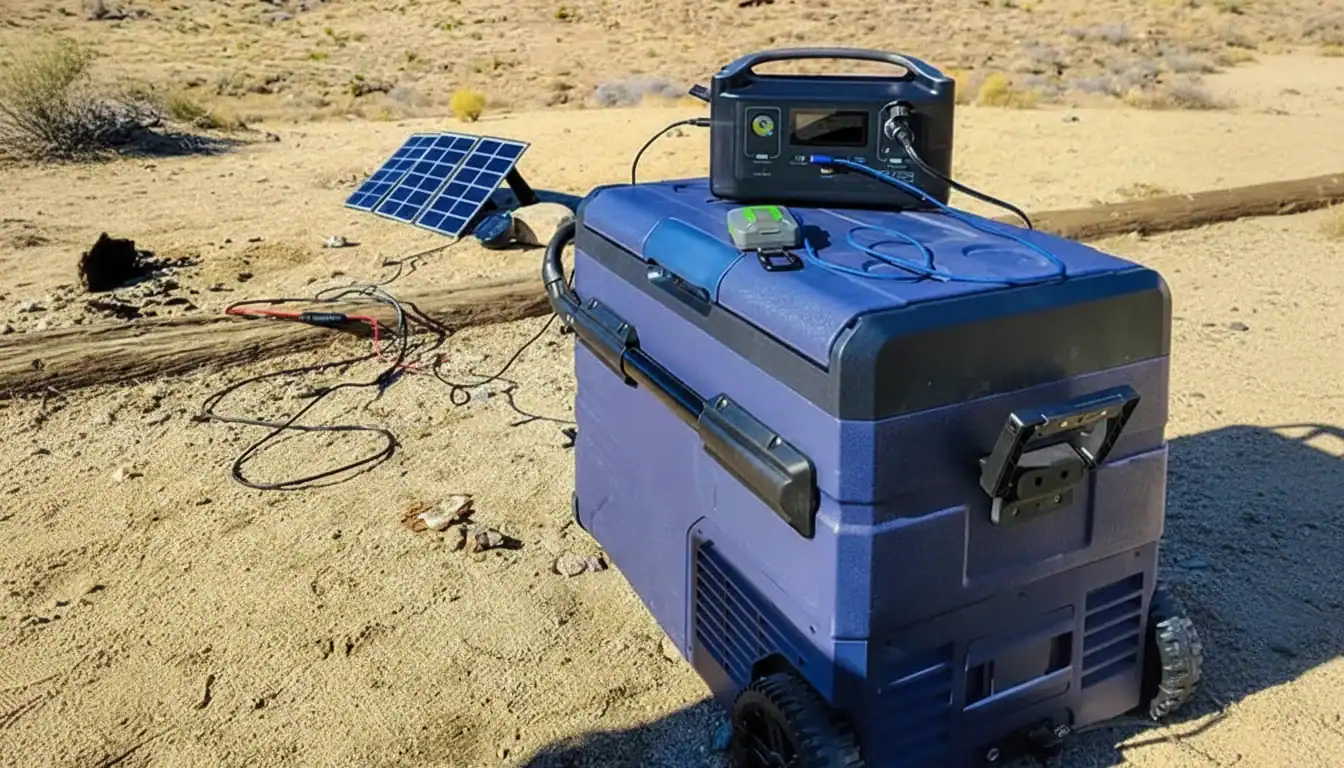
Die Kombi: Warum die Kombination mit einer tragbaren Power Station?
Durch die Kopplung eines tragbaren Kühlschranks mit einem Kraftwerk wird die Einrichtung von einem einfachen Solaranschluss zu einem vollständigen, modularen Energiesystem. Es ermöglicht die Energiespeicherung und Leistungsregulierung, die für eine mehrtägige Autonomie und die Langlebigkeit der Geräte entscheidend sind.
Während eine eigene Batterie oder ein direkter Fahrzeuganschluss für kurze Fahrten ausreicht, bietet eine tragbare Stromversorgungsanlage die nötige Energieunabhängigkeit für einen ernsthaften netzunabhängigen Einsatz. Diese Kombination wird immer mehr zum Standard für Camping, Wohnmobil und Notfallvorsorge, da sie die Kernprobleme der schwankenden Stromversorgung und der begrenzten Laufzeit löst.
Verlängern Sie die netzunabhängige Laufzeit um mehrere Tage
Durch den Anschluss eines Solarkühlschranks an ein tragbares Kraftwerk wird eine robuste Energiereserve aufgebaut. Auf diese Weise ist eine kontinuierliche Kühlung über mehrere Tage möglich, auch bei unregelmäßigem Sonnenlicht. Dies ist eine praktische Lösung für längere Campingreisen oder Situationen, in denen eine zuverlässige, langfristige Kühlung nicht verhandelbar ist.
- Ein Kraftwerk speichert die überschüssige Solarenergie, die während der größten Sonneneinstrahlung gesammelt wird, für die Nacht oder für bewölkte Tage.
- Diese Kombination ermöglicht eine mehrtägige Unabhängigkeit von der Startbatterie eines Fahrzeugs oder dem Stromnetz.
- Er sorgt dafür, dass Lebensmittel, Getränke oder Medikamente auch bei längerem netzunabhängigen Einsatz kalt und sicher bleiben, und beseitigt die Unsicherheit, sich allein auf das Wetter zu verlassen.
Schaffen Sie ein flexibles, modulares Energiesystem
Eine tragbare Energiestation fungiert als zentraler Energieknotenpunkt und bietet mehr Flexibilität als eine direkte Verbindung zwischen Solaranlage und Kühlschrank. Sie können die Energiestation über mehrere Eingänge aufladen - Solarmodule, eine normale Steckdose oder eine 12-V-Gleichstromsteckdose im Auto - und mehrere Geräte gleichzeitig mit Strom versorgen.
- Es liefert verschiedene Ausgänge (AC, DC, USB), um den Kühlschrank zu betreiben und gleichzeitig Telefone, Laptops und andere wichtige elektronische Geräte aufzuladen.
- Die Nutzer können ihr System skalieren, indem sie ein Kraftwerk mit einer Batteriekapazität auswählen, die ihrem spezifischen Energiebedarf entspricht.
- Dieses modulare Design bietet eine überragende Vielseitigkeit für verschiedene Verwendungszwecke, von Wochenendausflügen bis hin zur Notstromversorgung bei Stromausfällen zu Hause.
Ununterbrochene Zuverlässigkeit der Kühlung gewährleisten
Die ausschließliche Abhängigkeit von Sonnenkollektoren führt zu einem unregelmäßigen Stromfluss, der den Kompressor des Kühlschranks unregelmäßig ein- und ausschalten lässt. Ein Kraftwerk glättet diese Energiezufuhr. Es bietet eine gleichmäßige, geregelte Stromquelle, die den Kompressor vor Schäden schützt und eine konstante Innentemperatur aufrechterhält.
- Das Kraftwerk fungiert als Puffer und liefert auch dann eine saubere und konstante Spannung, wenn die Sonneneinstrahlung aufgrund vorbeiziehender Wolken schwankt.
- Dadurch wird das Risiko vermieden, dass sich der Kühlschrank in lichtarmen Zeiten abschaltet, was den Inhalt vor Verderb schützt.
- Diese Zuverlässigkeit ist für die Aufbewahrung von temperaturempfindlichen Produkten wie Insulin oder verderblichen Lebensmitteln, bei denen die Temperaturstabilität von entscheidender Bedeutung ist, unerlässlich.
Schlussfolgerung
Ein tragbarer Kühlschrank mit integrierter Batterie, direkter Solareinspeisung und einem effizienten Eco-Modus sorgt für eine zuverlässige, netzunabhängige Kühlung. Diese Kombination bietet die nötige Energieflexibilität für abgelegene Anwendungen, vom Wochenend-Camping bis hin zu längeren Überlandfahrten. Sie sorgt dafür, dass verderbliche Waren auch ohne ständigen Zugang zu Fahrzeug- oder Netzstrom frisch bleiben.
Für Einzelhändler von Outdoor-Ausrüstung und Importeure von Automobilzubehör stellen diese Merkmale ein hochwertiges Produkt für Ihre Kunden dar. Wenn Sie sich für eine OEM-Anpassung interessieren oder unseren vollständigen Katalog von Kompressorkühlschränken einsehen möchten, wenden Sie sich an unser Technikteam.
Häufig gestellte Fragen
Kann ein Solarmodul einen 12-V-Kühlschrank direkt betreiben?
Ein Solarmodul sollte nicht für den direkten Betrieb eines 12-V-Kühlschranks verwendet werden. Die Leistung des Panels ist aufgrund der wechselnden Sonneneinstrahlung unbeständig, was den Kompressor des Kühlschranks beschädigen kann. Der Industriestandard erfordert ein Solarmodul, das mit einem Laderegler verbunden ist, der eine Deep-Cycle-Batterie sicher auflädt. Der Kühlschrank bezieht dann stabilen, zuverlässigen Strom von der Batterie, was Langlebigkeit und ordnungsgemäßen Betrieb gewährleistet.
Welcher tragbare Kühlschrank hat eine herausnehmbare Batterie?
Mehrere führende Marken auf dem Markt für netzunabhängige Geräte bieten tragbare Kühlschränke mit herausnehmbaren oder austauschbaren Akkus an. Prominente Beispiele sind der Anker EverFrost, der EcoFlow Glacier und ausgewählte Modelle von Dometic und Jackery. Diese Funktion bietet Flexibilität für längere Reisen, da die Benutzer zusätzliche Batterien mit sich führen und austauschen können, um eine kontinuierliche Kühlung ohne eine primäre Stromquelle zu gewährleisten.
Bester netzunabhängiger Kühlschrank für abgelegenes Camping?
Der beste netzunabhängige Kühlschrank für abgelegene Campingplätze kombiniert einen hohen Stromverbrauch mit robuster Haltbarkeit. Achten Sie auf Modelle mit drehzahlgeregeltem Kompressor (wie Secop), hervorragender Isolierung und niedrigem durchschnittlichem Stromverbrauch (unter 2 Ampere bei 12 V). Branchenführende Modelle wie die Dometic CFX3-Serie, die ARB ZERO-Serie und der EcoFlow Glacier sind für ihre thermische Leistung, ihre robuste Bauweise und ihre fortschrittlichen Funktionen wie Zwei-Zonen-Kühlung und intelligente Steuerung hoch angesehen.
Wie lange hält der abnehmbare Akku?
Die Laufzeit einer abnehmbaren Kühlschrankbatterie beträgt in der Regel zwischen 6 und über 24 Stunden mit einer einzigen Ladung. Diese Dauer wird stark von der Kapazität der Batterie (gemessen in Wattstunden), der Umgebungstemperatur, der eingestellten Temperatur des Kühlschranks und der Qualität der Isolierung beeinflusst. Moderne Geräte mit fortschrittlichem Wärmemanagement, wie z. B. hybride passiv-aktive Systeme, reduzieren die Kompressorzyklen erheblich, maximieren die Lebensdauer der Batterie und verlängern die netzunabhängige Leistung.

 English
  Español
  Français
  Deutsch
  Português do Brasil
  Русский
  한국어
한국어  日本語
日本語  العربية