 Saltar al contenido principal Saltar al pie de página

Instalar un cargador comercial de CC para VE sin un plan claro de monetización es la forma más rápida de convertir una importante inversión de capital en una pérdida operativa. Muchas empresas tratan la recarga de VE como un simple servicio, sólo para descubrir que los altos costes energéticos y la baja utilización por parte de los clientes hacen imposible la rentabilidad. El verdadero reto no es simplemente proporcionar un enchufe, sino crear un sistema que convierta 30 minutos de tiempo de permanencia del cliente en un flujo de ingresos fiable.
Esta guía sirve de marco técnico para lograr un ROI positivo del cargador. Explicaremos por qué la carga rápida de CC de 30 kW+ es esencial para el modelo de “parada de café” de respuesta rápida que los cargadores de CA más lentos no pueden soportar. También detallaremos cómo el Protocolo de Punto de Carga Abierto (OCPP) proporciona la libertad de conectarse a cualquier red de pago y por qué el equilibrio de carga activo es fundamental para proteger la red eléctrica de su edificio de los costosos picos de demanda.
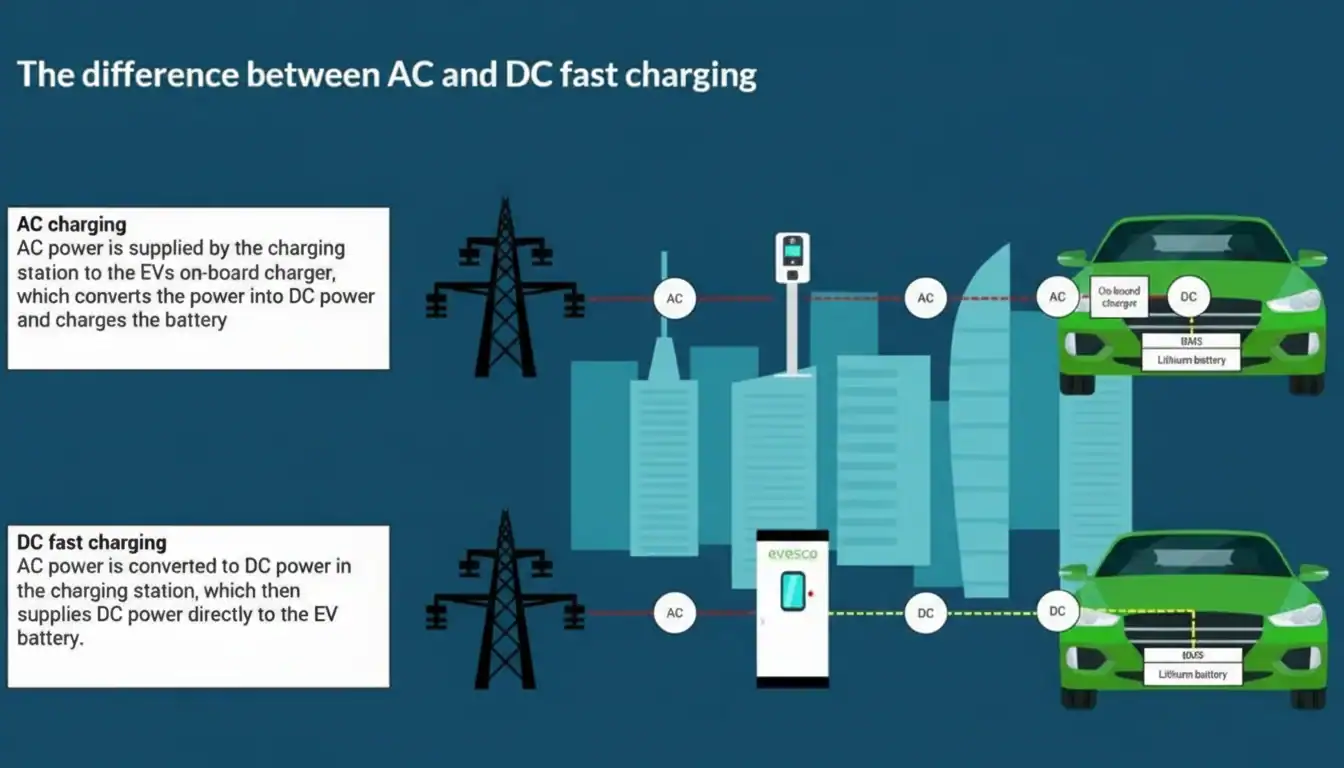
CA frente a CC: ¿por qué las empresas necesitan una carga rápida de más de 30 kW?
La elección entre carga de CA y de CC ya no consiste en elegir una u otra; se trata de construir una red híbrida que adapte la velocidad de carga a las necesidades comerciales específicas, equilibrando el coste, el impacto en la red y la rotación de vehículos.
Lugares muy frecuentados y plazos de entrega cortos
Para las ubicaciones comerciales con alta rotación de vehículos, la carga rápida de CC (50-350 kW) es una necesidad. Empresas como áreas de descanso en autopistas, centros comerciales y centros de flotas urbanas invierten en infraestructura de CC para minimizar el tiempo de inactividad de los vehículos. La capacidad de proporcionar una recarga rápida hace que los vehículos vuelvan a la carretera rápidamente, sirviendo a más clientes y manteniendo la eficiencia operativa de las flotas comerciales que no pueden permitirse esperar.
Carga de CA para flotas en el lugar de trabajo y de destino
Cuando los vehículos permanecen aparcados durante horas -como en lugares de trabajo, hoteles o complejos de apartamentos- la carga de CA ofrece una solución más práctica y rentable. La menor inversión inicial en hardware e instalación la convierte en la opción estándar para estas situaciones cotidianas. Las velocidades de carga más lentas también suponen un menor esfuerzo para la batería del vehículo, por lo que son adecuadas para entornos en los que los coches permanecen conectados durante periodos prolongados.
| Característica | Carga de CA (Nivel 2) | Carga rápida de CC (Nivel 3+) |
|---|---|---|
| Potencia de salida | 7kW - 22kW | 50 kW - 350 kW+ |
| El mejor caso de uso | Lugares de trabajo, hoteles, residencias (tiempos de permanencia largos) | Carreteras, depósitos de flotas, comercio minorista (rotación rápida) |
| Coste de las infraestructuras | Bajo a moderado | Alto a muy alto |
| Impacto en la salud de la batería | Mínimo; más suave con la batería | Acelera ligeramente la degradación con el tiempo |
Gestión de la red y longevidad de las baterías
La decisión entre cargar con corriente alterna o continua también depende de la estabilidad de la red y de la salud a largo plazo de las baterías de los vehículos eléctricos. La dependencia constante de la carga de corriente continua de alta potencia puede sobrecargar las redes eléctricas locales durante las horas punta y acelerar la degradación de las baterías. Las empresas están adoptando redes mixtas para gestionar eficazmente su carga eléctrica. Utilizar una carga de CA más lenta cuando sea necesario ayuda a preservar la longevidad de la batería, que es un activo fundamental para cualquier flota comercial.
Desarrollar una estrategia de recarga híbrida
En 2026, el mercado habrá superado el enfoque de "talla única". Las empresas líderes construyen ahora redes de recarga híbridas que combinan la velocidad de la corriente continua para lugares de alta rotación con la eficiencia de la corriente alterna para aparcamientos de larga duración. Esta estrategia adapta la velocidad de carga a las necesidades específicas de cada lugar, creando una infraestructura equilibrada que optimiza tanto el coste como la utilidad para diversas operaciones comerciales.
El modelo “Coffee Stop”: ¿Pueden 30 minutos de carga aumentar el gasto minorista?
Añadir la carga rápida a los puntos de venta crea un público cautivo, convirtiendo una espera de 30 minutos en un aumento cuantificable del tráfico peatonal y de las ventas en la tienda.
Aumentar el tráfico y las ventas en las tiendas
Los puntos de venta con recarga de VE atraen a un grupo demográfico de clientes de gran valor que ya tienen previsto parar durante un periodo prolongado. Al ofrecer este servicio esencial, los comercios atraen a conductores muy propensos a realizar compras mientras su vehículo se carga. Los datos muestran que casi 90% de los conductores de vehículos eléctricos realizan transacciones comerciales durante una sesión de carga. Esto hace que el modelo sea especialmente eficaz para minoristas independientes, cafeterías y restaurantes de servicio rápido que desean aumentar el flujo de clientes y crear nuevas oportunidades de venta a partir de un tiempo de espera que, de otro modo, sería pasivo.
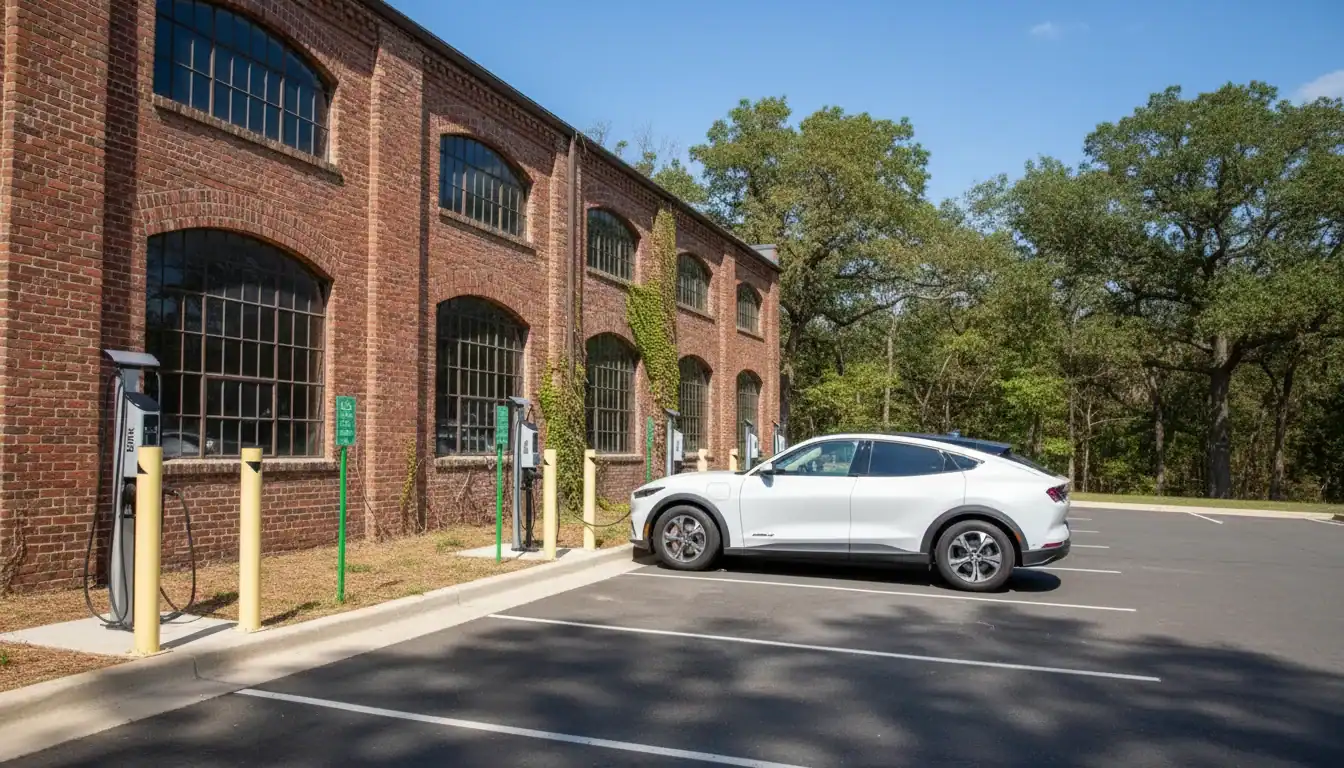
Convertir el tiempo de espera en tiempo de ocio
Una sesión típica de carga rápida de CC de 30 minutos establece una audiencia cautiva. Este periodo transforma la espera en una oportunidad inmejorable para gastar en comercios, lo que aumenta directamente el valor medio de las transacciones. Los estudios confirman que los conductores de vehículos eléctricos gastan aproximadamente $1 por minuto en otros bienes o servicios mientras su coche se carga. Esta estrategia rentabiliza eficazmente un retraso necesario, aprovechándolo para aumentar el tamaño de la cesta de la compra de cada cliente visitante.
| Métrica | Visita estándar al cliente | Sesión de recarga para conductores de VE |
|---|---|---|
| Tiempo medio de permanencia | 5-10 minutos | 25-30+ minutos |
| Probabilidad de compra en tienda | Variable | ~90% |
| Gasto auxiliar potencial | Transacción estándar | $25-$30 |
Convertirse en un destino, no sólo en un cargador
Al igual que la conexión Wi-Fi gratuita se ha convertido en un servicio estándar y en un factor decisivo a la hora de decidir dónde gastan los consumidores su tiempo y su dinero, la recarga de vehículos eléctricos es ahora un elemento diferenciador clave. Las empresas que integran la recarga en su infraestructura se posicionan como un destino preferente, no sólo como un lugar de paso. La disponibilidad de estaciones de recarga fiables influye cada vez más en el lugar que eligen los conductores de vehículos eléctricos para parar, comprar y comer. Esta estrategia fideliza a los clientes combinando una utilidad moderna con la comodidad de un comercio minorista, lo que garantiza la repetición del negocio en un mercado competitivo.
Haga crecer su marca con cargadores para vehículos eléctricos personalizables

Protocolo OCPP: ¿Por qué es vital conectarse a cualquier red de pago?
La conformidad con OCPP es la norma fundamental que desvincula el hardware de cobro del software propietario, lo que da a los operadores de redes la libertad de seleccionar los mejores sistemas de pago de su clase y ampliar su infraestructura sin costosas sustituciones de hardware.
Evitar el bloqueo del proveedor para lograr flexibilidad operativa
El Protocolo Abierto de Puntos de Carga (OCPP) es un estándar de código abierto que garantiza que el hardware de las estaciones de carga pueda comunicarse con cualquier sistema de gestión backend compatible. Esto evita que una empresa quede atrapada en el ecosistema de un único proveedor. Los operadores obtienen la libertad de seleccionar las redes de pago y el software de gestión en función del coste o las características, en lugar de verse limitados por su inversión inicial en hardware. Si aparece una solución de software mejor, pueden cambiar sin tener que sustituir todos los cargadores físicos.
| Característica | Protocolo propietario | Protocolo OCPP |
|---|---|---|
| Compatibilidad de hardware | Limitado a una sola marca | Funciona con cualquier hardware compatible |
| Elección de software | Bloqueado en el backend del proveedor | Libertad para elegir cualquier red que cumpla la normativa |
| Coste de integración | Alto coste de cambiar de sistema | Reduce los costes de integración en una media de 45% |
Mejorar la experiencia del usuario con diversas opciones de pago
Una experiencia de usuario positiva es fundamental para fidelizar a los clientes. Los cargadores compatibles con OCPP admiten una amplia gama de métodos de pago, como terminales de tarjeta de crédito integrados, monederos móviles y tarjetas RFID específicas de la red. Esto garantiza que cualquier conductor de VE pueda iniciar una sesión de carga rápidamente y sin fricciones, utilizando su método de pago preferido. El procesamiento más rápido de las transacciones reduce directamente los tiempos de espera y mejora la satisfacción del cliente.
- Admite terminales de pago integrados para pagos directos con tarjeta y monedero móvil.
- Ofrece a los conductores la comodidad de utilizar su plataforma de pago preferida.
- Mejora la velocidad de procesamiento de las transacciones hasta en 37%, reduciendo los tiempos de espera de los conductores.
Racionalización de la gestión financiera y escalabilidad
Para las empresas que gestionan una red de cargadores, OCPP simplifica la supervisión financiera. El protocolo permite el control centralizado y la recopilación de datos en tiempo real de todas las estaciones, independientemente de su fabricante. Esta consolidación permite a los operadores controlar los ingresos, realizar un seguimiento del estado de las transacciones y gestionar los precios desde un único panel de control. Este enfoque racionalizado de los informes financieros proporciona los datos operativos necesarios para tomar decisiones informadas sobre la expansión de la red.
- Ofrece datos en tiempo real sobre los ingresos y el estado de las transacciones de todas las estaciones.
- Centraliza las operaciones financieras para simplificar la contabilidad y la elaboración de informes.
- Proporciona una base escalable para añadir nuevas estaciones de recarga y socios de pago sin problemas.
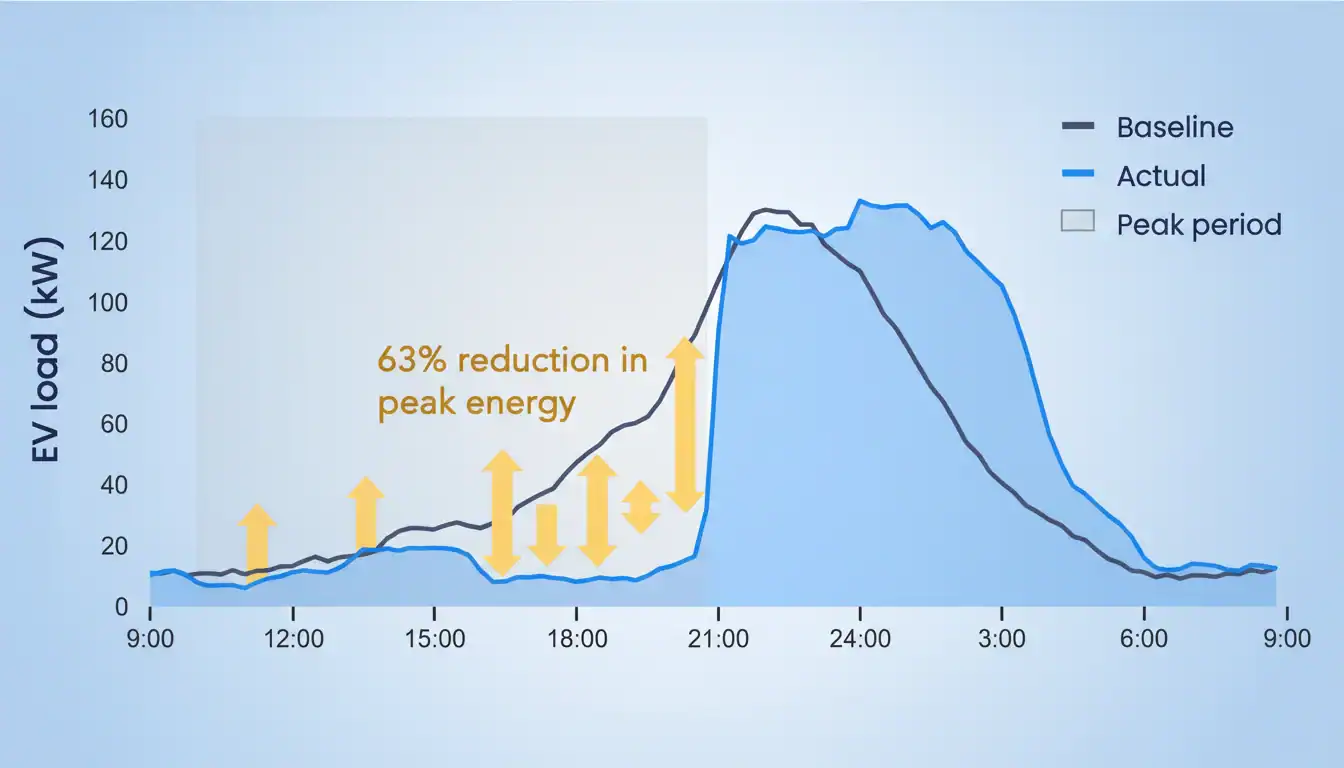
Equilibrio de carga: ¿Cómo proteger la red del edificio de los picos?
La gestión inteligente de la carga permite a las empresas desplegar densas redes de recarga de vehículos eléctricos utilizando la capacidad eléctrica existente, aplazando o evitando las costosas ampliaciones de la red y reduciendo las tarifas de demanda de las compañías eléctricas.
¿Qué es el equilibrio dinámico de la carga?
En 2026, las estaciones de carga comerciales utilizan el equilibrio de carga dinámico para distribuir de forma inteligente la energía disponible en tiempo real. A diferencia de los antiguos sistemas estáticos, que se limitan a dividir la energía a partes iguales, este enfoque ajusta constantemente el flujo de energía a cada vehículo en función de la carga eléctrica total del edificio. Este proceso garantiza que la red principal nunca se vea desbordada, incluso cuando varios vehículos se cargan simultáneamente en horas punta.
- Controla segundo a segundo el consumo total de energía del edificio.
- Prioriza la estabilidad de la red reduciendo automáticamente la velocidad de carga durante los picos de uso.
- Permite instalar más cargadores sin necesidad de costosas mejoras de la infraestructura eléctrica.
Integración del almacenamiento de energía en baterías
La combinación de estaciones de carga con un sistema de almacenamiento de energía en baterías (BESS) crea un colchón frente a la red. La batería se carga durante los periodos de baja demanda y bajo coste y luego se descarga para alimentar los cargadores cuando la demanda de electricidad aumenta. Esto protege a la red del edificio de los repentinos y elevados consumos de energía típicos de la carga rápida de CC y crea un ecosistema energético más resistente.
- Absorbe los picos de demanda, evitando la sobrecarga de la red local.
- Reduce los costes de electricidad al utilizar la energía almacenada fuera de las horas punta para la recarga.
- Proporciona continuidad eléctrica a los cargadores durante breves cortes de la red.
Aplazamiento de las mejoras de la red y reducción de las tarifas de los servicios públicos
La principal ventaja de la gestión inteligente de la carga es económica. Permite a las empresas desplegar densas redes de carga dentro de su capacidad eléctrica existente. Esta estrategia ayuda a aplazar o evitar por completo las costosas actualizaciones de la red, al tiempo que reduce las facturas mensuales de los servicios públicos mediante la gestión activa de los picos de demanda, una parte significativa de cualquier factura comercial de electricidad.
- Evita el importante gasto de capital que suponen los nuevos transformadores o paneles de servicio.
- Minimiza los gastos por picos de demanda, que suelen constituir una parte importante de la factura de los servicios públicos comerciales.
- Utiliza marcos normalizados que apoyan programas flexibles de interconexión con proveedores de servicios públicos.
Conclusión
Instalar un cargador comercial rápido de CC es algo más que ofrecer un servicio; es una decisión estratégica para atraer a conductores de vehículos eléctricos de alto valor. El modelo de la “parada de café” muestra cómo los tiempos de carga rápida pueden aumentar directamente el gasto de los comercios in situ. Mediante el uso de protocolos abiertos como OCPP y el equilibrio de carga inteligente, puede crear una nueva fuente de ingresos fiable al tiempo que protege la infraestructura eléctrica existente de su edificio.
Si está listo para monetizar su aparcamiento comercial, nuestro equipo puede ayudarle a especificar la solución de carga de CC adecuada para su propiedad. Póngase en contacto con nosotros para hablar de los requisitos de su proyecto y explorar nuestras opciones de personalización OEM.
Preguntas frecuentes
¿Es mala la carga rápida de CC para la salud de las baterías de los VE?
Aunque el uso exclusivo y repetido de la carga rápida de CC puede acelerar la degradación de la batería más que la carga más lenta de CA, no es intrínsecamente “malo” para la batería. El factor principal es el calor; los altos niveles de potencia de la carga de CC generan más estrés térmico. Sin embargo, los VE modernos están equipados con sofisticados sistemas de gestión de baterías (BMS) que enfrían activamente la batería y regulan las velocidades de carga para proteger su salud a largo plazo. Para la mayoría de los conductores, el uso de la carga rápida de CC para viajes por carretera o recargas rápidas ocasionales tiene un impacto insignificante en la vida útil total de la batería. El consenso es confiar en la carga de CA de nivel 2 para las necesidades diarias y utilizar la carga rápida de CC cuando la velocidad sea esencial.
¿Cuál es la diferencia entre el nivel 2 y la carga rápida de CC?
La diferencia fundamental es cómo suministran la energía. La carga de nivel 2 suministra corriente alterna (CA) al cargador de a bordo del vehículo, que la convierte en corriente continua (CC) para almacenarla en la batería. Este proceso es más lento y suele añadir entre 20 y 60 millas de autonomía por hora. En cambio, la carga rápida en CC evita el cargador de a bordo del vehículo y suministra corriente continua directamente a la batería. Esto permite niveles de potencia mucho más altos (de 50 kW a más de 350 kW), lo que permite a los vehículos eléctricos obtener una carga de 80% en tan sólo 20-30 minutos. En consecuencia, el nivel 2 es ideal para la carga nocturna y en el lugar de trabajo, mientras que la carga rápida de CC se utiliza para el repostaje rápido durante los viajes de larga distancia.
¿Cómo pueden acceder los clientes de VE a la recarga rápida de CC?
Los clientes de VE acceden a la recarga rápida de CC principalmente a través de redes públicas de recarga. Estas estaciones están estratégicamente situadas a lo largo de las principales autopistas, en centros urbanos y en puntos de venta. Los métodos de acceso suelen incluir: el uso de una aplicación móvil específica de la red (como Electrify America, EVgo o la aplicación de Tesla), el uso de una tarjeta RFID física proporcionada por la red o el uso de un lector de tarjetas de crédito directamente en el terminal. La mayoría de los vehículos eléctricos modernos también cuentan con sistemas de navegación integrados que pueden localizar cargadores rápidos de corriente continua cercanos, mostrar la disponibilidad en tiempo real y dirigir al conductor hacia ellos automáticamente.
¿Cuál es el coste de la instalación de un cargador comercial de CC?
El coste total de una instalación comercial de cargadores rápidos de CC es muy variable y suele oscilar entre $50.000 y más de $250.000 por estación. Este coste se desglosa en varios componentes clave. El hardware en sí puede oscilar entre $20.000 para una unidad de 50 kW y más de $100.000 para una unidad de 350 kW. La preparación del emplazamiento y la instalación suelen representar el mayor gasto, con zanjas, hormigón y mejoras eléctricas críticas como transformadores y conmutadores. Los costes adicionales incluyen las suscripciones al software de red, las tasas de autorización y las tarifas de los servicios públicos para las conexiones de alta demanda. El precio final depende en gran medida del nivel de potencia del cargador y de la infraestructura eléctrica existente en el emplazamiento.

 English
  Español
  Français
  Deutsch
  Português do Brasil
  Русский
  한국어
한국어  日本語
日本語  العربية