 Saltar al contenido principal Saltar al pie de página

Finding the quietest electric cooler is often the deciding factor between deep sleep and the chronic fatigue that tanks academic or work performance. Most cooler spec sheets advertise low noise levels, but they fail to account for the real-world operational sounds—the compressor cycling on, the constant fan drone, and the subtle vibrations that disrupt concentration in a small bedroom. This isn’t just a minor annoyance; it’s a direct threat to the focus required for studying and restorative rest.
This guide bypasses marketing claims and focuses on measurable data. We present a clear breakdown of decibel test results, ranking models from nearly inaudible to distracting. We will also cover standard operating procedures for noise and light management, including activating low-RPM “Eco Modes” for nighttime use, eliminating bright LED indicators, and isolating desk vibrations with simple modifications. Think of this as a technical manual for creating a silent, distraction-free environment.
The Decibel Test: Ranking from 25dB to 40dB
The 25–40 dB range is an ultra-quiet standard that most consumer electric coolers don’t meet; typical compressor models test between 42–49 dB, making direct product ranking impossible without specific lab data.
Data Limitations for Ultra-Quiet Coolers
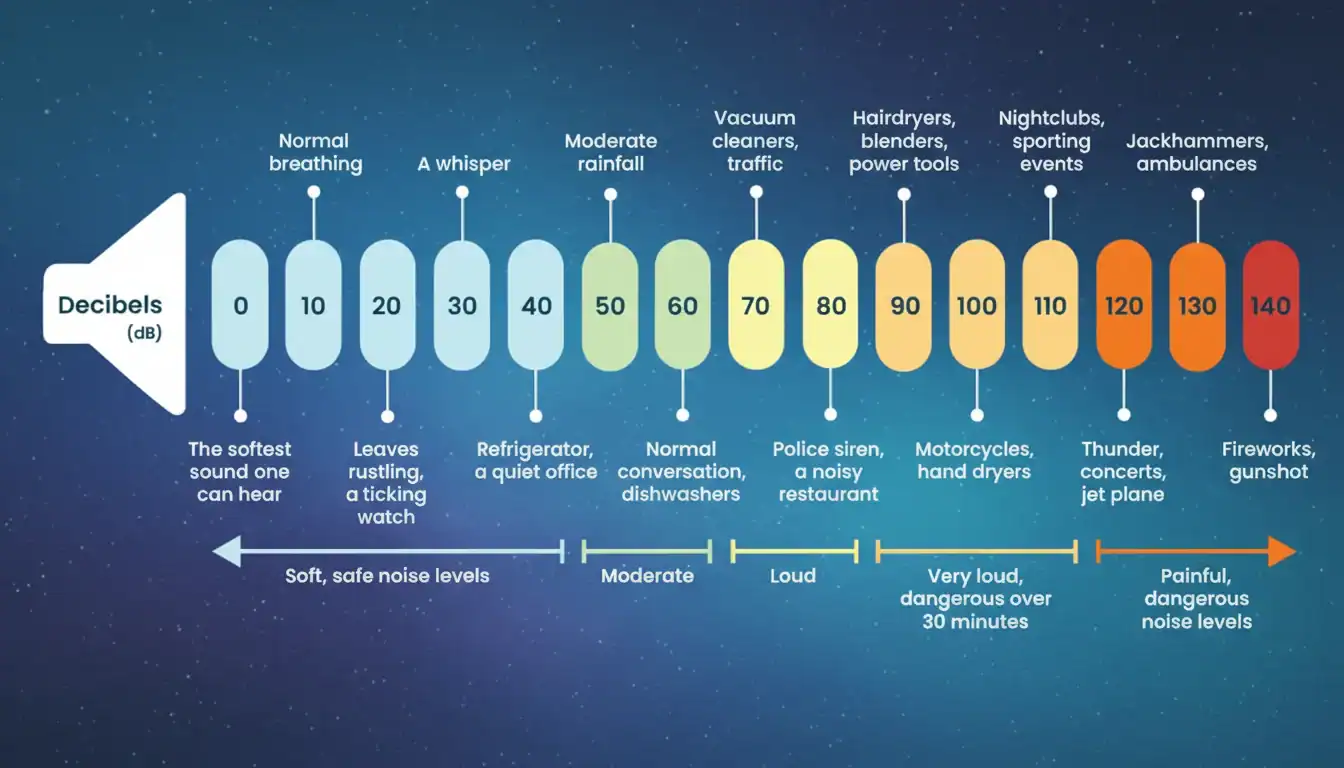
The 25–40 decibel range represents an extremely quiet operational standard, similar to a whisper or the ambient noise in a library. Publicly available data and product tests do not provide a comprehensive ranking for coolers that specifically meet this threshold. Most commercial units are not marketed with precise decibel ratings in this ultra-low category. Building an accurate database requires direct access to manufacturer specifications or dedicated third-party lab results, which are not commonly published.
| Acoustic Category | Typical Decibel (dB) Range | Real-World Comparison |
|---|---|---|
| Ultra-Quiet Target | 25–40 dB | Quiet library or a whisper |
| Standard Compressor Cooler | 42–49 dB | Low humming sound, quiet office |
| Industrial Benchmark | 67–68 dB | Loud conversation or vacuum cleaner |
Compressor Cooler Noise Levels (42-49 dB)
Independent tests on common compressor coolers show they operate just outside the 25–40 dB target. Measured noise levels consistently fall between 42 and 49 dB. While this is quiet enough for most applications and often described as a “low humming sound,” it does not classify them as ultra-quiet. These figures establish a realistic performance baseline for the market, placing standard compressor models slightly above the whisper-quiet threshold.
Industrial Coolers as a High-Noise Benchmark
To provide context, industrial-grade units like vortex enclosure coolers function at much higher sound levels, typically around 67–68 dB. This comparison highlights the significant engineering effort required to reduce noise in consumer-grade products. The substantial difference between a 45 dB portable fridge and a 68 dB industrial cooler underscores the advanced design and insulation needed to achieve low-noise operation for camping, vehicle, and residential use.
“Eco Mode” Switch: Dropping RPMs for Night Use
Eco mode lowers compressor RPMs to reduce both acoustic noise and power consumption, making it a standard feature for overnight or battery-dependent applications.
How Eco Mode Lowers Noise Levels
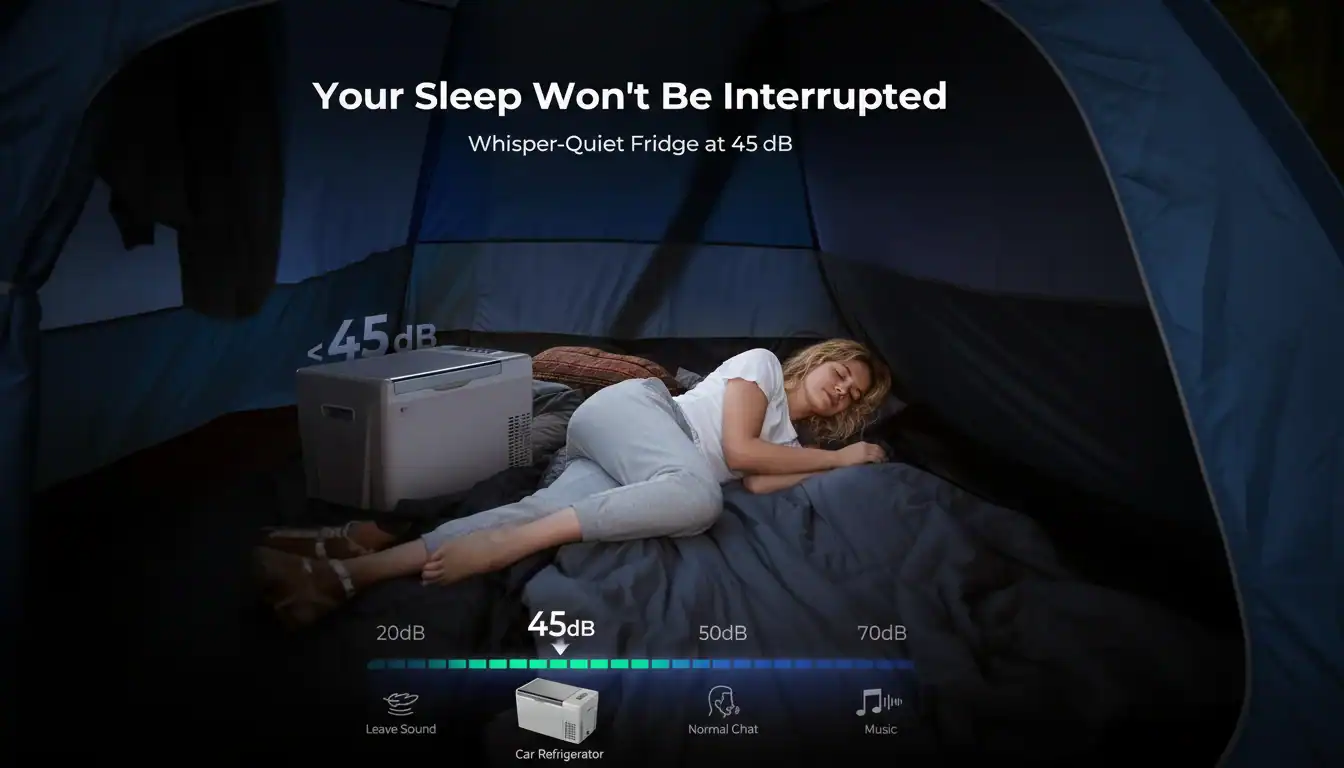
Eco mode reduces operational noise by lowering the compressor’s cycling frequency. This function is specifically engineered for stationary use, such as in bedrooms or RVs, ensuring noise levels remain at or below 45dB for quiet overnight operation. By slowing the system down, the distinct sounds of the compressor starting and stopping are minimized.
- Compressors operate at a lower speed, which directly reduces mechanical sound.
- The system cycles less frequently, minimizing abrupt start-up and shut-down noise.
- This feature is now standard in most modern compressor coolers to meet demand for silent performance.
Balancing Power Consumption and Cooling Performance
While reducing noise, Eco mode also significantly lowers power draw, making it essential for battery-dependent applications. It maintains stable temperatures by operating more efficiently, consuming between 28-45 watts. This is a noticeable drop from the 40-72 watts typically used in Max mode, extending off-grid runtime without sacrificing cooling integrity.
- It cuts power consumption to as low as 28-45W, preserving battery life in vehicles and portable power stations.
- The unit effectively maintains consistent cooling performance despite the lower energy use.
- This provides a functional balance between energy efficiency and reliable temperature management.
Ideal Applications for Silent Operation
The quiet performance of Eco mode makes it suitable for any environment where noise is a critical concern. It allows the cooler to run continuously without disturbing sleep or daily activities, which is a key selling point for recreational and professional users alike.
- Perfect for overnight use in bedrooms, tents, or truck cabins.
- Essential for RVs and campers, where both noise levels and battery drain are primary concerns.
- It also provides a quiet cooling solution for office or worksite use without creating a distraction.
Boost Your Brand with Custom Car Coolers

Light Pollution: Taping Over Bright LEDs.
The industry is moving beyond simple fixes like taping over bright LEDs, focusing instead on integrated design, compliant fixtures, and advanced controls to manage light pollution at the source.
Basic Fixes vs. Integrated Solutions
While taping over bright status LEDs is a straightforward, user-level solution, the market is shifting toward integrated designs. Manufacturers are building light control directly into products, which moves the responsibility from the end-user to the engineer. This trend shows a clear move away from post-purchase modifications and toward proactive, built-in light management from the factory floor.
- Covering bright indicators remains a common tactical approach for immediate light reduction.
- The current emphasis is on purpose-built fixtures that manage light output by design.
- This evolution reflects a shift from simple retrofits to proactive, embedded light management.
Modern Fixture Design and Compliance
Contemporary product design incorporates principles to minimize light spillage and its environmental impact. Standards, such as Dark Sky compliance, now guide manufacturers to create fixtures that direct light purposefully and efficiently. This approach is no longer niche; it’s becoming a standard expectation in premium electronics and outdoor equipment.
- Purpose-built fixtures are engineered to direct light downward, preventing unnecessary glare.
- Key features include physical cutoff shields and specific reflector shapes to contain illumination.
- These designs effectively balance necessary visibility with reduced environmental light pollution.
Advanced Light Control Technologies
Beyond the physical shape of a fixture, modern solutions use advanced technology to control the quality and intensity of light. These methods offer more sophisticated ways to reduce intrusiveness than simply blocking the source. They address the biological impact of light, not just its brightness, which is critical for products used in sleeping environments like RVs or campsites.
- Warm-color LEDs, typically 3000K or lower, are used to reduce harsh blue light that disrupts sleep.
- Intelligent controls, including dimmers and motion sensors, adjust brightness based on actual need.
- Alternative technologies like electroluminescent lighting provide softer, more diffuse illumination.
Vibration Control: Rubber Feet for Desk Use.
Effective vibration control isn’t about using the softest material; it’s a technical process of matching the dampening properties of the feet to the specific operational frequencies of the equipment they support.
Core Dampening Materials
Most desk vibration control relies on passive dampening, where the material itself absorbs and dissipates kinetic energy from equipment like fans or spinning hard drives. The effectiveness comes from the physical properties of specific materials. Selecting the right one is critical and depends on the vibration frequencies and the total weight of the equipment being isolated.
- Rubber and neoprene are standard choices due to their high elasticity and proven durability in industrial applications.
- Cork is valued for its natural cellular structure, which provides excellent dampening, and is often integrated into composite solutions.
- Material selection is a balance between stiffness, load capacity, and the specific frequency range that needs to be isolated.
The Principle of Frequency Isolation
True vibration isolation occurs when the equipment’s disturbing frequencies are significantly higher than the natural frequency of the support system (the rubber feet). When engineered correctly, this mismatch can achieve up to 99.9% isolation efficiency, preventing the vibrations from transferring into the desk surface and becoming structure-borne noise. A poorly matched foot can actually amplify low-frequency vibrations, making the problem worse.
- Isolation is most effective for high-frequency vibrations typically produced by small motors, fans, or compressors.
- The primary engineering challenge is avoiding low-frequency amplification, which occurs when the equipment’s frequency is too close to the natural frequency of the isolators.
- The main goal is to create an impedance mismatch that stops vibrational energy from propagating from the device to the supporting structure.
Composite Materials for Enhanced Performance
The market is shifting toward composite materials that blend different polymers to achieve superior performance characteristics. For example, combining rubber with polyurethane can create a compound with excellent shock absorption and greater durability across a wider range of operating temperatures. This approach allows for highly engineered solutions that can be tailored to specific equipment profiles, moving beyond generic, single-material feet.
- Composite feet offer a broader and more consistent range of dampening properties compared to single-material options.
- These materials are designed for longevity and resist the hardening or degradation that can affect basic rubber over time.
- This method allows for precise tuning of dampening characteristics to meet the demands of sensitive equipment.
Workstation Applications
In both professional and home office workstations, rubber feet are integrated to manage equipment stress and improve the user environment. By minimizing the transfer of vibrations, these components protect sensitive electronics from premature wear and reduce the low-frequency humming that contributes to operator fatigue during long periods of work. The result is a more stable and quiet workspace.
- Commonly used under printers, external hard drive enclosures, and audio equipment to prevent noise transfer.
- In technical environments, they help stabilize precision measurement tools and lab equipment.
- They directly contribute to a more comfortable workspace by reducing distracting structure-borne noise.
Conclusión
Selecting the right electric cooler for a dorm or bedroom goes beyond temperature control; managing noise, light, and vibration is essential for user satisfaction. The decibel rating and features like an eco mode directly impact sleep and study, making them critical considerations for any bulk purchase. Addressing these small details ensures a better experience for the end-user and reduces potential complaints.
If your project requires quiet and reliable cooling solutions, explore our catalog of thermoelectric models designed for noise-sensitive environments. Contact our team to discuss customization options or to receive detailed specifications for your next order.
Preguntas frecuentes
What is the quietest electric cooler for a dorm room?
For a dorm room, the quietest electric coolers are typically thermoelectric (Peltier) models. Unlike traditional compressor-based mini-fridges, these coolers use a solid-state system with only a small fan, resulting in significantly lower noise levels. Look for models specifically advertised with noise ratings between 25-35 dB, often described as ‘whisper-quiet’ operation, to ensure minimal disturbance.
Does the fan noise disturb sleep?
Whether the fan noise disturbs sleep depends on the cooler’s decibel level and an individual’s sensitivity to sound. Most modern thermoelectric coolers operate with a consistent, low-frequency hum from the fan, which is often less disruptive than the intermittent start-and-stop cycling of a compressor. Coolers rated below 35 dB are generally considered non-intrusive and can blend into ambient room noise, making them suitable for most sleepers.
Is there a silent mode for night time?
While not a standard feature on all models, many premium electric coolers designed for quiet environments like bedrooms or offices offer a ‘Silent’ or ‘Eco’ mode. This function typically reduces the fan speed to minimize noise during the night. Engaging this mode may slightly decrease the cooling power, but it ensures the quietest possible operation, making it ideal for light sleepers.
How loud is 30dB compared to a library?
A noise level of 30 decibels (dB) is exceptionally quiet, often quieter than a typical library. For comparison, a quiet library is generally rated at around 40 dB, while a soft whisper is approximately 30 dB. Therefore, a cooler operating at 30 dB produces a barely audible sound that would easily blend into the background of a quiet room.

 English
  Español
  Français
  Deutsch
  Português do Brasil
  Русский
  한국어
한국어  日本語
日本語  العربية