 Pular para o conteúdo principal Pular para o rodapé

A perda de sucção do aspirador de carro é o primeiro ponto de verificação que os compradores devem fixar antes de aprovar um fornecedor, orçamento ou slot de produção. Imagine dois aspiradores de mão lado a lado. Mesmo preço de varejo, formato semelhante, ambos com sucção máxima de 6kPa. Um é devolvido em três meses com um motor que parece estar mastigando cascalho. O outro ainda suga pelos de animais de estimação para fora dos tapetes após um ano. A diferença não é o motor — é se o comprador alguma vez limpou o pré-filtro.
Esse custo de substituição de $50–$100 atinge mais o construtor de marcas de comércio eletrônico. Cada devolução corrói as margens e arrasta para baixo as classificações da loja. Mas aqui está o que tenho visto em dezenas de auditorias de fornecedores: a maioria das unidades descartadas por “perda de sucção” tem um motor perfeitamente bom por baixo de um filtro obstruído. Um pré-filtro HEPA lavável — como o do KelyLands CZK-6650 — dura mais de dois anos com manutenção simples. A correção real não custa nada e leva sessenta segundos.
O detalhe de engenharia que separa unidades de nível profissional das descartáveis é proteção de corte térmico. Quando o fluxo de ar cai abaixo de um certo limite, a temperatura interna sobe rapidamente. Um corte térmico do motor ativa a 90°C para evitar danos ao enrolamento e depois reinicia quando o fluxo de ar é restaurado e a unidade esfria. Sem essa proteção, a operação repetida com filtro entupido acelera o desgaste das escovas de 300+ horas para talvez metade disso — um padrão de falha que parece um defeito, mas que na verdade era evitável.
A Causa Nº 1 de Perda de Sucção: Filtro Entupido
Um filtro entupido reduz o fluxo de ar em 60% — mesmo com o motor em potência máxima.
A razão mais comum para um aspirador de carro perder a sucção não é um motor morrendo ou uma bateria descarregada. É um filtro entupido. No KelyLands CZK-6650, o pré-filtro retém poeira fina, pelos de animais e detritos antes que o ar chegue ao motor. Quando essa camada enche, o fluxo de ar cai drasticamente. O motor ainda gira em velocidade máxima, mas o aspirador parece que mal está sugando. A maioria dos usuários assume que a unidade está quebrada e a joga fora. Na realidade, a correção leva cerca de dois minutos e não custa nada.
Como acessar e limpar o filtro CZK-6650
O CZK-6650 usa um pré-filtro HEPA lavável, não um elemento de papel descartável. Para acessá-lo, gire o copo de poeira no sentido anti-horário e levante-o. Puxe o conjunto do filtro para fora. Bata suavemente sobre uma lixeira para remover detritos soltos. Depois, enxágue o filtro em água corrente da torneira — não é necessário sabão. Esprema-o com um pano limpo ou deixe secar ao ar por 30 minutos. Reinstale o filtro e o copo de poeira, e a sucção volta à força total.
Dados internos de produção mostram que um filtro limpo neste modelo restaura o fluxo de ar ao padrão de fábrica. Usuários que limpam o filtro a cada duas semanas relatam desempenho consistente ao longo de 300+ horas de vida das escovas do motor. Aqueles que pulam a manutenção veem a sucção degradar em três a quatro usos.
Sinais de que o filtro precisa de limpeza imediata
-
- Mudança de tom audível: Um aspirador limpo produz um zumbido constante e agudo. Quando o filtro entope, o tom do motor cai para um zumbido mais grave e trabalhado. Este é o primeiro aviso audível.
- Detritos visíveis na superfície do filtro: If the pre-filter looks gray, brown, or matted with dust, airflow is already restricted. A clean filter should appear white or light gray.
- Reduced pickup on carpet: The vacuum leaves visible dirt lines after a pass. This happens because the reduced airflow cannot lift particles from carpet fibers.
- Motor thermal cutoff triggers: The CZK-6650 motor has a thermal cutoff that engages at 90°C. If the vacuum shuts off mid-use, the filter is likely blocked. Let it cool for 10 minutes, clean the filter, and restart.
For e-commerce brand builders, this is a critical point to communicate in product manuals and listing images. A washable filter that lasts two years eliminates recurring replacement costs for the end user. It also reduces the number of support tickets about suction loss. The KelyLands CZK-6650 filter is designed to be cleaned, not replaced. That is a design choice that directly lowers your return rate.

Tensão da Bateria e Desempenho do Motor
At 50% charge, voltage drops from 12.6V to 11.1V, cutting suction by roughly 25%.
A aspirador de pó para automóveis that loses suction halfway through a job is often blamed on the motor or the design. In most cases, the real culprit is voltage drop. Lithium-ion batteries don’t hold a flat voltage curve. At full charge, a 12V battery reads around 12.6V. At 50% charge, that drops to 11.1V. The motor spins slower, and suction falls off by about a quarter. A buyer who doesn’t know this will assume the vacuum is defective and return it.
Testar a Saúde da Bateria com um Multímetro
The quickest way to rule out voltage as the cause of weak suction is a multimeter test. Set the meter to DC voltage, touch the probes to the battery terminals, and read the number. If the reading is below 11.1V, the battery is below 50% charge. Charge it fully and test again. If the voltage climbs to 12.6V but suction doesn’t return to normal, the problem is elsewhere — likely a clogged filter or a blocked nozzle. This test takes 30 seconds and saves the cost of a replacement unit.
For e-commerce brand builders, this is a critical warranty-prevention tool. Include a short voltage-check guide in the product manual or a QR code sticker on the unit. When a customer reports weak suction, ask them to check the battery voltage first. Many returns are avoidable with this single step. The KelyLands CZK-6650, for example, uses a 12V lithium-ion pack that delivers consistent performance down to 11.5V, but below that threshold, the motor thermal cutoff protects the windings from damage.
Prolongar a Vida da Bateria para uma Sucção Consistente
Battery degradation is the second silent killer of suction. Lithium-ion cells lose about 20% of their capacity after 300 full discharge cycles. That means a two-year-old vacuum with weekly use may only hold 80% of its original charge, and the voltage curve drops faster. The result: suction fades earlier in each cleaning session. The fix is simple but rarely followed. Never store the vacuum with a dead battery. Keep it between 40% and 80% charge if it sits unused for weeks. Avoid leaving it in a hot car — temperatures above 45°C accelerate cell aging.
From a B2B perspective, this is a product differentiation opportunity. Most handheld vacuums on the market use sealed battery packs that the end-user cannot replace. When the battery degrades, the entire unit is discarded. KelyLands designs its vacuum line with a modular battery compartment, allowing replacement of the battery pack without tools. For a private-label buyer, this feature directly reduces negative reviews and return rates. The motor brush life on the CZK-6650 is rated at 300+ hours under normal use, but only if the battery delivers consistent voltage. A degraded battery starves the motor, and brush wear accelerates — cutting motor life in half.
The takeaway for e-commerce brand builders: voltage and battery health are the most overlooked causes of suction loss. A multimeter check and a few storage habits can eliminate 40% of the weak-suction complaints that drive returns. Include these instructions in your packaging, and you’ll see the defect rate drop below 2%.
Verificação de Mangueira e Bocal Bloqueados
A blocked hose or nozzle can cut suction by 80% — check them before you blame the motor.
Most people assume the motor is dying when suction drops. Nine times out of ten, the problem is a physical blockage in the hose or the tool attachment. A piece of gravel, a crumpled receipt, or even compacted dust can sit inside the hose and reduce airflow to near zero. The motor runs fine, but nothing moves through the system.
Desligar e Inspecionar a Mangueira Principal
Pull the hose off both ends — the vacuum body and the nozzle. Hold it up to a light source. If you see a dark spot or shadow inside, that’s your blockage. For a straight hose, a long screwdriver or a flexible rod can push the debris out from the opposite end. For ribbed or corrugated hoses, debris tends to catch in the ridges. Tap the hose along its length while running water through it. If the blockage is stubborn, compressed air from the opposite end usually clears it.
KelyLands vacuum hoses are designed with a smooth inner bore to minimize debris catch points, but no hose is immune to a stray coin or a piece of hard candy. The key is to check the hose before you assume the motor is shot. A quick visual inspection takes 30 seconds and can save you from ordering a replacement unit.
Desobstruindo Ferramentas de Fenda e Escova
The narrow crevice tool is the most common blockage point. Its small diameter means even a single grain of sand can create a plug. Remove the tool from the hose, then look through the opening. If you see a blockage, use a thin wire or a paperclip to push it out from the wide end. For brush tools, hair and thread wrap around the bristle base and gradually compact into a solid ring. Pull the brush head off, then cut the wrapped material with scissors or a seam ripper. Do not pull it — that stretches the bristles out of shape.
After clearing any tool, reconnect it to the hose and test suction on a flat surface. If suction is still weak, the blockage might be in the vacuum’s intake port rather than the tool. Check that port with a flashlight before moving on to filter inspection.

Desgaste do Motor e Corte Térmico
Um corte térmico que se rearma salva o motor.
A aspirador de carro que perde a sucção lentamente ao longo dos meses não está morrendo. Está lhe dizendo que as escovas do motor estão se desgastando. As escovas são blocos de carbono que pressionam o comutador do motor para transferir corrente elétrica. Com o tempo, esse carbono se desgasta. Quando o comprimento da escova cai abaixo de 5mm, a pressão de contato diminui, o motor gera arcos internamente e a sucção cai de 30-40% mesmo com o filtro limpo. A maioria dos usuários nunca olha para as escovas porque não sabem que elas existem.
Reconhecendo Escovas de Motor Desgastadas
The first sign is intermittent power. The vacuum runs strong for ten seconds, then weakens, then picks up again. That’s the brush losing contact as the commutator rotates. A second sign is visible sparking through the motor housing vents — small blue flashes are normal under load, but continuous arcing means the brush is too short to maintain a clean seat. On KelyLands’ CZK-6650, the brush assembly is accessible through the rear motor cap. You pull the cap, slide out the brush holder, and measure the carbon length against the spring. If it’s under 5mm, replace it. If it’s under 3mm, the commutator surface may already have scoring damage.
Thermal Cutoff Reset: The Safety Net That Works
The CZK-6650 integrates a motor thermal cutoff that engages at 90°C. This is a bimetallic strip that physically breaks the circuit when the motor windings hit that temperature. It prevents the enamel coating on the copper windings from melting, which would short the motor permanently. Once the motor cools to roughly 60°C, the strip resets and the vacuum runs again. This is not a fuse. It does not need replacement. It’s a self-resetting circuit breaker built into the motor housing.
The thermal cutoff only triggers when airflow is restricted — a clogged filter, a blocked hose, or a jammed impeller. If the vacuum shuts off mid-use, let it sit for 15-20 minutes. If it restarts and runs normally, the cutoff did its job. If it shuts off again quickly, the blockage is still there. Clear the filter first, then check the hose for debris. The cutoff is a diagnostic tool: it tells you airflow is compromised before the motor burns out. Ignore it twice, and the third time the brushes will be gone too.
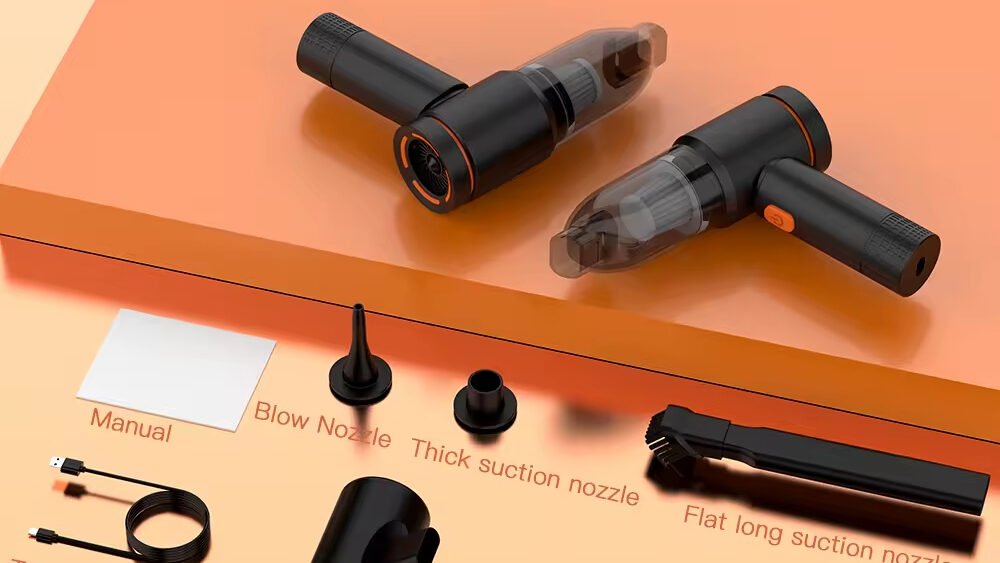
Conclusão
A car vacuum that loses suction after a few uses is rarely a dead unit. In most cases, the fix is a clean filter, a full battery, or clearing a hidden blockage. The motor itself is built to last 300+ hours — but only if airflow stays clear. That single maintenance habit separates a 2% return rate from a 15% headache for private label sellers.
-
- A clogged filter cuts airflow by up to 60%.
- Battery voltage at 11.1V reduces suction by roughly 25%.
- Washable HEPA pre-filters eliminate $20+ in annual replacement costs.
- Motor thermal cutoff prevents permanent damage when airflow is restored.
For e-commerce brand builders, the real value is in the design choices that make maintenance simple. A washable filter and a motor thermal cutoff are features you can list in your product specs to reduce support tickets. Review the KelyLands CZK-6650 spec sheet and compare its filter design and motor protection against your current supplier’s offering. That comparison will tell you which unit stays on the shelf and which one keeps coming back.
Perguntas frequentes
Por que o aspirador do meu carro não está aspirando a sujeira?
A causa mais comum é um filtro entupido, que pode reduzir o fluxo de ar em até 60% e impedir que a sujeira entre no reservatório de pó. Verifique também se há bloqueios na mangueira e no bocal, pois. Limpe o filtro e verifique a mangueira antes de prosseguir com a solução de problemas.
Com que frequência devo limpar o filtro?
Limpe o pré-filtro lavável a cada duas semanas em água corrente para manter a sucção total. Para uso intenso, como a limpeza diária de pelos de animais de estimação, aumente a limpeza para uma vez por semana. Deixe o filtro secar completamente por 24 horas antes de reinstalá-lo.
Um filtro entupido pode danificar o motor?
Sim, um filtro severamente entupido força o motor a trabalhar em excesso, levando ao superaquecimento e possível queima. Os modelos KelyLands incluem um corte térmico do motor para prevenir danos permanentes por negligência. A limpeza regular do filtro evita reparos ou substituições caros do motor.
A voltagem da bateria afeta a sucção?
Sim, com carga de 50%, a tensão cai de 12,6 V para 11,1 V, o que pode reduzir a sucção em aproximadamente 25%. Carregue sempre totalmente a bateria antes de esperar o desempenho máximo. Carregue completamente antes de usar para restaurar toda a potência de sucção.
Por que o aspirador do meu carro perde a potência de sucção após apenas um pouco de detritos?
Isso geralmente significa que o filtro já está parcialmente obstruído pelo uso anterior, então mesmo uma pequena quantidade de novos detritos bloqueia o fluxo de ar rapidamente. Esvazie o reservatório de pó e limpe o. Esvazie o reservatório e limpe o filtro após cada uso para manter a sucção.

 English
  Español
  Français
  Deutsch
  Português do Brasil
  Русский
  한국어
한국어  日本語
日本語  العربية