...

オリジナル Cosmetics用冷蔵庫:サンプル承認だけでは不十分です

cosmetic fridge case study: A representative case study of a beauty brand launching a private-label cosmetic fridge line from first inquiry to shipment.

読書時間: 11分  |  単語数 2930

Every sourcing guide on the planet hands buyers the same rule: approve a pre-production sample before mass production. This cosmetic fridge case study shows where that rule breaks down — a skincare brand on a $50,000 order got a flawless sample approval, then watched the production run drift past every acceptable quality tolerance once it hit the line. The sample wasn’t a lie. It just never represented the other 499 units.

The fix isn’t skipping the sample. It’s treating sample approval as step one, then pairing it with mid-production inspection and a tolerance spec written into the purchase order. For this order, that meant shortlisting three factories around Ningbo, asking which one could hold compressor noise and door-seal consistency across a full batch, and comparing FOB pricing on a realistic first order of 300 units with a custom logo.

The money, as usual, moved differently than expected. The cosmetic fridge private label cost concentrated in packaging and logo revisions rather than the unit price — each artwork round burned 3-5 days — and the Amazon FBA receiving window later swallowed 3-6 weeks, longer than the ocean crossing. Those quiet line items, not the freight quote, set the real timeline and budget for any private label launch.

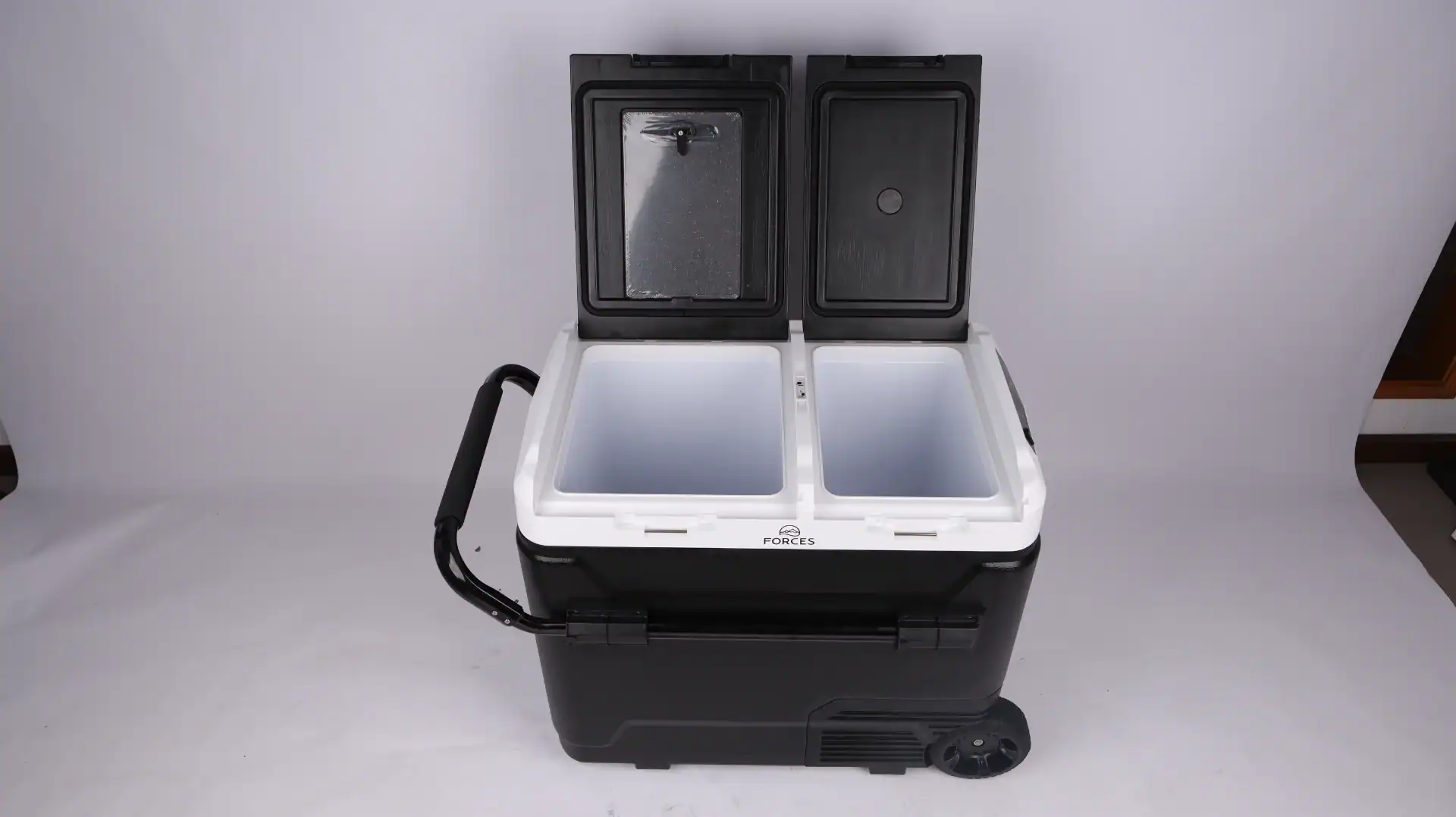
Dual-compartment portable car cooler fridge with black body, white interior, and wheels, open lids showing compartment space.
Portable car cooler fridge with dual compartments and wheels for easy mobility.

The Brand: A US Skincare E-commerce Store

A realistic first private-label order is 300-500 stock units with custom logo and dual-color packaging.

The brand runs a mid-size skincare e-commerce store, selling serums and moisturizers that lose potency in transit heat. Summer package damage triggered a steady stream of “melted formula” complaints, and the cost of free replacements was eating into margin. A cosmetic fridge gave them a way to control the temperature story from first touch.

Why they chose a cosmetic fridge private label

The shelf value alone justified the move. A branded mini fridge holding six to ten serum bottles makes the product visible long after the sale, turns the countertop into permanent advertising, and lets the brand charge a price point that breaks the race to the bottom on 30ml droppers.

They also understood early that white label was a dead end. A generic fridge with no logo and stock packaging photos means every competing seller has the same image library. Private label with custom logo and dual-color packaging creates visual separation. For their first run, that factory list started in Ningbo, where KelyLands has maintained a portable fridge production line since its 2018 partnership.

Initial budget and order size

The first order stayed at 400 units. For a cosmetic fridge MOQ for private label, that is the sensible starting point: a stock ODM build with custom logo and dual-color packaging, not a major tooling investment. Full custom tooling, which means a new mould for the housing and a new interior layout, only pays off after the stock build validates sell-through.

Budgeting followed the same logic. Anyone estimating cosmetic fridge private label cost for a first order should cover the sample, per-unit cost, packaging artwork, and freight. The largest hidden cost wasn’t the sample itself — it was the proof rounds. Each logo proof, artwork update, and packaging mock-up added 3–5 days to the timeline.

Step 1: Sourcing and Sample Selection

At 300-500 units, a stock ODM shell with custom branding beats full custom tooling.

The buyer was a US skincare e-commerce brand testing its first private-label cosmetic fridge. They wanted a product that felt designed, not a generic white box with a sticker slapped on the door. That narrowed the search from the start.

Shortlisting 3 Ningbo factories

They shortlisted three factories in the Ningbo area with cosmetic fridge OEM and private-label experience. The first offered a stock ODM shell with minor modifications. The second pushed for a brand-new injection mold. The third was KelyLands’ partner factory, which has built portable fridges since 2018 and now supplies the KelyLands mini fridge and car cooler lines.

The new-mold option was dropped before sampling. At a first order of 300-500 units, tooling amortization pushes the unit price up and leaves no sell-through data. A stock ODM build with a custom logo and dual-color packaging gives the brand nearly the same shelf presence at a fraction of the risk.

    • Factory depth: They looked for a factory that makes the fridge itself, not a trading company that sub-contracts after the order lands. Direct production keeps sample revisions in one room.
  • Existing export base: Factories already shipping mini fridges and car coolers to the US tend to have packing and compliance practices that smooth the import step.

What they looked for in the samples

They ordered two samples from each factory under the same spec: same capacity, same requested logo position, same color reference. That allowed direct comparison instead of matching apples to different orchards. They also defined a quality tolerance for logo placement before the first sample was sealed — something most first-time buyers skip.

Each sample ran through an overnight cooling hold with the door closed. They logged internal temperature, checked the door seal, and listened for compressor or fan noise in a quiet room. But what sent one sample back was not cooling. It was the logo: a slight film bubble under the edge, visible under bright retail lighting.

The lesson came down to revision rounds. Every logo proof, artwork update, and packaging mock-up added three to five days. One sample passed electrical checks but failed on packaging foam that shifted during shipping. That is the part that does not show up in a spec sheet; it only shows up during pre-production inspection.

アウトドアやドライブのお供に。.
A portable fridge with solar panels, perfect for off-grid adventures in the desert.

Step 2: Negotiating MOQ and Customization

Custom logo on a stock build keeps first orders realistic.

Logo customization on a cosmetic fridge rarely requires new tooling. The brand picked an existing stock model, applied its logo, and specified a two-tone colorway. That kept the cosmetic fridge private label cost within reach for a first order. Factories in Ningbo run these customization jobs on the same portable fridge lines they already operate for car cooler and mini fridge customers.

The packaging decision carried more weight than the logo. Dual-color printed cartons with a custom insert run through a different process than plain brown boxes. The supplier needs to order printed carton stock in bulk, which is why the minimum order quantity for a private-label cosmetic fridge usually sits between 300 and 500 units. Below that range, the per-unit carton cost spikes hard.

Lock in the quote details

The final unit price depends on where the order size lands and how many revision rounds the artwork burns. Buyers often negotiate the fridge price, then lose the savings to packaging overruns. The cleaner path is to request FOB pricing that breaks out the unit cost, the printed carton uplift, and the logo application charge separately. That way each element stays negotiable.

    • Unit price basis: Confirm FOB Ningbo or EXW pricing, and state which side pays the carton print plate fee.
    • Artwork revision cap: Agree that changes beyond two rounds shift the production date instead of just adding cost.
  • Order-size split: Clarify whether the 300-unit threshold applies per SKU or as a combined total across colors.

The revision tax

KelyLands runs this same negotiation structure through its Ningbo fridge factory partnership. The company’s export sales director manages partnerships with over 500 clients across 50+ countries, and the advice for first-time private-label buyers stays consistent: validate sell-through with 300-500 stock units before discussing custom tooling. A Ningbo manufacturer quotes both paths, but only one protects your cash flow on a first order.

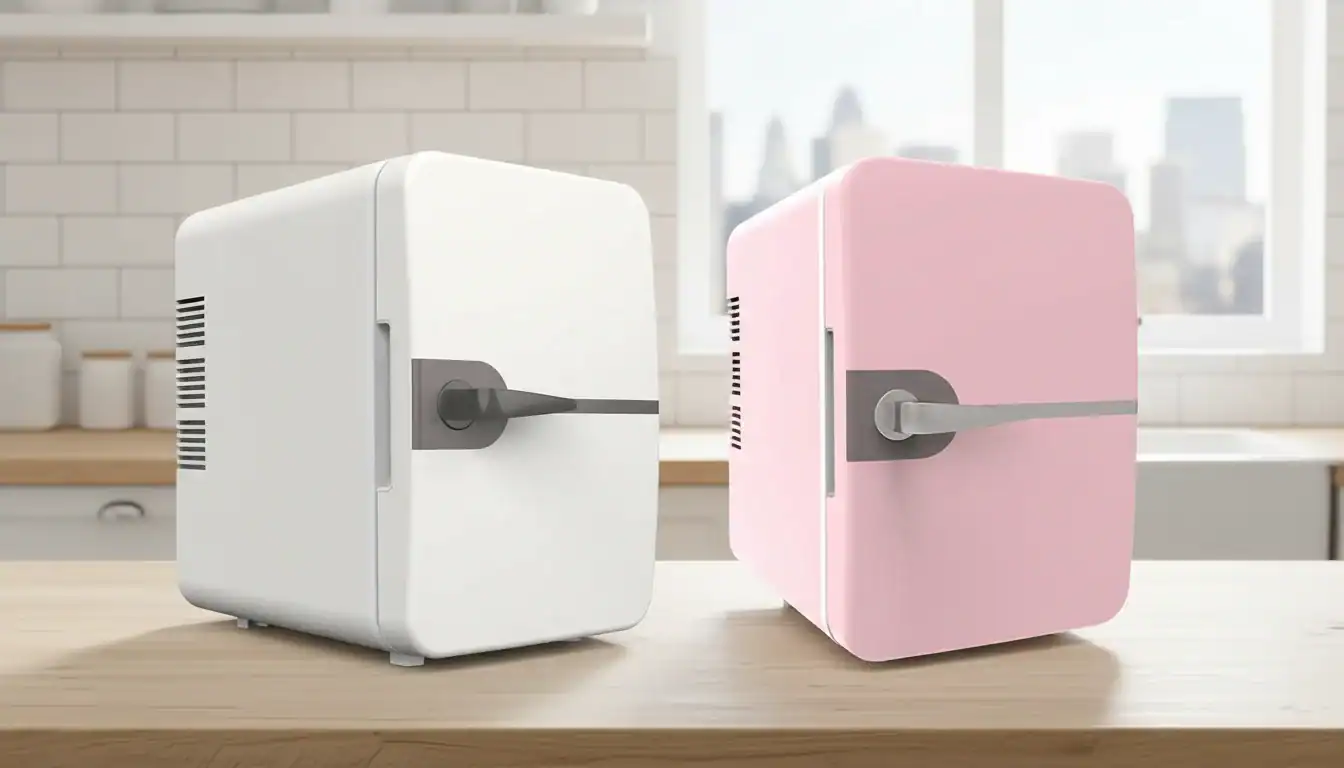
ホワイトとピンクの洗練されたデザインのコンパクトな車載用空気清浄機。.
キッチンカウンターに置かれたピンクと白のコンパクトなミニ冷蔵庫。.

Step 3: Production and Inspection

The approved sample is not a photograph.

Production for the first 400-unit order ran at the Ningbo portable fridge factory that KelyLands partnered with in 2018. The brand scheduled a mid-production inspection for day 3, before the line finished the full batch. Catching a defect at 100 units costs a reprint; catching it at 400 units costs a launch date.

Key checkpoints at the factory

    • Mass production vs pre-production sample: The inspection team lined up the approved sample against three units pulled randomly from the line. No visual drift in shell color, logo placement, or trim. This single step guards against the classic sample-to-batch mismatch.
    • Cooling performance and stability: Each pulled unit ran for four hours on the cosmetics setting. The interior temperature had to hold within the agreed range without short-cycling or compressor noise. Intermittent faults only show up under load.
    • Door gasket and hinge alignment: A weak magnetic seal allows warm air to seep in and causes condensation inside the fridge — a top source of negative reviews. The team checked seal tension on 20 units.
  • Packaging and label fidelity: The dual-color retail carton was compared side-by-side against the signed artwork proof, including barcode placement and the suffocation warning required for US marketplace compliance.

Finding and fixing a packaging issue

The blush pink shade on the production cartons came out visibly hotter than the approved proof — closer to coral than the soft rose the brand signed off on. The factory had quietly swapped print suppliers to cut cost. The brand rejected the entire carton run, and the factory reprinted all 400 at its own expense. Total delay: 4 days.

That 4-day hit is precisely the hidden cost most buyers miss: a single packaging revision round pushes delivery by 3-5 days. The brand could have rushed the cartons through and shipped, but on Amazon, the retail box is the product. Off-brand packaging invites the exact negative reviews a cosmetic fridge launch cannot survive.

The factory’s commitment to reliable delivery only holds when the buyer shows up on day 3 and questions what is on the line. For a first private-label cosmetic fridge order, inspection is not a formality. It is the last place where a defect still costs the supplier money instead of the brand’s reputation.

Private Label Cosmetic Fridge: Sample to Shipment Case Study
この製品、ソリューション、またはサービスのページを参照して、関連するオファーを確認してください。.

製品を見る →

CTAイメージ

Step 4: Shipping and Pre-Launch

Amazon’s 3-6 week receiving window often eclipses the ocean transit.

The container loading date ends the production timeline and starts the logistics timeline. For a first cosmetic fridge order of 300-500 units, the freight moves as LCL — less-than-container-load — out of Ningbo, sharing space with other shipments. The consolidation step is where delays surface when documentation is incomplete. A pallet without the ISPM-15 stamp or an incorrect HS code sits in the origin customs queue until corrected.

The ocean crossing from Ningbo to the US West Coast runs about two weeks. The full journey runs longer once you add export customs at origin, US customs entry, and drayage to the regional warehouse. The freight milestone that matters is not the vessel’s departure. It’s the moment the cargo clears US customs and the forwarder secures an FBA delivery appointment.

KelyLands’ fridge production runs through a Ningbo-based factory partnership built on competitive pricing and reliable delivery. That reliability includes having the commercial invoice, packing list, and bill of lading finalized before the loading date — a process refined across 500+ client partnerships in more than 50 countries. A mismatch in any of those documents stalls the FBA appointment booking.

Amazon FBA receiving: the hidden time sink

Amazon quotes a 3-6 week receiving window once the shipment reaches the fulfillment center. For many first-time importers, that window exceeds the ocean freight time. The typical failure pattern: a brand schedules its launch around the vessel’s arrival, then watches inventory sit in Amazon’s receiving queue for a month while ads run against out-of-stock listings.

Pre-launch prep also decides how fast the stock goes live. If the factory applies the FNSKU labels during production — one barcode per unit, covering any manufacturer barcode — the shipment avoids the FBA labeling surcharge. Labels shipped loose in a box mean the fulfillment center labels them, at extra cost and extra days.

    • Fallback buffer: Treat 4-6 weeks between container loading and stock-live as the minimum planning horizon for a first private-label order.
    • Delivery appointment: Book the FBA appointment before the cargo arrives; without a slot, the shipment waits at the forwarder’s yard.
  • Documentation check: Verify the commercial invoice values, HS codes, and country-of-origin markings against the packing list before the container departs.
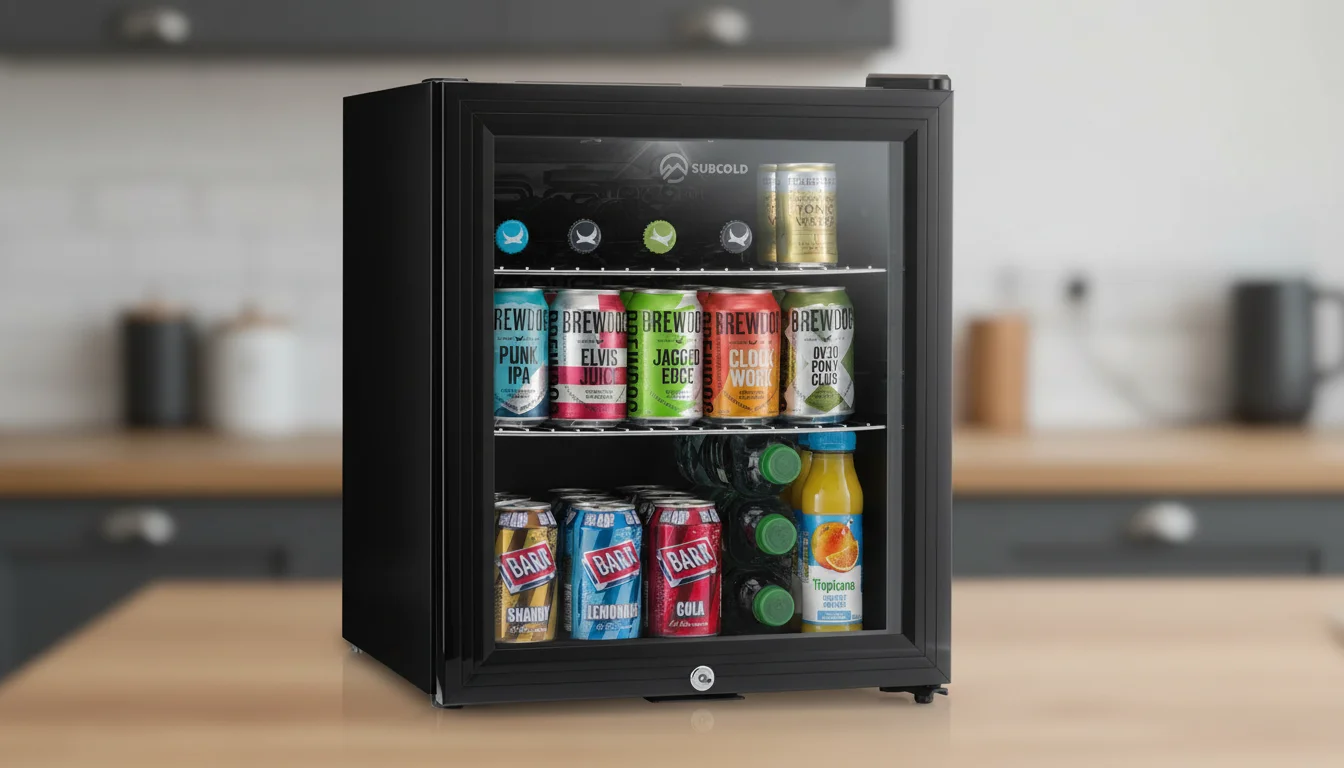
木製のキッチンカウンターの上に、缶飲料、ジュース、水筒などがストックされたミニ冷蔵庫。.
A compact mini fridge in a kitchen stocked with a variety of drinks.

Results and Timeline Summary

The budget held.

Total cost from sample to first sale

Production ran through a Ningbo portable fridge factory, the same manufacturing cluster where KelyLands secured its ミニ冷蔵庫 capacity through a 2018 partnership. That installed base mattered. The factory had already solved cosmetic fridge-specific challenges: logo placement on curved doors, protective inserts that survive a full ocean crossing, and packaging that arrives intact.

    • Sample and revisions: The sample itself is the cheap part. Iterations around it are the hidden line item — every proof round adds 3–5 days and the project timeline stretches accordingly.
    • Stock ODM build: 300–500 units with custom logo and dual-color packaging keeps custom tooling out of the first order. That keeps the cosmetic fridge MOQ for private label within reach of an unproven product.
  • FBA receiving: Amazon’s 3–6 week receiving window often eclipsed the ocean freight time. The container arrived on schedule; the listing didn’t go live on schedule.

What the brand would do differently

Skip the custom tooling conversation until sell-through proves the design. A stock shell with custom logo and dual-color packaging creates enough shelf difference for a test. Full tooling belongs on the second order, when the data says the product will actually move.

The second fix is launch timing. The brand tied its marketing push to container arrival and then watched stock sit in the FBA queue. Reserve two to three weeks of buffer between delivery and the on-sale date, and treat the receiving window as a schedule risk rather than a formality.

Most of all, lock the details at sample approval. The brand learned that signed artwork does not equal a finished run. On the next order, packaging specs and quality tolerance go into the approval document before production starts.

結論

This case study tracked a first private-label cosmetic fridge order from sample to shipment, and the numbers matter. A 300–500 unit stock build with custom logo and dual-color packaging keeps the cosmetic fridge private label cost manageable while preserving room for revision rounds. The real timeline risk is not production — it is the 3–6 week Amazon FBA receiving window that follows the ocean transit.

    • Plan a first order of 300–500 stock units with custom logo and two-color packaging.
    • Each logo proof, artwork update, or packaging mock-up adds 3–5 days to the schedule.
    • Reserve 3–6 weeks for Amazon FBA receiving, often longer than the shipping leg.
  • Sample approval that matches production quality tolerance protects your listing from returns.

Before you commit to a second order, compare how Ningbo suppliers handle packaging customization and sample revisions. Review the ミニ冷蔵庫 and car cooler options on the KelyLands product page to see which stock shell fits your brand positioning, then request a pre-production sample approval and lock the artwork timeline into your launch plan.

よくある質問

コスメ用フリーズのプライベートラベルのMOQはいくらですか?

MOQはカスタマイズ内容によります。ODM在庫シェルにロゴカスタマイズを施す場合は300〜500個程度から、フルオーダーの金型作成の場合はそれ以上の数量が必要です。KelyLandsは寧波の工場でミニ冷蔵庫を生産しているため、初めてのご注文でも対応可能です。カスタマイズ範囲を指定してお見積もりリクエストをお願いいたします。.

ロゴとパッケージのカスタマイズは可能ですか?

はい、ストックの冷蔵庫キャビネットにロゴとパッケージのカスタマイズは可能です。初回注文では、金型費用を抑えるため、ロゴと両面カラーパッケージに限定することをお勧めします。ロゴとパッケージデータを送付いただければ、仕様確認いたします。.

サンプルから出荷までどれくらいかかりますか?

サンプル作成から出荷まで typically 4〜8週間かかります(試作サンプルおよび輸送費を含む)。寧波拠点の生産はスケジュールの予測可能性を保ちますが、検品により余裕時間が加わる場合があります。ご入金の前にリードタイムをご確認ください。.

Amazon FBAへの直接配送に対応していますか?

はい、サプライヤーはプライベートラベルの化粧水冷蔵庫の注文を受け入れ、Amazon FBAへ直接配送が可能です。300〜500個の注文はLCLまたはフルコンテナで寧波から米国の倉庫へ輸送できます。配送先住所を教えてください。運賃の見積もりをご用意いたします。.