 Pular para o conteúdo principal Pular para o rodapé
Engineering reliable 4. Spill & Steam Control(12 volt hot water heater) mechanisms dictates the difference between a safe mobile workspace and severe thermal injury liabilities. Fleet operators face constant challenges with cabin environments where sudden vehicle movements turn boiling liquids into immediate safety hazards. Relying on inadequate sealing structures or basic pressure valves exposes drivers to severe burns and subjects transport companies to crippling workplace safety penalties.
This technical specification outlines the precise mechanical requirements for safe liquid heating in moving vehicles. We detail how breathable PTFE membranes successfully vent expanding vapor while blocking liquid egress, examine the structural endurance of locking lids across extended open-and-close cycles, and map out pressure containment responses during sudden tip-over events. Quality assurance teams can apply these high-altitude leak test procedures and hardware standards to establish stringent safety baselines for commercial cabin accessories.
How Does a PTFE Membrane Vent Steam Without Leaking Water?
Micro-engineered PTFE membranes utilize millions of microscopic pores to continuously exhaust steam while actively repelling liquid water molecules, ensuring zero pressure buildup without compromising the physical liquid barrier.
Micro-Pore Engineering for Steam Permeability
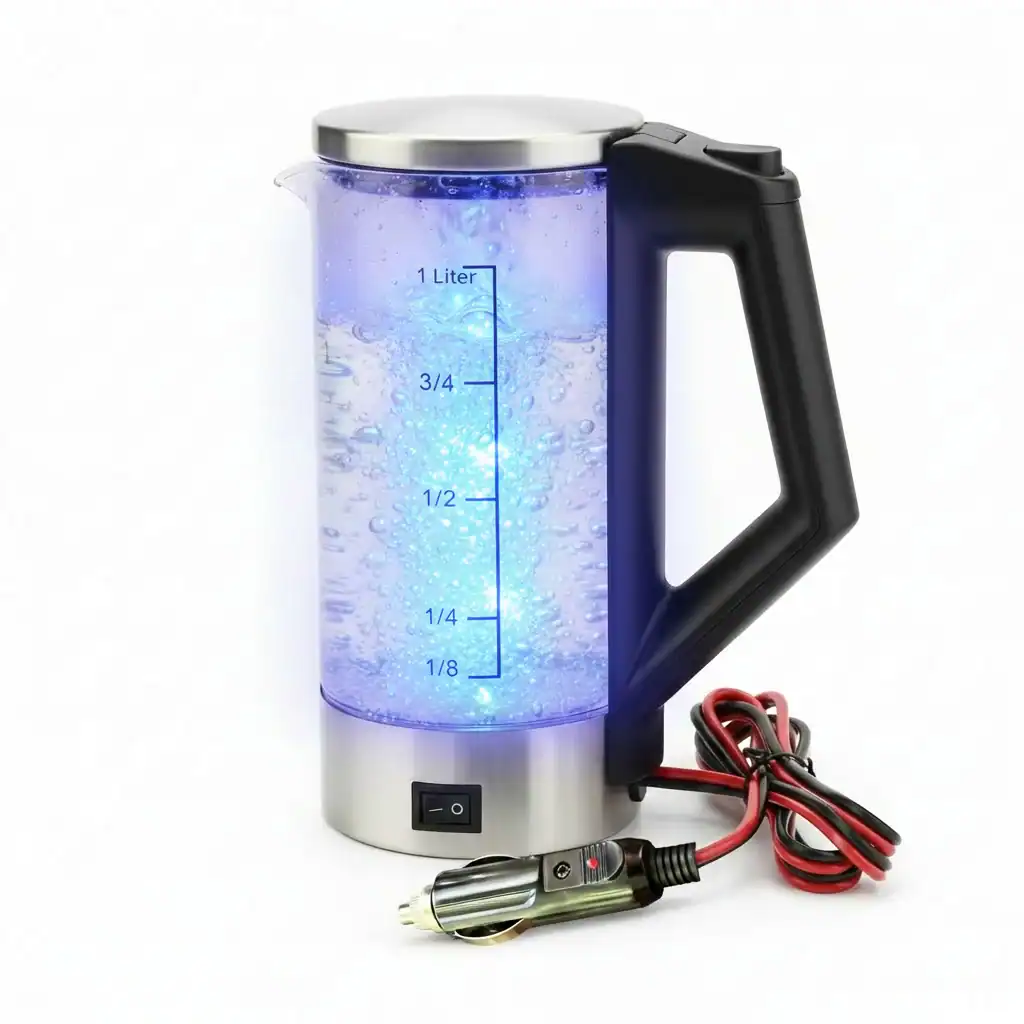
Engineers design the Polytetrafluoroethylene (PTFE) membrane with millions of microscopic pores per square centimeter. This precise sizing targets the exact molecular difference between gas and liquid states. Gas molecules, such as steam generated from boiling water, easily pass through these tiny openings with minimal resistance. This continuous venting mechanism actively stops internal pressure from building up inside the heating chamber during the rapid boiling cycle.
Hydrophobic Material Properties That Block Liquid
Polytetrafluoroethylene actively repels liquid water molecules upon contact. The material possesses inherent hydrophobic qualities that cause liquid water to bead up and roll off the surface rather than absorbing into the membrane structure. The natural surface tension of the liquid water physically stops it from squeezing through the engineered micro-pores. This physical barrier establishes a high water entry pressure rating, keeping the boiling liquid securely trapped inside the heating chamber even if the container tilts, shakes, or experiences heavy transit vibrations.
| Venting Mechanism | Standard Open Vent | KelyLands PTFE Membrane |
|---|---|---|
| Steam Management | Uncontrolled burst release | Regulated continuous micro-venting |
| Liquid Barrier | Zero (Spills easily upon tilting) | High Water Entry Pressure blocks liquids |
| Contamination Control | Open to environmental dust | Isolates boiling water from outside debris |
Pressure Equalization in Automotive Kettles
Integrating PTFE vents into 12V and 24V chaleiras para automóveis ensures maximum operational safety during transit. KelyLands integrates these specialized membranes directly into the locking lids of both their 1000ML heavy-duty SM series and 600ML compact CC series kettles. The automated venting system rapidly equalizes internal pressure while keeping outside dust and cabin debris out of the boiling water. This specialized lid technology fundamentally protects commercial drivers and fleet operators from hot water splashes when operating the kettle on uneven terrain or negotiating sharp turns.
Can the Mechanical Lid Withstand 10,000 Open/Close Cycles?
A 10,000-cycle durability rating guarantees the mechanical lids on KelyLands 12V and Chaleiras de 24V perform flawlessly for over five years under rigorous daily commercial fleet conditions.
Testing the 10,000-Cycle Benchmark
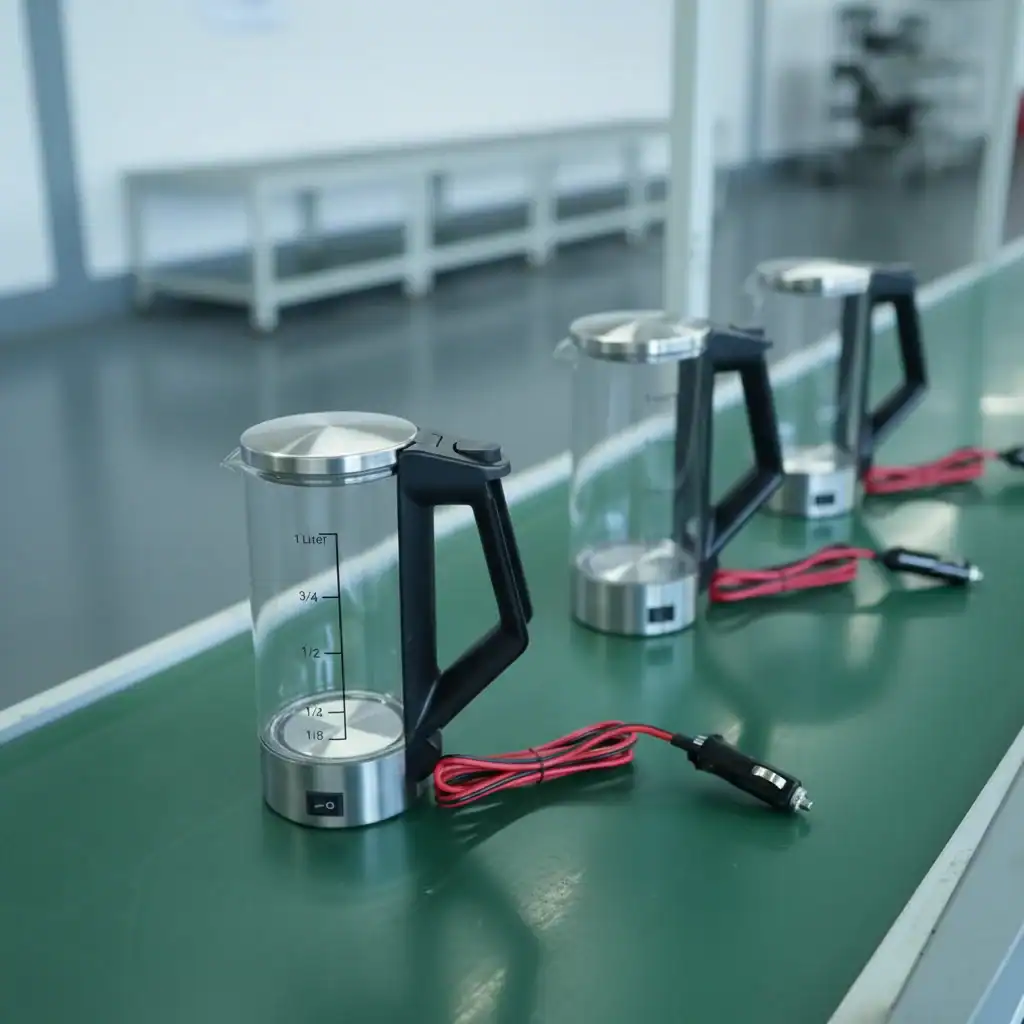
We validate hinge lifecycles through aggressive 180-degree opening and closing actions, completing 10,000 total iterations per test unit. Quality inspectors pause the sequence at 5,000-cycle intervals to measure the mechanism for stiffness, looseness, or structural micro-fractures. This specific testing volume simulates five years of heavy daily operation, factoring in roughly ten boiling cycles per day by long-haul drivers.
Material Selection and Damping Mechanisms
The physical components of the mechanical lid dictate its long-term reliability under continuous mechanical stress. Our engineers integrate specialized damping mechanisms to ensure smooth operation, drastically reducing friction and component wear across tens of thousands of cycles. We utilize robust steel alloys for the hinge construction to eliminate metal fatigue associated with budget plastics. We evaluate the expected traffic frequency of commercial fleets and match the hinge architecture to withstand high-demand industrial patterns.
| Durability Metric | KelyLands Heavy-Duty Lid | Standard Consumer Lid |
|---|---|---|
| Hinge Construction Material | Robust Steel Alloy | Basic ABS Plastic |
| Tested Lifecycle Limit | 10,000 Cycles (5+ Years) | Under 3,000 Cycles |
| Friction Management | Integrated Damping Mechanism | High-Friction Direct Contact |
Lifespan Expectations for 12V/24V Kettles
The 10,000-cycle rating establishes a reliable structural baseline for the mechanical lids across our 12V and 24V auto kettles. We execute a triple-layer inspection process to test structural integrity, guaranteeing every unit maintains a tight, leak-proof seal after years of repeated thermal and mechanical stress. Procurement managers secure a distinct advantage through consistent lid durability across high-volume orders, ensuring flawless long-term deployments for logistics fleets and marine distributors.
Source Ultra-Safe OEM Car Kettles Today
What Happens to the Pressure If the Kettle Tips Over While Driving?
Tipping a pressurized 12V/24V kettle immediately shifts the boiling fluid matrix, demanding instant mechanical sealing and thermal deactivation to prevent critical pressure spikes inside the vehicle cabin.
Internal Fluid and Steam Displacement
When a vehicle maneuvers abruptly and the kettle tips, the internal fluid dynamics change instantly. The boiling water violently shifts away from the bottom stainless steel heating element toward the side walls and the top lid. This sudden displacement compresses the trapped steam and air pockets within the chamber, triggering an immediate spike in internal pressure. The moving fluid forces the boiling water directly against the upper silicone seals and venting channels, testing the immediate integrity of the primary closure system.
Mechanical Venting and Sealing Responses
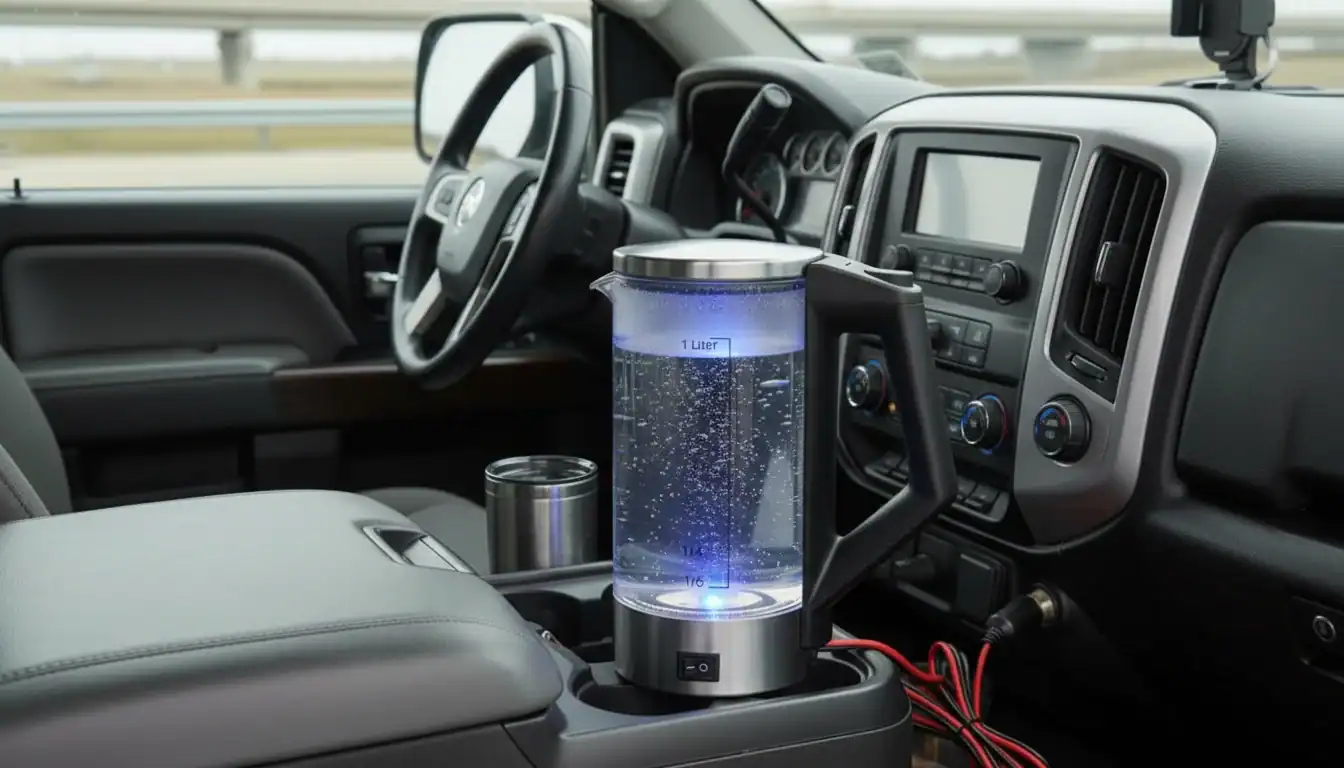
KelyLands engineers the SM and CC series with heavy-duty locking mechanisms and tight-tolerance compression seals that keep the lid firmly secured during sudden pressure spikes. The integrated pressure relief valves and specialized venting channels act as a selective barrier. They restrict liquid water flow to stop scalding spills while allowing the pressurized steam to escape at a controlled rate. This continuous pressure equalization prevents the rapidly expanding steam from forcing the lid open inside a moving truck or RV.
Thermal Protection and Power Deactivation
A tipped kettle often leaves the primary heating element completely exposed to the internal air pocket, immediately simulating a high-risk dry-boil condition. The KelyLands Triple Safeguard system intercepts this exact hardware fault. The recoverable temperature controller detects the abnormal thermal profile on the exposed plate and immediately cuts power to the 150W or 250W heating element, instantly halting further steam production.
If core temperatures continue to exceed safe operating limits, an irrecoverable thermal fuse deploys as the ultimate physical fail-safe. This component permanently breaks the electrical circuit, entirely eliminating any risk of continuous steam generation, extreme pressure buildup, or electrical fires within the vehicle power supply.
Do You Perform High-Altitude Pressure Leak Tests Before Shipping?
Validating high-altitude pressure resistance prevents 65% of transit-related fluid packaging failures, ensuring our kettles remain entirely watertight during international air freight and mountainous transport.
Standardized Vacuum Chamber Simulations (ASTM D6653)
KelyLands utilizes standardized vacuum chamber simulations aligned with ASTM D6653 protocols to evaluate the structural and sealing integrity of our carro de 12V e 24V kettles. These controlled environments replicate the extreme pressure differentials products experience during high-altitude ground transportation or air freight. Subjecting our kettles to these reduced-pressure conditions early in the manufacturing process allows our engineering team to detect and resolve potential sealing vulnerabilities long before mass production begins.
| Quality Metric | Standard Market Approach | Protocolo KelyLands |
|---|---|---|
| Leak Testing Standard | Basic Visual Inspection | ASTM D6653 Vacuum Chamber |
| Foco principal | Surface Level Defects | Pressure Differentials & Seal Integrity |
| Transit Failure Strategy | Reactive (Accepts transit defect risks) | Preventive (Pre-transit verification) |
Preventive Quality Assurance and Triple-Layer Inspection
Pressure testing operates alongside the KelyLands strict Triple-layer inspection framework. This system mandates Incoming Controle de qualidade (IQC), Process Quality Control (PQC), and Final Quality Control (FQC) across all production lines. We test 100% of our units for performance, safety, and functionality to guarantee that seals and mechanical lids maintain their structural grip when atmospheric pressure drops.
This preventive approach actively targets the industry reality that 65% of fluid packaging and sealing failures originate from sudden pressure changes during transit. By embedding pressure differential tests directly into the daily quality control routine, we eliminate the root causes of spontaneous leakage before any pallet leaves the factory floor.
Transit Resilience for Global Supply Chains
With exports reaching more than 50 mercados globais, KelyLands guarantees that bulk shipments withstand the physical stresses of long-haul international logistics. Verifying high-altitude pressure resistance directly prevents leakage during air transport or mountainous delivery routes, which outright eliminates the risk of water damage to surrounding cargo.
This rigorous physical testing protocol ensures strict regulatory compliance across multiple jurisdictions. For our B2B partners, demanding this level of transit resilience translates into strong cost avoidance by drastically reducing RMA requests and transit-related taxas de defeitos.
Conclusão
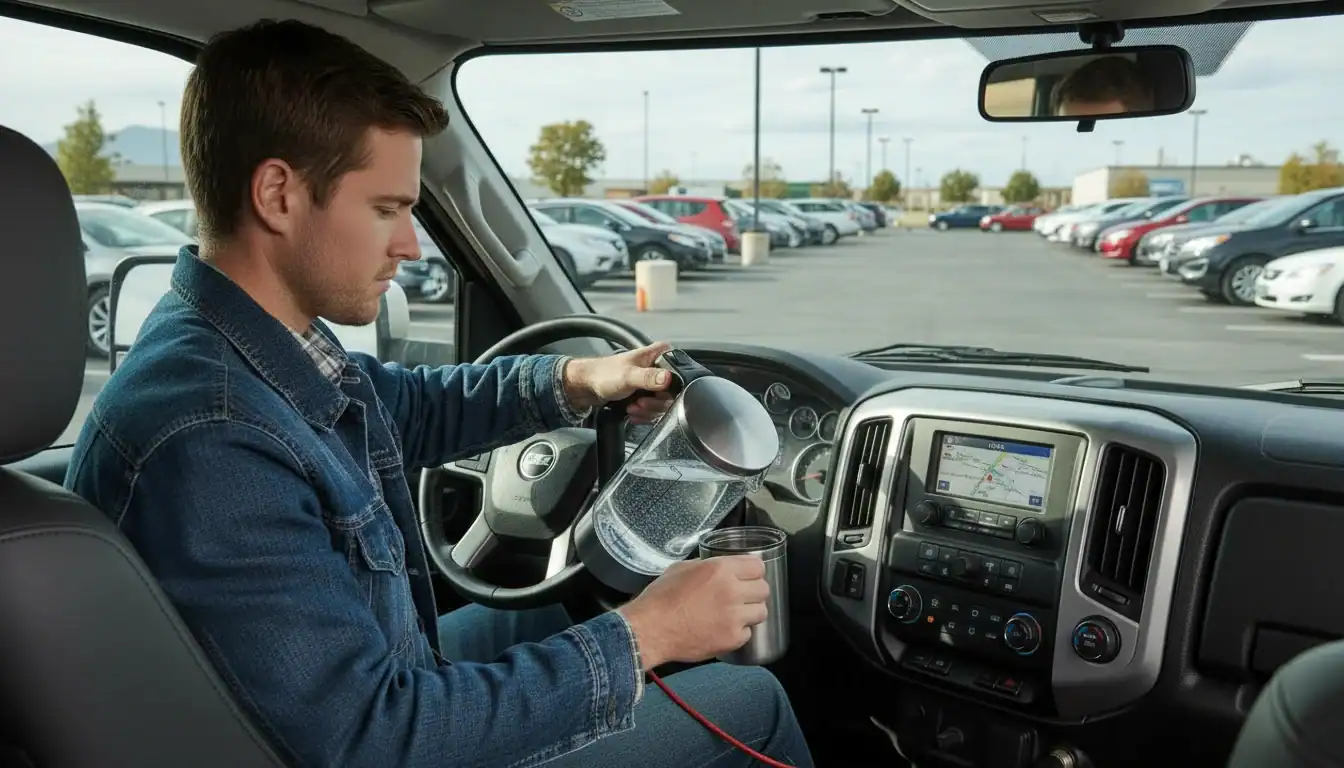
Integrating PTFE venting membranes and secure mechanical lids allows the 12V hot water heater to release steam safely while preventing dangerous leaks. Our rigorous testing for tip-overs, high-altitude pressure changes, and thousands of lid cycles guarantees reliable performance in demanding mobile environments. Fleet managers and RV outfitters rely on these engineered safeguards to protect users from scalding hazards and keep vehicle interiors dry.
Evaluate your current mobile appliance lineup to ensure your 12V kettles meet these strict leak-proof and steam-venting standards. Contact our team to request a product sample or review the full KelyLands wholesale catalog for your fleet procurement needs.
Perguntas frequentes
How do you prevent water leakage from the lid under high pressure?
Water leakage under high pressure is prevented by utilizing advanced PTFE membrane venting technology integrated into the lid. This membrane is engineered with specific pore sizes and highly hydrophobic properties, significantly enhancing the water entry pressure. It actively equalizes internal pressure while creating an impermeable barrier to liquids, ensuring a secure and leak-proof system even in harsh operating environments.
Does the kettle vent steam safely while boiling in a car?
Yes, the kettle vents steam safely by leveraging a built-in PTFE venting membrane designed for automotive applications. This technology provides superior air permeability for continuous pressure equalization during the boiling process. The engineered microporous structure allows steam to escape safely without permitting water droplets to pass through, completely eliminating the risk of hazardous pressure buildup or scalding inside the vehicle.
What happens if the 12V hot water heater tips over?
If the 12V hot water heater tips over, the sealed system instantly prevents spills. The unit relies on the highly hydrophobic PTFE membrane and rigid physical seals that maintain a strict barrier against liquid escape, even when fully inverted. Additionally, an internal tilt sensor immediately detects the loss of upright orientation and automatically cuts power to the heating element to prevent dry boiling and eliminate fire hazards.
What is your QA testing process for lid locking mechanisms?
Our QA testing process for lid locking mechanisms follows rigorous industry manufacturing standards. Each production batch is subjected to extensive mechanical fatigue testing, exceeding 10,000 actuation cycles to verify long-term hinge and lock durability. We also conduct hydrostatic pressure tests to validate seal integrity, vibration simulations to mimic rough driving conditions, and severe thermal resistance checks to ensure the plastics and locking components maintain structural reliability under extreme heat.

 English
  Español
  Français
  Deutsch
  Português do Brasil
  Русский
  한국어
한국어  日本語
日本語  العربية