 跳转到主要内容 跳转到页脚

Engineering a high-performance suction system requires overcoming the “voltage sag” inherent in lithium-ion discharge; while battery units peak early and crash, corded motors draw a continuous 7–12 Amps from AC mains to maintain a 3000 Pa suction ceiling. This architectural advantage allows for 1500W of sustained output, bypassing the thermal and discharge limits that force cordless alternatives to throttle performance as cells undergo structural voltage fade over 400+ cycles.
This technical analysis evaluates the transition from subordinate DC-DC modules to full-system AC front-ends, referencing the performance of the onsemi 600W-ACDC-GEVB and GAPTEC isolation benchmarks. We examine how compliance with ANSI C84.1 and IEC 62368 standards ensures consistent torque and a lower total cost of ownership compared to the recurring overhead of battery maintenance.
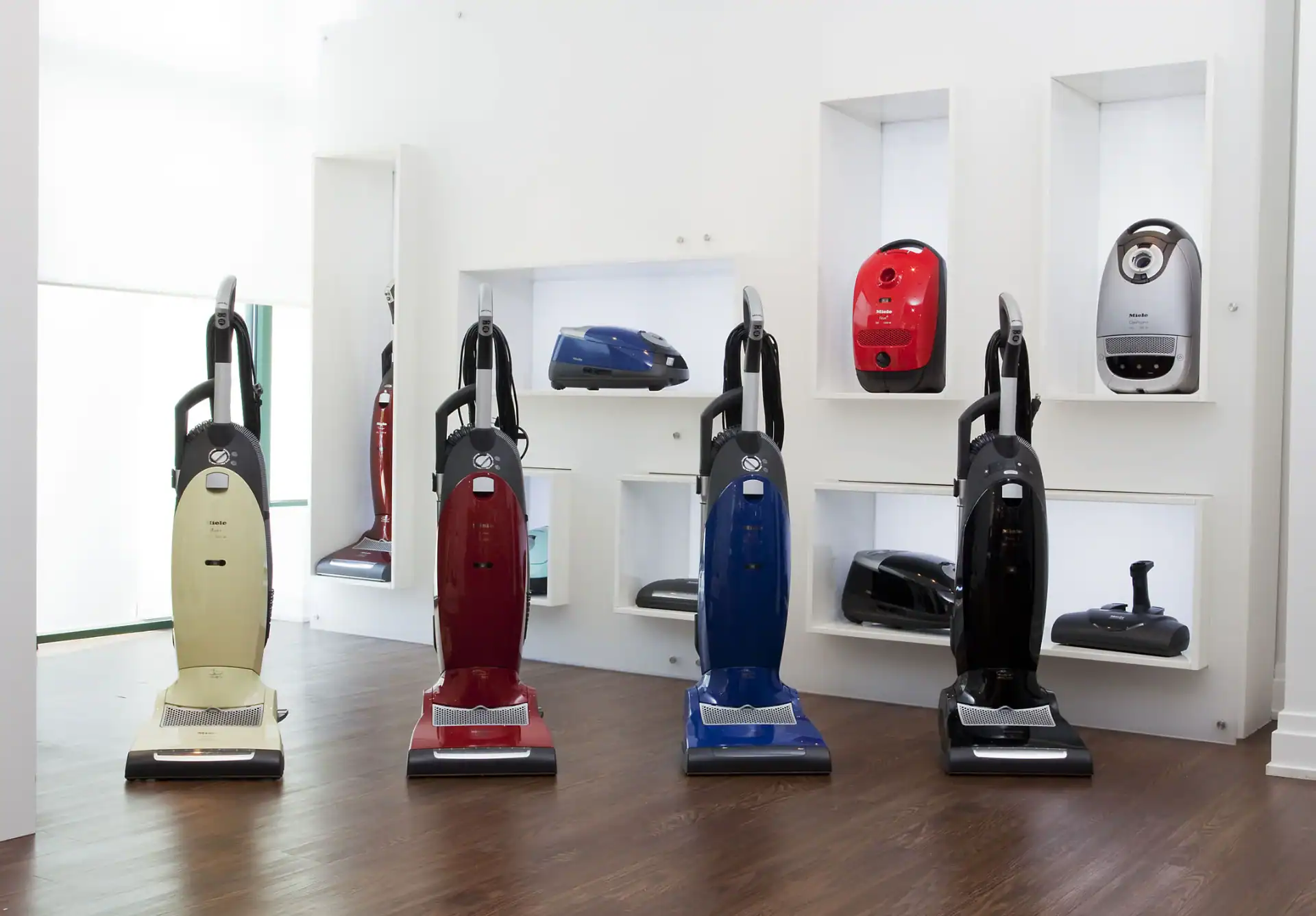
The Power Gap: 600W AC vs. 150W DC
Moving from 150W DC to 600W AC shifts from component regulation to full-system management, adding Power Factor Correction and complex safety isolation for direct mains connectivity.
A 600W AC design is not just a scaled-up version of a 150W module. It represents a fundamental shift in the power chain. While a 150W DC unit acts as a subordinate converter within a larger system, the 600W AC front-end serves as the primary gateway for industrial or IT loads.
Architectural Roles: Full System Front-Ends vs. Subordinate Modules
The distinction lies in where these units sit relative to the power source. A 600W system like the onsemi 600W-ACDC-GEVB handles the raw 110–230 Vrms AC mains directly. By contrast, 150W DC converters typically reside behind a pre-regulated high-voltage DC link.
- 600W AC Front-End: Converts 110–230 Vrms to 48V at 12.5A.
- 150W DC Module: Operates from a +380 VDC nominal link (e.g., Power Integrations RD-239).
- PFC Efficiency: 600W systems must reach ~97% efficiency using interleaved PFC stages.
- Switching Frequency: 150W DC stages target up to 250 kHz to maximize density in pre-regulated environments.
Engineers must account for the PFC stage in 600W designs to maintain efficiency. 150W DC units bypass this complexity because the preceding stage has already stabilized the high-voltage bus.
Technical Benchmarks: Safety Standards and Thermal Performance
Safety requirements escalate as power levels and input voltages rise. AC-mains-connected systems demand rigorous isolation and physical spacing that smaller DC modules simply don’t require.
- Isolation: Up to 4000 Vac for GAPTEC 150W AC-DC supplies.
- Creepage and Clearance: 8mm primary-secondary clearance and 9.2mm creepage (IEC 61800-5-2).
- Regulatory Compliance: IEC/EN/UL 62368 and EN60335 standards for appliance and IT safety.
- Performance Targets: Voltage regulation at ±1% with ripple between 150–200 mV p-p.
The 600W AC class requires interleaved LLC resonant topologies to manage the Bill of Materials (BOM) complexity. This thermal management strategy ensures the unit handles high density without compromising the tight ±1% regulation needed for sensitive industrial electronics.
Why Corded Motors Deliver Superior Suction Performance
Direct AC mains draw enables 1500W output and 3000 Pa suction. These motors bypass battery discharge limits to maintain peak torque and RPM even under heavy airflow resistance.
| Performance Metric | Corded Units | Cordless Units | Handheld Units |
|---|---|---|---|
| Suction Pressure (Pa) | 2000 – 3000 Pa | 1500 – 2500 Pa | 1000 – 2000 Pa |
| Typical Wattage | 500W – 1500W | 200W – 400W | 100W – 200W |
| Current Draw | 7 – 12 Amps (AC) | Battery Discharge Ltd | Battery Discharge Ltd |
Unrestricted AC Power and Current Stability
Corded motors pull energy directly from AC mains, removing the performance bottlenecks inherent in lithium-ion discharge cycles. While battery units suffer from “voltage sag” as they deplete, corded systems maintain a flat power curve from start to finish. This allows engineers to utilize thru-flow motor designs that prioritize raw mechanical work over the strict energy efficiency required for portable tools.
- AC Current Draw: 7-12 amps continuous from 110-230V mains.
- Wattage Ceiling: Supports up to 1500W loads; far exceeding the 100-200W range of typical handhelds.
- Power Architecture: Employs robust front-end supplies with PFC (Power Factor Correction) for up to 97% efficiency at high loads.
High-wattage AC front-ends handle the thermal demands of heavy-duty cleaning better than DC counterparts. Industrial-grade components within these motors manage the heat generated by sustained high-RPM operation, ensuring the unit doesn’t throttle performance to protect internal circuitry.
Suction Metrics: Pa Ratings and Torque Dynamics
Suction effectiveness depends on the relationship between current and mechanical torque. In corded systems, motor torque scales with the square of the current under light loads. This relationship means doubling the current provides a fourfold increase in torque, allowing the fan to overcome air inertia and maintain high-velocity airflow even as the nozzle encounters debris resistance.
- Suction Floor: Minimum 2000 Pa rating, peaking at 3000 Pa for deep-carpet extraction.
- Load Dynamics: Airflow resistance reduces the volume of air processed, which paradoxically lowers motor load and raises RPM until a sealed maximum suction is reached.
- Torque Saturation: High-voltage AC supply allows the motor to reach saturation limits that battery-powered DC motors cannot match without excessive weight.
When the vacuum head seals against a surface, corded motors capitalize on the lack of airflow to spin the fan faster. This creates the high-pressure differential needed to lift heavy particles. Battery units often lack the current overhead to sustain these spikes, resulting in weaker lift during deep-cleaning maneuvers.
The AC Power Advantage: Consistent Voltage vs. Battery Fade
AC utility power provides regulated stability within ±5% per ANSI C84.1. Batteries inherently decline due to state-of-charge depletion, internal resistance, and cycle-based chemical voltage fade.
| Feature | AC Utility Power | Battery-Stored DC Energy |
|---|---|---|
| Regulation Range | 114V – 126V (±5%) | Varies with State of Charge (SOC) |
| Voltage Profile | Constant Waveform | Linear or Plateau Decline |
| Long-term Stability | Steady over service life | Structural Voltage Fade (400+ cycles) |
| System Management | Passive (Transformers/Feeders) | Active (BMS and DC-DC Regulation) |
Grid Stability and ANSI C84.1 Standards for Constant Voltage
North American utility power maintains a predictable input envelope. Utilities use transformer tap settings and engineered feeder designs to ensure the AC waveform remains constant throughout the equipment’s service life. This eliminates the need to over-size systems to accommodate the massive swings found in chemical energy sources.
- Standard: ANSI C84.1 Range A
- Service Voltage: 114V to 126V (±5% of 120V nominal)
- Regulation Method: Transformer tap adjustment and distribution feeder design
- Load Performance: Distribution systems minimize steady-state voltage drop under normal load ranges

Battery Voltage Dynamics: Sag, Discharge Curves, and Cycle Fade
Batteries suffer from voltage decline at several levels. Instantaneous terminal sag occurs as soon as you apply a load due to internal resistance. This effect worsens as the battery ages or operates in low temperatures. While AC feeds provide stability by default, battery systems require active DC-DC regulation to emulate consistent output for motors and heaters.
- Lead-Acid Profile: Exhibits a near-linear voltage drop throughout the discharge cycle.
- Li-ion Profile: Maintains a flat plateau followed by a sharp crash near 0% charge.
- Voltage Fade: Advanced cathodes like Li1.2Ni0.15Mn0.55Co0.1O2 experience structural degradation, dropping discharge potential over 400–500 cycles.
- Standby Limits: Engineering targets often cap Li-ion at 4.00V per cell to trade peak energy for longer-term stability.
- Thermal Compensation: Lead-acid cells require -3 to -4 mV/°C per cell to maintain safe terminal voltage.
The gap between AC and battery power is a matter of management overhead. An entry-level AC feed provides a stable input rail. A battery system requires a Battery Management System (BMS) and secondary DC-DC stages just to reach that same level of performance, adding significant cost and complexity to the build.
Scale Your Brand with High-Performance OEM/ODM Vacuum Cleaners

Budget Efficiency: Why Corded Offers Better Long-Term Value
Corded tools eliminate $100 battery replacements and performance drops, providing consistent 5,500 RPM output and lower initial costs for power-accessible job sites.
Upfront Savings and the Hidden Costs of Battery Maintenance
Purchasing corded equipment lowers initial capital expenditure by removing the need for proprietary batteries and charging stations. While cordless systems offer mobility, they carry recurring maintenance liabilities that inflate the total cost of ownership over a standard three-year window.
- Battery Replacement Cost: $100 per unit, required after approximately 1,000 charge cycles as cells degrade.
- Workflow Overhead: Eliminates “pack juggling” and the need for redundant battery backups to prevent downtime.
- Purchase Price: Corded models cost significantly less than cordless versions because they bypass complex power management electronics.
Technical Longevity: Sustained Performance vs. Cordless Degradation
Corded tools draw directly from AC mains, often utilizing high-efficiency front-ends capable of 600W outputs with 97% efficiency. This ensures the motor receives steady power regardless of operation length, preventing the torque drop-off that occurs as battery voltage depletes.
- Circular Saw Performance: 5,500 RPM sustained speed.
- Standard Drills: 3,100 RPM without power fade.
- Hammer Drilling: 52,700 BPM for high-impact masonry work.
- Ergonomics: Lower tool weight without a mounted battery pack reduces operator fatigue during all-day grinding or drilling tasks.
The 600W AC power architecture allows for higher component ratings and better thermal design. This translates to a tool that survives heavy-duty cycles where 150W DC-based cordless modules might overheat or trigger safety shutdowns during deep cuts or intensive drilling.
Engineering Reliability and Lifecycle Costs
Engineers monetize reliability by converting MTBF into annual failure probabilities, allowing 25-40 year cost comparisons that justify preventive investments against unmitigated failure risks.
Quantifying Reliability through MTBF and Failure Risk Modeling
Reliability is a mathematical function of time, not a qualitative attribute. A component with a 3-year Mean Time Between Failures (MTBF) carries a 28.34% annual failure likelihood. Reducing that MTBF to 2 years drops annual reliability to approximately 60.65%. These probabilities allow engineers to project hard dollar costs into lifecycle cost (LCC) models.
Failure risk modeling monetizes these rates by debiting expected costs. For a component with a $25,000 failure expense, models book the full amount every two years or smooth the risk cost annually based on the MTBF-derived probability. This transparency identifies the lowest-cost strategy over the asset’s life.
Predictive and preventive maintenance strategies consistently represent the lowest lifecycle cost option. Even when these models require more upfront resources, they outperform reactive models by avoiding catastrophic outages. For example, a preventive investment with a present value of $2,732 is economically justified against an unmitigated future failure costing $5,000 at year five.
Standards, Analysis Horizons, and Mandatory LCC Thresholds
Regulatory frameworks dictate the duration and depth of LCC analysis. Public-sector engineering standards, including NIST Handbook 135 and Iowa LCCA guidelines, mandate a 25-year default analysis period for building systems. USACE ER 1110-1-8173 extends these horizons to 40 years or the lowest common multiple of alternative service lives.
- NIST Handbook 135: Defines U.S. federal discounting criteria for energy and building systems.
- ISO 15686 Series: Provides the international framework for service-life planning and economic sustainability.
- BS/EN 16627: Standardizes rules for construction procurement and economic assessments.
- ASHRAE 90.1: Acts as the baseline energy standard for evaluating USACE military construction alternatives.
Engineering LCC must capture the full spectrum of ownership costs to be valid. State guidelines, such as those in Iowa, require any proposed design to demonstrate equal or lower 25-year LCC than a code-minimum baseline. This comparison must explicitly include the following data points:
- Initial Capital: Acquisition, installation, and commissioning costs.
- Maintenance Modes: Periodic, predictive, preventive, and corrective expenses.
- Operational Impact: Overhauls, turnaround losses, and secondary damage from unplanned outages.
- End-of-Life: Environmental disposal, replacement timing, and residual salvage value.
Final Thoughts
Cordless convenience is a performance trap for high-demand industrial or cleaning tasks. AC power guarantees peak suction and thermal stability that batteries cannot match without massive costs and inevitable chemical failure.
Prioritize corded equipment for all high-intensity zones to eliminate $100 battery replacement cycles. Use a 3-year lifecycle audit to shift heavy-duty operations away from underpowered, battery-dependent tools.
Frequently Asked Questions
What is the suction power (kPa) comparison between a 600W AC vacuum and a 150W DC cordless model?
Industry standard suction for 600W AC vacuums ranges from 14-18 kPa. 150W DC cordless stick models typically reach 8-12 kPa. The AC model delivers 1.5 to 2 times more total suction force.
Does the unit feature thermal overload protection for the high-wattage motor?
Yes. High-wattage motors include thermal overload protection compliant with IEC 60335-1 standards. This ensures operational safety during heavy-duty cleaning tasks by preventing overheating.
Is the motor rated for continuous operation without a ‘cool down’ period?
Yes. These AC motors support continuous operation exceeding 30 minutes. They utilize AC power dissipation advantages that bypass the thermal limitations common in battery-operated DC motors.

 English
  Español
  Français
  Deutsch
  Português do Brasil
  Русский
  한국어
한국어  日本語
日本語  العربية