 跳转到主要内容 跳转到页脚

4 Best Solar EV Charging Setups
Quick Comparison: Top Setups at a Glance
| Setup Type | Best For | Core Strength | Verdict |
|---|---|---|---|
| Portable Power Stations | Emergency / Off-Grid Top-ups | Expandable battery systems with superior solar input for Level 1 EV charging. | Portable Power Innovator |
| Smart Wall Chargers | Homeowners with Rooftop Solar | Advanced “Full-Green Mode” for dynamic, 100% solar-only EV charging. | Smart Energy Leader |
| DIY Solar Carports | Custom / Self-Sufficient Projects | Custom-built structures integrating vehicle protection with solar generation. | Custom Integration Solution |
| Vehicle-to-Home (V2H) | Home Backup / Grid Resilience | Vehicle-to-Home (V2H) tech leverages an EV battery for home backup power. | Next-Gen Resilience |
Portable Power Stations: Can Ecoflow/Jackery Really Charge an EV?
VERDICT: A viable solution for emergency Level 1 top-ups, not a full recharge.
Both brands provide reliable emergency power for adding minimal EV range, with key differences in solar performance and system expandability.
EcoFlow and Jackery are established leaders in high-capacity portable power stations. Their systems are engineered for home backup, outdoor use, and providing emergency AC power to vehicles through expandable battery setups.
These units deliver standard Level 1 AC charging, adding roughly 8–20km of range. EcoFlow’s architecture often supports superior solar input for faster off-grid charging, while Jackery models typically focus on lower weight and portability for easier deployment.
📊 Technical Snapshot:
- 🏭 Core Products: EcoFlow DELTA Pro Series, Jackery HomePower 3000, Jackery Explorer 5000 Plus
- 🌍 Primary Markets: Global (Consumer electronics and off-grid power)
Why We Shortlisted Them:
| ✅ The Wins | ⚠️ Considerations |
|---|---|
|
|

The “Solar Only” Mode: Which Wallbox Tracks Production Best?
VERDICT: Wallbox excels at maximizing solar self-consumption with dynamic, real-time charging adjustments.
Wallbox offers one of the most sophisticated solar-only charging systems for homeowners with existing PV installations.
Based in Spain, Wallbox designs intelligent EV chargers specifically for advanced solar integration. Their systems are engineered to maximize the use of self-generated rooftop energy, targeting homeowners with established PV arrays.
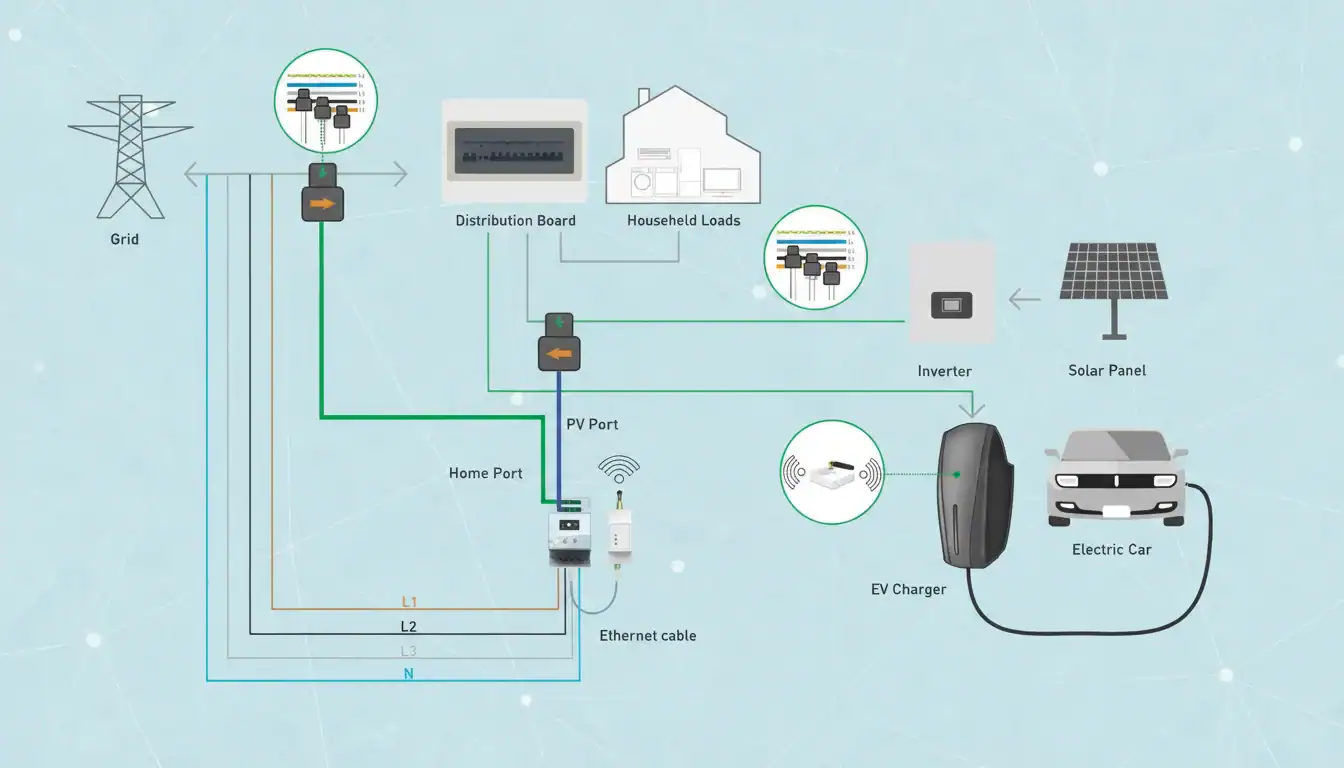
Their “Full-Green Mode” enables 100% solar-only charging by dynamically adjusting rates across single and three-phase configurations. This automatic phase switching captures more energy, optimizing self-consumption in real-time based on solar production and household load.
📊 Technical Snapshot:
- 📍 Location: Spain
- 🏭 Core Products: Wallbox Pulsar Max, Wallbox Pulsar Pro, Energy Management System (EMS)
- 🌍 Primary Markets:
Why We Shortlisted Them:
| ✅ The Wins | ⚠️ Considerations |
|---|---|
|
|
Your Brand on Certified Smart EV Chargers
DIY Solar Kits: Is It Cheaper to Build Your Own Carport?
VERDICT: Best for technically-skilled homeowners who prioritize full customization over off-the-shelf solutions.
This approach combines vehicle protection with a dedicated EV charging system, offering maximum control for those managing the project’s complexity.
A DIY solar carport allows homeowners to create a bespoke renewable energy asset. It merges vehicle shelter with a dedicated power source for EV charging, tailored specifically to the property layout and the owner’s independent energy goals.
Success requires sourcing compatible solar panels, inverters, and structural components. The project’s main challenge lies in navigating electrical codes and permitting, demanding a high level of technical expertise beyond standard construction skills.
📊 Technical Snapshot:
- 🏭 Core Products: Solar panels, carport structures, inverters, electrical components
- 🌍 Primary Markets: N/A (Project-based, not market-specific)
Why We Shortlisted Them:
| ✅ The Wins | ⚠️ Considerations |
|---|---|
|
|
Backup Power: Can These Systems Power Your House (V2H)?
VERDICT: An advanced energy resilience strategy for homeowners with compatible electric vehicles.
Vehicle-to-Home (V2H) technology transforms an EV into a powerful, grid-independent home battery during power outages.
V2H systems allow an electric vehicle’s high-capacity battery to discharge power directly into a home’s electrical panel. This effectively turns the car into a mobile generator, providing a clean and quiet source of backup energy for hours or even days.
Successful deployment requires specialized bidirectional hardware, a V2H-compatible EV, and utility approval. The system uses an inverter to convert the car’s DC power to AC power, while an islanding controller safely disconnects the home from the grid during an outage.
📊 Technical Snapshot:
- 🏭 Core Products: Bidirectional EV chargers (e.g., Tesla Powershare, Ford Charge Station Pro), DC to AC inverters, Islanding controllers
- 🌍 Primary Markets: Emerging in regions with high EV adoption and grid instability concerns (e.g., North America, Japan, parts of Europe).
Why We Shortlisted Them:
| ✅ The Wins | ⚠️ Considerations |
|---|---|
|
|
Frequently Asked Questions
Can I charge my EV with a portable solar generator?
Yes, you can use high-capacity portable solar generators like those from EcoFlow or Jackery for Level 1 charging. This provides an emergency top-up, typically adding 8-20km of range, but is not practical for a full recharge.
What is the best home charger for solar surplus?
Chargers like the Wallbox Pulsar series are excellent for using solar surplus. Their “Full-Green Mode” dynamically adjusts the charging rate to match your real-time solar generation, ensuring your EV is powered by 100% renewable energy from your own roof.
Is it cheaper to build a solar EV charging carport?
Building a solar carport can sometimes be cheaper in terms of materials, but the total project cost is often not significantly lower than a professional installation once labor, permitting, and potential mistakes are factored in. It is a complex DIY project that offers full customization but requires significant technical expertise.
Can my EV power my house?
Yes, if you have a compatible EV and the right equipment. This is called Vehicle-to-Home (V2H) technology. It requires a bidirectional charger that allows your car’s battery to send power back to your home during an outage, effectively turning it into a backup generator.

 English
  Español
  Français
  Deutsch
  Português do Brasil
  Русский
  한국어
한국어  日本語
日本語  العربية