 跳转到主要内容 跳转到页脚

Choosing the best home smart wallbox is no longer a simple accessory purchase; it’s a critical infrastructure decision that directly impacts property value and long-term energy costs. Selecting a charger based on outdated speed metrics alone creates a significant financial risk, locking your home into a system that may be incompatible with future vehicles, solar integrations, and utility grid services.
This analysis cuts through the marketing claims to provide a technical audit of the leading smart chargers. We break down the core engineering features that define a future-proof unit: 48-amp power delivery, intelligent load management, native NACS and J1772 connector support, and app ecosystems that actively reduce your electricity bill. This is a sourcing framework for your home’s next major energy appliance.
The Speed King: Which 11kW (48A) Unit Is Future-Proof?
By 2026, the 48-amp charger is the established standard for fast home charging, but true future-proofing depends entirely on dual-connector support and intelligent load management to handle growing home energy demands.
Selecting an EV charger is no longer just about raw speed. As the industry consolidates around the North American Charging Standard (NACS), long-term value comes from units that can handle multiple vehicle types and intelligently manage your home’s electrical load. A 48A/11.5kW unit hits the sweet spot, delivering maximum AC charging speed for most EVs without requiring costly electrical service upgrades.
Core Features of a Future-Proof 11kW Charger
By 2026, a charger’s value is defined by its adaptability. The key factors are power level, universal connector support, and flexible installation options that anticipate future changes in vehicles and home energy systems.
- The 48-amp (11.5kW) power level provides the ideal balance for rapid home charging while staying within the limits of standard residential electrical codes.
- Dual-connector support for both J1772 and NACS is non-negotiable for long-term vehicle compatibility.
- Installation versatility, offering both plug-in and hardwired setups, gives homeowners flexibility for initial installation and future electrical system upgrades.
Leading Models for 2026 and Beyond
A few chargers have pulled ahead of the pack by delivering the right combination of power, compatibility, and intelligence. These models are built to handle the transition to new standards and the increased electrical load of the modern, electrified home.
| Model | Key Feature | Connector Support |
|---|---|---|
| ChargePoint Home Flex | Highest power output (12kW) | J1772 & NACS Options |
| Emporia Pro | Advanced load management | J1772 & NACS Versions |
| Tesla Universal Wall Connector | Integrated adapter & 4-year warranty | Native NACS + J1772 |
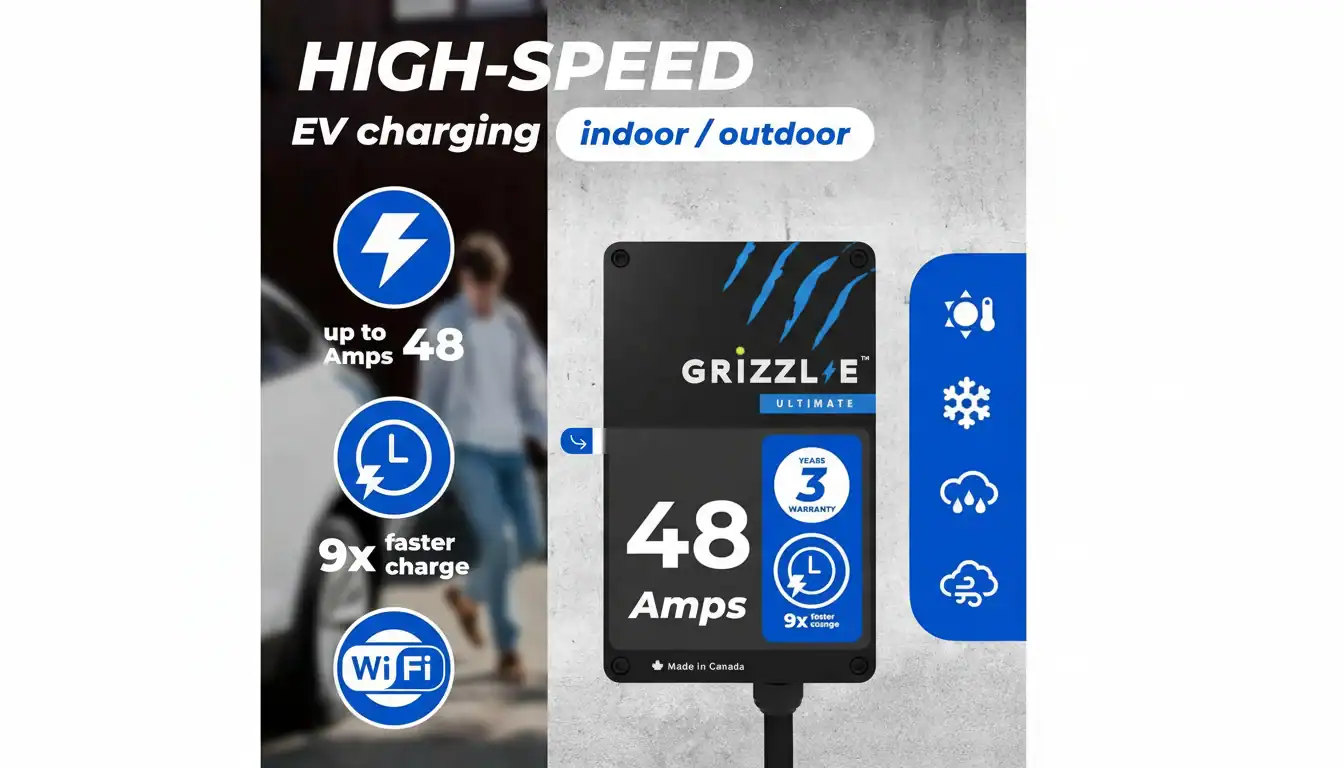
| Grizzl-E Ultimate 48A | Budget-friendly 48A performance | J1772 or NACS Options |
Why Smart Load Management is Essential
As homes integrate more high-draw appliances like heat pumps and additional EVs, actively managing the electrical load is critical. Smart load management isn’t a luxury feature anymore; it’s a core component for preventing overloads and ensuring the stability of your home’s electrical system without expensive panel upgrades.
- This technology automatically throttles the charger’s power output based on real-time total household electricity consumption.
- It prevents your main circuit breaker from tripping, a common problem in households with multiple EVs or integrated solar power.
- Chargers with this feature can help you avoid a costly electrical panel upgrade, saving thousands while ensuring safe operation.
App Experience: Can You Schedule Charging for Off-Peak Hours Easily?
The biggest financial leak for EV owners is charging at peak utility rates. In 2026, the key difference isn’t if you can schedule, but whether your app actively hunts for the cheapest kilowatt-hour without you guessing.
How Off-Peak Scheduling Works: In-Car vs. Smart Apps
By 2026, scheduling is a standard feature handled through two primary methods. You can use your electric vehicle’s native system for basic timing or a dedicated smart charging app for true automation and cost optimization. The choice dictates whether you’re just avoiding peak hours or actively targeting the lowest possible rates.
- Vehicle-native scheduling lets you set a charging window directly in your car’s dashboard or manufacturer app. When you plug in, the car and charger perform a handshake, but charging only begins during your preset hours.
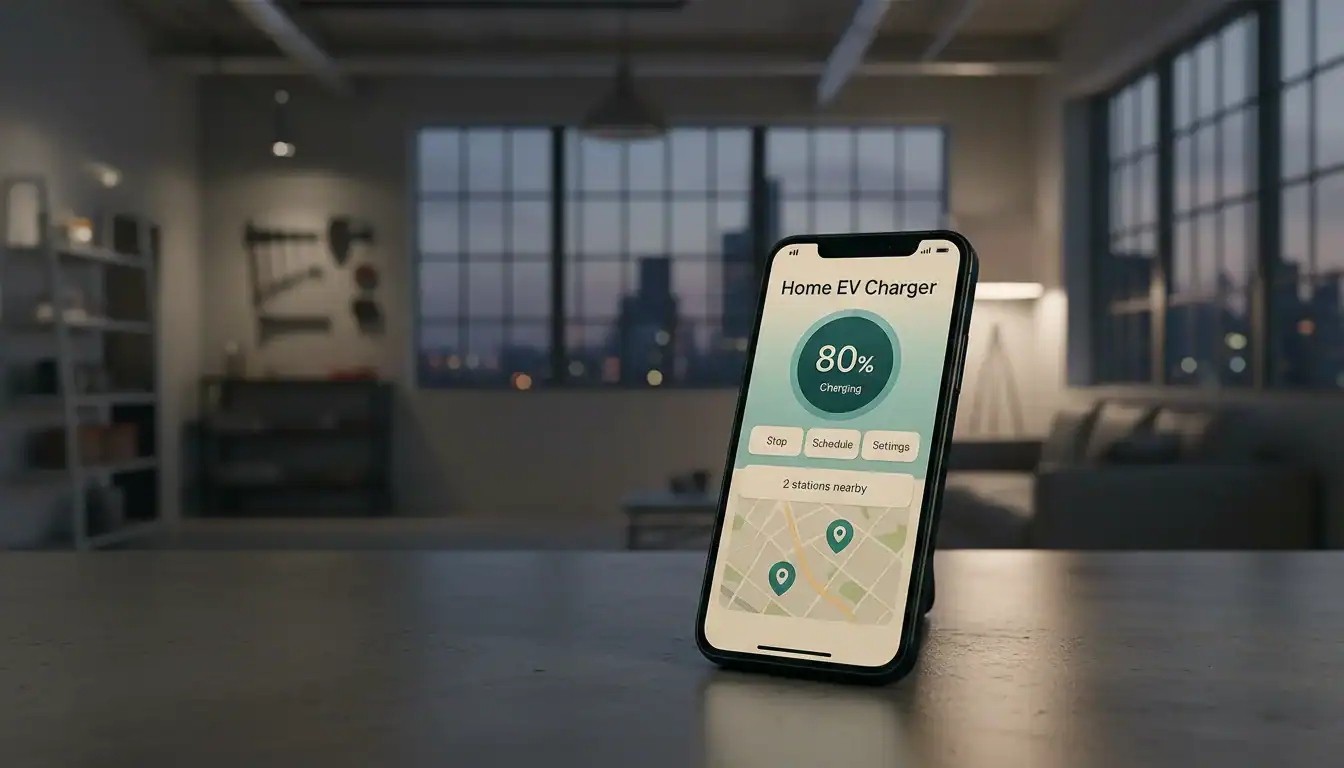
- Dedicated smart charging apps integrate directly with your utility’s actual time-of-use (TOU) rates. They remove the guesswork by automatically finding the cheapest off-peak windows to charge.
- Smart apps work backward from your “ready by” time. You tell the app you need a full battery by 7 AM, and it calculates the most cost-effective charging session overnight to meet that goal.
Key Features to Look for in 2026
Modern charging apps offer a suite of features designed to maximize savings and convenience. The best platforms provide granular control, detailed cost analysis, and the flexibility to adapt to your daily routine without constant manual adjustments.
- Daily and weekly scheduling patterns allow you to create different charging routines for workdays versus weekends.
- Real-time utility rate integration automatically adjusts your schedule based on seasonal or daily price changes from your energy provider, ensuring you never miss a new off-peak window.
- Cost tracking and session reports give you a detailed breakdown of how much you spend and save on each charge, often with exportable data.
- An emergency override or ‘charge now’ function lets you start charging immediately for an unexpected trip without deleting your entire schedule.
Real-World Setup and Savings
Setting up a smart charging app is straightforward, and the financial benefits are immediate. Most EV owners unknowingly overpay for electricity simply because they aren’t aware of their utility’s cheapest charging windows—a problem these apps solve directly.
- The initial setup process typically takes 5–10 minutes. You connect the app to your vehicle’s account and input your utility plan information.
- These apps prevent overpayment by pinpointing your utility’s precise off-peak windows, which can shift seasonally.
- Many utility companies now offer direct rebates and rewards programs for customers who consistently use smart apps to charge their EVs during off-peak hours.
Offer Certified, Brandable Smart Home EV Chargers

Solar Matching: Which Charger Only Uses Excess Sun Power?
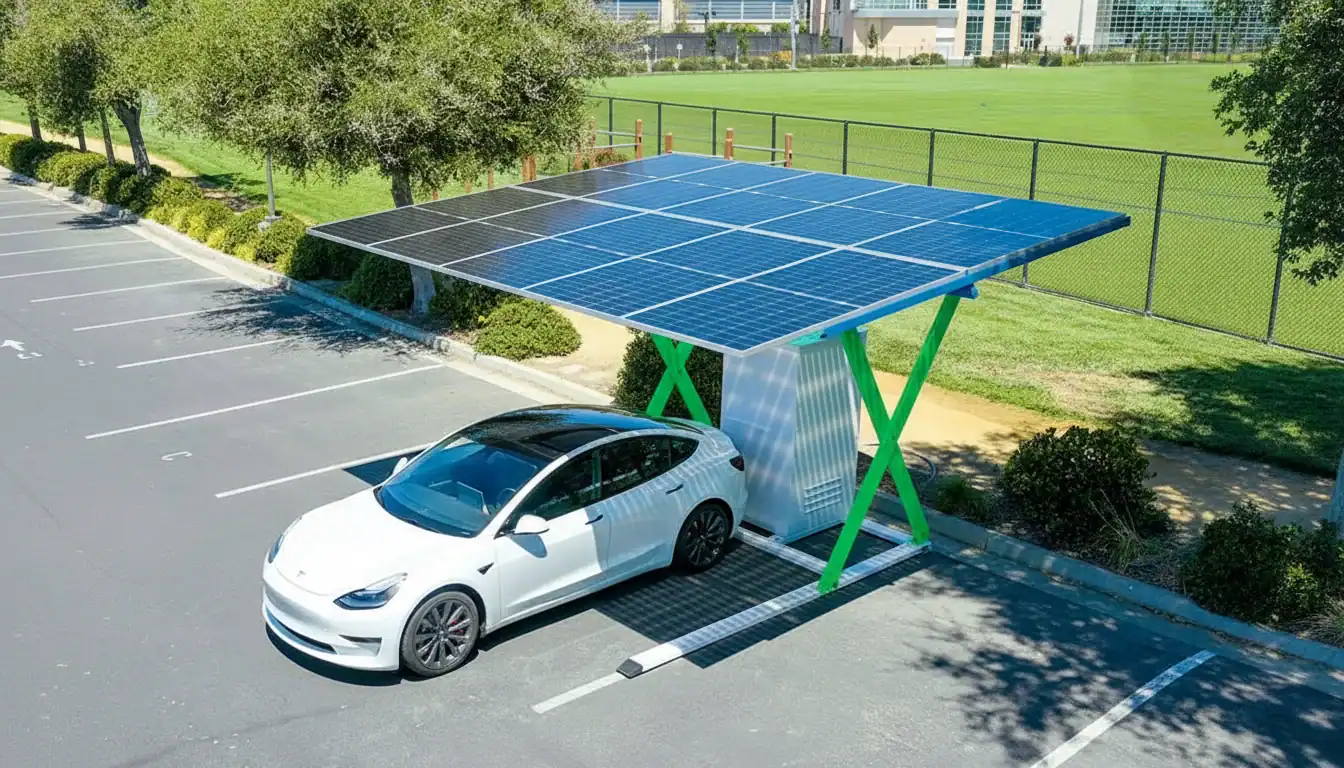
Effective solar EV charging hinges on the system’s reaction time; dedicated hardware offers near-instantaneous power matching, while app-based solutions introduce a slight but manageable data lag.
Dedicated Solar-Aware EV Chargers
These chargers are built specifically to monitor a home’s solar output and household energy consumption in real time. They automatically adjust the charging speed to use only the excess solar power available, preventing any pull from the grid. This approach is the most efficient for maximizing self-consumption of the energy you generate.
- Purpose-built hardware tracks excess solar generation second-by-second for precise matching.
- The system reacts instantly to changes in sunlight or when home appliances are turned on or off.
- This method is highly efficient, minimizing grid exports and consumption.
- A prime example is the Enphase IQ EV charger, which integrates directly into the Enphase energy ecosystem.
Software-Based and App Solutions
Third-party apps can link many standard smart EV chargers with various solar inverter systems to enable solar-only charging. This approach offers flexibility by working with a wide range of existing hardware, but its response time is typically slower due to its reliance on internet communication.
- Apps like Charge HQ act as a bridge between different brands of chargers and solar inverters.
- Communication relies on internet data, which can cause a delay of one to five minutes in adjusting the charge rate.
- This lag might result in brief periods of drawing power from the grid or not using all available solar.
- These apps often let you set a minimum daily charge level supplemented by any excess solar power.
| Approach | Response Time | Key Requirement |
|---|---|---|
| Dedicated Solar Charger | Real-time (second-by-second) | Purpose-built hardware (e.g., Enphase) |
| Third-Party App | 1-5 minute delay (internet-based) | Compatible charger + solar inverter |
| Integrated Ecosystem | Near real-time (proprietary link) | Single-brand system (e.g., Tesla + Powerwall) |
Integrated Manufacturer Ecosystems
Some brands offer a seamless, all-in-one solution if you use their entire energy ecosystem, including the vehicle, charger, and home battery. This provides a user-friendly, integrated experience managed through a single platform, eliminating compatibility concerns between different manufacturers.
- Tesla’s “Charge on Solar” feature is a prime example, working with a Tesla vehicle and a Powerwall battery.
- The system is controlled through a single app, automatically prioritizing surplus solar for vehicle charging.
- It also allows for setting a baseline charge from the grid before switching to solar-only mode to top off the battery.
The Trade-Off: Speed vs. Savings
The primary limitation of charging with only excess solar is the charging speed. The rate is entirely dependent on how much unused solar power is available after powering your home’s appliances. On cloudy days or when household consumption is high, the charging rate can be slow.
- Charge times are often longer, especially with smaller solar systems or on overcast days.
- Your home’s electricity needs always take priority, reducing the power available for your vehicle.
- Every solar-matching solution includes a manual override to use full-speed grid power when you need a faster charge.
Hardwire Ready: Which Units Are Easiest for Electricians to Install?
The ease of a hardwired EV charger installation depends less on the charger’s design and more on the home’s existing electrical panel capacity and the path for running the new circuit.
Why 48-Amp Hardwired Units Are the Standard
For residential installations, the 48-amp hardwired unit is the industry standard. It provides 11.5kW of power, hitting an optimal balance between fast charging and what most home electrical systems can support under code. A direct connection to the circuit panel bypasses the potential failure points of a high-power outlet, delivering a safer and more reliable charge. From a cost perspective, electricians often find it more efficient to hardwire a unit than to install a new, dedicated NEMA 14-50 outlet, which can lower the total installation bill for the homeowner.
Streamlined Designs That Simplify Mounting
Modern chargers from major brands like ChargePoint and Tesla feature simplified wall-mounted designs. Internally, the components are largely plug-and-play, which significantly reduces the time an electrician needs for on-site assembly and wiring. This approach makes the physical mounting process fast and predictable. The industry-wide shift toward the NACS standard also helps installers by simplifying the inventory and components they need to carry, regardless of the EV brand they are working with.
Key Factors for a Smooth Installation
The actual complexity of a charger installation rarely lies with the unit itself. The bulk of an electrician’s work involves assessing the home’s main electrical panel to ensure it has sufficient capacity. Their primary tasks are sizing the circuit breaker correctly and routing the thick-gauge wire through conduit from the panel to the desired charger location. Because an EV charger is one of the most power-intensive appliances in any home, selecting a model that is fully certified and compliant with local electrical codes is non-negotiable for a safe, successful installation.
Final Procurement Verdict: Securing Your Smart Home EV Charger Supply Chain
Selecting a smart charger is now a direct reflection of your brand’s technical credibility. Sourcing basic units without certified load balancing and robust off-peak scheduling creates a liability, leading to customer complaints and installer callbacks. A portfolio built on future-proof hardware with universal NACS support and OCPP compliance is the only way to protect your reputation and secure market share.
Your next step is to ensure your supply chain can deliver on these technical demands. We provide fully certified hardware that integrates with any management backend, ready for your brand’s customization. Request our complete OEM catalog and a sample kit to validate the build quality and performance for your market.
Frequently Asked Questions
What is the best smart EV charger for home?
The best smart EV charger for home use balances power, intelligence, and reliability. As of 2026, top models like the ChargePoint Home Flex 2 and Wallbox Pulsar Max lead the market. Key features to look for include adjustable amperage (up to 48A for 11.5kW charging), Wi-Fi and Matter-over-Thread connectivity for robust smart home integration, and an intuitive app for scheduling charges during off-peak hours to save on electricity costs. A quality charger will also offer load balancing to prevent overloading your home’s electrical panel.
Which charger works best with solar panels?
For homes with solar panels, the best chargers are those with dedicated solar integration features. Models like the myenergi Zappi are purpose-built for this. These chargers use Current Transformer (CT) clamps to monitor your home’s real-time solar generation and energy consumption. They offer an “eco” or “solar-only” mode that intelligently diverts only surplus solar power to your EV, maximizing your self-consumption and minimizing grid reliance. This ensures you are charging your car with 100% renewable energy whenever possible.
Do I need a subscription for the charger app?
No, for the vast majority of residential smart chargers, a subscription is not required to use the essential features. Core functionalities like remote start/stop, charge scheduling, viewing your charging history, and adjusting power settings are included with the hardware purchase. Some manufacturers may offer optional premium subscriptions for advanced features like detailed energy analytics or multi-user management, but these are not necessary for typical home use.
Best hardwired EV charger for outdoors?
The best hardwired EV charger for outdoor installation is one with a high weather-resistance rating, specifically NEMA 4 or IP66. This certification ensures the unit is fully protected against rain, snow, dust, and ice. Models like the Grizzl-E Extreme Edition and the ChargePoint Home Flex are known for their rugged, all-weather construction. Additionally, a quality outdoor charger will have a durable, flexible cable that does not become stiff in cold temperatures, ensuring ease of use year-round. Hardwiring is preferred over a plug-in setup for outdoor use as it provides a more secure and weatherproof connection.

 English
  Español
  Français
  Deutsch
  Português do Brasil
  Русский
  한국어
한국어  日本語
日本語  العربية