 跳转到主要内容 跳转到页脚

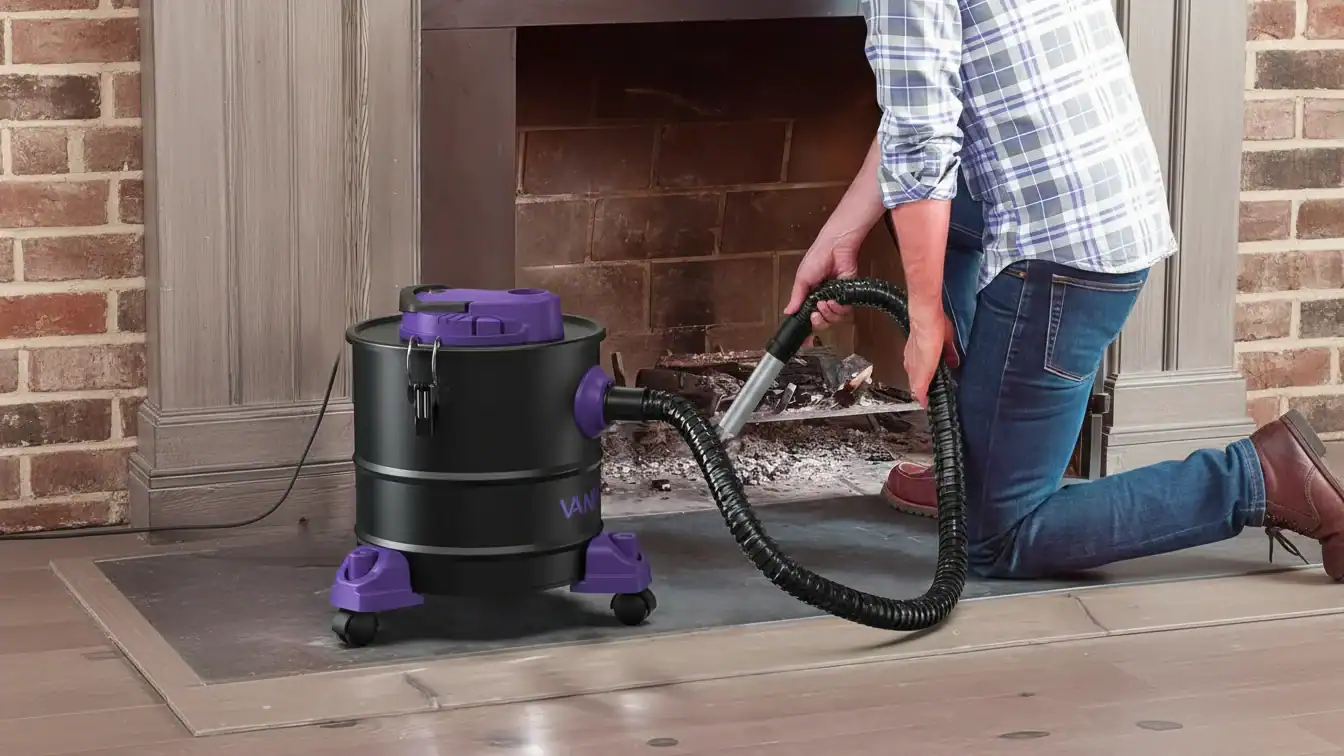
B2B buyers face significant safety challenges when managing maintenance on narrow staircases where 25-pound upright machines risk tipping. Opting for a specialized canister stair design provides a more stable alternative, separating heavy motor housings from the cleaning tools to ensure user balance on 10-inch treads.
This guide examines the technical specifications for these systems, including the use of 65±3 durometer thermoplastic rubber for surface protection and Hilti anchors designed for 3,000 psi concrete. We also cover the space-saving 42-inch square footprint required for modern residential and commercial layouts through 2026.
The Canister Myth: “Bad for Stairs”?
While many view canister vacuums as bulky, they often provide better stair safety than uprights. By placing the canister at the base or top of a flight, users only carry the lightweight wand and hose. This setup eliminates the need to balance a 25-pound machine on narrow treads, reducing trip hazards and physical strain.
Weight Distribution and User Balance
Full-sized upright vacuums often weigh 25 pounds or more, which creates significant stabilization challenges on standard 10-inch stair treads. Attempting to balance a heavy motor housing while cleaning increases the risk of the machine tipping or the user losing their footing. Canister designs solve this issue by separating the heavy motor from the cleaning tool. Users keep the main unit stationary at the base or top of the stairs, utilizing only the lightweight wand and attachment to reach each step.
This physical configuration supports safer movement because it allows for one-handed operation. Users can keep their other hand free to grip the handrail for balance, a practice favored by professional cleaning guides. Detachable powerheads and hoses also prevent the muscle fatigue typically associated with lifting a complete vacuum unit onto every individual step, making the process more ergonomic for people with mobility concerns.

Reach Radius and Surface Protection Specs
Technical specifications for models like the SEBO Airbelt E1 highlight a 37-foot cleaning radius. This reach often covers an entire flight of stairs, allowing the user to complete the task without moving the canister unit itself. This extended range minimizes the need to navigate heavy equipment on inclines. Furthermore, S-Class filtration systems trap 99.97% of allergens down to 0.3 microns, ensuring that air quality remains high even in the confined, poorly ventilated spaces of a stairwell.
Integrated soft-foam bumpers protect the home’s infrastructure by preventing scuffs and structural damage to wood risers or walls during movement. Variable suction controls located directly on the handle allow users to adjust airflow instantly. This feature is particularly useful when transitioning from carpeted treads that require high suction to delicate wood landings where reduced airflow prevents the vacuum head from sticking to the surface.
Stair-Lock Engineering: Grooved Bases for Treads
Grooved base engineering uses extruded aluminum shoes and Taper-Loc dry-glaze systems to secure glass balustrades and treads directly into 3,000 psi concrete. These systems comply with ASTM E 2358-04 standards, utilizing high-strength Hilti anchors to resist wind loads exceeding 70 psf and 200 lb concentrated point loads for modern structural integrity.
| System Component | Technical Specification | Performance Rating |
|---|---|---|
| Extruded Base Shoe | ASTM E 2358-04 / GRS System | 200 lb concentrated point load |
| Concrete Anchors | Hilti HUS-EZ (3/8” diameter) | 2.5” embed depth in 3,000 psi |
| Wind Load Capacity | B6S (36” height) | 71.2 psf uniform load resistance |
Aluminum Extrusion for Continuous Tread Support
Extruded aluminum base shoes provide a continuous anchoring profile for structural glass balustrades and un-notched stringer treads. The Taper-Loc Dry-Glaze system replaces traditional wet glazing by using six to seven plates for installations between 70 and 96 inches. This configuration maintains 2026 safety compliance for high-traffic environments while providing a rigid mechanical connection.
ASTM E 2358-04 specifications dictate how glass strips integrate into the system to resist 200 lb point loads. The engineering limits deflection to 0.8 inches at a glass height of 38 inches. Modular stair units typically utilize a 225 mm step depth and 800 mm width to distribute weight evenly across the aluminum channel, preventing localized stress on the glass components.
Mechanical Anchor Specifications and Load Resistance
Structural stability relies on Hilti HUS-EZ (KH-EZ) anchors with a 3/8-inch diameter. These fasteners require a minimum 2.5-inch embedment depth in 3,000 psi concrete to satisfy ESR-3027 standards. Spacing anchors at 6 inches on center supports uniform wind loads reaching 74.6 psf for systems standing 36 inches tall, ensuring the assembly withstands environmental pressure and physical impact.
Edge distance requirements range from 1.75 to 3.75 inches, which allows for placement within narrow 10-inch stair footprints. When working with lightweight concrete mixes, we apply a 0.6W reduction factor to calculate shear resistance. These adjustments maintain safety margins while meeting international building code requirements for permanent glass railing systems.
Compact Footprint: Fitting on a 10-Inch Step
Canister stairs utilize a 42-inch square footprint to fit into tight 10-inch step configurations. By radiating treads from a central pole, these systems provide a 17-inch walking path while maintaining a total diameter as small as 3’6″, ensuring efficiency for 2026 residential and commercial layouts.
| Stair Diameter | Square Footprint | Clear Walking Space |
|---|---|---|
| 3’6″ (Smallest) | 42″ x 42″ | 17″ |
| 4’0″ | 48″ x 48″ | 20″ |
| 5’0″ (Recommended) | 60″ x 60″ | 26″ |
Space-Saving Geometry and Central Pole Integration
The canister design achieves its compact dimensions by rotating treads around a single central support pole. This spiral layout eliminates the need for bulky horizontal stringers, minimizing the horizontal projection of the staircase. A 42-inch by 42-inch footprint allows for installation in tight corners or small floor openings where traditional straight stairs would fail due to space constraints.
Uniform tread rises between 8.5 and 9.5 inches accommodate various floor-to-floor heights. By using a standard 9-tread count, the system manages significant vertical transitions while maintaining a minimal horizontal footprint. This geometry ensures structural stability through welded components while optimizing the available area in small-scale residential or industrial settings.
Dimensional Standards and Clearance Requirements
Technical measurements for these systems prioritize both safety and spatial efficiency. The base 3’6″ diameter model provides a 17-inch clear walking space, which scales predictably by 3 inches for every 6-inch increase in diameter. This allows designers to select the specific size that balances user comfort with floor space limitations. A 10-inch unit run matches industry step depth standards, facilitating a natural gait even within a reduced radius.
Floor opening specifications require an additional 2 inches of clearance beyond the actual stair diameter. For example, a 3’6″ stair requires a 44-inch by 44-inch opening to prevent handrail pinch points and ensure safe passage. These clearance requirements prevent contact between the user’s hand and the surrounding structure, maintaining code alignment and user safety in narrow installations.
Premium OEM/ODM Solutions for High-Performance Home Vacuums

Bumper Protection: Preventing Scuffs on Wood Risers
Protective systems utilize thermoplastic rubber with a 65±3 durometer rating and laminated tire plies to absorb 80% of impact force. These guards, available in thicknesses from 5/8 to 1-3/16 inches, provide a soft-touch barrier that prevents scuffs on wood surfaces during cleaning.
Resilient Materials for Impact Absorption
Thermoplastic rubber guards featuring a 65±3 durometer rating provide the necessary density to neutralize impacts without leaving permanent marks on wood finishes. These materials compress upon contact, isolating the wood grain from the hard frames of vacuum cleaners or floor polishers. Laminated non-radial tire plies further enhance this protection by offering 80% force absorption, which effectively shields the riser from high-velocity canister strikes that would otherwise cause structural denting.
Surface-mounted guards typically stand 8 inches high, creating a dedicated wear zone that captures impact energy before it reaches the wood surface. Designers often use recessed rubber patterns combined with aluminum brackets to ensure the protection system remains stable. This material selection focuses on elastic memory, allowing the bumper to return to its original shape after repeated collisions while maintaining a soft-touch interface that prevents marring or friction burns on finished lumber.
Technical Specs for Wood Surface Preservation
Effective riser protection requires precise hardware selection to match the stair geometry. Guard thicknesses ranging from 5/8-inch to 1-3/16-inch allow for customizable clearance based on the specific depth of the stair tread overhang. Continuous aluminum retainers and surface-mounted brackets secure the bumper to the wood, preventing the shifting or “walking” that occurs during lateral cleaning movements. For high-traffic areas, 11-gauge steel-faced tubes and zinc-plated brackets reinforce the system to handle heavier impact loads without compromising the wood backing.
Synthetic wood surfaces require specialized components, such as black PVC risers, to prevent the warping and denting that occurs under concentrated pressure. These components distribute force across a wider surface area than standard bumpers. Additionally, protective extensions are available in heights from 4 to 12 inches, enabling installers to align the impact zone with the specific height of cleaning equipment. This height adjustability ensures that both the lower baseboard area and the upper portion of the riser remain protected from scuffs and mechanical damage.
Handle Controls: Turning Off Brush Roll from the Handle
Handle-mounted controls allow users to toggle the rotating brush roll directly from the grip, facilitating seamless transitions between carpeted stairs and hard landings. This functionality prevents debris scattering on wood or tile while reducing mechanical wear on 480-watt motors and internal belts, ensuring cleaning efficiency remains high across diverse home environments in 2026.
Fingertip Controls for Surface Transitions
Ergonomic D-shaped handles integrate two-speed selectors to adjust brush roll intensity for various carpet heights without stopping the vacuum. This design allows for immediate adjustments when moving from thick carpeting to low-pile rugs, ensuring the agitation level matches the floor type. Manual switches enable users to stop rotation instantly, protecting delicate wood surfaces and tile risers from aggressive bristle impact that could cause scratching over time.
Handle-positioned toggles maintain user balance on inclines by removing the need to reach for base-mounted buttons during stair navigation. By keeping the controls within thumb-reach, the operator maintains a secure grip on the machine, which is essential for safety when cleaning steep or narrow staircases. These fingertip controls also simplify the workflow for users who frequently switch between agitation and suction-only modes in multi-floor layouts.
Mechanical Agitation and Motor Performance Data
Deactivating the brush roll on hard surfaces minimizes torque on 480-watt motor systems, which reduces internal heat and extends belt life. Constant rotation on non-carpeted floors provides no cleaning benefit and subjects the drive system to unnecessary friction. By utilizing a manual shut-off, the vacuum diverts energy away from the brush assembly, preserving the integrity of internal components and preventing premature mechanical failure.
Engineering designs for 13-inch cleaning paths utilize brush shut-off to focus all available airflow on suction-only mode for efficient fine dust removal. When the brush roll is inactive, the vacuum seals more effectively against hard floor surfaces, maximizing the static lift required to pull debris from cracks and crevices. Advanced bearing systems in the 15-inch brush assembly further reduce mechanical friction, supporting 2026 durability standards for frequent commercial and residential use while ensuring smooth operation during active agitation cycles.
Final Thoughts
Moving away from heavy upright vacuums makes cleaning stairs less of a physical chore. The canister setup keeps the weight on the landing or floor, so you only handle the lightweight hose and wand. This physical separation prevents the instability often felt when balancing a large machine on narrow treads. By utilizing a stationary base, you maintain better personal balance and reduce the risk of a fall during household maintenance.
Choosing equipment with protective bumpers and handle-mounted controls preserves the finish of wood risers and improves the workflow across different floor types. Technical standards for base shoes and anchors ensure that the structural elements of the stairs themselves handle weight and movement without shifting. These engineering choices provide a stable environment where you can quickly transition from deep carpet cleaning to delicate wood dusting without risking scuffs or mechanical strain.
Frequently Asked Questions
Does the canister base fit standard US stair treads?
Standard US residential building codes, such as the IBC, mandate a minimum tread depth of 10 inches. Canister vacuums designed for stair use specifically match this 10-to-11-inch depth to ensure the unit remains stable and centered on the step during operation.
Are the wheels engineered to prevent sliding on wood or tile steps?
Stair-optimized canisters often feature rubberized or grooved wheels. These materials provide essential grip on smooth surfaces like polished hardwood or ceramic tile, preventing the vacuum from slipping off the tread while you clean.
Can I adjust suction or the brush roll from the handle?
Advanced canister models incorporate electronic controls directly into the handle. This allows you to toggle the motorized brush roll off when transitioning to bare wood stairs or adjust suction levels for delicate runners without needing to reach down to the main unit.

 English
  Español
  Français
  Deutsch
  Português do Brasil
  Русский
  한국어
한국어  日本語
日本語  العربية