 跳转到主要内容 跳转到页脚
Selecting a robust and reliable cooler factory is critical for outdoor and automotive brands that demand uncompromising product performance. This article delivers a comprehensive factory audit checklist specifically tailored to evaluating cooler suppliers, covering quality control, production capacity, supplier due diligence, social responsibility, and regulatory compliance to assist buyers in making informed sourcing decisions. Factory audits must include thorough checks on storage, pest management, sanitation, traceability, and equipment maintenance for highest food safety standards. Energy efficiency, durability under extreme conditions, and advanced control technologies are key differentiators for cooler suppliers in niche markets such as adventure gear and vehicle OEMs.
Comprehensive Quality and Safety Assessment
A rigorous audit of manufacturing practices is the first and most critical line of defense against product failure and recalls.
Factory audits must include thorough checks on storage, pest management, and sanitation. These are non-negotiable for meeting the highest food safety standards. Proper protocols prevent cross-contamination and spoilage, protecting your brand’s reputation.
Documentation and verification of HACCP systems are mandatory. This ensures traceability and adherence to strict regulatory requirements like FDA FSMA. A documented plan is useless without consistent execution and verification.
Stringent pest control with periodic monitoring is essential. This includes using approved chemicals and maintaining meticulous cleaning schedules. A pest-free environment is a fundamental indicator of overall facility management.
Join 300+ global partners who trust KelyLands for top-tier car accessories. Review our car coolers in our catalogue
Request now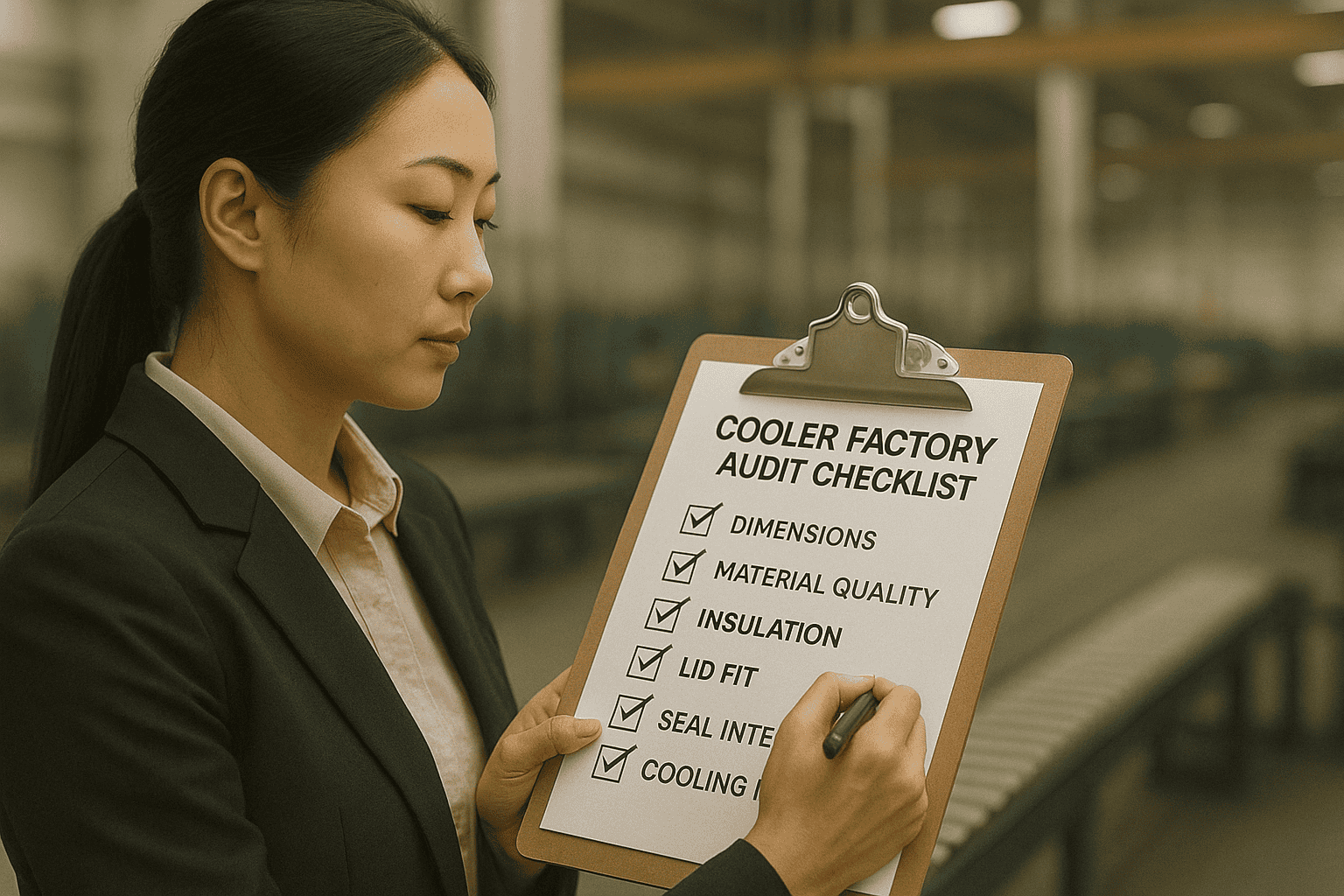
PrimusLabs Factory Audit Checklist Overview
Storage facility inspection covers segregation of materials and sanitary conditions. It verifies that rejected materials are clearly identified and separated. This prevents adulteration and ensures only quality products move forward.
Employee hygiene and training programs are vital for consistent safety. This includes handwashing policies, proper protective clothing, and illness reporting systems. Well-trained staff are your first line of quality control.
Equipment calibration and maintenance ensure consistent product temperature controls. Routine records and sensor calibration are critical for reliability. This directly impacts the energy efficiency and durability of the final cooler product.
Traceability systems must allow one-step forward and one-step back tracking. This is crucial for effective recall readiness and managing lot coding. Annual mock recall drills are a best practice for any serious supplier.
| Audit Category | Key Aspects | Compliance Criteria | Reference |
|---|---|---|---|
| Storage & Pest Control | Segregation, Pest-free, Sanitation, Traceability | Physical inspections, pest licenses, approved chemical use, cleaning schedules | PrimusLabs Cooling Audit Guidelines (2021-2023) |
| HACCP & Management Systems | Food safety policy, HACCP team, Employee Training | Documented plans, formal trainings, verification schedules | Codex Alimentarius HACCP Principles; FDA FSMA Regulations |
| Equipment & Calibration | Maintenance, Cleaning, Sensor Calibration | Routine records, calibrated sensors, rejection protocol | ASQ and ISO 9001 standards |
| Employee Hygiene & Practices | Handwashing, protective clothing, reporting illnesses | Training logs, glove policies, illness reporting systems | FDA Food Code & OSHA requirements |
| Traceability & Recall | Lot coding, Recall simulations, Supplier verification | Documented trace systems; annual recall drills | FDA CFR Part 11; Produce Traceability Initiative |
Supplier Capability and Customization Evaluation
Beyond basic compliance, a supplier’s technical prowess and flexibility determine if they can meet your unique brand and performance needs.
Examining factory capacity and technical capabilities is crucial. It ensures alignment with your specific performance and design requirements. This due diligence separates adequate suppliers from exceptional partners.
KelyLands: Integrated Manufacturing and R&D Strength
KelyLands demonstrates strong internal R&D capabilities enabling product innovation. This supports extensive OEM/ODM customization for branding, color, and packaging. Their manufacturing includes quality control compliant with international certifications.
KelyLands Strategic Growth Positioning
The company focuses on quality manufacturing aligned with international standards. They hold more than 60 patents, underscoring a commitment to innovation. Their facilities handle customizations from prototype to mass production. Their end-user targeted design emphasizes energy efficiency, compactness, and advanced control including smart app integration, with sustainable energy use strategies incorporated anticipating growing climate impact and carbon footprint concerns. They prioritize global distribution logistics for seamless scalability.
Custom Car Coolers for Every Journey
Explore KelyLands’ range of thermoelectric and compressor car coolers, designed to keep your items perfectly cooled or warmed on the go. With flexible power options, portable designs, and extensive OEM customization, our solutions support diverse uses from outdoor trips to vehicle and home applications worldwide.
Sustainability, Compliance, and Risk Mitigation
Long-term supply chain viability depends on integrating environmental responsibility with rigorous regulatory adherence.
Total Cost of Ownership includes often-overlooked operational and disposal costs, and integrating this with reliability engineering is key for optimal asset management and true risk mitigation. This proactive approach minimizes vulnerabilities identified through failure mode analysis and ensures long-term operational efficiency.
Integrating Environmental Sustainability and Carbon Accountability
Application of carbon accounting across scopes 1, 2 and 3 is increasingly vital. It quantifies greenhouse gas emissions throughout the manufacturing lifecycle. This data is critical for buyers with corporate sustainability targets. The incorporation of HVAC system efficiency and thermal comfort design is also key to reducing operational energy consumption in factory environments, while the employment of asset life cycle management optimizes maintenance scheduling and prolongs equipment longevity.
Advancement of carbon offset practices and verification is a key differentiator. It also involves using failure mode and effect analysis (FMEA) to anticipate vulnerabilities. This proactive approach minimizes resource waste and reduces environmental impact.
Regulatory Compliance and Social Responsibility
Adherence to FDA, USDA, OSHA, and regional regulations is a baseline requirement. Social compliance audits evaluating labor practices are equally important. They mitigate significant reputational and operational risks. Comprehensive supply chain due-diligence encompassing supplier qualifications, certifications, and ongoing performance verification is fundamental to this process.
Risks of non-compliance include security vulnerabilities and potential adulteration. Transparent documentation management supports traceability and incident response. Comprehensive due diligence is your best protection.
Power Up Your Market Presence
Stay ahead with KelyLands’ cutting-edge car accessories. Our products are designed for global markets. Contact us to ask for our new catalogue and explore partnership opportunities.
Frequently Asked Questions
What are the critical components of a cooler factory audit checklist?
An effective checklist must cover storage conditions, pest control, sanitation, HACCP, equipment calibration, traceability, employee hygiene, and regulatory compliance. These areas collectively ensure product safety and quality.
How can buyers assess a factory’s capability for customization?
Evaluate the supplier’s R&D capacity, patent portfolio, and track record in OEM/ODM projects. A strong history of delivering tailored products with consistent quality is a positive indicator.
Why is environmental sustainability important in manufacturing?
It reduces energy use and carbon emissions, lowering long-term environmental impact and operational costs. It is measured through carbon accounting frameworks tracking emissions across different scopes.
What are common concerns when sourcing from international factories?
Concerns often include inconsistent quality control, communication barriers, and doubts over compliance with international safety and performance certifications. Rigorous auditing is the solution.
How can traceability and recall readiness be ensured?
Verify that lot coding systems enable one-step forward and backward traceability. Insist on regular mock recall exercises and comprehensive documentation of supplier certification programs.

 English
  Español
  Français
  Deutsch
  Português do Brasil
  Русский
  한국어
한국어  日本語
日本語  العربية